What book(s) are you reading?

greyhammer90

the drunk piano player
Messages
16,837
Reaction score
16,116
Anybody read Origin by Dan Brown yet?

I finished it a week ago and took some time to stew on it.

I thought it was entertaining from start to finish, and felt less episodic than Inferno and The Lost Symbol. It was a solid narrative taking place over the course of about a day and a half, and felt like one long thrill-ride.

I thought some of the transition chapters were kind of weak, and Dan Brown REALLY needs to work on his sense of how blogs and social media work these days, but those were minor obstacles to what I thought was a pretty well-written adventure.

The story's narrative is driven by a famous/never-wrong futurist discovering the answers to two of the world's fundamental questions:
1. Where do we come from?
2. Where are we going?

He sets up a big event to reveal the answers that he has discovered, knowing that the answers will effectively destroy religion as we know it... if the answer has explicit evidence, then the answer likely isn't "we come from God, and will return to God."

Yadda yadda yadda, story story story, BOOM! SHOCKING BIG REVEAL IS SHOCKING!

The big reveal wasn't bad, and not a letdown based on the buildup, but it wasn't earth-shattering like I thought it would be, either. I also doubt that it would actually have a profound effect on the world's religions at all, based on how it's presented and explained.

The "reveal" answers some fundamental questions that may refute religions and some of their beliefs, but it also leaves a big aspect of religion not just unanswered, but totally unaddressed... and I don't think it was intentionally left open for interpretation or something like that. I just think Dan Brown failed to think things through all the way, and didn't realize there was a massive hole in his narrative and the basis for the "big reveal."

Despite what seems to be a glaring issue with a central aspect of the book, I still thought it was very enjoyable, and the "big reveal" gives the reader some big things to chew on besides just the religious stuff. The narrative was tight and action-packed, and the chapters that begin as history lessons aren't totally unbearable.

IrishLion's Definitive Robert Langdon Adventure Rankings:
1. Angels and Demons
2. The DaVinci Code
3. Origin
4. Inferno
5. Steaming Pile of Shit That I Refuse to Name

Asking about how people feel about Dan Brown on a Catholic website. Bold.

tenor.gif
 

ACamp1900

Counting my ‘bet against ND’ winnings
Messages
48,951
Reaction score
11,235
That's a real time video feed of Whiskey trying to process that post without going into epileptic shock...
 

connor_in

Oh Yeeaah!!!
Messages
11,433
Reaction score
1,006
I am about a quarter to a third of the way through Ready Player One now and it is pretty good
 

IrishLion

I am Beyonce, always.
Staff member
Messages
19,128
Reaction score
11,077
I am about a quarter to a third of the way through Ready Player One now and it is pretty good

I posted about that one above. REALLY liked that one. Shot up into my top-10 list.

Nerd fan service for its entirety, and I loved every word of it.
 

Whiskeyjack

Mittens Margaritas Ante Porcos
Staff member
Messages
20,894
Reaction score
8,126
Anybody read Origin by Dan Brown yet?

Asking about how people feel about Dan Brown on a Catholic website. Bold.

That's a real time video feed of Whiskey trying to process that post without going into epileptic shock...

[webm]https://i.imgur.com/dXlg6XH.mp4[/webm]

I actually think he just put me on "ignore"

I have never put anyone on ignore; and were I to do so, you'd be one of the last to get muted.

Dan Brown is garbage, though.
 

ACamp1900

Counting my ‘bet against ND’ winnings
Messages
48,951
Reaction score
11,235
I have never put anyone on ignore; and were I to do so, you'd be one of the last to get muted.

Dan Brown is garbage, though.

Challenge accepted:


Opus Dei is legit a cult hell bent on total destruction tho....

(Quickly exits the room before shit starts flying)...
 

greyhammer90

the drunk piano player
Messages
16,837
Reaction score
16,116
Challenge accepted:


Opus Dei is legit a cult hell bent on total destruction tho....

(Quickly exits the room before shit starts flying)...

Amateur hour over here.

So I skimmed Summa Theologica during my lunch break. Just a guy talking in circles trying to sound smart.
 

Whiskeyjack

Mittens Margaritas Ante Porcos
Staff member
Messages
20,894
Reaction score
8,126
Challenge accepted:

Opus Dei is legit a cult hell bent on total destruction tho....

(Quickly exits the room before shit starts flying)...

Opus Dei has plenty of fierce critics within the Church itself, but it ain't the shadowy organization bent on world domination described by Brown.

Amateur hour over here.

So I skimmed Summa Theologica during my lunch break. Just a guy talking in circles trying to sound smart.

Fite me IRL binch

<blockquote class="twitter-tweet" data-lang="en"><p lang="en" dir="ltr">If I wuz debatin Mahtin Lutha, I'd give him da Summa: (boxing moves) a little summa dis, a little summa dat, bop bop bop ayyy</p>— Guido Tommy d'Aquino (@GuidoTomAquinas) <a href="https://twitter.com/GuidoTomAquinas/status/900335251066683397?ref_src=twsrc%5Etfw">August 23, 2017</a></blockquote>
<script async src="https://platform.twitter.com/widgets.js" charset="utf-8"></script>
 

BGIF

Varsity Club
Messages
43,946
Reaction score
2,922
tenor.gif


Exactly, and I just saw Whiskey responded seriously, geez dude just put me on ignore already....


You were put on ignore years ago. Didn't work. Your kitty litter posts keep appearing like re-gifted fruit cakes in December.
 

Whiskeyjack

Mittens Margaritas Ante Porcos
Staff member
Messages
20,894
Reaction score
8,126
Exactly, and I just saw Whiskey responded seriously, geez dude just put me on ignore already....

In my defense, I'm dealing with people who unironically like Dan Brown here.

Is it a joke, or just a sincerely garbage take? Who can tell?
 

BGIF

Varsity Club
Messages
43,946
Reaction score
2,922
In my defense, I'm dealing with people who unironically like Dan Brown here.

Is it a joke, or just a sincerely garbage take? Who can tell?


I've only read The Da Vinci Code and Angels & Demons and I've also seen those movies. I found them interesting and I found them as advertised thriller fiction, page turners bordering on Tom Clancy detailed descriptions.

And I had no compunction over Robert Langdon's haircut.
 

Whiskeyjack

Mittens Margaritas Ante Porcos
Staff member
Messages
20,894
Reaction score
8,126
Here's a review of Andrew Willard Jones' Before Church and State:

Before Church and State, from the historian’s perspective, is undoubtedly a seminal work: refreshing in its approach, provocative in its argumentation, and thorough in its research. From the layman’s perspective, it is a brilliant 28-page introductory essay with 422 pages of dull and somewhat repetitive notes. The thesis, however, is so valuable and so profound that even to the layman that brief essay makes the book worth its price. Indeed, the book has achieved something almost unknown to academic presses: popularity. It became (in admittedly particular circles) a minor best seller shortly after its publication.

The book is a work of history by a relatively young professor named Andrew Willard Jones, now affiliated with the St. Paul Center for Biblical Theology at the Franciscan University of Stuebenville. It is about the world of King Saint Louis IX of France, and its narrative is partially guided by the life of one Gui Foucois—a lawyer, soldier, secretary to King Saint Louis, enquêter; then priest, bishop, archbishop, cardinal, papal legate, grand penitentiary, and finally pope: Clement IV. As the reader follows the future pope through the middle stages of his career, Jones uses the circumstances of each stage to illuminate the ways in which Christian society at the time must be understood.

The thesis of Jones’s book is simple: everything that we thought we knew about the Middle Ages is fundamentally mistaken, and the study of the Middle Ages in modern times has frequently, indeed almost always, amounted to the study of modern preconceptions and prejudices about the past. This is not to say that we know nothing at all, or that every technical paper on twelfth-century crop cycles or Carolingian numismatics is worthless. What he means, rather, is that historical scholarship heretofore has failed to penetrate the mind of the Middle Ages; we have not made the effort to discover that world as it was experienced by its occupants. The main obstacle to our understanding of the medieval world, indeed, appears to be our understanding of our own world, and our routine application of modern conceptions to a past in which they do not belong. We have ignored or discarded the concepts proper to our area of study. Instead of looking at the microbe through the microscope, we have effectively been studying the lens.

Many examples of Jones’s thesis are provided, with much detail. Here are a few: “secularism” did not exist; the distinction between “temporal” and “spiritual,” or between “church” and “state,” did not exist; peace in temporal matters was peace in spiritual matters, and vice versa; the “state” itself did not exist, nor did “sovereignty,” nor “law”; “violence” is not a necessary characteristic of society but a disrupter of it, for society is peace; and governance is not determined, as Weber thought, by a “monopoly on force.” Of course, every one of these theses is buttressed by pages and pages of careful argument and explanation, extensively referenced and footnoted.

While Jones protests that his discipline is history, many of his arguments are made clearer when contrasted to the modern misconceptions he aims to dislodge. Take the first: that “secularism” did not exist. We are accustomed today to think in terms of things religious and things secular. Our world is secular, though it contains pockets of what we call “religion.” There are secular people and there are religious people, and there are even people who are “religious” above all else, to whom faith is the most important factor, the most fundamental element of their being. When we think of medieval society, however, we recognize that it is “more” religious—we might even say that it is religious simpliciter.

Against this understanding Jones argues that the notion of “being religious” is a woeful anachronism. One cannot measure how religious a society is whose members cannot conceive of ever having been anything else—the spheres between the sacred and the secular simply had not been created yet, and society had not yet been split apart along those lines. But the distinction goes further: this is not merely a community of Christians, but a community which is itself Christian, to whose every facet and function that label can be applied. To describe these functions in their relation to the whole, Jones uses a term coined in the time of the Albigensian Crusade, the negotium pacis et fidei—the “business of the peace and the faith,” where both are ordered toward a single end.

Here is how the argument proceeds throughout the book. A thesis is proposed, and its contrasts to the received way of thinking are stated. A novel term or phrase, which captures the meaning of the concept Jones intends to convey, is coined. Examples are given and the reader is reminded of the thesis, and of how it is fulfilled in each example. More examples and illustrations follow, interspersed with commentary and further reminders of the initial thesis that the author is attempting to prove. The chapter’s key phrase, generally italicized, is woven throughout the argument like a refrain; sometimes it will occur several times in a single page. This sort of writing, which is not quite narrative nor exactly analytical, is frequently boring, but it produces its intended effect: the reader gradually adopts Jones’s concepts as his own, and begins to make sense of them in relation to the people they describe. By the third or fourth chapter the reader has begun to think with a medieval mind.

It is well that Jones begins with the concepts that he does (“secular,” “religious”), because by the middle of the book, the argument has advanced to a point where the reader’s recently acquired thirteenth-century brain begins to come in handy. Chapter 7 (“The Lord King Orders That the Plain Truth Be Found”) marks the beginning of Jones’s attempt to present, in his characteristically exhaustive approach, the operating principles of the king’s high court—in short, the preservation of peace, or, just as often, “peaces.” Peace was the stick by which society was judged, and keeping the peace was not seen simply as a business of more violently putting down the already violent, or of the absence of non-state-sponsored violence. The “state” did not have a monopoly on violence at all—those who acted to correct criminals and disturbers of the peace were acting not on behalf of the king, but in defense of that peace. It was not negative in character, not the mere exhaustion of cruelty, but a positive flourishing of the kingdom’s subjects—as Jones puts it, Louis was not seen as the master of the peace, but as its servant. The king served the peace by seeking the king’s justice. A great mound of court documents is adduced and summarized for the reader. The scrupulousness and care with which Louis’s court attended to the peace is everywhere in them evident.

Not every argument in the book requires as much imagination as these. The concept of sovereignty has never stood on completely sure footing, and Jones’s argument that it did not exist in Saint Louis’s France will likely find purchase with some readers thinking of our own times. Jones’s notion of society as networks of friends, made manifest in acts of counsel and aid, consilium et auxilium, might find an echo or premonition in the increasingly decentralized social world of the Internet. “Networks of cooperation, of loyalty, of debt, of favor, and of friendship,” which “cut across any lines we might be tempted to draw,” whose members “deployed what power they controlled” together toward common goals—perhaps there is something of this growing in our own day, where Facebook events can coordinate flash mobs, and “viral” social media can be used to do anything from raising money to help a dispossessed family to connecting people with the lost relatives they didn’t know they had. There is an interesting chapter on the development of canon law in the thirteenth century, and a somewhat less interesting chapter wherein the author attempts to describe this society in Thomistic terminology.

Jones’s accomplishment in this book is undeniable. He has issued a challenge to his profession, asking them to rethink the way they approach their task as historians in a radical way, and he has argued his case as convincingly as one could imagine. His lasting achievement, at least in the estimation of this reviewer, remains to be seen. Whether others will follow along the path he has cut out of the wilderness we do not know. But he has taken the first step.

I got this book for Christmas, and while I'm not far into it yet, I agree with this reviewer's description of the introductory essay. Propositions I've only vaguely intuited before have been snapping into place like tumblers in a lock. Highly recommended if you're into the subject.
 

Black Irish

Wise Guy
Messages
3,770
Reaction score
603
I just finished "The Great Siege: Malta 1565" by Ernle Bradford. It's about the Knights of the Order of St. John, now known as the Knights of Malta, defending their new base of operations against a massive attack by the Ottoman Empire. I found it thoroughly interesting.
 

zelezo vlk

Well-known member
Messages
18,013
Reaction score
5,055
I just finished "The Great Siege: Malta 1565" by Ernle Bradford. It's about the Knights of the Order of St. John, now known as the Knights of Malta, defending their new base of operations against a massive attack by the Ottoman Empire. I found it thoroughly interesting.

I was reading a book on the Battle of Lepanto and everything leading up to it, and was absolutely fascinated at the story of that siege. I might need to pick up that book for Lent...
 

ACamp1900

Counting my ‘bet against ND’ winnings
Messages
48,951
Reaction score
11,235
I just finished "The Great Siege: Malta 1565" by Ernle Bradford. It's about the Knights of the Order of St. John, now known as the Knights of Malta, defending their new base of operations against a massive attack by the Ottoman Empire. I found it thoroughly interesting.

Sounds like my bag for sure... I'll look for it.
 

IrishLion

I am Beyonce, always.
Staff member
Messages
19,128
Reaction score
11,077
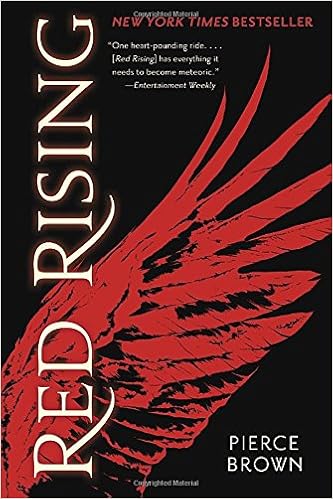
After getting through "Ready Player One" and "Origin," I started a series I've seen that's picked up in popularity a little bit lately called "Red Rising."

51o6CzgXwLL._SX331_BO1,204,203,200_.jpg


It's Sci-Fi, set in a future where Earth is essentially plague-ridden and useless, and society has reformed itself to a cast system where mobility is impossible. You are born to a "color," and to that color you will remain. Society now exists on Earth, but most of those in "The Society" populate various colonies on the Moon, Mars, various planetary moons, and some asteroid belts. Society is also based upon the traditions of ancient Greek and Roman society, where the "Gold" ruling class stands above all others as the rich and powerful. The naming conventions are pretty cool.

Anywho, the story focuses on a lowly Red named Darrow (the lowest of the colors). The Reds are the slaves of society, though the Gold ruling class calls them heroes. The Reds mine Helium3, an element crucial to the terraforming process, which will make Mars livable for society, and thus the Reds are crucial to the whole deal or space-living.

Darrow is a very gifted miner, a "Helldiver," who operates a clawDrill and mines Helium3 in large quantities, trying to ensure that his village, Lykos, is more prosperous than the other mining colonies on Mars. The colony that mines more each month wins the Laurel, and earns more food and rations for their colony.

Except, not everything is as it seems... so Darrow gets involved in some heavy shit, and has to find a way to infiltrate Gold society.

I finished the first book, which was great. The series itself is the sci-fi version of "The Count of Monte Cristo," which really tickles my fancy, because that's probably my favorite book, period.

The first book of Red Rising would take Edmund Dantes, and throw him into "The Hunger Games."

I'm reading the second book now, "Golden Son," which would take Edmund Dantes into a high-class space society, with a "Dune" or "Star Wars" skin thrown over top, where the ruling families and houses fancy themselves to be hot shit.

I highly recommend this series, and I'm not even halfway through it.
 
Last edited:

connor_in

Oh Yeeaah!!!
Messages
11,433
Reaction score
1,006
After getting through "Ready Player One" and "Origin," I started a series I've seen that's picked up in popularity a little bit lately called "Red Rising."

51o6CzgXwLL._SX331_BO1,204,203,200_.jpg


It's Sci-Fi, set in a future where Earth is essentially plague-ridden and useless, and society has reformed itself to a cast system where mobility is impossible. You are born to a "color," and to that color you will remain. Society is also based upon the traditions of ancient Greek and Roman society, where the "Gold" ruling class stands above all others as the rich and powerful. The naming conventions are pretty cool.

Anywho, the story focuses on a lowly Red named Darrow (the lowest of the colors). The Reds are the slaves of society, though the Gold ruling class calls them heroes. The Reds mine Helium3, an element crucial to the terraforming process, which will make Mars livable for society, and thus the Reds are crucial to the whole deal or space-living.

Darrow is a very gifted miner, a "Helldiver," who operates a clawDrill and mines Helium3 in large quantities, trying to ensure that his village, Lykos, is more prosperous than the other mining colonies on Mars. The colony that mines more each month wins the Laurel, and earns more food and rations for their colony.

Except, not everything is as it seems... so Darrow gets involved in some heavy shit, and has to find a way to infiltrate Gold society.

I finished the first book, which was great. The series itself is the sci-fi version of "The Count of Monte Cristo," which really tickles my fancy, because that's probably my favorite book, period.

The first book of Red Rising would take Edmund Dantes, and throw him into "The Hunger Games."

I'm reading the second book now, "Golden Son," which would take Edmund Dantes into a high-class space society, with a "Dune" or "Star Wars" skin thrown over top, where the ruling families and houses fancy themselves to be hot shit.

I highly recommend this series, and I'm not even halfway through it.

So, like next week?
 

Black Irish

Wise Guy
Messages
3,770
Reaction score
603
I was reading a book on the Battle of Lepanto and everything leading up to it, and was absolutely fascinated at the story of that siege. I might need to pick up that book for Lent...

One of the most intriguing aspects for me was the fact that the Knights of the Order were noblemen, essentially the 1 percent of their time. Instead of living in luxury these men dedicated themselves to being warriors of their faith, often to the death. Truly a different time.
 

zelezo vlk

Well-known member
Messages
18,013
Reaction score
5,055
One of the most intriguing aspects for me was the fact that the Knights of the Order were noblemen, essentially the 1 percent of their time. Instead of living in luxury these men dedicated themselves to being warriors of their faith, often to the death. Truly a different time.

Oh yeah, a lot of guys gave up a lot, heck that's the story of a ton of saints. Sts Francis, Thomas Aquinas, and Philip Neri all gave up comfortable lives to live humbly. And like you said, the military orders were giving up a ton to essentially go against a friggin' juggernaut. Heck, the first Crusade was like that too; many of the noblemen were putting themselves into debt just to go, and they knew they weren't gonna get rich.

Sorry, I love to rant on this stuff as history and the saints are pretty dope
 

ACamp1900

Counting my ‘bet against ND’ winnings
Messages
48,951
Reaction score
11,235
Starting Shaara's A Blaze of Glory, have had it for about a year but have just read other things...
 

Whiskeyjack

Mittens Margaritas Ante Porcos
Staff member
Messages
20,894
Reaction score
8,126
One of the most intriguing aspects for me was the fact that the Knights of the Order were noblemen, essentially the 1 percent of their time. Instead of living in luxury these men dedicated themselves to being warriors of their faith, often to the death. Truly a different time.

Oh yeah, a lot of guys gave up a lot, heck that's the story of a ton of saints. Sts Francis, Thomas Aquinas, and Philip Neri all gave up comfortable lives to live humbly. And like you said, the military orders were giving up a ton to essentially go against a friggin' juggernaut. Heck, the first Crusade was like that too; many of the noblemen were putting themselves into debt just to go, and they knew they weren't gonna get rich.

That's a pretty damning indictment of our current regime. Hierarchy is unavoidable; every society has always had and will always have an "elite" class that acts as a cultural vanguard. And what are our elites doing now? "Inventing" shittier versions of things that already exist and finding ways to make orgies boring. The Middles Ages definitely produced a better class of elite than liberalism ever has.
 

zelezo vlk

Well-known member
Messages
18,013
Reaction score
5,055
That's a pretty damning indictment of our current regime. Hierarchy is unavoidable; every society has always had and will always have an "elite" class that acts as a cultural vanguard. And what are our elites doing now? "Inventing" shittier versions of things that already exist and finding ways to make orgies boring. The Middles Ages definitely produced a better class of elite than liberalism ever has.
Are you trying to tell me that being a patron of such fine art as The Vagina Monologs is not on par with the Arena Chapel of Padua?

Sent from my SAMSUNG-SM-G900A using Tapatalk
 
Top