
You are using an out of date browser. It may not display this or other websites correctly.
You should upgrade or use an alternative browser.
You should upgrade or use an alternative browser.
What book(s) are you reading?
- Thread starter Veritate Duce Progredi
- Start date


Black Irish
Wise Guy
- Messages
- 3,770
- Reaction score
- 603
Just finished The Four Legendary Kingdoms by Matthew Reilly and getting ready to start If Chins Could Kill: Confessions of a B Movie Actor by Bruce Campbell
Campbell's book is a great read. He seems like he'd be a helluva guy to grab a beer with.


ACamp1900
Counting my ‘bet against ND’ winnings
- Messages
- 48,951
- Reaction score
- 11,234
Campbell's book is a great read. He seems like he'd be a helluva guy to grab a beer with.
Most Campbells are.........

- Messages
- 20,894
- Reaction score
- 8,126
Finished reading Sword of Destiny (the 2nd book of Witcher short stories) last night. Was even better than the first book. Would make you feel really bad about picking Triss over Yen or ever being mean to Ciri in the game, though.

- Messages
- 19,128
- Reaction score
- 11,077
How did Malazan hold up on a second read?
I think it was even better the second time. Despite losing the "impact" of knowing the twists and how the climax plays out, there is sooooooooo much that you pick up the second time through, both because you're familiar with the way the world works, and because there's just too much detail to catch the first time.
It makes it enjoyable to read something in GotM and go "hey, I know what that means now! And I know how that connects to the future of the series now, too!"
It's very rewarding.
Let us know what you think of the American Gods show. Although I liked the book, I found it a little disappointing because I felt it missed an opportunity to say something a bit more substantial about contemporary America. I'd be interested to know if the show does the book one better there.
My plans to binge-watch the show were foiled, but the first two episodes were faithful to the source material. Not earth-shattering, but good enough to watch if you liked the book.
As for the book itself, I really enjoyed it, but after separating from it a bit, I understand how you feel. There seems to be something missing, or incomplete, about the way the "New Gods" just kind of fade out (contemporary America just kind of fades out, rather than hitting us in the face with a lessn/theme). That probably has something to do with the twist (the one about *who* was leading the new gods), and the fact that Gaiman supposedly has plans for a sequel.
Gardens of the Moon is challenging because Erikson just tosses you in the deep end of his massive fantasy world. Deadhouse Gates is easier for the reason you mention above, and Memories of Ice is the best of the series. I've found that it's rare for someone to get through the 3rd book without finishing the series.
GotM is infinitely better upon a re-read. The story is wayyyy more thrilling when you have an idea of the things taking shape, and the introduction and first chapter go from "overwhelming" to "Masterpiece" when you have an appreciation for Whiskeyjack, Fiddler and Anomander Rake, and the powers that Anomander wields in the first battle scene.
I'd pay a lot of money for a ticket if GotM could be made into a movie (it can't), just to see that first battle between Rake and the Malazan mages now that I know the extent of the powers at work.
As for the best book, Memories of Ice actually moved down the list a few spots for me, personally, upon a re-read. Books like "Bonehunters" and "Toll the Hounds" moved up, on the other hand.
I tried to come up with rankings, but the re-read gave me enough appreciation for the books I didn't like as much the first time, that I'd feel bad having to rank any of them in the bottom 3 or so.
- Messages
- 20,894
- Reaction score
- 8,126
I'd pay a lot of money for a ticket if GotM could be made into a movie (it can't), just to see that first battle between Rake and the Malazan mages now that I know the extent of the powers at work.
The same was once said of LotR and ASoIaF. You never know.
As for the best book, Memories of Ice actually moved down the list a few spots for me, personally, upon a re-read. Books like "Bonehunters" and "Toll the Hounds" moved up, on the other hand.
I can believe that. But my reading list is long (and grows faster than I read), so I doubt I'll have time to read the 9,000 pages of Erikson's magnum opus again any time soon.

Emcee77
latress on the men-jay
- Messages
- 7,295
- Reaction score
- 555
Yeah, dudes, Deadhouse Gates was really good. What intriguing stuff.
I'm not a big fantasy reader, but it seems to me Erikson has a unique perspective on the genre, at least in my experience. I can't find too much about him in the way of journalistic or biographical profiles, but apparently he has some sort of anthropology/archaeology background? (He references being on an "archaeology dig" here.) It sure seems that way from his books. His world almost has a whole separate dimension from other fantasy books because of the depth of the historical backdrop. Sure, there is a sense in which time exists as a dimension in most fantasy universes (there is always some kind of mythological or legendary backdrop), but in Erikson's series that dimension is literally geological in scope, or at least can be described in such terms. It's really impressive. Also, fantasy worlds tend to have a few distinct races or cultures, but only a few; his has so many that it's tough to keep them all straight. The scope of the project is staggering.
And then there's this ... talking a few years ago of why he disliked Skyrim (same interview I linked above), Erikson said:
https://www.wired.com/2012/11/geeks-guide-steven-erikson/
Almost all the fantasy I've ever read has been apparently derived from Norse mythology or English or other northern European history. Erikson's stuff has echoes of that tradition, but it's largely different.
I'm not a big fantasy reader, but it seems to me Erikson has a unique perspective on the genre, at least in my experience. I can't find too much about him in the way of journalistic or biographical profiles, but apparently he has some sort of anthropology/archaeology background? (He references being on an "archaeology dig" here.) It sure seems that way from his books. His world almost has a whole separate dimension from other fantasy books because of the depth of the historical backdrop. Sure, there is a sense in which time exists as a dimension in most fantasy universes (there is always some kind of mythological or legendary backdrop), but in Erikson's series that dimension is literally geological in scope, or at least can be described in such terms. It's really impressive. Also, fantasy worlds tend to have a few distinct races or cultures, but only a few; his has so many that it's tough to keep them all straight. The scope of the project is staggering.
And then there's this ... talking a few years ago of why he disliked Skyrim (same interview I linked above), Erikson said:
But for me it ends up becoming too trope-driven — sort of the medieval, northern European kind of approach to things. Elves, dwarves, all that is stuff I’ve been actively writing against — well, not against, but that I’ve been ignoring, put it that way.
https://www.wired.com/2012/11/geeks-guide-steven-erikson/
Almost all the fantasy I've ever read has been apparently derived from Norse mythology or English or other northern European history. Erikson's stuff has echoes of that tradition, but it's largely different.
Last edited:
- Messages
- 19,128
- Reaction score
- 11,077
Also, fantasy worlds tend to have a few distinct races or cultures, but only a few; his has so many that it's tough to keep them all straight. The scope of the project is staggering.
And then there's this ... talking a few years ago of why he disliked Skyrim (same interview I linked above), Erikson said:
"But for me it ends up becoming too trope-driven — sort of the medieval, northern European kind of approach to things. Elves, dwarves, all that is stuff I’ve been actively writing against — well, not against, but that I’ve been ignoring, put it that way."
https://www.wired.com/2012/11/geeks-guide-steven-erikson/
Almost all the fantasy I've ever read has been apparently derived from Norse mythology or English or other northern European history. Erikson's stuff has echoes of that tradition, but it's largely different.
I think he's being a bit disingenuous when he says he "ignores" the usual tropes (and I don't mean it as a slight). I think he purposely uses those tropes against themselves to subvert expectations for the genre, as he does with the different races and cultures as well.
In most fantasy worlds, death is either final, or it is easily overcome based on certain laws. There usually isn't a middle ground. Erikson basically throws those ideas into chaos and finds a middle ground that most readers wouldn't respond to, but he makes it work. Some deaths ARE permanent and really hit you in the feels. Other deaths are almost surely going to be overcome, based on the context of the story and character. And still others don't fit any normal mold at all. It all falls back to unique historical and magical laws he's put in place, that even HE doesn't fully explain. It leaves a lot of mystery to be worked out in future works or prequels, and leaves other things for the reader to simply speculate. I like that.
As for the races, I like that the Andii (the elves) have the usual physical qualities (eternal life, weird about communities and the progression of time, physically and magically gifted), but they don't share the usual attitude that elves in other worlds usually have. His eleves are actually kind of close to the elves of Tolkien's works in terms of their dour nature about everlasting life, and in terms of how they struggle with the sense of a fading community, but Erikson's elves differ in that their motivations are ultimately separated from those views. They march on and follow their leaders as they need to, and their leaders makes decisions concerning the world, even though they don't really need to do so.
I also like that Erikson has taken his version of Orcs (the Jaghut) and made them so much deeper and more complex than just being the scary beasts that we traditionally know. They ARE orcs, and their physical descriptions point to that, but their literal characterization somehow avoids focusing overtly on those aspects, and instead focuses on their individual natures and powers. You could read the whole series thinking Jaghut are a wise, mysterious, very powerful humanoid race without connecting them to the traditional views of "Orcs" if Erikson didn't describe their tusks and green skin so often.
TL;DR
I like Erikson's world because you don't ever know what "death" might actually mean, and I also like that his elves (Andii) aren't pigeon-holed into the immortal finesse trope, and that his orcs (Jaghut) aren't simply scary-looking brutes and berserkers by nature.
- Messages
- 19,128
- Reaction score
- 11,077
Dan Brown has a new Robert Langdon novel out called "Origin"
May throw a wrench into my projected reading plans over the weekend. His books are usually fast reads for me (a day or two), but "Inferno" was a bit of a chore at times, and "The Lost Symbol" was a titanic struggle.
Hopefully he's back to form on this one.
May throw a wrench into my projected reading plans over the weekend. His books are usually fast reads for me (a day or two), but "Inferno" was a bit of a chore at times, and "The Lost Symbol" was a titanic struggle.
Hopefully he's back to form on this one.

woolybug25
#1 Vineyard Vines Fan
- Messages
- 17,677
- Reaction score
- 3,018
Dan Brown has a new Robert Langdon novel out called "Origin"
May throw a wrench into my projected reading plans over the weekend. His books are usually fast reads for me (a day or two), but "Inferno" was a bit of a chore at times, and "The Lost Symbol" was a titanic struggle.
Hopefully he's back to form on this one.
I’ve always read Dan Brown too. A lot of them I’ve just listened to on cds during road trips too, which I love. But totally agree with everything you said. I’ll read or listen to Origin too. Hope it’s a bounce back, cuz he has written some terrific stuff.

- Messages
- 20,894
- Reaction score
- 8,126
The Week's Matthew Walther just published an article titled "Dan Brown is a very bad writer":
I'm sure you'll all be shocked to learn that I agree with Walther. Dan Brown is a fedora-tipping hack.
To say that Dan Brown's Origin is one of the worst "thrillers" ever published would not be accurate. Not because it is not appallingly, insultingly, groan-inducingly written — it is — but because it is not, in fact, a thriller.
It would be hard to pinpoint the exact moment at which I made this discovery, but I would venture a guess that it was somewhere around chapter three. The clues, like the endless codes Brown's characters are doomed to chase fruitlessly around a version of Europe that rarely achieves a CIA World Factbook entry level of descriptive interest, are everywhere — hiding, as he might put it, in plain sight.
Robert Langdon, a professor in a non-existent field called "symbology" that seems mainly to consist of knowing things like what an ampersand is, is ostensibly Brown's dashingly cerebral but relatable hero. What he really is, though, is a stand-in for Brown himself. Every sentence in this book is imbued with Brown's fascinating perspective as a reasonably fit gazillionaire naif whose main hobbies seem to be high-end non-commercial aircraft and food. You can see it in the way he forces his characters to have thoughts like "Langdon had always enjoyed the challenge of modern art," a sentiment no one has ever expressed without a glass of shiraz and something highbrow, perhaps "18th-century composer" Ludwig van Beethoven, on the Bose.
(Yes, Brown really does seem to be under the impression that his readers will not have heard of this obscure figure. Ditto "Nicolaus Copernicus … the father of the heliocentric model — the belief that the planets revolve around the sun — which ignited a scientific revolution in the 1500s"; "Friedrich Nietzsche, the renowned 19th-century German philosopher and atheist"; and "Winston Churchill himself, the celebrated British statesman who, in addition to being a military hero, historian, orator, and Nobel Prize-winning author, was an artist of remarkable talent.")
Brown is also keen to remind us of Langdon's "faithful daily regimen of swimming laps" and dares us to believe that this shy 50-something academic is capable of performing spontaneous rib-crushing tornado kicks and spur-of-the-moment foe-stunning piledrivers.
Brown thinks that a "classicist" is someone who likes old things rather than a scholar of classical languages, that Harvard professors of subjects real or imaginary say things like "Nostradamus was the most famous prognosticator of all time," that it would cost untold billions to create a computer with the epoch-making ability to tell you what the Dow closed at on August 23, 1974, that there exists a "priceless manuscript," as opposed to a paperback book, entitled The Complete Works of William Blake, or that this or any manuscript has standard page numbers. Page numbers are in fact a major pitfall for Brown, at one point leading me to wonder how many books he has actually opened in his life, let alone read:
"It's a clever decoy."
"You've lost me," Langdon said, eyeing the painting.
"Edmond chose page 163 because it's impossible to display that page without simultaneously displaying the page next to it — page 162!" [Origin]
Reader: If you ever come across a book in which it is possible to "display" page 163 without also displaying page 162, write to the publisher. You are almost certainly due a refund of some kind, to say nothing of an explanation.
Brown is I daresay on much firmer ground when he sticks with telling us the make and model of well-nigh every vehicle driven by each character in the book, or when helpfully informing us on multiple occasions that the first of many helicopters in which his characters travel is an "EC145" (is that like an F-150?). His approach to describing a very large room is to compare it to "an airplane hangar" and to specify the square footage (34,000!). One character who has "collected a wide array of priceless impressionist and modern art" is also said to be the proud owner of "an oversized smartphone — one that he had designed and built to serve his own unique needs" and to enjoy having conversations "over a plate of short-rib crudo at Boston's Tiger Mama." '"White flip-flops are couture?'" asks the befuddled Langdon. "'Flip-flops?!'" cries his interlocutor. "'These are Ferragamo Guineas.'"
Let's be clear, though. Despite the exotic locales in which he insists on setting his books — Paris, Venice, Madrid, Barcelona — no one could ever accuse Brown of being a cosmopolitan. To him it seems perfectly reasonable that a stock English character should be named "Winston" and have a voice that sounds like Hugh Grant and say things like "Righto." (Thank goodness "Winston" turns out to be a robot.) When Brown wants a Muslim character to be from somewhere, he quickly settles on Dubai and shows no sign of regretting it even when it starts to make his chronology look iffy.
Once you have cracked the code, as it were, it all starts to seem obvious. The dust jacket is a tease. Origin is not a thriller. No writer honestly attempting to concoct one would dare to begin with several chapters of a man taking a guided tour of a museum complete with unevocative descriptions of each work of art and follow it up with such varied set pieces as a conversation in a boat, a conversation on a plane, and a conversation in a driverless Tesla SUV before settling in to two more long conversations in an apartment and an office building. There are no real chases here and only two gunshots. An author attempting to claim the mantle of Robert Ludlum, however incompetent, would never interrupt what almost amounts to a tense chapter with such bizarre interior monologue fare as "Atheists now have their own baseball caps?" or, in the middle of a helicopter search, interrupt the parody of an action scene taking place to inform us that Spanish police helmets might have inspired those worn by the Stormtroopers in Star Wars. No actual writer of this kind of fiction would ever compose any of the following sentences and paragraphs (taken at random and willfully ignoring many similar offerings):
The Dawkins classic The Blind Watchmaker forcefully challenged the teleological notion that human beings — much like complex watches — could exist only if they had a "designer." Similarly, one of Dennett's books, Darwin's Dangerous Idea, argued that natural selection alone was sufficient to explain the evolution of life, and that complex biological designs could exist without help from a divine designer. [...]
The holy seat of the Roman Catholic Archdiocese of Madrid — Catedral de la Almudena — is a robust neoclassical cathedral situated adjacent to Madrid's Royal Palace. Built on the site of an ancient mosque, Almudena Cathedral derives its name from the Arabic al-mudayna, meaning "citadel." [...]
Madrid's Palacio Real is Europe's largest royal palace as well as one of its most stunning architectural fusions of classical and baroque styles. Built on the site of a ninth-century Moorish castle, the palace's three-story facade of columns spans the entire 500-foot width of the sprawling Plaza de la Armería on which it sits. The interior is a mind-boggling labyrinth of 3,418 rooms that wind through almost a million and a half square feet of floor space. The salons, bedrooms, and hallways are adorned with a collection of priceless religious art, including masterpieces by Velázquez, Goya, and Rubens. [Origin]
How many rooms again?
Nor would the most plodding and tired hack, as opposed to a quasi-professional soul searcher, write dialogue like this: "'The human brain,' Edmond declared. 'Why does it believe what it believes?'" (Thank goodness Brown gets around the problem of writing conversations that sound like they could possibly have been spoken by human beings via the nifty device of putting approximately one-third of the book's dialogue in the mouth of a talking computer.) A few chapters later, we come to what would appear to be a crisis, a moment of extraordinary tension and gravity, with Langdon standing indecisively like Indiana Jones over the gaping chasm into which the Holy Grail has just fallen. "'Robert,' Ambra whispered, 'just remember the wise words of Disney's Princess Elsa.' Langdon turned. 'I'm sorry?' Ambra smiled softly. 'Let it go.'" (The "it" in question is Langdon's cellphone.)
Nor, finally, would anyone who is not going out of his way to subvert the very notion of suspense as a factor that might conceivably motivate us to turn pages attempt even as a joke what must be the most banal chapter-ending cliffhanger in the history of fiction: "'This getaway car was hired,' Langdon said, pointing to the stylized U on the windshield. 'It's an Uber.'" Nor would he dream of opening the next chapter by announcing that a police officer has responded to this utterance with "a look of wide-eyed disbelief" at "the quick decryption of the windshield sticker." Decryption! Code-breaking! Rare feats of professorial intellect, like knowing what corporate logos are! Imagine what further wonders Langdon might perform if only his creator allowed him to visit a certain international hamburger chain or glance down at the anagogic white fruit staring up from the bottom of his cellphone. (Unimprovably, Brown follows up this masterclass in symbology from Langdon by noting himself that "Uber's ubiquitous 'on-demand driver' service had taken the world by storm over the past few years. Via smartphone, anyone requiring a ride could instantly connect with a growing army of Uber drivers who made extra money by hiring out their own cars as improvised taxis.") If this guy is trying to write thrillers, then this article is actually a piece of SpongeBob Squarepants fan fiction.
Whatever else you want to say about Brown, he is certainly a memorable writer. He takes what might be charitably described as a loose view of the relations between nouns and verbs, subjects and predicates, between words in general. He prefers his metaphors shaken and stirred, sluiced, juiced, and served as a teeming froth of impossibilities: We learn of a "collage" of "symbols" that, he tells us, "flooded the sky" (how could you make them out with all the waves crashing above your head?), a purportedly controversial lecture being compared to "a flaming spear" tossed "into a hornets' nest" (so that when it falls in addition to having pissed-off hornets you can burn your lawn?). Taking no heed of such would-be pressing concerns as making us care about his protagonists or their missions, he instead goes out of his way to specify, inter alia, that Luis Ávila is a "navy admiral" (as opposed to the army or an air force kind, presumably) and that a character who is not smoking has just "exhaled," of all things, "a breath."
Instead he writes sentence after sentence that will elicit a groan from any moderately educated reader but which probably seemed quite plausible to the author, viz., "Langdon had tasted Montrose only once, in an ancient secret wine cellar beneath Trinity College Dublin, while he was there researching the illuminated manuscript known as The Book of Kells." There are indeed wine cellars in most universities in the British Isles, but they are hardly secret, being opened on numerous formal and informal occasions, their contents shared even with undergraduates. And why would Langdon go all the way to Ireland to see this medieval copy of the Gospel when anyone can access a facsimile of it online or purchase a printed one with a detailed scholarly apparatus? Is he a textual critic now rather than a vague generalist? No, but it's a book with "symbols" in it, you see, and a chance to use the words "ancient" and "secret" in the same sentence.
The novel's most crucial scene is the stunning almost-but-not-quite-too-late moment when, having reached as far as he can into the depths of his (as is repeatedly impressed upon us) encyclopedic memory, it dawns upon Langdon, purportedly a member of the Harvard humanities faculty, that "Blake was not only an artist and illustrator … Blake was a prolific poet." Bingo? This is like saying that John Carpenter is not only a composer of synthesizer music, he is also the director of such classic films as Halloween and The Thing.
What makes Brown such an enticing specimen is that this former high-school English teacher never gives you the impression of having encountered, much less absorbed, the most elementary rule of prose writing, one that is being repeated manta-like in classrooms as you read this — namely, "Show, don't tell." Brown is incapable of showing. (He is no great shakes as a teller either.) This is how it is possible for him to give us a man who has just witnessed the murder of a friend feeling this in his heart of hearts: "There will be time to mourn, Langdon told himself, fighting back intense emotion. Now is the time for action." This is why Brown also resorts to marketing language ("ultrasleek office space"), why he opens chapters with obvious pastiches of websites like WorldforTravel.com, why his idea of describing architecture is to visit the Wikipedia page for a building and quote all the accolades compiled there and borrow without attribution the description from a New Yorker article that he later decides to quote directly after all. Elsewhere, we are told, "Langdon's eidetic memory quickly conjured the alchemical symbol for amalgamation." Is this how memories work, eidetic or otherwise? I find it difficult to believe that anyone whose ears are accustomed to the rhythms of English, written or spoken, could write of a character's hope "to move past her dark past." How did this make it on the page? Are Brown's editors intentionally trying to sabotage him?
There is one more thing worth pointing out about Brown: For a writer whose plots tend to settle in the obscure byways of religion, he seems remarkably unaware of even the most critical and well-known facts about his chosen subject. There is, in fact, scarcely a sentence in the book bearing upon the Roman Catholic Church that is free of error. (To mention three examples among dozens: There is no such office in the Catholic Church as "head priest" or "presiding clergyman;"; laypeople do not read the Gospel at Mass, nor are the readings themselves chosen at random by the celebrant.) Would it have been totally beyond the resources of the world's largest publishing concern to correct Brown's errors in a book whose first page contains a pompous disclaimer attesting to the "truth" of all the novel's religious content and whose final pages contain his no-doubt sincere acknowledgement of generous assistance from dozens of editors, researchers, and fact-checkers?
Brown's howlers are insulting in themselves, but they point to a larger issue, namely his own absurdly condescending view of religion and its adherents. Brown clearly thinks that religious people confronted by a weirdo tech entrepreneur in black jeans who says that his secret computer program "proves" that God does not exist would murder him with bullets from a 3D-printed gun concealed inside a gigantic metal rosary (yes!) rather than smile blandly and walk to the other side of the street. Christians hear such preposterous claims every day, though usually from people who don't talk like this: "'Do you hear that sound?' Edmond called over the booming rapids. 'That is the inexorable swelling of the River of Scientific Knowledge!'" Somebody save us from drowning.
Dan Brown is a truly terrible writer. But I would be lying if I said I hated reading Origin. I did not. Few books have ever given me a more vivid impression of the writer or struck me more with the force of their truthfulness. The present volume provides as clear a window into its author's soul as the Confessions of St. Augustine or Proust's Remembrance of Things Past. This was hardly what I expected, but that's what happens sometimes when you open books, including those with both left and right-hand pages.
I'm sure you'll all be shocked to learn that I agree with Walther. Dan Brown is a fedora-tipping hack.

greyhammer90
the drunk piano player
- Messages
- 16,837
- Reaction score
- 16,111
Every October I like to read at least one horror book I've never read. This year its "The Haunting of Hill House" by Shirley Jackson. So far it hasn't gotten to the "good stuff" but I'm enjoying the sense of dread.
- Messages
- 19,128
- Reaction score
- 11,077
The Week's Matthew Walther just published an article titled "Dan Brown is a very bad writer":
I'm sure you'll all be shocked to learn that I agree with Walther. Dan Brown is a fedora-tipping hack.
His dialogue isn't genius, everyone knows that. He writes Langdon like GRRM writes Samwell Tarley... he sees himself as that character, using the book as make-believe for his own longing for adventure.
HOWEVER. I think Angels and Demons is a legitimately good story, regardless of its inaccuracies and embellishments. Brown does a better job of building and describing the action like an author is supposed to, treating it like an actual novel (though a bit episodic), rather than just trying to fantasize about himself thrown into a historical conspiracy like he does in other books.
Da Vinci Code isn't quite as good, but it's an entertaining thriller if you aren't overly offended by the conspiracy theories centering around "sangreal."
And I love a good conspiracy, so I really like Brown's first two novels.
"The Lost Symbol" was terrible, and "Inferno" was boring.
I do like that Langdon has a new, young, hot love interest in every story. Brown's books are like the elevated and historical-conspiracy versions of those terrible romance novels that old ladies read.
- Messages
- 20,894
- Reaction score
- 8,126
Brown's books are like the elevated and historical-conspiracy versions of those terrible romance novels that old ladies read.
That's a good observation. Carl Olson of the Catholic World Report recently published an "interview" with Chesterton about Brown's books, because many of Chesterton's contemporary opponents espoused a worldview very similar to Brown's (meaning that all the quotes are genuine, and very applicable to Brown, but were not written specifically with him in mind).
I'm sure you can understand why I find him annoying: (1) he takes a very dim view of religion; (2) he singles out the Roman Catholic Church for special condemnation; and (3) his books all contain a foreword asserting as "fact" a lot of utter nonsense and half truths. Brown is basically Jack Chick reincarnated as a bourgie hack of an author.
ACamp1900
Counting my ‘bet against ND’ winnings
- Messages
- 48,951
- Reaction score
- 11,234
I actually liked Da Vinci Code for what it was, a fast paced, easy to read but nonetheless entertaining book. I have never been able to finish anything else of Brown. Not hard to tell why a strong Catholic would not enjoy him, as Whiskey has pointed out.
Emcee77
latress on the men-jay
- Messages
- 7,295
- Reaction score
- 555
Ugh Dan Brown is terrible but I liked Angels & Demons and the DaVinci Code because they were enjoyable ways to learn more about religious art and symbols, although obviously you have to take everything with big grains of salt. I've read that David Foster Wallace used to read Tom Clancy novels in a similar way: they may not be Literature but they are an an interesting way to learn a few things about espionage and defense intelligence. I find that really inspiring. If DFW can read light fiction without thinking too deeply about it and being turned off by the parts that are shitty, then I can do that too. It kind of opened a whole new world for me.
- Messages
- 19,128
- Reaction score
- 11,077
Ugh Dan Brown is terrible but I liked Angels & Demons and the DaVinci Code because they were enjoyable ways to learn more about religious art and symbols, although obviously you have to take everything with big grains of salt. I've read that David Foster Wallace used to read Tom Clancy novels in a similar way: they may not be Literature but they are an an interesting way to learn a few things about espionage and defense intelligence. I find that really inspiring. If DFW can read light fiction without thinking too deeply about it and being turned off by the parts that are shitty, then I can do that too. It kind of opened a whole new world for me.
Right, sometimes you can read simply for page-to-page entertainment. It’s good to decompress from more strenuous reading from time to time with a good smut novel (Dan Brown is high class smut, IMO).
- Messages
- 19,128
- Reaction score
- 11,077
Just finished “Ready Player One” by Ernest Cline, in anticipation of the film dropping in March.
I really enjoyed it. It’s basically nerd fan service for its entirety, set around a dystopian-ish future (which is wild, because it’s a future that Verizon would totally love, and isn’t totally unbelievable).
Most of the sweet-spot stuff in terms of the games/movies/tv/music was before my time, via the 80’s (I’m a 90’s kid), but I’m well-versed enough as a geek that it didn’t reduce the enjoyment at all, and I still appreciated most of the references.
Really, really nerdy and enjoyable take on the “grail quest” genre.
11/10, would recommend to nerds.
I really enjoyed it. It’s basically nerd fan service for its entirety, set around a dystopian-ish future (which is wild, because it’s a future that Verizon would totally love, and isn’t totally unbelievable).
Most of the sweet-spot stuff in terms of the games/movies/tv/music was before my time, via the 80’s (I’m a 90’s kid), but I’m well-versed enough as a geek that it didn’t reduce the enjoyment at all, and I still appreciated most of the references.
Really, really nerdy and enjoyable take on the “grail quest” genre.
11/10, would recommend to nerds.
- Messages
- 19,128
- Reaction score
- 11,077
Picked up The Godfather... why not...
I like that one. There are a few strange parts, but it’s pretty good overall.
If you like it, try “The Sicilian” after that, also by Puzo. It was better, IMO, but perhaps that’s only because it was a totally new story to me.
It’s considered a loose sequel to “The Godfather,” but it’s really not... it just shares a character or two.

loomis41973
Banned
- Messages
- 4,055
- Reaction score
- 203
Late to the game, but...
The Subtle Art of Not Giving a F*ck.
Fantastic
The Subtle Art of Not Giving a F*ck.
Fantastic

ickythump1225
New member
- Messages
- 4,036
- Reaction score
- 323
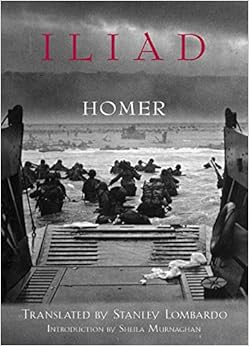
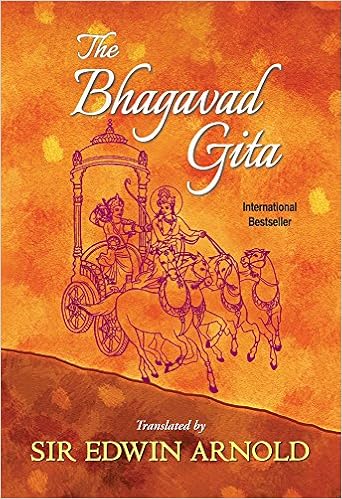

greyhammer90
the drunk piano player
- Messages
- 16,837
- Reaction score
- 16,111
Whiskey, did you ever read The Name of the Wind?
Alternate title: "Kvothe is so cool you guys don't even know"

Veritate Duce Progredi
A man gotta have a code
- Messages
- 9,358
- Reaction score
- 5,352
How are you moving through the Bhagavad Gita? I tried and it was terribly difficult, like going through the Old Testament where the lineages are given. Therein lies meaning but I need a guide or additional info to understand the significance.
I pushed through, maybe 1/2 and then stopped. Never went back but wouldn't mind finding a "study guide".
- Messages
- 19,128
- Reaction score
- 11,077
Anybody read Origin by Dan Brown yet?
I finished it a week ago and took some time to stew on it.
I thought it was entertaining from start to finish, and felt less episodic than Inferno and The Lost Symbol. It was a solid narrative taking place over the course of about a day and a half, and felt like one long thrill-ride.
I thought some of the transition chapters were kind of weak, and Dan Brown REALLY needs to work on his sense of how blogs and social media work these days, but those were minor obstacles to what I thought was a pretty well-written adventure.
The story's narrative is driven by a famous/never-wrong futurist discovering the answers to two of the world's fundamental questions:
1. Where do we come from?
2. Where are we going?
He sets up a big event to reveal the answers that he has discovered, knowing that the answers will effectively destroy religion as we know it... if the answer has explicit evidence, then the answer likely isn't "we come from God, and will return to God."
Yadda yadda yadda, story story story, BOOM! SHOCKING BIG REVEAL IS SHOCKING!
The big reveal wasn't bad, and not a letdown based on the buildup, but it wasn't earth-shattering like I thought it would be, either. I also doubt that it would actually have a profound effect on the world's religions at all, based on how it's presented and explained.
The "reveal" answers some fundamental questions that may refute religions and some of their beliefs, but it also leaves a big aspect of religion not just unanswered, but totally unaddressed... and I don't think it was intentionally left open for interpretation or something like that. I just think Dan Brown failed to think things through all the way, and didn't realize there was a massive hole in his narrative and the basis for the "big reveal."
Despite what seems to be a glaring issue with a central aspect of the book, I still thought it was very enjoyable, and the "big reveal" gives the reader some big things to chew on besides just the religious stuff. The narrative was tight and action-packed, and the chapters that begin as history lessons aren't totally unbearable.
IrishLion's Definitive Robert Langdon Adventure Rankings:
1. Angels and Demons
2. The DaVinci Code
3. Origin
4. Inferno
5. Steaming Pile of Shit That I Refuse to Name
I finished it a week ago and took some time to stew on it.
I thought it was entertaining from start to finish, and felt less episodic than Inferno and The Lost Symbol. It was a solid narrative taking place over the course of about a day and a half, and felt like one long thrill-ride.
I thought some of the transition chapters were kind of weak, and Dan Brown REALLY needs to work on his sense of how blogs and social media work these days, but those were minor obstacles to what I thought was a pretty well-written adventure.
The story's narrative is driven by a famous/never-wrong futurist discovering the answers to two of the world's fundamental questions:
1. Where do we come from?
2. Where are we going?
He sets up a big event to reveal the answers that he has discovered, knowing that the answers will effectively destroy religion as we know it... if the answer has explicit evidence, then the answer likely isn't "we come from God, and will return to God."
Yadda yadda yadda, story story story, BOOM! SHOCKING BIG REVEAL IS SHOCKING!
The big reveal wasn't bad, and not a letdown based on the buildup, but it wasn't earth-shattering like I thought it would be, either. I also doubt that it would actually have a profound effect on the world's religions at all, based on how it's presented and explained.
The "reveal" answers some fundamental questions that may refute religions and some of their beliefs, but it also leaves a big aspect of religion not just unanswered, but totally unaddressed... and I don't think it was intentionally left open for interpretation or something like that. I just think Dan Brown failed to think things through all the way, and didn't realize there was a massive hole in his narrative and the basis for the "big reveal."
Despite what seems to be a glaring issue with a central aspect of the book, I still thought it was very enjoyable, and the "big reveal" gives the reader some big things to chew on besides just the religious stuff. The narrative was tight and action-packed, and the chapters that begin as history lessons aren't totally unbearable.
IrishLion's Definitive Robert Langdon Adventure Rankings:
1. Angels and Demons
2. The DaVinci Code
3. Origin
4. Inferno
5. Steaming Pile of Shit That I Refuse to Name
Last edited: