Bishop2b5
SEC Exchange Student
- Messages
- 9,251
- Reaction score
- 6,495
I'll take a stab at it. Mike knows more about this than I do, so he can correct me if I'm wrong.Same here. If anybody who has knowledge can do an "Explain like I'm 5 years old" on how they do this, I'd be interested to read it. I would assume it has to be related to light refraction since light is the only thing reaching us from that distance but how you would use that to determine the amount of a particular molecule from hundreds of LYs away is lost on me.
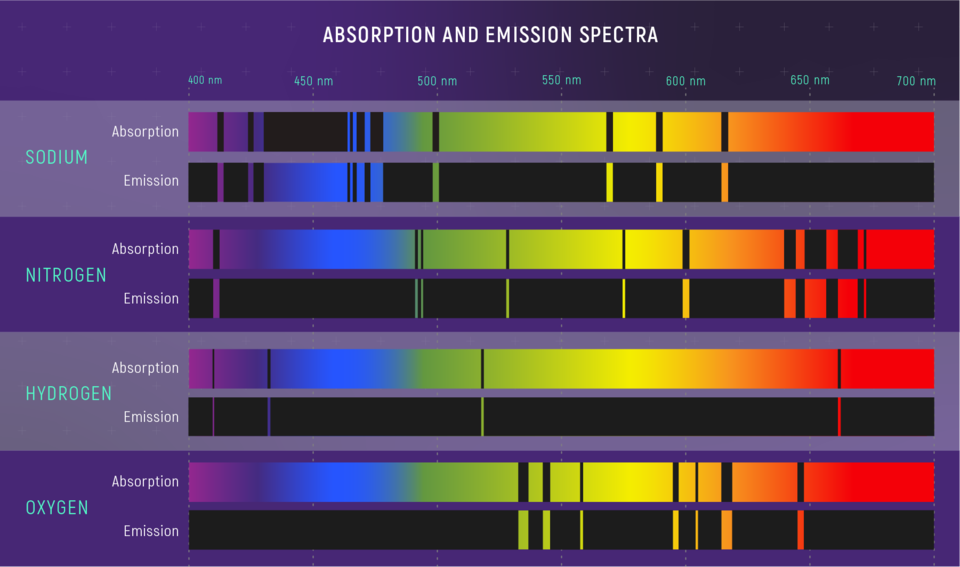
It's done by analyzing the light that passes through the distant planet's atmosphere as it passes in front of its star. That light is collected by a telescope such as the James Webb, then split into its various wavelengths, just like a prism splitting a beam of light into a broad band of colors. Different chemicals in the atmosphere of the planet will absorb certain very narrow bands of the light and produce dark stripes in the spread out band of light, looking a bit like a bar code on a can of soup. By knowing what patterns in the bar code correspond to different elements or compounds, you can then tell what elements or compounds are in that planet's atmosphere and absorbing the starlight passing through it.
It seems hard to believe that we can see that precisely over several light years, but apparently we can. Below is an example of what it looks like.
Last edited: