
You are using an out of date browser. It may not display this or other websites correctly.
You should upgrade or use an alternative browser.
You should upgrade or use an alternative browser.
Travel
- Thread starter Legacy
- Start date


NorthDakota
Grandson of Loomis
- Messages
- 15,705
- Reaction score
- 6,006
I hear Canadians enjoy crude fart jokes and have funny looking heads and smell of cabbage.
Their cars have square tires.

IrishinSyria
In truth lies victory
- Messages
- 6,046
- Reaction score
- 1,924
So when I first joined this site I was living in Syria. I spent a lot of time there and in Lebanon and Jordan. It was all amazing, but I can't in good faith recommend Lebanon or Syria at the moment.
Here are a few of my favorite trips:
1 week
Slovenia. Day or two in Ljubljana, stay at a vineyard for another two days, enjoy Lake Bled, and see some caves. If you've been to Europe and have seen the great Imperial cities like Paris and Vienna, Slovenia's a great off the beaten path destination and it's gorgeous. If you have more time, I've heard great things about Croatia.

Lake Bled
Jordan
Jordan might be the ideal 1 week destination. If you have two weeks, Jordan+Israel is a trip off a lifetime. Israel's more well covered, so I'll focus on the highlights of Jordan.
Amman- Probably the least interesting of its regional peer cities (Beirut, Damascus, Cairo, Jerusalem) but worth seeing nonetheless. While your there, take the time to visit Madaba and Mt. Nebo- ideally on the way to a day's stay at a resort on the dead sea. Outside Amman, Jordan gets way more interesting. Absolute highlights are Petra (there's a reason it's one of the best wonders in Civ 5) and Wadi Rum- famous for it's stunning landscape and for it's role as a wintering ground for T.E. Lawrence during WW1. Spend the night in a bedouin camp at wadi rum if you want the full experience. Finally, Aqaba is a neat stop both because of it's proximity to Egypt, Saudi, and Israel and because of the great snorkeling to be found in the Red Sea (though if you're into that you should probably get to Sharm el-Sheikh in Egypt).
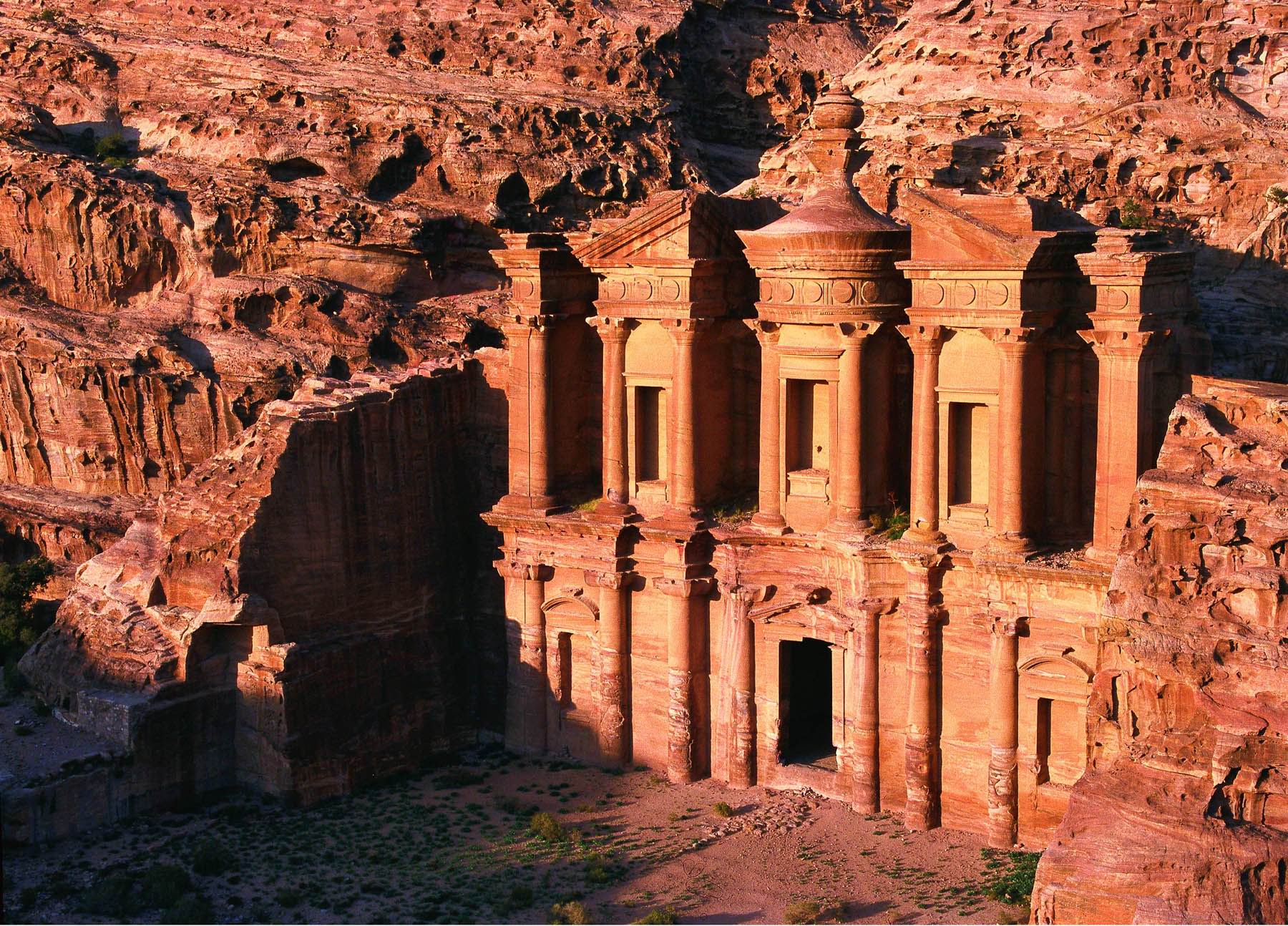
Petra
I'll post my two week recommendations (Morocco and the Baltic States) if I get time and there's interest.
Here are a few of my favorite trips:
1 week
Slovenia. Day or two in Ljubljana, stay at a vineyard for another two days, enjoy Lake Bled, and see some caves. If you've been to Europe and have seen the great Imperial cities like Paris and Vienna, Slovenia's a great off the beaten path destination and it's gorgeous. If you have more time, I've heard great things about Croatia.
Lake Bled
Jordan
Jordan might be the ideal 1 week destination. If you have two weeks, Jordan+Israel is a trip off a lifetime. Israel's more well covered, so I'll focus on the highlights of Jordan.
Amman- Probably the least interesting of its regional peer cities (Beirut, Damascus, Cairo, Jerusalem) but worth seeing nonetheless. While your there, take the time to visit Madaba and Mt. Nebo- ideally on the way to a day's stay at a resort on the dead sea. Outside Amman, Jordan gets way more interesting. Absolute highlights are Petra (there's a reason it's one of the best wonders in Civ 5) and Wadi Rum- famous for it's stunning landscape and for it's role as a wintering ground for T.E. Lawrence during WW1. Spend the night in a bedouin camp at wadi rum if you want the full experience. Finally, Aqaba is a neat stop both because of it's proximity to Egypt, Saudi, and Israel and because of the great snorkeling to be found in the Red Sea (though if you're into that you should probably get to Sharm el-Sheikh in Egypt).
Petra
I'll post my two week recommendations (Morocco and the Baltic States) if I get time and there's interest.
Last edited:
That's like saying America is shit and quoting Nebraska as your reference...
You do realize that most of the modern world think that average Americans, like yourself, are short-sighted ignorants. You're not really helping your cause here...
Hey, take it easy Pasquinel. No one said Canada had nothing going for it. For instance, James "Logan" Howlett is from Canada right? Wait, he's a fictional character? Ok, I've got nothing then.
IrishinSyria
In truth lies victory
- Messages
- 6,046
- Reaction score
- 1,924
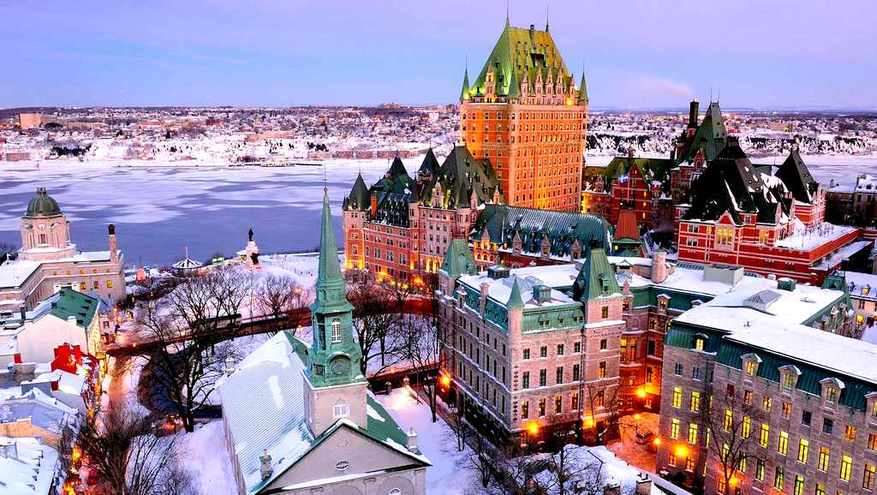
Quebec would be a top-tier long weekend trip. Haven't been there forever so I won't do highlights, but it's tough to believe that this is in North America:

zelezo vlk
Well-known member
- Messages
- 18,012
- Reaction score
- 5,055
I can second Slovenia. Unbelievably gorgeous.
Also Canada is great. How can a country that invented poutine be awful?
Sent from my SAMSUNG-SM-G900A using Tapatalk
Also Canada is great. How can a country that invented poutine be awful?
Sent from my SAMSUNG-SM-G900A using Tapatalk
I can second Slovenia. Unbelievably gorgeous.
Also Canada is great. How can a country that invented poutine be awful?
Sent from my SAMSUNG-SM-G900A using Tapatalk
https://www.historicacanada.ca/blog/poutine-not-good/
I would stick with the square tires thing, that's actually pretty cool.
Last edited:
zelezo vlk
Well-known member
- Messages
- 18,012
- Reaction score
- 5,055
French fries gravy and cheese is delicious.
Sent from my SAMSUNG-SM-G900A using Tapatalk
Sent from my SAMSUNG-SM-G900A using Tapatalk

Sherm Sticky
The Prophet
- Messages
- 19,321
- Reaction score
- 1,638
In Saskatoon Canada at the moment. Seems pretty chill so far.
Sent from my iPhone using Tapatalk
Sent from my iPhone using Tapatalk

aubeirish
Well-known member
- Messages
- 3,601
- Reaction score
- 149
https://www.historicacanada.ca/blog/poutine-not-good/
I would stick with the square tires thing, that's actually pretty cool.
I don't know if Toronto is the best place to have poutine... It's mainly a French Canadian thing. Best ones are usually found in small villages/towns or at cheese factories across the province of Quebec. The thing about curd cheese is that it doesn't take too long until it goes bad, so it has to be fresh to be really good.
I'm more of a burger guy myself, but it's cool to have both(burger + poutine) together every now and then.

calvegas04
Well-known member
- Messages
- 11,881
- Reaction score
- 8,468
Just started working at Expedia today.... mad travel discounts

gkIrish
Greek God
- Messages
- 13,184
- Reaction score
- 1,004
Just started working at Expedia today.... mad travel discounts
Hook a brother up.

Fbolt
I've been around
- Messages
- 6,932
- Reaction score
- 2,254
Any travel in South America and in Africa?
Yes.
Last edited:
Sherm Sticky
The Prophet
- Messages
- 19,321
- Reaction score
- 1,638
I can second Slovenia. Unbelievably gorgeous.
Also Canada is great. How can a country that invented poutine be awful?
Sent from my SAMSUNG-SM-G900A using Tapatalk
https://www.historicacanada.ca/blog/poutine-not-good/
I would stick with the square tires thing, that's actually pretty cool.
French fries gravy and cheese is delicious.
Sent from my SAMSUNG-SM-G900A using Tapatalk
Had my first ever poutine tonight. I did not like it one bit at all zelezo. The cheese curds are just not my thing. I got the tradition poutine. The place I went to had many different toppings. I'll give it a shot one more time when I'm here next...chicken bacon ranch is what I'll try next time.
Sent from my iPhone using Tapatalk
zelezo vlk
Well-known member
- Messages
- 18,012
- Reaction score
- 5,055
Well that's sad. I love that stuff, but yeah if you don't like cheese curds, you just won't enjoy it.Had my first ever poutine tonight. I did not like it one bit at all zelezo. The cheese curds are just not my thing. I got the tradition poutine. The place I went to had many different toppings. I'll give it a shot one more time when I'm here next...chicken bacon ranch is what I'll try next time.
Sent from my iPhone using Tapatalk
Sent from my SAMSUNG-SM-G900A using Tapatalk

CanadianIrishFan306
Canadian Navy Seals
- Messages
- 690
- Reaction score
- 77
In Saskatoon Canada at the moment. Seems pretty chill so far.
Sent from my iPhone using Tapatalk
Hope you enjoy your time man. I'm out of the city right now but I think the weather has been decent for late October and the snow is gone. The local University plays a football game tonight vs Alberta that might be interesting for you to watch if you have warm clothes. We don't usually get big crowds but its a good time.
Also I don't understand how a guy from Montana can chirp Canada. Unless he was kidding
NorthDakota
Grandson of Loomis
- Messages
- 15,705
- Reaction score
- 6,006
Hope you enjoy your time man. I'm out of the city right now but I think the weather has been decent for late October and the snow is gone. The local University plays a football game tonight vs Alberta that might be interesting for you to watch if you have warm clothes. We don't usually get big crowds but its a good time.
Also I don't understand how a guy from Montana can chirp Canada. Unless he was kidding
Montana....where men are men...and sheep are nervous
C
Cackalacky
Guest
Just started working at Expedia today.... mad travel discounts
What can you do for unlimited reps from?
For the adventurous, I recommend Peru. Definitely go to Cusco, and hang there. Macchu Picchu is a day trip (but stay there extra time if able, outside the ruins). You can also take a train to Puno and check out the Lake Titicaca area. Or, if jungle is your thing, Iquitos in the Amazon offers fishing and sights from another world.
Lima is OK, just too big and cluttered. Andes weather is wet or dry. Coast is opposite as US (summer is winter, etc.). Jungle is warm, humid, rain.
Lima is OK, just too big and cluttered. Andes weather is wet or dry. Coast is opposite as US (summer is winter, etc.). Jungle is warm, humid, rain.
Montana....where men are men...and sheep are nervous
... of men in cowboy boots.
Greece
Greece
Greece has the wonders of some of best beaches, its beautiful islands with crystal clear blue waters plus the history and culture that abounds, especially in Athens. Yet Greece is more than what the tour boats and packages provide. You have to spend some time in Athens, and you can book a hotel that looks out onto the Acropolis and the Parthenon. The Acropolis and its museum can be packed. In addition to monuments, sculptures and mythology, it's easy to walk to markets, restaurants, shops, museums as well as access to other areas and neighborhoods via taxi or subway. Go up the west coast and visit some of their islands on the Ionian Sea, especially Corfu, with a history of being ruled by many European countries that are reflected in their architecture and food, e.g. Italian, French, and English.
Greece also has many reminders of all the civilizations that have conquered her - Roman Agoras and bridges, the Byzantine Empire, Ottoman churches, mosques as well as churches of the Greek Orthodox Church. Beautiful Byzantine icons. The Western coast with its many islands and clear warm waters for swimming, snorkeling or scuba diving is worth the trip. Temples and theaters and remains of city-states - Dodoni, Delphi, Philippi and more - are well worth visiting and bring back thoughts of Greek theater both drama and comedy, oracles, Philip the Second, his son, Alexander the Great, who was tutored by Aristotle.
A great trip is in north central Greece - the Zagori region in Epirus - with a huge national park for hiking and kayaking in season. Mountainous with rivers and lakes worth exploring and one of the deepest gorges in the world. The tourist crowd is lower. The Greeks there are very welcoming and Europeans of all nationalities are exploring the area more. Greek food was terrific wherever you go with each region serving up its traditional foods. Tipping is not traditional and many places will serve you multiple courses, so meals are more leisurely and you may fill up quickly if not eating wisely.
Thessaloniki on their eastern coast and nearby Kavala is a return to a small modern metropolis with an active commercial sector. Paul preached in eastern Greece. Thessaloniki is also very walkable and has an atmosphere and population that reflects a recognized university. (Greek students per their constitution can protest in their squares - and often may.)
The vast majority of Greeks, despite their troubles, are very friendly, proud of their country and convey a warmth to the visitor. Serial tax increases to pay off the national debt which grew after the recession as well as the Olympic debt have eaten into retirees' incomes as well as business owners' profits. (One small bed and breakfast owner in Zagori measured his success by the fact he could now pay off his taxes and have a profit.) Thirty percent of Greek children are hungry with food challenges, and suffering malnutrition. The Greek wealthy have avoided paying taxes for a long time, with the current government reviewing documents and recovering a good portion of the amount evaded. Much of foreign business has left Greece with many abandoned buildings since the average Greek has little disposable income. University students on graduation often will work abroad in other European Union countries since the job market for their degrees is poor. Then there is the burden of immigrants and refugees, while many millionaires and billionaires now think of relocating. Yet the Greeks overall feel that providing some services and places immigrants can live is an expression of their values despite the drain on the cost of the services provided. With all the success the current government has had in bringing in more tourist dollars, in meeting debt financing goals, in recovering tax evasion monies while not increasing taxes, the current political mood is turning to a conservative view.
But Greece is a great place to visit. Spend at least one week traveling, preferably two, and you will be well rewarded.
The Greek Reporter (News)
Greece
Greece has the wonders of some of best beaches, its beautiful islands with crystal clear blue waters plus the history and culture that abounds, especially in Athens. Yet Greece is more than what the tour boats and packages provide. You have to spend some time in Athens, and you can book a hotel that looks out onto the Acropolis and the Parthenon. The Acropolis and its museum can be packed. In addition to monuments, sculptures and mythology, it's easy to walk to markets, restaurants, shops, museums as well as access to other areas and neighborhoods via taxi or subway. Go up the west coast and visit some of their islands on the Ionian Sea, especially Corfu, with a history of being ruled by many European countries that are reflected in their architecture and food, e.g. Italian, French, and English.
Greece also has many reminders of all the civilizations that have conquered her - Roman Agoras and bridges, the Byzantine Empire, Ottoman churches, mosques as well as churches of the Greek Orthodox Church. Beautiful Byzantine icons. The Western coast with its many islands and clear warm waters for swimming, snorkeling or scuba diving is worth the trip. Temples and theaters and remains of city-states - Dodoni, Delphi, Philippi and more - are well worth visiting and bring back thoughts of Greek theater both drama and comedy, oracles, Philip the Second, his son, Alexander the Great, who was tutored by Aristotle.
A great trip is in north central Greece - the Zagori region in Epirus - with a huge national park for hiking and kayaking in season. Mountainous with rivers and lakes worth exploring and one of the deepest gorges in the world. The tourist crowd is lower. The Greeks there are very welcoming and Europeans of all nationalities are exploring the area more. Greek food was terrific wherever you go with each region serving up its traditional foods. Tipping is not traditional and many places will serve you multiple courses, so meals are more leisurely and you may fill up quickly if not eating wisely.
Thessaloniki on their eastern coast and nearby Kavala is a return to a small modern metropolis with an active commercial sector. Paul preached in eastern Greece. Thessaloniki is also very walkable and has an atmosphere and population that reflects a recognized university. (Greek students per their constitution can protest in their squares - and often may.)
The vast majority of Greeks, despite their troubles, are very friendly, proud of their country and convey a warmth to the visitor. Serial tax increases to pay off the national debt which grew after the recession as well as the Olympic debt have eaten into retirees' incomes as well as business owners' profits. (One small bed and breakfast owner in Zagori measured his success by the fact he could now pay off his taxes and have a profit.) Thirty percent of Greek children are hungry with food challenges, and suffering malnutrition. The Greek wealthy have avoided paying taxes for a long time, with the current government reviewing documents and recovering a good portion of the amount evaded. Much of foreign business has left Greece with many abandoned buildings since the average Greek has little disposable income. University students on graduation often will work abroad in other European Union countries since the job market for their degrees is poor. Then there is the burden of immigrants and refugees, while many millionaires and billionaires now think of relocating. Yet the Greeks overall feel that providing some services and places immigrants can live is an expression of their values despite the drain on the cost of the services provided. With all the success the current government has had in bringing in more tourist dollars, in meeting debt financing goals, in recovering tax evasion monies while not increasing taxes, the current political mood is turning to a conservative view.
But Greece is a great place to visit. Spend at least one week traveling, preferably two, and you will be well rewarded.
The Greek Reporter (News)
Last edited:
zelezo vlk
Well-known member
- Messages
- 18,012
- Reaction score
- 5,055
I hear that the monasteries there are beautiful.
Sent from my SAMSUNG-SM-G900A using Tapatalk
Sent from my SAMSUNG-SM-G900A using Tapatalk
I hear that the monasteries there are beautiful.
Sent from my SAMSUNG-SM-G900A using Tapatalk
Greek Monasteries - for further searching if you wish (with links to each).
The one in Corfu, Panagia Palaiokastritsa monastery, gets packed with tourists and buses going up a winding two lane road to reach it.
One that is not mentioned and may be the best is Mount Athos on a peninsula in eastern Greece, accessible only by boat.
A pilgrimage to Mount Athos...the Garden of Virgin Mary, Mother of Jesus Christ
(Good description and photos)Mount Athos or Agion Oros, as it is locally known, is the oldest surviving monastic community in the world. It dates back more than a thousand years, to Byzantine times. It is a unique monastic republic, which, although part of Greece, it is governed by its own local administration.
It occupies the best part of the Athos peninsula in Halkidiki. It consists of a range which runs south-east for thirty miles from Xerxes' Canal, where Xerxes the Persian King cut a canal across the peninsula for his ships to pass. A rugged, sea-battered peninsula 56 kilometers long. Two kilometers wide at the canal, it broadens to eight, with a long back-bone rising into peaks of roughly five hundred, six hundred, six hundred and fifty, eight hundred and fifty and a thousand meters. Finally the imposing marble summit of Athos itself, 2,039 meters high, 6,670 feet of grey-white crystalline limestone. Its snow-capped peak is usually crowned by white clouds, an awesome sight to see....
Of note, no females are allowed on the island including female animals except for cats. So they have to obtain eggs from the mainland. Twenty different monasteries on the peninsula. Many Russians make the pilgramage. Putin has visited there a couple of times.
You need permission and must go through an application process.
The procedure to obtain the appropriate permit is complicated and lengthy, especially for non Orthodox visitors. There is a daily quota of 120 Orthodox pilgrims and 10 non Orthodox. Orthodox Greeks can apply by producing their identity card at the Athos Bureau in Ouranoupolis. Non Orthodox pilgrims have to establish a valid reason for visiting Mount Athos, by producing a letter of recommendation from their embassy or an academic institution. They must also explain in another letter the reason for their proposed visit. Sightseeing or tourism are not valid reasons. Pilgrimage or study are. The two letters and passport have to be submitted a least a month ahead of the proposed date of the visit to the Ministry of Foreign Affairs, Directorate of Churches in Athens, or to the Ministry of Northern Greece, Directorate of Civil Affairs in Thessaloniki. An authorization is issued which should be presented to the Athos Bureau in Ouranoupolis a day before the visit where the Diamonitirion (permit) is produced, specifying the date of entry. The maximum stay permitted is four days. The ship sails the next day from the jetty by the Byzantine tower.
Or... Meteora: Greek Monasteries Built in Impossible Places and
Meteora Monasteries and Kalambaka
Last edited:
zelezo vlk
Well-known member
- Messages
- 18,012
- Reaction score
- 5,055
Damn, sounds great. Too bad I'm not going back to Europe for a while.

wizards8507
Well-known member
- Messages
- 20,660
- Reaction score
- 2,661
Not world travel, but the view from my Disney hotel room is pretty sweet. There was a giraffe earlier but now it's just some sort of antelope and some funny African birds.


calvegas04
Well-known member
- Messages
- 11,881
- Reaction score
- 8,468
Not world travel, but the view from my Disney hotel room is pretty sweet. There was a giraffe earlier but now it's just some sort of antelope and some funny African birds.
You need a better camera, that looks like the back of the projects

loomis41973
Banned
- Messages
- 4,055
- Reaction score
- 203
You need a better camera, that looks like the back of the projects
It basically is.

NDdomer2
Local Sports vBookie
- Messages
- 17,050
- Reaction score
- 3,875
This might not be best thread for this but was one of the better ones I found.
Wife and I are doing a weekend getaway in Nashville starting Friday.
We already have some things somewhat picked out but looking for any and all suggestions.
Good bar to watch ND?
Other Bars/Restaurants.
I know there are some bourbon drinkers on here. Any places I need to make sure I stop and get a bottle of something that I cant get back in Indiana?
Wife and I are doing a weekend getaway in Nashville starting Friday.
We already have some things somewhat picked out but looking for any and all suggestions.
Good bar to watch ND?
Other Bars/Restaurants.
I know there are some bourbon drinkers on here. Any places I need to make sure I stop and get a bottle of something that I cant get back in Indiana?
BrownerandFry
Banned
- Messages
- 1,141
- Reaction score
- 198
Quebec would be a top-tier long weekend trip. Haven't been there forever so I won't do highlights, but it's tough to believe that this is in North America:
Got to go to a long business trip and we headquartered at Chateu Frontenac in Quebec. Astounding.