Tesla's Revolutionary Model 3

wizards8507

Well-known member
Messages
20,660
Reaction score
2,661
No you don't. Quit acting like you know anything about man things. ;)

Tesla 3
Horsepower: 503 hp rear and 259 hp front for the P90D; 259 hp front and rear for the 90D and the 70D.
Torque: 713 lb-ft for the P90D; 485 lb-ft for the 90D; 387 lb-ft for the 70D

Toyota Tacoma
Horsepower: 159 hp @ 5200 rpm.
Torque: 180 ft-lbs. @ 3800 rpm

The Tesla models all have better horsepower and torque numbers than the 4 banger tacoma. Which is the highest selling light-duty commercial fleet truck. I'm not saying they quite enter the heavy duty truck market yet (although 500hp/713torque would certainly allow them to), but rather the light duty truck market.
I'm not talking about horsepower and torque on their own. I'm talking about the intersection of horsepower and torque with battery life. I have no doubt they can generate comparable output to what's out their in the gasoline market, but for how long? Being able to tow 5,000 lbs isn't worth jack shit if you can only tow it for ten miles.
 

woolybug25

#1 Vineyard Vines Fan
Messages
17,677
Reaction score
3,018
I'm not talking about horsepower and torque on their own. I'm talking about the intersection of horsepower and torque with battery life. I have no doubt they can generate comparable output to what's out their in the gasoline market, but for how long? Being able to tow 5,000 lbs isn't worth jack shit if you can only tow it for ten miles.

You're not towing 5,000 pounds with a 4 banger tacoma either, weirdo.

Not to mention, they already can tow (even at high speeds) with their current models. So acting like they don't have the battery technology to do it with a light truck is simply incorrect. They already have the technology.

Tesla Model X reportedly able to tow at “very high speeds” | Electrek

Best read up, son.
 

woolybug25

#1 Vineyard Vines Fan
Messages
17,677
Reaction score
3,018
I drove 3,000 miles last month, for work. There's no way something like that would work for me.............. damnit! Hopefully, this will be the springboard that accelerates the advancement of the next generation of vehicle.

How many miles a day did you drive? If you worked 20 days last month (5 day work week), then you were only driving 150 miles a day. Well under the mileage per charge.

Hell... if you worked 31 days, then you were driving less than a 100.

Seems like it would work just fine for you.
 

kmoose

Banned
Messages
10,298
Reaction score
1,181
How many miles a day did you drive? If you worked 20 days last month (5 day work week), then you were only driving 150 miles a day. Well under the mileage per charge.

Hell... if you worked 31 days, then you were driving less than a 100.

Seems like it would work just fine for you.

I maintain a territory. It's not unheard of for me to drive from Albany to Hartford in the morning, only to have to then go from Hartford to Syracuse in the afternoon, and then back home to Albany. Or I might have to go to Syracuse in the morning, then get a call for Massena before going back home to Albany. And with the weight of the tools and parts that I have to carry with me, I would never get the maximum mileage from a charge.

Did it say how long it takes to charge? If it did, I missed it.
 

NorthDakota

Grandson of Loomis
Messages
15,693
Reaction score
5,994
Fast chargers will charge a car in 30 minutes and a lot of them are located near restaurants and shopping. Charging isn't a problem unless you live in a place like North Dakota.

Like most non-Ag products(and cultural trends, etc.), I imagine it'll be a little slower to get to places like the Northern Plains. The big thing here isn't so much the bigger "cities." It's the small towns. You could get from Fargo to Bismarck on a charge. Any town that is on the interstate system will probably get these But from many of the little towns you will be cutting it close to get anywhere. Obviously if your local town of 200-2500 people doesn't have one(see Economics 101: Supply and Demand), you probably won't have one.

It'll be fun to see how quickly these charging stations get implemented into rural areas. I'm sure someone could do some academic papers on the spread and it'd actually be semi-interesting.

The other thing that will be interesting is the social acceptance of the product. If someone drove around my hometown in a Tesla, they'd get the living Hell judged out of them.

I will make a point to come back and post on this thread when I see a Tesla charging station up here.
 

wizards8507

Well-known member
Messages
20,660
Reaction score
2,661
Did it say how long it takes to charge? If it did, I missed it.
I think I read 30 minutes for a "fast charge" but I don't know if that's less than full capacity and/or requires special equipment.
 

woolybug25

#1 Vineyard Vines Fan
Messages
17,677
Reaction score
3,018
Like most non-Ag products(and cultural trends, etc.), I imagine it'll be a little slower to get to places like the Northern Plains. The big thing here isn't so much the bigger "cities." It's the small towns. You could get from Fargo to Bismarck on a charge. Any town that is on the interstate system will probably get these But from many of the little towns you will be cutting it close to get anywhere. Obviously if your local town of 200-2500 people doesn't have one(see Economics 101: Supply and Demand), you probably won't have one.

It'll be fun to see how quickly these charging stations get implemented into rural areas. I'm sure someone could do some academic papers on the spread and it'd actually be semi-interesting.

The other thing that will be interesting is the social acceptance of the product. If someone drove around my hometown in a Tesla, they'd get the living Hell judged out of them.

I will make a point to come back and post on this thread when I see a Tesla charging station up here.

I think it will really depend on how close they are in proximity to metropolitan cities and how they close they are to major highways.

For instance, my rural town of 4000 people has a charging station today. But we are 90 miles from Chicago, 200 miles from Detroit and 20 miles from South Bend. A major highway (hwy 31) runs right through the city and the longest toll road in the country (I80/90) is 5 minutes away. So even though our rural area doesn't have a lot of population density, it makes a lot of sense for us to have one.
 

GoIrish41

Paterfamilius
Messages
9,929
Reaction score
2,119
As long as so much of our electricity is generated by burning fossil fuels, is this car really an environmental game changer?
 

woolybug25

#1 Vineyard Vines Fan
Messages
17,677
Reaction score
3,018
As long as so much of our electricity is generated by burning fossil fuels, is this car really an environmental game changer?

I think so. It's not like our vehicles are a small contributor. They are one of the biggest users of fossil fuel in our economy.

44.9% gasoline for use in automobiles
29.8% heating oil and diesel fuels
20.5% other products, including those derived from petroleum for the manufacturing of chemicals, synthetic rubber, and plastics.
9.5% jet fuel
2.0% asphalt

Fossil Fuels - IER

Furthmore, it puts additional pressure on companies to advance their technology to compete. Which is good for everyone.
 

GoIrish41

Paterfamilius
Messages
9,929
Reaction score
2,119
I think so. It's not like our vehicles are a small contributor. They are one of the biggest users of fossil fuel in our economy.


Fossil Fuels - IER

Furthmore, it puts additional pressure on companies to advance their technology to compete. Which is good for everyone.

But producing the electricity that will fuel these cars is also dependent on the burning of fossil fuels, right?

I agree that this represents a shift that the other companies will have to react to and that will good for everyone in the long run, but whether a car runs directly on fossil fuel or electricity produced by burning fossil fuel, it still ultimately running on fossil fuel. Solar cars? Now that would be a game changer. This car is certainly a step in the right direction, but I don't see it as revolutionary as some do, I guess.
 

bkess8

Us vs. Them
Staff member
Messages
7,626
Reaction score
1,419
I drive 165 miles a day roundtrip for work so I will be looking into this more. Thanks to all of you for the links and information.
 

woolybug25

#1 Vineyard Vines Fan
Messages
17,677
Reaction score
3,018
But producing the electricity that will fuel these cars is also dependent on the burning of fossil fuels, right?

I agree that this represents a shift that the other companies will have to react to and that will good for everyone in the long run, but whether a car runs directly on fossil fuel or electricity produced by burning fossil fuel, it still ultimately running on fossil fuel. Solar cars? Now that would be a game changer. This car is certainly a step in the right direction, but I don't see it as revolutionary as some do, I guess.

The amount of fossil fuel needed to charge one of these is not even on the same stratosphere of the amount it takes to fill up a gasoline vehicle. But it really does matter on how the country utilizes power and how they manage their grid. Here's a good article on it.

Critics of electric cars love to talk about manufacturing emissions and putting horses before carts. But they never seem to offer any better solutions. If they were waxing lyrical about urban densification, electrified public transport and the joys of bicycles their critiques would ring true, but that’s not what you hear.

Electric cars are relatively new at a commercial scale and are dealing with issues of cost, range and charging speed. Each of which will be helped by improving batteries. Despite this they offer enormous hope for reducing carbon emissions, improving local air quality and limiting noise pollution.

Electric cars are far from perfect, and there are plenty of valid ways to critique them. But let’s not pretend that a gasoline vehicle can compete with an electric car in terms of carbon emissions. It’s just not a contest.


Read more at The ‘electric cars aren’t green’ myth debunked – shrinkthatfootprint.com
The ‘electric cars aren’t green’ myth debunked – shrinkthatfootprint.com

EVmpgequivalent.jpg
 

NDohio

Well-known member
Messages
5,869
Reaction score
3,060
Renewable energy to use in conjunction with electric cars. Kind of interesting. I've been following these guys for a few years now and we are looking at this for our parking lot when they come available.


Home - SolarRoadways
 

Irish#1

Livin' Your Dream!
Staff member
Messages
44,577
Reaction score
20,028
Very impressed with this car but like the iPhone I am going to wait it out a bit.

Charging stations exist, like apps existed on the first iPhone, but it will take a while for those to really be 'everywhere' that's needed.

I am also curious as to how these cars hold up and what their resale value is and maintenance costs are. But I am for sure rooting for them to blow the doors open everywhere.

I really hope charging stations start popping up everywhere. I am on the road quite a bit and the charge will not last me a full day of driving without being able to plug in. I really want one though...

I live in a town of 4000 people in rural sw Michiana. We have a charger right downtown. I know of about half a dozen more in a 60 mile radius. If charger density is that good here, then no doubt there's great coverage in metropolitan cities.

Anybody got the spec on miles per charge?

I really wish they would consider a light duty truck. It's an underserved market and trucks are way overpriced right now. They also guzzle gas. Seems like a missed opportunity.

If I remember correctly, existing charging stations are within the driving radius no matter where you are. There's one in the parking lot of a LaQuinta Inn which is just off an exit on 465 in Indy. I'm guessing they are making agreements with similar hotels to make it easy to locate a charging station?
 

greyhammer90

the drunk piano player
Messages
16,821
Reaction score
16,084
Renewable energy to use in conjunction with electric cars. Kind of interesting. I've been following these guys for a few years now and we are looking at this for our parking lot when they come available.


Home - SolarRoadways

Aren't you in the business of large industrial batteries? Have you been seeing any movement toward renewability on an industrial level? I wonder what kind of cost/tax benefits would exist for a larger company doing this stuff.
 

IrishLion

I am Beyonce, always.
Staff member
Messages
19,127
Reaction score
11,075
Renewable energy to use in conjunction with electric cars. Kind of interesting. I've been following these guys for a few years now and we are looking at this for our parking lot when they come available.


Home - SolarRoadways

I had read somewhere that Solar Roadways are great ideas, but also not feasible on a large scale. They simply wouldn't be durable or safe enough in inclement weather, as compared to our concrete roadways.

The cost of installation and durable materials, combined with the safety risks, don't come close to making it worth it.
 

NDohio

Well-known member
Messages
5,869
Reaction score
3,060
Fast chargers will charge a car in 30 minutes and a lot of them are located near restaurants and shopping. Charging isn't a problem unless you live in a place like North Dakota.

As far as the trucks, I think Tesla needs to perfect the cars and suv lines first. I read an article the other day about how they're burning through money like crazy...to the point of it being worrisome to the longevity of the company. Adding a new concept to the line of EVs sounds like too much of a financial undertaking at the moment. Especially when their cars still have kinks to be worked out.

Like most non-Ag products(and cultural trends, etc.), I imagine it'll be a little slower to get to places like the Northern Plains. The big thing here isn't so much the bigger "cities." It's the small towns. You could get from Fargo to Bismarck on a charge. Any town that is on the interstate system will probably get these But from many of the little towns you will be cutting it close to get anywhere. Obviously if your local town of 200-2500 people doesn't have one(see Economics 101: Supply and Demand), you probably won't have one.

It'll be fun to see how quickly these charging stations get implemented into rural areas. I'm sure someone could do some academic papers on the spread and it'd actually be semi-interesting.

The other thing that will be interesting is the social acceptance of the product. If someone drove around my hometown in a Tesla, they'd get the living Hell judged out of them.

I will make a point to come back and post on this thread when I see a Tesla charging station up here.


Yeah, my concern is not about charging stations in the cities or along major highways so much. I travel to small towns all across the lower third of South Carolina. I am fairly certain it will take a long time for charging stations to pop up in the places I travel to on a semi-regular basis.
 

Bubbles

Turn down your lights
Messages
661
Reaction score
76
Has battery cell recycling, longevity and production made any significant gains in terms of reducing waste? I honestly haven't been paying attention, but that would be a concern of mine when looking at buying one.
 

BleedBlueGold

Well-known member
Messages
6,265
Reaction score
2,489
Charge Station Map: https://www.teslamotors.com/findus#...-124.39,d?search=destination charger&name=usa

Small towns and rural areas is a problem. Tesla tries to strategically place a station within the max range capacity from point A to point B. But with that said, they still have a ways to go with infrastructure because a quick look at the map will point out that it's not the case in every state. Give it time.

On another note, I'm going to be lobbying for my HOA to change the ruling on no solar panels in the neighborhood. When the time comes to get my Tesla, I want to install solar panels on my roof to use for charging.
 
Last edited:

woolybug25

#1 Vineyard Vines Fan
Messages
17,677
Reaction score
3,018
Charge Station Map: https://www.teslamotors.com/findus#...-124.39,d?search=destination charger&name=usa

Small towns and rural areas is a problem. Tesla tries to strategically place a station within the max range capacity from point A to point B. But with that said, they still have a ways to go with infrastructure because a quick look at the map will point out that it's not the case in every state. Give it time.

On another note, I'm going to be lobbying for my HOA to change the ruling on no solar panels in the neighborhood. When the time comes to get my Tesla, I want to install solar panels on my roof to use for charging.

One note, is while the Tesla network of charging stations is pretty large, that's just the ones they own. Tesla S models are compatible with CHAdeMO fast chargers. Which a couple thousand are scattered across the country. That's in addition to the Tesla owned chargers.
 

pkt77242

IPA Man
Messages
10,805
Reaction score
719
If I remember correctly, existing charging stations are within the driving radius no matter where you are. There's one in the parking lot of a LaQuinta Inn which is just off an exit on 465 in Indy. I'm guessing they are making agreements with similar hotels to make it easy to locate a charging station?

There is probably 10 hotels in my area that have them but half of those hotels only let you use them are for patrons only.
 

NDohio

Well-known member
Messages
5,869
Reaction score
3,060
Aren't you in the business of large industrial batteries? Have you been seeing any movement toward renewability on an industrial level? I wonder what kind of cost/tax benefits would exist for a larger company doing this stuff.

When I was traveling, I saw a lot of companies using their roof space to install solar panels and attempt to use that energy to help run their facilities. There was an Office Depot distribution center just outside of Boston that was a test for them to see how well it worked. It was interesting as there were months that they were selling electricity back to the electric company. I don't know if they ever expanded that program or not.

There is a big push currently in the industrial vehicle world to use hydrogen fuel cells to power the vehicles. The Government has given some fairly big tax credits to companies that move in that direction. The cost to maintain the fuel cells is still a burden on the customer though so it hasn't been as widespread as the hydrogen fuel cell companies had hoped - they are actually struggling financially.

There are huge cost befits, and in some states tax benefits, for changing over from using LP powered forklifts to battery powered forklifts. This is our largest growth market currently. Texas has some amazing tax benefits for making this switch and CA has some also. Your up front costs are higher, but the maintenance and long term costs on your fuel make it a no brainer to make the switch.

I had read somewhere that Solar Roadways are great ideas, but also not feasible on a large scale. They simply wouldn't be durable or safe enough in inclement weather, as compared to our concrete roadways.

The cost of installation and durable materials, combined with the safety risks, don't come close to making it worth it.

I do have doubts on this being feasible for roadways, but in my situation I think it will be perfect for our parking lot. I have 37 industrial chargers that are using a good amount of electricity, we are in South Carolina where the sun almost always shines, and I have very few people that actually park in my lot. I want to get a solar parking lot and buy a couple of the Tesla home batteries to store the energy and really reduce the amount of money I pay to the electric company every month.
 

NDohio

Well-known member
Messages
5,869
Reaction score
3,060
Has battery cell recycling, longevity and production made any significant gains in terms of reducing waste? I honestly haven't been paying attention, but that would be a concern of mine when looking at buying one.

The short answer is yes. Johnson Controls has done a pretty amazing job of getting the recycling of a battery to a point that almost the entire thing is reusable. There is still some work to do, but there have been major strides in the last five years.
 

BobbyMac

Staff & Stuff
Staff member
Messages
33,950
Reaction score
9,294
Honestly I'd be interested to just see how the visually design a truck. Their current "style" would look so wonky on a truck style body.

Tesla-Truck.jpg


I find it hilarious that back in the 80s cars were getting 25mpg on average and everyone said that needed to improve drastically. Here we are almost 40 years later and its still 25mpg.

You can thank improvements in safety for that. Cars are heavier than they've ever been, laden down with steel to protect you when your SUV flips over.

Cars are heavier because of safety AND bigger. A new Civic is bigger than an Accord from 20 years ago. More weight comes form features / accessories. Power locks & windows, AC, consoles, electronics, wiring, sound proofing. It's what they tell us we want. There is no such thing as a base model work truck - commuter car with roll up windows anymore. Their are plenty of people that still view the car as an appliance but are not given the choice to buy a "stripper".

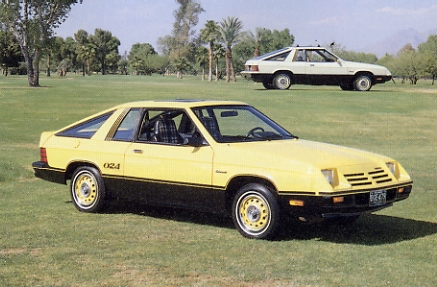
The other factor in lower fuel efficiency today is performance. Cars today are quicker than ever. A new Elantra SE is almost as quick as a Fox body Mustang GT of the 80's... while getting mid to upper 30's hwy. I don't think there are many who could go back to the 0-60 times of 14 sec. of the 50mpg cars of the early 80's. I briefly had an '82 Dodge Omni in college. It was rated at 52 or 53mpg without looking and got closer to 60mpg on the interstate doing 55-60 (back when we had to drive 55). Of course it had no AC or power anything. but it did have a digital Pioneer Supertuner Cassette! It did 0-60 in a week. Too slow for today's demands.

dodge-omni-024-01.jpg
 
Top