
You are using an out of date browser. It may not display this or other websites correctly.
You should upgrade or use an alternative browser.
You should upgrade or use an alternative browser.
Projects/Home Improvement Thread
- Thread starter no.1IrishFan
- Start date

- Messages
- 45,817
- Reaction score
- 21,806
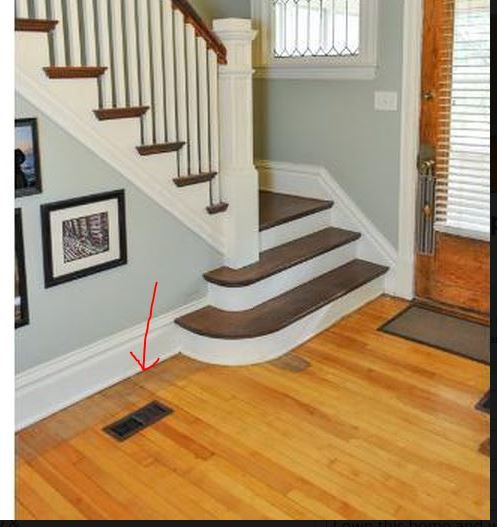
Looking for advice on hardwood floor finishing. I'm listing my home next month, and one of the things to touch up is this section of hardwood that was left unfinished years ago for some reason. It's a small section, probably only 8 square feet and only in this one spot.
I want to sand and finish this so it looks like the rest of the floors. Any guess what kind of wood this is? Does it even matter? The house is built in 1907, and I'm not sure if they're the original hardwood or not.
Wondering if anyone can give me an idea of what kind of wood it is (or if it even matters). My plan is simple - sand it and try to match the polyurethane, guessing honey oak or something light.

It absolutely matters as different woods have different densities and will absorb stain differently. Their color will also make a difference on what the stain looks like after applying. For instance, oak will not absorb as much stain as pine and because of their color variation they will not look the same after applying the same stain to both.
As far as the type of wood on the floor, more than likely it is a hardwood, like oak, yellow pine, maple or hickory. Sand it down to bare. You should be able to determine what it is by its color and grain.
K
koonja
Guest
It absolutely matters as different woods have different densities and will absorb stain differently. Their color will also make a difference on what the stain looks like after applying. For instance, oak will not absorb as much stain as pine and because of their color variation they will not look the same after applying the same stain to both.
As far as the type of wood on the floor, more than likely it is a hardwood, like oak, yellow pine, maple or hickory. Sand it down to bare. You should be able to determine what it is by its color and grain.
Damn it. Thanks though.
So beyond the wood, any advice for trying to match the rest once I'm sanded down? Not idea what the previous owner used so I'd be eye balling and guessing.

Wild Bill
Well-known member
- Messages
- 5,587
- Reaction score
- 3,434
Damn it. Thanks though.
So beyond the wood, any advice for trying to match the rest once I'm sanded down? Not idea what the previous owner used so I'd be eye balling and guessing.
Check with Sherwin Williams. I installed stairs stairs last summer and I was surprised how close they matched my oak stairs to the existing hickory floors. I took in a sample piece of both my flooring and stairs to their store to get the match. I'm not sure they'll be able to match them unless you have samples of both, though. Maybe a picture will work. Call them or stop in the store and they'll let you know. I'm guessing they will tell you that an exact match is not likely without samples but I'd trust them to give you the best advice either way.
K
koonja
Guest
Check with Sherwin Williams. I installed stairs stairs last summer and I was surprised how close they matched my oak stairs to the existing hickory floors. I took in a sample piece of both my flooring and stairs to their store to get the match. I'm not sure they'll be able to match them unless you have samples of both, though. Maybe a picture will work. Call them or stop in the store and they'll let you know. I'm guessing they will tell you that an exact match is not likely without samples but I'd trust them to give you the best advice either way.
Thanks, I've never gone to Sherman Williams but they might be more knowledgeable than whoever happens to be free at Home Depot.
Taking a sample is not possible. There's no leftover wood, and I'm definitely not removing any flooring because then I'm definitely hiring someone to come out.
I'm going to take a picture in, ask their advice, and probably error on going "too light" so I can wipe it off/sand it out if necessary.
Wild Bill
Well-known member
- Messages
- 5,587
- Reaction score
- 3,434
Thanks, I've never gone to Sherman Williams but they might be more knowledgeable than whoever happens to be free at Home Depot.
Taking a sample is not possible. There's no leftover wood, and I'm definitely not removing any flooring because then I'm definitely hiring someone to come out.
I'm going to take a picture in, ask their advice, and probably error on going "too light" so I can wipe it off/sand it out if necessary.
They will be, it's not even a question. It's your best bet.
- Messages
- 45,817
- Reaction score
- 21,806
They will be, it's not even a question. It's your best bet.
Definitely better than the folks at the big box stores. I've had them match stain for me a couple of times and they nailed it. If you don't have something to take in, talking a pic is your only hope.
Remember, the longer you let stain set before wiping the darker it will be. Any chance you can cut out a small piece under a floor register or under a cabinet that will never be seen?

ACamp1900
Counting my ‘bet against ND’ winnings
- Messages
- 49,640
- Reaction score
- 12,047
Once my man cave add-on is done it should open up a lot of options with my closet (A significant number of items going in the new room are currently just stored in boxes my closet)... has anyone done any shelving or reconfiguration of a two door closet?? Any suggestions? I'd like to do something where my hanger space remains intact but I add a number of shelves or built in storage for shoes and seasonal clothing underneath...

GowerND11
Well-known member
- Messages
- 6,765
- Reaction score
- 3,689
Once my man cave add-on is done it should open up a lot of options with my closet (A significant number of items going in the new room are currently just stored in boxes my closet)... has anyone done any shelving or reconfiguration of a two door closet?? Any suggestions? I'd like to do something where my hanger space remains intact but I add a number of shelves or built in storage for shoes and seasonal clothing underneath...
Your capris for when it drops below 70?

RDU Irish
Catholics vs. Cousins
- Messages
- 8,911
- Reaction score
- 3,015
Composite decking - Will be replacing our deck this spring and seems like composite decking is the Notre Dame of construction materials - either love it or hate it. Anyone have experience with Choicedeck - the Lowes Trex knockoff?
We recently had a guy work in a section of hardwood that was replaced. He argued with us a ton about the color and finish (we had the exact stuff used three years earlier). From the exact stain to the amount of time it is applied to how it changes with the finish and then ages over 3-6 months .... I wouldn't set your expectations too high on a perfect match. We knew it all and had a damn artisan do the work and it turned out great but you can still tell if you are looking closely.
Did help that we buffed and extended the final coat of finish on the continuous area.
We recently had a guy work in a section of hardwood that was replaced. He argued with us a ton about the color and finish (we had the exact stuff used three years earlier). From the exact stain to the amount of time it is applied to how it changes with the finish and then ages over 3-6 months .... I wouldn't set your expectations too high on a perfect match. We knew it all and had a damn artisan do the work and it turned out great but you can still tell if you are looking closely.
Did help that we buffed and extended the final coat of finish on the continuous area.
- Messages
- 45,817
- Reaction score
- 21,806
Composite decking - Will be replacing our deck this spring and seems like composite decking is the Notre Dame of construction materials - either love it or hate it. Anyone have experience with Choicedeck - the Lowes Trex knockoff?
We recently had a guy work in a section of hardwood that was replaced. He argued with us a ton about the color and finish (we had the exact stuff used three years earlier). From the exact stain to the amount of time it is applied to how it changes with the finish and then ages over 3-6 months .... I wouldn't set your expectations too high on a perfect match. We knew it all and had a damn artisan do the work and it turned out great but you can still tell if you are looking closely.
Did help that we buffed and extended the final coat of finish on the continuous area.
Excellent point that I had forgotten about. Reps
ACamp1900
Counting my ‘bet against ND’ winnings
- Messages
- 49,640
- Reaction score
- 12,047
Your capris for when it drops below 70?
and my leopard speedos for when it's above...
Wild Bill
Well-known member
- Messages
- 5,587
- Reaction score
- 3,434
Once my man cave add-on is done it should open up a lot of options with my closet (A significant number of items going in the new room are currently just stored in boxes my closet)... has anyone done any shelving or reconfiguration of a two door closet?? Any suggestions? I'd like to do something where my hanger space remains intact but I add a number of shelves or built in storage for shoes and seasonal clothing underneath...
https://lda.lowes.com/is/image/Lowes/DP17-81700_010518_ClosetOrg_mow_bnr_1-1_WoodClosetKits?scl=1&201801021000
It's a reach in closet not walk in, right? I installed this in my house. It was relatively easy. You can buy kits ranging in price from $200 to $400. Well worth the time and money, imo.
ACamp1900
Counting my ‘bet against ND’ winnings
- Messages
- 49,640
- Reaction score
- 12,047
https://lda.lowes.com/is/image/Lowes/DP17-81700_010518_ClosetOrg_mow_bnr_1-1_WoodClosetKits?scl=1&201801021000
It's a reach in closet not walk in, right? I installed this in my house. It was relatively easy. You can buy kits ranging in price from $200 to $400. Well worth the time and money, imo.
Yes something like that would work...

Rack Em
Community Bod
- Messages
- 7,089
- Reaction score
- 2,727
https://lda.lowes.com/is/image/Lowes/DP17-81700_010518_ClosetOrg_mow_bnr_1-1_WoodClosetKits?scl=1&201801021000
It's a reach in closet not walk in, right? I installed this in my house. It was relatively easy. You can buy kits ranging in price from $200 to $400. Well worth the time and money, imo.
ACamp has a reach around closet, not a reach in.
Rack Em
Community Bod
- Messages
- 7,089
- Reaction score
- 2,727
Mrs. Rack and I are closing on our first real home this coming week. It was built in 1911. Long story short, it has 2 bedrooms in the attic which has no insulation behind the knee walls. I want to insulate that puppy ASAP and I've been reading a lot about how to properly insulate an old home. But I want to hear what you guys think.
What's the most effective insulation (cost, ease of installation, etc.) and what are the parts of the attic to focus on first? Should I focus on the underside of the roof, the floors, or behind the knee wall? Basically, what's my best bang-for-buck and I'll work backwards to fill in the rest.
I wasn't able to see inside the attic during inspection, so I'm not sure exactly what I'm working with. And I know insulation will be the most effective when the whole attic is completely insulated, but I need a starting point. TIA fellas.
What's the most effective insulation (cost, ease of installation, etc.) and what are the parts of the attic to focus on first? Should I focus on the underside of the roof, the floors, or behind the knee wall? Basically, what's my best bang-for-buck and I'll work backwards to fill in the rest.
I wasn't able to see inside the attic during inspection, so I'm not sure exactly what I'm working with. And I know insulation will be the most effective when the whole attic is completely insulated, but I need a starting point. TIA fellas.
Mrs. Rack and I are closing on our first real home this coming week. It was built in 1911. Long story short, it has 2 bedrooms in the attic which has no insulation behind the knee walls. I want to insulate that puppy ASAP and I've been reading a lot about how to properly insulate an old home. But I want to hear what you guys think.
What's the most effective insulation (cost, ease of installation, etc.) and what are the parts of the attic to focus on first? Should I focus on the underside of the roof, the floors, or behind the knee wall? Basically, what's my best bang-for-buck and I'll work backwards to fill in the rest.
I wasn't able to see inside the attic during inspection, so I'm not sure exactly what I'm working with. And I know insulation will be the most effective when the whole attic is completely insulated, but I need a starting point. TIA fellas.
You don't want to blow insulation into the walls, it most likely does not have the vapor barrier, and mold can take over the insulation.
Myths About Insulating Old House Walls | About Your House
My house was built in 1895, so I'm in a similar boat. If the floor is cold, and you can get to it from the basement, you can put insulation between the joists. Our crawl space is open earth, so I need to dig it out and get it concreted over to fix our drafts.
Rack Em
Community Bod
- Messages
- 7,089
- Reaction score
- 2,727
You don't want to blow insulation into the walls, it most likely does not have the vapor barrier, and mold can take over the insulation.
Myths About Insulating Old House Walls | About Your House
My house was built in 1895, so I'm in a similar boat. If the floor is cold, and you can get to it from the basement, you can put insulation between the joists. Our crawl space is open earth, so I need to dig it out and get it concreted over to fix our drafts.
The attic is on the 3rd floor so I have very little interest in blowing in insulation anyway if I can avoid it.
Between the joists in the basement or between the joists in the attic? I'm not sure I follow. And I may not have explained it well either.
The attic is on the 3rd floor so I have very little interest in blowing in insulation anyway if I can avoid it.
Between the joists in the basement or between the joists in the attic? I'm not sure I follow. And I may not have explained it well either.
I might just not be able to read

My floors are cold on the main level because of the basement. You were obviously talking about attic floors. sorry!
Wild Bill
Well-known member
- Messages
- 5,587
- Reaction score
- 3,434
Mrs. Rack and I are closing on our first real home this coming week. It was built in 1911. Long story short, it has 2 bedrooms in the attic which has no insulation behind the knee walls. I want to insulate that puppy ASAP and I've been reading a lot about how to properly insulate an old home. But I want to hear what you guys think.
What's the most effective insulation (cost, ease of installation, etc.) and what are the parts of the attic to focus on first? Should I focus on the underside of the roof, the floors, or behind the knee wall? Basically, what's my best bang-for-buck and I'll work backwards to fill in the rest.
I wasn't able to see inside the attic during inspection, so I'm not sure exactly what I'm working with. And I know insulation will be the most effective when the whole attic is completely insulated, but I need a starting point. TIA fellas.
Insulating the cavity between your ceiling and roof, if possible, is the best energy savings per dollar spent. You lose a considerable amount of heat through your roof and it's relatively cheap and easy to add insulation, provided you have access to the space.
If the knee walls were built in 1911, they probably lack cavities needed to add insulation. There are other options but they are costly. If you don't mind losing a bit of square footage, you plan on staying at the place for a while and it needs updating, you should consider re-framing the walls exterior walls.
Rack Em
Community Bod
- Messages
- 7,089
- Reaction score
- 2,727
Insulating the cavity between your ceiling and roof, if possible, is the best energy savings per dollar spent. You lose a considerable amount of heat through your roof and it's relatively cheap and easy to add insulation, provided you have access to the space.
Don't know if I can get up there. But the inspector acted like "the whole attic isn't insulated" which makes me think he could see up there. Any recommendations on what to insulate it with?
If the knee walls were built in 1911, they probably lack cavities needed to add insulation. There are other options but they are costly. If you don't mind losing a bit of square footage, you plan on staying at the place for a while and it needs updating, you should consider re-framing the walls exterior walls.
I'm pretty sure the knee walls were built after that. The guy rehabbing it might have re-framed them, but I'm not sure. Do you mean re-framing the knee walls or the walls in the attic?
Wild Bill
Well-known member
- Messages
- 5,587
- Reaction score
- 3,434
Don't know if I can get up there. But the inspector acted like "the whole attic isn't insulated" which makes me think he could see up there. Any recommendations on what to insulate it with?
Insulate it. That should be the first thing you do.
You can buy it by the roll, batts, or blown in. If access is limited, the blown in insulation makes it easier to install. You can rent the blower from HD or Lowes if you decide to do it on your own. If access and ceiling height is plentiful, I'd use the batts. Very easy to get that done. Make sure you shop around for the best prices. Insulation prices vary far more than you think. Menards is usually the cheapest.
I meant re-framing the knee walls. If you have drywall on the knee walls it's likely re-framed with a cavity. If it's plaster, it's probably a solid wall.I'm pretty sure the knee walls were built after that. The guy rehabbing it might have re-framed them, but I'm not sure. Do you mean re-framing the knee walls or the walls in the attic?
*Drywall doesn't make it certain that you have cavities in your walls. They could have glued the drywall right onto the plaster without re-framing the walls.
Last edited:
Rack Em
Community Bod
- Messages
- 7,089
- Reaction score
- 2,727
Insulate it. That should be the first thing you do.
You can buy it by the roll, batts, or blown in. If access is limited, the blown in insulation makes it easier to install. You can rent the blower from HD or Lowes if you decide to do it on your own. If access and ceiling height is plentiful, I'd use the batts. Very easy to get that done. Make sure you shop around for the best prices. Insulation prices vary far more than you think. Menards is usually the cheapest.
Good to know about the pricing! For the attic, should I used faced batts or is that not necessary?
I meant re-framing the knee walls. If you have drywall on the knee walls it's likely re-framed with a cavity. If it's plaster, it's probably a solid wall.
*Drywall doesn't make it certain that you have cavities in your walls. They could have glued the drywall right onto the plaster without re-framing the walls.
If there are cavities in the wall, should I start by putting batts in them? Or should I put rigid foam insulation on the exterior walls?

dshans
They call me The Dribbler
- Messages
- 9,624
- Reaction score
- 1,182
Keep in mind that the reason behind insulating attic space is two-fold. One is to capture the warm air you pay dearly for. The other is to reduce the temperature differential between the interior and exterior of the roof.
Snow accumulation on the roof provides a blanket of insulation in and of itself. Unrestrained heat on the underside of the roof leads to melting, which can lead to ice dams and destructive water infiltration to the underlying sheathing.
The goal is to capture the heat inside while allowing the roof to achieve an equilibrium(as much as possible) between the exterior and interior surfaces.
Snow accumulation on the roof provides a blanket of insulation in and of itself. Unrestrained heat on the underside of the roof leads to melting, which can lead to ice dams and destructive water infiltration to the underlying sheathing.
The goal is to capture the heat inside while allowing the roof to achieve an equilibrium(as much as possible) between the exterior and interior surfaces.
Wild Bill
Well-known member
- Messages
- 5,587
- Reaction score
- 3,434
Good to know about the pricing! For the attic, should I used faced batts or is that not necessary?
If there is no existing insulation, use a faced insulation with the paper facing the heated living space. If the cavities are already insulated, run an unfaced insulation perpendicular to the joists.
If there are cavities in the wall, should I start by putting batts in them? Or should I put rigid foam insulation on the exterior walls?
You'd have to remove the drywall to install traditional insulation from the interior, unless I'm missing something. I would not do the foam insulation from the exterior on my own. So much can go wrong. Call a couple contractors and see what they have to say or what they would charge.
Rack Em
Community Bod
- Messages
- 7,089
- Reaction score
- 2,727
Keep in mind that the reason behind insulating attic space is two-fold. One is to capture the warm air you pay dearly for. The other is to reduce the temperature differential between the interior and exterior of the roof.
Snow accumulation on the roof provides a blanket of insulation in and of itself. Unrestrained heat on the underside of the roof leads to melting, which can lead to ice dams and destructive water infiltration to the underlying sheathing.
The goal is to capture the heat inside while allowing the roof to achieve an equilibrium(as much as possible) between the exterior and interior surfaces.
Thanks Dick!
- Messages
- 45,817
- Reaction score
- 21,806
So you have an attic that was converted, yet the ceiling is flat, correct? If so, batts or blown will work. Blown in will be the easiest, especially when getting to the far end and corners.
For the walls I had a similar situation in a house we use to own. More than likely you have an empty cavity behind the wall. Cut out a section of drywall small enough for you to crawl through and put it paper backed batts.
You want t know who's house is well insulated? Go outside and look at the roofs. Those still covered in snow are good. Those with melting snow need to do something.
For the walls I had a similar situation in a house we use to own. More than likely you have an empty cavity behind the wall. Cut out a section of drywall small enough for you to crawl through and put it paper backed batts.
You want t know who's house is well insulated? Go outside and look at the roofs. Those still covered in snow are good. Those with melting snow need to do something.
Rack Em
Community Bod
- Messages
- 7,089
- Reaction score
- 2,727
So you have an attic that was converted, yet the ceiling is flat, correct? If so, batts or blown will work. Blown in will be the easiest, especially when getting to the far end and corners.
Correct. I'm not sure how difficult it will be to reach the flat ceiling. I'm kinda worried about the vapor barrier of blown in insulation that ozzman brought up. What are your thoughts on that? And if it's difficult to reach the ceiling, I may not be able to guarantee how evenly the insulation is blown in.
For the walls I had a similar situation in a house we use to own. More than likely you have an empty cavity behind the wall. Cut out a section of drywall small enough for you to crawl through and put it paper backed batts.
There is an access panel I can get into so I won't need to cut any out. How would one attach paper backed batts to it?
You want t know who's house is well insulated? Go outside and look at the roofs. Those still covered in snow are good. Those with melting snow need to do something.
So basically I shouldn't worry about insulating against the exterior walls/roof at all? Focus all insulation on the interior walls and flat ceiling?
Thanks a bunch guys. This is really helpful.
- Messages
- 45,817
- Reaction score
- 21,806
You never put a vapor barrier in the ceiling and you should always insulate exterior walls.
We're rehabbing a home built in 1873. About 35-40 years ago the owner had insulation blown into the walls. We replaced all of the old siding so we exposed every wall. There was no vapor barrier when we took off the siding and there was no signs of mold in the insulation. Of course the blown siding fell out when we opened the walls, so we replaced the blown in insulation with paper faced rolls and then wrapped in Tyvek before putting on Hardie board siding. Do not use paper faced rolls in the ceiling. You always want your house to be able to breath. That's why they use Tyvek instead of plastic for a barrier in newer homes.
Just use a staple gun the attach the insulation. The paper side should always face the interior so stapling it is a little more difficult, but not a huge problem. Given you have access to the other side, I would recommend you put Tyvek (or any similar product) up after you put the insulation in. It will not only help retain heat, but cut down on drafts.
The only time you insulate the roof is if you have cathedral ceilings and no actual flat ceiling. In those instances, you need to install a ventilation chamber, then your insulation. The chamber is basically a cardboard type half tube that allows air to flow and keep your roof from over heating in the summer and failing earlier than it should.
We're rehabbing a home built in 1873. About 35-40 years ago the owner had insulation blown into the walls. We replaced all of the old siding so we exposed every wall. There was no vapor barrier when we took off the siding and there was no signs of mold in the insulation. Of course the blown siding fell out when we opened the walls, so we replaced the blown in insulation with paper faced rolls and then wrapped in Tyvek before putting on Hardie board siding. Do not use paper faced rolls in the ceiling. You always want your house to be able to breath. That's why they use Tyvek instead of plastic for a barrier in newer homes.
Just use a staple gun the attach the insulation. The paper side should always face the interior so stapling it is a little more difficult, but not a huge problem. Given you have access to the other side, I would recommend you put Tyvek (or any similar product) up after you put the insulation in. It will not only help retain heat, but cut down on drafts.
The only time you insulate the roof is if you have cathedral ceilings and no actual flat ceiling. In those instances, you need to install a ventilation chamber, then your insulation. The chamber is basically a cardboard type half tube that allows air to flow and keep your roof from over heating in the summer and failing earlier than it should.
K
koonja
Guest
We just sold our Minneapolis home, contingent upon inspection.
1908 home with a crawl space (as if you didn't know), and buyers elected to test for Radon.
Anyone know our chances of having radon? And then if so, any advice for installing radon mitigation system? I've seen cost between $500 and $2,500.
1908 home with a crawl space (as if you didn't know), and buyers elected to test for Radon.
Anyone know our chances of having radon? And then if so, any advice for installing radon mitigation system? I've seen cost between $500 and $2,500.