Healthcare

Legacy

New member
Messages
7,871
Reaction score
321
Higher Uninsured rates in "Red States" and in states that did not expand

Uninsured Rate by Congressional District: 2015

Medicaid Expansion Map

Change in the Uninsured Rate by State: 2013 to 2015

Expansion states generally started with lower poverty rates than non-expansion states, but their poverty rates dropped more than non-expansion states in all categories, but especially in the less than 100% of federal poverty limits category.

Uninsured Rate by Poverty Status and Medicaid Expansion of State for Adults
Aged 19 to 64: 2013 to 2015
 
Last edited:

kmoose

Banned
Messages
10,298
Reaction score
1,181
I just read the quoted blurb again and I have yet to see a demand. They stated very clearly, if you want to protect the most vulnerable among us, you should follow our recommendations. Did they state demands somewhere else?

The Bishops of the United States continue to reject the inclusion of abortion as part of a national health care benefit.* No health care reform plan should compel us or others to pay for the destruction of human life, whether through government funding or mandatory coverage of abortion.* Long-standing "Hyde Amendment" protections must extend to any relevant health care plan in order to prevent federal funding of abortion, and federal resources—including tax credits—must not be used to assist consumers in the purchase of health care plans that cover abortion.*

The entire quote above is one big demand, but the bolded is a particularly obvious demand.

I suppose the above was supposed to have meaning. If you believe faith serves as a foundation for many, then you'd understand why it's incomprehensible for them to "leave their faith at home"

It has meaning to me, and that's enough. Who said anything about leaving their faith at home? I simply answered that I consider morals, not faith, to be the foundation for people's philosophies and character. Are you contending that atheists have no foundation for their philosophies or the way they live their lives?

You believe the world would be less violent without religion? How does one maintain a serious faith but also keep it to themselves? In the case of the bishops: All human life has dignity. The Church should work to protect the weakest and infirm among us. Who are the weakest? I imagine a 19 week old child has to be on the short list, no?

I think it is pretty obvious that you misrepresented my views on this, and badly at that. I never said the world would be more peaceful without religion. I said it would be more peaceful without religions fighting for followers..... big difference. The problem is not religion, perse'. The problem is that fallible men tend to twist religion to suit their own ambitions. The Islamic Extremism of today is not all that dissimilar to the Christian Extremism that occurred during the Inquisition. You could go your entire life with no one knowing what religion you belong to, and still be deeply religious. I'm not going to get dragged into the abortion debate. It's an incendiary topic that no one is "right" or "wrong" about, and yet everyone thinks they are.

Ok. But it's not just Hillary, it's all politicians right? How about da gubment? Technically they are all the same so they can't say sh!t about sh!t because they've had all manner of transgressions. So continuing to follow your logic, we arrive at: any person in the Catholic church can't speak about healthcare cuz pedophilia.

Again, it must have stretched you quite thin, to make such a reach from what I said. I never said it was just Hillary, I specifically mentioned Trump as well. And I mentioned specific subjects that their words would ring hollow about. I also said that they could lecture people, but that their words would ring hollow. So, by my logic, I NEVER said, nor insinuated, that "any person in the Catholic Church can't speak about Healthcare cuz pedophilia." However, the Bishops in general, were the ones that failed the weak that the Church is supposed to protect. You know? The pre-teen and teenaged altar boys?
 

phgreek

New member
Messages
6,956
Reaction score
433
I don't think states would object to federal control of basic licensure requirements, but I think most commissioners would simply point out that NAIC standards are essentially universal already and the fed taking that over wouldn't accomplish much. It'd be similar to federalizing the Uniform Commercial Code -- to the extent states have generally adopted its principles, the change won't fix outstanding differences, and to the extent those differences are problematic, states will want to retain control.


I would agree that it's not an impossible problem -- just an issue that insurers would need time to incorporate. But it is a real problem and it's one of the hindrances to expansion of the market -- meeting requirements in one state can impose overhead on the company without making it any more efficient in its home state; that's a real problem in terms of competition, and these variations can have a significant annual cost.


Regional differences are a choice and do account for some variation in price. Price is not what I was getting at with that point, though; rather, it was intended to point out an issue in nationalizing insurance requirements. State insurance codes (and regs) aren't generally related to price with the exception of trying to avoid increasing cost; instead they're focused on defining the "stuff" of coverage: what does your product have to look like to be sold as insurance; is that different for large group, small group, and individual plans; can you cover things outside of health; how do you interact with bodily injury clauses in auto insurance; what does the provider network have to look like before we'll let you tell them they're covered; what do you have to cover; what solvency requirements are necessary to ensure you won't leave our residents in the lurch; what are you allowed to do to encourage providers to join your network; what can you do to recoup payments from providers; can you address balance billing; do you have to offer your product to any willing purchaser; how do you interact with employers; etc.

The answers to those questions vary based on the population you're covering. In a coastal state, we may want an insurer to cover non-network providers during a disaster. We'll pay a bit extra for that, but we may want that to be a mandatory part of what it means to insure us. In Nevada, maybe that's not as necessary. Maybe we also want to stay out of the balance billing issue and leave the up to insurers and providers to hash out themselves, where a state with a larger aged population or a more left-leaning governing style may want to be a bit more prescriptive. These kind of issues are far more variable than laws/regs aimed at price.

One place where price does come in though is with provider sophistication. In a state dominated by large, well-capitalized providers in urban settings, providers and insurers are largely left to negotiate between each other and the insurance code reflects that hands-off approach. In states with more rural or small providers, state legislatures (even the ostensibly fiscally conservative ones) tend to be much more willing to step in and tilt the scales a bit to keep rurals from getting crowded out of their markets.


Pharmacy is one of the weirdest markets in the country. Historically, insurers contracted with pharmacy benefit managers to negotiate drug prices with pharmacies. In turn, the independent pharmacies would contract with a third party contract manager to pool their negotiating power when dealing with the PBM. In addition, chain pharmacies have a strong interest in the major PBMs -- CVS/Caremark is one of the largest PBMs in the country; Walgreens used to own one of the PBMs that became Catamaran, which was subsequently bought up by UnitedHealth and incorporated into its captive PBM, OptumRx. Clear as crystal, eh? Anyhow, the upshot is that states with high concentrations of independents tend to see much more lobbying against PBM authority (especially around steering patients to PBM-affiliated pharmacies) and for "any willing provider" requirements in the pharmacy industry.


I actually don't know how much the unit cost varies nationally for medical services. I mean, I know there's some -- even Medicare DRGs show that there's wide variation -- I just don't know how much of a driver it is relative to, say, efficiency of care delivery (e.g. Minnesota is famous for reducing care costs by reducing excess care) or venue appropriateness (e.g. using urgent care over EDs where appropriate, building and using an adequate primary care network, etc). And of course you've got the massive variation from non-medical cost drivers in health.


Oh, I know it looks like a list by the time it's down to the patient level, but it represents so much more. These are individual agreements with providers governing what's reimbursable, how much the insurer reimburses for care, whether unreimbursed costs can be charged to the insured, what requires prior authorization with the insurer before treatment, what can be post-authorized and for how long, what the bill must look like, which policies include the physician, and so on. To answer your direct question, I guess from a patient-facing perspective, this will govern how long you have to wait for care (prior auth), the amount of your premium, the amount of your coinsurance, and whether you get balance billed.

The reason that it's inefficient at a national level is that the terms of network participation aren't ubiquitous and it becomes impossible to efficiently negotiate new terms for multiple coverage plans in widely disparate regions with different conventions of coverage for each of several thousand providers who are themselves in a constant state of flux. I can think of simpler methods if we had an interstate insurance model, but the cost component of switching off of the network model is out of my depth. I would add that this isn't really an issue for government to solve -- it's just an issue that industry must confront before progress is possible.


This is a great post overall. I would add a 5) to your list -- the issues we face are symptomatic of the system we've built and not of the nature of health care. It's not that they're insurmountable problems, it's that solving them requires alterations to the system far more significant than granting corporations permission to participate in multiple markets.

Thanks for the detailed responses...I know at times it is like guiding a blind man through a maze...appreciate it. I seriously hope insurance companies are incentivized to show movement toward interstate models. If we can't overtly kill ACA, and replace it with a Deliberate, well thought out plan that makes competition work for us...I'm at least hopeful we can ram some more efficiency into the system, and more choice for consumers.
 

Veritate Duce Progredi

A man gotta have a code
Messages
9,358
Reaction score
5,352
I'm not going to get dragged into the abortion debate. It's an incendiary topic that no one is "right" or "wrong" about, and yet everyone thinks they are.

Leaving the rest of your replies alone, given this quote, I'll let the discussion end. We have such strong differences in our presuppositions that it'd be futile for either of us to continue this discussion.
 

Legacy

New member
Messages
7,871
Reaction score
321
Healthcare in the South

Healthcare in the South

One of the aspects of any proposed replacement plan is regional marketplaces so insurance companies can cross state lines, increasing competition which would lower prices.

From NOLAIrish's comment:
Originally Posted by NOLAIrish
Regional differences are a choice and do account for some variation in price. Price is not what I was getting at with that point, though; rather, it was intended to point out an issue in nationalizing insurance requirements. State insurance codes (and regs) aren't generally related to price with the exception of trying to avoid increasing cost; instead they're focused on defining the "stuff" of coverage: what does your product have to look like to be sold as insurance; is that different for large group, small group, and individual plans; can you cover things outside of health; how do you interact with bodily injury clauses in auto insurance; what does the provider network have to look like before we'll let you tell them they're covered; what do you have to cover; what solvency requirements are necessary to ensure you won't leave our residents in the lurch; what are you allowed to do to encourage providers to join your network; what can you do to recoup payments from providers; can you address balance billing; do you have to offer your product to any willing purchaser; how do you interact with employers; etc.

The answers to those questions vary based on the population you're covering. In a coastal state, we may want an insurer to cover non-network providers during a disaster. We'll pay a bit extra for that, but we may want that to be a mandatory part of what it means to insure us. In Nevada, maybe that's not as necessary. Maybe we also want to stay out of the balance billing issue and leave the up to insurers and providers to hash out themselves, where a state with a larger aged population or a more left-leaning governing style may want to be a bit more prescriptive. These kind of issues are far more variable than laws/regs aimed at price.

One place where price does come in though is with provider sophistication. In a state dominated by large, well-capitalized providers in urban settings, providers and insurers are largely left to negotiate between each other and the insurance code reflects that hands-off approach. In states with more rural or small providers, state legislatures (even the ostensibly fiscally conservative ones) tend to be much more willing to step in and tilt the scales a bit to keep rurals from getting crowded out of their markets.

Health and Health Coverage in the South: A Data Update
Kaiser Family Foundation, Feb 10, 2016_

With its recent adoption of the Affordable Care Act (ACA) Medicaid expansion to adults, Louisiana became the 32nd state to move forward with the expansion, and the 7th of the 17 states that make up the American South to expand. However, within the South, which has high rates of chronic disease and poor health outcomes, the majority of states still have not adopted the Medicaid expansion. The ACA and its Medicaid expansion offer important opportunities to expand access to health coverage, particularly in the South, where Medicaid and CHIP eligibility levels across groups have lagged behind other regions for many years.1 While many factors contribute to chronic disease and poor health outcomes, expanding health coverage can provide an important step in improving health by supporting individuals’ ability to access preventive and primary care and ongoing treatment of health conditions. This brief provides key data on the South and the current status of health and health coverage in the South to provide greater insight into the health needs in the region and the potential coverage gains that may be achieved through the ACA. State specific data for the indicators presented in the brief are available in Tables 1 through 6.

A few of the tables:
8836-figure-1.png


8836-figure-3.png


8836-figure-9.png


Note that, in the South, childless non-diabled adults cannot obtain Medicaid and that parents qualify for Medicaid at significantly lower eligibility limits, generally if they are disabled, e.g. in Texas under those conditions, one has to make less than 18% of the Federal Poverty Level.

8836-figure-10.png


8836-figure-11.png


8836-figure-12.png


Other figures show diabetes rates, obesity rates, cancer rates....

Implications
The South is a vital component of the nation, accounting for over a third of the total population. The region is racially and ethnically diverse and home to a large share of the nation’s people of color. There are significant health needs within the region. Southerners as a group are generally more likely than those in other regions to have a number of chronic illnesses and experience worse health outcomes. While a broad array of factors contributes to the high rates of chronic disease and poor health outcomes in the South, ensuring individuals have health coverage that enables them to access preventive and primary care and ongoing treatment to meet their health needs can be an important step in addressing these disparities. Southerners are more likely to be uninsured compared to the rest of the country. The ACA has the potential to extend health coverage to many uninsured Southerners through the Medicaid and Marketplace coverage expansions. However, in states that do not implement the Medicaid expansion, many poor adults fall into a coverage gap. Despite this coverage gap, millions of uninsured Southerners are eligible for coverage today. Outreach and enrollment efforts will be key for getting these individuals into coverage. If all states were to expand Medicaid, the coverage gap would be eliminated and potential coverage gains in the region would be significantly larger.

Also worth watching is how the Trump administration deals with two mergers of four of the top six insurance companies. Obama's Justice Department obtained judicial decisions blocking them as anti-competitive and detrimental to consumers. Will Trump negotiate settlements so that these can proceed? How will that decrease in competition in the marketplace affect consumers, especially in regional marketplaces like the South?
 
Last edited:

Whiskeyjack

Mittens Margaritas Ante Porcos
Staff member
Messages
20,894
Reaction score
8,126
Matthew Loftus just posted an article on Mere Orthodoxy titled "5 Ways to Actually Reform American Healthcare":

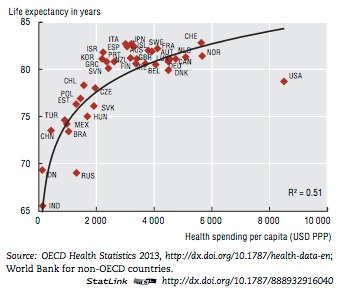
Obamacare is the law of the land. For better or worse, we’re stuck with it for now. It still has problems — millions of people are still uninsured and its cost-containment measures, while often useful, are probably not enough to slow down rising deductibles and high premiums. American healthcare still spends more than comparable countries for worse health outcomes, as this graph shows:

OECD-LE-Spending.jpg


Conservatives argue that this somehow makes us more “innovative”, which is in some senses true but I don’t understand why this argument is coming from the people who are supposed to be standing athwart history yelling “stop!” Also, the innovation tends to benefit niche markets, which is great for the people in those markets but not really helpful for the population at large who are dying of things that we know how to treat, they just aren’t getting the care they need.

Fortunately, there are alternatives!

I will go through 3 things that are parroted as conservative talking points but really won’t fix things, each of which also illustrates a much bigger problem with the healthcare system that policy alone will have a hard time fixing. I will then lay out 5 options (in order of their political feasibility) that would meet the requirements for justice that I alluded to in my last post. Most of these options will feel icky to conservatives; quite frankly, maintaining the dignity of the Imago Dei is costly and choosing to forego what is necessary for that maintenance is injustice.

Things that won’t fix the problem

1. Selling insurance across state lines

Everyone wants to get the healthcare they need, but they don’t want to pay too much for it and they really don’t want to pay too much for anyone else’s healthcare. The Republican motto lately has been “choice”, a concept that makes very little sense when it comes to choosing insurance. Since insurance is so expensive, anyone healthy enough to do so will generally opt for crappy insurance that covers as little as possible as long as they pay less month-to-month. Since it’s impossible to tell what exactly you will need until you get sick, this leads people to either delay or forego care if they happen to get sick when they don’t have a lot of money lying around to meet their deductible. So far, most Republican proposals I have seen to fix the healthcare system is “let’s subsidize our Byzantine health insurance companies harder and allow people to buy crappy insurance if they want.” This is not only a failure of imagination, but also of good sense.

2. Tort reform

I love tort reform. I think that randomly awarding millions of dollars to people who happen to call an aggressive lawyer is stupid and unjust. I think that fear of a lawsuit animates many bad decisions that doctors make. I want America to have a national no-fault system where everyone pays in and anyone who has a legitimate claim gets a payout. The only problem is that tort reform, when it’s been passed in particular states, really doesn’t reduce costs. Go ahead and do it, please, just don’t think it’s a magic pill to solve all our problems.

3. Medicaid block grants


In theory, the idea of a Medicaid block grant is very appealing to conservatives like me (a similar idea will show up at the end of this post). If Maryland wants to spend its federal Medicaid dollars putting fresh food in corner stores and Oklahoma wants to spend its federal Medicaid dollars improving stroke protocols in its rural hospitals, that intuitively makes more sense than the federal government trying to micromanage healthcare for 70 million citizens. The problem is that this doesn’t really slow down healthcare costs as long as the rest of the plan involves subsidizing insurance companies, and since the Republicans were planning on whittling down Medicaid spending this way, it would probably end up forcing people off Medicaid into nothing or crappy insurance.

Things that would be better than our current system

1. Make America Singapore

Ross Douthat explained it here, but there’s room for American experimentation (like PEG has suggested) and this proposal has actually been floated in the Cassidy-Collins bill. The basic idea is that the government pays for all preventive care and enrolls everyone in a catastrophic insurance plan. People can then either buy insurance on the market for their other needs or use a Health Savings Account (HSA), which is subsidized for the poor. How just this system works out to be in practice depends very much on how high the bar is for catastrophic care and how generous the subsidy is for HSAs. One way to make things fairer would be to break the most common (and the most expensive) chronic diseases into tiers that multiply your subsidy so that healthy people get a small subsidy that could cover your trips to the doctor for a cold or broken bone while sicker people would get a significant portion of their monthly costs covered.

2. Take Obamacare To Its Logical Conclusion

You could also call this one “Make America Germany, France, or Belgium”. I rated it highly on the political viability scale because it’s the easiest step to take: all we have to do is fix prices (which virtually every other OECD country with a free-market system does). You then raise taxes until everyone who needs Medicaid gets it. There are other things that ease this, like forcing every insurer and every doctor to work together as Germany does or paying your subspecialists less while making medical school cheaper, but you have to raise taxes and fix prices in order to cover everyone while slowing down the cost juggernaut.

3. The VA For Anyone Who Wants It

The American public seems to have this bizarre perception (mostly based on anecdotes) that a publicly run healthcare system like the VA or the NHS is an awful mess. This may be true, but the rest of the American healthcare system is even more awful, so the health outcomes between the two systems are about the same or better. The scandals that grab headlines are, in fact, not as bad as people quietly dying of preventable causes because they couldn’t access healthcare. The government could simply eliminate Medicaid, Medicare, and tax exemptions for health insurance and use that money to build out the VA system such that anyone who needed it could use it. Anyone making enough money to choose otherwise could do so (although surely many people would opt for the convenience and cost savings of using the public option). If the VA managed to maintain its current quality standards (admittedly a tricky proposition when scaling up), everyone who needed healthcare would get it and all those people that Paul Ryan is deeply concerned about can get so much choice they’ll get tired of choosing.

4. Medicare For All

It’s simple: everyone gets Medicare. This is a pretty radical restructuring, but it works for a lot of countries who pay less per capita than we do. The government gets to negotiate whatever prices it wants to keep the system solvent, and everyone gets care. People still have the choice to see whatever doctor they want, so from the patient perspective it’s more of a free market than the current system.

5. Blow It All Up And Build A Distributist Paradise

This is the most radical option, but it also has the most potential to create a better system than what we have now. I sketched out some of the basic points of a distributist system here that can be applied to any of the above systems, but I think it would still be wisest to federally fund and deliver the basics, primarily using community health workers to do a lot of basic chronic care and preventive care. Mid-level providers could do a lot of the day-to-day hospital work, acute visits, and slightly more complex chronic care. They often do this now, but the basic assumption of the system would be that doctors shouldn’t do anything that someone who was trained less than them can do. (This is an infrequently deployed and frequently underdeveloped conservative talking point that I agree with.) Doctors, in turn, would be responsible for the more complex and sick individuals. Churches and other community organizations would partner with hospitals and doctors to provide the sort of services that hospitals now employ an army of social workers and case managers now must do.

Funding everything else is the fun part: eliminate Medicaid, Medicare, and tax exemptions for health insurance so you can start from scratch. States, cities, and municipalities then have the freedom to raise taxes, operate charitable foundations, or whatever else to finance their local healthcare systems however they wish. Or you could create a federally-funded mandatory HSA for every person that they could use to buy insurance, save as they wish, or self-organize into cost-sharing or local funding schemes. States could choose to take a cut (or all) of this to create its own public option, or let citizens choose whatever they want. Liberals who wanted to help subsidize care for the poor could join national or state insurance schemes designed for this purpose, and conservatives who wanted a perfectly free market could do business with providers as they wish. There would have to be some sort of national accountability linked to health outcomes in order to keep parts of the country from being shafted, but this would not have to be terribly complicated (e.g. if a county in Mississippi falls below a certain level of infant mortality three years in a row then Mississippi has to work with the Feds to clean up its act or it starts to get massive fines).

This last option would work best in sync with other distributist reforms, although in many ways it bleeds into Option 1 if you start off blowing up fewer things. This move also requires a certain amount of civic virtue and internetsafesearch.com, two things that are currently in short supply nowadays. Yet it also has the most potential to get at some of the underlying factors that have created the crisis we’re in: there is no way to get around our civic dysfunction without a greater movement toward solidarity, as I have argued elsewhere. Giving power back to the people — despite the crisis such a move would precipitate — provides an opportunity to create the conditions under which we can address our existing crises together.
 

Legacy

New member
Messages
7,871
Reaction score
321
Nice article.

Much of these "better suggestions" are integral to the Australian health system.

Health Care System and Health Policy in Australia
(Commonwealth Fund)

The Health Care System


The Australian health care system provides universal access to a comprehensive range of services, largely publicly funded through general taxation. Medicare was introduced in 1984 and covers universal access to free treatment in public hospitals and subsidies for medical services; Medicare is now sometimes used to describe the Australian health care system though precisely it refers to access to hospitals (hospital Medicare) and medical care (medical Medicare). Health indicators are strong, for example Australian life expectancy is the third longest in the OECD. Nonetheless, there are concerns in common with many developed countries, such as the ageing of the population, rising levels of obesity, the prevalence of mental illness, and the burden of chronic disease. There is a dramatic gap in the health indicators for the indigenous population compared to non-indigenous Australians. Health care expenditure represents approximately 9% GDP, close to the OECD median but much less than the US.

Australia has a federal system of government, with a national (Commonwealth) government and six States and two Territories. At Federation, health remained the responsibility of the States. However, the Commonwealth Government holds the greatest power to raise revenue, so States rely on financial transfers from the Commonwealth to support their health systems. This makes the Australian health care system a complex division of responsibilities and roles across levels of government. It is also marked by a complex interplay of the public and private sectors. The system is financed largely through general taxation. Although there is a specific income tax levy (the Medicare levy), it raises a small portion of total finance. There is also a high reliance on out of pocket payments, at 17% of total expenditure. Government dominates funding, with 43% of total expenditure provided through the Commonwealth, and 25% through other levels of government. This gives the Commonwealth the dominant role in policy making.

The three major components of Medicare cover public hospitals, medical services, and pharmaceuticals. There is a strong and growing private hospital sector. There is government support (subsidies) for private health insurance which covers both hospital inpatient treatment and out of hospital services not covered by Medicare.

Public hospitals are owned and operated by the State and Territory Governments which also deliver a variety of mental health, dental, health promotion, school health and community health programs. Under funding agreements with the Commonwealth, all Australians are entitled to free treatment as a public patient in a public hospital. Public hospitals can also admit private patients, who may face a range of out-of-pocket charges. Private patients have choice of doctor, ie the patient selects the doctor who is responsible for their care while the public patient has a treating doctor assigned by the hospital. In practice, these are the same doctors but the doctor charges the private patient directly for their medical care. In general, emergency departments are in public hospitals while teaching, education, and research are found in the larger public hospitals which also tend to a treat a more complex case-mix.

The private hospital sector is growing in size and complexity. There is an increasing presence of for-profit firms operating several hospitals. There is a strong focus on elective surgery, and many day only facilities are private. Private patients benefit from subsidized insurance (if insured), and the Medicare subsidies for medical services in hospital.

Most medical practitioners are in private medical practice with fee for service payments. The Medical Benefits Schedule (MBS) sets a fee for each item or service covered by Medicare, for which the Government pays a fixed rebate. New items added to the MBS are generally assessed for safety, effectiveness and cost-effectiveness, and recommendations for public funding are made by an independent committee. The MBS covers all out of hospital medical services, and in-hospital medical services for private patients. However, medical practitioners are free to set their own fees above the MBS fee, thus exposing patient to out-of-pocket charges. Overall, around 70% of all medical services are bulk billed (direct billed to Medicare) in which case there is no out of pocket fee; bulk billing rates are over 80% for primary care attendances, and vary by specialty with . The out-of-pocket charges for out of hospital services cannot be covered by private insurance, and recent changes have introduced the Extended Medicare Safety Net to provide some protection against high levels of private expenses (though some services, such as cosmetic surgery, are excluded). There is a strong primary medical care sector, and general practitioners (primary care doctors) play a gate keeping role, i.e. specialist treatment will be covered by Medicare only with a referral from a general practitioner. There is free choice of provider, with no enrollment or restrictions. Until recently MBS payments were limited to services delivered by medical practitioners but they are now also available in defined circumstances to patients who use practice-based nursing, psychology, dental and other allied health services. Generally such services must be delivered as part of a planned program of care, and specifically requested by the patient’s physician, before a benefit can be paid.

The Pharmaceutical Benefits Scheme (PBS) provides subsidized drugs at a set co-payment (at a lower level for welfare recipients). It was established more than 50 years ago and now covers about 600 drugs in over 1,500 formulations. This comprises over 90% of all prescriptions written in Australia. Patients therefore pay the set co-payment regardless of the cost of the drug they receive. There are safety net provisions in place to limit total expenditure. There is direct negotiation on price between the Government and the pharmaceutical company. All new items added to the PBS must be recommended for listing by an independent committee, the Pharmaceutical Benefits Advisory Committee (PBAC), based on an assessment of safety, effectiveness and cost-effectiveness. Australia was the first country to introduce a mandatory requirement for comparative effectiveness and economic evaluation.

Private health insurance funds (and there are many in Australia though the bulk of the market is covered by 4 funds) is highly regulated. Insurance can cover private treatment in hospital (duplicating the public coverage) and out of hospital services not covered by Medicare, for which the majority of services are dental care and physiotherapy. Since 1996, there have been incentives to encourage the purchase of insurance, often described as ‘carrots and sticks’. The carrots comprise a 30% rebate on private insurance premiums, effectively reducing the cost. The sticks are an income tax surcharge for higher income earners without private cover. Since 2000, there has been a financial incentive to purchase insurance by the age of 30 and to stay with cover. This is Lifetime Health Cover, an age related premium based on the number of years after 30 without private insurance. Other than that, premiums are community rated. From July 1, 2012, access to the rebate has been means tested, with the full 30% applying only to individuals with an annual income less $84,000 and families less than $168,000.

The improvement of information technology as means of supporting better communication and co-ordination of care has been widely accepted. There has been a Practice Incentives Program for primary care physicians to adopt IT strategies. Current efforts are focused on the implementation of a Personally Controlled Electronic Health Record and are auspice under the National E-Health Transition Authority.


Health Care Around the World: Why Australia is #1
Includes pros and cons
 
Last edited:

Legacy

New member
Messages
7,871
Reaction score
321
Continuing on healthcare in Tennessee, their Senators have introduced a bill called the
Health Care Options Act of 2017:

Alexander, Corker Introduce Bill To Rescue Americans With No Options For Insurance

Senators Lamar Alexander and Bob Corker on Wednesday introduced legislation to rescue Americans with Affordable Care Act subsidies who have zero options for health insurance on the exchanges for the 2018 plan year.

“There are 34,000 Knoxville area residents who rely on an Affordable Care Act subsidy to purchase insurance, and after the one remaining insurer pulled out of the exchange for 2018, these subsidies are worth as much as bus tickets in a town with no buses running,” Senator Alexander said. “There is also a real prospect that all 230,000 Tennesseans who buy insurance on the exchange—approximately 195,000 with a subsidy—won’t have any plans to buy next year either, and millions of Americans in other states are facing the same dire circumstances.”

In the next month, insurance companies will complete their coverage plans for 2018.
 
Last edited:

Legacy

New member
Messages
7,871
Reaction score
321
Letter to Trump from major health and insurance groups

Letter to Trump from major health and insurance groups

April 12, 2017
The Honorable Donald J. Trump
President of the United States
The White House
1600 Pennsylvania Avenue, Northwest
Washington, D.C. 20050

Dear Mr. President:

As providers of healthcare and coverage to hundreds of millions of Americans, we share many core principles and common priorities. We believe that every American deserves affordable coverage and high-quality care. We stand ready to work with the Administration and all members of Congress to keep this commitment.

A critical priority is to stabilize the individual health insurance market. The window is quickly
closing to properly price individual insurance products for 2018.

The most critical action to help stabilize the individual market for 2017 and 2018 is to
remove uncertainty about continued funding for cost sharing reductions (CSRs). Nearly 60
percent of all individuals who purchase coverage via the marketplace – 7 million people – receive assistance to reduce deductibles, co-payments, and/or out-of-pocket limits through CSR payments.

This funding helps those who need it the most access quality care: low- and modest-income consumers earning less than 250 percent of the federal poverty level. If CSRs are not funded, Americans will be dramatically impacted:

• Choices for consumers will be more limited. If reliable funding for CSRs is not
provided, it may impact plan participation, which would leave individuals without
coverage options.

• Premiums for 2018 and beyond will be higher. Analysts estimate that loss of CSR
funding alone would increase premiums for all consumers – both on and off the exchange
by at least 15 percent. Higher premium rates could drive out of the market those
middle-income individuals who are not eligible for tax credits.

• If more people are uninsured, providers will experience more uncompensated care which
will further strain their ability to meet the needs of their communities and will raise costs
for everyone, including employers who sponsor group health plans for their employees.

- Hardworking taxpayers will pay more, as premiums grow and tax credits for low-income
families increase, than if CSRs are funded.

We urge the Administration and Congress to take quick action to ensure CSRs are funded.
We are committed to working with you to deliver the short-term stability we all want and the
affordable coverage and high-quality care that every American deserves. But time is short and
action is needed. By working together, we can create effective, market-based solutions that best serve the American people.

Respectfully,
America’s Health Insurance Plans
American Academy of Family Physicians
American Benefits Council
American Hospital Association
American Medical Association
Blue Cross Blue Shield Association
Federation of American Hospitals
U.S. Chamber of Commerce

cc: The Honorable Thomas E. Price, M.D., Secretary of Health and Human Services
The Honorable Steven T. Mnuchin, Secretary of the Treasury
The Honorable Mick Mulvaney, Director of the Office of Management and Budget
The Honorable Seema Verma, Administrator, Centers for Medicare and Medicaid Services
 
Last edited:

woolybug25

#1 Vineyard Vines Fan
Messages
17,677
Reaction score
3,018
So I have a question for anyone that is self employed. What kind of insurance do you have? Is it out of control without the subsidies from an employer?

If someone were to go out on their own and start a small business, what's the best way to get health insurance for their family. Asking for a friend (for realz).
 

wizards8507

Well-known member
Messages
20,660
Reaction score
2,661
So I have a question for anyone that is self employed. What kind of insurance do you have? Is it out of control without the subsidies from an employer?
I'm not self-employed obviously, but my employer provides a "total rewards" statement where I can see the market value of my benefits. I pay roughly 25% of $20,000 total for a plan with a $3,000 deductible and $8,000 annual out-of-pocket maximum.
 

woolybug25

#1 Vineyard Vines Fan
Messages
17,677
Reaction score
3,018
I'm not self-employed obviously, but my employer provides a "total rewards" statement where I can see the market value of my benefits. I pay roughly 25% of $20,000 total for a plan with a $3,000 deductible and $8,000 annual out-of-pocket maximum.

That's exactly what I'm talking about. So how do people afford to be self employed or a 1099? I mean pipe up fellas. I know there are some insurance, realtors and small business owners on here. Y'all got insurance? If so, how much is it and how did you find it? Horror stories?
 

woolybug25

#1 Vineyard Vines Fan
Messages
17,677
Reaction score
3,018
So half of the US workforce will be self employed by 2020 and nobody on this board is self employed and willing to explain their insurance to me?

Cool. Ha
 

Quinntastic

IE's Microbiologist
Messages
1,036
Reaction score
111
In Las Vegas, Drug Users Have a New Place for Help: Needle Vending Machines

Lets keep pushing them to do an illegal drug that is bad for you. This country SMH

If they are addicted, they are going to do the drugs whether they are legal or illegal. And sharing needles are how Hep C, HIV and a whole host of other diseases are transmitted. And those diseases are expensive/impossible to treat/cure. So the thought is by providing low cost/free sterile needles for them to use, we can at least reduce the risk of disease transmission and lessen at least some of the related healthcare costs that way.
 

Whiskeyjack

Mittens Margaritas Ante Porcos
Staff member
Messages
20,894
Reaction score
8,126
The Week's Matthew Walther just published an article titled "A conservative case for single-payer healthcare":

The GOP's latest health-care push is a magic show featuring the same malnourished rabbit being pulled from the same shabby top hat Republicans have been reaching their fingers into for years before pronouncing their now-familiar incantations.

Abracadabra! they always say. Allowing companies to sell insurance across state lines! Alakazam! Block-granting — is there an uglier formulation in the English language? — Medicare to the states! Presto-chango! Medical malpractice reform! Hocus-pocus! Health savings accounts! And for my last trick, keeping the expansion of Medicaid but not paying for it!

For Republican members of Congress and the kinds of people with whom they tend to be well acquainted — defense contractors, up-and-coming fracking magnates, lawyers, purple-tied megachurch pastors — all of that sounds very convenient. For millions of other Americans, the reality is very different.

What is a 25-year-old making burritos at Chipotle for Heritage Foundation bros at $12 an hour supposed to do with the chance to funnel an unlimited amount of his meager wages into a tax-free health-savings account? Pay the rent with catheters? If he saved diligently for two or three years, he might be able to buy himself half a blood test. A colleague whose friend recently decided to open a health-savings account was forced to upgrade to a premium version of TurboTax in order to fill out the proper forms, which cost her $25 more than she had managed to put away during the previous year.

In the grand sweepstakes that is America's health-care system, I am one of the winners. My family is covered by a premium plan for which my employer pays every month without deducting so much as a penny, pre-tax or otherwise, from my paycheck. We have negligible co-pays and a whopping $500 deductible. Having two children at one of the best midwiferies in the D.C. metro area cost us virtually nothing out of pocket. If, like most Americans of my age and class, I went in for yearly check-ups, I could actually get the insurance company to pay me!

But even we have had our fair share of hang-ups. When my wife was pregnant with our first daughter, she went in for a routine ultrasound. Months later a bill arrived for something like $1,000. When I called the insurance company, they told me to disregard it because there was no out-of-pocket charge. Copies of the erroneous bill continued to pour in every few weeks regardless. Eventually they crossed paths with a much smaller bill for a second ultrasound that we were supposed to pay, but who could tell the difference? Somehow it escaped our attention and ended up with a debt collector, another black mark on a young family's credit score. This sort of thing happens to responsible people every day.

Nearly everyone agrees that our semi-private insurance-driven system is mad. It makes all the logistical sense of having the clerk at the Shell station file a claim with Geico every time you put gas in your car. The Affordable Care Act exacerbated everything wrong with the present arrangement by creating a permanent carve-out for insurance companies. Millions of Americans were left feeling the way villagers would have if the Magnificent Seven had shown up at the last minute and thrown in their lot with the bandits.

Meanwhile, conservatives insist on getting rid of the only good part of the legislation: the expansion of Medicaid. This is not because it hasn't worked but because it conflicts with Republicans' increasingly ethereal principles. Put aside for a moment the question of whether it would be desirable to return to those halcyon days when simple country doctors gave big bills to the rich, smaller ones to ordinary people, and treated the poor gratis. Is it even possible, much less feasible? No one, not even Tea Party members during the movement's heyday, has been clamoring at the door to get rid of Medicare. Even if their wildest dreams came true and they managed to get government out of health care altogether, what would happen to people in the meantime while their hypothetical army of altruist medicos mustered its forces?

The solution should be obvious. Single payer is the only way forward. The U.S. government should provide health insurance for every one of its citizens.

Already I hear the chorus of well-rehearsed objections from the right. Who's going to pay for it? Please. Every other wealthy country in the world ensures universal health-care coverage, and we are spending far more than any of them to let people above the bottom and well into what remains of the middle fall through the cracks. What about innovation? they say, as if Costa Rica, with a GDP smaller than New Hampshire's, were not a leader in the treatment of diseases such as pancreatic cancer and a destination for innovation-seeking medical tourists from around the world. (It is curious how this objection never seems to spring up in the case of the military. Should we privatize that too, lest we fall behind the denizens of the SeaOrbiter in the quest for better fighter jets?)

Single payer just isn't "conservative." Of course it is, at least if the word still means anything. Conservatism is about stability and solidarity across class boundaries, not a fideistic attachment to classical liberal dogma. When Winston Churchill's Conservative Party returned to power in the U.K. in 1951, they did not attempt to dismantle the National Health Service established six years earlier by the post-war Labour government. They tried to do a better job of running it. Conservatives in this country should get used to the idea of being prudent stewards of the welfare state, not its would-be destroyers.

Then there is the old concern about "rationing," with which I must admit to very little patience, probably because, like the claret-soaked Tories of old, I am not myself terribly interested in health. I have no doubt that if America were to adopt a single-payer system, those with sprained ankles or runny noses would indeed face longer lines. This is a good thing. Health is not the be-all end-all of human existence, and half the reason care costs what it does is that providers across the country know that they can charge BlueCross whatever they want when wealthy suburban mothers bring Dylan in after soccer practice for X-rays, MRIs, CT scans, and goodness knows what other radiological marvels, when what he really needs is a $1 ice pack.

Putting the government in charge of health care would restore it to its proper place in our lives. If conservatives' worst fears turn out to be justified, then visiting the doctor will become a very occasional half-day-long exercise in mandatory tedium, like going to the DMV or having your passport renewed. I do not visit the clinic down the street for aches or minor ailments, much less stop in to see my non-existent family physician to engage in morbid speculations concerning the potential diseases to which I might one day succumb — and neither should you.

"In the long run we are all dead," Lord Keynes said. To quote a marginally more cheerful writer, "There is nothing better for a man, than that he should eat and drink, and that he should make his soul enjoy good in his labor." There are a thousand more important things in life than fussing about health. Exercise if you want — or don't. Have a nice lunch; order a drink or two; smoke; relax with a ball game or a good book. If you're sick, go wait in line. You'll be glad not to get a bill four months later.
 

Legacy

New member
Messages
7,871
Reaction score
321
GOP rushing to vote on healthcare without analysis of changes (The Hill)

It's important to push this across before the Congressional Budget Office can score with costs, number of Americans who would lose coverage, forecasts on premiums, the coverage extent of appropriated subsidies, forecasts on the stability of the marketplaces, the effect on other federal health programs, or transparency on other items. Learning those unleased all kinds of trouble for the Ruling Party last time.

House Republicans are once again fast-tracking consideration of their ObamaCare replacement bill without knowing the full impact of the legislation they’ll vote on Thursday.

The nonpartisan Congressional Budget Office (CBO) is not expected to have completed its analysis detailing the effects of the latest changes to the legislation overhauling the nation’s healthcare system in time for the Thursday vote.

Leadership’s decision to press ahead with the floor action means lawmakers will be voting on the bill without updated figures from their nonpartisan scorekeeper on how many people would lose coverage under the bill or how much it would cost.

Some lawmakers acknowledged that it would be helpful to have an analysis, known as a “score,” from the CBO, but said they could not wait for it.

When asked why the vote would not wait for the score, Rep. Fred Upton (R-Mich.) -- the lead sponsor of a new amendment to the bill that might push it over the finish line -- said “because I don’t expect it probably for a couple weeks.”
“I wish that we had it, alright?” Upton added. “I wish that we had had it in committee, I said so at the time.”

The lack of a score comes despite years of GOP attacks on Democrats for what Republicans argued was a rushed process that rammed through ObamaCare in 2010.

The latest bill text was posted Wednesday, just one night before the vote.

Are all bills going to provide so little specifics with so little time for citizens to review them?
 
Last edited:

irishroo

The CNN of Irish Envy
Messages
572
Reaction score
44
The Week's Matthew Walther just published an article titled "A conservative case for single-payer healthcare":

This still doesn't address a major issue with single-payer in the US that I've yet to see addressed and hardly even mentioned elsewhere - what the hell happens to the health insurance companies? I feel like nobody has even considered the potential hugely negative effects to our overall economy.
 

Legacy

New member
Messages
7,871
Reaction score
321
This still doesn't address a major issue with single-payer in the US that I've yet to see addressed and hardly even mentioned elsewhere - what the hell happens to the health insurance companies? I feel like nobody has even considered the potential hugely negative effects to our overall economy.

My guess would be that it would be run along the lines of how military care is run with competitive bids, detailed requirements, cost limitations, controlled drug prices, possibly divided sections, etc.

Tricare drops UnitedHealthcare from new contracts worth $58 billion

Leverage in the marketplace is lost with consolidation of competitors, i.e. mergers of health insurance corps.
 

BleedBlueGold

Well-known member
Messages
6,270
Reaction score
2,493
The Week's Matthew Walther just published an article titled "A conservative case for single-payer healthcare":

Thanks for the post. I'm not sure I see how that's a "Conservative case for single-payer," though. Those are all talking points I hear from anyone, regardless of political labels, who supports such a system (including myself).

What say you on the matter regarding this article?
 

drayer54

Well-known member
Messages
8,402
Reaction score
5,823
The death spiral of Obamacare has hit the bottom here in Iowa.

https://www.washingtonpost.com/news...all-but-five-counties/?utm_term=.4956d4ea6934

Iowa’s last major Affordable Care Act insurer threatened on Wednesday to pull out from the state’s marketplace next year, the latest step in a sudden collapse of the state’s insurance marketplace that holds ominous signs for health care customers in states across the county.

If Minnesota-based Medica follows through on its threat not to sell plans in 2018, Iowa could be the first state to lack any insurers on its exchanges in all but a handful of counties. At the start of 2017, Iowa outwardly appeared to be an Affordable Care Act success story, with three insurance companies selling competing plans on its exchanges broadly. But last month, two of Medica’s competitors said they would exit the state’s marketplace next year, citing financial losses. And on Wednesday, Medica released a statement saying its continued participation “is in question.”


When you promise access to everyone and pay no attention to the costs, quality, or availability..... Well, Obama's sole accomplishment is going down the tubes fast.
 

RDU Irish

Catholics vs. Cousins
Messages
8,625
Reaction score
2,731
Just a few thoughts on the Jimmy Kimmel thing -

I get pretty frustrated with this implied denial of care pushed out there by folks. Were we really throwing uninsured babies in dumpsters prior to Obamacare? If you were uninsured having a child - you were opening yourself up to potential for a medical bankruptcy. That is a personal choice to assume a financial risk. Exact same choice made daily by the uninsured who risk bankruptcy if they get sick.

Why is it never a response to say - hey, if you can't afford health insurance - how in the hell are you going to afford to raise a kid? Isn't it a form of negligence to choose to raise a kid without the financial means to provide for them?

People with pre-existing conditions have always had access to care AND insurance. State insurance plans were there for the uninsurable (i.e. pre-existing conditions). Just because you don't like the price does not mean you are being denied - much as we see people balking at normal adult issues like paying deductibles but acting like that is somehow oppressive.

The battle is already lost when both sides refuse to separate getting care and paying for it. The issue is people upset with being medically bankrupted which is pretty inconsiderate when the alternative is to be medically dead.
 

ACamp1900

Counting my ‘bet against ND’ winnings
Messages
48,948
Reaction score
11,228
It'd be nice if those in Kimmel's corner could make an argument that isn't so lazy and driven on emotionally pimping people... on any topic.
 

RDU Irish

Catholics vs. Cousins
Messages
8,625
Reaction score
2,731
It'd be nice if those in Kimmel's corner could make an argument that isn't so lazy and driven on emotionally pimping people... on any topic.

But the basis of the entire argument is patently false... AND NOBODY CALLS THEM OUT. Watching The Five last night waiting for just one of them to point out the obvious point that those kids have always gotten treatment! Not a one.
 

Whiskeyjack

Mittens Margaritas Ante Porcos
Staff member
Messages
20,894
Reaction score
8,126
Thanks for the post. I'm not sure I see how that's a "Conservative case for single-payer," though. Those are all talking points I hear from anyone, regardless of political labels, who supports such a system (including myself).

What say you on the matter regarding this article?

That's a good example of how hollow the term "conservative" is these days. I agree that there's no classical- or neo-liberal case for single payer, and if that's what you associate conservatism with, then you're right. But if, as Walther does, you take conservatism to mean stability and solidarity across class (and I'd add generational) boundaries, then it definitely fits the bill.

There are two options for improving upon our status quo. We can either: (1) copy Singapore, which is the only developed nation that has something akin to a high-functioning "free market" in healthcare services; or (2) we can copy Western Europe and switch to a single payer system. (1) has been on the table for a while in the form of the Cassidy-Collins Bill, but the GOP has shown zero interest in pursuing it. Given Trump's populist tendencies, and the coalition-bending realignment it would likely bring about, I think (2) is the more realistic option for improving our system right now. I don't really care how it happens, as long as we start taking better care of our own.

Why is it never a response to say - hey, if you can't afford health insurance - how in the hell are you going to afford to raise a kid? Isn't it a form of negligence to choose to raise a kid without the financial means to provide for them?

Poor people have the same right to pursue a vocation as mothers and fathers as rich people do. It's evil to tell the lower class that they need to put in X number of years as wage slaves before they're granted the privilege of reproducing. If the American total fertility rate continues to fall, we're going to have much more serious political and economic problems than figuring out how to bring our healthcare system in line with the rest of the developed world. Lowering the individual cost of having children through healthcare reform is a big part of that.

The battle is already lost when both sides refuse to separate getting care and paying for it. The issue is people upset with being medically bankrupted which is pretty inconsiderate when the alternative is to be medically dead.

Americans are upset because they're aware that virtually all of our peer nations have vastly superior healthcare systems. They cover a larger % of their people, produce better health outcomes, and all for a small fraction of the cost we're currently paying. It's not about an unreasonable sense of entitlement. It's about looking around and realizing that things could be much better than they are.
 

Legacy

New member
Messages
7,871
Reaction score
321
Just a few thoughts on the Jimmy Kimmel thing -

I get pretty frustrated with this implied denial of care pushed out there by folks. Were we really throwing uninsured babies in dumpsters prior to Obamacare? If you were uninsured having a child - you were opening yourself up to potential for a medical bankruptcy. That is a personal choice to assume a financial risk. Exact same choice made daily by the uninsured who risk bankruptcy if they get sick.

Why is it never a response to say - hey, if you can't afford health insurance - how in the hell are you going to afford to raise a kid? Isn't it a form of negligence to choose to raise a kid without the financial means to provide for them?

People with pre-existing conditions have always had access to care AND insurance. State insurance plans were there for the uninsurable (i.e. pre-existing conditions). Just because you don't like the price does not mean you are being denied - much as we see people balking at normal adult issues like paying deductibles but acting like that is somehow oppressive.

The battle is already lost when both sides refuse to separate getting care and paying for it. The issue is people upset with being medically bankrupted which is pretty inconsiderate when the alternative is to be medically dead.

Jimmy Kimbel Sheds Light on Health Coverage for Infants With Birth Defects

Tetralogy of Fallot is a life-threatening heart condition, requiring immediate pediatric cardio-thoracic surgery. The newborn has four heart defects that must be corrected.

As far as insurance coverage (from above):
Before the passage of the Affordable Care Act in 2010, federal law required employer-sponsored plans to cover newborns regardless of their health status as long as their parents enrolled them within 30 days, said Karen Pollitz, a senior fellow at the Kaiser Family Foundation.

If parents switched jobs, their new insurers could not impose waiting periods or charge more for sick newborns.

But things were different for parents who bought their insurance individually.

All 50 states had laws requiring newborns to be covered under a parent’s insurance policy and not to be charged more if they were sick, if they were enrolled within 30 days. But if a parent switched plans after a baby’s birth, the new insurer could refuse to cover the care for an ill infant for an initial period of time or charge more, Ms. Pollitz said.

They could also do so if the parents were uninsured to begin with.

Lifetime limits on coverage were a problem, too. In both individual and employer-sponsored plans, some critically ill children met policy limits within the first few years of their lives....

Under the Republican repeal-and-replace bill, the biggest concern for seriously ill newborns may be cuts to the Medicaid program. The Republican plan would give states a choice between a fixed annual sum per recipient or a block grant, either of which would almost certainly lead to major limitations in coverage over time.

The bill would also allow states to opt out of several consumer protections, including the Affordable Care Act’s ban on insurance companies’ charging higher premiums to people with pre-existing medical conditions.

That could affect the roughly 8 percent of Americans who rely on the individual insurance market, though only if they had been uninsured for 63 days or more in the previous year.

Under this plan, families with sick children who rely on individual coverage would “have to be meticulous about signing up at every open enrollment and never missing a payment,” Ms. Pollitz said.

“One slip-up, and you’re back in the underwritten pool again and could be charged an unaffordable amount.”

The Republican bill would also let states allow insurers to offer skimpier coverage than the Affordable Care Act requires, and it would provide smaller premium tax credits for many Americans.

“You’re going to have a certain level of income to even be able to afford the coverage in the first place,” said Sabrina Corlette, a research professor at Georgetown University.

Even now, parents of newborns with severe heart defects struggle for care.

Ideally, infants with congenital heart defects receive surgery in specialized medical centers, said Dr. Gerald Marx, a pediatric cardiologist at Boston Children’s Hospital, which performs about 1,400 heart operations each year. Outcomes are better if the surgeon and medical center are highly experienced.

Not every state has specialized congenital heart disease centers, yet families often have insurance policies that do not cover medical care outside their state.

The high costs of this and other expensive interventions, treatment and on-going care for this and other chronic conditions as well as increased costs associated with aging can be mitigated by including low-risk participants in health insurance pools, but costs to the patient and family are exacerbated with premiums increasing beyond what people can afford when such patients are shunted to high-risk pools that insurers or states have the options for withdrawing from those pools and cost-sharing programs.
 
Last edited:

wizards8507

Well-known member
Messages
20,660
Reaction score
2,661
Poor people have the same right to pursue a vocation as mothers and fathers as rich people do. It's evil to tell the lower class that they need to put in X number of years as a wage slave before they're granted the privilege of reproducing.
False.

From Humanae Vitae, Pope Paul VI, July 25, 1968

Under "Responsible Parenthood," emphasis mine.

Married love, therefore, requires of husband and wife the full awareness of their obligations in the matter of responsible parenthood, which today, rightly enough, is much insisted upon, but which at the same time should be rightly understood. Thus, we do well to consider responsible parenthood in the light of its varied legitimate and interrelated aspects.

With regard to the biological processes, responsible parenthood means an awareness of, and respect for, their proper functions. In the procreative faculty the human mind discerns biological laws that apply to the human person.

With regard to man's innate drives and emotions, responsible parenthood means that man's reason and will must exert control over them.

With regard to physical, economic, psychological and social conditions, responsible parenthood is exercised by those who prudently and generously decide to have more children, and by those who, for serious reasons and with due respect to moral precepts, decide not to have additional children for either a certain or an indefinite period of time.

Responsible parenthood, as we use the term here, has one further essential aspect of paramount importance. It concerns the objective moral order which was established by God, and of which a right conscience is the true interpreter. In a word, the exercise of responsible parenthood requires that husband and wife, keeping a right order of priorities, recognize their own duties toward God, themselves, their families and human society.

From this it follows that they are not free to act as they choose in the service of transmitting life, as if it were wholly up to them to decide what is the right course to follow. On the contrary, they are bound to ensure that what they do corresponds to the will of God the Creator. The very nature of marriage and its use makes His will clear, while the constant teaching of the Church spells it out.

Americans are upset because they're aware that virtually all of our peer nations have vastly superior healthcare systems. They cover a larger % of their people, produce better health outcomes, and all for a small fraction of the cost we're currently paying. It's not about an unreasonable sense of entitlement. It's about looking around and realizing that things could be much better than they are.
Bullshit, you're smarter than that. Our "peer nations" only have the health outcomes they have because they ride on the back of what we do here. It's like saying "such-and-such Western democracy only spends $X on their military." Well yeah, they can get away with spending so little because we have a big ass military.
 
Last edited:

greyhammer90

the drunk piano player
Messages
16,827
Reaction score
16,101
Americans are upset because they're aware that virtually all of our peer nations have vastly superior healthcare systems. They cover a larger % of their people, produce better health outcomes, and all for a small fraction of the cost we're currently paying. It's not about an unreasonable sense of entitlement. It's about looking around and realizing that things could be much better than they are.

...But my principles...
 
Top