Economics

Whiskeyjack

Mittens Margaritas Ante Porcos
Staff member
Messages
20,894
Reaction score
8,126
TAC's Charles Hughes Smith just published an article titled "Is There Capitalism After Cronyism?":

Judging by the mainstream media, the most pressing problems facing capitalism are 1) income inequality, the subject of Thomas Piketty’s bestseller Capital in the Twenty-First Century, and 2) the failure of free markets to regulate their excesses, a common critique encapsulated by Paul Craig Roberts’ recent book The Failure of Laissez Faire Capitalism. These and many similar diagnoses reach a widely shared conclusion: capitalism must be reformed to save it from itself.

Exactly how this economic reformation should be implemented is a question that sparks debates across the ideological spectrum, but the idea that capitalism can be reformed is accepted by the left, right, and libertarians alike. But socio-economist Immanuel Wallerstein asks a larger question: is the current iteration of global capitalism poised to be replaced by some other arrangement? Wallerstein and four colleagues explore the answer in Does Capitalism Have a Future?

Wallerstein is known as a proponent of world systems, the notion that each dominant economic-political arrangement eventually reaches its limits and is replaced by a new globally hegemonic system. Wallerstein draws his basic definition of the current dominant system—let’s call it Global Capitalism 1.0—from his mentor, historian Fernand Braudel, who meticulously traced modern capitalism back to its developmental roots in the 15th century in an influential three-volume history, Civilization & Capitalism, 15th to 18th Centuries. From this perspective, there is a teleological path to global capitalism’s expansion, beneath the market’s ceaseless cycle of boom-and-bust.

It is today’s latest and most expansive iteration of capitalism—one dominated by the mobility of global capital, state enforcement of private rentier/cartel arrangements, and the primacy of financial capital over industrial capital—that Wallerstein and his collaborators view as endangered. Amidst the conventional chatter of social spending countering markets gone wild—as if the only thing restraining rampant capitalism is the state—Wallerstein clearly identifies the state’s role as enforcer of private cartels. This is not just a function of regulatory capture by monied elites: if the state fails to maintain monopolistic cartels, profit margins plummet and capital is unable to maintain its spending on investment and labor. Simply put, the economy tanks as profits, investment, and growth all stagnate.

Wallerstein characterizes this iteration of capitalism as “a particular historical configuration of markets and state structures where private economic gain by almost any means is the paramount goal and measure of success.”

Even those who reject this left-leaning description of free markets and the self-interested pursuit of profit can agree that the prime directive of capitalism is the accumulation of capital: enterprises that fail to accumulate capital lose it and eventually go bust. As economist Joseph Schumpeter recognized, capitalism is not a steady-state system but one constantly reworked by “creative destruction,” the process of the less efficient being replaced by the more efficient.

In Wallerstein’s view, Global Capitalism 1.0 could end in the inability of capitalists to continue reaping large and fairly secure profits. If capital can no longer accumulate more capital, this iteration of capitalism runs out of oxygen and creative destruction will usher in a radically new arrangement. Wallerstein’s chapter in this book is titled, “Structural Crisis, or Why Capitalists May No Longer Find Capitalism Rewarding.”

Though exponents of the status quo believe that amending the political-financial rules is all that’s needed to maintain the current centralized arrangement, Wallerstein believes that following the old rules will actually intensify the coming structural crisis.

Piketty’s analysis offers a ripe example of the belief that the old rules are sufficient: to Piketty, capital’s ability to expand at faster rates than the underlying economy (as measured by GDP) has lashed the tiller on a course to rising inequality, and the only way to ameliorate the resulting social instability is to redistribute the wealth via state-mandated taxes. Wallerstein and his collaborators, on the other hand, see capitalism’s ability to accumulate capital as anything but fixed—in their view, capitalism is threatened by profound changes in wage and labor structures and the global environment.

University of Pennylsvania sociologist Randall Collins fingers the displacement of human labor by information technology as the trigger for capitalism’s terminal crisis. Collins sees this inevitable trend as independent of economic and political theory and boom-bust cycles. “The structural crisis of technological displacement transcends cycles and financial bubbles,” he writes.

Collins acknowledges that the processes of financialization—roughly speaking, the commodification of all assets into tradable securities that are pyramided via leverage and exotic derivatives—have helped hollow out the economic middle, but technology’s displacement of labor is the coup de grace that could eliminate two-thirds of the educated middle class. (His back-of-the-envelope calculation is based on the dominance of the service sector in developed economies.) He rejects the commonly held optimistic view that new technologies always create more jobs than they destroy: “There is no intrinsic end to this process of replacing human labor with computers and other machines.”

Michael Mann, distinguished professor of sociology at UCLA, sees ecological crisis as the overriding threat to global capitalism. This entirely predictable crisis has an unpredictable resolution because it derives from our era’s dominant institutions of capital, the sovereign state and consumerism, having “gone global.” The other systemic threat is what Mann characterizes as “the treadmill of the nation-state’s obsession with growth.” The environmental degradation resulting from increasing consumption is jeopardizing the global system’s ability to stay on this GDP-focused treadmill. One need only glance at photos of choking smog in Beijing and New Delhi to grasp Mann’s point.

If the arrangement between the institutions of state and market changes radically enough, Mann envisions the possibility that the structural crisis “will stabilize into an enduringly low-growth capitalism,” a possibility with historical precedents such as 18th-century Britain.

But this rosy outcome ignores the book’s key thesis that the current system has no future because it has reached intrinsic limits: the returns on following the old rules are increasingly marginal. Financialization has run of out of assets to leverage into financial bubbles—what’s left to leverage? Bat guano?—the middle class that has paid for its ever-expanding consumption with rising wages is in structural decline due to the displacement of human labor by software; and the state’s ability to manage structural crises while protecting global cartel profits is being undermined, in Wallerstein’s analysis, by the ever rising costs of providing healthcare and income security and paying the external costs of environmental damage.

The old rules—inflating another credit bubble to bail out an insolvent financial sector, increasing taxes on the remaining employed, further centralizing authority and control—are no longer working. thisarticleappears

Wallerstein and his colleagues do not address another possible future, however, one that does more with less: an economic philosophy that rejects GDP as the arbiter of nation-state success and embraces the principles of the “degrowth movement”—décroissance in French—that is gaining adherents in the developed world. In Japan, proponents speak of the “de-generation” that is pursing degrowth, de-materialism and de-ownership: for them, advancement and success arise not from consuming more resources and capital but from using fewer resources and less capital in pursuit of a more fulfilling, lower-impact lifestyle.

Piketty and Wallerstein alike overlook Nassim Taleb’s diagnosis of what’s wrong with the current system of state-capitalism. In Taleb’s view, wealth inequality arises not from capital’s expansion but from the state’s transfer of risk from private speculation to the public sector. As the financial crisis of 2008 illustrated, the state protects financial capital from losses and inflates asset bubbles that provide outsized returns for those with access to cheap central-bank credit.

Wealth inequality is generated not by intrinsic features of capitalism—the most important of which, in Taleb’s view, is that every participant is exposed to the losses that go hand in hand with risk—but from specific state and central-bank policies that reward leveraged speculation and enable financiers to play with no skin in the game. In Taleb’s trenchant phrase, financial inequalities are “one crash away from reallocation.”

This suggests that one way to address both wealth inequality and speculative excesses is to rewrite the rules so that participants must have skin in the game. Whether this is possible in an era of regulatory capture by the very financiers the rules aim to corral is an open question. Wallerstein’s school, like Piketty, also overlooks the transformative power of the factors Giovanni Arrighi—another disciple of Braudel and author of The Long Twentieth Century—identifies as the key drivers of capital accumulation: attracting entrepreneurs and mobile capital.

What could replace the current iteration of global state-capitalism? If we assemble these three potentially transformative dynamics—degrowth, the recoupling of risk and loss, and entrepreneurial mobile capital—we discern a new and potentially productive teleological arc to global capitalism, one that moves from a capitalism based on financial hyper-centralization and obsession with rising consumption to one focused on more efficient use of resources and capital via decentralization and localized innovation.

Rather than ask if such a “think globally, profit locally” alternative is possible, we might ponder the sobering conclusion that Global Capitalism 1.0 will be replaced with some new arrangement one way or another, and we might as well try for the most efficient, adaptive, and sustainable decentralized model rather than go down with the statist-steered ship.
 

Whiskeyjack

Mittens Margaritas Ante Porcos
Staff member
Messages
20,894
Reaction score
8,126
TAC's Charles Marohn just published an article titled "The Conservative Case Against the Suburbs":

In his recent column, “Why Suburbia Irks Some Conservatives,” the prominent urban geographer Joel Kotkin creates and then slays a number of straw men in defense of suburban development patterns and all that is right and good in this country. This, unfortunately, is a lament that too often goes unchallenged, ceding a large swath of the American experience in the process. It is time for conservatives to confront the true nature of the suburbs.

America’s suburban experiment is a radical, government-led re-engineering of society, one that artificially inverted millennia of accumulated wisdom and practice in building human habitats. We can excuse modern Americans for not immediately grasping the revolutionary ways in which we restructured this continent over the past three generations–at this point, the auto-dominated pattern of development is all most Americans have ever experienced–but today we live in a country where our neighborhoods are shaped, and distorted, by centralized government policy.

Kotkin begins his piece with a reference to Franklin Roosevelt. In the depths of the Great Depression, Roosevelt pushed for the creation of the Federal Housing Administration (FHA). The traditional way of building a home–in slow increments over time, sometimes with an attached commercial enterprise that helped with cash flow–became impossible to underwrite as government officials, desperate for economic growth, used regulation to make the single family home the only viable option for new homeowners. The federally-established Fannie Mae and Freddie Mac followed. The results were rising home ownership and economic growth, but on a very different framework, one where families held significantly higher levels of long term debt.

Dwight Eisenhower likewise embraced the capacity of centralized government action to reshape society. The Interstate Highway Act was a grand vision to connect the entire country with a world-class highway system. This undertaking was finished three decades ago, but policymakers found transportation spending such a seductively simple way to create short-term jobs and growth that we continue to expand it aggressively.

American governments continue to be obsessed with maximizing people’s capacity to travel, even as they ignore minimizing the amount people have to travel. Not only must American families pay the taxes to support this continually-expanding system, but to live in it they are required to purchase, maintain, and store a fleet of vehicles even as they endure heightened sensitivity to oil price fluctuations (and support the military adventures that result).

Like Medicare, Social Security, and a myriad of other federal initiatives, housing and transportation subsidy programs are as popular today as they are financially insolvent. In an effort to prop up our suburban experiment, we now have the Federal Reserve owning the mortgage-backed securities market while Republicans in Congress champion “pension smoothing” as a way to pretend an insolvent federal highway trust fund can continue to build more roads. As with any over-centralized effort, a lack of appropriate feedback mechanisms allows the system to continue barreling down its present course–until it buckles under its own insolvency. Our suburban experiment has an expiration date.

Kotkin argues for the popularity of subsidies for highways and dispersed single-family homes when he claims the suburbs, “represent the epitome of the American Dream and the promise of upward mobility.” This is a pleasant platitude, but is it true?

If it were, we should expect the typical American to actually enjoy more upward mobility than those in other societies. Unfortunately, that is not the case. Research shows that most Western European and English-speaking nations have higher rates of mobility than the United States, despite living at much higher densities.

We would also expect Americans to have more economic security–more accrued wealth–than those in other societies. Again, the reality is that Americans rank 19th in median net worth behind countries such as the United Kingdom, Spain, and Japan, countries that have urban population densities many times that of the United States.

The sad reality is that, despite the marketing, the suburbs were never about creating household wealth; they were about creating growth on the cheap. They were born under a Keynesian regime that counted growth from government spending as equivalent to that coming from private investment. Aggressive horizontal expansion of our cities allowed us to consistently hit federal GDP and unemployment targets with little sophistication and few difficult choices.

That we were pawning off the enormous long-term liabilities for serving and maintaining all of these widely dispersed systems onto local taxpayers–after plying municipalities with all the subsidies, pork spending, and ribbon cuttings needed to make it happen–didn’t seem to enter our collective consciousness. When all those miles of frontage roads, sewer and water pipes, and sidewalks fall into disrepair–as they inevitably will in every suburb–very little of it will be fixed. The wealth necessary to do so just isn’t there.

To quote the late columnist Earl Wilson, “Modern man drives a mortgaged car over a bond-financed highway on credit card gas.” Debt-to-income and debt-to-assets ratios for U.S. households have grown steadily during suburban expansion. That’s because there is an enormous ante required to participate in Kotkin’s version of the American dream. Two cars. Two incomes. Home, work, daycare, school, milk, and fun all require an enormous investment in time behind the wheel every day. It should be no surprise that younger Americans, burdened with student loan debt and having diminished job prospects, are less and less willing to tie themselves to a 30-year mortgages with two car payments.

Where Kotkin sees a “forced march towards densification and ever more constricted planning augurs,” I see the unwinding of our great suburban experiment. As government’s ability to subsidize this artificial pattern of development wanes, a return to more traditional living arrangements is inevitable. For thousands of years, cities have been engines of wealth creation. In America, they are becoming that again.

This leads us to a final truth: cities desperately need conservatives. These are places that have been abandoned to the left for decades. Many urban dwellers are hungry for better government. They want a more responsive bureaucracy. They favor unwinding many of the stifling regulations and perverse subsidies that have built up over the years. They are angry with the political patronage systems run by a governing class that has been unchallenged for decades. Why would conservatives cede this ground so easily?

If conservatives want to identify with the artificial paradigm of an urban left and a rural right meeting on the suburban battlefield, we will continue to empower a progressive governing minority in a country that is solidly conservative. Instead of abandoning America’s growing urban centers to the left, we must see the inherent conservatism rooted within traditional neighborhood patterns of development. These are our people. They are there just waiting for us to speak to them.

Clinging to the Kotkin Doctrine of suburban primacy during this period of change will not only lead to a generation of conservative exile; it will produce a much weaker America.
 

wizards8507

Well-known member
Messages
20,660
Reaction score
2,661
The federally-established Fannie Mae and Freddie Mac followed. The results were rising home ownership and economic growth, but on a very different framework, one where families held significantly higher levels of long term debt.
Home ownership and the accompanying debt is independent of the rise of suburbs. I'm going to need a mortgage whether I buy a cape in Stamford, a brownstone in Chicago, a row house in Baltimore, or a villa in Orlando. Bellyaching over the debt associated with home ownership is a strawman that ignores the simple fact that "you gotta live somewhere." Though less than ideal, the evils of mortgage debt are trumped tenfold by the implicit debt of renting.

Dwight Eisenhower likewise embraced the capacity of centralized government action to reshape society. The Interstate Highway Act was a grand vision to connect the entire country with a world-class highway system. This undertaking was finished three decades ago, but policymakers found transportation spending such a seductively simple way to create short-term jobs and growth that we continue to expand it aggressively.
I would agree that none of this needs to be done at the federal level. The further you get from the individual, the easier it is to ignore his hopes/wishes/desires. Highways and easy transportation aren't evil per se, but they're a problem if communities (and the individuals therein) aren't given a say in the matter.

American governments continue to be obsessed with maximizing people’s capacity to travel, even as they ignore minimizing the amount people have to travel.
I've used this argument myself as it relates to public transit in Europe. People love to talk about Europe's public transit like it's the greatest thing since sliced bread, but I'd rather live in a place where I can still get wherever I want but on my own schedule.

Not only must American families pay the taxes to support this continually-expanding system, but to live in it they are required to purchase, maintain, and store a fleet of vehicles even as they endure heightened sensitivity to oil price fluctuations (and support the military adventures that result).
The tax argument is valid and would be adequately addressed by clawing back power to the state and local levels as I mentioned above. The statement that "American families are required to purchase, maintain, and store a fleet of vehicles" is, frankly, bullshit. This is nothing more than a function of individual behavior. My wife and I live on a single income and in three years since graduating we've been able to pay off two 2012 vehicles and over $25K in student loans. We could have gotten by with a single vehicle and it sure as heck didn't need to be a 2012 (purchased in 2011). The American family burying itself in debt to "keep up with the Joneses" doesn't mean that the Joneses are doing anything wrong.

Like Medicare, Social Security, and a myriad of other federal initiatives, housing and transportation subsidy programs are as popular today as they are financially insolvent.
I'm just not buying the position that the suburbs only exist because housing and transportation subsidy programs exist. People want to get away from noise and crime because they hate noise and crime, not because the government offers them incentive to hate noise and crime.

In an effort to prop up our suburban experiment, we now have the Federal Reserve owning the mortgage-backed securities market while Republicans in Congress champion “pension smoothing” as a way to pretend an insolvent federal highway trust fund can continue to build more roads. As with any over-centralized effort, a lack of appropriate feedback mechanisms allows the system to continue barreling down its present course–until it buckles under its own insolvency. Our suburban experiment has an expiration date.
Again, this focus on mortgages is tangentially related to the rise of the suburbs at best. The author implicitly equates mortgages with suburban homes, ignoring the fact that plenty of people rent homes in the suburbs while others purchase homes in cities.

We would also expect Americans to have more economic security–more accrued wealth–than those in other societies. Again, the reality is that Americans rank 19th in median net worth behind countries such as the United Kingdom, Spain, and Japan, countries that have urban population densities many times that of the United States.
Then why doesn't this author move to London, Barcelona, or Tokyo? This is all a function of individual behavior. Americans are incapable of turning down credit card offers, saying no to their kids, or going to Disney World once every ten years instead of once every five. He's just stating statistics while making no connection between those statistics and the rise of the suburbs.

The sad reality is that, despite the marketing, the suburbs were never about creating household wealth; they were about creating growth on the cheap.
I pay $1,250 per month for my home. In 15 years, I'll have a $250,000 asset. How is that NOT "creating household wealth" when the other option is paying $1,250 per month and ending up with diddly squat in 15 years?

To quote the late columnist Earl Wilson, “Modern man drives a mortgaged car over a bond-financed highway on credit card gas.” Debt-to-income and debt-to-assets ratios for U.S. households have grown steadily during suburban expansion. That’s because there is an enormous ante required to participate in Kotkin’s version of the American dream. Two cars. Two incomes. Home, work, daycare, school, milk, and fun all require an enormous investment in time behind the wheel every day. It should be no surprise that younger Americans, burdened with student loan debt and having diminished job prospects, are less and less willing to tie themselves to a 30-year mortgages with two car payments.
Again, all personal behavior. It can be done (fairly easily, I might add) with a single income, debt-free cars, zero credit card or student loan debt, no daycare to worry about, and a 15 year mortgage (to be paid off early).
 
B

Buster Bluth

Guest
TAC's Charles Marohn just published an article titled "The Conservative Case Against the Suburbs":
Charles Marohn started a group called Strong Towns (strongtowns.org), I've posted some of his YouTube videos to IE, but I'd strongly recommend checking them out. I'll post some later.

For example one of my favorite points he bring up is the huge amount of required parking we make stores/malls build. We've all been in a Walmart and noticed that only four of the thirty checkout aisles are open, the rest are built for only are handful of holiday shopping days...and the parking outside is the same way. We require these places to build 2-5x what they actually need, just so there isn't ever an inconvenience. It's just stupid.

I'll read the article and comment on it snd other later hopefully. I'm out here paving an unsustainable suburban strip mall to pay for a graduate degree in how to prevent unsustainable suburban strip malls haha
 
B

Buster Bluth

Guest
Home ownership and the accompanying debt is independent of the rise of suburbs. I'm going to need a mortgage whether I buy a cape in Stamford, a brownstone in Chicago, a row house in Baltimore, or a villa in Orlando. Bellyaching over the debt associated with home ownership is a strawman that ignores the simple fact that "you gotta live somewhere." Though less than ideal, the evils of mortgage debt are trumped tenfold by the implicit debt of renting.

Again, this focus on mortgages is tangentially related to the rise of the suburbs at best. The author implicitly equates mortgages with suburban homes, ignoring the fact that plenty of people rent homes in the suburbs while others purchase homes in cities.

Notice that Marohn wasn't referring to the introduction of debt per se, but to a "significantly higher" debt.

I would agree that none of this needs to be done at the federal level. The further you get from the individual, the easier it is to ignore his hopes/wishes/desires. Highways and easy transportation aren't evil per se, but they're a problem if communities (and the individuals therein) aren't given a say in the matter.

Sounds like you're in complete agreement then, and yet you contradict yourself later.

I would add that they're a problem not only because communities (and states) don't have enough say in the matter, but because they often don't pay the tab.

I've used this argument myself as it relates to public transit in Europe. People love to talk about Europe's public transit like it's the greatest thing since sliced bread, but I'd rather live in a place where I can still get wherever I want but on my own schedule.

Basically the entire criticism of the US national transportation strategy is that the ability to "get wherever I want but on my own schedule" costs wayyyy too much money. Also, simply considering the physical space needed on our roads in the next half-century, there just won't be enough room for all of the news cars...not to mention the wear and tear increases, as does the number of lanes, etc.

accurate.jpg


The tax argument is valid and would be adequately addressed by clawing back power to the state and local levels as I mentioned above. The statement that "American families are required to purchase, maintain, and store a fleet of vehicles" is, frankly, bullshit. This is nothing more than a function of individual behavior. My wife and I live on a single income and in three years since graduating we've been able to pay off two 2012 vehicles and over $25K in student loans. We could have gotten by with a single vehicle and it sure as heck didn't need to be a 2012 (purchased in 2011). The American family burying itself in debt to "keep up with the Joneses" doesn't mean that the Joneses are doing anything wrong.

The baseline premise is that Americans need a vehicle to get around, and that is an expense that shouldn't be mandatory to succeed in this country. Paying off two cars--regardless of their year--shouldn't be something you have to do. Suburbia, due to its lack of density, requires that we purchase, maintain, and store a fleet of vehicles. It's just not bullshit at all. I didn't see "new" in there, you are the one saying that.

A payment of any sort in a manner that isn't a wealth-generating investment takes away from your personal wealth. He's not saying car payments are crushing us single-handedly, but suburbia has a way of nickle and diming your paycheck from you and car expenses are a big one...and should be rather unnecessary.

I'm just not buying the position that the suburbs only exist because housing and transportation subsidy programs exist. People want to get away from noise and crime because they hate noise and crime, not because the government offers them incentive to hate noise and crime.

(When someone mentions what is attractive about suburbia (and it's almost always noise/crime/schools/space) it's almost required to say "Okay, that's cool, as long as you pay for the hundreds of millions of dollars of extra roads/bridges/expressways to get there and back. If you think it's worth it then, then go ahead." The fact is we don't have people paying the real cost, we pass the cost on...hence the unsustainable label.)

People got away from noise and crime before automobile-dominated suburbia, in streetcar suburbs. It's no secret that life in the city during the industrial revolution wasn't optimal for most, so they found a response to that problem. The big difference here is that streetcar suburbs still built neighborhoods, and within each of these neighborhoods there was the downtown which had a streetcar stop. That worked really really really well. Today we've relabeled streetcar suburbs as Transit-Oriented Development (much like we've thrown a New Urbanism label on stuff that isn't new at all).

At 12:43 James Kunstler (a man brought up by Whiskey and myself on this thread) talks a bit about what I've said: James Kunstler: How bad architecture wrecked cities - YouTube

Then why doesn't this author move to London, Barcelona, or Tokyo? This is all a function of individual behavior. Americans are incapable of turning down credit card offers, saying no to their kids, or going to Disney World once every ten years instead of once every five. He's just stating statistics while making no connection between those statistics and the rise of the suburbs.

I pay $1,250 per month for my home. In 15 years, I'll have a $250,000 asset. How is that NOT "creating household wealth" when the other option is paying $1,250 per month and ending up with diddly squat in 15 years?

Again, all personal behavior. It can be done (fairly easily, I might add) with a single income, debt-free cars, zero credit card or student loan debt, no daycare to worry about, and a 15 year mortgage (to be paid off early).

On one hand I want to say you have fine points...not that your right or wrong, I just don't have a specific answer for them because I have many other reasons for why suburbia is awful. Something to keep in mind though.

I do however see what I consider to be a flaw in the libertarian thought process. The obsession with an individual, when in reality we live in a society and it doesn't matter if one can go down X path for success, but how many actually are. Because that affects you. Your neighbors successes and failures do impact you. It's not all personal behavior, it's the result of our personal behaviors as a nation and if our development model is failing most of us, then it's failing all of us.

Again, I think you have fine questions...and if you don't email him those questions I will. Seriously. They're good thoughts...I'm just not a personal wealth manager fella. I can however explain all night how suburban development patterns are a losing situation for nearly every municipality involved.
 
Last edited:
B

Buster Bluth

Guest
I am grateful for the neighborhood I grew up in, but let's shift back to the original topic... economics.

My home MSA is struggling. Because there are no major cities nearby (part of the reason why communal structure is so strong), there are also no major corporations and limited jobs. A high school grad with no plans to attend college can carve out a reasonably comfortable niche within some type of trade job or working for a small community business. But I'm well-educated, have substantial college loans, and have a higher expectations and goals for myself. So I can't go home to work... the only paths to wealth there are entrepreneurship, becoming a doctor, and (in some cases) pursuing law.

So I think the overarching question is how do we balance well-designed, ideally structured communities with businesses that can sustain consistent, significant job growth and increased populations? Not sure there is a solution... are there any major cities doing it right?

I don't understand the question. I mean, proper planning isn't going to impact a Fortune 500 company's headquarters, or the manufacturing sector, or the tradesmen, or office jobs. Proper planning is going to prevent sprawl, the endless devouring of our countryside by developers who build shitty houses and facilitate the implosion of the previous 'burbs behind them. It certainly impacts local businesses (retail, food/drink) but it's not going to cause a company to close a factory. I guess you could argue (and be right) that sprawl destroyed the tax base of the central city, which caused higher taxes (ie inhospitable business climate)...and that could certainly cause a corporation to move. ...but mostly I just don't totally get the question haha

May I ask what your MSA is?
 
Last edited:
C

Cackalacky

Guest
Notice that Marohn wasn't referring to the introduction of debt per se, but to a "significantly higher" debt.


Sounds like you're in complete agreement then, and yet you contradict yourself later.

I would add that they're a problem not only because communities (and states) don't have a say in the matter, but because they often don't pay the tab.


Basically the entire criticism of the US national transportation strategy is that the ability to "get wherever I want but on my own schedule" costs wayyyy too much money. Also, simply considering the physical space needed on our roads in the next half-century, there just won't be enough room for all of the news cars...not to mention the wear and tear increases, as does the number of lanes, etc.

accurate.jpg


The baseline premise is that Americans need a vehicle to get around, and that is an expense that shouldn't be mandatory to succeed in this country. Paying off two cars--regardless of their year--shouldn't be something you have to do. Suburbia, due to its lack of density, requires that we purchase, maintain, and store a fleet of vehicles. It's just not bullshit at all. I didn't see "new" in there, you are the one saying that.

A payment of any sort in a manner that isn't a wealth-generating investment takes away from your personal wealth. He's not saying car payments are crushing us single-handedly, but suburbia has a way of nickle and diming your paycheck from you and car expenses are a big one...and should be rather unnecessary.


(When someone mentions what is attractive about suburbia (and it's almost always noise/crime/schools/space) it's almost required to say "Okay, that's cool, as long as you pay for the hundreds of millions of dollars of extra roads/bridges/expressways to get there and back. If you think it's worth it then, then go ahead." The fact is we don't have people paying the real cost, we pass the cost on...hence the unsustainable label.)

People got away from noise and crime before automobile-dominated suburbia, in streetcar suburbs. It's no secret that life in the city during the industrial revolution wasn't optimal for most, so they found a response to that problem. The big difference here is that streetcar suburbs still built neighborhoods, and within each of these neighborhoods there was the downtown which had a streetcar stop. That worked really really really well. Today we've relabeled streetcar suburbs as Transit-Oriented Development (much like we've thrown a New Urbanism label on stuff that isn't new at all).

At 12:43 James Kunstler (a man brought up by Whiskey and myself on this thread) talks a bit about what I've said: James Kunstler: How bad architecture wrecked cities - YouTube


On one hand I want to say you have fine points...not that your right or wrong, I just don't have a specific answer for them because I have many other reasons for why suburbia is awful. Something to keep in mind though.

I do however see what I consider to be a flaw in the libertarian thought process. The obsession with an individual, when in reality we live in a society and it doesn't matter if one can go down X path for success, but how many actually are. Because that affects you. Your neighbors successes and failures do impact you. It's not all personal behavior, it's the result of our personal behaviors as a nation and if our development model is failing most of us, then it's failing all of us.

Again, I think you have fine questions...and if you don't email him those questions I will. Seriously. They're good thoughts...I'm just not a personal wealth manager fella. I can however explain all night how suburban development patterns are a losing situation for nearly every municipality involved.
Excellent post. DAMN SKIPPY. EXCELLENT POST.
 

MNIrishman

Well-known member
Messages
2,532
Reaction score
481
Designed to Decline | ferguson | Strong Towns Podcast Podcast

This is a brilliant podcast from Charles Marohn, "Designed to Decline."

I think it's worth 72 minutes of your life, especially for conservatives.

I'm a conservative in the sense that I think that public resources should be spent conservatively. I support user fees associated with the expansion of neighborhoods (increased expenses for police, utilities, etc) and for road usage, because you're absolutely right; the cost of these exceeds our ability to maintain them.

And the car thing---cars should absolutely not be necessary unless you live outside the limits of a major city. Right now, there are only a handful of cities where you can legitimately get rid of a car and have the same or better mobility than someone who does. Not everyone can get a job in NYC or Chicago, and the "tax" for getting a job in Columbus, OH shouldn't be an expensive car. Cars suck. The freedom is great, but damn, they break down all the time, cause ever increasing amounts of traffic, are dangerous as hell, and worst of all you can't really go out drinking if you're driving yourself! Cars should be a privilege and not a requirement for life.

If we improved our cities to mitigate car usage (see: London), we would dramatically decrease public spending on road construction and maintenance. That's what it means to be a conservative.

I <3 you Buster, but please don't confuse "conservative" with "Sarah Palin."
 
B

Buster Bluth

Guest
I only suggested it's great for conservatives because he gets into the fiscal/economic failures of suburbia and idiotic regulations. I didn't mean "hey Sarah Palin dummies...learn!" haha
 

MNIrishman

Well-known member
Messages
2,532
Reaction score
481
I only suggested it's great for conservatives because he gets into the fiscal/economic failures of suburbia and idiotic regulations. I didn't mean "hey Sarah Palin dummies...learn!" haha

The points you are making about urban planning are:

1) Objectively true
2) Difficult to understand in an objective way (financial projections taking into account population growth don't really resonate with people)
3) Appear to be in contradiction to American values to many people

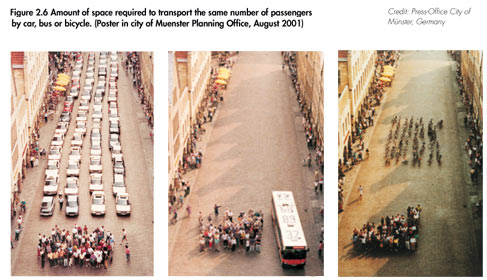
To many people, cars don't represent freedom. They represent expense, obligation, and decay. Most people have never lived in a place where they truly don't need them for anything. Having a train line within walking distance is true freedom, since it doesn't eat your disposable income like some kind of insatiable monster and doesn't require anything of you. It's also substantially cheaper to the public over time than transporting an equivalent number of people each with their own 800 lb engine and 80 sq ft of personal space.

Building truly functional cities will not be easy. Most people are not convinced by data and our common experience contradicts the conclusions found by engineers and urban planners. We have a half century plus of doing things the wrong way. That kind of inertia is difficult to overcome.
 

woolybug25

#1 Vineyard Vines Fan
Messages
17,677
Reaction score
3,018

I have a unique opinion of this. I don't think everyone should be going to college. The reason they consistently increase tuition is because of supply/demand. Over the last 40 years or so, somehow this country has come to believe that all kids should go to college and if they dont, they are screwed. Which couldn't be further from the truth. There are more worthless degrees and more kids getting them than any time in our history. So now we have minimized the value of four year degrees and flooded the work force with young people with [/insert worthless degree here] degrees and no actual work skills, and that is if they are the lucky ones to come out of college with a degree.

It still boggles my mind when I go and work with businesses and they universally tell me that their biggest struggle for their business is finding capable workers. No one wants or has the skills for today's blue collar jobs. Instead, they get minimum paying service jobs that they perceive as better because they dont get their hands dirty, jump from crappy gig to crappy gig, or simply sit at home and take government handouts.

Tell me... which kid has a better future?

Kid A
- Was never much of a student, so went to work at a machine shop right out of highschool, starting at $20 an hour.
- Accumulates zero debt for education
- Starts saving into his 401k at 18 years old
- Can afford to purchase his first small house with 20% down at 21 years old.
- Learns a skill (running a CNC machine) in a market with an extreme need for talent. Can get a job anywhere in town.

or

Kid B
- Not much of a student, but forced into the state university because his parents want him to and all of his friends are going.
- Leaves $50,000 in debt
- Gets a degree in communications and works a job he hates selling something he has no passion for, making $40,000 (which translates into... you guessed it... $20 per hour)
- Has no marketable skills to sell other than "communications degree"
- Has to wait 4 years out of high school before entering the workforce.
- Doesn't start saving for retirement until he is 21.
- Buys his first house at 24 years old with 3.5% down under a govt backed mortgage program. Which intensifies his monthly debt service.

If you ask me, there is nothing wrong with Kid A's path. But somehow, this has become a faux pas for young adults. There is a huge difference between getting an education and learning a trade. Eventually everyone needs to make a living, and college is not the best path for everyone.

In my opinion, if we want to bring college costs down, start putting more money into trade programs and quit making it so easy for kids to have access to low interest student loans. Start making kids really think if the cost of getting their art history degree is worth it, or if they can be just as happy learning how to build houses.
 
Last edited:

Whiskeyjack

Mittens Margaritas Ante Porcos
Staff member
Messages
20,894
Reaction score
8,126
In my opinion, if we want to bring college costs down, start putting more money into trade programs and quit making it so easy for kids to have access to low interest student loans. Start making kids really think if the cost of getting their art history degree is worth it, or if they can be just as happy learning how to build houses.

Germany's system seems to work pretty well. They sort kids out between Trade School and University tracks pretty early on. But can you imagine having to tell an American helicopter parent that little Johnny isn't likely to get into a good college, so he's better off learning a trade and starting an apprenticeship in high school? "There must be some mistake..."
 

woolybug25

#1 Vineyard Vines Fan
Messages
17,677
Reaction score
3,018
Germany's system seems to work pretty well. They sort kids out between Trade School and University tracks pretty early on. But can you imagine having to tell an American helicopter parent that little Johnny isn't likely to get into a good college, so he's better off learning a trade and starting an apprenticeship in high school? "There must be some mistake..."

Exactly! Then 4 years later, that helicopter parent is so proud of their little Johnny, who just graduated from Joe Blow State University with a degree in General Studies.

He's going to backpack Europe for the summer and then figure out what he wants to do for a living...
 

MNIrishman

Well-known member
Messages
2,532
Reaction score
481
Germany's system seems to work pretty well. They sort kids out between Trade School and University tracks pretty early on. But can you imagine having to tell an American helicopter parent that little Johnny isn't likely to get into a good college, so he's better off learning a trade and starting an apprenticeship in high school? "There must be some mistake..."

Would have helped my brother out a bunch. He always hated school and barely passed his way along, needing tutoring the whole way. Every night my parents yelling at him to do his homework. They forced him to go to the same high school I went to, a prep school that was proud of the fact that only something like 1 in 400 kids didn't go to college. My brother graduated with a 2.0 (a questionably-valid minimum GPA).

My bro chose not to go to college. He enlisted in the AF and is now doing fantastically well, zooming up the ranks as fast as they'll let him and receiving great praise for his work. He's happier than he's ever been and I'm really proud of him. He's doing some CCAF work on the side too, so eventually if he wants to leave he'll be in good shape with some college education and great skills in a trade.

I wonder how much happier he'd have been growing up if he hadn't been made to feel like a failure because he wasn't on the "college path," like I was. In the end, neither of us had student debts or needed anything from our parents, and at the moment he's making more money than me. I don't see anything wrong with the skilled trade path, and as I've grown in maturity I've come to believe in the validity of this route over the college route for many people. Needless student debt doesn't help anyone, and it certainly wouldn't have made my brother happier than he is now.
 

Whiskeyjack

Mittens Margaritas Ante Porcos
Staff member
Messages
20,894
Reaction score
8,126
TAC's James Mumford just published an article titled "Distributism Isn't Outdated":

I’m not holding out for a Red October 2017, but neither am I happy succumbing to a weary fatalism about the kind of capitalism we find ourselves with today. I want to believe things could be different, but that will require more vision than can be found in our current political arguments. And its accomplishment will hinge upon inspiring rather than alienating business leaders.

This will require a vision for transformation that—crucially—doesn’t revolve around a model of gladiatorial government whereby elected representatives battle for policy changes and social justice while we sit by cheering. No, we need a non-statist vision for economic and social change.

G.K. Chesterton’s early 20th century “distributism” is a movement typically considered a spent force, which is always a good reason to pay attention to something, for finding a vision for the future often requires swiveling back to the past. It holds out just the sort of powerful vision that could very well capture the hearts and minds of business leaders.

Chesterton’s “distributist” project tried to chart a middle course (but not “Third Way”!) between laissez faire capitalism on the one side and state socialism on the other. The problem with the former, as Chesterton wrote in The Outline of Sanity 10 years after the Russian Revolution, was that “The practical tendency of all trade and business today is towards big commercial combinations, often more imperial, more impersonal, more international than many a communist commonwealth.” While of the alternative, Chesterton said, “the point about Communism is that it only reforms the pickpocket by forbidding pockets.”

Instead, Chesterton picked up and ran with what we might call the Lockean strain in Pope Leo XIII’s famous encyclical Rerum Novarum, the emphasis on the natural integrity of private property. For Chesterton, ownership is a self-evident good, which therefore shouldn’t be abolished but widely distributed. Similarly, profit is a good thing, in fact too good a thing not to be shared. Accordingly, what Chesterton took issue with in the then-current defense of capitalism was that it was a “defense of keeping most men in wage dependence; that is, keeping most men without capital.” This conviction compelled Chesterton to lambast big business (which backfired when big chain of news stands refused to sell G.K.’s weekly); to monitor and oppose mergers; to advocate independent proprietorship; and to pronounce on every possible occasion that “small is beautiful”.

What possible relevance, though, can distributism have in globalized 21st-century economies? Economies where self-employment makes up so small a proportion of overall employment? In economies that produce complex, specialized goods from iPhones to aircraft?

Well, I think we could envisage in our economies a radical increase in the rate of self-employment—by which I mean, proportionately, a small increase! Small but significant. For, excitingly, many of the jobs that lend themselves to self-employment—bike shops, cleaning, landscape gardening, building trades—are entry-level. Ownership can be most achievable for some of the most disadvantaged and for the longest unemployed.

Policy circles at the moment, in the U.S. and the U.K., are abuzz with talk of how transformative “interventions” can improve someone’s life—interventions like the Family Nurse Partnership, or other types of mentoring for isolated young mothers. The distributist vision will require interventions as well, but interventions undertaken by men and women in the business community who give their time and energy to mentor young people at risk of crime, those coming out of the criminal justice system, or the long-term unemployed, all with the aim of giving them the confidence to set up their own productive, self-owned businesses.

How else might the distributist vision be achieved? Many on the right say that the best thing men and women in the business community could do for the poor is to start companies. Absolutely, but what about starting companies that the poor have a stake in from the very start?

Take a rural example: I have a friend who has made a significant amount of money, with which he has purchased a farm. But instead of working the land for him, the worker keeping the pigs will run the business with my friend, will co-farm, and will then share the profits.

Interestingly, however—as Jay Corrin notes in his excellent book Catholic Intellectuals and the Challenge of Democracy (University of Notre Dame Press, 2002)—Chesterton’s promotion of ownership and concomitant dismissal of wage-dependence led, in the General Strike of 1926, to the distributists strongly disapproving of the central demand of the trade unions: an insistence on a living wage. As Corrin says: “Focusing on the issue of wages, they argued, would only serve to perpetuate the division of property between employer and employee.”

At this point, though, Chesterton was running so far with the Lockean strand of Rerum Novarum, he left behind its other emphasis: the living wage. We can’t afford to make that mistake. For the truth is we don’t have time to wait until the elimination of “wage-dependence”; something needs to be done now about the low-wage economy. More specifically, the poor deserve a “floor” in terms of income—in the form of a living wage.

In the UK there have been two recent political attempts to respond to Catholic Social Teaching: Phillip Blond’s Red Toryism—focusing more on Chesterton’s distributist vision—and the Blue Labour movement developed by Lord Glasman, a Jewish political philosopher. His thinking and activism bears the impress of his appreciation of what he called the precious “gift” of Catholic social teaching. For as a community organizer, Glasman is adamantly anti-statist. Only by lobbying companies one by one, he insists, bringing management into direct relationship with their low-paid staff, should the living wage be campaigned for.

Returning to America, the task of tackling poverty can seem overwhelming. The U.S. has the highest incarceration rate per capita in the world, while drug use is so endemic that it would now seem that opium is the opiate of the people. But chief among our priorities must be to increase ownership amongst the poorest and to ensure them a living-wage “floor.”

How will this be accomplished? Not mainly through government. No, this vision will be accomplished by envisioning, rather than alienating, business leaders; envisioning them to do things differently in the capitalist economies in which we find ourselves.

James Mumford writes both fiction and non-fiction, his first book Ethics At The Beginning of Life was published by Oxford in 2013. He is currently a fellow at the University of Virginia’s Institute for Advanced Studies in Culture and posts regularly at I Write What I Like | Writing by James Mumford

Adapted from a speech at The Notre Dame Center for Ethics and Culture’s 15th Annual Fall Conference, ‘Your Light Will Rise in the Darkness: Responding to the Cry of the Poor.’
 

Ndaccountant

Old Hoss
Messages
8,370
Reaction score
5,771
With European inflation declining to 0.3%, and U.S. inflation slowing, a specter now haunts the Western world. Deflation, the Economist recently proclaimed, is a “pernicious threat” and “the world’s biggest economic problem.” Christine Lagarde , managing director of the International Monetary Fund, called deflation an “ogre” that could “prove disastrous for the recovery.”

True, a sudden, large and sharp collapse in prices, such as occurred in the early 1920s and 1930s, would be a problem: Debtors might fail, some prices and wages might not adjust quickly enough. But these deflations resulted directly from financial panics, when central banks couldn’t or didn’t accommodate a sudden demand for money.

The worry today is a slow slide toward falling prices, maybe 1% to 2% annually, with perpetually near-zero short-term interest rates. This scenario would unfold alongside positive, if sluggish, growth, ample money and low credit spreads, with financial panic long passed. And slight deflation has advantages. Milton Friedman long ago recognized slight deflation as the “optimal” monetary policy, since people and businesses can hold lots of cash without worrying about it losing value. So why do people think deflation, by itself, is a big problem?


John Cochrane: Who’s Afraid of a Little Deflation? - WSJ - WSJ
 

wizards8507

Well-known member
Messages
20,660
Reaction score
2,661
TAC's James Mumford just published an article titled "Distributism Isn't Outdated":
I'm always amazed at these articles you get from The American Conservative that absolutely throw conservatism out the window.

Basic, basic, BASIC economics: raising the minimum wage to the level of a "living wage" is economically impossible in the long term. The market will always adjust so that whatever nominal wage you get from working entry level at a fast food restaurant will not be enough to raise a family on. Let's say a living wage is determined to be $12 an hour. The $8 fast food worker is bumped to $12 by legislative mandate. The $10 cashier says "wait, I'm worth more than the fast food worker," and demands $15. The $14 maintenance worker says "I'm worth more than the cashier" and is bumped to $21. $40,000 manufacturers become $60,000 manufacturers, $60,000 CPAs become $90,000 CPAs, and $100,000 attorneys become $150,000 attorneys. In order to pay for their new employees' wages (and to capitalize on higher nominal disposable income in the economy), firms raise prices on absolutely everything. That fast food worker used to spend $50 on groceries, but now his basket of goods costs $75. Nominal wages went up, but real purchasing power is exactly the same as it was before. Granted, all of this takes time to reach equilibrium and a minimum wage increase has certain short term ramifications, but it all comes out in the wash in the long run, with the only exception being devaluation of debt in real terms (good for debtors, bad for asset holders).

Also: Who actually earns minimum wage? When I was in high school, the federal minimum wage was $5.15. As a part time employee of a fast food restaurant (McDonald's), I was the bottom of the bottom of the labor market and I still earned $8.25.
 

Whiskeyjack

Mittens Margaritas Ante Porcos
Staff member
Messages
20,894
Reaction score
8,126
I'm always amazed at these articles you get from The American Conservative that absolutely throw conservatism out the window.

Basic, basic, BASIC economics: raising the minimum wage to the level of a "living wage" is economically impossible in the long term. The market will always adjust so that whatever nominal wage you get from working entry level at a fast food restaurant will not be enough to raise a family on. Let's say a living wage is determined to be $12 an hour. The $8 fast food worker is bumped to $12 by legislative mandate. The $10 cashier says "wait, I'm worth more than the fast food worker," and demands $15. The $14 maintenance worker says "I'm worth more than the cashier" and is bumped to $21. $40,000 manufacturers become $60,000 manufacturers, $60,000 CPAs become $90,000 CPAs, and $100,000 attorneys become $150,000 attorneys. In order to pay for their new employees' wages (and to capitalize on higher nominal disposable income in the economy), firms raise prices on absolutely everything. That fast food worker used to spend $50 on groceries, but now his basket of goods costs $75. Nominal wages went up, but real purchasing power is exactly the same as it was before. Granted, all of this takes time to reach equilibrium and a minimum wage increase has certain short term ramifications, but it all comes out in the wash in the long run, with the only exception being devaluation of debt in real terms (good for debtors, bad for asset holders).

A "living wage" could also be achieved via a Basic Income contingent upon being gainfully employed or currently looking for work. Simple and humane without any of the market distortions you've listed. Then we focus on encouraging self-employment as the author explained above.
 

wizards8507

Well-known member
Messages
20,660
Reaction score
2,661
A "living wage" could also be achieved via a Basic Income contingent upon being gainfully employed or currently looking for work. Simple and humane without any of the market distortions you've listed. Then we focus on encouraging self-employment as the author explained above.
That's even worse. You'd have to take the money out of the economy in the form of taxation, then pump it back into the economy as a distribution, with the net effect being the loss it takes to fund the bureaucracy that administers the whole thing.
 

GoIrish41

Paterfamilius
Messages
9,929
Reaction score
2,119
I'm always amazed at these articles you get from The American Conservative that absolutely throw conservatism out the window.

Basic, basic, BASIC economics: raising the minimum wage to the level of a "living wage" is economically impossible in the long term. The market will always adjust so that whatever nominal wage you get from working entry level at a fast food restaurant will not be enough to raise a family on. Let's say a living wage is determined to be $12 an hour. The $8 fast food worker is bumped to $12 by legislative mandate. The $10 cashier says "wait, I'm worth more than the fast food worker," and demands $15. The $14 maintenance worker says "I'm worth more than the cashier" and is bumped to $21. $40,000 manufacturers become $60,000 manufacturers, $60,000 CPAs become $90,000 CPAs, and $100,000 attorneys become $150,000 attorneys. In order to pay for their new employees' wages (and to capitalize on higher nominal disposable income in the economy), firms raise prices on absolutely everything. That fast food worker used to spend $50 on groceries, but now his basket of goods costs $75. Nominal wages went up, but real purchasing power is exactly the same as it was before. Granted, all of this takes time to reach equilibrium and a minimum wage increase has certain short term ramifications, but it all comes out in the wash in the long run, with the only exception being devaluation of debt in real terms (good for debtors, bad for asset holders).

Also: Who actually earns minimum wage? When I was in high school, the federal minimum wage was $5.15. As a part time employee of a fast food restaurant (McDonald's), I was the bottom of the bottom of the labor market and I still earned $8.25.

If an $8 fast food worker gets a $4 raise, they will now make $160 more per week, so even with the extra $25 they spend on groceries they still are making $135 more than they were making prior to the legislation. It is not the same as it was before. For someone who makes minimum wage, $135 is a meaningful amount of money each week.

Minimum wage earners are not making much more that minimum wage, which is $7.25 right now. Their raises come slowly and they are quite small, so it would take a couple of years in most cases for them to even make what you made in your job when you were in high school.
 

wizards8507

Well-known member
Messages
20,660
Reaction score
2,661
If an $8 fast food worker gets a $4 raise, they will now make $160 more per week, so even with the extra $25 they spend on groceries they still are making $135 more than they were making prior to the legislation. It is not the same as it was before. For someone who makes minimum wage, $135 is a meaningful amount of money each week.
It's not just their groceries that are more expensive, it's everything. Gas, rent, entertainment, merchandise, utilities. If they're making $160 more per week, their total expenditures are going to be $160 more per week.

Minimum wage earners are not making much more that minimum wage, which is $7.25 right now. Their raises come slowly and they are quite small, so it would take a couple of years in most cases for them to even make what you made in your job when you were in high school.
That's my point. If 16 year old me can make $8.25 ten years ago, how terrible of a worker do you have to be to be stuck at $7.25 now? My father works in a factory with 20-somethings who show up to work high, drunk, and hungover, and those guys make $40,000 plus overtime. Honestly, if you're a grown man making minimum wage, you're doing something VERY VERY wrong.

(All of this excludes people with legitimate disabilities. Those folks should be taken care of.)
 

GoIrish41

Paterfamilius
Messages
9,929
Reaction score
2,119
It's not just their groceries that are more expensive, it's everything. Gas, rent, entertainment, merchandise, utilities. If they're making $160 more per week, their total expenditures are going to be $160 more per week.


That's my point. If 16 year old me can make $8.25 ten years ago, how terrible of a worker do you have to be to be stuck at $7.25 now? My father works in a factory with 20-somethings who show up to work high, drunk, and hungover, and those guys make $40,000 plus overtime. Honestly, if you're a grown man making minimum wage, you're doing something VERY VERY wrong.

(All of this excludes people with legitimate disabilities. Those folks should be taken care of.)

Or how shitty have the practices of the companies hiring these people become? But, I suppose blaming the victims and calling them terrible workers is another way to look at it. Those drunken teens are lucky there is a factory for them to work at to make $40k. Most of those types of jobs have been shipped overseas where modern companies can pay workers $5k a year instead.
 

GowerND11

Well-known member
Messages
6,535
Reaction score
3,282
It's not just their groceries that are more expensive, it's everything. Gas, rent, entertainment, merchandise, utilities. If they're making $160 more per week, their total expenditures are going to be $160 more per week.


That's my point. If 16 year old me can make $8.25 ten years ago, how terrible of a worker do you have to be to be stuck at $7.25 now? My father works in a factory with 20-somethings who show up to work high, drunk, and hungover, and those guys make $40,000 plus overtime. Honestly, if you're a grown man making minimum wage, you're doing something VERY VERY wrong.

(All of this excludes people with legitimate disabilities. Those folks should be taken care of.)

Or how shitty have the practices of the companies hiring these people become? But, I suppose blaming the victims and calling them terrible workers is another way to look at it. Those drunken teens are lucky there is a factory for them to work at to make $40k. Most of those types of jobs have been shipped overseas where modern companies can pay workers $5k a year instead.

It's like you two are arguing over Nature VS Nurture, the real problem lies somewhere in the middle. There are grown men and women who are lazy and feed off the gov't, don't want to improve their lives, etc etc. There are others who have been dealt a shitty draw and suffer from that scratching and crawling trying to get out from that hole and are stuck in these shitty positions.

Companies have also taken advantage of the job climate in the US and have driven wages down forcing some to be underemployed.
 

Whiskeyjack

Mittens Margaritas Ante Porcos
Staff member
Messages
20,894
Reaction score
8,126
That's even worse. You'd have to take the money out of the economy in the form of taxation, then pump it back into the economy as a distribution, with the net effect being the loss it takes to fund the bureaucracy that administers the whole thing.

Do you have a politically feasible plan for repealing our entire welfare apparatus then? I assume not, since the idea is pure fantasy. Virtually every Western nation in the world has a social safety net, and ours isn't going anywhere. Thus, I'm interested in ways to make it more simple, efficient, comprehensive and humane than the currently Byzantine patchwork of redundant programs we have. There's a lot of research that indicates conditional cash transfers are the most efficient and non-paternalistic form of social safety net.

Our federal, state and local governments spend over $1 trillion annually on welfare. Is all of money simply being wasted? If your economic theory is correct (and it's not), inflation should have already destroyed any increase in buying power those recipients might have enjoyed. So they'd all be better off if we just abolished the welfare system altogether, right?

What do you tell panhandlers who ask you for change? "Gee, I'd love to help you, but the market will eventually wipe out any buying power I could transfer to you, so I'll just do you a favor and keep my cash. But God bless!"
 
Last edited:

wizards8507

Well-known member
Messages
20,660
Reaction score
2,661
Do you have a politically feasible plan for repealing our entire welfare apparatus then? I assume not, since the idea is pure fantasy. Virtually every Western nation in the world has a social safety net, and ours isn't going anywhere.
Privatization of--and an "opt out" clause in--Social Security is less feasible than a national guaranteed income? Come on. From a political "would it ever pass?" perspective, we're both dreaming.

Thus, I'm interested in ways to make it more simple, efficient, comprehensive and humane than the currently Byzantine patchwork of redundant programs we have. There's a lot of research that indicates conditional cash transfers are the most efficient and non-paternalistic form of social safety net.
You're adding a layer. What does that simplify?

Federal, state and local governments government spend over $1 trillion annually on welfare. Is all of money simply being wasted? If your economic theory is correct (and it's not), inflation should have already destroyed any increase in buying power those recipients might have enjoyed. So they'd all be better off if we just abolished the welfare system altogether, right?
Buying power has gone up due to decreases in the real cost of production. Technological advances mean we can make a television (for example) much more cheaply in terms of real dollars than we could in the past. These advances have had a deflationary effect that have masked the inflationary effect of welfare and the minimum wage. None of these exist in a vacuum, so it's just about impossible to point to any data that proves the concept. Too many variables.

What do you tell panhandlers who ask you for change? "Gee, I'd love to help you, but the market will eventually wipe out any buying power I could transfer to you, so I'll just do you a favor and keep my cash. But God bless!"
You should know me better than that. There's a difference between an individual's moral obligation and society's moral obligation. I, wizards8507, have a moral obligation to help the poor. You, Whiskeyjack, have a moral obligation to help the poor. The "United States of America" has no moral obligation to help the poor because the State, being a social construct and not an independent agent, is amoral by definition. Furthermore, every act taken by the state coerces the individual members of the state into participation. As much as you and I have obligations, our choice to meet those obligations must be an act of free will and should not be forced upon us. Charity through coercion is no virtue.

EDIT: That's all just the principled side of the argument. The practical side of the argument is that the government just sucks at doing stuff. I don't know the actual percentage, but if I write a $1,000 check to Notre Dame, I'm probably doing about $998 worth of good. What percentage of $1,000 confiscated by the federal government actually helps anyone? I'd be shocked if it was as high as 50%.
 
Last edited:

Whiskeyjack

Mittens Margaritas Ante Porcos
Staff member
Messages
20,894
Reaction score
8,126
Privatization of--and an "opt out" clause in--Social Security is less feasible than a national guaranteed income?

Yes, because SSI ceased being a self-sustaining pay-as-you-go federally-mandated savings program long ago. It's a progressive program that redistributes a lot of income from the wealthy to the poor, and that progressivity has been and will continue increasing for the foreseeable future. Privatizing it would be a windfall for Wall Street and those few Americans who are capable of investing wisely, but a disaster for the common good. Which is why it's a complete nonstarter for the left, and will never happen.

You're adding a layer. What does that simplify?

The Basic Income would replacement everything-- SSI, SSD, food stamps, etc. It would be a massive simplification.

Buying power has gone up due to decreases in the real cost of production. Technological advances mean we can make a television (for example) much more cheaply in terms of real dollars than we could in the past. These advances have had a deflationary effect that have masked the inflationary effect of welfare and the minimum wage. None of these exist in a vacuum, so it's just about impossible to point to any data that proves the concept. Too many variables.

I agree, which is partly why your "just-so" explanation of the economic consequences here is so off-putting.

You should know me better than that. There's a difference between an individual's moral obligation and society's moral obligation. I, wizards8507, have a moral obligation to help the poor. You, Whiskeyjack, have a moral obligation to help the poor. The "United States of America" has no moral obligation to help the poor because the State, being a social construct and not an independent agent, is amoral by definition.

It shouldn't be that way, nor does it have to be. I agree that you and I, as individuals, have moral obligations; but so do social units larger than ourselves. Our families, churches, civic organizations, school boards, neighborhoods, city zoning commissions, etc. all have moral obligations as well, because they are extensions of the communities in which they exist. Once we've arrived at a layer of government so distant from the people it governs that it no longer makes sense to speak in terms of moral obligation, that should be a strong indication that it's time to devolve power.

No human organization is exempt from moral obligation, though the perverse philosophy at the heart of political liberalism (humans are autonomous individuals who presumably owe nothing to one another) has obscured that fact. Which is why we now not only tolerate, but expect corporations and governments to be amoral.

Furthermore, every act taken by the state coerces the individual members of the state into participation. As much as you and I have obligations, our choice to meet those obligations must be an act of free will and should not be forced upon us. Charity through coercion is no virtue.

As you know, my political instincts are much more libertarian than progressive. As far as taking care of one's fellow man, I agree that voting for higher taxes and more generous benefits is a far cry from actually helping ones neighbors personally, because charity is a powerful and vital force that acts not just on the donee, but the donor. When we foist all concern for the poor on distant governments, even if we support more generous policies, most of the transformative moral effect on both parties (especially on the donor) is lost.

That said, we're also obligated to do what we can within the current flawed system; we can't sacrifice the Good on the altar of the Perfect. In my estimation, given our current political arrangements, I think the best and most realistic option to work toward is a Basic Income at the federal level, and policies that recognize the inherent dignity of work and financial independence on the local level (which any successful business person can get involved with personally through mentorship).

EDIT: That's all just the principled side of the argument. The practical side of the argument is that the government just sucks at doing stuff. I don't know the actual percentage, but if I write a $1,000 check to Notre Dame, I'm probably doing about $998 worth of good. What percentage of $1,000 confiscated by the federal government actually helps anyone? I'd be shocked if it was as high as 50%.

I'm no fan of the federal government, but I'm certain it's no where near that low.
 
Last edited:

irishog77

NOT SINBAD's NEPHEW
Messages
7,441
Reaction score
2,206
Do you have a politically feasible plan for repealing our entire welfare apparatus then? I assume not, since the idea is pure fantasy. Virtually every Western nation in the world has a social safety net, and ours isn't going anywhere. Thus, I'm interested in ways to make it more simple, efficient, comprehensive and humane than the currently Byzantine patchwork of redundant programs we have. There's a lot of research that indicates conditional cash transfers are the most efficient and non-paternalistic form of social safety net.

Our federal, state and local governments spend over $1 trillion annually on welfare. Is all of money simply being wasted? If your economic theory is correct (and it's not), inflation should have already destroyed any increase in buying power those recipients might have enjoyed. So they'd all be better off if we just abolished the welfare system altogether, right?

What do you tell panhandlers who ask you for change? "Gee, I'd love to help you, but the market will eventually wipe out any buying power I could transfer to you, so I'll just do you a favor and keep my cash. But God bless!"

I laughed!
 

phgreek

New member
Messages
6,956
Reaction score
433
I have a unique opinion of this. I don't think everyone should be going to college. The reason they consistently increase tuition is because of supply/demand. Over the last 40 years or so, somehow this country has come to believe that all kids should go to college and if they dont, they are screwed. Which couldn't be further from the truth. There are more worthless degrees and more kids getting them than any time in our history. So now we have minimized the value of four year degrees and flooded the work force with young people with [/insert worthless degree here] degrees and no actual work skills, and that is if they are the lucky ones to come out of college with a degree.

It still boggles my mind when I go and work with businesses and they universally tell me that their biggest struggle for their business is finding capable workers. No one wants or has the skills for today's blue collar jobs. Instead, they get minimum paying service jobs that they perceive as better because they dont get their hands dirty, jump from crappy gig to crappy gig, or simply sit at home and take government handouts.

Tell me... which kid has a better future?

Kid A
- Was never much of a student, so went to work at a machine shop right out of highschool, starting at $20 an hour.
- Accumulates zero debt for education
- Starts saving into his 401k at 18 years old
- Can afford to purchase his first small house with 20% down at 21 years old.
- Learns a skill (running a CNC machine) in a market with an extreme need for talent. Can get a job anywhere in town.

or

Kid B
- Not much of a student, but forced into the state university because his parents want him to and all of his friends are going.
- Leaves $50,000 in debt
- Gets a degree in communications and works a job he hates selling something he has no passion for, making $40,000 (which translates into... you guessed it... $20 per hour)
- Has no marketable skills to sell other than "communications degree"
- Has to wait 4 years out of high school before entering the workforce.
- Doesn't start saving for retirement until he is 21.
- Buys his first house at 24 years old with 3.5% down under a govt backed mortgage program. Which intensifies his monthly debt service.

If you ask me, there is nothing wrong with Kid A's path. But somehow, this has become a faux pas for young adults. There is a huge difference between getting an education and learning a trade. Eventually everyone needs to make a living, and college is not the best path for everyone.

In my opinion, if we want to bring college costs down, start putting more money into trade programs and quit making it so easy for kids to have access to low interest student loans. Start making kids really think if the cost of getting their art history degree is worth it, or if they can be just as happy learning how to build houses.

I see things similarly...but the rub is...wait for it...PARENTS. No parent wants to let their kids do it...to MOST, its some sort of defeat if their kid learns a trade and goes to work...I think the perception of trades comes from the shrinkage of Detroit, and other industrial/manufacturing areas from the 70s on. I guess it is assumed that is the fate of all tradesman...and those folks are generally the parents and grandparents of these kids...so, trades get a real bad rep. Its a hrd stigma to break...
 
Top