Economics

Wild Bill

Well-known member
Messages
5,518
Reaction score
3,262
New Urbanism is not expressly theological; indeed, Bess concedes that most New Urbanists are secular progressives.

Yet the bigger challenge, from Bess’s point of view, is to convince conservatives that New Urbanism is something they should embrace.

I'd have to assume it's difficult to embrace the idea of living in a community populated by individuals who mock your fundamental beliefs.
 

Emcee77

latress on the men-jay
Messages
7,295
Reaction score
555
When we talk about "central plans" and "master design," we need to remember that those things require an agent to do the planning and designing. By default and as a function of scale, those roles are filled by the State.

But I can't find either of those phrases in what Whiskey quoted. I thought the piece was about local planning, not the Federal Department of Urban Planning.

Surely you aren't opposed to local planning? Like, are you saying you are against public schools, run by a local school board? I think that is the kind of planning that is being talked about here, local planning by municipal governments of the sort that is widespread throughout the country.

The change is just that those municipal bodies' decisions have been driven by an underlying assumption that the ideal living situation that their citizens preferred is a big house on a lot of land in an outlying area that could only be accessed by car. Nowadays, more people are seeking a different lifestyle.
 

Whiskeyjack

Mittens Margaritas Ante Porcos
Staff member
Messages
20,894
Reaction score
8,126
My brain is breaking trying to reconcile that article into anything that can be described as "conservatism." I'm trying really hard because I respect Whiskey and his opinions, but this reeks of flat-out communism to me. When we talk about "central plans" and "master design," we need to remember that those things require an agent to do the planning and designing. By default and as a function of scale, those roles are filled by the State.

Conservativism, as the author defines it, means recognizing "a sacred order to which individuals and communities must conform to flourish, and... [a commitment] to protect, nurture, and develop that order as it comes to us through tradition." That obviously doesn't jive with any sort of libertarian philosophy, which seems to be your definition of "conservative." (Though what exactly is a libertarian seeking to "conserve"?)

Authority is an unavoidable fact of human life. Anarcho-capitalism is a utopian (or, more likely, dystopian) fantasy. Our current neo-liberal system has been vesting more and more of it in the Federal government, as the distant omnipotent guarantor of "individual" rights; and the growth of the Federal government is only going to continue as the intermediary institutions that, by right, should be wielding the most authority in American lives--families, churches, voluntary associations, neighborhoods, local governments, etc.-- are slowly but surely undermined by the legal fiction of "individual autonomy". Or we can try to devolve power from the Feds back to those intermediate institutions. But in either case, authority is inescapable.

The post-war model of highways and long commutes to distant cookie-cutter suburbs didn't arise organically from the decisions of private citizens either. It was, and continues to be, the result of "central planners" from the Federal level all the way down to your local Zoning Commission. And unless you'd welcome a cement factory as a next door neighbor, I don't expect you're in favor of abolishing zoning regulations.

I'd have to assume it's difficult to embrace the idea of living in a community populated by individuals who mock your fundamental beliefs.

Walkable neighborhoods aren't limited to secular progressives. Right now, they're mostly found in large urban centers which coincidentally happen to be very liberal, but there's nothing inherently leftist about wanting to live in such a place. The difficulty Bess refers to is reflected in wizards' post above; American "conservatives" are mostly neoliberal these days, which causes them to reflexively oppose anything that whiffs of "central planning".

The point is that beauty matters. When we, as conservatives, focus solely on economics, theology, etc., and cede the entire realm of art, architecture, etc. to secular progressives, it makes our job of "conserving" the Good, True and Beautiful that much harder, because we're left with only dry intellectual premises. We need to be able to build tangible examples of the Good Life, and walkable neighborhoods are definitely part of that.
 
Last edited:

wizards8507

Well-known member
Messages
20,660
Reaction score
2,661
Conservativism, as the author defines it, means recognizing "a sacred order to which individuals and communities must conform to flourish, and... [a commitment] to protect, nurture, and develop that order as it comes to us through tradition." That obviously doesn't jive with any sort of libertarian philosophy, which seems to be your definition of "conservative." (Though what exactly is a libertarian seeking to "conserve"?)
That's how we're going to define conservatism in this conversation yet it's libertarianism that you label a "Utopian/dystopian fantasy"? The problem with establishing a society based on higher ideals (in this case, a "sacred order"), is that someone or some entity gets to write the definition of those ideals. That might be fine and good if the "sacred order" of those wielding the power is in line with your own personal philosophy (Judeo-Christian values, for example), but what if it's not? Once you create a sword mighty enough to enforce the "sacred order," you better be darn sure that you know who's going to be wielding it in the future.
 

Whiskeyjack

Mittens Margaritas Ante Porcos
Staff member
Messages
20,894
Reaction score
8,126
That's how we're going to define conservatism in this conversation yet it's libertarianism that you label a "Utopian/dystopian fantasy"?

I wrote that anarcho-capitalism is a utopian fantasy. My political instincts are strongly libertarian, and I don't hold out much hope for conservatism (as I understand it) to ever take root in America. I will happily vote for principled libertarian candidates over progressives, because the former will generally leave me alone to practice my faith my peace, while the latter tend to believe that religion should be hounded out of the public square.

The problem with establishing a society based on higher ideals (in this case, a "sacred order"), is that someone or some entity gets to write the definition of those ideals.

Every society is founded on some conception of the Common Good. America has its own "sacred order", even with the First Amendment. "Sacred order" in this case doesn't have to be explicitly theological. Many conservatives aren't religious.
 
B

Buster Bluth

Guest
Posting this here because: (1) it's one of my all-time favorite IE threads; and (2) it contains most of Buster's posts re good urban planning.

TAC's Rod Dreher just published an article titled "New Urbanism of the Soul":

Bess is a boss. Curious to hear Buster's thoughts on this.

I just bought that book, "Geography of Nowhere." It's on my list after I finish this Ralph Nader book. I'm a huuuuuuge fan of the Kunstler TedTalk I posted on this thread earlier. I'm honestly a little proud of how many elements of that article I posted in this thread. haha

I'm not crazy about the religious aspects he brings up, mostly because they don't apply to me. I do think America severely lacks in public spaces that Europe has, specifically the Church/Cathedral squares where community interaction thrives. Here in the US we have chance meetings in a parking lot. Sorta sucks.

He's clearly making a different conservative argument than a fiscal "sprawl is economically unsustainable," which is what is currently causing the Right to rethink its stances on sprawl (not that they have a centralized policy per se). He's making a much broader criticism of conservatism, that it doesn't mean isolation from community (pure individualism) and we should reflect that in our design standards. I'm sure people will still equate any presence of community with ghosts of Joseph Stalin.

I think there's a lot to be said about conservatives incorrectly rejecting all government/community instead of promoting local government/community. The best way to promote the latter is with neighborhoods. We don't build them anymore and I think it's politically unsustainable for this country. We don't have enough conversation with neighbors on the sidewalk, instead we let Rush Limbaugh tell us what to think.

It's an A+ article. I shared in on Facebook haha
 
Last edited:
B

Buster Bluth

Guest
this reeks of flat-out communism to me.

(Joseph Stalin's ghost!) :)

When we talk about "central plans" and "master design," we need to remember that those things require an agent to do the planning and designing. By default and as a function of scale, those roles are filled by the State.

When I think of communism, I think of apathetic government workers, who are thousands of miles away, telling me to build uniform buildings (ie modernism) because their opinion is better than mine, and if I reject it I hate "our" core virtues.

When I think of the current typical suburban commercial strip...

ringgold_road.jpg


...I think of apathetic business executives, who are thousands of miles away, telling me to build uniform buildings because their opinion is better than mine, and if I reject it I hate "our" core values.

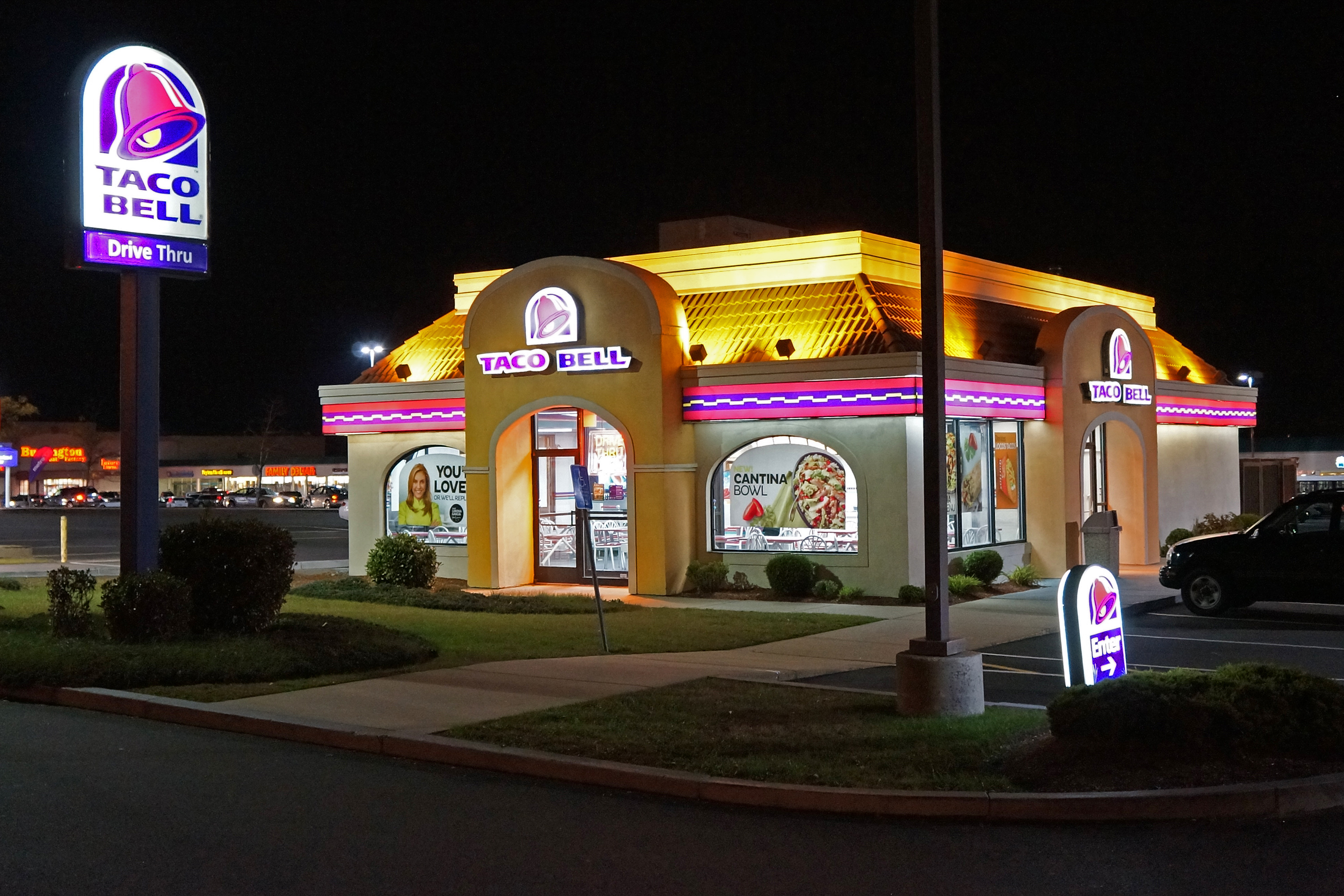
The disease within communism that you fear has mutated into corporatism and invaded our lives via suburbia. Sameness. Sameness everywhere.

CrackerBarrel.jpg


bob_evans.jpg


Dicks-Sporting-Goods.jpg


dsc05533.jpg


Taco_Bell_Night.JPG


Or in our neighborhoods...

urban-sprawl-florida.jpg


Even driving between them, states now wall off highways with trees, spreading the view of sameness for thousands of miles.

M1X00200_highway09282009.JPG


Architecturally speaking, suburbia is what communism was.

Politically speaking, local planning and local master plans are almost the very definition of democracy and republicanism. Local governments designing their zoning codes in a manner that creates neighborhoods and unique places is democracy in action.
 
Last edited:

Whiskeyjack

Mittens Margaritas Ante Porcos
Staff member
Messages
20,894
Reaction score
8,126
The Atlantic's Parag Khanna just published an article titled "Dismantling Empires Through Devolution":

Last week, the world’s most globe-spanning empire until the mid-20th century let its fate be decided by 3.6 million voters in Scotland. While Great Britain narrowly salvaged its nominal unity, the episode offered an important reminder: The 21st century’s strongest political force is not democracy but devolution.

Before the vote was cast, British Prime Minister David Cameron and his team were so worried by voter sentiment swinging toward Scottish independence that they promised a raft of additional powers to Edinburgh (and Wales and Northern Ireland) such as the right to set its own tax rates—granting even more concessions than Scotland’s own parliament had demanded. Scotland won before it lost. Furthermore, what it won it will never give back, and what it lost it can try to win again later. England, meanwhile, feels ever more like the center of a Devolved Kingdom rather than a united one.

Devolution—meaning the decentralization of power—is the geopolitical equivalent of the second law of thermodynamics: inexorable, universal entropy. Today’s nationalism and tribalism across Europe, Africa, and the Middle East represent the continued push for either greater autonomy within states or total independence from what some view as legacy colonial structures. Whether these movements are for devolution, federalism, or secession, they all to varying degrees advocate the same thing: greater self-rule.

In addition to the traditional forces of anti-colonialism and ethnic grievance, the newer realities of weak and over-populated states, struggles to control natural resources, accelerated economic competition, and even the rise of big data and climate change all point to more devolution in the future rather than less. Surprisingly, this could be a good thing, both for America and the world.

Woodrow Wilson brought his fierce anti-colonialism to the Paris Peace Conference after World War I, insisting on national self-determination as one of his famous “Fourteen Points.” But stubborn Western Europeans held on to their imperial possessions until World War II bankrupted them. The dismantling of the British and French empires over the course of the 20th century gave birth to more than 75 new countries within four decades. Decolonization was followed by the collapse of the Soviet Union, which created 15 independent states. All told, the jackhammer of devolution has more than tripled the number of countries around the world, from the 51 original member states of the United Nations to its 193 members today.

Strangely, international law as enshrined in the UN Charter appears to work against these trends, strongly privileging state borders as they are as if to freeze the world map in time. But to paraphrase Victor Hugo, there is nothing more powerful than an idea whose time has come. People can no longer be cheated (for long) out of their legitimate aspirations for self-rule.

Devolution helps to sensibly reorganize large and unwieldy post-colonial states. Take the example of India, where more than 60 years of independence have brought little development to peripheral and rural states in the east and northeast of the country. Rather than fostering economic growth outside the capital, New Delhi’s priority instead has been imposing either the Hindi (Mahatma Gandhi’s preference) or English languages across the country. But such malign neglect has only stoked devolutionary pressures. Since 1947, the number of states in the Indian federation has doubled, with the 29th (Telangana) created earlier this year. As state boundaries better conform to ethnic and linguistic boundaries, provincial units can focus more on their internal growth, rather than on having to defend themselves against the center. Notice how the second-largest contributor to Indian GDP besides Mumbai’s Maharashtra state is Tamil Nadu, the state that is geographically farthest from notoriously corrupt New Delhi.

Another accelerant of devolution is ubiquitous data. Much as modern nation-states seem to have lost their monopoly on armed forces, so too has evaporated their dominance of information flows and narratives. Call it the triumph of transparency: Whether through free media, leaks, hacks, democracy, or legal pressure, people increasingly know how their countries are run—and crucially how their money is spent. This March, participants in a nonbinding online referendum in Venice overwhelmingly supported an unofficial “declaration of independence” from Italy. The reason? Venice pays 70 billion euros in taxes per year, but receives only a fraction back in fiscal transfers, meaning support from the capital.

Catalonia, with its unique language and centuries of cultural traditions, made similar calculations with respect to Madrid and is set to vote on independence in November. Spain and Italy’s constitutions forbid secession, but to avoid severe internal unrest beyond that which has already beset them since the financial crisis, both governments will likely grant more autonomy to these important provinces. Ultimately, these upstart—or start-up—regions want the “devo-max” deal the Basques of northern Spain have: complete fiscal autonomy with no taxes paid to the capital.

Even global warming can drive devolution: As Greenland’s ice sheet melts, its 60,000 Inuit have greater access to abundant and valuable reserves of resources such as uranium and natural gas. This creates an incentive for Greenlanders to hoard the potential windfall rather than send it to Copenhagen, which has retained some governing authority over the island since Denmark seized and colonized Greenland nearly three centuries ago. The 2021 date proposed for a Greenland independence vote provides an eerie parallel to Scotland’s referendum, which took place roughly 300 years after that country joined the United Kingdom. Unlike Scotland, however, Greenland’s vote for independence wouldn’t even be close. Make way for another seat at the UN.

Shrill warnings against devolution ignore the evidence that it is also a logical consequence of connectivity. In the days before Scotland’s independence referendum, Gordon Brown, the Scotland-born former British prime minister, made a passionate appeal to his countrymen to choose unity over independence. Scotland’s “quarrel should be with globalization, rather than England,” he said. But on whose terms should that tug-of-war for jobs be waged? Smaller states and smaller economies have less of a margin for error when it comes to their own survival. Would Scotland have outsourced its manufacturing base to Asia in the way that far-off London capitalists so enthusiastically did? Would Scotland, as politicians in London warned, really have been unable to establish its own currency within 18 months? As even the anti-independence Economist noted, 28 new central banks have been created in the past 25 years; Estonia set up its own central bank and currency in a week. A connected world—the result of Brown’s bogeyman of ‘globalization’—has turned such bureaucratic hurdles into commoditized tasks.

The more cities and provinces attain quality infrastructure—courtesy of investment from their own governments and foreigners—the more they can leverage these new capacities. In America, fiscal federalism is a crucial driver of economic dynamism. For example, Texas has made itself the most business-friendly state in the country by minimizing regulations and keeping taxes low; it now boasts an $8.8 billion surplus. California also experiments at the state level with immigration and greenhouse-gas emissions reduction policies that are best suited to its own needs and goals. Oil-rich British Columbia and gas-and-mineral-rich Western Australia have their own resource wealth funds that have propelled infrastructure investment and growth in cities such as Vancouver and Perth first, before a share of the profits is sent to the distant capitals of Ottawa and Canberra.

In Europe, devolution has become a healthy form of competitive arbitrage—a perpetual negotiation to get maximum freedoms from under-performing national governments so that over-performing provinces can get on with their own priorities. An independence movement is brewing in Sardinia, for instance, that would see the already autonomous Italian island sell itself to landlocked (and far better governed) Switzerland as a maritime canton.

Can all devolution be handled so peacefully? With all the world’s terrain claimed, one’s gain (of independence) must equal another’s loss (of territorial integrity). Borders can therefore either change violently, or can be softened through devolution. Devolution is why the Basques and Quebecois are at peace today. To attempt to stem the pro-Russian rebel tide in Ukraine, the parliament in Kiev last week granted self-rule to the eastern provinces of Donetsk and Luhansk as a gesture to keep them within the Ukrainian orbit. Devolution today is thus not just a force of tribalism but a tool of peacemaking.

This kind of thinking will be necessary for remapping the Middle East as the century-old Sykes-Picot map of the region crumbles. The near-total dissolution of Arab political cartography embodies the most severe entropy, fragmentation, and disorder. Today only the oil-rich micro-states of the Persian Gulf such as Qatar and the U.A.E. have purchased long-term security. But we do not yet know what will replace the current Syria and Iraq—to say nothing of the Islamic State’s plans for Jordan, Lebanon, and beyond.

Yet if one rule of counterinsurgency is to find, protect, and build stable enclaves, that is also a bottom-up approach to replacing Arab colonial cartography with a more legitimate order based on smaller and more coherent islands of stability. Rather than artificial nations, the future Middle East order will likely consist of robust tribal states like Israel and Kurdistan, and urban commercial centers with mixed populations that will protect themselves and their trade routes.

Perhaps a world of smaller states would bring globalization more into balance, with each state maintaining the necessary production and jobs essential for social stability, even if not optimizing global comparative advantage. A world of smaller states might be a more peaceful one as well, with none able to survive without importing food and goods from others. Such a world would embody the principle of anti-fragility that the author Nassim Taleb advocates: too small to fail.

The map of the world is in perpetual flux, with territories splintering and combining in various configurations. North and South Yemen merged in 1990; Czechoslovakia divorced in 1993. South Sudan seceded in 2011; now there’s talk of North and South Korea reunifying along the model of East and West Germany. The fundamental search for more coherent political entities can bring turbulence, but not always violence.

Thus, the Scottish precedent is a harbinger of neither global chaos nor the end of multinational harmony. In fact, devolution’s dialectical opposite is aggregation. The world may splinter, but it also comes together in new combinations such as the European Union, which ultimately absorbs all the continent’s micro-states into a truly multinational federation. Witness the Balkans, where two decades on from the bloody wars of Yugoslavia’s dissolution, all its former republics have become or are candidates to become EU members. If the world wants to see global solidarity of nations, the tribes may need to win first.

Devolution could help us sensibly reorganize our own "large and unwieldly post-colonial states".
 
Last edited:

wizards8507

Well-known member
Messages
20,660
Reaction score
2,661
This is only tangentially related to the discussion we've been having, but I don't think it deserves its own thread and probably fits here better than "Politics."

How American parenting is killing the American marriage – Quartz

Sometime between when we were children and when we had children of our own, parenthood became a religion in America. As with many religions, complete unthinking devotion is required from its practitioners. Nothing in life is allowed to be more important than our children, and we must never speak a disloyal word about our relationships with our offspring. Children always come first. We accept this premise so reflexively today that we forget that it was not always so.

In our recently published book, Sacred Cows, we took on our society’s nonsensical but deeply ingrained beliefs surrounding marriage and divorce. We often get asked whether we will next address the sacred cows of modern parenting, at which point we ask the speaker to please lower his voice, and we look nervously over our shoulders to make sure that nobody has overheard the question.

To understand the frightening power of the parenthood religion, one need look no further than the 2005 essay in The New York Times by Ayelet Waldman, where the author explained that she loved her husband more than her four children. On “Oprah Where Are They Now,” the author recently reaffirmed the sentiments reflected in her New York Times article, and she added that her outlook has had a positive impact on her children by giving them a sense of security in their parents’ relationship. Following the publication of her essay, Waldman was not only shouted down by America for being a bad mother; strangers threatened her physically and told her that they would report her to child protective services. This is not how a civil society conducts open-minded discourse. This is how a religion persecutes a heretic.

The origins of the parenthood religion are obscure, but one of its first manifestations may have been the “baby on board” placards that became popular in the mid-1980s. Nobody would have placed such a sign on a car if it were not already understood by society that the life of a human achieves its peak value at birth and declines thereafter. A toddler is almost as precious as a baby, but a teenager less so, and by the time that baby turns fifty, it seems that nobody cares much anymore if someone crashes into her car. You don’t see a lot of vehicles with placards that read, “Middle-aged accountant on board.”

Another sign of the parenthood religion is that it has become totally unacceptable in our culture to say anything bad about our children, let alone admit that we don’t like them all of the time. We are allowed to say bad things about our spouses, our parents, our aunts and uncles, but try saying, “My kid doesn’t have a lot of friends because she’s not a super likable person,” and see how fast you get dropped from the PTA.

When people choose to have children, they play a lottery. Children have the same range of positive and negative characteristics as adults, and the personalities of some children are poorly matched with those of their parents. Nature has protected children against such a circumstance by endowing them with irresistible cuteness early on, and by ensuring that parents bond with children sufficiently strongly that our cave-dwelling ancestors didn’t push their offspring out in a snowbank when they misbehaved. Much as parents love their children and have their best interests at heart, however, they don’t always like them. That guy at the office who everyone thinks is a jerk was a kid once upon a time, and there’s a pretty good chance that his parents also noticed that he could be a jerk. They just weren’t allowed to say so.

Of course, Ayelet Waldman’s blasphemy was not admitting that her kids were less than completely wonderful, only that she loved her husband more than them. This falls into the category of thou-shalt-have-no-other-gods-before-me. As with many religious crimes, judgment is not applied evenly across the sexes. Mothers must devote themselves to their children above anyone or anything else, but many wives would be offended if their husbands said, “You’re pretty great, but my love for you will never hold a candle to the love I have for John Junior.”

Mothers are also holy in a way that fathers are not expected to be. Mothers live in a clean, cheerful world filled with primary colors and children’s songs, and they don’t think about sex. A father could admit to desiring his wife without seeming like a distracted parent, but society is not as willing to cut Ms. Waldman that same slack. It is unseemly for a mother to enjoy pleasures that don’t involve her children.

There are doubtless benefits that come from elevating parenthood to the status of a religion, but there are obvious pitfalls as well. Parents who do not feel free to express their feelings honestly are less likely to resolve problems at home. Children who are raised to believe that they are the center of the universe have a tough time when their special status erodes as they approach adulthood. Most troubling of all, couples who live entirely child-centric lives can lose touch with one another to the point where they have nothing left to say to one another when the kids leave home.

In the 21st century, most Americans marry for love. We choose partners who we hope will be our soulmates for life. When children come along, we believe that we can press pause on the soulmate narrative, because parenthood has become our new priority and religion. We raise our children as best we can, and we know that we have succeeded if they leave us, going out into the world to find partners and have children of their own. Once our gods have left us, we try to pick up the pieces of our long neglected marriages and find new purpose. Is it surprising that divorce rates are rising fastest for new empty nesters? Perhaps it is time that we gave the parenthood religion a second thought.
 

wizards8507

Well-known member
Messages
20,660
Reaction score
2,661
Architecturally speaking, suburbia is what communism was.

Politically speaking, local planning and local master plans are almost the very definition of democracy and republicanism. Local governments designing their zoning codes in a manner that creates neighborhoods and unique places is democracy in action.
The things you seem to desire exist, you just have to go find them.

My home town:

Royal_Mill,_West_Warwick,_Rhode_Island.JPG


My current town:

St_Joseph_Church,_Bristol_CT.jpg


Isn't the "best of both worlds" when you can live in an old mill (first picture), go to church in a 90 year-old building (150 year-old parish, second picture), and still pop in a Target when you need a pack of toilet paper and a new bike pump at the same time?
 
Last edited:

Whiskeyjack

Mittens Margaritas Ante Porcos
Staff member
Messages
20,894
Reaction score
8,126
Isn't the "best of both worlds" when you can live in an old mill (first picture), go to church in a 90 year-old building (150 year-old parish, second picture), and still pop in a Target when you need a pack of toilet paper and a new bike pump at the same time?

I can't speak for Buster on this, but my understanding is that there's nothing wrong with Target per se. The problems crop up when that Target, reachable only by a 15m+ car commute, is the closest option one has for shopping. Proper planning results in dense walkable neighborhoods that feature common areas, greenery, local grocers, hardware stores, pizza joints, etc.

As an aside, I'm totes jelly of your church. The vast majority of churches here in Arizona are ugly utilitarian buildings without a shred of character or spirituality about them. Makes me miss the Basilica, and pretty much every church I toured in Europe.
 

pkt77242

IPA Man
Messages
10,805
Reaction score
719
I can't speak for Buster on this, but my understanding is that there's nothing wrong with Target per se. The problems crop up when that Target, reachable only by a 15m+ car commute, is the closest option one has for shopping. Proper planning results in dense walkable neighborhoods that feature common areas, greenery, local grocers, hardware stores, pizza joints, etc.

As an aside, I'm totes jelly of your church. The vast majority of churches here in Arizona are ugly utilitarian buildings without a shred of character or spirituality about them. Makes me miss the Basilica, and pretty much every church I toured in Europe.

What are you talking about, we have beautiful churches here in Arizona.
 

GowerND11

Well-known member
Messages
6,536
Reaction score
3,287
I can't speak for Buster on this, but my understanding is that there's nothing wrong with Target per se. The problems crop up when that Target, reachable only by a 15m+ car commute, is the closest option one has for shopping. Proper planning results in dense walkable neighborhoods that feature common areas, greenery, local grocers, hardware stores, pizza joints, etc.

As an aside, I'm totes jelly of your church. The vast majority of churches here in Arizona are ugly utilitarian buildings without a shred of character or spirituality about them. Makes me miss the Basilica, and pretty much every church I toured in Europe.

I would agree Whiskey. It's become so commonplace in our society now that everything we do (shop, eat, movies, drink, whatever) is "at least a 15 minute drive." Are there exceptions? Of course. Right across the street from me is an amazing little pizza shop, and the grocery store is a block away. But I also live in an extremely rural area. On the other hand, in order for me to have some kind of entertainment, I must seek driving anywhere from an hour to two hours to hit any city worth doing something in. Nobody walks places anymore, unless you are entrenched in a well planned city and don't mind the noise, pollution, or whatever else may be the negatives. Once people throw children into the mix, that convenience of the city, more times than not, is thrown away for the sake of safety, education, and the American Dream.
 

Wild Bill

Well-known member
Messages
5,518
Reaction score
3,262
I can't speak for Buster on this, but my understanding is that there's nothing wrong with Target per se. The problems crop up when that Target, reachable only by a 15m+ car commute, is the closest option one has for shopping. Proper planning results in dense walkable neighborhoods that feature common areas, greenery, local grocers, hardware stores, pizza joints, etc.

As an aside, I'm totes jelly of your church. The vast majority of churches here in Arizona are ugly utilitarian buildings without a shred of character or spirituality about them. Makes me miss the Basilica, and pretty much every church I toured in Europe.

Are dense, walkable neighborhoods desirable? Try to convince a mother or father of two it's convenient to walk to and from the grocery store. A strong stream could piss from my balcony to Trader Joe's and my g/f simply cannot get over how anyone can walk there and back with children. My friends and colleagues are moving to the burbs one by one and for the most part it's due to the convenience the burbs offer. I realize it's purely anecdotal, but I'm not so sure walkable is what we desire.

We all want it all. I want a nice home, I want the convenience of my car, I want the ability to walk if I choose, I want elite schools, I want low taxes and so on. Unfortunately, most of us our held back by a G.D. budget. I hate mine but I can't shake it.
 

wizards8507

Well-known member
Messages
20,660
Reaction score
2,661
I can't speak for Buster on this, but my understanding is that there's nothing wrong with Target per se. The problems crop up when that Target, reachable only by a 15m+ car commute, is the closest option one has for shopping. Proper planning results in dense walkable neighborhoods that feature common areas, greenery, local grocers, hardware stores, pizza joints, etc.
But what's the advantage of a local grocer over a grocery chain? I've never said "dang, I really wish I could get product XYZ but they just don't sell it at Publix/Stop and Shop/Price Chopper."

As an aside, I'm totes jelly of your church. The vast majority of churches here in Arizona are ugly utilitarian buildings without a shred of character or spirituality about them. Makes me miss the Basilica, and pretty much every church I toured in Europe.
You should move to New England Whiskey. My town of 27 square miles has six Catholic churches. You can take your pick from the historical Irish, French, Polish or Italian parishes, or go with a more "generic" one. We also have greenery and local pizza joints galore (in all New England, not just Bristol).

I think that inadvertently touches on a big discrepancy in the opinions here. I agree with all of the problems of suburbanism as they apply to California, Arizona, and Florida, but I don't know if there's the same "decay" of community in many parts of the north- and southeast.

We all want it all. I want a nice home, I want the convenience of my car, I want the ability to walk if I choose, I want elite schools, I want low taxes and so on. Unfortunately, most of us our held back by a G.D. budget. I hate mine but I can't shake it.
Women-be-Shoppin.jpg
 

Whiskeyjack

Mittens Margaritas Ante Porcos
Staff member
Messages
20,894
Reaction score
8,126
Are dense, walkable neighborhoods desirable? Try to convince a mother or father of two it's convenient to walk to and from the grocery store. A strong stream could piss from my balcony to Trader Joe's and my g/f simply cannot get over how anyone can walk there and back with children. My friends and colleagues are moving to the burbs one by one and for the most part it's due to the convenience the burbs offer. I realize it's purely anecdotal, but I'm not so sure walkable is what we desire.

There's a common false dichotomy that frequently comes up in this debate. On one hand, you've got soaring concrete jungles like New York City, and on the other, you've got widely spaced single-family lot developments curling into a never ending patchwork of disconnected cul-de-sacs. The new urbanism Buster is promoting views both of them as extreme, and endorses neither. In other words, it's not just a bunch of hipster city-dwellers looking down their noses at suburbia.

We all want it all. I want a nice home, I want the convenience of my car, I want the ability to walk if I choose, I want elite schools, I want low taxes and so on. Unfortunately, most of us our held back by a G.D. budget. I hate mine but I can't shake it.

Why are the only choices a disconnected suburb or a concrete jungle? It doesn't have to be that way.
 

Whiskeyjack

Mittens Margaritas Ante Porcos
Staff member
Messages
20,894
Reaction score
8,126
But what's the advantage of a local grocer over a grocery chain? I've never said "dang, I really wish I could get product XYZ but they just don't sell it at Publix/Stop and Shop/Price Chopper."

Ideally, you can walk to your local grocer and connect with neighbors while you shop there, thereby fostering a sense of community. How often do you run into people you know at Target?

I think that inadvertently touches on a big discrepancy in the opinions here. I agree with all of the problems of suburbanism as they apply to California, Arizona, and Florida, but I don't know if there's the same "decay" of community in many parts of the north- and southeast.

The suburbia of California, Arizona and Florida is mostly what's being criticized here. Many parts of New England have genuine communities that are preserved in large part by sound urban planning. See the false dichotomy discussed above. I grew up in a disconnected suburb, and am currently raising my kids in a better (though still not close to ideal) one. Cities aren't categorically better than suburbs, nor visa versa. The goal is community, and it can be achieved in either setting with proper planning.
 

Emcee77

latress on the men-jay
Messages
7,295
Reaction score
555
But what's the advantage of a local grocer over a grocery chain? I've never said "dang, I really wish I could get product XYZ but they just don't sell it at Publix/Stop and Shop/Price Chopper."

It's the sense of community. My grocer knows me. We chat when I go in there. If I get the wrong thing at the counter, she'll correct me and tell me what my wife would have gotten (and then I alter my order). I see my neighbors in there and chat with them.

When you have a huge Target that's drawing motorists from miles around, you lose all that. The experience becomes de-identifying. You feel like you are just a walking debit card.

When you live in a walkable community, you feel like a person. I see my neighbors when I walk not just to the grocery store but when I walk my daughter to the park, when I walk to Mass, when I walk or ride my bike to the coffee shop, the hardware store, the library, the pizza place, the Thai place, the ice cream store, what have you, and it just feels great to be recognized.

And I am not against Target. There is a Target barely more than a mile from my house, and we shop there regularly for various things we need around the house. But not groceries; when it comes to that, I greatly prefer the local grocery store.

Ideally, you can walk to your local grocer and connect with neighbors while you shop there, thereby fostering a sense of community. How often do you run into people you know at Target?


The suburbia of California, Arizona and Florida is mostly what's being criticized here. Many parts of New England have genuine communities that are preserved in large part by sound urban planning. See the false dichotomy discussed above. I grew up in a disconnected suburb, and am currently raising my kids in a better (though still not close to ideal) one. Cities aren't categorically better than suburbs, nor visa versa. The goal is community, and it can be achieved in either setting with proper planning.

Whiskey, you beat me.

The bolded is more or less how I feel. I lacked for nothing during my suburban childhood, but at the same time I definitely felt isolated. I feel like my kids are growing up in a better environment, and that's a great feeling.
 
Last edited:

wizards8507

Well-known member
Messages
20,660
Reaction score
2,661
It's the sense of community. My grocer knows me. We chat when I go in there. If I get the wrong thing at the counter, she'll correct me and tell me what my wife would have gotten (and then I alter my order). I see my neighbors in there and chat with them.

When you have a huge Target that's drawing motorists from miles around, you lose all that. The experience becomes de-identifying. You feel like you are just a walking debit card.

When you live in a walkable community, you feel like a person. I see my neighbors when I walk not just to the grocery store but when I walk my daughter to the park, when I walk to Mass, when I walk or ride my bike to the coffee shop, the hardware store, the library, the pizza place, the Thai place, the ice cream store, what have you, and it just feels great to be recognized.

And I am not against Target. There is a Target barely more than a mile from my house, and we shop there regularly for various things we need around the house. But not groceries; when it comes to that, I greatly prefer the local grocery store.

Whiskey, you beat me.

The bolded is more or less how I feel. I lacked for nothing during my suburban childhood, but at the same time I definitely felt isolated. I feel like my kids are growing up in a better environment, and that's a great feeling.
I'll tap out of the conversation because this just wasn't my experience. I grew up in the suburbs (walkable to the elementary school but not much else) and never felt the isolation that you guys describe. Sure, the grocery store we went to was a national chain, but it was still staffed by the local high school kids and we saw people from school, church, and work all the time.
 

tussin

Well-known member
Messages
4,153
Reaction score
1,982
The bolded is more or less how I feel. I lacked for nothing during my suburban childhood, but at the same time I definitely felt isolated. I feel like my kids are growing up in a better environment, and that's a great feeling.

You guys should have grown up near me. Spent my summers riding bikes with my friends to local Mom & Pop restaurants, playing basketball at the park, and general tomfoolery around the neighboorhood. Best years of my life.
 

Ndaccountant

Old Hoss
Messages
8,370
Reaction score
5,771
I'll tap out of the conversation because this just wasn't my experience. I grew up in the suburbs (walkable to the elementary school but not much else) and never felt the isolation that you guys describe. Sure, the grocery store we went to was a national chain, but it was still staffed by the local high school kids and we saw people from school, church, and work all the time.

Me too.

Currently I live in an area where each subdivision is planned around a park. This park is massive where there are baseball fields, soccer fields, playground, walking track, etc. We walk our boys there every night for practice or to play and we see everyone. It's nice and we have a good time. My wife stays at home but is active in many different mother's groups and other service organizations. These groups have opened up relationships both inside and outside our neighborhood. The social aspect and community fostering stemming from these groups far exceeds that of the centrally planned park and sports rec area.

Based on my experience as an adult and as a child leads me to believe that it isn't the design of location that make things feel tight nit, but rather the willingness one has to seek out and foster those relationships.
 

tussin

Well-known member
Messages
4,153
Reaction score
1,982
I'll tap out of the conversation because this just wasn't my experience. I grew up in the suburbs (walkable to the elementary school but not much else) and never felt the isolation that you guys describe. Sure, the grocery store we went to was a national chain, but it was still staffed by the local high school kids and we saw people from school, church, and work all the time.

I understand where you are coming from, but I think Whiskey's (and others) POV has much merit.

I grew up in the Wyoming Valley (Wyoming Valley - Wikipedia, the free encyclopedia). I believe it is the largest MSA in the country that isn't centered around a major city. This means it is essentially a connected network of smaller towns. Each of these small towns consists of businesses run by sole proprietors. So while there is some communal aspect to walking into your national chain and seeing some people you know, it can't compare to actually knowing the family that owns the store. Going to school with their kids. Being personally invested in the success of local businesses and your community as a whole.

At home, no one gave a shit when Price Chopper left town, but when Insalaco's (the local store) decided to sell? People were upset. I've since moved to Philly, which has some nice suburbs, but not the same feel. Last time I made the two hour drive back home? It was unfortunately to go to the funeral for the local deli owner, who's shop my friends and I grew up in. We used to shoot the shit in that place from grade school to high school... never knowing who was going to walk in to join us, but always knowing that it would be a familiar face.

All of this isn't to say these stories/communal relationships can't happen in modern surburbia, I find they are just exceedingly rare.
 

Whiskeyjack

Mittens Margaritas Ante Porcos
Staff member
Messages
20,894
Reaction score
8,126
Based on my experience as an adult and as a child leads me to believe that it isn't the design of location that make things feel tight nit, but rather the willingness one has to seek out and foster those relationships.

Genuine community requires a strong sense of place. How a place is designed can either promote the formation of community or hinder it. Willingness to engage with the community is obviously a necessary condition to enjoying its benefits, but one can't simply will community into being where it doesn't exist. Believe me, the way most of the Phoenix metro-area has been "designed" (allowed to sprawl is more accurate) poses significant hurdles to the formation and sustenance of community. You, wizards and tussin are lucky to have grown up in the types of neighborhoods you did. That's rarer than you think, and it's becoming harder and harder to find.
 
Last edited:

tussin

Well-known member
Messages
4,153
Reaction score
1,982
Genuine community requires a strong sense of place. How a place is designed can either promote the formation of community or hinder the formation of community. Willingness to engage with the community is obviously a necessary condition to enjoying its benefits, but one can't simply will community into being where it doesn't exist. Believe me, the way most of the Phoenix metro-area has been "designed" (allowed to sprawl is more accurate) poses significant hurdles to the formation and sustenance of community. You, wizards and tussin are lucky to have grown up in the types of neighborhoods you did. That's rarer than you think, and it's becoming harder and harder to find.

I am grateful for the neighborhood I grew up in, but let's shift back to the original topic... economics.

My home MSA is struggling. Because there are no major cities nearby (part of the reason why communal structure is so strong), there are also no major corporations and limited jobs. A high school grad with no plans to attend college can carve out a reasonably comfortable niche within some type of trade job or working for a small community business. But I'm well-educated, have substantial college loans, and have a higher expectations and goals for myself. So I can't go home to work... the only paths to wealth there are entrepreneurship, becoming a doctor, and (in some cases) pursuing law.

So I think the overarching question is how do we balance well-designed, ideally structured communities with businesses that can sustain consistent, significant job growth and increased populations? Not sure there is a solution... are there any major cities doing it right?
 
B

Buster Bluth

Guest
I love the convo happening here. There will be a ten page response coming up after work haha
 

wizards8507

Well-known member
Messages
20,660
Reaction score
2,661
Because there are no major cities nearby (part of the reason why communal structure is so strong), there are also no major corporations and limited jobs. A high school grad with no plans to attend college can carve out a reasonably comfortable niche within some type of trade job or working for a small community business. But I'm well-educated, have substantial college loans, and have a higher expectations and goals for myself. So I can't go home to work... the only paths to wealth there are entrepreneurship, becoming a doctor, and (in some cases) pursuing law.

So I think the overarching question is how do we balance well-designed, ideally structured communities with businesses that can sustain consistent, significant job growth and increased populations? Not sure there is a solution... are there any major cities doing it right?
That's a brilliant question and I'm interested to hear everyone's thoughts on the challenge you presented. There are some truly fantastic communities in New Hampshire that I'd love to bring my family to, but the jobs for "Certified Public Accountant, master's degree, 3-5 years experience" are few and far between and would likely result in something like a 20% pay cut (and I'm not exactly rolling in dough as it is).
 

Bluto

Well-known member
Messages
8,146
Reaction score
3,979
My brain is breaking trying to reconcile that article into anything that can be described as "conservatism." I'm trying really hard because I respect Whiskey and his opinions, but this reeks of flat-out communism to me. When we talk about "central plans" and "master design," we need to remember that those things require an agent to do the planning and designing. By default and as a function of scale, those roles are filled by the State.

"New Urbanism" is "conservative" in that it promotes "traditional" urban design principals that date back thousands of years. Suburbanization on the other hand is really new ie not traditional. Maybe New Urbanism should be rebranded as super retro urbanism. Lol.
 
Last edited:

NDohio

Well-known member
Messages
5,869
Reaction score
3,060
Me too.

Currently I live in an area where each subdivision is planned around a park. This park is massive where there are baseball fields, soccer fields, playground, walking track, etc. We walk our boys there every night for practice or to play and we see everyone. It's nice and we have a good time. My wife stays at home but is active in many different mother's groups and other service organizations. These groups have opened up relationships both inside and outside our neighborhood. The social aspect and community fostering stemming from these groups far exceeds that of the centrally planned park and sports rec area.

Based on my experience as an adult and as a child leads me to believe that it isn't the design of location that make things feel tight nit, but rather the willingness one has to seek out and foster those relationships.


We moved from a small city in Ohio, ~13,000 residents, and it is a great community. There wasn't a "downtown" area; but the churches, schools, and parks and rec department did an amazing job of putting on events that brought the community together. There was a chain grocery store but it had a real home town feel to it. You did have to travel for Target/WalMart/Lowes/Home Depot. Local restaurants were plentiful. This small city has a true community feel to it.

We now live in a smaller town in SC, ~7,800 residents, and have never felt more isolated(maybe it's because I'm a yankee). This smaller town has a "downtown", but it's dead. The parks sit empty and the churches are mostly insulated. It sounds strange, but we cannot wait to move to a bigger city to find the community feeling again. If it weren't for my sophomore in HS, we would have already done so.

So, to the bolded, I would agree. The design isn't paramount to the community feel. It certainly makes it easier if the city/neighborhoods are well planned with central meeting areas. To the underlined, I would say that we have made true effort to find those opportunities and we have had very little success. Sometimes, people need a kick start to this with planned community events.
 

Wild Bill

Well-known member
Messages
5,518
Reaction score
3,262
There's a common false dichotomy that frequently comes up in this debate. On one hand, you've got soaring concrete jungles like New York City, and on the other, you've got widely spaced single-family lot developments curling into a never ending patchwork of disconnected cul-de-sacs. The new urbanism[/U.RL] Buster is promoting views both of them as extreme, and endorses neither. In other words, it's not just a bunch of hipster city-dwellers looking down their noses at suburbia.

Why are the only choices a disconnected suburb or a concrete jungle? It doesn't have to be that way.


It's not false in many areas across the country. Chicago's residents have limited options right now. We have limited space to develop and insane local governments that make it nearly impossible to re-build/re-develop. Sure, there are a few areas that resemble new urban living but the housing is very limited and comes with a huge price tag most residents simply cannot afford (among other issues).

You're right, it doesn't have to be this way. I would prefer new urban living (though I see why others would reject it) but I understand why, in Chicago, it's not an option. The only realistic option is to re-develop blighted areas in and around the south and west sides of the city. You, me and Buster could spend a fortune over the next decade greasing politicians, community leaders and priests to re-develop these areas and maybe we get something built. And therein lies the issue - risk, time and money. Make no mistake, there is a demand for suburban living. So, investors are left with a choice - keep developing the burbs without the red tape, assume minimal risk and get a nice return on their investment or dick around with local governments, assume great risk and pray for profit. The answer is obvious and it's why our options are limited here in the people's republic of Chicago.
 
Last edited:

Ndaccountant

Old Hoss
Messages
8,370
Reaction score
5,771
We moved from a small city in Ohio, ~13,000 residents, and it is a great community. There wasn't a "downtown" area; but the churches, schools, and parks and rec department did an amazing job of putting on events that brought the community together. There was a chain grocery store but it had a real home town feel to it. You did have to travel for Target/WalMart/Lowes/Home Depot. Local restaurants were plentiful. This small city has a true community feel to it.

We now live in a smaller town in SC, ~7,800 residents, and have never felt more isolated(maybe it's because I'm a yankee). This smaller town has a "downtown", but it's dead. The parks sit empty and the churches are mostly insulated. It sounds strange, but we cannot wait to move to a bigger city to find the community feeling again. If it weren't for my sophomore in HS, we would have already done so.

So, to the bolded, I would agree. The design isn't paramount to the community feel. It certainly makes it easier if the city/neighborhoods are well planned with central meeting areas. To the underlined, I would say that we have made true effort to find those opportunities and we have had very little success. Sometimes, people need a kick start to this with planned community events.

Fair and good point.

I should rephrase it to read the willingness of all to develop that feeling.
 
Top