Turning potential scientific exploration into comedy only turns into a positive if one is dealing with mature minds who know when to turn the mockery off. Otherwise it creates an aura of non-seriousness which can go so far as to block even the thought of researching certain possibilities. Deciding that things are just "obviously ridiculous" is a dangerous societal game which should only be played [if ever] after great attention to detail as Coach would say. Scientific discovery often moves forward precisely because someone decided to explore the unlikely rather than the "safe" possibility.
The "Man from Mars" concept began much further back than War of the Worlds etc. In the late 1800s several major astronomers viewed Mars as a possible Solar System "cousin" for life. Much discussion centered around markings on the planet or possible markings. Heavyweight astronomers published their own versions of these possibilities, and there was little or no derision. Then Percival Lowell put "his" giant telescope in Tucson to the task and thought that he "clearly" saw the famous "canals". Publications by Lowell are what really stimulated the science fiction concepts of advanced life on Mars --- examples: Edgar Rice Burroughs' John Carter series in the 1920s/30s, H G Wells' War of the Worlds, and C S Lewis' Out of the Silent Planet among many others.
During the 1940s and early 1950s, even though better telescopy was making advanced life on Mars less likely, several apparent "explosions" were seen on Mars by US and Japanese astronomers --- one being Clyde Tombaugh. As we'd just detonated the first A-Bomb, this caused some consternation even among military thinkers. This was followed by the observation that the "darkening" of large surface areas of the planet seemed to cycle seasonally, leading to the reasonable speculation that some kind of groundcover growth was involved. NASA scientists such as Frank Salisbury of Utah State continued to pursue this possibility throughout the 50s and 60s, and NASA thought enough of the possibility that they included three tests for soil biology on the Viking Lander [this went beyond mild interest, as the scientific mission director, Jerry Soffen, told me personally when I was able to talk about this with him.] These tests came back puzzling, as two of the three could be seen as positive for biochemistry. But as years went on, the prime hypothesis shifted to one of highly Sun-radiation-impacted surface material, consisting of chemically-violent oxidizers. [similar to inorganic peroxides.]
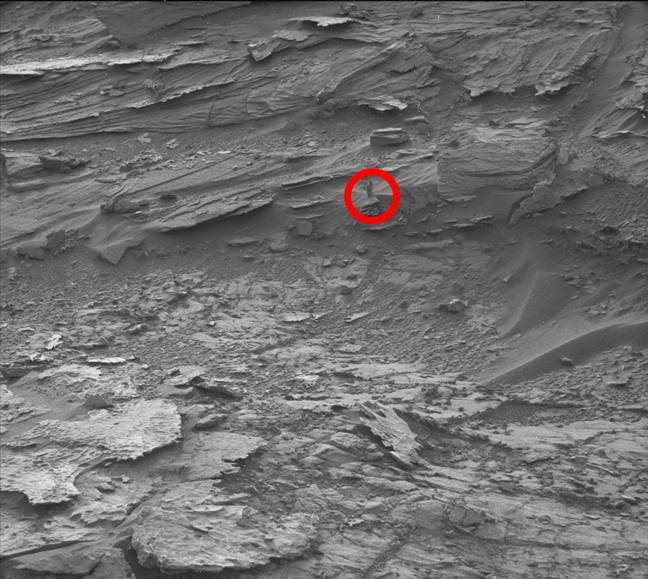
None of that however vacates the idea that life COULD have formed on Mars early in its life cycle, as is shown by all our obsession with finding water and its effects today. This also does not vacate the idea that simple life might continue to persist in sheltered pockets or shallowly underground. It also doesn't vacate the hypothesis that Mars [or any planet with "solid ground"] might not have been visited sometime in the past by advanced space travelers --- something Sagan thought likely, by the way. People like Sagan and Michael Papagiannis and some of the more brave SETIans [it wouldn't take any bravery at all if there was not a culture of derision about this] have suggested in the relevant literature that looking for "left artifacts" on places like Mars, the asteroid belt, the Moon, Lagrangian Points, large moons like Ganymede or smaller ones like Iapetus, would be intelligent spots to search. Of course the comedians would laugh this off to the point of making funding difficult.
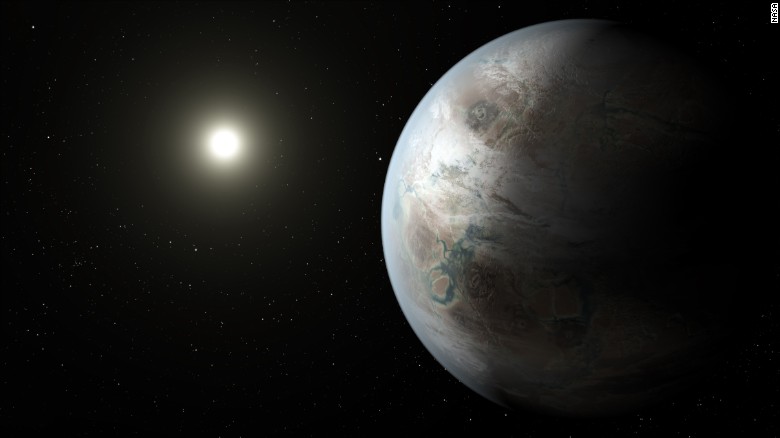
One should not underestimate the power of cultural "weather" to affect Congress' attitudes about funding NASA projects. Sagan had to make several personal appearances before Congress to try to get certain explorations into NASA's budget --- particularly regarding things like SETI, Titan, Mars --- note that all involved the search for non-terrestrial life. Because of the "comedy", we have to come at this set of concepts the long way around, mainly depending upon great new telescopy to slowly find Earth-like planets and hopefully atmospheric hints of life [free oxygen] and intelligence [nuclear fission products.] All that is great science of course, but other more "laughable" explorations could be going on without the negative cultural atmosphere.