Theology

zelezo vlk

Well-known member
Messages
18,009
Reaction score
5,048
<blockquote class="twitter-tweet" data-lang="en"><p lang="en" dir="ltr">BREAKING: New Vatican statement distancing Pope Francis from Scalfari’s report that Francis said, “Hell does not exist.” They say this should not be “considered a faithful transcription of the Holy Father’s words.”</p>— Raymond Arroyo (@RaymondArroyo) <a href="https://twitter.com/RaymondArroyo/status/979349439943979009?ref_src=twsrc%5Etfw">March 29, 2018</a></blockquote>
<script async src="https://platform.twitter.com/widgets.js" charset="utf-8"></script>
 

ACamp1900

Counting my ‘bet against ND’ winnings
Messages
48,946
Reaction score
11,225
Hell definitely exists... I know this because The Lord's own Angels open their season there later today...
 

Whiskeyjack

Mittens Margaritas Ante Porcos
Staff member
Messages
20,894
Reaction score
8,126
The Catholic Herald's Michael Davis just published an article the centers of Catholic conversion:

The Algerian example is especially striking. St Augustine was born in Thagaste, the Berber heartland, which was located in the modern-day city of Souk Ahras. When he served as Bishop of Hippo, it was overwhelmingly Catholic. The Church’s population centres have undergone several of these shifts over her 2,000-year history, and each new centre begins as a mustard seed.

So, it’s true that nations that are predominantly Catholic today (such as Mexico and the Philippines) might have faster growth rates. But who knows? Give it a millennium. Mongolians may establish missions in France. Swedes might catechise the Brazilians. After all, Christ chose Rome as the headquarters of His Church. It doesn’t get much stranger than that.

In response to the Scalfari scandal, the NYT's Ross Douthat just shared an article he wrote 7 wrote years titled "A Case for Hell":

As Anthony Esolen writes, in the introduction to his translation of Dante’s “Inferno,” the idea of hell is crucial to Western humanism. It’s a way of asserting that “things have meaning” — that earthly life is more than just a series of unimportant events, and that “the use of one man’s free will, at one moment, can mean life or death ... salvation or damnation.”

If there’s a modern-day analogue to the “Inferno,” a work of art that illustrates the humanist case for hell, it’s David Chase’s “The Sopranos.” The HBO hit is a portrait of damnation freely chosen: Chase made audiences love Tony Soprano, and then made us watch as the mob boss traveled so deep into iniquity — refusing every opportunity to turn back — that it was hard to imagine him ever coming out. “The Sopranos” never suggested that Tony was beyond forgiveness. But, by the end, it suggested that he was beyond ever genuinely asking for it.

Is Gandhi in hell? It’s a question that should puncture religious chauvinism and unsettle fundamentalists of every stripe. But there’s a question that should be asked in turn: Is Tony Soprano really in heaven?

And lastly, The Catholic Herald just published a review of Douthat's new book by Matthew Schmitz titled "How Pope Francis Encouraged a Generational Battle":

When Amoris Laetitia was published in 2016, few anticipated how deeply it would divide the Church, how endless the controversy would be. Amid all the scandal and chaos, one fact has become clear. Though John Paul II and Benedict XVI stabilised the Church after the Council, their programme – broadly liberal, but traditional on moral matters – was more a working settlement than a lasting synthesis.

This is the argument made by Ross Douthat in the most insightful book on the Church to be published in many years. He describes the increasingly polarisation between the two parties in the Catholic civil war and suggests the only plan that might bring them together.

“Attempts at a revolution have encouraged liberal Catholicism to become more ambitious, more aggressive, more optimistic about how far the Church can change,” Douthat writes. But they have also encouraged younger conservative Catholics “to take a darker view of the post-Vatican II era, and to reassess whether there might have always been more wisdom in the traditionalist critique than they wanted to believe”.

One thing Douthat does not explore is the way in which this generational battle is a kind of class war. Louis Veuillot called liberal Catholicism an error of the rich. If the young are less prone to this error, it may be because they are poorer than their parents in ways both material and cultural. They are less likely to have stable employment, lasting marriage or the prospect of children. Significantly for the Church’s current debates, they are less likely to have a married mother and father.

This is why there has been a generational polarisation in the reaction to Amoris Laetitia. Narrowly considered, the document is about divorce, remarriage and Communion. In broad terms, it is about the Church’s stance toward liberalism. Moral and financial deregulation was championed by the generation of May 1968 and is now being challenged by its children. When it comes to the typical sins of this liberal culture, Amoris says, “Who am I to judge?”

True, Francis rebuked wealthy Westerners for their wasteful consumption in Laudato Si’ – and rightly so. But no one is likely to be bothered by denunciations of pollution, war or capitalism that are not accompanied by concrete prohibitions – say, on usury.

In fact, entertaining vaguely self-critical thoughts on matters outside one’s control tends to induce a pleasant feeling of broad-mindedness, the righteous repose of the armchair radical. It is not enough for the Church to decry abstractions such as the “contraceptive mentality”, the “throwaway culture” or “systemic injustice”. Only when concrete acts are judged always and everywhere wrong is the individual forced to confront his own frailty and taint.

Douthat argues that Amoris seeks to strip Christian teaching of this absolute character. It recommends “discernment”, a process that allows the Church to preserve a vague moralism while denying that any act is per se immoral. Someone who wants Communion need not confess his sin with a firm purpose of amendment. He instead must be “a responsible and tactful person”. He does not need contrition, only “discretion”. Politeness takes the place of repentance. Uncouthness remains as the unforgivable sin.

The Australian Archbishop Mark Coleridge has explained how such a scheme works in practice: “A second marriage that is enduring and stable and loving, and where there are children who are cared for, is not the same as a couple skulking off to a hotel room for a wicked weekend.” Evil acts committed in good order with ample capital cease to be sins.

Douthat observes that it is not easy to know “how far to accommodate to liberalism, and when and where to draw lines and resist”. Newman provided the most generous standard for this difficult work in his Biglietto speech. He noted that “there is much in the liberalistic theory which is good and true; for example, not to say more, the precepts of justice, truthfulness, sobriety, self-command, benevolence.” He resisted blanket denunciation in order to weigh how liberalism worked in practice. “It is not till we find that this array of principles is intended to supersede, to block out, religion, that we pronounce it to be evil”, he said.

In the immediate wake of the Second World War, it seemed that liberalism and the Church could work as one. In spite of changed conditions and the accumulation of contrary evidence, the generation of 1968 still holds this dream. Amoris Laetitia seeks to extend it. In submission to the Council that called on us to read the signs of the times, we should acknowledge the present reality. For 50 years liberalism has superseded, has blocked out, religion. It has obscured the truth not only of revealed doctrine but of nature itself. Allowing every caveat, accepting each nuance, those who pronounce it evil are faithful to Newman’s standard.

Amid our current upheavals, wariness toward liberalism is a matter of prudence as well as principle. The liberal order is suffering challenges on every side, and wherever it succeeds it has itself become illiberal. In such an environment, the Catholic embrace of liberalism is a concordat with Atlantis, an attempt to make peace with a world that no longer exists and perhaps never did.

Instead of concessions to liberal hedonism, we need what Douthat calls a “distinctively Catholic sort of synthesis.” This would stress “the Church’s themes of economic and social solidarity without compromising its metaphysical and moral commitments”. It would bring about “religious solidarity, rather than secular technocracy”.

If Pope Francis were to do this, Catholicism’s ideological, generational and class divide might begin to heal. He could be a new Elijah, turning the hearts of the fathers to the children, and the hearts of the children to the fathers.

Young-Pope-banner.jpg


“You surprise me, Holy Father. You are young, and yet you have such old ideas.”
“You’re wrong about that. I’m an orphan, and orphans are never young.”
“But the majority of churchgoers are not orphans.”
“Says who? You really think the only orphans are those without a mother and father?”
 

ab2cmiller

Troublemaker in training
Messages
11,453
Reaction score
8,532
<blockquote class="twitter-tweet" data-lang="en"><p lang="en" dir="ltr">BREAKING: New Vatican statement distancing Pope Francis from Scalfari’s report that Francis said, “Hell does not exist.” They say this should not be “considered a faithful transcription of the Holy Father’s words.”</p>— Raymond Arroyo (@RaymondArroyo) <a href="https://twitter.com/RaymondArroyo/status/979349439943979009?ref_src=twsrc%5Etfw">March 29, 2018</a></blockquote>
<script async src="https://platform.twitter.com/widgets.js" charset="utf-8"></script>

I get that Scalfari may not be "reliable". But this statement means nothing. If Scalfari is making this up, then an outright denial with a statement affirming that hell exists is the obvious solution. The fact that that hasn't happened (to my knowledge) speaks volumes.
 

Veritate Duce Progredi

A man gotta have a code
Messages
9,358
Reaction score
5,352
I get that Scalfari may not be "reliable". But this statement means nothing. If Scalfari is making this up, then an outright denial with a statement affirming that hell exists is the obvious solution. The fact that that hasn't happened (to my knowledge) speaks volumes.

It really doesn't speak at all. The fact they put out a statement distancing themselves from that interpretation says something.
 

ab2cmiller

Troublemaker in training
Messages
11,453
Reaction score
8,532
And yet Il Papa continues granting interviews to a 93 year old Italian atheist who has repeatedly twisted his words. Why is he choosing to communicate this way?

Many people believe it is a calculated move. He uses Scalfari as a surrogate to publicize more controversial ideas that he or the Vatican can later dismiss as unreliable.

To me this is the only possible explanation. Why would you continue to meet with someone (this is the 5th meeting) when you have to continue issuing dismissive press releases. Fool me once shame on you, fool me 5 times, shame on me.
 

ab2cmiller

Troublemaker in training
Messages
11,453
Reaction score
8,532
It really doesn't speak at all. The fact they put out a statement distancing themselves from that interpretation says something.

The Vatican statement didn't deny the interpretation, it denied that it was a "faithful transcription of the words of the Holy Father." The whole statement is simply denial that those were the exact words that the Pope said and that it was reconstruction etc etc etc.

There is zero denial pertaining to the issue of the Pope believes there is no hell.
 

Veritate Duce Progredi

A man gotta have a code
Messages
9,358
Reaction score
5,352
The Vatican statement didn't deny the interpretation, it denied that it was a "faithful transcription of the words of the Holy Father." The whole statement is simply denial that those were the exact words that the Pope said and that it was reconstruction etc etc etc.

There is zero denial pertaining to the issue of the Pope believes there is no hell.

Understood but it still doesn't speak volumes. It feels like this is always how the Papal office handles misinterpretations rather than outright blasphemies.

Except that this happens over and over and over again.

Understood and maybe there is some merit in being critical of who he grants interviews with but...

many have described Hell as the eternal separation from the beatific vision. Not fire and brimstone. It's easy to see how this can be misconstrued by someone who has an agenda.


I'm not a huge Pope Francis fan but he's following on the heals of PBXVI. I'll continue cutting him some slack.
 
Last edited:

ickythump1225

New member
Messages
4,036
Reaction score
323
<iframe width="560" height="315" src="https://www.youtube.com/embed/bR8zyW0gmY8" frameborder="0" allow="autoplay; encrypted-media" allowfullscreen></iframe>
 

Whiskeyjack

Mittens Margaritas Ante Porcos
Staff member
Messages
20,894
Reaction score
8,126
First Things' Dan Hitchens wrote about the main problem with the Pope's most recent encyclical:

Opponents of Church teaching make such tendentious readings all the time. Fr. Maurizio Chiodi, a member of the pope’s own academy on life issues, has argued that Amoris justifies contraception, despite Amoris’s actual words on the subject. Dissent does not need much help. It needs, first, an atmosphere in which Church authorities are reluctant to condemn error; and, second, enough ambiguity to gain a foothold. Gaudete, for all its strengths, adds to the ambiguities.

And here's Michael Brendan Dougherty's review of Douthat's new book:

With this new book, Ross Douthat has done a service to all those who take an interest in the life and teachings of the Catholic Church.

Douthat, a political columnist who writes for a mostly secular audience, is exquisitely careful in delineating the factional fault lines within the Church under Francis. He credits Francis with a surprising turnaround in the media’s perception of the Church, one that seemed impossible after the nadir of the child-sex scandals. But what motivates this book are not questions of politics or of media perceptions, but ones concerning theology: Does a pope have authority to change Church teaching? Can Christian doctrine develop in such a way that it has practically the opposite meaning in one age that it has in the next? Is the Church about to undergo a schism? And beneath it all, a much more personal question lurks.

Douthat’s account really takes off when he comes to narrate, and comment on, the hour-by-hour intrigue of the two-year Synod on the Family (2014–15). To much of the rest of the world, the Catholic Church looks like an inscrutable closed system, one in which the chief occasionally shows a different personality to the world but that otherwise functions like a machine according to its own internal logic, breaking down here or there, as machines do. But watching the sometimes ugly maneuvering and wheedling of the Synod’s progressives, and the alternating attempts at flattery and bold confrontation by the Synod’s conservatives, all over theological concepts, will return many readers to the palace intrigue of the Middle Ages and the Renaissance.

Francis closed the proceedings of the first year’s synod with a speech that sought a middle ground between the two factions, placing himself at the center. At the close of the second year’s synod, the pope, obviously frustrated that his desired language had not received approval, thundered openly and hysterically against the conservatives.

With the subsequent papal document Amoris Laetitia (2016), Francis and his fellow progressive reformers sought to institute a legal and official way of granting Holy Communion to those who live in a state of life the Church traditionally recognizes as adultery, without calling them to repent and reconcile with their first spouse or to live “as brother and sister” in their new household. This debate has opened up rhetorical tools the Church seemed to have put away: bishops charging other bishops with heresy, or with schismatical disobedience to the Roman pontiff. Douthat sensitively navigates the generational, political, and geographical features of this conflict: In general, the older, richer, and more European parts of the Church insist on change. The younger, poorer, and African parts insist on orthodoxy.

The Church’s liberal reformers often say that if the great mass of Catholics are failing to practice one of the Church’s teachings or recognize its authority in their lives, then they have not “received” that teaching, and that the teaching itself is to be blamed. The People of God can’t be so wrong, can they? Reformers apply this to the Church’s prohibition on artificial contraception: Catholics flout the teaching. If the sheep do not recognize the voice of the shepherd, they reason, perhaps it isn’t the shepherd speaking. (For reasons I cannot grasp, they rarely apply this logic to the Beatitudes.)

The reformers, seeking to get their new policy’s nose under the tent, sought a “pastoral” change, not a doctrinal one: They claimed to be changing not the teaching but its application. But the theories undergirding their approach ultimately rewrote the moral law into a system of beautiful but unreachable moral ideals that could be only approximated in the lives of believers, not fully obeyed with the generous help and grace of God. The practical effect of this change is to seek for signs not of repentance or holiness in believers but of stability and sincerity in their purpose. Instead of reaching out to wretches begging forgiveness, and falling down before the godliness of saints, this approach hallows the respectable and the bourgeois. The Church used to make mistakes in mystifying the authority of kings and potentates; now it is reduced merely to flattering remarried stockjobbers.

The greatest strength of Douthat’s book is the way he draws out how this supposedly “merciful” reform ultimately hollows out the authority of the Church — not because it is merely inconsistent with a previous paradigm, but because it contradicts the ultimate authority. “This is where Francis-era liberal Catholicism has so often ended up,” Douthat writes: “in arguments that imply that the Church must use Jesus to go beyond Jesus, as it were, using his approach to the ritual law as a means to evade or qualify the moral law, which means essentially evading or qualifying his own explicit commandments, and declaring them a pharisaism that the late-modern Church should traffic in no more. To fulfill Jesus’s mission, to follow the Jesus of faith, even the Jesus of Scripture must be left behind.”

Francis’s men apparently thought that conservative bishops could be steamrolled on these points, believing that they were all spineless timeservers, morally compromised mediocrities, or at least sufficiently conditioned to accept and implement the documents that poured out of the Vatican. In fairness to the conservative bishops, I should point out that, for some three decades, these Roman documents had been polished like gems by the exacting Joseph Ratzinger, first as head of the Congregation for the Doctrine of the Faith, then as pope; and they stood out against the pious political dribble that is produced by most national conferences of Catholic bishops.

Further, Francis and his allies knew that the sacramental approach to the divorced and remarried, and even homosexuals, that they want to institute de jure is often the de facto way of the world even in many conservative dioceses. But it turned out, when the chips were down, that the conservatives were capable of putting up at least a little fight on behalf of the orthodoxy, at least on paper. And ever since Francis’s fulminations, conservatives seem to have stopped boosting Francis, and instead, when possible, have passively resisted these reforms with simple noncompliance or nonrecognition. But their relatively feeble, disorganized, and hesitant resistance seems to have resulted in a stalemate, and the impression now is that this pontificate has stalled out and that Francis is playing a longer game.

Douthat outlines several possibilities for the Church’s future. He correctly locates Francis’s influence in his ability to shape the College of Cardinals and to choose bishops — but he asks whether this power can possibly overcome the generational conflict within Catholicism: “The real Francis legacy might be less a swiftly unfolding progressive revolution than a new impasse. He could leave liberal Catholicism with control of the most important levers of power within the Church — but without having solved its longstanding manpower-and-enthusiasm problem. There might be fewer cardinals equipped to stop his would-be heirs — but also too few priests enthusiastic about following them.” This generational conflict is a staple of Francis’s own parables, which frequently pit young, fire-breathing priests who want to protect tradition and orthodoxy against wise old clerics who know how to be merciful.

One of Francis’s declared goals was to break the Church out of what he perceived as its self-referentiality. But Douthat believes that Francis may have inadvertently accomplished the opposite of what he intended, with the Church actually “more defined by its abstruse internal controversies and theological civil wars.” This seems correct, but there’s a deeper problem. The life of the Church is more than its winding paper trail of doctrinal development and the coherence of its teaching. The liberal reformers are correct to sense something unsustainable in Catholic life. The traditionalist slogan Lex orandi, lex credendi means that the law of prayer is the law of belief: Ultimately, how we worship God shapes what we believe about Him. This was the basis of the traditionalists’ critique of liturgical reform after 1970: They believed that defection from the liturgical traditions would lead inexorably to defection from the creed itself.

That logic is clearly at work in the modern Church in the West, which mostly has short lines for confession and long lines for Communion. Pastors constantly come up with reasons not to confront the respectable bourgeois sins of their parishioners, sins that in the traditional orthodox understanding would bar them from Communion. The United States, whose cardinals contributed to the conservative resistance at the synods, is promiscuous when it grants annulments. This experience plainly contradicts what is taught in Catholic catechisms — and all of this makes the current theological confusion in the Church inevitable.

Just as the rise of certain feasts and devotions and the persistence of liturgical rites led to doctrines about Mary and the deepened articulation of the doctrine of the Eucharist, so this persistent defection from the Church’s official sacramental discipline seems to call forth the reforming theological formulas that would justify it. The theological innovators must be credited with one thing: They are tired of deceiving themselves and others. Unlike many conservative bishops, they can no longer announce one doctrine and practice another.

If the conservative cardinals want to win this fight over what’s said in the official documents of the Church, they will first need to work up the courage to tell the truth in the pulpit and the confessional. If they cannot confront a rich parishioner, how will they stand up before the bishop of Rome? The Lord’s assurance that the gates of hell shall not prevail against the Church is the basis for their acting in hope, but they must cease using it as an excuse to chicken out of the fight of their lives, a fight with souls in the balance.

The Church wants to welcome families that are broken. Its pastors tire of the cold language of “irregularity” that greets them as they seek their way back to religion. But Douthat’s book, which begins on a personal note, speaks for all those who — like him, and like me — come from complicated family situations, and who found, in the unchanging doctrine of marriage, a credible witness of God’s mercy in our age. We want a Church that adopts into itself the children and parents of broken families, but what we fear is a Church that in its haste to make us feel “welcome” would ultimately bless the sins that estrange us from our siblings and parents. And if it can tolerate and bless these sins, whom will we call upon when faced with our own family difficulties?

There should be another question that haunts Catholic bishops, if they believe. If the Church is, as Scripture says, the Bride of Christ, how will the Bridegroom react to finding his beloved thinking so fondly of divorce and remarriage?
 

wizards8507

Well-known member
Messages
20,660
Reaction score
2,661
https://www.nationalreview.com/corner/baseball-rule-change-proposal-for-faster-pace-younger-fans/

Baseball is like Church, argues Nicholas Frankovich at National Review.

"Many feel baseball's pace doesn’t fit the time, that it is too long and too slow to capture newer, younger fans," Joe Posnanski wrote at MLB.com last year. It sounds like something an old person would say. No knock on old people, the demographic we all belong to, some of us because we live in the moment, others because you’re so forward-looking, always on your toes, leaning into the future. No knock on Posnanski either, an all-star sportswriter. He ably reproduced the piping voice of Major League Baseball as it worries out loud about keeping up with the kids these days.

"Too slow" for "newer, younger fans" is what old people said about baseball back when I was a newer, younger fan myself. You know, the glory days, when George Hendrick roamed center field to the ironic cheers of some fraction of the approximately 3,000 Clevelanders scattered across the cavern that was Municipal Stadium, built to seat 27 times that number.

Games were shorter then. Also, they were poorly attended, by today’s standards — not just in The Land but across The Show. In 1974, the average attendance per game was half of what it was last season, when — note well — the average game was longer by 36 minutes, or more than 20 percent.

That is, baseball was less popular when games were shorter. Commissioner Rob Manfred wants to make them shorter again. Hmm. MLB revenue has risen for the past 15 seasons. In 2017, it topped $10 billion for the first time. Meanwhile, Manfred is pushing rule changes to get game times down to what they were when he was a kid and professional baseball was a smaller, poorer industry.

No one doubts the sincerity of his conviction that baseball is in trouble, though as a business MLB is obviously flourishing, or that the way out of the imagined crisis is to stress up the game by adding clocks, imposing deadlines on players between pitches, and in general pressuring everyone to hurry. Manfred may assume that it’s despite the increase in game length, not because of it, that more people watch baseball now than when games were shorter. And anyway, his ultimate goal is to quicken the pace of play, for which game length — or game shortness, rather — is only a rough proxy.

Bear in mind, however, that pace of play is slower in the NFL. There the ratio of live action to dead time is about half of what it is in MLB. And yet, according to Gallup, Americans prefer football to baseball by a ratio of four to one. Granted, it may be despite all the so-called dead time, not because of it, that football beats baseball in revenue as well as in opinion polls, but maybe that’s enough with the special pleading. Everyone knows that the pauses between the notes are where the art resides, and the evidence that fans like them is greater than the evidence that they don't.

The assumption that they don’t follows a pattern you might recognize from the Catholic Church’s rewrite of the Mass in the 1960s. The liturgical reformers reduced the amount of dead air, as a radio engineer might think of it. The practice had been that during much of the liturgy the priest prayed sotto voce at the altar while the people in the pews did likewise as they turned the pages of their missal or moved their fingers down the string of their rosary beads. Another option was to close your eyes, forgo all visual, aural, and tactile stimulation, and be still. "Mental prayer," they called it. It worked fine, at least for those who knew the ropes. For the benefit of those who didn’t, the Church slashed the amount of supposed dead time at Mass. That’s when Mass attendance in the West began to plummet. Of course, the people who stopped attending may have done so for other reasons. What we do know is that the increase in the ratio of bustle to quiet didn’t keep them from leaving.

A subcategory of the new Mass was the "guitar Mass," pitched to the young people. Many of our elders weren’t that much older than we were, but they exaggerated the distance, treating us with the condescending benevolence of a Western anthropologist among people in the bush. They thought we would relate to the holy sacrifice better if we sang lyrics to a Cat Stevens song at the Offertory. God bless the Jesuits who taught my generation of Catholics in the 1970s. They meant well, but they got a lot wrong. A brother of theirs in Argentina grew up to become the pope. I never met him but I recognize his mind.

Now it’s the pope of baseball who wants to pander to the youth market. Does he have evidence that young people — or anyone, for that matter — would watch more baseball if its pace of play were accelerated? Has the assumption that they would because they have short attention spans ever been tested? The leisureliness of baseball is in its DNA. The best that any project to make it more like basketball could achieve would be marginal, a blip compared with the agita induced by the introduction of clocks and little rules designed to make players work faster. Most fans already get enough of that at their own jobs.
 

Whiskeyjack

Mittens Margaritas Ante Porcos
Staff member
Messages
20,894
Reaction score
8,126
<blockquote class="twitter-tweet" data-lang="en"><p lang="en" dir="ltr">Scott Hahn, one of the biggest Catholic names in the U.S., says it’s time to challenge liberalism. From his new book, The First Society: <a href="https://t.co/pTpNkYmHxF">pic.twitter.com/pTpNkYmHxF</a></p>— Matthew Schmitz (@matthewschmitz) <a href="https://twitter.com/matthewschmitz/status/985895259791155200?ref_src=twsrc%5Etfw">April 16, 2018</a></blockquote>
<script async src="https://platform.twitter.com/widgets.js" charset="utf-8"></script>

<iframe width="560" height="315" src="https://www.youtube.com/embed/36odfqA-Xqw" frameborder="0" allow="autoplay; encrypted-media" allowfullscreen></iframe>
 

ickythump1225

New member
Messages
4,036
Reaction score
323
<iframe width="560" height="315" src="https://www.youtube.com/embed/6a3ZJjSKgx8" frameborder="0" allow="autoplay; encrypted-media" allowfullscreen></iframe>
 

zelezo vlk

Well-known member
Messages
18,009
Reaction score
5,048
I'm a bit surprised that Whiskey hasn't posted this article yet. I guess I should. As a young convert, I can say that this sums up my views fairly well.

https://www.firstthings.com/web-exclusives/2018/04/from-the-heart-of-a-young-father

Bishops get a lot of unsolicited mail from strangers, some of it pleasant, some of it much less so. It goes with the job. But every once in a while a letter comes in that’s worth sharing with a wider audience.

Last month, in preparation for the October 2018 synod, roughly 300 young adults from around the world gathered in Rome to discuss their views of faith and the Church. The result was a valuable experience of dialogue and learning—so valuable that I think that continuing the process of listening to a wide range of young adult experiences is important. In that spirit, I offer a letter below, which I received just after the March pre-synod gathering. It was unsolicited and from a stranger—but hardly the first such letter to come my way. Though I’ve removed the author’s name and other identifiers, the content is unchanged and used with his permission. It deserves consideration as we seek a fuller understanding of the pastoral challenges facing young adults in a changing world.

I am 26 years old, a father of three young children, and I wish to offer my perspective, shared by many of my peers, on Rome’s upcoming synod [on “Young People, the Faith, and Vocational Discernment”].

Though the Church’s growing focus on evangelization of the “Nones” is encouraging, there have been recent discussions emanating from several prominent figures in Rome and throughout Church leadership regarding a so-called “paradigm shift” relative to doctrine, the supremacy of individual conscience, and pastoral accommodation. My wife and I find these developments disturbing and potentially disastrous for the evangelization of the young and the fallen-away.

We young people crave the truth and clarity of good teaching. On a secular level this is evidenced by the meteoric rise in popularity of Jordan Peterson. We crave the truth, no matter how blunt or difficult it is for us to swallow or for the shepherds of our flock to teach.

Our culture is roiled in confusion concerning the basic tenets of human nature: From a very young age, we’re deluged with propaganda that distorts basic scientific truths about gender, paints virtue and chivalry as “toxic masculinity,” denigrates the family, and desecrates the nature of sex and its fruits, especially the unborn child.

We urgently need the Church’s clarity and authoritative guidance on issues like abortion, homosexuality, gender dysphoria, the indissolubility of matrimony, the four last things, and the consequences of contraception (moral, anthropological, and abortifacient). My generation has never, or rarely, heard these truths winsomely taught in the parishes. Instead, we hear most forcefully and frequently from our bishops' conference and our dioceses regarding the federal budget, border policy, net neutrality, gun control, and the environment.

Increasingly, we have noticed an appeasement of modern culture under the broad cloak of pastoral sensitivity, including cases of some high-profile clergy who deliberately blur the Church's teaching regarding homosexuality and transgenderism in the name of “building bridges.” The dubia remain unanswered. Discussions of beauty in the liturgy and reverent reception of the Eucharist are mocked. Heads are scratched at decreasing Mass attendance, yet young people who look to tradition to recover our bearings are chided as “rigid.”

This shift away from clarity is demoralizing for young faithful Catholics, particularly those with a heart for the New Evangelization and my friends raising children against an ever-stronger cultural tide. Peers of mine who are converts or reverts have specifically cited teachings like Humanae Vitae, Familiaris Consortio, and Veritatis Splendor as beacons that set the Church and her wisdom apart from the world and other faiths. Now they’re hearing from some in the highest levels of the Church that these liberating teachings are unrealistic ideals, and that “conscience” should be the arbiter of truth.

Young Catholics crave the beauty that guided and inspired previous generations for nearly two millennia. Many of my generation received their upbringing surrounded by bland, ugly, and often downright counter-mystical modern church architecture, hidden tabernacles, and banal modern liturgical music more suitable to failed off-Broadway theater. The disastrous effect that Beige Catholicism (as Bishop Robert Barron aptly describes it) has had on my generation can’t be overstated. In a world of soulless modern vulgarity, we’re frustrated by the iconoclasm of the past 60 years.

In sum, many of us feel that we’re the rightful heirs of thousands of years of rich teaching, tradition, art, architecture, and music. We young Catholics increasingly recognize that these riches will be crucial for evangelizing our peers and passing on a thriving Church to our children. If the Church abandons her traditions of beauty and truth, she abandons us.

I offer these observations without bitterness or insult, but with love for my brothers and sisters who have not received the blessing, love, and formation God mysteriously granted to me and my friends. I am not alone. Though deeply troubled by the current state of affairs, we remain hopeful; and rooted in that confidence, we’re raising large families who will inherit the future of the Church. I sincerely hope this can be conveyed emphatically at the upcoming synod, and I thank every pastor and bishop who stands as a role model for evangelizing, preaching the truth, and promoting the beauty and richness our faith has to offer.


I can add little to that kind of witness. I’ll merely suggest the obvious: The future of the Catholic faith belongs to those who create it with their fidelity, their self-sacrifice, their commitment to bringing new life into the world and raising their children in truth, and their determination to walk Christ’s “narrow way” with joy. May God grant the 2018 synod fathers the grace and courage to lead young people on that path.

Chaput is very good at bishing.
 

Whiskeyjack

Mittens Margaritas Ante Porcos
Staff member
Messages
20,894
Reaction score
8,126
Here's your weekly theology dump. First, Scott Hahn has apparently declared himself in favor of Catholic integralism in his most recent book (which is available for free through the St. Paul Center). This is a big deal because he's arguably the most prominent Catholic theologican in America. Here's an excerpt:

So we shouldn’t be trying to piggyback on the dying liberal order. If there was ever a time when accommodating secular liberalism might come with some benefits–and there probably wasn’t–that time is long past. Secularism and liberalism and relativism and postmodernism and all the other inhumane -isms of our age have left an entire civilization dazed and confused. Now is the time to speak Catholic truth with clarity and boldness. It’s what the people want, and more importantly, it’s what they need.

Speaking of integralism, a group of college kids recently published an integralist manifesto under the title Tradistae. I could quibble with some of the wording, but the politics described therein would be vastly superior to what we have on offer currently.

<blockquote class="twitter-tweet" data-lang="en"><p lang="en" dir="ltr">"Does liberalism sustainably preserve the liberty of the Church?"'<br><br>American Catholics: <a href="https://t.co/AAVoKSx83O">pic.twitter.com/AAVoKSx83O</a></p>— Brandon McGinley (@brandonmcg) <a href="https://twitter.com/brandonmcg/status/986970876540309504?ref_src=twsrc%5Etfw">April 19, 2018</a></blockquote>
<script async src="https://platform.twitter.com/widgets.js" charset="utf-8"></script>

The Catholic Herald's Tim Stanley just published an article titled "A new era for American Catholicism":

The good news is that creative destruction is forcing a rethink. On my trip I met plenty of non-ideological young conservatives who want to root their political thinking in religion rather than the other way around. The most influential journal among Washington’s intellectuals is currently First Things, which is dominated by Catholics, and the Catholic Herald intends to bring an equally smart voice to the dinner tables of America. One reason why the time is so right for us is because the anarchy of Trump has made new ideas – pinched from both Left and Right – possible, and the culture war he is prosecuting proves that the big themes of God, history and identity really do matter.

I'm less happy to share this next bit, which is the perfect condensation of Boomer Catholicism, but it's worth reading for other reasons. The National Catholic Reporter just published an article, which is apparently not satirical, titled "A weekend at Cape Cod shows glimpses of a future church", in which 7 retirees reinvent Protestantism and convince themselves they'll be fine without the sacraments.

Lastly, and the only one I'll share in full, is a letter written to Archbishop Charles J. Chaput that he recently published in First Things:

Bishops get a lot of unsolicited mail from strangers, some of it pleasant, some of it much less so. It goes with the job. But every once in a while a letter comes in that’s worth sharing with a wider audience.

Last month, in preparation for the October 2018 synod, roughly 300 young adults from around the world gathered in Rome to discuss their views of faith and the Church. The result was a valuable experience of dialogue and learning—so valuable that I think that continuing the process of listening to a wide range of young adult experiences is important. In that spirit, I offer a letter below, which I received just after the March pre-synod gathering. It was unsolicited and from a stranger—but hardly the first such letter to come my way. Though I’ve removed the author’s name and other identifiers, the content is unchanged and used with his permission. It deserves consideration as we seek a fuller understanding of the pastoral challenges facing young adults in a changing world.

I am 26 years old, a father of three young children, and I wish to offer my perspective, shared by many of my peers, on Rome’s upcoming synod [on “Young People, the Faith, and Vocational Discernment”].

Though the Church’s growing focus on evangelization of the “Nones” is encouraging, there have been recent discussions emanating from several prominent figures in Rome and throughout Church leadership regarding a so-called “paradigm shift” relative to doctrine, the supremacy of individual conscience, and pastoral accommodation. My wife and I find these developments disturbing and potentially disastrous for the evangelization of the young and the fallen-away.

We young people crave the truth and clarity of good teaching. On a secular level this is evidenced by the meteoric rise in popularity of Jordan Peterson. We crave the truth, no matter how blunt or difficult it is for us to swallow or for the shepherds of our flock to teach.
Our culture is roiled in confusion concerning the basic tenets of human nature: From a very young age, we’re deluged with propaganda that distorts basic scientific truths about gender, paints virtue and chivalry as “toxic masculinity,” denigrates the family, and desecrates the nature of sex and its fruits, especially the unborn child.

We urgently need the Church’s clarity and authoritative guidance on issues like abortion, homosexuality, gender dysphoria, the indissolubility of matrimony, the four last things, and the consequences of contraception (moral, anthropological, and abortifacient). My generation has never, or rarely, heard these truths winsomely taught in the parishes. Instead, we hear most forcefully and frequently from our bishops' conference and our dioceses regarding the federal budget, border policy, net neutrality, gun control, and the environment.

Increasingly, we have noticed an appeasement of modern culture under the broad cloak of pastoral sensitivity, including cases of some high-profile clergy who deliberately blur the Church's teaching regarding homosexuality and transgenderism in the name of “building bridges.” The dubia remain unanswered. Discussions of beauty in the liturgy and reverent reception of the Eucharist are mocked. Heads are scratched at decreasing Mass attendance, yet young people who look to tradition to recover our bearings are chided as “rigid.”

This shift away from clarity is demoralizing for young faithful Catholics, particularly those with a heart for the New Evangelization and my friends raising children against an ever-stronger cultural tide. Peers of mine who are converts or reverts have specifically cited teachings like Humanae Vitae, Familiaris Consortio, and Veritatis Splendor as beacons that set the Church and her wisdom apart from the world and other faiths. Now they’re hearing from some in the highest levels of the Church that these liberating teachings are unrealistic ideals, and that “conscience” should be the arbiter of truth.

Young Catholics crave the beauty that guided and inspired previous generations for nearly two millennia. Many of my generation received their upbringing surrounded by bland, ugly, and often downright counter-mystical modern church architecture, hidden tabernacles, and banal modern liturgical music more suitable to failed off-Broadway theater. The disastrous effect that Beige Catholicism (as Bishop Robert Barron aptly describes it) has had on my generation can’t be overstated. In a world of soulless modern vulgarity, we’re frustrated by the iconoclasm of the past 60 years.

In sum, many of us feel that we’re the rightful heirs of thousands of years of rich teaching, tradition, art, architecture, and music. We young Catholics increasingly recognize that these riches will be crucial for evangelizing our peers and passing on a thriving Church to our children. If the Church abandons her traditions of beauty and truth, she abandons us.

I offer these observations without bitterness or insult, but with love for my brothers and sisters who have not received the blessing, love, and formation God mysteriously granted to me and my friends. I am not alone. Though deeply troubled by the current state of affairs, we remain hopeful; and rooted in that confidence, we’re raising large families who will inherit the future of the Church. I sincerely hope this can be conveyed emphatically at the upcoming synod, and I thank every pastor and bishop who stands as a role model for evangelizing, preaching the truth, and promoting the beauty and richness our faith has to offer.

I can add little to that kind of witness. I’ll merely suggest the obvious: The future of the Catholic faith belongs to those who create it with their fidelity, their self-sacrifice, their commitment to bringing new life into the world and raising their children in truth, and their determination to walk Christ’s “narrow way” with joy. May God grant the 2018 synod fathers the grace and courage to lead young people on that path.

Young Catholics like him are the future of the Church. The narcissism described in the NCR piece immediately above it is utterly sterile and is obviously living on borrowed time. Let's just pray the Boomers don't add to the wreckage on their way out.
 

greyhammer90

the drunk piano player
Messages
16,821
Reaction score
16,085
Speaking of integralism, a group of college kids recently published an integralist manifesto under the title Tradistae.

Integralism is not impossible idealism

All people should be virtuous, and this includes political leaders.

the freedom of speech must be restrained in accord with the common good

Similarly, the vulnerable ... must be protected from conception to natural death for the sake of justice.

all employers and employees must model virtue on the job, especially public figures

Thus, we must defeat the ugliness of the modern world with true art, that which seeks to share with others what is True, Beautiful, and Good.

s_0A8A760FB18B843BB51F4A3EE3475B0D666EE0B425A92E4E6B9860DB462F0E8E_1484931286474_giphy1_zps607f4546-2.gif
 

Whiskeyjack

Mittens Margaritas Ante Porcos
Staff member
Messages
20,894
Reaction score
8,126

Church and state were integrated in virtually every human nation prior to the "Enlightenment", and we have plenty of historical examples of Catholic integralist polities that worked extremely well--like France under St. Louis IX or the Republic of Venice. It's not utopian.

Some of the goals are obviously aspirational and will never be fully realized given human frailty. But what you aim for matters. Liberalism posits greed and universal strife, which despite its false anthropology, becomes a sort of self-fulfilling prophecy. Integralism posits virtue and peace which, while it often falls short of those ideals, invariably produces better outcomes than liberalism.

And regarding aesthetics... is there any doubt that integralism promotes and creates beauty better than liberalism? People still travel from all over the world to see the Vatican, the Chartres Cathedral, the Duomo, the entirety of Venice, etc. In 500 years, most of the inhumane garbage that passes for modern architecture won't even have survived, and what little that has certainly won't be attracting tourists.
 

wizards8507

Well-known member
Messages
20,660
Reaction score
2,661
<blockquote class="twitter-tweet" data-lang="en"><p lang="en" dir="ltr">it had to be done <a href="https://t.co/2aCCRpr9D4">pic.twitter.com/2aCCRpr9D4</a></p>— Ethan Stueve (@bropostle) <a href="https://twitter.com/bropostle/status/987030417315418113?ref_src=twsrc%5Etfw">April 19, 2018</a></blockquote>
<script async src="https://platform.twitter.com/widgets.js" charset="utf-8"></script>

Spicy.
 

ickythump1225

New member
Messages
4,036
Reaction score
323
Church and state were integrated in virtually every human nation prior to the "Enlightenment", and we have plenty of historical examples of Catholic integralist polities that worked extremely well--like France under St. Louis IX or the Republic of Venice. It's not utopian.

Some of the goals are obviously aspirational and will never be fully realized given human frailty. But what you aim for matters. Liberalism posits greed and universal strife, which despite its false anthropology, becomes a sort of self-fulfilling prophecy. Integralism posits virtue and peace which, while it often falls short of those ideals, invariably produces better outcomes than liberalism.

And regarding aesthetics... is there any doubt that integralism promotes and creates beauty better than liberalism? People still travel from all over the world to see the Vatican, the Chartres Cathedral, the Duomo, the entirety of Venice, etc. In 500 years, most of the inhumane garbage that passes for modern architecture won't even have survived, and what little that has certainly won't be attracting tourists.
"Beauty will save the world."-Fyodor Dostoevsky
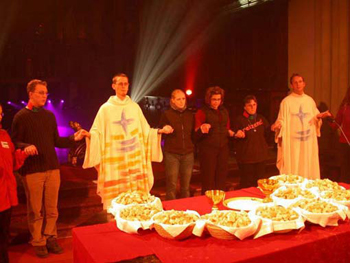
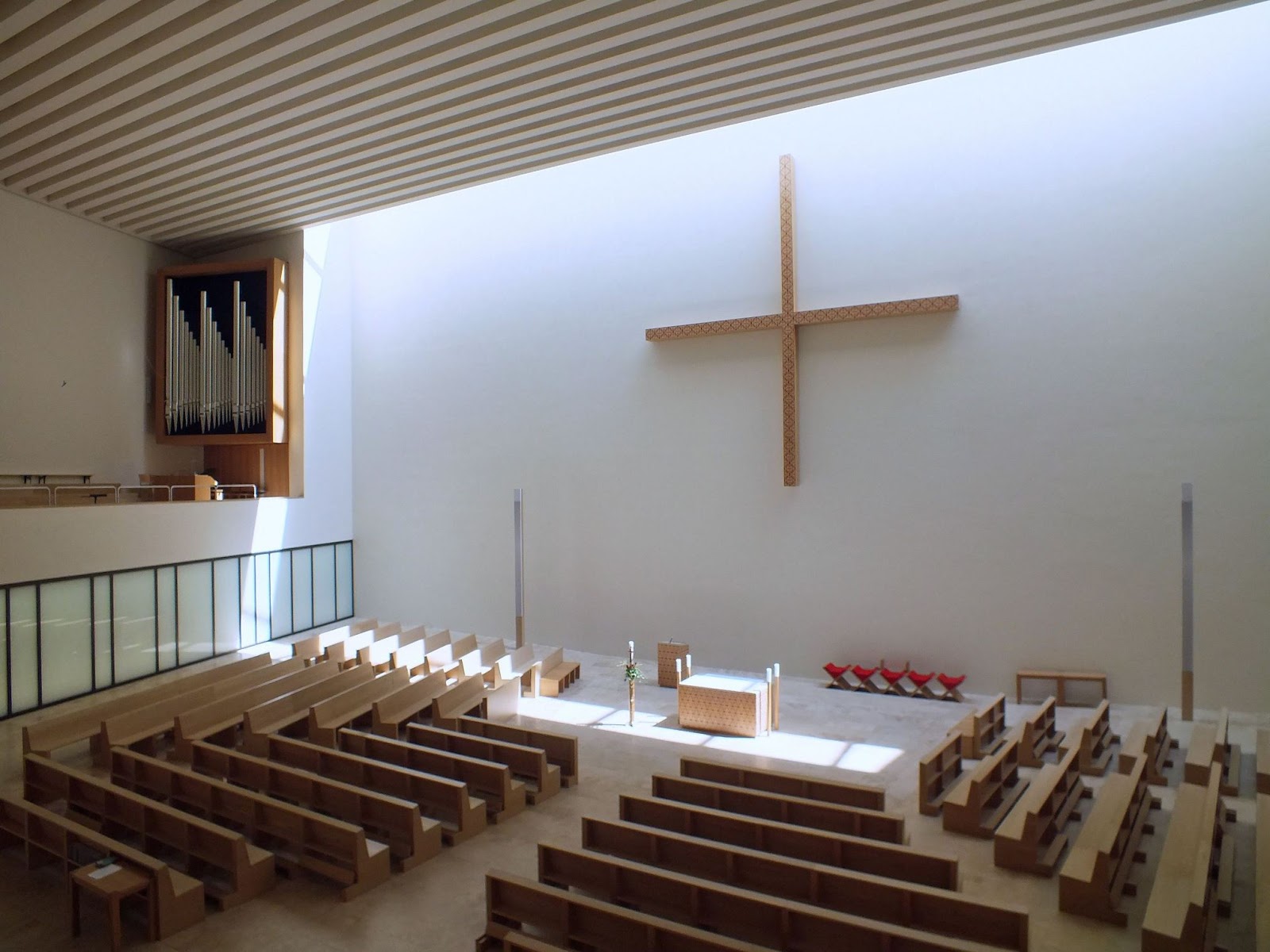
Mass infected with boomer modernist liberalism:
novus+ordo.jpg

I019_Abuse.jpg

02%2B-%2BSt.%2BTrinitatis%2BLzg.%2BKirchenraum.jpg


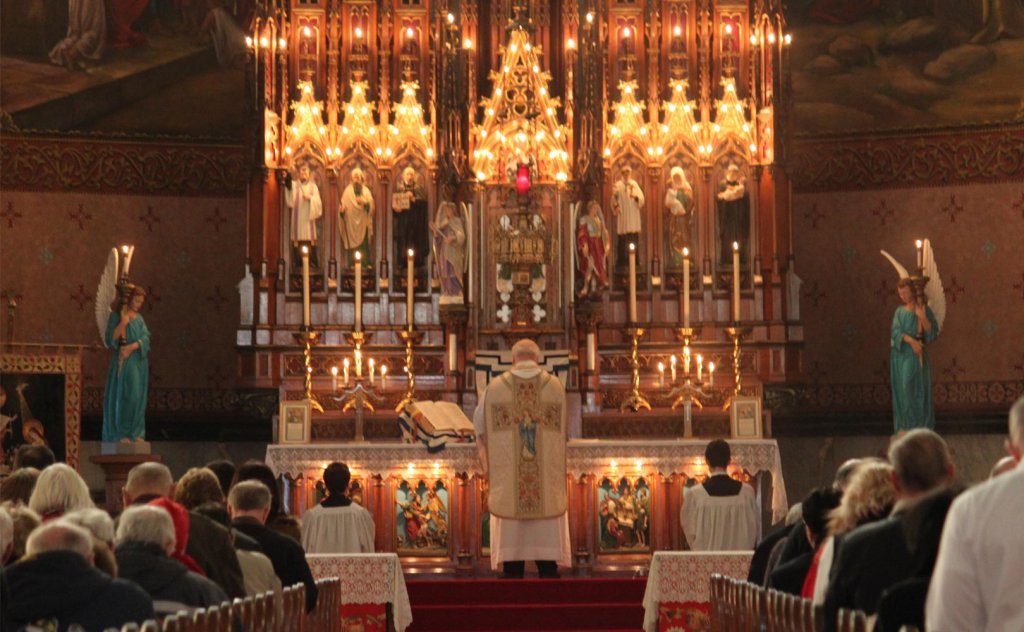
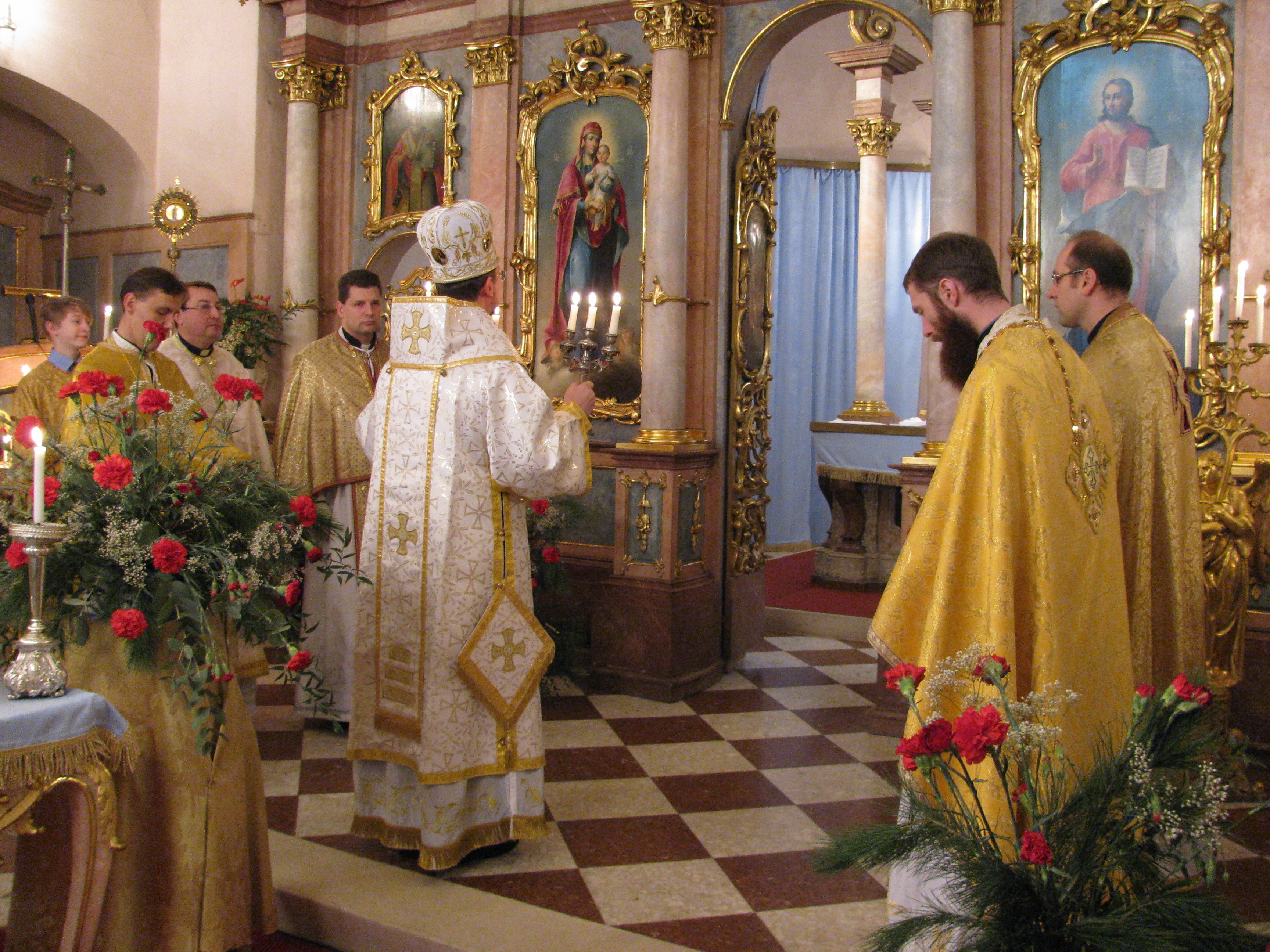
Liturgies not infected with Vatican II liberalism:
TLM-1-1024x632.jpg

1-divine-liturgy-in-st-barbara-in-vienna.jpg
 

ickythump1225

New member
Messages
4,036
Reaction score
323
I teach in a great books program at an Evangelical university. Almost all students in the program are born-and-bred Christians of the nondenominational variety. A number of them have been both thoroughly churched and educated through Christian schools or homeschooling curricula. Yet an overwhelming majority of these students do not believe in a bodily resurrection. While they trust in an afterlife of eternal bliss with God, most of them assume this will be disembodied bliss, in which the soul is finally free of its “meat suit” (a term they fondly use).

I first caught wind of this striking divergence from Christian orthodoxy in class last year, when we encountered Stoic visions of the afterlife. Cicero, for one, describes the body as a prison from which the immortal soul is mercifully freed upon death, whereas Seneca views the body as “nothing more or less than a fetter on my freedom,” one eventually “dissolved” when the soul is set loose. These conceptions were quite attractive to the students.

Resistance to the idea of a physical resurrection struck them as perfectly logical. “It doesn’t feel right to say there’s a human body in heaven, when the body is tied so closely to sin,” said one student. In all, fewer than ten of my forty students affirmed the orthodox teaching that we will ultimately have a body in our glorified, heavenly form. None of them realizes that these beliefs are unorthodox; this is not willful doctrinal error. This is an absence of knowledge about the foundational tenets of historical, creedal Christianity.
https://www.firstthings.com/article/2018/05/evangelical-gnosticism
 

ickythump1225

New member
Messages
4,036
Reaction score
323
1. The light of the East has illumined the universal Church, from the moment when "a rising sun" appeared above us (Lk 1:78): Jesus Christ, our Lord, whom all Christians invoke as the Redeemer of man and the hope of the world.

That light inspired my predecessor Pope Leo XIII to write the Apostolic Letter Orientalium Dignitas in which he sought to safeguard the significance of the Eastern traditions for the whole Church.(1)

On the centenary of that event and of the initiatives the Pontiff intended at that time as an aid to restoring unity with all the Christians of the East, I wish to send to the Catholic Church a similar appeal, which has been enriched by the knowledge and interchange which has taken place over the past century.

Since, in fact, we believe that the venerable and ancient tradition of the Eastern Churches is an integral part of the heritage of Christ's Church, the first need for Catholics is to be familiar with that tradition, so as to be nourished by it and to encourage the process of unity in the best way possible for each.

Our Eastern Catholic brothers and sisters are very conscious of being the living bearers of this tradition, together with our Orthodox brothers and sisters. The members of the Catholic Church of the Latin tradition must also be fully acquainted with this treasure and thus feel, with the Pope, a passionate longing that the full manifestation of the Church's catholicity be restored to the Church and to the world, expressed not by a single tradition, and still less by one community in opposition to the other; and that we too may be granted a full taste of the divinely revealed and undivided heritage of the universal Church(2) which is preserved and grows in the life of the Churches of the East as in those of the West.
https://w2.vatican.va/content/john-...ts/hf_jp-ii_apl_19950502_orientale-lumen.html
 
Top