B

You are using an out of date browser. It may not display this or other websites correctly.
You should upgrade or use an alternative browser.
You should upgrade or use an alternative browser.
Theology
- Thread starter bobbyok1
- Start date


Old Man Mike
Fast as Lightning!
- Messages
- 9,426
- Reaction score
- 7,283
I won't try to unravel the author's morass, but I can speak a little to convergent evolution. [my bonafides: I've had a mail correspondence with Simon Morris, who is one of the leading expositors of the science, and surprisingly he liked what we talked about].
The initial point for addressing Whiskey's concern is: yes, naturalistic explanations ARE given for these convergences. The point of the Convergent Evolution biologists is that the similar forms of varying species [ex. Dolphin, Shark, Mosasaur --- note "Mammal", "Fish", "Reptile"] are caused by physical parameters within the environment which are relevant to species survival. In the indicated case, those physical parameters involve the optimal shapes for "sliding" rapidly through a fluid medium. This is almost demanded of a swimming predator or something trying to escape a swimming predator in an open water environment. --- I picked the example that I did because it's easy to see.
As variations to proteins which alter the animal's shape occur, the variations with the best "slickness through water" will preferentially survive. Though more complicated, these same physical, and chemical [and even mathematically-describable] environmental constraints can explain why large land-dwelling animals must have the famous head-end, torso bisymmetrically formed, with precisely four limbs, and faces conformed in the two-eyes, two ears, one nose, one mouth etc format. All of this spills out of the physical parameters of living in this universe of physical and chemical laws which govern the forces that structures face constantly.
Now as to metaphysics: Bringing Plato into it isn't "scientific" but it doesn't have to be. Speaking of and thinking about untestable things is not forbidden by anyone other than closed-minded scientistic pseudo-scientists, whether they are doing biology, physics, chemistry or not. It is not OBVIOUS that there are no such things as Platonic Forms, just that are no scientific ways of getting evidence for such a concept --- though one modern scientist thought that there were. That fellow was Rupert Sheldrake, and his theory of "Morphogenic Forms" was sort of Plato-in-reverse. Scientistic persons smirked at Sheldrake, but in fact he described perfectly logical ways to try to test whether some such "metaphysical" set of [in his vision, evolving] forms/patterns might exist in a non-spacetime reality, but one connected to and "informed" by our own. Laughing at Sheldrake's idea without examining it is not scientific, nor honest.
Still metaphysically, Native Americans have long had an idea which borders on these same issues. They have believed that species are in a way "represented" by Spirit Entities ["THE Coyote", "THE Bear", "THE Bison"] which can interact with you on Vision Quests, or other times of intense natural strife. Lesser forms of these entities might be one's "Spirit Guide" giving advice about nature and the world's life cycles. For those who categorically reject anything spiritual, these beliefs will be nonsense, but that is THEIR faith statement and not proof. [I personally have a friendship with someone who is part Native American, who has {in his belief} a Spirit Guide in Deer form, who has been attached to his family for decades. I do not doubt Richard; I, as a proper scientist, merely listen to his retellings of his encounters.]
COULD there be a realm wherein something like Platonic Forms, or Sheldrakian Morphogenic Fields, or Richard's animistic Spirit Guide could exist? With no more than we know about the extradimensional realms from which forces are projected to create sensible phenomena upon the stage of spacetime, we shouldn't be too autocratic with our opinions of the possible. I can imagine, for instance, in my "poetical" mind, that in those extradimensional realities there is a process which "clusters" the distinctive force-projecting xyz's for any commonplace structural form. That is, the basic form " tree", or "ball", or "humanoid design" would be "in place" ready to be utilized, simply because it had been already utilized so many times. The force-projecting cluster would have taken on a second-level organizational reality. Would this be like something Plato or Sheldrake or Richard might imagine, or even encounter?
The point of that excursion is not to prove anything, but to create humility --- something almost entirely absent in followers of the Church of Scientism.
The initial point for addressing Whiskey's concern is: yes, naturalistic explanations ARE given for these convergences. The point of the Convergent Evolution biologists is that the similar forms of varying species [ex. Dolphin, Shark, Mosasaur --- note "Mammal", "Fish", "Reptile"] are caused by physical parameters within the environment which are relevant to species survival. In the indicated case, those physical parameters involve the optimal shapes for "sliding" rapidly through a fluid medium. This is almost demanded of a swimming predator or something trying to escape a swimming predator in an open water environment. --- I picked the example that I did because it's easy to see.
As variations to proteins which alter the animal's shape occur, the variations with the best "slickness through water" will preferentially survive. Though more complicated, these same physical, and chemical [and even mathematically-describable] environmental constraints can explain why large land-dwelling animals must have the famous head-end, torso bisymmetrically formed, with precisely four limbs, and faces conformed in the two-eyes, two ears, one nose, one mouth etc format. All of this spills out of the physical parameters of living in this universe of physical and chemical laws which govern the forces that structures face constantly.
Now as to metaphysics: Bringing Plato into it isn't "scientific" but it doesn't have to be. Speaking of and thinking about untestable things is not forbidden by anyone other than closed-minded scientistic pseudo-scientists, whether they are doing biology, physics, chemistry or not. It is not OBVIOUS that there are no such things as Platonic Forms, just that are no scientific ways of getting evidence for such a concept --- though one modern scientist thought that there were. That fellow was Rupert Sheldrake, and his theory of "Morphogenic Forms" was sort of Plato-in-reverse. Scientistic persons smirked at Sheldrake, but in fact he described perfectly logical ways to try to test whether some such "metaphysical" set of [in his vision, evolving] forms/patterns might exist in a non-spacetime reality, but one connected to and "informed" by our own. Laughing at Sheldrake's idea without examining it is not scientific, nor honest.
Still metaphysically, Native Americans have long had an idea which borders on these same issues. They have believed that species are in a way "represented" by Spirit Entities ["THE Coyote", "THE Bear", "THE Bison"] which can interact with you on Vision Quests, or other times of intense natural strife. Lesser forms of these entities might be one's "Spirit Guide" giving advice about nature and the world's life cycles. For those who categorically reject anything spiritual, these beliefs will be nonsense, but that is THEIR faith statement and not proof. [I personally have a friendship with someone who is part Native American, who has {in his belief} a Spirit Guide in Deer form, who has been attached to his family for decades. I do not doubt Richard; I, as a proper scientist, merely listen to his retellings of his encounters.]
COULD there be a realm wherein something like Platonic Forms, or Sheldrakian Morphogenic Fields, or Richard's animistic Spirit Guide could exist? With no more than we know about the extradimensional realms from which forces are projected to create sensible phenomena upon the stage of spacetime, we shouldn't be too autocratic with our opinions of the possible. I can imagine, for instance, in my "poetical" mind, that in those extradimensional realities there is a process which "clusters" the distinctive force-projecting xyz's for any commonplace structural form. That is, the basic form " tree", or "ball", or "humanoid design" would be "in place" ready to be utilized, simply because it had been already utilized so many times. The force-projecting cluster would have taken on a second-level organizational reality. Would this be like something Plato or Sheldrake or Richard might imagine, or even encounter?
The point of that excursion is not to prove anything, but to create humility --- something almost entirely absent in followers of the Church of Scientism.
C
Cackalacky
Guest
I will do my best here as I am on my mobile and most likely I misunderstood his point. Pardon my lack of quotes here:
Genotypes
Genotype Variation, Mutations and Recombination - WikiLectures
There are numerous ways parts of DNA get moved around, copied, edited and deleted leading to. A series of variability. Insertions, deletions, junk DNA no longer active. It is well know why many of these occur and their results. It is harder to predict when out side the lab. They are predictable because of the natural chemical and physical forces of our own universe.
There are established rates of reactions and modeled results which he appears to be involved with. Little effort is required out side of a favorable environment and food source as many experiments show the repeated development of nylnase in bacteria. To see why these things happen include the chemistry and physics on the molecular level. Proteins bind into a form because the AA chains and Their polar properties. These form myriads of 3d macromolecules that have numerous and varies functions which have been copied, recycled and reused. We know that and expect that. We know AAs combine in triplets and the triples form the major identification. This is kind of special at this point as this is the preferred way to pass on genotypes which produce phenotypes and later homologus structures ( convergent evolution). The mechanism is purely physical and chemical. At the basest level.
Understanding the source of variations is important and well studied as much as can be on shoestring budgets.
If he is stating the evolutionary essence of an animal is genotype based then he must be arguing that the genotypes components must have essence to behave predictabily and so does atomic level matter and backwards... Scientists are willing to go back about as far as rNA precursors self replicating out side of a cell (Abiogenesis) but thats it. I know few claiming knowledge last that point.
List of examples of convergent evolution - Wikipedia, the free encyclopedia
Cnvergent evolution is primarily driven by environmental conditions or the biome with long term stability. It has little to do with networks between animals in most cases. Many phenotypic parts, like wings, fins, oil coated feather and hair.. Teeth shape body type, colorations... All are selected for over time and with similar selection pressures you get unrelated organisms adopting phenotypes and behaviors and homologous structures from existing and unrelated structures. These don't cause the genotype networks to work together rather the organism/ parent population, with its own variability will experiene the pressure and respond. One big thing that was in his article is that all this variability will surely pass on to future generations because of it essensces could be less true. An extinction event will bring the globs of population of organisms to bottleneck status and wipe out the remaing leaving little genetic Variability left. This has happened several times and humans most likely would not have evolved when we did if was not for the KT event and several long ice ages.
Divergent evolution - Wikipedia, the free encyclopedia
Divergent evolution has known mechanisms as well. These are being used in labs daily to solve many problems as well as conceptualized algorithms to evolve efficient machine part designs.
But does any of this explain why? The why is still naturalistic and causative though not deterministic. Animals are dynamic and impact the environment. The environment impacts the animals. Both change each other. The effect can be seen at many levels but mostly occur at the population level. The why is innocuous and not any one thing except that we live in a interactive reality with consequences reaching far into time. Some of the changes result in disease susceptibility. Some lead to physical deformities. These can come frm coding errors r they can come from mutations from the environment. Anyway. Did it answer everything and I apologize. Been a long day.
Genotypes
Genotype Variation, Mutations and Recombination - WikiLectures
There are numerous ways parts of DNA get moved around, copied, edited and deleted leading to. A series of variability. Insertions, deletions, junk DNA no longer active. It is well know why many of these occur and their results. It is harder to predict when out side the lab. They are predictable because of the natural chemical and physical forces of our own universe.
There are established rates of reactions and modeled results which he appears to be involved with. Little effort is required out side of a favorable environment and food source as many experiments show the repeated development of nylnase in bacteria. To see why these things happen include the chemistry and physics on the molecular level. Proteins bind into a form because the AA chains and Their polar properties. These form myriads of 3d macromolecules that have numerous and varies functions which have been copied, recycled and reused. We know that and expect that. We know AAs combine in triplets and the triples form the major identification. This is kind of special at this point as this is the preferred way to pass on genotypes which produce phenotypes and later homologus structures ( convergent evolution). The mechanism is purely physical and chemical. At the basest level.
Understanding the source of variations is important and well studied as much as can be on shoestring budgets.
If he is stating the evolutionary essence of an animal is genotype based then he must be arguing that the genotypes components must have essence to behave predictabily and so does atomic level matter and backwards... Scientists are willing to go back about as far as rNA precursors self replicating out side of a cell (Abiogenesis) but thats it. I know few claiming knowledge last that point.
List of examples of convergent evolution - Wikipedia, the free encyclopedia
Cnvergent evolution is primarily driven by environmental conditions or the biome with long term stability. It has little to do with networks between animals in most cases. Many phenotypic parts, like wings, fins, oil coated feather and hair.. Teeth shape body type, colorations... All are selected for over time and with similar selection pressures you get unrelated organisms adopting phenotypes and behaviors and homologous structures from existing and unrelated structures. These don't cause the genotype networks to work together rather the organism/ parent population, with its own variability will experiene the pressure and respond. One big thing that was in his article is that all this variability will surely pass on to future generations because of it essensces could be less true. An extinction event will bring the globs of population of organisms to bottleneck status and wipe out the remaing leaving little genetic Variability left. This has happened several times and humans most likely would not have evolved when we did if was not for the KT event and several long ice ages.
Divergent evolution - Wikipedia, the free encyclopedia
Divergent evolution has known mechanisms as well. These are being used in labs daily to solve many problems as well as conceptualized algorithms to evolve efficient machine part designs.
But does any of this explain why? The why is still naturalistic and causative though not deterministic. Animals are dynamic and impact the environment. The environment impacts the animals. Both change each other. The effect can be seen at many levels but mostly occur at the population level. The why is innocuous and not any one thing except that we live in a interactive reality with consequences reaching far into time. Some of the changes result in disease susceptibility. Some lead to physical deformities. These can come frm coding errors r they can come from mutations from the environment. Anyway. Did it answer everything and I apologize. Been a long day.
Last edited:

- Messages
- 20,900
- Reaction score
- 8,158
It seems like the paragraph I added after the article obscured the point I had hoped to discuss here. Here's the bit I found most compelling:
I interpreted this to mean that, if the adaptations that drive evolution were completely random, fatal mutations which compromise the viability of critical proteins would vastly outnumber beneficial ones; in other words, evolution wouldn't work. But that's not the case. Genotype networks exist which ensure that mutations do not compromise the viability of critical proteins, which both: (1) makes adaptation possible; and (2) explains convergent/ divergent evolution.*
That strikes me as very convenient, in the same way that the universal fundamental physical constants all being within the very narrow range which happens to allow for life is. And of course committed naturalists reject the significance of that by positing the multiverse; which is fine, as far as it goes, except that it's untestable, putting it on par with most religious beliefs.
In other words, there are lots of things-- music, abstract mathematical objects, etc.-- that cannot be explained by purely deductive, naturalistic philosophy.
*Is this not accurate? Please correct me if so.
Let me put this point as strongly as I can. Without these pathways of synonymous texts, these sets of genes that express precisely the same function in ever-shifting sequences of letters, it would not be possible to keep finding new innovations via random mutation. Evolution would not work.
I interpreted this to mean that, if the adaptations that drive evolution were completely random, fatal mutations which compromise the viability of critical proteins would vastly outnumber beneficial ones; in other words, evolution wouldn't work. But that's not the case. Genotype networks exist which ensure that mutations do not compromise the viability of critical proteins, which both: (1) makes adaptation possible; and (2) explains convergent/ divergent evolution.*
That strikes me as very convenient, in the same way that the universal fundamental physical constants all being within the very narrow range which happens to allow for life is. And of course committed naturalists reject the significance of that by positing the multiverse; which is fine, as far as it goes, except that it's untestable, putting it on par with most religious beliefs.
In other words, there are lots of things-- music, abstract mathematical objects, etc.-- that cannot be explained by purely deductive, naturalistic philosophy.
*Is this not accurate? Please correct me if so.
Last edited:
C
Cackalacky
Guest
Firstly, we are about to get uber complicated here so I will do my best to explain.
There is a BIG conceptual mess here which needs to be clarified. He goes from texts to gene sets, letters… and random mutation to Evolution would not work.
SO…. To clarify the stratigraphy we need to keep in mind is:
Base <
base pair <
codon (triplet) <
amino acid <
amino acid chain <
simple protein <
Protein Structure (Primary-Quaternary Levels):

Redundnacy of DNA and Protein Coding
Detailed explanation here: 29+ Evidences for Macroevolution: Part 4
Example: the gene for cytochrome c (from the link above)
“Using a ubiquitous gene such as cytochrome c, there is no reason to assume that two different organisms should have the same protein sequence or even similar protein sequences, unless the two organisms are genealogically related. This is due in part to the functional redundancy of protein sequences and structures. Here, "functional redundancy" indicates that many different protein sequences form the same general structure and perform the same general biological role. Cytochrome c is an extremely functionally redundant protein, because many dissimilar sequences all form cytochrome c electron transport proteins. Functional redundancy need not be exact in terms of performance; some functional cytochrome c sequences may be slightly better at electron transport than others.
Decades of biochemical evidence have shown that many amino acid mutations, especially of surface residues, have only small effects on protein function and on protein structure (Branden and Tooze 1999, Ch. 3; Harris et al. 1956; Lesk 2001, Chs. 5 and 6, pp. 165-228; Li 1997, p. 2; Matthews 1996). A striking example is that of the c-type cytochromes from various bacteria, which have virtually no sequence similarity. Nevertheless, they all fold into the same three-dimensional structure, and they all perform the same biological role (Moore and Pettigrew 1990, pp. 161-223; Ptitsyn 1998).
Even within species, most amino acid mutations are functionally silent. For example, there are at least 250 different amino acid mutations known in human hemoglobin, carried by more than 3% of the world's population, that have no clinical manifestation in either heterozygotic or homozygotic individuals (Bunn and Forget 1986; Voet and Voet 1995, p. 235). The phenomenon of protein functional redundancy is very general, and is observed in all known proteins and genes.”
His statement that “Evolution would not work” is also IMO incomplete as it takes heredity for these changes to manifest themselves. Its really incoherent to take random mutation of a macromolecule as evidence of evolution when in fact it takes functionality, heredity, accumulation, expression and a host of other things for “evolution” to occur.
RANDOM MUTATION:
The idea of random mutation needs some tempering. Here is a long discussion on it: Random Genetic Drift
The main concept is understanding what changes occur at what level and whether those are expressed within a population and passed on to offspring. Copying errors at the RNA level may be random initially but those errors can lead to malfunctioning proteins (enzymes) that perform coding that are passed on and become less random and more deterministic over time. Genetic drift is random, to an extent and operates at different levels and magnitudes on different size populations. Natural selection is very much NON-RANDOM as the physical constraints on this planet and in the universe are fairly stable.
For example: our cell wall is made of a phospholipid bilayer. Due to its chemical structure, a PBL will form a spherical structure in water:
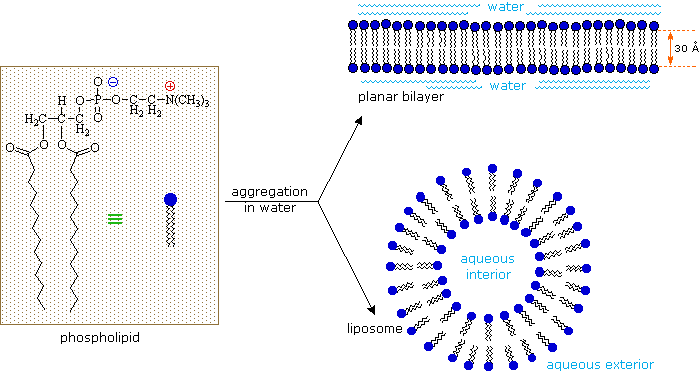
Embed proteins and other macromolecules and you have a functioning cell wall with transport mechanisms.
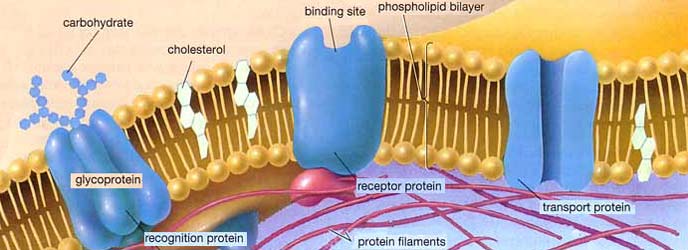
This leads into the fine tuning argument. This argument hinges on one big premise that may remain unanswered forever. The universe as we know it cannot exist in any other form or manner. That is a big assumption.
Here are 14 objections/counter points for the fine tuning argument (http://wiki.ironchariots.org/index.php?title=Fine-tuning_argument ):
So the argument therefore becomes more of are we “anthropormorphizing” this information? Could this happen any other way in our universe or in other universes?
“Let me put this point as strongly as I can. Without these pathways of synonymous texts, these sets of genes that express precisely the same function in ever-shifting sequences of letters, it would not be possible to keep finding new innovations via random mutation. Evolution would not work.”
There is a BIG conceptual mess here which needs to be clarified. He goes from texts to gene sets, letters… and random mutation to Evolution would not work.
SO…. To clarify the stratigraphy we need to keep in mind is:
Base <
base pair <
codon (triplet) <
amino acid <
amino acid chain <
simple protein <
Protein Structure (Primary-Quaternary Levels):
Redundnacy of DNA and Protein Coding
Detailed explanation here: 29+ Evidences for Macroevolution: Part 4
So, the way he is laying it out is muddy at best. His use of “precisely” is loaded. As stated above, there are ridiculous variations of protein arrangements that perform the same general function. Humans have multiple variations of the same functional proteins ( e.g. haemoglobin). His analogy of randomly changing letters is a bit misleading as well. Many random changes to the text (what I am assuming is the Base or Base Pair) lead to little or no functional changes. Real observable changes occur in the protein chain and one of the four protein form levels, which are dominated by physical and chemical property interactions.The support for common descent given by studies of molecular sequences can be phrased as a deductive argument. This argument is unique within this FAQ, as it is the only instance we can directly conclude that similarity implies relatedness. This conclusion depends upon the similarity of biological structures within a specific context: the similarity observed between ubiquitous genes from different species.
The following discussion is somewhat technical, so it is first presented in the outline of a deductive argument, which makes the logical thread easy to follow. Here are listed the premises of the argument followed by the conclusion and further discussion.
The gist of the argument:
(P1) Ubiquitous genes: There are certain genes that all living organisms have because they perform very basic life functions; these genes are called ubiquitous genes.
(P2) Ubiquitous genes are uncorrelated with species-specific phenotypes: Ubiquitous genes have no relationship with the specific functions of different species. For example, it doesn't matter whether you are a bacterium, a human, a frog, a whale, a hummingbird, a slug, a fungus, or a sea anemone - you have these ubiquitous genes, and they all perform the same basic biological function no matter what you are.
(P3) Molecular sequences of ubiquitous genes are functionally redundant: Any given ubiquitous protein has an extremely large number of different functionally equivalent forms (i.e. protein sequences which can perform the same biochemical function).
(P4) Specific ubiquitous genes are unnecessary in any given species: Obviously, there is no a priori reason why every organism should have the same sequence or even similar sequences. No specific sequence is functionally necessary in any organism - all that is necessary is one of the large number of functionally equivalent forms of a given ubiquitous gene or protein.
(P5) Heredity correlates sequences, even in the absence of functional necessity: There is one, and only one, observed mechanism which causes two different organisms to have ubiquitous proteins with similar sequences (aside from the extreme improbability of pure chance, of course). That mechanism is heredity.
(C) Thus, similar ubiquitous genes indicate genealogical relationship: It follows that organisms which have similar sequences for ubiquitous proteins are genealogically related. Roughly, the more similar the sequences, the closer the genealogical relationship.
“Like protein sequence similarity, the DNA sequence similarity of two ubiquitous genes also implies common ancestry. Of course, comprehensive DNA sequence comparisons of conserved proteins such as cytochrome c also indirectly take into account amino acid sequences, since the DNA sequence specifies the protein sequence. However, with DNA sequences there is an extra level of redundancy. The genetic code itself is informationally redundant; on average there are three different codons (a codon is a triplet of DNA bases) that can specify the exact same amino acid (Voet and Voet 1995, p. 966). Thus, for cytochrome c there are approximately 3104, or over 1046, different DNA sequences (and, hence, 1046 different possible genes) that can specify the exact same protein sequence.
Example: the gene for cytochrome c (from the link above)
“Using a ubiquitous gene such as cytochrome c, there is no reason to assume that two different organisms should have the same protein sequence or even similar protein sequences, unless the two organisms are genealogically related. This is due in part to the functional redundancy of protein sequences and structures. Here, "functional redundancy" indicates that many different protein sequences form the same general structure and perform the same general biological role. Cytochrome c is an extremely functionally redundant protein, because many dissimilar sequences all form cytochrome c electron transport proteins. Functional redundancy need not be exact in terms of performance; some functional cytochrome c sequences may be slightly better at electron transport than others.
Decades of biochemical evidence have shown that many amino acid mutations, especially of surface residues, have only small effects on protein function and on protein structure (Branden and Tooze 1999, Ch. 3; Harris et al. 1956; Lesk 2001, Chs. 5 and 6, pp. 165-228; Li 1997, p. 2; Matthews 1996). A striking example is that of the c-type cytochromes from various bacteria, which have virtually no sequence similarity. Nevertheless, they all fold into the same three-dimensional structure, and they all perform the same biological role (Moore and Pettigrew 1990, pp. 161-223; Ptitsyn 1998).
Even within species, most amino acid mutations are functionally silent. For example, there are at least 250 different amino acid mutations known in human hemoglobin, carried by more than 3% of the world's population, that have no clinical manifestation in either heterozygotic or homozygotic individuals (Bunn and Forget 1986; Voet and Voet 1995, p. 235). The phenomenon of protein functional redundancy is very general, and is observed in all known proteins and genes.”
His statement that “Evolution would not work” is also IMO incomplete as it takes heredity for these changes to manifest themselves. Its really incoherent to take random mutation of a macromolecule as evidence of evolution when in fact it takes functionality, heredity, accumulation, expression and a host of other things for “evolution” to occur.
RANDOM MUTATION:
The idea of random mutation needs some tempering. Here is a long discussion on it: Random Genetic Drift
The main concept is understanding what changes occur at what level and whether those are expressed within a population and passed on to offspring. Copying errors at the RNA level may be random initially but those errors can lead to malfunctioning proteins (enzymes) that perform coding that are passed on and become less random and more deterministic over time. Genetic drift is random, to an extent and operates at different levels and magnitudes on different size populations. Natural selection is very much NON-RANDOM as the physical constraints on this planet and in the universe are fairly stable.
For example: our cell wall is made of a phospholipid bilayer. Due to its chemical structure, a PBL will form a spherical structure in water:
Embed proteins and other macromolecules and you have a functioning cell wall with transport mechanisms.
This leads into the fine tuning argument. This argument hinges on one big premise that may remain unanswered forever. The universe as we know it cannot exist in any other form or manner. That is a big assumption.
Here are 14 objections/counter points for the fine tuning argument (http://wiki.ironchariots.org/index.php?title=Fine-tuning_argument ):
1. Essentially this argument is just a variation on the argument from design. The key difference here is that it misrepresents actual scientific evidence in such a way to support an unscientific conclusion. A more scientific conclusion would be to state that there is some unknown natural phenomenon to explain this apparent "fine tuning". It is also worth mentioning that a counter-argument to design, natural-law argument, and the anthropic principle is also a counter-argument to fine-tuning. See below.
2. A problem arises from the premise that the cosmological constants are in fact 'fine tuned' at all. This premise assumes that there is a certain range of values that each constant could assume. The greater these ranges, the more unlikely that a given set of constants would have assumed the values we observe. However, to simply imagine a certain range of possible numerical values that each constant could assume and calculating the probability that this value would be arrived at by mere chance is fallacious for two reasons. Currently, we have no access to data that would tell us a) what range the constants could possibly assume in reality and b) how many trials there were in which the constants assumed certain values. If in a lottery one number were drawn from a pot of five numbers, then winning the lottery would become comparatively likely. Likewise, even if a trial with an extremely unlikely outcome - say winning an actual national lottery - were repeated a sufficient number of times, the outcome would become likely to occur overall. (See next point)
3. Scientists theorize that given the infinite nature of time and space, an infinite number of other unobservable universes could exist parallel to our own, each with infinite variations of constants. This is known as the multiverse theory. Given infinite possibilities, the formation of a universe such as our own is not so inconceivable.
4. Another flaw with this argument is that it assumes our universe is finely tuned for the sole purpose of supporting life. This is not the case at all. Given the laws of our universe, scientists theorize that our universe is composed of less than 2% baryonic matter, that is matter consisting of protons, neutrons or other particles equal or greater than that of a proton. Dark matter is by far the most common form of matter in our universe. Our universe, if anything, is far more suited for the creation of black holes than it is for supporting life. Life on our planet constitutes only an insignificant portion of our universe.
5. The Earth's total mass is 5.9736×10^24 kg while the estimated total biomass on Earth is around 7×10^13 kg. This means that the percentage of life on Earth is 1.17182269 × 10^-9. That is .00000000117%. The Earth, let alone the universe, is hardly fine tuned for life. Man has created and tested much more finely tuned mediums for simple life in the form of specialized agar solutions that support life/medium ratios far greater than .00000000117%.
6. In order for the probability argument to be valid, the fundamental constants under consideration have to be independent. That is, one cannot claim that the gravitational constant and the speed of expansion of the universe were individually tuned, since they are clearly related. The electromagnetic force is mediated by massless photons which travel at the speed of light, so therefore the strength of this force is likely related to the speed of light. Similar relationships may yet emerge between other constants.
7. If there were a creator who "fine tuned" the universe for our existence, who "fine tuned" the universe in order for said creator to exist? The argument of a creator is infinitely paradoxical.
8. The initial premise of the argument is that in order for life to exist, the universe must have such properties that warrant a designer. However in this line of reasoning, the designer of those properties would exist in a state where none of these properties were true. Therefore any properties deemed to require a designer can't be necessary for existence in the first place, as the designer can exist without them. The argument is self-refuting.
9. If one starts with the assumption that humanity is an accident, the fine tuning argument makes no sense since if we are an accident, no fine tuning was necessary. For the fine tuning argument to make any sense, one has to start with the assumption that humanity is not an accident, which begs the question of a creator. But since the purpose of the argument is to prove that there is a god who created us, any such assumption renders the argument circular.
10. If we are to consider the chance of the universe existing the way it did, surely the same principle of chance can be reversed. What is the chance that a truly omnipotent God, as proposed by many religions, made the constants, factors and general details of the universe as he did? he would have infinite possibilities meaning the probability would be 1 in infinity - much less than the supposed calculations of those presenting the argument.
11. It may be useful to realize that the vast majority of the universe is uninhabitable by any form of life, albeit human life. If there are so many regions of space, and indeed our own planet, that are uninhabitable by life, then why should we call the universe "fine-tuned"?.
12. The argument also seems to call into question the omnipotence of the creator. If he were infinitely powerful, why did he make life constrained to survive only in a tiny fraction of the universe? The case for supernatural intervention would be much more plausible if humans found themselves floating in the vacuum of space, on a toxic planet with no oxygen, or somewhere else where our continued survival was a complete mystery to scientists. As it is, we find life only in areas where the facts of biology tell us it can exist. This is exactly what we would expect if we were not the products of omnipotence.
13. When considering the arguments fourth premise, which includes "...created out of nothing by a single being who is omnipotent, omniscient, all-loving, eternal...", the question must be raised of how does the God being posited as the creator of said universe gain the attributes stated by the argument? the argument is in no way structured to determine the precise attributes of the personal being of which the presenter asserts. It is not necessary for the creator to be all-loving, he could be making us with the notion of torturing us for all we know. It is not necessary for the creator to be eternal, he could have fizzled out in the creation or could have died of some unfathomable cause. And it is likewise unnecessary for the creator to be omniscient and/or omnipotent, there are logical arguments against the proposition of such attributes, and the being need not be all-powerful/knowing - he could just be really, really powerful and know a lot, but not everything.
14. It may be worth noting, also, that the some of the constants specified not not require arbitrary precision. With regards to the Goldilocks zone, the amount Earth can be distanced from the sun is approximately 37%, right out to Mars (yes, our solar system has two planets in the Goldilocks zone). The point being that the so-called precision we find, is actually not that precise in reality (this is one of the more extreme cases, most others can be changed but the difference being not as much).
"Why did God issue just those natural laws and no others? If you say that he did it simply from his own good pleasure, and without any reason, you then find that there is something which is not subject to law, and so your train of natural law is interrupted. If you say, as more orthodox theologians do, that in all the laws which God issues he had a reason for giving those laws rather than others -- the reason, of course, being to create the best universe, although you would never think it to look at it -- if there was a reason for the laws which God gave, then God himself was subject to law, and therefore you do not get any advantage by introducing God as an intermediary." –Bertrand Russell
“According to the anthropic principle proponents, if the universal constants (e.g. gravitation, the strong force, etc.) were just a nose-hair off, the universe as we know it would not exist; stars wouldn't form and there would be no life and no us. That supposedly makes our universe truly special. To demonstrate just how ridiculous this fine-tuning argument is, consider the fact that no measurement in physics is perfect. All of them are approximations and have margins of error. That means the universal constants, that make our universe what it is, have some wiggle room. Within that wiggle room are an infinite quantity of real numbers. Each of those real numbers could represent constants that could make a universe like ours. Since there are an infinite number of potential constants within that wiggle room, there are an infinite number of potential universes, like ours, that could have existed in lieu of ours. Thus, there is really nothing special about our universe.”
― G.M. Jackson, Debunking Darwin's God: A Case Against BioLogos and Theistic Evolution
So the argument therefore becomes more of are we “anthropormorphizing” this information? Could this happen any other way in our universe or in other universes?

Veritate Duce Progredi
A man gotta have a code
- Messages
- 9,508
- Reaction score
- 5,624
@Cack,
I can't say I found the 14 arguments all that satisfying or the quote from Bertrand Russell but I'm not sure I really follow the discussion being had.
Did someone argue against evolution? Or that ubiquitous genes cannot be used in the approximation of ancestry? Although I do appreciate the biology refresher, I need someone to help bridge the divide on what's being purported
In regards to your information about how the texts/words metaphor doesn't align itself with the genetic code created by our DNA. You talked about the biological safeguards builtin with codon redundancy but there are many more ways for an amino acid to be affected by a base pair substitution. We can abuse numbers for our purpose here: There are 3 BPs per codon per AA and the redundancy builtin often applies to the 3rd bp so if there is a mutation, you'll still likely get the correct AA. But if you affect either of the previous two codons you are sure to get a different AA. Since there are 3 opportunities to go wrong at each BP and you average three redundancies per AA, you have 6 opportunities to screw it up and 3 opportunities to silently screw it up
This also doesn't take into account catastrophic affects like frameshifts and stop codons being accidentally transcribed.
The nice thing is that we often see minimal effect in protein folding and functionality when a single amino acid is swapped, I'm assuming if swapped, it's better for the swap to occur within the amino acid classes, eg - arginine & histidine
I can't say I found the 14 arguments all that satisfying or the quote from Bertrand Russell but I'm not sure I really follow the discussion being had.
Did someone argue against evolution? Or that ubiquitous genes cannot be used in the approximation of ancestry? Although I do appreciate the biology refresher, I need someone to help bridge the divide on what's being purported
In regards to your information about how the texts/words metaphor doesn't align itself with the genetic code created by our DNA. You talked about the biological safeguards builtin with codon redundancy but there are many more ways for an amino acid to be affected by a base pair substitution. We can abuse numbers for our purpose here: There are 3 BPs per codon per AA and the redundancy builtin often applies to the 3rd bp so if there is a mutation, you'll still likely get the correct AA. But if you affect either of the previous two codons you are sure to get a different AA. Since there are 3 opportunities to go wrong at each BP and you average three redundancies per AA, you have 6 opportunities to screw it up and 3 opportunities to silently screw it up
This also doesn't take into account catastrophic affects like frameshifts and stop codons being accidentally transcribed.
The nice thing is that we often see minimal effect in protein folding and functionality when a single amino acid is swapped, I'm assuming if swapped, it's better for the swap to occur within the amino acid classes, eg - arginine & histidine
C
Cackalacky
Guest
@Cack,
I can't say I found the 14 arguments all that satisfying or the quote from Bertrand Russell but I'm not sure I really follow the discussion being had.
Did someone argue against evolution? Or that ubiquitous genes cannot be used in the approximation of ancestry? Although I do appreciate the biology refresher, I need someone to help bridge the divide on what's being purported
In regards to your information about how the texts/words metaphor doesn't align itself with the genetic code created by our DNA. You talked about the biological safeguards builtin with codon redundancy but there are many more ways for an amino acid to be affected by a base pair substitution. We can abuse numbers for our purpose here: There are 3 BPs per codon per AA and the redundancy builtin often applies to the 3rd bp so if there is a mutation, you'll still likely get the correct AA. But if you affect either of the previous two codons you are sure to get a different AA. Since there are 3 opportunities to go wrong at each BP and you average three redundancies per AA, you have 6 opportunities to screw it up and 3 opportunities to silently screw it up
This also doesn't take into account catastrophic affects like frameshifts and stop codons being accidentally transcribed.
The nice thing is that we often see minimal effect in protein folding and functionality when a single amino acid is swapped, I'm assuming if swapped, it's better for the swap to occur within the amino acid classes, eg - arginine & histidine
Veritae, my post was in response to Whiskeyjack's prior post with specific questions. My attempt to be concise failed lol. The point of the first part was to expound on how complex but inherently directed evolution is as opposed to randomly occurring. It's so natural that it may be as fundamental to life as a medium is to sound/music. That does not mean it can't happen another way either, it's just the case as we know it to be. Ultimately variation is required but it is not confined to random events and also requires time, heredity etc. happen"
The second part was in response to the finely tuned argument. It is ultimately a argument from design, which I find incoherent and unnecessarily anthropomorphized logic. The counter points are simple but I think it exposes several aspects of an argument for design and its assumptions.
As to your number crunching... That's not really accurate. Mutation rates are highly variable between species and can speed up or slow down. Environmental changes also can affect Mutation rates Mutation rate - Wikipedia, the free encyclopedia. We are talking x10^-6 and smaller base pairs per group per generation. That is small. Even then, mutations are mostly mute. The real effects are in respect to gene/allele frequencies in populations which is dominated by Natural selection (non-random) pressures.
Last edited:
Veritate Duce Progredi
A man gotta have a code
- Messages
- 9,508
- Reaction score
- 5,624
Veritae, my post was in response to Whiskeyjack's prior post with specific questions. My attempt to be concise failed lol. The point of the first part was to expound on how complex but inherently directed evolution is as opposed to randomly occurring. It's so natural that it may be as fundamental to life as a medium is to sound/music. That does not mean it can't happen another way either, it's just the case as we know it to be. Ultimately variation is required but it is not confined to random events and also requires time, heredity etc. happen"
1. The second part was in response to the finely tuned argument. It is ultimately a argument from design, which I find incoherent and unnecessarily anthropomorphized logic. The counter points are simple but I think it exposes several aspects of an argument for design and its assumptions.
2. As to your number crunching... That's not really accurate. Mutation rates are highly variable between species and can speed up or slow down. Environmental changes also can affect Mutation rates Mutation rate - Wikipedia, the free encyclopedia. We are talking x10^-6 and smaller base pairs per group per generation. That is small. Even then, mutations are mostly mute. The real effects are in respect to gene/allele frequencies in populations which is dominated by Natural selection (non-random) pressures.
1. It's very difficult to extract out anthropomorphized logic given that everything we sense and experience is through the human lens. I don't really want to make a design argument as I see no purpose for it, inside or outside of a theistic philosophy. I do understand that some of our forum members may believe in some variation of "finely tuned" and I don't see how that has been disproven, since all of these phenomena could come about by a fine tuner.
2. My number crunching still holds. Mutation rates can wax and wane but that variable is simply applied to each codon being transcribed/translated without bias. There may be some published biology papers that can dispel my logic but they'd have to be focused on positional mutation percentages, aka - mutation rate percentages for any given codon have mutation rates across their BPs in a non-uniform pattern, 15%:15%:70%
The rest of what you said I am in agreement with.
It appears this discussion always comes down to a leap of faith in one of two directions:
All things that exist, had a beginning or an inception point. Given that fact, it is reasonable to believe there is a great progenitor that acts as the ultimate end to all of existence.
...or....
The universe/multiverse has always existed, there was no beginning and there will be no true end. Moments of creation are only equaled by moments of destruction and entropy, a sinusoidal pattern that has ruled existence ad infinitum.
Taking Pascal's wager, I tend to fall in the former but I certainly recognize those who put their faith in the other option are not holding an unreasonable position.
C
Cackalacky
Guest
Just curious wher your assertion about the 15:15:70 idea comes from? Do you have a source I can check to understand better because my understanding of transcription and translation doesn't jive with that. Single point mutations are typically corrected quickly during transcription and during translation there are also several things that prevent errors reading a codon. Errors including 3-6 billion base pairs every time a cell divides result in very few (relatively) errors and certainly not as high or in the manner as I think you are saying.1. It's very difficult to extract out anthropomorphized logic given that everything we sense and experience is through the human lens. I don't really want to make a design argument as I see no purpose for it, inside or outside of a theistic philosophy. I do understand that some of our forum members may believe in some variation of "finely tuned" and I don't see how that has been disproven, since all of these phenomena could come about by a fine tuner.
2. My number crunching still holds. Mutation rates can wax and wane but that variable is simply applied to each codon being transcribed/translated without bias. There may be some published biology papers that can dispel my logic but they'd have to be focused on positional mutation percentages, aka - mutation rate percentages for any given codon have mutation rates across their BPs in a non-uniform pattern, 15%:15%:70%
The rest of what you said I am in agreement with.
It appears this discussion always comes down to a leap of faith in one of two directions:
All things that exist, had a beginning or an inception point. Given that fact, it is reasonable to believe there is a great progenitor that acts as the ultimate end to all of existence.
...or....
The universe/multiverse has always existed, there was no beginning and there will be no true end. Moments of creation are only equaled by moments of destruction and entropy, a sinusoidal pattern that has ruled existence ad infinitum.
Taking Pascal's wager, I tend to fall in the former but I certainly recognize those who put their faith in the other option are not holding an unreasonable position.
Veritate Duce Progredi
A man gotta have a code
- Messages
- 9,508
- Reaction score
- 5,624
Just curious wher your assertion about the 15:15:70 idea comes from? Do you have a source I can check to understand better because my understanding of transcription and translation doesn't jive with that. Single point mutations are typically corrected quickly during transcription and during translation there are also several things that prevent errors reading a codon. Errors including 3-6 billion base pairs every time a cell divides result in very few (relatively) errors and certainly not as high or in the manner as I think you are saying.
I think you misunderstood the intent of my post. I'm not positing there is a high error rate in transcription/translation. I was trying to spell out that the redundancy built in for some codon-AAs only show up on the 3rd base pair. So, let's look at an example to be more specific. My favorite AA, Leucine (tied to skeletal muscle increases) two of it's codons are CUU and CUC, so the third base pair provides the redundancy in case there were a mutation. I was attempting to state, that I would assume mutations across all base pairs in the codon would occur at equal rates. So if the error rate is x 10^-6, then it applies to all BPs in the codon. so there are still better chances that any given mutation will result in either a different amino acid or a stop codon.
Three base pairs per codon, each base pair has the same likelihood of being mutated, which means if a mutation occurs at BP1 or BP2, you definitely get something different than originally intended. If it occurs at BP3, for simplicity sake, we'll say it still gives the same amino acid, since that's where the majority of the redundancy is built in.
With three base pairs per codon, you have twice as high likelihood that any given error in translation will result in a "non-silent" mutation. I can't tell if I'm being too basic or too nebulous in my description. This doesn't take into account the fact that some proteins will still fold correctly or that some amino acids are of the same class and may minimize the effect of any given mutation. It's also possible that a single AA mutation in a protein can reduce it's enzymatic ability drastically, to the point of certainly causing a de novo branch to be selected against in the population.
Obviously, I'm discounting a great deal of complexity seen in this pathway but for our purpose, I believe it still holds true.
What I intended with my previous post was to simply say: if my numbers are wrong, then it'd be due to some academic publishing a paper that describes the relative percentage of BP mutations in any given set of codons. Perhaps it's not true that mutations occur equally across all BPs. To disprove my point above, one would require a study of specific sequences (most likely in yeast or some other fast-propagating organism), which introduced mutagens. You'd then track mutation rate across specific gene sequences to see if there was a biological preference for mutation at a 3rd BP vs 1 or 2. My lab skills have completely atrophied so I'm not sure how you'd setup the study but the underlying theory is explained above.
Let me know if you see an error in this thinking.
C
Cackalacky
Guest
I think you misunderstood the intent of my post. I'm not positing there is a high error rate in transcription/translation. I was trying to spell out that the redundancy built in for some codon-AAs only show up on the 3rd base pair. So, let's look at an example to be more specific. My favorite AA, Leucine (tied to skeletal muscle increases) two of it's codons are CUU and CUC, so the third base pair provides the redundancy in case there were a mutation. I was attempting to state, that I would assume mutations across all base pairs in the codon would occur at equal rates. So if the error rate is x 10^-6, then it applies to all BPs in the codon. so there are still better chances that any given mutation will result in either a different amino acid or a stop codon.
Three base pairs per codon, each base pair has the same likelihood of being mutated, which means if a mutation occurs at BP1 or BP2, you definitely get something different than originally intended. If it occurs at BP3, for simplicity sake, we'll say it still gives the same amino acid, since that's where the majority of the redundancy is built in.
With three base pairs per codon, you have twice as high likelihood that any given error in translation will result in a "non-silent" mutation. I can't tell if I'm being too basic or too nebulous in my description. This doesn't take into account the fact that some proteins will still fold correctly or that some amino acids are of the same class and may minimize the effect of any given mutation. It's also possible that a single AA mutation in a protein can reduce it's enzymatic ability drastically, to the point of certainly causing a de novo branch to be selected against in the population.
Obviously, I'm discounting a great deal of complexity seen in this pathway but for our purpose, I believe it still holds true.
What I intended with my previous post was to simply say: if my numbers are wrong, then it'd be due to some academic publishing a paper that describes the relative percentage of BP mutations in any given set of codons. Perhaps it's not true that mutations occur equally across all BPs. To disprove my point above, one would require a study of specific sequences (most likely in yeast or some other fast-propagating organism), which introduced mutagens. You'd then track mutation rate across specific gene sequences to see if there was a biological preference for mutation at a 3rd BP vs 1 or 2. My lab skills have completely atrophied so I'm not sure how you'd setup the study but the underlying theory is explained above.
Let me know if you see an error in this thinking.
I think I get what your saying and it appears to be a form of the Chargroff (sp) rule??? and I have seen that as an assumption for various modeling that base pairs are equally likely to be mutated (changed) but they aren't....
This is obviously limited to human non-mitochondrial DNA Mitochondrial DNA does not follow Chargraffs rule. Also other organisms display similar behaviors but with different rates, so its hard for me to agree that "each base pair is equally likely to be mutated"...lolMolecular Human Genetics
The frequency of individual base substitutions is nonrandom
Base substitutions are among the most common mutations and can be grouped into two classes:
Transitions are substitutions of a pyrimidine (C or T) by a pyrimidine, or of a purine (A or G) by a purine.
Transversions are substitutions of a pyrimidine by a purine or of a purine by a pyrimidine.
When one base is substituted by another, there are always two possible choices for transversion, but only one choice for a transition. For example, the base adenine can undergo two possible transversions (to cytosine or to thymine) but only one transition (to guanine; see Figure 9.1). One might, therefore, expect transversions to be twice as frequent as transitions. Because the substitution of alleles in a population takes thousands or even millions of years to complete, nucleotide substitutions cannot be observed directly. Instead, they are always inferred from pairwise comparisons of DNA molecules that share a common origin, such as orthologs in different species. When this is done, the transition rate in mammalian genomes is found to be unexpectedly higher than transversion rates. For example, Collins and Jukes (1994) compared 337 pairs of human and rodent orthologs and found that the transition rate consistently exceeded the transversion rate. The ratio was 1.4 to 1 for substitutions which did not lead to an altered amino acid, and more than 2 to 1 for those that did result in an amino acid change.
Figure 9.1. Transversions are theoretically expected to be twice as frequent as transitions.
Figure 9.1
Transversions are theoretically expected to be twice as frequent as transitions. Blue arrows, transversions; black arrows, transitions.
Transitions may be favored over transversions in coding DNA because they usually result in a more conserved polypeptide sequence (see below). In both coding and noncoding DNA the excess of transitions over transversions is at least partly due to the comparatively high frequency of C [implies] T transitions, resulting from instability of cytosine residues occurring in the CpG dinucleotide. In such dinucleotides the cytosine is often methylated at the 5′ C atom and 5-methylcytosines are susceptible to spontaneous deamination to give thymine (Section 8.4.2). Presumably as a result of this, the CpG dinucleotide is a hotspot for mutation in vertebrate genomes: its mutation rate is about 8.5 times higher than that of the average dinucleotide (see Cooper et al., 1995). Other factors favoring transitions over transversions are likely to include differential repair of mispaired bases by the sequence-dependent proofreading activities of the relevant DNA polymerases.
The location of base substitutions in coding DNA is nonrandom
Nucleotide substitutions occurring in noncoding DNA usually have no net effect on gene expression. Exceptions include some changes in promoter elements or some other DNA sequence that regulates gene expression, and in important intronic sequence positions, such as at splice junctions or the splice branch site (see Figure 1.15). Substitutions occurring in coding DNA sequences which specify polypeptides show a very nonrandom pattern of substitutions because of the need to conserve polypeptide sequence and biological function. In principle, base substitutions can be grouped into three classes, depending on their effect on coding potential (see Box 9.2).
Classes of single base substitution in polypeptide-encoding DNA. On very rare occasions, a single nucleotide substitution within polypeptide-encoding DNA causes defective gene expression by activating a cryptic splice site within an exon (see Figure 9.12). (more...)
The different classes of base substitution listed in the box show differential tendencies to be located at the first, second or third base positions of codons. Because of the design of the genetic code, different degrees of degeneracy characterize different sites. Base positions in codons can be grouped into three classes:
Nondegenerate sites are base positions where all three possible substitutions are nonsynonymous. They include the first base position of all but eight codons, the second base position of all codons and the third base position of two codons, AUG and UGG (Figure 9.2). Taking into account the observed codon frequencies in human genes, they comprise about 65% of the base positions in human codons. The base substitution rate at nondegenerate sites is very low, consistent with a strong conservative selection pressure to avoid amino acid changes (Figure 9.3).
Fourfold degenerate sites are base positions in which all three possible substitutions are synonymous and are found at the third base position of several codons (Figure 9.2). They comprise about 16% of the base positions in human codons. The substitution rate at fourfold sites is very similar to that within introns and pseudogenes, consistent with the assumption that synonymous substitutions are selectively neutral (Figure 9.3).
Twofold degenerate sites are base positions in which one of the three possible substitutions is synonymous. They are often found at the third base positions of codons, but also at the first base position in eight codons (Figure 9.2). They comprise about 19% of the base positions in human codons. As expected, the substitution rate for twofold degenerate sites is intermediate (Figure 9.3): only one out of the three possible substitutions, a transition, maintains the same amino acid. The other two possible substitutions are transversions which, because of the way in which the genetic code has evolved, are often conservative substitutions. For example, at the third base position of the glutamate codon GAA, a transition A [implies] G is silent, while the two transversions (A [implies] C; A [implies] T) result in replacement by a closely similar amino acid, aspartate.
Figure 9.2. Codon frequencies in human genes and locations of nondegenerate, two- and fourfold degenerate sites.
The rate of nucleotide substitution varies in different gene components and gene-associated sequences. On the basis of the above substitution rates and the observation that an average mammalian coding DNA sequence comprises 400 codons, the coding DNA (more...)
Veritate Duce Progredi
A man gotta have a code
- Messages
- 9,508
- Reaction score
- 5,624
I think I get what your saying and it appears to be a form of the Chargroff (sp) rule??? and I have seen that as an assumption for various modeling that base pairs are equally likely to be mutated (changed) but they aren't....
This is obviously limited to human non-mitochondrial DNA Mitochondrial DNA does not follow Chargraffs rule. Also other organisms display similar behaviors but with different rates, so its hard for me to agree that "each base pair is equally likely to be mutated"...lol
Good link. I'm reading through some of it now and I do stand corrected. It appears specific base pairs in coding regions of DNA can have a different probability for mutation. Further there is selective pressure to have mutations that don't affect overall function. I'm not quite sure I understand the machinery that offers the selective pressure? For example: Is it the transcription/replication machinery itself that carries a conformation that makes it less likely to mutate a cysteine BP since the disulfide bonds are so important for protein structure? And that same confirmation is evolutionarily built to allow mutations at specific base pairs that are more likely going to be silent/not deleterious/or confer advantage? And if so, how is that accomplished? It seems like genetic clairvoyance
I'm afraid I'm lost as to how specific mutations can be evolutionarily preferred.
Last edited:

IrishinSyria
In truth lies victory
- Messages
- 6,138
- Reaction score
- 2,075
Thank God that "Eve" ate that "Apple".
Great post OMM overall, but this x100.
Wingman Ray
Banned
- Messages
- 1,578
- Reaction score
- 110
Never really worried about the atheist or the lukewarm Christian. To be honest, not much good in either one of them for the Kingdom of God. I figure both will get their due in the end and wind up at the same place.

woolybug25
#1 Vineyard Vines Fan
- Messages
- 17,677
- Reaction score
- 3,018
Never really worried about the atheist or the lukewarm Christian. To be honest, not much good in either one of them for the Kingdom of God. I figure both will get their due in the end and wind up at the same place.
What a condescending tone for other people. You wonder why there are atheists that evangelize, its because of people like you that will stricken them to hell for simply not believing in your god. Meanwhile, you don't even care if they are good people, good citizens or care for others.
I doubt they are losing sleep over people like you either.
Wingman Ray
Banned
- Messages
- 1,578
- Reaction score
- 110
What a condescending tone for other people. You wonder why there are atheists that evangelize, its because of people like you that will stricken them to hell for simply not believing in your god. Meanwhile, you don't even care if they are good people, good citizens or care for others.
I doubt they are losing sleep over people like you either.
Not concerned if they are or if they are not. Im nobody to be concerned about. The power that they should be concerned about they clearly arent. If they arent devote followers of Jesus the Bible CLEARLY states the outcome. It doesnt matter if they are good people or good citizens AT ALL. If they are not picking up their cross daily and following Him, whether they are Atheist or lukewarm Christians, the destination is the same.
Maybe you should pick up the Bible sometimes and actually read what it says???

- Messages
- 19,279
- Reaction score
- 11,595
Not concerned if they are or if they are not. Im nobody to be concerned about. The power that they should be concerned about they clearly arent. If they arent devote followers of Jesus the Bible CLEARLY states the outcome. It doesnt matter if they are good people or good citizens AT ALL. If they are not picking up their cross daily and following Him, whether they are Atheist or lukewarm Christians, the destination is the same.
Maybe you should pick up the Bible sometimes and actually read what it says???
You sound just like the guy that's always on my college campus. He holds up a sign that says "Take the 'Are You a Good Person?' Quiz!"
You answer a bunch of questions about being a generally good person, and then lastly he asks you if you go to church every Sunday, if you support gay marriage, and if you've accepted Jesus as your lord and savior.
Regardless of how "good" you are after answering his initial questions, if you answer "no" to any of his final three questions, he begins shouting to the entire campus that you will burn in hell for eternity.
Fantastic stuff.

- Messages
- 38,164
- Reaction score
- 31,027
It's perfectly within someone's rights to believe what Wingman Ray does. It's also perfectly within someone's rights to be an atheist. And there is nothing you can do to prove either viewpoint "right" or "wrong"... such are matters of faith.
IMO, atheism is an extremely arrogant belief-set founded mainly in over-confidence in the "truths" of science. I don't feel like getting into this now as it's a really deep topic and much too complex for a forum post, but there is an awful lot that is inherently flawed about someone saying there is not or must not be a higher power. I understand the choice of agnosticism, I do not understand the choice of atheism.
IMO, atheism is an extremely arrogant belief-set founded mainly in over-confidence in the "truths" of science. I don't feel like getting into this now as it's a really deep topic and much too complex for a forum post, but there is an awful lot that is inherently flawed about someone saying there is not or must not be a higher power. I understand the choice of agnosticism, I do not understand the choice of atheism.
woolybug25
#1 Vineyard Vines Fan
- Messages
- 17,677
- Reaction score
- 3,018
Not concerned if they are or if they are not. Im nobody to be concerned about. The power that they should be concerned about they clearly arent. If they arent devote followers of Jesus the Bible CLEARLY states the outcome. It doesnt matter if they are good people or good citizens AT ALL. If they are not picking up their cross daily and following Him, whether they are Atheist or lukewarm Christians, the destination is the same.
Maybe you should pick up the Bible sometimes and actually read what it says???
You seem like a really deep thinker... lol
woolybug25
#1 Vineyard Vines Fan
- Messages
- 17,677
- Reaction score
- 3,018
IMO, atheism is an extremely arrogant belief-set founded mainly in over-confidence in the "truths" of science. I don't feel like getting into this now as it's a really deep topic and much too complex for a forum post, but there is an awful lot that is inherently flawed about someone saying there is not or must not be a higher power. I understand the choice of agnosticism, I do not understand the choice of atheism.
I would be interested in why that is. In my opinion, I don't understand what is fundamentally flawed in thinking that we are not all special creatures. That maybe... just maybe... the light simply turns off and we become dust in an endless abyss that is the universe. Considering the fact that human life is a grain of sand in the scope of the universe, it seems almost like "arrogance founded mainly in over-confidence in the belief" of God.
I'm not saying those are my thoughts, but I have never understood why someone believing that we are not a hand-picked population of a higher power, but rather a speck of existence in a much larger plane, is seemed illogical. That almost seems more logical than a magic man in the heavens watching our every move and demanding our allegiance.
Last edited:

Black Irish
Wise Guy
- Messages
- 3,819
- Reaction score
- 634
It's not nearly as much of a turn on when an atheist girl talks dirty to you. Now, the nice church-going girls talking naughty.... Awwwww yeah.

GoIrish41
Paterfamilius
- Messages
- 9,986
- Reaction score
- 2,184
It's perfectly within someone's rights to believe what Wingman Ray does. It's also perfectly within someone's rights to be an atheist. And there is nothing you can do to prove either viewpoint "right" or "wrong"... such are matters of faith.
IMO, atheism is an extremely arrogant belief-set founded mainly in over-confidence in the "truths" of science. I don't feel like getting into this now as it's a really deep topic and much too complex for a forum post, but there is an awful lot that is inherently flawed about someone saying there is not or must not be a higher power. I understand the choice of agnosticism, I do not understand the choice of atheism.
Couldn't the vies of Christians who believe in the one true God be considered arrogant, too?

jerboski
New member
- Messages
- 1,200
- Reaction score
- 63
You seem like a really deep thinker... lol
I think you are looking at it wrong, he is obviously a Christian and believes the Bible, which clearly states what he is saying. You may disagree with him but to challenge whether or not he is a "deep thinker" is a pretty arrogant statement just because he firmly believes in his faith

Bishop2b5
SEC Exchange Student
- Messages
- 9,318
- Reaction score
- 6,571
You sound just like the guy that's always on my college campus. He holds up a sign that says "Take the 'Are You a Good Person?' Quiz!"
You answer a bunch of questions about being a generally good person, and then lastly he asks you if you go to church every Sunday, if you support gay marriage, and if you've accepted Jesus as your lord and savior.
Regardless of how "good" you are after answering his initial questions, if you answer "no" to any of his final three questions, he begins shouting to the entire campus that you will burn in hell for eternity.
Fantastic stuff.
People like the guy you describe and WingmanRay do far more damage to their cause than good. They tend to drive a LOT more people away from religion than draw them to it. That overbearing, sanctimonious, judgmental, intolerant "I have the truth" attitude is not much different from the radical Muslims who want to behead anyone who doesn't agree with their beliefs.
woolybug25
#1 Vineyard Vines Fan
- Messages
- 17,677
- Reaction score
- 3,018
I think you are looking at it wrong, he is obviously a Christian and believes the Bible, which clearly states what he is saying. You may disagree with him but to challenge whether or not he is a "deep thinker" is a pretty arrogant statement just because he firmly believes in his faith
I don't have anything against strong believers at all. I respect the heck out of guys like Whiskey, who can rationally have a conversation about faith and debate with logic. Rather than "you're going to hell!!1!!" and "BECAUSE THE BIBLE SAYS SO" comments.
I wasn't disregarding Ray because of his specific belief, I was disregarding him because his comments lacked any real thought, logic or specific points. Simple as that.
- Messages
- 38,164
- Reaction score
- 31,027
I would be interested in why that is. In my opinion, I don't understand what is fundamentally flawed in thinking that we are not all special creatures.
That is not what atheism is. Atheism is an affirmative belief set that there are no gods. Atheism does not leave any room for interpretation... as non-compromising Christianity is about there being one God and Jesus Christ, atheism affirmatively states that there are no gods, deities, supreme beings... extrapolated, it's a belief set that fundamentally rejects beings, metaphysical, and other phenomena beyond our comprehension.
That maybe... just maybe... the light simply turns off and we become dust in an endless abyss that is the universe. Considering the fact that human life is a grain of sand in the scope of the universe, it see almost "arrogance founded mainly in over-confidence in the belief" of God.
I don't get your point here. First of all, the bolded is only a small part of atheism, and isn't the part I find arrogant. Second, I'm not measuring or contrasting the level of arrogance intrinsic to atheism relative to Wingman Ray relative to ISIS relative to...
I'm saying, in a vacuum, there is a ton wrong with core concepts of atheism. There is as much if not more wrong with atheism as any other major religion in terms theological arguments that undermine the integrity of the belief set.
I'm not saying those are my thoughts, but I have never understood why someone believing that we are not a hand-picked population of a higher power, but rather a speck of existence in a much larger plane, is seemed illogical. That almost seems more logical than a magic man in the heavens watching our every move and demanding our allegiance.
Rejection of the bolded does not necessarily relegate someone to atheism.
- Messages
- 38,164
- Reaction score
- 31,027
Couldn't the vies of Christians who believe in the one true God be considered arrogant, too?
YUP
B
Buster Bluth
Guest
Not concerned if they are or if they are not. Im nobody to be concerned about. The power that they should be concerned about they clearly arent. If they arent devote followers of Jesus the Bible CLEARLY states the outcome. It doesnt matter if they are good people or good citizens AT ALL. If they are not picking up their cross daily and following Him, whether they are Atheist or lukewarm Christians, the destination is the same.
Maybe you should pick up the Bible sometimes and actually read what it says???
So let me get this straight. God created the Heavens and the Earth, and Hell.
In hell, he created a place for people who don't follow him to burn and be tortured for ever and ever and ever. If you don't follow him, you're toast. Worse than toast even.
He also created the largest variable which determines whether you're a Christian or not: geography on his Earth. People on one side of the mountain are Christians, people on the other side...never heard of it. People on one side of the ocean are Christians, people on the other side...what's a Christ? People on one side of the desert are Christians, people on the other side...Huh? Jesus?
So God creates the rules on which you're judged, and the geography preventing you from being informed of those rules, and the place where you're tortured for eternity for not following the rules you couldn't follow because you never heard of his ahh nevermind fuck it this is stupid.
Now my man whiskey will be along with a rebuttal I can summarize as such:
But that's more or less how millions of Evangelicals see it, and I think he'd agree and join me in criticism of them. So at a minimum that's enough for me to hold the position of "don't tell me what you all think because you guys don't even have your story straight."
It really drives me nuts that even within Christianity there are a myriad of different views. The idea of what Christianity is has mutated and individualized itself to spread. No longer is it the Church saying "dammit believe this and only this!" it's now, for many (most?), "read the Bible and form your relationship with Jesus Christ" which is code for "make it up for yourself in your head and don't be rude enough to question it out-loud." On this board, with thousands of members, we have thousands of idiosyncratic views of Jesus and Christianity. The religion isn't even strong enough to develop a singular position. That's a red flag for me.
Last edited:
woolybug25
#1 Vineyard Vines Fan
- Messages
- 17,677
- Reaction score
- 3,018
That is not what atheism is. Atheism is an affirmative belief set that there are no gods. Atheism does not leave any room for interpretation... as non-compromising Christianity is about there being one God and Jesus Christ, atheism affirmatively states that there are no gods, deities, supreme beings... extrapolated, it's a belief set that fundamentally rejects beings, metaphysical, and other phenomena beyond our comprehension.
I guess i'm not getting how that is different than what I said? My "special creatures" comment revolves around a deity ruling over our souls. Again, I don't see why it is arrogant for someone to believe that there is no deity in another existence that specifically makes decisions on an afterlife.
I don't get your point here. First of all, the bolded is only a small part of atheism, and isn't the part I find arrogant. Second, I'm not measuring or contrasting the level of arrogance intrinsic to atheism relative to Wingman Ray relative to ISIS relative to...
I fail to see how an atheist's lack of belief in deities doesn't directly correlate to perceived afterlife?
I'm saying, in a vacuum, there is a ton wrong with core concepts of atheism. There is as much if not more wrong with atheism as any other major religion in terms theological arguments that undermine the integrity of the belief set.
Rejection of the bolded does not necessarily relegate someone to atheism.
I guess that is what I am asking. In a vacuum, what specifically is wrong with the core concept of atheism (the belief that no deities exist)?