Foreign Policy

Whiskeyjack

Mittens Margaritas Ante Porcos
Staff member
Messages
20,894
Reaction score
8,126
Matthew Fay just published an article to War on the Rocks titled "The 'Bow Wave' and the Military Balance":

Most defense policy watchers have heard of it. They know it is coming. And while it is the kind of thing many Pentagon officials, military leaders, and members of Congress might wish to ignore, it will be here before they know it. “It,” of course, is the modernization “bow wave” the U.S. military will encounter beginning in the early 2020s.

“A modernization bow wave typically forms as the overall defense budget declines and modernization programs are delayed or stretched in the future,” writes Todd Harrison of the Center for Strategic and International Studies. He continues: “As this happens the underlying assumption is that funding will become available to cover these deferred costs.” These delays push costs into the future, like a ship’s bow pushes a wave forward at sea. Veteran defense reporter Bill Sweetman described it in more acerbic terms: “If the Pentagon was a family, the parents would be buying new cars every other year and eating out three times a week while blithely planning to put all five kids through Harvard.” Yet unlike waves at sea, these costs cannot be pushed off forever. With the bill for these plans coming due, many are wondering how to pay for what Harrison recently estimated will require a $130-billion cumulative defense spending increase between fiscal years 2017 and 2022.

This raises two questions: First, how will the Pentagon pay for these programs? Second, given the size of the price tag, are these programs the right ones to ensure U.S. military superiority into the middle part of the 21st century?

New Technology and the Military Balance

The acquisition programs at the heart of the bow wave are legacy systems — new platforms that are costly and technologically advanced incremental improvements on existing platforms. According to a recent Cato Institute policy analysis by T.X. Hammes, new technologies could enable states and non-state actors to generate military power that negates U.S. military advantages at far lower cost than the Department of Defense will pay to upgrade its current force. The result is that the United States will have to either rethink the wisdom of a grand strategy that requires it to project power globally, or to rethink the current, increasingly expensive, way it does so.

Hammes, a retired U.S. Marine Corps colonel and analyst at the National Defense University, examines the role of 3D printing, unmanned systems, nanotechnology, and artificial intelligence in making deadly force more accessible. He argues that these technologies, when combined, provide an inexpensive means to produce military power on a large scale — potentially negating the advantages in power projection the U.S. military has enjoyed since the end of the Cold War. According to Hammes, smaller states, non-state actors, and even individuals will soon be able to exploit dramatic improvements in these technologies to produce “small, smart, and cheap weapons” that can be used in any domain of warfare.

If Stalin was right that quantity has a quality of its own and if technology continues to advance, large numbers of 3D-printed autonomous unmanned systems could qualitatively change the global balance of military power. Hammes argues that defense will once again dominate the battlefield because “waves” of smart drones operating at long distances as mobile improvised explosive devices (enabled by nanoenergetics) will render battlefield mobility difficult, if not impossible. Airbases and large-deck aircraft carriers will be vulnerable to similar waves, meaning a $13-billion Ford-class aircraft carrier and $100-million F-35s, will be overwhelmed by swarms of disposable pilotless systems before ever launching. Similarly, unmanned underwater systems will be able to travel transoceanic distances to act as “smart mines” at ports of debarkation and embarkation and threaten undersea lines of communication.

Hammes suggests that these developments will produce a world that gives defensive tactics the advantage over offensive capabilities, thus requiring a fundamental rethinking of American strategy. If he is right, the type of weapons systems Harrison identifies as the cause of the impending bow wave will be anachronistic. Spending ever-increasing amounts of money on incremental improvements to current systems will matter little if large numbers of inexpensive systems overwhelm them. Deepening deficits to pay for exquisite capabilities of questionable utility would be actively counterproductive to American security.

While there is a thread of questionable technological determinism running through Hammes’ analysis, we have reason to believe the new capabilities he describes will indeed proliferate. According to Michael C. Horowitz, a University of Pennsylvania political scientist, financial and organizational factors determine the likelihood that international actors will convert new technologies into military power. Horowitz’s “adoption capacity theory” posits that the ability of a military to exploit a new military innovation depends on its “financial intensity” and the “organizational capital” required to change existing practices of a military organization in line with the new development. If a new military capability is inexpensive and the military organization can absorb the disruption its adoption will cause, the spread of the capability becomes more likely.

The first part of Horowitz’s theory is particularly important with regard to Hammes’ argument. Financial intensity is a product of both the cost of the technological capability itself and of potential commercial applications that allow for economies of scale in production. 3D printing, sometimes termed additive manufacturing, represents the key component in the diffusion of military power Hammes presents. This manufacturing process boasts widespread commercial applications and has become increasingly affordable since its introduction three decades ago. If Hammes’ analysis holds, then the financial barriers to entry will be almost entirely nonexistent — increasing the chances that these capabilities will rapidly proliferate.

Organizing Military Power

If the technologies in question are cheap enough to be within reach of small states, terrorist groups, and individuals, then there is little doubt the United States can acquire them as well. But what about organizational capital? “While higher financial requirements generally mean that adoption patterns will benefit preexisting wealthy and powerful states,” Horowitz writes, “higher organizational change requirements can handicap the wealthiest and upset the balance of power toward newer and more nimble actors.” If at least some countries or groups hostile to the United States have the organizational capital to adopt these capabilities, the question then becomes whether the U.S. military has the organizational capital to adjust swiftly enough to meet the threat.

The Department of Defense is not blind to proliferation of these technologies, and some of the capabilities Hammes lists have a role in the Pentagon’s Third Offset Strategy. However, even at a recent event at the Cato Institute discussing Hammes’ paper, much of the conversation about defense innovation focused on the ability — or lack thereof — of the Pentagon’s outdated acquisition system to quickly procure new technologies. More importantly, how will the military services use new technologies? Will they return to doctrines that once again favor mass over precision, as Hammes recommends? Will they be willing to embrace tactical defensive doctrines when facing swarms of unmanned systems that make offensive warfare too risky? Or will they seek new ways to conduct offensive operations that account for an adversary’s ability to inexpensively counter current methods?

While the Pentagon is frequently criticized for its supposed technological conservatism, the U.S. military has more often been too enamored with technological fixes. Where the military services are resistant to change is in their doctrine and organizational hierarchies. When technology reinforces the status quo in both, the services are more likely to eagerly accept it. When technology disrupts doctrine and hierarchy, which could occur if these technological trends continue, then the services are likely to resist.

Historical precedents for this type of resistance are readily available. During the interwar period, the U.S. Army limited the role of tanks to existing cavalry and infantry scout missions until training maneuvers at home and the fall of France in 1940 abroad combined to demonstrate unequivocally the value of an independent combat arm for armor. Of more recent vintage, the U.S. military’s performance in Operation Desert Storm supposedly heralded an information-based Revolution in Military Affairs (RMA). Advanced networked sensors and precision munitions were supposed to foreshadow a discontinuity in the way war was waged. In theory, force structure changes should have followed to make the U.S. military lighter, faster, less hierarchical, and less expensive. In reality, little changed. As retired Army officer Richard Lacquement documented in his work on post-Cold War defense planning, after accepting a smaller version of its Cold War force structure as part of Gen. Colin Powell’s “Base Force,” the military services stonewalled every attempt at change, from Les Aspin’s 1993 “Bottom-Up Review” to Donald Rumsfeld’s ill-fated 2001 Quadrennial Defense Review. Instead of changing U.S. military doctrine or force structure, information-based RMA technology was largely incorporated into existing structures and grafted onto existing systems.

The defense industry, ever-eager to please its sole customer, and Congress, always fearful of developments that might take jobs away from home states and districts, are both likely to reinforce existing doctrinal preferences since they undergird the current modernization plan. While the $130-billion increase in defense spending necessary to contend with the bow wave is unlikely to materialize, recent legislative deals to raise the Budget Control Act spending limits suggest some increase in defense spending will probably occur — even if means kicking the can on some programs further down the road.

Answering the question of how the Pentagon will pay for its modernization plans is less important over the long term than deciding whether it should pay for them. Yet there remains a real risk that devoting too much political attention to the former question will impede discussion of the latter.

Is there a way forward?

The sensible approach to this problem would seem to be to follow the advice of analysts such as Jerry Hendrix of the Center for a New American Security. Instead of pursuing exquisite — and exquisitely expensive — versions of legacy systems that may be increasingly vulnerable to less expensive, more numerous capabilities, the Pentagon should pursue lower-tech systems that can be built at both lower cost and in greater numbers. Instead of increasing the defense budget to pay for bow wave, invest in research and development and keep procurement spending low until the picture of how new technologies will affect the military balance becomes clearer. Rather than centrally planning how the military might use new technologies, Defense Department leadership should facilitate competition among the services to encourage conceptual experimentation.

Given the interests aligned in favor of the status quo, it is possible that questions about whether to pursue current modernization plans at all will go unexamined. If that is the case, the impending bow wave might not only turn out to be costly to American taxpayers, but also leave America’s military in a weaker position for the trouble.

Not sure I agree with his prescription, but he's at least asking the right questions.
 

ACamp1900

Counting my ‘bet against ND’ winnings
Messages
48,944
Reaction score
11,225
Not sure I agree with the double posting, but at least you're posting the right articles...
 
Last edited:

woolybug25

#1 Vineyard Vines Fan
Messages
17,677
Reaction score
3,018
Wut?

U.S. intelligence satellites have spotted signs that North Korea may be preparing for an unprecedented launch of a mobile ballistic missile which could potentially hit portions of the U.S., CNN has learned.

Two U.S. officials told CNN that if the regime proceeds with a launch, the latest assessments are the most likely scenario is the launch of the so-called Musudan missile, which the U.S. believes could potentially hit Guam and perhaps Shemya Island in the outer reaches of Alaska's Aleutian chain.
However, officials are strongly saying there are two other scenarios that are possible: North Korea could launch either its Kn-08 or Kn-14 mobile ballistic missiles which would have a longer range and could potentially hit the Pacific Northwest of the United States. The Kn-14 is thought to be a more precise version of the Kn-08, and it is believed the regime showed it for the first time at a military parade in 2015, officials say.

U.S. sources: N. Korea may be preparing mobile launch - CNNPolitics.com
 

Legacy

New member
Messages
7,871
Reaction score
321
Migrant crisis: Migration to Europe explained in seven charts

More than a million migrants and refugees crossed into Europe in 2015, sparking a crisis as countries struggled to cope with the influx, and creating division in the EU over how best to deal with resettling people.

Of those migrants arriving in Europe so far in 2016, 45% are Syrians fleeing their war, 15% are Afgani and 10% are Iraqis.
 
Last edited:

Irish YJ

Southsida
Messages
25,888
Reaction score
1,444
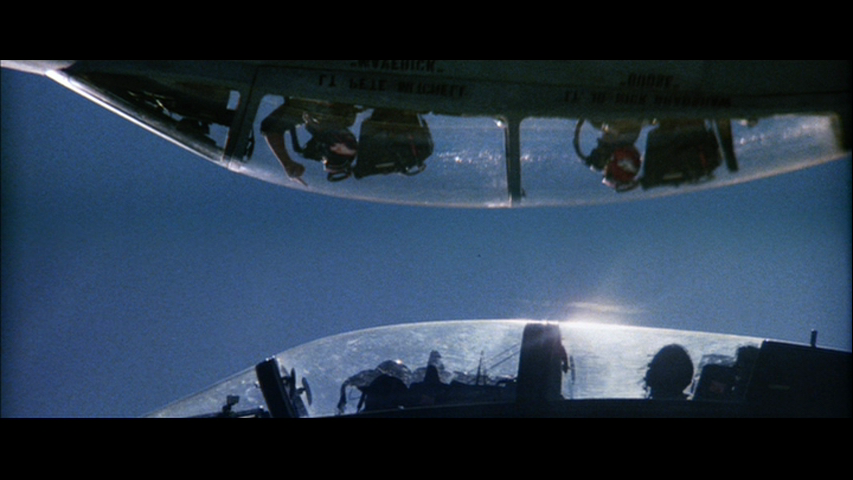
Still haven't gotten over the Top Gun incident. Need to send Ice Man and Mav back.

Top-Gun-upside-down-middle-finger.png
 

Whiskeyjack

Mittens Margaritas Ante Porcos
Staff member
Messages
20,894
Reaction score
8,126
Foreign Policy's Stephen Walt just published an article titled "Why Is American So Bad at Promoting Democracy in Other Countries?"

If you’re a dedicated Wilsonian, the past quarter-century must have been pretty discouraging. Convinced liberal democracy was the only viable political formula for a globalizing world, the last three U.S. administrations embraced Wilsonian ideals and made democracy promotion a key element of U.S. foreign policy. For Bill Clinton, it was the “National Security Strategy of Engagement and Enlargement.” For George W. Bush, it was the “Freedom Agenda” set forth in his second inaugural address and echoed by top officials like Condoleezza Rice. Barack Obama has been a less fervent Wilsonian than his predecessors, but he appointed plenty of ardent liberal internationalists to his administration, declaring, “There is no right more fundamental than the ability to choose your leaders.” And he has openly backed democratic transitions in Egypt, Libya, Yemen, and several other countries.

Unfortunately, a soon-to-be-published collection edited by Larry Diamond and Mark Plattner suggests that these (and other) efforts at democracy promotion have not fared well. Success stories like the recent end to military rule in Myanmar are balanced by the more numerous and visible failures in Libya, Yemen, and Iraq, the obvious backsliding in Turkey, Hungary, Russia, Poland, and elsewhere, and the democratic dysfunctions in the European Union and in the United States itself. As Diamond points out in his own contribution to the book, nearly a quarter of the world’s democracies have eroded or relapsed in the past 30 years.

You might think a realist like me wouldn’t give a damn about a state’s regime-type or domestic institutions and care even less about the goal of promoting democracy. But you’d be wrong. Realists recognize that regime-type and internal arrangements matter (indeed, Kenneth Waltz wrote a whole book comparing different democratic orders); they just believe relative power and the need for security are usually more important and that systemic pressures often lead dissimilar regimes to act in strikingly similar ways.

Even so, there are good reasons for realists (and others) to favor democracy while remaining mindful of the dangers associated with democratic transitions. Stable democracies have better long-term economic growth records (on average) and do much better in terms of protecting basic human rights. While not immune to various follies, democracies are less likely to kill vast numbers of their own citizens through famines or ill-planned acts of social engineering, mostly because corrective information is more readily accessible and officials can be held accountable. Democracies are as likely to start and fight wars as any other type of state, but there’s some (highly contested) evidence that they tend not to fight each other. On balance, therefore, I think it would be better for most human beings if the number of democracies in the world increased.

The question is, however: How should we try to bring that goal about?

At the risk of stating the obvious, we do know what doesn’t work, and we have a pretty good idea why. What doesn’t work is military intervention (aka “foreign-imposed regime change”). The idea that the United States could march in, depose the despot-in-chief and his henchmen, write a new constitution, hold a few elections, and produce a stable democracy — presto! — was always delusional, but an awful lot of smart people bought this idea despite the abundant evidence against it.

Using military force to spread democracy fails for several obvious reasons. First, successful liberal orders depend on a lot more than a written constitution or elections: They usually require an effective legal system, a broad commitment to pluralism, a decent level of income and education, and widespread confidence that political groups which lose out in a particular election have a decent chance of doing better in the future and thus an incentive to keep working within the system. Because a lot of social elements need to line up properly for this arrangement to work and endure, creating reasonably effective democracies took centuries in the West, and it was often a highly contentious — even violent — process. To believe the U.S. military could export democracy quickly and cheaply required a degree of hubris that is still breathtaking to recall.

Second, using force to spread democracy almost always triggers violent resistance. Nationalism and other forms of local identity remain powerful features of today’s world, and most people dislike following orders from well-armed foreign occupiers. Moreover, groups that have lost power, wealth, or status in the course of a democratic transition (such as Sunnis in post-Saddam Iraq) will inevitably be tempted to take up arms in opposition, and neighboring states whose interests are adversely affected by a transition may try to stop or reverse it. Such developments are the last thing a struggling democracy needs, of course, because violence tends to empower leaders who are good at it, instead of those who are skilled at building effective institutions, striking deals across factional lines, promoting tolerance, and building more robust and productive economies.

To make matters worse, foreign occupiers rarely know enough to pick the right local people to put in charge, and even generous and well-intentioned efforts to aid the new government tend to fuel corruption and distort local politics in unpredictable ways. Creating democracy in a foreign country is a vast social engineering project, and expecting outside powers to do it effectively is like asking someone to build a nuclear power plant, without any blueprints, on an active earthquake zone. In either case, expect a rapid meltdown.

The bottom line is that there is no quick, cheap, or reliable way for outsiders to engineer a democratic transition and especially when the country in question has little or no prior experience with it and contains deep social divisions.

So if promoting democracy is desirable, but force is not the right tool, what is? Let me suggest two broad approaches.

The first is diplomacy. When there is a genuine, significant, and committed indigenous movement in favor of democracy — as was the case in Eastern Europe during the “velvet revolutions” or in Myanmar today — powerful outsiders can use subtler forms of influence to encourage gradual transitions. The United States has done this successfully on a number of occasions (e.g., South Korea, the Philippines, etc.) by being both persistent and patient and using nonmilitary tools such as economic sanctions. In these cases, the pro-democracy movement had been building for many years and enjoyed broad social support by the time it gained power. Relying on diplomacy may not be as exciting as the “shock and awe” of a military invasion, but it’s a lot less expensive and a lot more likely to succeed.

The second thing we could do is set a better example. America’s democratic ideals are more likely to be emulated by others if the United States is widely regarded as a just, prosperous, vibrant, and tolerant society, instead of one where inequality is rampant, leading politicians are loudmouthed xenophobes, the prison population is the world’s largest, and airports and other public infrastructure are visibly decaying, yet no one seems able to do much about it. When millions of qualified citizens are excluded from voting, or when a handful of billionaires and other moneyed interests exert a disproportionate and toxic effect on U.S. politics, it is hardly surprising that other societies find America’s professed ideals less appealing than they once were. Add in Guantánamo, targeted killings, Abu Ghraib, overzealous NSA surveillance, and the reluctance to hold powerful people accountable for their misdeeds, and you end up with a pretty tarnished brand.

In short, the United States will do a better job of promoting democracy in other countries if it first does a better job of living up to its ideals here at home. The necessary reforms are not going to be easy — and I have no magic formula for achieving them — but reforming the United States should be just a tad easier than trying to create a robust democracy in Afghanistan, Yemen, or any of the other places where we’ve been flailing for a decade or more.

Building a better America would also permit more Americans to lead prosperous, proud, secure, and bountiful lives. Maybe I’m dreaming, but might doing more to improve the lives of Americans here at home also be the best way to enhance democracy’s prospects abroad?
 

Legacy

New member
Messages
7,871
Reaction score
321
Nation-Building 101
"The chief threats to us and to world order come from weak, collapsed, or failed states. Learning how to fix such states—and building necessary political support at home—will be a defining issue for America in the century ahead"

Think Again: Nation Building
Conclusion:
Consequently, the international community has to set more modest goals for nation building and then tailor those goals to each country's reality. Unpleasant compromises are inevitable. If the international community is not going to disarm Afghanistan's warlords, it will have to deal with them in other ways because they will not just disappear on their own. It has to make at least some of them less dangerous and disruptive by using aid to co-opt them into the government. If nations do not want to occupy Somalia and impose state structures on warring clans, they should consider helping the regional governments that have emerged to fill the void, beginning with Somaliland. In some cases, such as in the drc, the international community should either accept the disintegration of the country or allow nondemocratic leaders to use force to put the state back together. These are all unpalatable choices. But those who believe that the international community knows how to turn collapsed states into democracies should think again.
 
Last edited:
B

Buster Bluth

Guest
Anybody reading up on Brexit? This could be a pretty profound change in the layout of Europe. I think it would easily be the biggest change in Western Europe since the reunification of Germany in 1990.

If the UK leaves the EU then I think Scotland will leave the UK within a few years. That would be the end of a union which has stood since 1707.

Interestingly, the "Leave" supporters resemble America's Trump supporters. That makes sense considering the complete disregard of economics because something something better deals with X route.
 

Legacy

New member
Messages
7,871
Reaction score
321
Anybody reading up on Brexit? This could be a pretty profound change in the layout of Europe. I think it would easily be the biggest change in Western Europe since the reunification of Germany in 1990.

If the UK leaves the EU then I think Scotland will leave the UK within a few years. That would be the end of a union which has stood since 1707.

Interestingly, the "Leave" supporters resemble America's Trump supporters. That makes sense considering the complete disregard of economics because something something better deals with X route.

I read this after your post:
THE ECONOMIC CONSEQUENCES OF BREXIT: A TAXING DECISION
OECD ECONOMIC
POLICY PAPER
April 2016 No. 16


I don't think Scotland will leave the UK because the economic consequences would be too severe. Projected Scottish revenue from offshore oil, which was touted for funding self-governance, was thirteen times higher than reality. The Bank of Scotland had threatened to leave with a Yes vote.

I wonder what the arguments would be for and against for Texas independence. "It's a whole other country."
 
Last edited:

Whiskeyjack

Mittens Margaritas Ante Porcos
Staff member
Messages
20,894
Reaction score
8,126
The National Interest's Robert D. Kaplan just published an article titled "The Post-Imperial Moment":

IN 1935, the anti-Nazi writer and Austrian-Jewish intellectual Joseph Roth published a story, “The Bust of the Emperor,” about an elderly count at the chaotic fringe of the former Habsburg Empire who refused to think of himself as a Pole or an Italian, even though his ancestry encompassed both. In his mind, the only mark of “true nobility” was to be “a man above nationality,” in the Habsburg tradition. “My old home, the Monarchy, alone,” the count says, “was a great mansion with many doors and many chambers, for every condition of men.” Indeed, the horrors of twentieth-century Europe, Roth wrote presciently, had as their backdrop the collapse of empires and the rise of uniethnic states, with Fascist and Communist leaders replacing the power of traditional monarchs.

Empire had its evils, as Roth himself details in another great work, The Radetzky March, but one cannot deny empire’s historical function—to provide stability and order to vast tracts of land occupied by different peoples, particularly in Europe. If not empire, what then? In fact, as Michael Lind has intuited, the underpinnings of the global order today attempt to replace the functions of empire—from the rules-based international system to the raft of supranational and multinational groupings, such as the North Atlantic Treaty Organization, the European Union, the International Monetary Fund, the International Court of Justice and the World Economic Forum. Silently undergirding this process since World War II has been the undeniable fact of American power—military, diplomatic and economic—protecting sea lanes, maritime choke points, access to hydrocarbons and, in general, providing some measure of security to the world. These tasks are amoral to the extent that they do not involve lofty principles, but without them there is no possibility for moral action anywhere. This is not traditional imperialism, which is no longer an option, but it is a far more humane replacement for it.

While the United States still remains the single strongest power on earth, it is less and less an overwhelming one. The diffusion of central authority in new democracies everywhere, the spread of chaos in the Middle East and North Africa, and the rise of Russia, China and Iran as regional hegemons—all work to constrain the projection of American power. This is part of a process that has been going on for a century. At the end of World War I, multiethnic empires in Europe—those of the Habsburgs and Ottomans—crumbled. At the end of World War II, the overseas empires of the British and French began to do the same. The end of the Cold War heralded the collapse of the Soviet Empire in Eastern Europe and parts of Eurasia. The early twenty-first century saw the toppling or erosion of strongmen in postimperial, artificial states like Iraq, Syria and Libya. The American empire-of-sorts—that is, the last power standing whose troops and diplomats have found themselves in a vaguely empire-like situation—is now giving way, too.

This partial retreat of American power has international and domestic causes. On the international front, vast urbanization, population growth and natural-resource scarcities have eroded the power of central authority everywhere. The rise of individual consciousness thanks to the communications revolution has only accelerated the trend. The United States just cannot influence other states’ decisions the way it used to. Meanwhile, the maturation of both violent millenarian movements and regional hegemons are direct threats to U.S. power projection. On the domestic front, the Obama administration, wishing to transform American society, has avoided major entanglements overseas and has sought to ameliorate relations with adversaries, principally Iran. This is a sign of imperial fatigue—a good thing, arguably, but something that nevertheless works to constrain, rather than project, U.S. power. The United States, in other words, is signaling that it will less and less be providing world order. This is not the work of one president. It is the beginning of a new phase in American foreign policy, following the hyperactivity of World War II and the Cold War—and their long aftershocks in the Balkans and the Middle East. Social and economic turmoil at home and intractable complexity and upheaval abroad are driving Washington toward retrenchment.

WORLD DISORDER will only grow. The weakening and dissolution of small- and medium-size states in Africa and the Middle East will advance to quasi-anarchy in larger states on which the geographic organization of Eurasia hinges: Russia and China. For the external aggression of these new regional hegemons is, in part, motivated by internal weakness. They’re using nationalism to assuage the unraveling domestic economies upon which their societies’ stability rests. Then there is the European Union, which is enfeebled, if not crumbling. Rather than a unified and coherent superstate, Europe will increasingly be a less-than-coherent confection of states and regions, dissolving into the fluid geography of Eurasia, the Levant and North Africa. This is demonstrated by Russian revanchism and the demographic assault of Muslim refugees. Of course, on a longer time horizon there is technology itself. As the strategist T.X. Hammes points out, the convergence of cheap drones, cyber warfare, 3D printing and so on will encourage the diffusion of power among many states and nonstate actors, rather than the concentration of it into a few imperial-like hands.

We are entering an age of what I call comparative anarchy, that is, a much higher level of anarchy compared to that of the Cold War and post–Cold War periods.

After all, globalization and the communications revolution have reinforced, rather than negated, geopolitics. The world map is now smaller and more claustrophobic, so that territory is more ferociously contested, and every regional conflict interacts with every other as never before. A war in Syria is inextricable from a terrorist outrage in Europe, even as Russia’s intervention in Syria affects Europe’s and America’s policy toward Ukraine. This happens at a moment when, as I’ve said, multinational empires are gone, as are most totalitarian regimes in contrived states where official borders do not conform with ethnic and sectarian ones. The upshot is a maelstrom of national and subnational groups in violent competition. And so, geopolitics—the battle for space and power—now occurs within states as well as between them. Cultural and religious differences are particularly exacerbated: as group differences melt down in the crucible of globalization, they have to be reforged in a blunter and more ideological form. It isn’t the clash of civilizations so much as the clash of artificially reconstructed civilizations that is taking place. Witness the Islamic State, which does not represent Islam per se, but Islam combusting with the tyrannical conformity and mass hysteria of the Internet and social media. The postmodern reinvention of identities only hardens geopolitical divides.

In the course of all this, technology is not erasing geography—it is sharpening it. Just look at China and India. For most of history, with exceptions like the spread of Buddhism in antiquity and the nineteenth-century Opium Wars, China and India had relatively little to do with each other, emerging as two civilizations separated by the Himalayas. But technological advances have collapsed distance. Indian intercontinental ballistic missiles can hit Chinese cities and Chinese fighter jets can pierce the Indian Subcontinent’s airspace. Indian warships have deployed to the South China Sea and Chinese warships have maneuvered throughout the Indian Ocean. A new strategic geography of rivalry now exists between China and India. Geopolitics, rather than a vestige of previous centuries, is a more tightly woven feature of the globe than ever. India seeks new allies in Vietnam and Japan; China seeks closer links with Russia and Iran.

In fact, there are no purely regional problems anymore, since local hegemons like Russia, China and Iran have engaged in cyber attacks and terrorism worldwide. Thus, crises are both regional and global at the same time. And as wars and state collapses persist, the fear we should harbor should be less that of appeasement and more that of hard landings for the troubled regimes in question. We know that soft landings for totalitarian regimes in Iraq and Syria have been impossible to achieve. The United States invaded Iraq, yet stood aside in Syria; the result was virtually the same, with hundreds of thousands of people killed in each country and extremist groups filling the void.

Another thing: Remember that globalization is not necessarily associated with growth or stability, but only with vast economic and cultural linkages. These can amplify geopolitical disorder in the event of an economic slowdown. That’s what we are seeing now. Take Africa, which has had years of steady economic growth thanks less to the development of a manufacturing sector and more to a rise in commodity prices. Commodity prices are now falling, along with Chinese infrastructure investment in Africa, as China itself experiences a dramatic decrease in GDP growth. Thus, economic changes in Asia imperil African stability, to the degree that it exists. Then there are the various radical Islamic movements rampaging across Sahelian Africa. This is actually the latest phase of African anarchy—in which the communications revolution brings millenarian Islam to weak and failed states. Obviously, the United States holds little sway over any of this.

In sum, everything is interlinked as never before, even as there is less and less of a night watchman to keep the peace worldwide. Hierarchies everywhere are breaking down. Just look at the presidential primaries in the United States—an upheaval from below for which the political establishment has no answer. Meanwhile, like “the brassiness of marches” and “the heavy stomp of peasant dances” that composer Gustav Mahler employed as he invaded “the well-ordered house of classical music” in the waning decades of the Habsburg Empire (to quote the late Princeton Professor Carl E. Schorske), vulgar, populist anarchy that elites at places like Aspen and Davos will struggle to influence or even comprehend will help define the twenty-first century. The multinational empires of the early-modern and modern past, as well as the ideological divisions of the Cold War, will then be viewed almost as much with nostalgia as with disdain.
 

Legacy

New member
Messages
7,871
Reaction score
321
Brexit, the EU referendum

Brexit, the EU referendum

Originally Posted by Buster Bluth
Anybody reading up on Brexit? This could be a pretty profound change in the layout of Europe. I think it would easily be the biggest change in Western Europe since the reunification of Germany in 1990.

If the UK leaves the EU then I think Scotland will leave the UK within a few years. That would be the end of a union which has stood since 1707.

Interestingly, the "Leave" supporters resemble America's Trump supporters. That makes sense considering the complete disregard of economics because something something better deals with X route.

EU referendum issues guide: Explore the arguments

BBC's coverage articles:
EU Referendum

The UK's EU referendum: All you need to know
 
Last edited:

Corry

Active member
Messages
769
Reaction score
98
So the vote for Britan to stay in the EU is tomorrow. I've read a few articals and they've said this could have global ramifications. Does anyone care to give me the cliff notes version of how that's possible?
 

calvegas04

Well-known member
Messages
11,861
Reaction score
8,440
I would like to see the UK leave the EU, im not a big fan of the immigration laws the EU has. Plus the UK is dumping so much money into the EU and not getting anything back in return.
 
B

Buster Bluth

Guest
So the vote for Britan to stay in the EU is tomorrow. I've read a few articals and they've said this could have global ramifications. Does anyone care to give me the cliff notes version of how that's possible?

<iframe width="560" height="315" src="https://www.youtube.com/embed/DlLNFrqiFTg" frameborder="0" allowfullscreen></iframe>

I would like to see the UK leave the EU, im not a big fan of the immigration laws the EU has. Plus the UK is dumping so much money into the EU and not getting anything back in return.

Are you a fan of recession? Because that's what the Leave camp is going to get if they win tomorrow. They live in fantasy land thinking the EU will renegotiate their trade deals to be as favourable (British spelling intentional) and that the US will rush to their aid with special free trade deals. The latter is more likely, but the consensus among economists is a 2-4% reduction in GDP. For instance London is Europe's financial center, by leaving the EU they're basically asking the big banks to leave for Paris and/or Berlin--an action not undone easily. They're also encouraging Scotland, Wales, and Northern Ireland to leave the UK. I wouldn't be surprised at all if in five years England is it's own country for the first time since like 1284.

The "we give 350 million to the EU a week for nothing!" has been thoroughly debunked, it's more like 190 million pounds, which they more than make up via free trade. As for immigration, correct me if I'm wrong but Britain isn't part of the Schengen Agreement.
 

calvegas04

Well-known member
Messages
11,861
Reaction score
8,440
<iframe width="560" height="315" src="https://www.youtube.com/embed/DlLNFrqiFTg" frameborder="0" allowfullscreen></iframe>


Are you a fan of recession? Because that's what the Leave camp is going to get if they win tomorrow. They live in fantasy land thinking the EU will renegotiate their trade deals to be as favourable (British spelling intentional) and that the US will rush to their aid with special free trade deals. The latter is more likely, but the consensus among economists is a 2-4% reduction in GDP. For instance London is Europe's financial center, by leaving the EU they're basically asking the big banks to leave for Paris and/or Berlin--an action not undone easily. They're also encouraging Scotland, Wales, and Northern Ireland to leave the UK. I wouldn't be surprised at all if in five years England is it's own country for the first time since like 1284.

The "we give 350 million to the EU a week for nothing!" has been thoroughly debunked, it's more like 190 million pounds, which they more than make up via free trade. As for immigration, correct me if I'm wrong but Britain isn't part of the Schengen Agreement.

Norway isn't in the EU and they are doing just fine, plus the UK is in much better shape to be on their own. Also the EU wants the UK to drop the pound by 2020 and adopt a much weaker currency.

<iframe width="560" height="315" src="https://www.youtube.com/embed/ZbEZNhFY9TA" frameborder="0" allowfullscreen></iframe>
 
B

Buster Bluth

Guest
<iframe width="560" height="315" src="https://www.youtube.com/embed/kccuNuAp7Lw" frameborder="0" allowfullscreen></iframe>
 
B

Buster Bluth

Guest
Norway isn't in the EU and they are doing just fine, plus the UK is in much better shape to be on their own. Also the EU wants the UK to drop the pound by 2020 and adopt a much weaker currency.

<iframe width="560" height="315" src="https://www.youtube.com/embed/ZbEZNhFY9TA" frameborder="0" allowfullscreen></iframe>

Norway is one of those countries that has an economy that deserves an asterisk. That asterisk is for the shitload of oil wealth they get from their offshore drilling operations.

The EU has almost no leverage to force the UK into dropping the pound, whereas the EU oes have leverage in encouraging Scotland and maybe even Wales and Northern Ireland into leaving the UK.

Yeah, it's not always peachy in the EU. There are legitimate immigration concerns and the whole place will have to rethink their policies.

I think this is ultimately how conservatives express their discontent with the economy. Whereas liberals will lament factory closings and automation and try to slow it down (damaging their own net benefit), conservatives will look at broadly blaming immigration and regulation. In both cases, trying to undo instead of adapt and thrive is a recipe for disaster. There is no sense is pulling away from globalization, the world economy will leave you behind.

Lastly there is one man sitting at his desk smiling ear-to-ear at the prospect of Europe's seventy-year long run of unity coming to a close: Vladimir Putin. He would loooove for Britain to cause enough stress in the EU for the Eastern European countries to reconsider their investments in the EU too and rejoin a Russian orbit.
 

Wild Bill

Well-known member
Messages
5,518
Reaction score
3,262
Are you a fan of recession? Because that's what the Leave camp is going to get if they win tomorrow. They live in fantasy land thinking the EU will renegotiate their trade deals to be as favourable (British spelling intentional) and that the US will rush to their aid with special free trade deals. The latter is more likely, but the consensus among economists is a 2-4% reduction in GDP. For instance London is Europe's financial center, by leaving the EU they're basically asking the big banks to leave for Paris and/or Berlin--an action not undone easily. They're also encouraging Scotland, Wales, and Northern Ireland to leave the UK. I wouldn't be surprised at all if in five years England is it's own country for the first time since like 1284.

The EU isn't going to stop trading with Britain if they leave. Britain would be one of their biggest export markets and they need them.

Norway is one of those countries that has an economy that deserves an asterisk. That asterisk is for the shitload of oil wealth they get from their offshore drilling operations.

What's the explanation for Switzerland? Highest quality of life in Europe, low taxes, low unemployment, high GDP, regularly trades with the EU yet they're not a member.
 
Last edited:

kmoose

Banned
Messages
10,298
Reaction score
1,181
The EU isn't going to stop trading with Britain if they leave. Britain would be one of their biggest export markets and they need them.

It's not that the EU would stop trading with them. It's that there are special incentives built into inter-EU trade deals, that the UK will no longer enjoy. They will be forced to compete with other EU countries that DO get the special incentives.
 

Wild Bill

Well-known member
Messages
5,518
Reaction score
3,262
It's not that the EU would stop trading with them. It's that there are special incentives built into inter-EU trade deals, that the UK will no longer enjoy. They will be forced to compete with other EU countries that DO get the special incentives.

I read an article that claimed EU takes over 50% of Norway's and Switzerland's exports. I have no idea if those numbers are accurate or manipulated. If true, however, it doesn't seem like it's a very special incentive. Certainly not something that can't be overcome by the UK.

In any event, both sides, the EU and UK, have strong incentives to negotiate reasonable trade agreements if they decide to leave.
 
Last edited:

Whiskeyjack

Mittens Margaritas Ante Porcos
Staff member
Messages
20,894
Reaction score
8,126
The latter is more likely, but the consensus among economists is a 2-4% reduction in GDP.

How many points of GDP growth would you take in exchange for ceding our national sovereignty to the UN? Totally incommensurable goods. These sorts of arguments in favor of Remain strike me as particularly inappropriate coming from Americans. We'd never do the same.

The best argument for Remain is that the EU is already headed toward a crackup, and Britain's got a pretty good deal at the moment, so the more prudent course is to avoid paying the (modest) upfront costs of leaving just to accelerate a process that will happen naturally anyway.

But those in favor of leaving inarguably have the moral high ground. National sovereignty, particularly given Britain's history, is a precious thing. And the EU is horribly incompetent at governing.
 
Last edited:

calvegas04

Well-known member
Messages
11,861
Reaction score
8,440
Going to be a very tight vote, but looks like the UK is going to be leaving the EU if these keep up
 

Domina Nostra

Well-known member
Messages
6,251
Reaction score
1,388
I'm glad. Self-governance is important if we are going to talk about democracy, and Europe is to big a voting block.

And self determination is only justified if it's better for the bottom line. Not everything boils down to money.

Hope our next President doesn't has their back and ignores Pres. Obama's threat about their being in the back of the line. Don't understand how we can have a trade deal with China but not the UK!
 

GoldenDomer

preferred walk on
Messages
3,160
Reaction score
166
700,000+ vote lead at the moment for Leave. :)

Congrats to UK if it happens. National sovereignty and smart immigration is essential in 2016.
 
Top