- Messages
- 20,899
- Reaction score
- 8,157
Considering how capitalism has crushed the prices for goods and increased the standards of living for everyone in the world (despite clear "growing pains") , I'd say we are better off now. For me the question is whether or not it's a phase like Marx thought or permanently optimal. I'm siding with Marx on the matter.
From the post immediately preceding the one quoted above, and some of your posts in the past, I know you appreciate how urban sprawl and poor urban planning have negatively affected communities all over the countries. Similarly, chicago (who favors some very Progressive policies) laments the fact that Americans feel little to no sense of obligation to their communities.
That's all part and parcel of capitalism (which is itself a natural extension of the Protestant worldview our country was founded on). So one can't really praise capitalism for its efficiency while also complaining about the breakdown of civil society (not implying that you've done this). Now, one can analyze the costs and benefits of capitalism and assert that it was probably worth it, but that's very difficult for us, as modern Americans, to do-- the costs are not easily quantified, and the benefits are frequently exaggerated (see: most of the global poverty reduction occurring in China). It's particularly difficult for the young; you and I were born into a society that was already fairly atomized, and have known nothing else.
I have always understood Distributism as a guise for crony capitalism. However, between your views here (and in the religion thread) I can see that you are quite the Chestertonian and I have to admit I'm not well-versed enough to actually debate you in depth on these topics.
I'm definitely a Chestertonian, and my worldview is admittedly very Catholic. Your understanding of Distributism sounds very Protestant (which is ultimately why the guild system was disbanded, and why Distributism has found little purchase in the Western world). Chesterton wrote a couple books explicitly defending it, though I haven't had an opportunity to read either of them yet; so my knowledge is no better than yours here regarding the Medieval guild system.
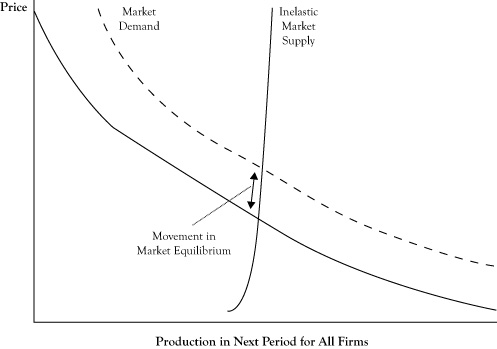
Prices rise not because of increased cost of production (in this example), but because of artificially inflated demand for goods and services.
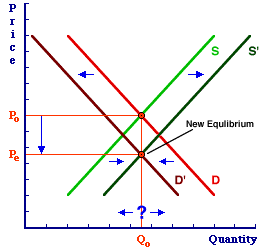
Your arguments against a Basic Income seem to be premised on the idea that cash transfers to the poor are, at best, economically neutral simply because inflation will wipe out any increase in purchasing power. But that would require a perfect correlation between money supply and purchasing power, which is clearly not the case.
For example: the poorest ~10% of Americans have no (or negative) net wealth. If we transferred $100 to each them (at a cost of $3.14b), can you honestly say that they're no better off? They had virtually no purchasing power before the transfer, and now they can at least buy something. The counter-balancing effect of inflation would likely become more apparent as the the amount increases, but I don't see any reason to believe that the poor would somehow be worse off if they were guaranteed a subsistence-level transfer every month. Adjust it for regional differences in cost of living, make it means-tested and index it to inflation-- welfare reform solved.
And the benefits should be obvious. This would replace the entirety of the current welfare state--a patchwork of complex, redundant and often wasteful programs-- with a simple, efficient and minimally paternalistic transfer program. It would also unburden businesses to the extent current social welfare regulations (minimum wage, etc.) affect them.
I think this is the best we can realistically hope for, but that's based on my assumption that the welfare state cannot be unwound. Not sure how you could argue otherwise based on the consistent voting and polling records since the welfare state was created.
Last edited: