Economics

Whiskeyjack

Mittens Margaritas Ante Porcos
Staff member
Messages
20,894
Reaction score
8,126
Considering how capitalism has crushed the prices for goods and increased the standards of living for everyone in the world (despite clear "growing pains") , I'd say we are better off now. For me the question is whether or not it's a phase like Marx thought or permanently optimal. I'm siding with Marx on the matter.

From the post immediately preceding the one quoted above, and some of your posts in the past, I know you appreciate how urban sprawl and poor urban planning have negatively affected communities all over the countries. Similarly, chicago (who favors some very Progressive policies) laments the fact that Americans feel little to no sense of obligation to their communities.

That's all part and parcel of capitalism (which is itself a natural extension of the Protestant worldview our country was founded on). So one can't really praise capitalism for its efficiency while also complaining about the breakdown of civil society (not implying that you've done this). Now, one can analyze the costs and benefits of capitalism and assert that it was probably worth it, but that's very difficult for us, as modern Americans, to do-- the costs are not easily quantified, and the benefits are frequently exaggerated (see: most of the global poverty reduction occurring in China). It's particularly difficult for the young; you and I were born into a society that was already fairly atomized, and have known nothing else.

I have always understood Distributism as a guise for crony capitalism. However, between your views here (and in the religion thread) I can see that you are quite the Chestertonian and I have to admit I'm not well-versed enough to actually debate you in depth on these topics.

I'm definitely a Chestertonian, and my worldview is admittedly very Catholic. Your understanding of Distributism sounds very Protestant (which is ultimately why the guild system was disbanded, and why Distributism has found little purchase in the Western world). Chesterton wrote a couple books explicitly defending it, though I haven't had an opportunity to read either of them yet; so my knowledge is no better than yours here regarding the Medieval guild system.

Prices rise not because of increased cost of production (in this example), but because of artificially inflated demand for goods and services.

Your arguments against a Basic Income seem to be premised on the idea that cash transfers to the poor are, at best, economically neutral simply because inflation will wipe out any increase in purchasing power. But that would require a perfect correlation between money supply and purchasing power, which is clearly not the case.

For example: the poorest ~10% of Americans have no (or negative) net wealth. If we transferred $100 to each them (at a cost of $3.14b), can you honestly say that they're no better off? They had virtually no purchasing power before the transfer, and now they can at least buy something. The counter-balancing effect of inflation would likely become more apparent as the the amount increases, but I don't see any reason to believe that the poor would somehow be worse off if they were guaranteed a subsistence-level transfer every month. Adjust it for regional differences in cost of living, make it means-tested and index it to inflation-- welfare reform solved.

And the benefits should be obvious. This would replace the entirety of the current welfare state--a patchwork of complex, redundant and often wasteful programs-- with a simple, efficient and minimally paternalistic transfer program. It would also unburden businesses to the extent current social welfare regulations (minimum wage, etc.) affect them.

I think this is the best we can realistically hope for, but that's based on my assumption that the welfare state cannot be unwound. Not sure how you could argue otherwise based on the consistent voting and polling records since the welfare state was created.
 
Last edited:

chicago51

Well-known member
Messages
3,658
Reaction score
387
How do people feel about consumption taxes? Personally I like small value added tax at each stage of product from raw material, to manufactured good, to transportation, as opposed to a straight sales tax.

I actually do think the corporate tax rate is too high.

You can also use that VAT to eliminate payroll or some income taxes.

I think with any kind of consumption tax food, housing, education, and healthcare should be exempt from the VAT to avoid making it a regressive tax.

Some countries with VATs apply it imports upon arrival for all stages of its manufacturing just like home products but they exempt their exports so it does not violate free trade agreements but it helps with the value of trade deficits/surplus.

I don't think having a VAT or any consumption tax is practical as the sole source of income but I think take up a big chunk of the revenue enough to eliminate the corporate tax and then either eliminate income taxes below a certain level or eliminate payroll taxes.

I can't emphasize enough consumption tax have the potential to be regressive so I think it is best exempt the things everyone just has to have.
 

magogian

New member
Messages
1,467
Reaction score
155
I'm losing patience trying to teach BASIC economics around here.

I'm not saying prices would increase due to labor costs. Prices would increase because all of a sudden people are running around with all kinds of money. The only prices that would fall are yachts, mansions, and luxury cars because demand for those items will drop along with executive compensation.

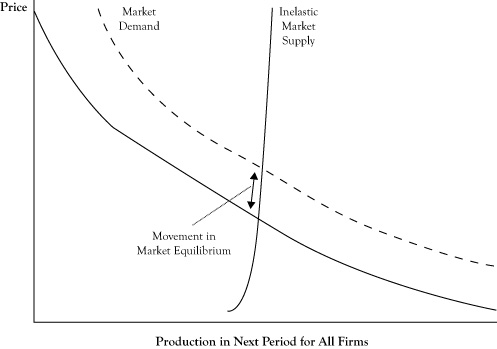
I'll try to illustrate this with a very simple example. Joe and Mary can afford a $200,000 house, which is an average 3 bed, 2 bath home in their town. All of a sudden, Joe's income goes up by 50% due to your wage equalization tactics. All of Joe's peers also receive the same increase. You think this is great! Joe can now afford a $300,000 home. While that may be true, ALL of the workers got the same bump, so demand for homes rises and the 3 bed, 2 bath home now costs $300,000. Sure, Joe and Mary make more "dollars" than they used to, but their purchasing power is exactly the same. All you did was artificially drive up demand.

stengel-fig06_007.jpg


Prices rise not because of increased cost of production (in this example), but because of artificially inflated demand for goods and services.

Good post, but ultimately futile. If a basic understanding of economics was a requirement for posting here, 9/10ths of the posters would be gone.
 

MJ12666

New member
Messages
794
Reaction score
60
How do people feel about consumption taxes? Personally I like small value added tax at each stage of product from raw material, to manufactured good, to transportation, as opposed to a straight sales tax.

I actually do think the corporate tax rate is too high.

You can also use that VAT to eliminate payroll or some income taxes.

I think with any kind of consumption tax food, housing, education, and healthcare should be exempt from the VAT to avoid making it a regressive tax.

Some countries with VATs apply it imports upon arrival for all stages of its manufacturing just like home products but they exempt their exports so it does not violate free trade agreements but it helps with the value of trade deficits/surplus.

I don't think having a VAT or any consumption tax is practical as the sole source of income but I think take up a big chunk of the revenue enough to eliminate the corporate tax and then either eliminate income taxes below a certain level or eliminate payroll taxes.

I can't emphasize enough consumption tax have the potential to be regressive so I think it is best exempt the things everyone just has to have.


Living in NJ I can tell you that this would be a very bad idea. Either you have an income tax, sales tax or VAT. You cannot have both an income tax and one of the other, if you do, ultimately both will continue to rise and expand as they have done in NJ.
 

chicago51

Well-known member
Messages
3,658
Reaction score
387
Living in NJ I can tell you that this would be a very bad idea. Either you have an income tax, sales tax or VAT. You cannot have both an income tax and one of the other, if you do, ultimately both will continue to rise and expand as they have done in NJ.

Yea now that you mention I'm noticing the same thing here in IL.

If I had to pick one it I'd say income taxes are better as sales taxes are regressive unless you exempt enough things from it which ultimately makes it ineffective as a sole revenue source.
 

chicago51

Well-known member
Messages
3,658
Reaction score
387
I'm losing patience trying to teach BASIC economics around here.

I'm not saying prices would increase due to labor costs. Prices would increase because all of a sudden people are running around with all kinds of money. The only prices that would fall are yachts, mansions, and luxury cars because demand for those items will drop along with executive compensation.

I'll try to illustrate this with a very simple example. Joe and Mary can afford a $200,000 house, which is an average 3 bed, 2 bath home in their town. All of a sudden, Joe's income goes up by 50% due to your wage equalization tactics. All of Joe's peers also receive the same increase. You think this is great! Joe can now afford a $300,000 home. While that may be true, ALL of the workers got the same bump, so demand for homes rises and the 3 bed, 2 bath home now costs $300,000. Sure, Joe and Mary make more "dollars" than they used to, but their purchasing power is exactly the same. All you did was artificially drive up demand.

stengel-fig06_007.jpg


Prices rise not because of increased cost of production (in this example), but because of artificially inflated demand for goods and services.

Okay demand raise prices that is 100 percent true.

However more inccome doesn't mean more demand for everything goes up.

For example food has inelastic demand because that is what everyone buys first but even when people have more money they still pretty much eat 3 meals a day. Now they may decide to buy more steak instead of chicken so maybe the price for steak goes up but food prices as a whole is one example of demand that really wouldn't change that much.

I think the proposal for national mimimum income is a way to simplify the welfare system into one program. So instead of the poor getting housing assistance once they afford basic housing but the demand for low level housing didn't really change. Instead of getting food from food stamps they buy it but the demand for food didn't change. I don't think this idea thrown out on a national minimum is talking about making people all 6 figure salary individuals but just enough to cover basic expenses.

If we had basic catastrophic healthcare coverage that covered some basic preventive screenings we could actually safe a ton of money as a society on health cost by preventing larger health problems from occurring. It would actually reduce the demand for visiting the ER.
 

johnnycando

Frosted Tips
Messages
3,744
Reaction score
490
I always enjoyed how in my business classes, the author would coin his/her own term and the weak sauce instructor would use book chapter exams, in doing so test me on chapter vocabulary.

IrishEnvyism: the state of being for worthless fucks to pretend they know everything about everything,
 

pkt77242

IPA Man
Messages
10,805
Reaction score
719
I think you over estimate the amount of employee compensation funneled to the C-suite.

Cisco Systems has 74,000 employees, John Chambers - CEO made $12M last year = $160 per employee or 8 cents per hour.

GE - 307,000 employees, Immelt made $12M also = $39 per employee or 2 cents per hour

WYNN - 16,500 employees, Steve Wynn made $18M = $1090 per employee or 55 cents per hour

McDonalds - 440,000 employees, Thompson made $11M = $25 per employee or 1.25 cents per hour.


McDonalds total revenue is only $63,000 per employee, which means they sure as hell can't pay more than that in average wages and stay in business! And don't say that is all international workers skewing the results, Wendy's generates $67,000 of revenue per worker.

While I agree with your general point that just cutting the CEO's pay isn't going to give any type of "real" raise to the employees. Having said that large companies aren't just paying the CEO large amounts of money. Lets look at JPMorgan Chase's top 5

James S. Dimon/Chairman of the Board and Chief Executive Officer 18,717,013
Daniel Pinto/Co-Chief Executive Officer, Corporate & Investment Bank - - - - 17,009,797
Mary Callahan Erdoes/Chief Executive Officer, Asset Management - 14,745,836
Douglas Braunstein/Vice Chairman and Former Chief Financial Officer - 10,537,984
Matthew E. Zames/Co-Chief Operating Officer - - - - 16,604,301

Info from JPM JPMorgan Chase & Co Executive Compensation
 

chicago51

Well-known member
Messages
3,658
Reaction score
387
Considering how capitalism has crushed the prices for goods and increased the standards of living for everyone in the world (despite clear "growing pains") , I'd say we are better off now. For me the question is whether or not it's a phase like Marx thought or permanently optimal. I'm siding with Marx on the matter.

By phase I assume you are referring to 1- feudalism 2 - capitalism 3- socialism (state owned) 4 -communism (owned by the people and the community)?

My readings on Marx is limited so I'll defer to your knowledge. Did Marx actually say we shouldn't help the lower class through deomcratic measures because we are just prolonging the capitalism phase and thus delaying the innevitable revolution to the next phase?

I got say it is kind of amazing that Marx had the kind of insight on the impacts of automation and machines from use time period which was well before the information age and really just the very beginning of the industrial revolution. For better or worse the guy has been right so far.
 
Last edited:

cody1smith

Active member
Messages
679
Reaction score
61
If CEOs made less say instead of 500x the average worker they made 100x the average worker then couldn't employees hourly wages go up without a price increase?

The bold is exactly why need to stop allowing bankers buy commodities futures on food commodities. It has raised food prices so food no longer follows typically supply/demand profit margin/sales which determine what an item is priced at.
People for the most part that make more money than your average employee deserve it. If you think the reason your boss makes five times the money you do is because he works five times as hard you are sadly mistaken. Its because he works a hundred times harder than you. And you may never even see or realize it.
 

EddytoNow

Vbuck Redistributor
Messages
1,481
Reaction score
235
People for the most part that make more money than your average employee deserve it. If you think the reason your boss makes five times the money you do is because he works five times as hard you are sadly mistaken. Its because he works a hundred times harder than you. And you may never even see or realize it.

The average worker works 30-40 hours per week, shows up for work regularly and on time, and is productive for the time he or she is at work. Many of these average workers put in over 60 hours per week at two or more jobs. It is physically impossible to work 100 times harder than that. The boss would have to put in 3,000-4,000 hours per week or more.

The boss might be deserving of two or three times the wages of the average worker. Some might even be deserving of ten times the average salary. But there is no way anyone is worth 100 times the earnings of their average employee.

Let's not confuse the average employee with the lazy employee that calls in sick all the time and doesn't do much of anything when he or she is at work. The latter (lazy employee) should be fired. The former (hard-working average employee) deserves every penny they earn plus a whole lot more.
 

Irish#1

Livin' Your Dream!
Staff member
Messages
44,575
Reaction score
20,024
Don't kill me, because I've never read about it, but what about a national sales tax in place of income tax? Anyone do any research on the pros and cons?
 

wizards8507

Well-known member
Messages
20,660
Reaction score
2,661
Don't kill me, because I've never read about it, but what about a national sales tax in place of income tax? Anyone do any research on the pros and cons?
I'm all for a flat tax, but a national sales tax would actually be regressive (i.e. it would tax the poor at a higher rate than the rich). While the rich spend more than the poor, they also spend a lower percentage of their income. For example, a family making $200,000 might spend $160,000 and save $40,000, so they'd be paying taxes on 80% of their income. A family making $50,000 might only be able to save $2,000, so they're paying taxes on $48,000, or 96% of their income. Theoretically, this would all be a timing issue because the rich guy (or his descendants) is/are going to spend their savings eventually, but I just don't see it working. They'd have to carve out all kinds of exemptions like food, clothing, and housing, and we'd end up with the same bureaucracy and loopholes that we have today.
 

wizards8507

Well-known member
Messages
20,660
Reaction score
2,661
Back to the minimum wage argument, this Econ 102 (Principles of Macro) chart illustrates the damaging effect that minimum wages have on the entry-level workforce.

400px-Surplus_from_Price_Floor.svg.png


The minimum wage is a price floor on labor. It prevents the market from reaching an equilibrium wage and generates a surplus of labor. Surplus of labor = unemployment.
 
B

Buster Bluth

Guest
Back to the minimum wage argument, this Econ 102 (Principles of Macro) chart illustrates the damaging effect that minimum wages have on the entry-level workforce.

400px-Surplus_from_Price_Floor.svg.png


The minimum wage is a price floor on labor. It prevents the market from reaching an equilibrium wage and generates a surplus of labor. Surplus of labor = unemployment.

So what if the automation of jobs gets to the point where the skill needed is minimal and the "free market" decides that X% of jobs just aren't worth more than $5/hr?
 

wizards8507

Well-known member
Messages
20,660
Reaction score
2,661
So what if the automation of jobs gets to the point where the skill needed is minimal and the "free market" decides that X% of jobs just aren't worth more than $5/hr?
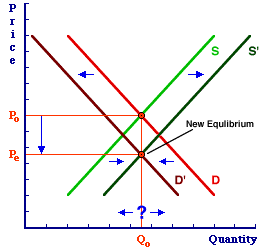
1. Supply curve for goods and services shifts right. Lower wages mean the demand curve shifts left. Quantity supplied remains roughly constant and prices drop. You make less money than you used to, but the prices have adjusted accordingly so your purchasing power remains constant.

MkSh44d.gif


2. Something like 2% of workers actually earn the minimum wage. If you make even a penny above the minimum wage, it means your labor is worth more than the artificial price floor and therefore you wouldn't be harmed if the price floor were to disappear.

3. It's better to work for $5/hr. than to not work at all.
 

tussin

Well-known member
Messages
4,153
Reaction score
1,982
Generally speaking, on a micro level, an increase to the minimum wage will decrease employee productivity. If John is making $6/hr. and gets a bump to $10 because of a min wage increase, his job effort likely won't increase. He will still put in minimal effort and receive the same wage floor. But Joe, who makes $14/hr and doesn't see any raise, my not put in as much effort because minimum wage damn near equalized his pay with a subordinate.

On a macro level, if minimum wage is increased two things will happen: 1) prices will raise accordingly and 2) if that can't happen, employers will decrease production costs (through more automation and less labor).
 

Veritate Duce Progredi

A man gotta have a code
Messages
9,358
Reaction score
5,352
The average worker works 30-40 hours per week, shows up for work regularly and on time, and is productive for the time he or she is at work. Many of these average workers put in over 60 hours per week at two or more jobs. It is physically impossible to work 100 times harder than that. The boss would have to put in 3,000-4,000 hours per week or more.

The boss might be deserving of two or three times the wages of the average worker. Some might even be deserving of ten times the average salary. But there is no way anyone is worth 100 times the earnings of their average employee.

Let's not confuse the average employee with the lazy employee that calls in sick all the time and doesn't do much of anything when he or she is at work. The latter (lazy employee) should be fired. The former (hard-working average employee) deserves every penny they earn plus a whole lot more.

You are viewing worth as time spent on the job. Punching a clock so to speak. What if the boss spends his time increasing contracts, creating a plan for the future so all of his employees can continue to punch their clock and they may even expand into other markets. I'd say he's worth at minimum, the number of jobs he's kept steady and the future earnings the company will make because of his vision.

You can argue from all sides but there are more ways to view worth than "He does 50 hrs of work, the same as me". His 50 hours of work are smarter, more efficient in that they have longer-reaching effects per hour spent and have allowed others to continue working.

This isn't the case for all bosses but it's important to realize there are many ways to value a person's productivity and contribution to a company.
 

Veritate Duce Progredi

A man gotta have a code
Messages
9,358
Reaction score
5,352
I always enjoyed how in my business classes, the author would coin his/her own term and the weak sauce instructor would use book chapter exams, in doing so test me on chapter vocabulary.

IrishEnvyism: the state of being for worthless fucks to pretend they know everything about everything,

Ha ha. Here's a new one:

Johnnycandoism: the state of being awesome and making sure everyone knows it by blatantly bashing the intellect of those around.
 

EddytoNow

Vbuck Redistributor
Messages
1,481
Reaction score
235
Not so. I've conceded that the boss's time might be worth as much as 10 times that of his average worker. Anything more than that and the boss (CEO or whatever) could just as readily be replaced by someone who could do the same job for far less money. No one is irreplaceable. There is a fine line between being justly compensated for your skills and knowledge and just plain greed.
 

wizards8507

Well-known member
Messages
20,660
Reaction score
2,661
Not so. I've conceded that the boss's time might be worth as much as 10 times that of his average worker. Anything more than that and the boss (CEO or whatever) could just as readily be replaced by someone who could do the same job for far less money.
Sorry, then why aren't you making $1 million as the CEO of Google or Exxon? That's "far less" than the folks in those positions, and I'm sure the Boards of Directors would be happy for the company to save the money.
 

chicago51

Well-known member
Messages
3,658
Reaction score
387
So what if the automation of jobs gets to the point where the skill needed is minimal and the "free market" decides that X% of jobs just aren't worth more than $5/hr?

Screen-Shot-2013-08-07-at-9.34.00-AM.png


Vending-Machine-of-the-Future-9.jpg


or eliminates a bunch of jobs all together.

1. Supply curve for goods and services shifts right. Lower wages mean the demand curve shifts left. Quantity supplied remains roughly constant and prices drop. You make less money than you used to, but the prices have adjusted accordingly so your purchasing power remains constant.

MkSh44d.gif


2. Something like 2% of workers actually earn the minimum wage. If you make even a penny above the minimum wage, it means your labor is worth more than the artificial price floor and therefore you wouldn't be harmed if the price floor were to disappear.

3. It's better to work for $5/hr. than to not work at all.

This wouldn't happen for things like food, housing, transportation (maybe more people cities ride the bus or take the train but the transportation demand to get to work is still there) and to a certain extent healthcare especially emergency healthcare. All you'll have is less people with a lower ability to pay for it.

People are still gonna want to eat 3 or at the very least 2 meals a day. So I don't see how the demand for these things drops. I guess the demand for buying food could drop if enough of the populace resorts to stealing.

Sure the price of HD TVs will come down. Your premise assumes that less income equals less demand is flawed for things that have an inelastic demand.


Generally speaking, on a micro level, an increase to the minimum wage will decrease employee productivity. If John is making $6/hr. and gets a bump to $10 because of a min wage increase, his job effort likely won't increase. He will still put in minimal effort and receive the same wage floor. But Joe, who makes $14/hr and doesn't see any raise, my not put in as much effort because minimum wage damn near equalized his pay with a subordinate.

On a macro level, if minimum wage is increased two things will happen: 1) prices will raise accordingly and 2) if that can't happen, employers will decrease production costs (through more automation and less labor).

There is no empirical evidence to suggest there would be any of this would happen at statistically significant levels.
 

tussin

Well-known member
Messages
4,153
Reaction score
1,982

There is no empirical evidence to suggest there would be any of this would happen at statistically significant levels.[/QUOTE]

On the micro point, I'm speaking from personal experience.

On the macro level, there is plenty of evidence to support all of my points.
 

Ndaccountant

Old Hoss
Messages
8,370
Reaction score
5,771
Not so. I've conceded that the boss's time might be worth as much as 10 times that of his average worker. Anything more than that and the boss (CEO or whatever) could just as readily be replaced by someone who could do the same job for far less money. No one is irreplaceable. There is a fine line between being justly compensated for your skills and knowledge and just plain greed.

It's not about how hard people work, its about what they produce.

Additionally, CEO's typically have more compensation "at risk" via stock and bonuses. For example, the CEO at my company this year has a base salary of roughly 1.5M. His total compensation has ranged from 10M to 22M depending on company performance over the last 3 years. That's quite a swing.

I would never want the CEO role in my company. I have only gotten a sniff of what he does daily and I can assure you, the level of responsibility this guys has plus the need to be "on" 24/7 justifies his pay.
 

Veritate Duce Progredi

A man gotta have a code
Messages
9,358
Reaction score
5,352
Not so. I've conceded that the boss's time might be worth as much as 10 times that of his average worker. Anything more than that and the boss (CEO or whatever) could just as readily be replaced by someone who could do the same job for far less money. No one is irreplaceable. There is a fine line between being justly compensated for your skills and knowledge and just plain greed.

Where does this arbitrary ten times number come from? If a company truly believed what you just stated, then they'd never pay more but these big companies routinely poach top CEOs, CFOs, CMIOs, etc. because they have a record of producing big results. This makes them worth more than the next guy they could plug in.

This is ultimately a market that dictates worth and big companies believe big salaries/benefits are a drop in the hat compared to falling behind their competitiors or worse.
 

Bubba

Beer Drinker
Messages
2,092
Reaction score
176
I don't know why I'm getting into the mix here, but...

Regarding the minimum wage: if the minimum wage was raised to a level where these people were not eligible for food stamps/welfare programs, wouldn't their actual income remain fairly similar. The only thing that changes is that their employer is now actually paying them instead of the federal or state governments, right? So, there is no additional purchasing power and there should not be a correlating inflation... Perhaps I'm making that to be more simple than it actually is. Can anyone here explain further?

It all comes down to greed in my book. Companies want higher margins on their goods. If the people (consumers) make enough money, I would rather make 20% profit on my goods rather than 5%. Like the "lazy" employees someone spoke of earlier in this thread, the company also wants to produce as little as possible to make the most they can.

The fact remains that the divide between the haves and have-nots continues to grow larger. The people with money make the policies and control our government. They want to keep it that way, because it provides security for their individual futures. They do not take the nation's well being into consideration. This is very short-sighted in my opinion; ultimately our system will meet its demise if we continue along the path we are going.

I'm not saying I'm for wealth re-distribution, but something needs to even the playing field so that the average worker can keep his head above water without government assistance.
 

wizards8507

Well-known member
Messages
20,660
Reaction score
2,661
Regarding the minimum wage: if the minimum wage was raised to a level where these people were not eligible for food stamps/welfare programs, wouldn't their actual income remain fairly similar. The only thing that changes is that their employer is now actually paying them instead of the federal or state governments, right? So, there is no additional purchasing power and there should not be a correlating inflation... Perhaps I'm making that to be more simple than it actually is. Can anyone here explain further?
Federal benefits are not "income" in a macroeconomic sense because they have to come from somewhere. For every SNAP dollar pushed "into" the economy there's a tax dollar (or the creation of new debt) taken "out" of the economy.

It all comes down to greed in my book. Companies want higher margins on their goods. If the people (consumers) make enough money, I would rather make 20% profit on my goods rather than 5%. Like the "lazy" employees someone spoke of earlier in this thread, the company also wants to produce as little as possible to make the most they can.
This is the consumers' fault. People are either too lazy to shop for the best prices (allowing competition to work) or they just don't have the fortitude to say "no" to things they can't afford.

Also, a company making disproportionate margins can't continue to do so forever. Very profitable industries will see new companies and new competition form. For example, Amazon undercut the iPad with the Kindle Fire and Samsung blew up in the smartphone space in response to the iPhone. If I see you making a ton of money in the pants business, I'm going to start my own pants business. Eventually, competition drives prices down to an equilibrium margin.

The fact remains that the divide between the haves and have-nots continues to grow larger. The people with money make the policies and control our government. They want to keep it that way, because it provides security for their individual futures. They do not take the nation's well being into consideration. This is very short-sighted in my opinion; ultimately our system will meet its demise if we continue along the path we are going.
It doesn't much bother me that there are people with more money than me. You make the incorrect assumption that a rich guy with tons of money is somehow part of the reason I don't have tons of money. The economy isn't just a pie that has a finite number of pieces to divide up. The economy is a bakery that is capable of churning out an ever-increasing number of pies, provided you have the right bakers and equipment.

I'm not saying I'm for wealth re-distribution, but something needs to even the playing field so that the average worker can keep his head above water without government assistance.
You're saying the "average worker" CAN'T keep his head above water without government assistance? I'd wager that 95% of the posters here on IE are "average workers" keeping their heads above water without government assistance.
 

Bubba

Beer Drinker
Messages
2,092
Reaction score
176
Federal benefits are not "income" in a macroeconomic sense because they have to come from somewhere. For every SNAP dollar pushed "into" the economy there's a tax dollar (or the creation of new debt) taken "out" of the economy.
If this money was not being used for SNAP, however, it could be used for something else. The SNAP benefits people use free up their actual income, so consumers can buy other goods. If their SNAP benefits go away, they still have X amount to spend, it's just in a different form. This is good for OUR government, but not the company who has to pay the worker I guess.


This is the consumers' fault. People are either too lazy to shop for the best prices (allowing competition to work) or they just don't have the fortitude to say "no" to things they can't afford.
I can agree with this.

Also, a company making disproportionate margins can't continue to do so forever. Very profitable industries will see new companies and new competition form. For example, Amazon undercut the iPad with the Kindle Fire and Samsung blew up in the smartphone space in response to the iPhone. If I see you making a ton of money in the pants business, I'm going to start my own pants business. Eventually, competition drives prices down to an equilibrium margin.
This is a good point as well. Ultimately, I would prefer to see businesses expand as opposed to increasing margins. This creates jobs and is good for our economy on a larger scale in my opinion.


It doesn't much bother me that there are people with more money than me. You make the incorrect assumption that a rich guy with tons of money is somehow part of the reason I don't have tons of money. The economy isn't just a pie that has a finite number of pieces to divide up. The economy is a bakery that is capable of churning out an ever-increasing number of pies, provided you have the right bakers and equipment.
It doesn't bother me either, but I would like for those at the top to have more social responsibility. I get it, they worked hard for what they achieved (most of them, some are born into it). That doesn't mean they can't make the right decisions for the company and community as a whole.
As knowledgeable in economics as you are, you realize that there is a breaking point and there cannot be an infinite amount of pies produced. It is limited by the number of people and the amount of money in the system. Sure, it could grow, but only if the buying power of the consumer grows as well.


You're saying the "average worker" CAN'T keep his head above water without government assistance? I'd wager that 95% of the posters here on IE are "average workers" keeping their heads above water without government assistance.
I would say the sample here is not representative of the population of our country. I don't believe that your hypothesis could be supported on a national level.
 

Whiskeyjack

Mittens Margaritas Ante Porcos
Staff member
Messages
20,894
Reaction score
8,126
This is the consumers' fault. People are either too lazy to shop for the best prices (allowing competition to work) or they just don't have the fortitude to say "no" to things they can't afford.

So all of capitalism's good features are evidence of its moral superiority to other economic systems, but any drawback is simply blamed on the moral failures of individuals? You can't have it both ways. Our current system actively undermines the types of virtue necessary for individuals to thrive in it-- ubiquitous marketing, the pressure to maintain dual incomes, ruinous levels of student debt, shrinking opportunity, etc.

It doesn't much bother me that there are people with more money than me. You make the incorrect assumption that a rich guy with tons of money is somehow part of the reason I don't have tons of money. The economy isn't just a pie that has a finite number of pieces to divide up. The economy is a bakery that is capable of churning out an ever-increasing number of pies, provided you have the right bakers and equipment.

You're correct that thinking of the economy as a static "pie" to be divvied up is simply inaccurate. But the converse-- prioritizing growth over all other values-- is no less harmful. Growth is important, but the policies which promote it involve serious costs as well; consideration of what we're losing in the process is completely absent from our economic discourse. And as Bubba notes above, the pie can't really continuing growing forever; there are definite limits involved here.

This is a good point as well. Ultimately, I would prefer to see businesses expand as opposed to increasing margins. This creates jobs and is good for our economy on a larger scale in my opinion.

This preference of yours probably stems from a sense of social responsibility and the greater good. Our corporate model is amoral, and has no place for such values. Businesses will grow if there are advantages to scale; otherwise, they'll simply increase their margins.

It doesn't bother me either, but I would like for those at the top to have more social responsibility. I get it, they worked hard for what they achieved (most of them, some are born into it). That doesn't mean they can't make the right decisions for the company and community as a whole.

And where is this sense of social responsibility among our elites going to come from? American culture is actively undermining it-- everyone is a free, autonomous individual with no real obligations to family or community, as those would interfere with one's ability to fulfill his own selfish desires. So we see those at the top ruthlessly pursuing their own interests to the exclusion of everyone else, and wonder how we got here.
 
Last edited:
Top