Theology

Whiskeyjack

Mittens Margaritas Ante Porcos
Staff member
Messages
20,894
Reaction score
8,126
zelezo's correct on this one, wizards. The Remnant promotes several heterodox propositions, such as:

1) That the Novus Ordo Mass is invalid or “objectively offensive to God.”

2) That the Second Vatican Ecumenical Council is qualitatively different from preceding Councils, or invalid, or intrinsically heretical (modernist), or shot-through with modernist “ambiguity,” or a corruption or “evolution” of received Catholic dogma – as opposed to a consistent (Newmanian and Vincentian and Thomistic) development — so that it is not binding on Catholics, and may be routinely opposed, and not obeyed.

3) That Vatican II is the root and central cause of the present modernist crisis (as opposed to the machinations of theological liberals and heterodox, who “hijacked” or “co-opted,” distorted and twisted the orthodox, papally-approved Council for their own wicked ends).

4) That the pontificates of John XXIII, Paul VI, and John Paul II are qualitatively different from those preceding them, or that they have knowingly (or even unknowingly, as dupes) presided over the destruction of the traditional Catholic Faith, passed down from the Apostles, or that they are material or formal heretics.

5) That (authentic Catholic) ecumenism, or the notion of religious liberty, or salvation outside the Church, properly understood in light of Sacred Tradition — as promulgated and developed especially by Vatican II — are radical innovations not present at least in kernel form in previous received apostolic Catholic Tradition.

6) That the Catholic Church could ever institutionally depart from the True Faith (defectibility). This includes conspiratorial notions that the Church could ever be substantially and institutionally overthrown by movements such as Freemasonry, the New World Order, Radical Secularism or Humanism, Enlightenment philosophies, Protestantizing elements, etc.

The full critique that comes from is worth reading.

You've made your political reservations about Pope Francis well known, so it's understandable that you'd be sympathetic to the arguments that The Remnant is making. But as I touched upon earlier, Catholics have to be careful in criticizing the Pope due to the nature of the Church's authority.
 

wizards8507

Well-known member
Messages
20,660
Reaction score
2,661
zelezo's correct on this one, wizards. The Remnant promotes several heterodox propositions, such as:
You're engaging in the genetic fallacy. Just because you can point to some objectionable arguments from The Remnant does not mean everything that comes from The Remnant is objectionable. I wish I could find some more well-measured discussion about the theological implications of Amoris laetitia, but the literature seems to be sharply divided between blind apologists and harsh critics. I have a stronger theological background than most lay Catholics but I'm by no means a scholar, so I read everything I can. Find me a piece of literature that defends Amoris laetitia on grounds any more robust than "4 teh feelz" and I'll be happy to give it a read.

The full critique that comes from is worth reading.

You've made your political reservations about Pope Francis well known, so it's understandable that you'd be sympathetic to the arguments that The Remnant is making. But as I touched upon earlier, Catholics have to be careful in criticizing the Pope due to the nature of the Church's authority.
That's just it, everything I've been reading about the Francis papacy has brought me closer to YOUR political philosophy. You speak about the damage that modernism and secular liberalism have had on families and communities, yet you're silent when those same forces are penetrating the Catholic Church at the highest levels. When our prelates abandon the Faith in the name of modernism, it's within the right of lay people to defend the Faith in the name of Christ.
 
Last edited:

Whiskeyjack

Mittens Margaritas Ante Porcos
Staff member
Messages
20,894
Reaction score
8,126
You're engaging in the genetic fallacy. Just because you can point to some objectionable arguments from The Remnant does not mean everything that comes from The Remnant is objectionable. I wish I could find some more well-measured discussion about the theological implications of Amoris laetitia, but the literature seems to be sharply divided between blind apologists and harsh critics. I have a stronger theological background than most lay Catholics but I'm by no means a scholar, so I read everything I can. Find me a piece of literature that defends Amoris laetitia on grounds any more robust than "4 teh feelz" and I'll be happy to give it a read.

I don't think any of my posts on the subject can be so characterized. Chapter 8 of AL definitely includes some problematic ambiguities. Those ambiguities can be interpreted in a way that doesn't contradict the Church's ancient discipline regarding communion for those in openly adulterous relationships (Ratzinger's "hermeneutic of continuity"), or they can be interpreted as a radical break with tradition. I wish Pope Francis would address the dubia and end this controversy, but he hasn't yet. Canon lawyer Edward Peters has written about this subject at length on his blog, as has Edmund Waldstein (though you have to scroll back to his older posts to find them).

That's just it, everything I've been reading about the Francis papacy has brought me closer to YOUR political philosophy. You speak about the damage that modernism and secular liberalism have had on families and communities, yet you're silent when those same forces are penetrating the Catholic Church at the highest levels. When our prelates abandon the Faith in the name of modernism, it's within the right of lay people to defend the Faith in the name of Christ.

I'm not silent about it. The Church has always contended with heresy, even from within the clergy. Arius, Pelagius, Marcion and most of the great heretics were Catholic priests and bishops. We've had all manner of popes throughout the ages, some of them very bad, and yet the Church has survived, and her authority remains in tact. I pray for Pope Francis every day, that God might edify him and protect him from error, and ultimately bring an end to schism; both the submerged de facto schism that has existed since Vatican II within the Roman Church, and those open schisms that separate us from our Protestant and Eastern Orthodox brethren.

Augustine and Newman were both strongly critical of the corruption within the Catholic church in their own times, but as Peter said to Jesus, "Lord, to whom shall we go? You have the words of eternal life." I don't see how a good Catholic can come to any other conclusion regarding the Church today. Schism is never the right answer.
 

zelezo vlk

Well-known member
Messages
18,010
Reaction score
5,049
Happy St Patrick's Day

<iframe width="560" height="315" src="https://www.youtube.com/embed/KQLfgaUoQCw" frameborder="0" allowfullscreen></iframe>
 

Whiskeyjack

Mittens Margaritas Ante Porcos
Staff member
Messages
20,894
Reaction score
8,126
<blockquote class="twitter-tweet" data-lang="en"><p lang="en" dir="ltr">Happy St. Patrick's Day. Here's a lovely Malick clip with a riff on a prayer traditionally attributed to Patrick: <a href="https://t.co/iw16jtuyUe">https://t.co/iw16jtuyUe</a></p>— Elizabeth Bruenig (@ebruenig) <a href="https://twitter.com/ebruenig/status/842747952376561664">March 17, 2017</a></blockquote>
<script async src="//platform.twitter.com/widgets.js" charset="utf-8"></script>
 

zelezo vlk

Well-known member
Messages
18,010
Reaction score
5,049
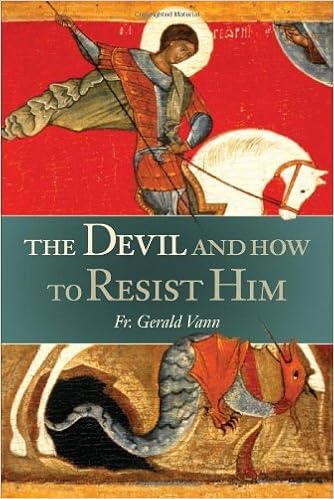
Going through this with a formation group in my parish's Young Adults ministry. Pretty good stuff. It's amazing how the author (an English Dominican) was able to see in 1957 the problems of modern Christendom that have become so exacerbated in recent years.

51Q9HcOet4L._SX332_BO1,204,203,200_.jpg
 

Legacy

New member
Messages
7,871
Reaction score
321
Conservative pundit speaks on University’s identity, Catholicism (The Observer, April 5, 2017)

Excerpts from the article

Matt Walsh, a columnist for The Blaze, spoke on what he believed to be the University’s departure from its Catholic heritage and what he saw as the political left’s corruption of Catholicism.

“Notre Dame has provided us a helpful demonstration of what the consequences are when a Catholic institution loses its Catholic heritage,” he said. “ … This institution calls itself Catholic but proceeds to betray that identity, and in doing so has scandalized the public.”

Walsh cited Obama’s speech and certain University policies as evidence of this departure.

“Recent history speaks for itself,” he said. “ … We know that in [2009] Notre Dame hosted the most radically pro-abortion president in history. … A few years ago, management decided to provide marriage benefits to employees in same-sex relationships, citing a legal obligation that does not exist.”

The invitation for Davis to speak was key evidence for his case against Notre Dame’s Catholicism, Walsh said.

“Last year, this to me is the most egregious of all, … the Notre Dame gender studies department invited Wendy Davis to speak,” he said. “Wendy Davis is known for — and only known for — her extremist pro-abortion views. Davis is a fierce disciple of the abortion death cult and has devoted her entire life to ensuring the right to kill children.”

Walsh said Notre Dame’s Gender Studies Program also helped push the University away from its Catholic mission.

“The very fact that this university has a gender studies program is a problem,” he said. “Gender studies programs exist to create unemployed people, and second, to indoctrinate students into a radical left-wing notion of gender.”

“Notre Dame must be admonished and rebuked for what it’s done,” he said.

Walsh then moved from his critique of Notre Dame to a discussion of his belief that liberalism is corrupting Catholicism.

“This is liberalism, it is indistinguishable from satanism — it is satanism,” he said. “ … Pope Leo [XIII] saw this before liberalism would claim the right to kill children, the right to redefine marriage.”

There were three key areas, Walsh said, in which liberalism was attacking Catholic teaching — family, gender and marriage. Walsh spoke especially passionately against abortion.

“How could a pro-choice catholic believe that an unborn child is worthless and subhuman when unborn humans possess an identity not only created by God but shared with him and experienced by him?” he said.

“We as Catholics and Christians, we drop the ball big time on this discussion,” he said. “We did a really bad job of explaining it. Even more so, we did a bad job demonstrating what a sacred marriage looks like to the outside world.”

“We may not understand it, we may find it hard and difficult … but although it can be interesting to talk about why the Bible says this or why the Church says this, we need to establish first that they do say it, period,” he said.
 

Old Man Mike

Fast as Lightning!
Messages
8,971
Reaction score
6,458
Another bent-out-of-shape-nearly single-issue opinion-stater .....

A couple of years ago a member of IE told us of his inspiration from his Notre Dame education to essentially give up several years of his economic life to help at The Farm of The Child in Central America. He needed a few bucks to help pay his way. I and one other IEer gave him some support. He sent pictures of The Farm and its work. (wonderful grass-roots charity.)

Recently he sent again a "hello" and a request to help a young man with his education there. Again, wonderful.

THAT is Notre Dame TODAY. Anyone blithely ignoring such (numberless) actions taken by Notre Dame students and profs has got extremely riotous hemorrhoids indeed. ... and, demonstrating my lack of total conversion to a meek Catholic of the Beatitudes, I'd like to supplement those hemorrhoids with a properly placed Mediaeval Pike. --- back to our glorious history.
 

Veritate Duce Progredi

A man gotta have a code
Messages
9,358
Reaction score
5,352
Another bent-out-of-shape-nearly single-issue opinion-stater .....

A couple of years ago a member of IE told us of his inspiration from his Notre Dame education to essentially give up several years of his economic life to help at The Farm of The Child in Central America. He needed a few bucks to help pay his way. I and one other IEer gave him some support. He sent pictures of The Farm and its work. (wonderful grass-roots charity.)

Recently he sent again a "hello" and a request to help a young man with his education there. Again, wonderful.

THAT is Notre Dame TODAY. Anyone blithely ignoring such (numberless) actions taken by Notre Dame students and profs has got extremely riotous hemorrhoids indeed. ... and, demonstrating my lack of total conversion to a meek Catholic of the Beatitudes, I'd like to supplement those hemorrhoids with a properly placed Mediaeval Pike. --- back to our glorious history.


You provide a good story but how does that devalue what Walsh is saying? I didn't see him claim ND was incapable of producing citizens who do good works? Do you believe Wendy Davis should've been invited to speak?

Is it possible to be Catholic and pro-abortion? I'd contend that a pro-abortion stance is anathema to the underlying presuppositions of a natural law philosophy and thus can't coexist in a Catholic framework.

I suppose we could strip the meaning of what it means to be Catholic. I've always viewed that designation to be driven more by action than by statement. Watch how a person lives to tell if they are Catholic. The Catholic church clearly articulates a number of foundational principles to be Catholic and yet so many people think they can just claim it like protestant salvation.

If there is a single issue to bent out of shape about, I think abortion qualifies.
 

Whiskeyjack

Mittens Margaritas Ante Porcos
Staff member
Messages
20,894
Reaction score
8,126
My take, for what it's worth (and it isn't much), is this:
  • In the post Legacy quoted above, Walsh isn't technically wrong on any of his points. ND, as the flagship Catholic university in America, did cause scandal by inviting Davis to speak and awarding an honorary degree to Obama (when ASU--of all places--mustered the courage to deny him an honorary degree due to his lack of accomplishments to date). If we can't be counted on to consistently oppose abortion, we shouldn't call ourselves Catholic.
  • This gets at OMM's critique above, but as far as I know, Walsh has no connection to ND, and that's some pretty heated rhetoric to take from an outsider. My problem with Walsh more generally is that he seems completely oblivious to the hypocrisy of denouncing liberalism as "satanism" while crowing about the moral superiority of capitalism. So his witness on this subject, such as it is, sort of undermines itself.
  • I bothers me that there are entire academic departments at ND--Gender Studies and English, to name a couple--which are openly hostile to the University's larger mission. I don't advocate for turning ND into a Catholic madrassa, but I do subscribe to JPII's prescription in Ex corde ecclesiae for Catholic universities that "a majority of its faculty must be Catholic". That figure was nearly 90% as recently as the late 70s for ND, but it has fallen precipitously in the intervening decades. The current faculty is now barely above 50% Catholic, and I suspect a lot of those so self-identifying aren't practicing. That's a major problem, because ND is only special insofar as it is Catholic. If we give that up chasing secular relevance, we're bound for the same fate as Georgetown and lots of other 2nd rate Jesuit universities.
 

Legacy

New member
Messages
7,871
Reaction score
321
- What's the responsibility of the University to disallow a speaker invited by a particular group of students, e.g. College Democrats or Republicans, etc., or of the University, e.g. Theology inviting a Muslim speaker? Should Catholic teaching/doctrine be the litmus test?

- As for the percentages, does it really matter if a Law prof, for instance, be Catholic, e.g. Immigration law? I suppose he might follow the Pope's and the USCB's stance on Muslim immigration.

Then,
Being Mercy: Mercy, Faith and Sexual Orientation Notre Dame Magazine, Spring Issue
 

Old Man Mike

Fast as Lightning!
Messages
8,971
Reaction score
6,458
I've told myself for years that I would not type what I am about to type on IE (for reasons obvious and too many to elaborate.) But, what-the-he!l ...

I've taught courses which emphasized human biology and the social issues that intersected with them for many years at WMU. WMU is a state university, therefore no religious preaching in science class, and no "absolutism" of any kind.

But here in this course were the issues of birth control, genetic screening, transplantation, definition of death, and, yep, abortion, right in the syllabus to be covered --- with as much science as possible, and with as much objectivity on the social decisions side.

What to do about that dilemma? I did what any well-trained Catholic science teacher from Notre Dame would do: I did my best to study up on every angle I could, and to present the scientific facts and the religious/philosophical reasonings when they applied. I never told the students where I stood personally. At the end of classes, hard-right conservatives would tell me, disapprovingly, that they thought I was pro-abortion. Hard-left liberals would tell me the exact opposite. I had done my job AND MADE THEM THINK ABOUT THEIR OWN POSITION. That's intellectual, and spiritual honesty. Thinking about what you do is in fact the primary goal of God's design of the Universe --- a la free will.

But what did I find? I found that someone who really cared to make the effort to study all the aspects OF A VERY COMPLICATED SUBJECT could (uncomfortably) settle into an intellectually and spiritually honest position in favor of banning abortion OR of giving individuals their own choice to make such a decision themselves.

I am going to list a few of the reasons behind the possible honest decision of somebody who (Catholic or not) might choose to take the pro-individual-choice position (again uncomfortably --- this is SERIOUS on both sides: anyone "comfortable" with their position is a spiritual screw-up). I am not going to make a similar list for the ban-abortion as that position appears to have many simplistic absolutists here on IE and they do not feel that they need any subtlety in their position to my reading. I could however make such a list, and did in the classroom.

A). The Church has not been of one mind on this issue across the centuries. Our greatest moral philosophers have differed as to when an individual becomes fully human. For instance Aquinas felt that the individual did not become ensouled until several weeks/months into the pregnancy. If one tries to argue that "those old guys were just fools", one would have a hard time getting any scholar to pay attention if that's all one brought to the table;

B). In order to sustain the extreme position that no abortion can be allowed, one must take the position that GOD ensouls the embryo at the moment of fertilization. Whereas a materialist-reductionist-atheist might be able to make some kind of case that the fertilized egg is a fully-human being, a spiritual person cannot. "Fully-human" requires ensoulment for the spiritual view. This critical opinion, that the soul is inserted by GOD at conception is a belief. Beliefs are wonderful, but they are hard to defend as facts. And, the goodness of beliefs will be judged on how they affect one's behaviors in dealing with and limiting other persons' lives. At a minimum persons holding beliefs should admit that they ARE beliefs. It is a powerful choice indeed to limit other persons' behaviors because of one's beliefs. (That's where the killing starts.) The fundamentalness of any belief is therefore a big deal. For most people and all scripture scholars, one cannot find clear statements about this issue anywhere in the Gospels or The Creed. This absence is unsurprising in that our moral theologians have been arguing about it for centuries. If it was at all clear, we wouldn't have all of that;

C). Although there is no evidence for the belief that the soul is inserted by GOD at the moment of conception, there is, very marginally, some possible weak evidence that it might not be.

example: an egg is fertilized (GOD inserts a soul?) --- a little way down the fallopian tube, the dividing embryo gets too rambunctious and splits in two (identical twins). Ooops, says GOD, look what just happened!! I'll have to fix that and fetch another soul for the empty one! --- seems a bit ridiculous does it not?

example: two eggs are fertilized in the same cycle (non-identical twins --- GOD placed in the two souls?). As they swim down the fallopian tubes and implant in the womb, they plant in the same spot. There they fuse into one embryo with two different genetic lines --- a so-called "Chimaera." Ooops, says GOD, look at that!! I'll have to take one of those two souls out and save it for later... hmmm... which one?" Again, pretty hard to swallow.

generic fact: there are uncounted numbers of fertilized eggs which never make it to birth. "Embryonic wastage" is greater than actual births. Shall we envision GOD wildly sowing souls and harvesting most of them halfway down the uterus? Things like this don't PROVE anything, but they do show how one might think differently and a heck-of-a-lot more subtly and nuanced than the absolutists.
There are a lot more arguments which thoughtful persons have meditated upon regarding this hate-filled controversy. Things like ectopic pregnancies --- a true issue if GOD ensouls immediately and the embryo is killed "before its time." Trisomy 13 and 18. Lesch-Nyhan syndrome. .... genetics teaches some horror-filled facts.

The bottomline of this for me is simple: thoughtful people truly interested in understanding the myriad complexities of this issue are rare --- it takes a lot of education to do the work. But when you do it, you see two things: 1]. thoughtful people can thoughtfully and spiritually come to opposite positions on what they believe best about this terrible thing, and 2]. some of those thoughtful people can say with complete intellectual and spiritual honesty that they will not deny anyone the choice in these matters, even though they would do anything they could to avoid this in their own life.

There are a very large number of other things to say about this dilemma --- I'll not write that book. I'll leave off with the observation that I rarely hear anything from anyone who seems to have done the necessary work to really weigh the sides of the issue, and so, from the extremists on both sides, I hear only the angry crowd noises of the Witch Hunters.
 

Veritate Duce Progredi

A man gotta have a code
Messages
9,358
Reaction score
5,352
I've told myself for years that I would not type what I am about to type on IE (for reasons obvious and too many to elaborate.) But, what-the-he!l ...

I've taught courses which emphasized human biology and the social issues that intersected with them for many years at WMU. WMU is a state university, therefore no religious preaching in science class, and no "absolutism" of any kind.

But here in this course were the issues of birth control, genetic screening, transplantation, definition of death, and, yep, abortion, right in the syllabus to be covered --- with as much science as possible, and with as much objectivity on the social decisions side.

What to do about that dilemma? I did what any well-trained Catholic science teacher from Notre Dame would do: I did my best to study up on every angle I could, and to present the scientific facts and the religious/philosophical reasonings when they applied. I never told the students where I stood personally. At the end of classes, hard-right conservatives would tell me, disapprovingly, that they thought I was pro-abortion. Hard-left liberals would tell me the exact opposite. I had done my job AND MADE THEM THINK ABOUT THEIR OWN POSITION. That's intellectual, and spiritual honesty. Thinking about what you do is in fact the primary goal of God's design of the Universe --- a la free will.

But what did I find? I found that someone who really cared to make the effort to study all the aspects OF A VERY COMPLICATED SUBJECT could (uncomfortably) settle into an intellectually and spiritually honest position in favor of banning abortion OR of giving individuals their own choice to make such a decision themselves.

I am going to list a few of the reasons behind the possible honest decision of somebody who (Catholic or not) might choose to take the pro-individual-choice position (again uncomfortably --- this is SERIOUS on both sides: anyone "comfortable" with their position is a spiritual screw-up). I am not going to make a similar list for the ban-abortion as that position appears to have many simplistic absolutists here on IE and they do not feel that they need any subtlety in their position to my reading. I could however make such a list, and did in the classroom.

A). The Church has not been of one mind on this issue across the centuries. Our greatest moral philosophers have differed as to when an individual becomes fully human. For instance Aquinas felt that the individual did not become ensouled until several weeks/months into the pregnancy. If one tries to argue that "those old guys were just fools", one would have a hard time getting any scholar to pay attention if that's all one brought to the table;

To make this more clear: The Church has never wavered on it's position regarding abortion. The debates that began in the 1st to 3rd century and that have continued to this day, revolved around "ensoulment". At conception, there is an early-stage developing human being and it's always been considered an evil act to terminate the development of that human. Since the "soul" is an abstract metaphysical concept, it really serves no purpose for our current discussion. Unless we're trying to find ways to not be complicit in abortion by choosing pro-choice.

B). In order to sustain the extreme position that no abortion can be allowed, one must take the position that GOD ensouls the embryo at the moment of fertilization. Whereas a materialist-reductionist-atheist might be able to make some kind of case that the fertilized egg is a fully-human being, a spiritual person cannot. "Fully-human" requires ensoulment for the spiritual view. This critical opinion, that the soul is inserted by GOD at conception is a belief. Beliefs are wonderful, but they are hard to defend as facts. And, the goodness of beliefs will be judged on how they affect one's behaviors in dealing with and limiting other persons' lives. At a minimum persons holding beliefs should admit that they ARE beliefs. It is a powerful choice indeed to limit other persons' behaviors because of one's beliefs. (That's where the killing starts.) The fundamentalness of any belief is therefore a big deal. For most people and all scripture scholars, one cannot find clear statements about this issue anywhere in the Gospels or The Creed. This absence is unsurprising in that our moral theologians have been arguing about it for centuries. If it was at all clear, we wouldn't have all of that;

Why must someone ascribe to the view of ensoulment at conception to believe abortion is a terrible thing? I can believe ensoulment is a developmental process that occurs through all of life or any other myriad of things and still find elective abortion evil. It's not a belief that a human being is developing from conception onward. What does "fully human" entail? It could be easily argued infants/toddlers aren't fully human, in that they can't reason, are not self-sustaining, etc. What external signs can be attributed to an "ensouled human"? Does that matter when discussing abortion?

C). Although there is no evidence for the belief that the soul is inserted by GOD at the moment of conception, there is, very marginally, some possible weak evidence that it might not be.

example: an egg is fertilized (GOD inserts a soul?) --- a little way down the fallopian tube, the dividing embryo gets too rambunctious and splits in two (identical twins). Ooops, says GOD, look what just happened!! I'll have to fix that and fetch another soul for the empty one! --- seems a bit ridiculous does it not?

If God is a representation of omniscience, it seems silly to anthropomorphize him to the point of mistakes in an effort to rationalize a position. Obviously, any "belief" in ensoulment takes into account that God doesn't make mistakes and moves on thusly.

example: two eggs are fertilized in the same cycle (non-identical twins --- GOD placed in the two souls?). As they swim down the fallopian tubes and implant in the womb, they plant in the same spot. There they fuse into one embryo with two different genetic lines --- a so-called "Chimaera." Ooops, says GOD, look at that!! I'll have to take one of those two souls out and save it for later... hmmm... which one?" Again, pretty hard to swallow.

generic fact: there are uncounted numbers of fertilized eggs which never make it to birth. "Embryonic wastage" is greater than actual births. Shall we envision GOD wildly sowing souls and harvesting most of them halfway down the uterus? Things like this don't PROVE anything, but they do show how one might think differently and a heck-of-a-lot more subtly and nuanced than the absolutists.
There are a lot more arguments which thoughtful persons have meditated upon regarding this hate-filled controversy. Things like ectopic pregnancies --- a true issue if GOD ensouls immediately and the embryo is killed "before its time." Trisomy 13 and 18. Lesch-Nyhan syndrome. .... genetics teaches some horror-filled facts.

Principle of double effect adequately covers women in crisis with ectopic pregnancies, hemorrhaging, etc. This isn't debated in the Catholic church insofar as I can tell. If the woman's life is in jeopardy, medical action can be taken to save the mother's life as long as it doesn't also purposefully kill the developing child.

The bottomline of this for me is simple: thoughtful people truly interested in understanding the myriad complexities of this issue are rare --- it takes a lot of education to do the work. But when you do it, you see two things: 1]. thoughtful people can thoughtfully and spiritually come to opposite positions on what they believe best about this terrible thing, and 2]. some of those thoughtful people can say with complete intellectual and spiritual honesty that they will not deny anyone the choice in these matters, even though they would do anything they could to avoid this in their own life.

If human life is a gift from God and we value that gift, you'd be hard pressed to make an argument that justifies legislation which allows the termination of human life without extenuating circumstances, ie - the mother's life is in danger. I suppose someone could make the claim an ideal society, which we are all striving to create, doesn't attempt to limit evil but instead promotes freedom of choice in everything but I don't think that argument can be made from a Catholic worldview. Of course, I'm open to hearing any arguments that support it.

There are a very large number of other things to say about this dilemma --- I'll not write that book. I'll leave off with the observation that I rarely hear anything from anyone who seems to have done the necessary work to really weigh the sides of the issue, and so, from the extremists on both sides, I hear only the angry crowd noises of the Witch Hunters.

There is a beautiful relationship between God's life-giving force and the fecundity of human beings. Giving life is one of, if not the most, God-like thing we can do. To terminate a life is then, the least God-like thing we can do. What do we call things that are least God-like? Sin? Evil? Abhorrent? Should we work to limit people's ability to pursue these unGodly actions? We can also rephrase the questioning to dispose of the 'God' nomenclature and appeal to the humanists among us.

I suppose the ultimate question that comes from this discussion is this: If we believe something is evil based on our philosophical presuppositions, should we work to eliminate it/legislate it? or should we "agree to disagree"?

If I saw someone committing any number of grave atrocities, I'm compelled to bring about awareness so that we might create enough social force to codify the immorality of those actions in our laws.


..
 
Last edited:

wizards8507

Well-known member
Messages
20,660
Reaction score
2,661
Veritate, I need to push back a little bit on the implication that the Church has been consistently black-and-white when it comes to abortion. Even among Catholic moral theologians, there is disagreement regarding the treatment of ectopic pregnancies, for example.

Catholics United for the Faith | A Catholic Approach to Tubal Pregnancies | Teaching the Catholic Faith

Catholic Theologians typically discuss the morality of three common treatments for ectopic pregnancies according to the principle of double effect.[4] One approach utilizes the drug Methotrexate (MTX), which attacks the tissue cells that connect the embryo to its mother, causing miscarriage. A surgical procedure (salpingostomy) directly removes the embryo through an incision in the fallopian tube wall. Another surgical procedure, called a salpingectomy, removes all of the tube (full salpingectomy) or only the part to which the embryo is attached (partial salpingectomy), thereby ending the pregnancy.

The majority of Catholic moralists reject MTX and salpingostomy on the basis that these two amount to no less than a direct abortion. In both cases, the embryo is directly attacked, so the death of the embryo is not the unintended evil effect, but rather the very means used to bring about the intended good effect. Yet, for an act to be morally licit, not only must the intended effect be good, but also the act itself must be good. For this reason, most moralists agree that MTX and salpingostomy do not withstand the application of the principle of double effect.

The majority of Catholic moralists, while rejecting MTX or a salpingostomy, regard a salpingectomy as different in kind and thus licit according to the principle of double effect. What is the difference?

A partial salpingectomy is performed by cutting out the compromised area of the tube (the tissue to which the embryo is attached). The tube is then closed in the hope that it will function properly again. A full salpingectomy is performed when implantation and growth has damaged the tube too greatly or if the tube has ruptured. These moralists maintain that, unlike the first two treatments, when a salpingectomy is performed, the embryo is not directly attacked. Instead, they see the tissue of the tube where the embryo is attached as compromised or infected. The infected tube is the object of the treatment and the death of the child is indirect. Since the child’s death is not intended, but an unavoidable secondary effect of a necessary procedure, the principle of double effect applies.

Dr. T. Lincoln Bouscaren,[5] an early 20th-century ethicist and canon lawyer, argues that though the pathological condition is caused by the presence of an embryo in the fallopian tube, nonetheless “the tube has become so debilitated and disorganized, or destroyed by internal hemorrhage, that it now constitutes in itself a distinct source of peril to the mother’s life even before the external rupture of the tube.”[6]

Bouscaren admits that this is a “fine distinction,” but he essentially argues that the infection in the tube, though related to the pregnancy, is sufficiently distanced from the pregnancy to constitute a pathological condition of its own. He maintains that the inevitable rupture is the final end of a single pathology, i.e., a diseased and ever-worsening tube.

Dr. Bouscaren arrives at the same conclusion as the majority of Catholic moralists, that both the partial and full salpingectomy is licit. Some critics of this conclusion argue that salpingectomy is morally indistinguishable from salpingotomy or MTX. Therefore, Dr. Bouscaren’s explanation is helpful and would benefit from further elaboration by contemporary moral theologians.

There are two circumstances that make the use of any of these treatments morally acceptable. The first occurs when an ectopic pregnancy has been diagnosed, but no signs of life exist. The morality of treatment for ectopic pregnancies concerns the absolute value of human life. Conversely, there is no such moral consideration if the embryo has succumbed—there is no taking of human life (assuming a reasonable effort has been made to detect life).

The second circumstance occurs when the fallopian tube ruptures, whether or not the embryo is alive. A ruptured tube presents an immediate threat to both mother and child. If nothing is done, both will die. The doctor is morally obligated to act, even though only one life can be saved. The rupture is the cause of the child’s death, not any procedure the doctor performs. These two circumstances, miscarriage and rupture, present fundamentally different moral questions from instances in which both mother and child are alive and the fallopian tube itself does not pose an immediate threat to the mother’s life.

Medical Management

Catholic theologians disagree as to whether or not this is licit under Church teaching. Some claim that the medication technically targets the fast-growing cells of the placenta and not the baby, so it is acceptable. Others claim that while it targets the placenta, it also targets the fast-growing cells of the baby itself, causing a direct abortion and therefore going against Church teaching. Still others claim that until the baby is viable, the placenta itself is a vital organ of the baby, and therefore targeting the placenta is also a direct abortion and therefore not acceptable.
I've shared in other threads that my wife and I have gone through two miscarriages. In both instances, the miscarriage was incomplete, i.e. the baby died but was "stuck." The process we had to go through was medically exactly the same as abortion procedures, with the obvious difference being that our babies were already dead. Sadly, getting credible guidance from the Church during this whole ordeal was just about impossible.
 
Last edited:

woolybug25

#1 Vineyard Vines Fan
Messages
17,677
Reaction score
3,018
Veritate, I need to push back a little bit on the implication that the Church has been consistently black-and-white when it comes to abortion. Even among Catholic moral theologians, there is disagreement regarding the treatment of ectopic pregnancies, for example.

Catholics United for the Faith | A Catholic Approach to Tubal Pregnancies | Teaching the Catholic Faith


Medical Management


I've shared in other threads that my wife and I have gone through two miscarriages. In both instances, the miscarriage was incomplete, i.e. the baby died but was "stuck." The process we had to go through was medically exactly the same as abortion procedures, with the obvious difference being that our babies were already dead. Sadly, getting credible guidance from the Church during this whole ordeal was just about impossible.

Totally agree. There are some that even feel a blighted ovum (where there literally is no human present) should not be removed. Seems pretty crazy to me that such a procedure, one that is clearly the safest and most humane option for the mother, would be frowned upon.
 

Veritate Duce Progredi

A man gotta have a code
Messages
9,358
Reaction score
5,352
Veritate, I need to push back a little bit on the implication that the Church has been consistently black-and-white when it comes to abortion. Even among Catholic moral theologians, there is disagreement regarding the treatment of ectopic pregnancies, for example.

Catholics United for the Faith | A Catholic Approach to Tubal Pregnancies | Teaching the Catholic Faith


Medical Management


I've shared in other threads that my wife and I have gone through two miscarriages. In both instances, the miscarriage was incomplete, i.e. the baby died but was "stuck." The process we had to go through was medically exactly the same as abortion procedures, with the obvious difference being that our babies were already dead. Sadly, getting credible guidance from the Church during this whole ordeal was just about impossible.

My wife and I went through a miscarriage as well and had to heavily weigh our options. IN regards to your push back, what were the differing views on abortion in the Church? There are differing views on medical management of problems in pregnancy but they've never viewed elective abortion as morally neutral. Unless I've managed to miss those documents while reading on the subject.

My fear is people will read OMM's response above and your reply below and say "See the Church is even ambivalent about abortion" but I don't see how that is supported. There are differing views on "ensoulment" and viability and medical treatment with pregnancies gone awry but they've never given carte blanche to their adherents when it comes to elective abortion.

Am I missing something that's more nuanced? I'm only opposed to equivocation so I'm trying to openly discuss this insofar as I am able.
 

Old Man Mike

Fast as Lightning!
Messages
8,971
Reaction score
6,458
My last contribution to this distressing subject, hopefully of some use:

IF it is reasonable, and often stated both historically and in modern times, that the just-post-conception embryo may well NOT be ensouled, and therefore not yet a human individual, then one might think that "nuanced" views about scenarios where two different "goods/bads" are being weighed against one another would be very appropriate. At the minimum, for a person who believed in their philosophy that there was no ensoulment in the early embryo, the issue of "murder" or "homicide" or "killing a human being" would be off the table. If the removal of an embryo was not, in that person's mind, the killing of another human, but rather the killing of an embryo with the potential to become another human being, that distinction should not be cast aside trivially. It would not eviscerate the situation of serious thought about decisions, but, to my mind at least, requires a somewhat different weighing-and-measuring. (I might say that with current biological understanding, every cell in the human body except haploids has "the potential to become a fully human being." That might seem relevant to some and not to others. I'd hate to think that I was constantly killing human-potentials if that mattered theologically --- yes, it's absurd, thus nuanced thinking.)

There are many very serious reasons for a woman to be relieved of the situation of being pregnant --- some of these are extremely serious and some are nearly whimsical. Along that spectrum of seriousness, there are things that almost any person tilts the values judgement towards the woman (the medical situations threatening her severely, and not just her mortality --- ironically, for some situations a toxic pregnancy may be necessary to terminate if the woman is to have any chance of a future normal one --- what's more important?) At the other end of the spectrum, there are situations where someone might just use abortion as their birth control method because "babies" are inexpedient.

Moving along the spectrum of seriousness, one encounters genetic defects which NEVER give birth to a normal child, and almost never one who lives more than a few months beyond delivery (read about Trisomy 13 and 18 --- this isn't statistics but certainties.) Full pregnancy with these situations is far riskier to the woman's health than early termination of a fetus who will never have even close to physical or mental normalcy, often inoperative sense perceptors among the unending list of horrors. And the list of such things is not short. And one comes to rape. and incestual rape and its greatly enhanced genetic foul-ups. ... and the "amount of severity" of the confronting issue may gradually become less as one passes across this spectrum of situations until one by one each of us decides "no" on that one I'm voting to take the risk and keep the pregnancy. I would submit, that not thinking of the embryo as ensouled changes the decision dynamic profoundly. If on the one hand "I" am not murdering a human person (lets not kid ourselves about the rhetoric employed), my concern for the woman might take precedent much further along this spectrum than if "I" thought "I" was killing a person.

But I notice that on top of all that, "I" am not the (directly) affected party. Does that not count for anything? Should the individual directly affected (in the not-yet-ensouled theology, she is the ONLY individual directly involved) have primary say? Ensoulment thereby has almost everything to do with "nuancing" the decisions here. And arguments that GOD can have it all figured out about the souls in twins etc things from my previous post, can't suddenly be abandoned here to say that GOD can't deal with that individual woman GOD-person to Human-person and easily adjust what HE was going to do with that soul. In the end, it is the relationship between GOD and person which is the only relevant thing anyway. With murder taken out of at least some of the scenarios, one feels ones role is to alter to be a counsellor rather than a policeman.

At the other end of the Spectrum there is a powerful argument NOT to have wildly free ranging use of abortion. I'm not talking about late term abortions which could be dealing with viable fetuses --- that's against the law already --- the Supreme court has spoken about that. (and, in my philosophy, everyone should agree that terminating a viable fetus is "killing a citizen." --- just one snip of the doctor's scissors away.) Rather, what I'm talking about is abortion casually employed because pregnancy is undesirable at the moment. One can read the Utopian writers/philosophers about the best and worst traits to encourage into a society. The worst trait to encourage is "Killing for Expediency." Killing someone just because it's in my way. (the ensoulment arguments above still hold vis-a-vis decisions made early and with serious issues involved, but the "killing of the Soul of a whole Society" by casting things aside for mere expediency is also a serious matter. America is notorious at the latter in many ways.)

The point of these paragraphs is that the ensoulment issue DOES require some nuancing. That nuancing then involves a whole spectrum of reasons to be weighed and considered. At one end of the spectrum, termination of an embryo might be trumped by realities directly impacting the woman. On the other end, there might be no reasonable argument made for a termination, and a strong social one not to encourage such things. The final decision on these matters is really a decision between an individual and GOD, and will be handled there and not by us.
 
Last edited:

Veritate Duce Progredi

A man gotta have a code
Messages
9,358
Reaction score
5,352
Pope John Paul II wrote in his encyclical Evangelium Vitae:

Throughout Christianity's two thousand year history, this same doctrine of condemning all direct abortions has been constantly taught by the Fathers of the Church and by her Pastors and Doctors. Even scientific and philosophical discussions about the precise moment of the infusion of the spiritual soul have never given rise to any hesitation about the moral condemnation of abortion.

Many believe ensoulment is the point when a developing embryo is 'fully human'. We already know the point of conception is when a human is developing, even if it is an incomplete human. There are plenty of scientific names to use throughout the lifecycle: embryos, blastula, 3rd trimester fetuses, newborns, infant, toddler, adolescent, adult and geriatric before succumbing to the forces of the universe. (If they are fortunate to live a complete cycle)

The Church has changed it's stance on when ensoulment occurs, and like everything, it's position has developed organically to this very minute. So anyone who claims to be Catholic, by the nature of the definition, must ascribe themselves to the Church's temporal views on such grave matters as far as I can understand. The Church is clear in it's view on abortion as it stands in this temporal moment.

This gets back to the idea of identity. What does it mean to say "I'm Catholic", is it an oratory or written opt-in? Is it actually binding one's self to Catholic teaching?

As to the terrible genetic defects that occur in pregnancy, I'm well aware. My wife works at one of a handful of fetal care clinics where early detections are referred from all over the country. We routinely discuss trisomies, CDH, Spina Bifida, etc. The last two are operable within the womb and can have good outcomes. Trisomy 13 & 18 are a different situation and terribly sad.

As to rape, I hate the idea of violence solving violence but this is the most difficult case presented. But let's not kid ourselves, almost everyone who is against abortion is willing to make exceptions even if it's not internally consistent: I'd love to see the percentage of performed abortions resulting from rape or the trisomies. I bet it's less than 2% so let's go back to the other > 90% abortions.

I suppose the final questions are posed as such: Is a woman's choice to carry a child and her autonomy over her own body more important than the developing life of the new human inside? Should society intervene at all in such matters? At what point do we grant human privileges to the developing human?

Yes, the final analysis is all between YHWH and the individual but in the interim, how do we promote the best policies to minimize evil and still make concessions for people caught in terrible situations?

Just because someone is firmly rooted in their position doesn't mean they haven't given true thought to the subject. It's a bit condescending to assume someone with a concrete position must be too stupid or too lazy to understand the situation in it's entirety.

But ultimately OMM, your last sentence above is most likely what wins out over time: let women decide and let them be accountable to the infinite. Since humanity increasingly seems to dispel of the notion of God altogether, I imagine the list of human beings who will never be, continues to grow. We can feel satisfied that we left it to the individual and bear no responsibility for it as such.
 
Last edited:

wizards8507

Well-known member
Messages
20,660
Reaction score
2,661
^ The gray area there is in defining "direct abortion." A direct abortion is never licit, but there are a number of medical procedures where it's unclear whether they constitute a direct abortion or not.
 

Old Man Mike

Fast as Lightning!
Messages
8,971
Reaction score
6,458
To Veritate: this is not about our current issue, and I don't plan to aggravate the IE readers with my views anymore (unless very specifically asked about some worthwhile aspect of this.) This remark in entirely in praise of you. I am not kidding. This exchange that a few of us have had here is one of the few, perhaps the only one, that I have experienced with some genuine measure of civility and openness to where others are coming from.

I have grown from such civility and admire it beyond my ability to state. You sir are a gentleman. ... and I wish you were in politics so I might vote for someone like you instead of (generally) the self-serving posers and undereducated mental midgets that we have. God bless you.
 

Whiskeyjack

Mittens Margaritas Ante Porcos
Staff member
Messages
20,894
Reaction score
8,126
- What's the responsibility of the University to disallow a speaker invited by a particular group of students, e.g. College Democrats or Republicans, etc., or of the University, e.g. Theology inviting a Muslim speaker? Should Catholic teaching/doctrine be the litmus test?

I think that if a professor or a club wants to invite someone to speak who will be advancing a position that is explicitly hostile to Church teaching, especially on such a publicly controversial issue as abortion, it ought to occur in the context of a debate, so the audience gets the benefit of hearing both sides. For instance, I'd be upset if ND invited Richard Spencer to speak without a rebuttal from, say, a Catholic civil rights attorney, or someone from NDLS pushing back with the Catholic viewpoint. We aren't a secular university that claims all speech is good; and as the flagship Catholic university in this country, there are consequences that flow from the people we honor and the views that we platform.

- As for the percentages, does it really matter if a Law prof, for instance, be Catholic, e.g. Immigration law? I suppose he might follow the Pope's and the USCB's stance on Muslim immigration.

For a law professor? Absolutely. There are few subjects where the professor's theological/ moral beliefs are more important than the study of law. It's much less important in the hard sciences, which is likely why JPII didn't argue that 100% of the faculty needs to be orthodox Catholics in order for a university to provide a quality Catholic education.


I've read many such articles, most of them written by Jesuits. Note how theological liberals rarely make reference to scripture, ecumenical councils, encyclicals, etc.-- the vast majority of the Church's Tradition just gets ignored, because it cannot support their positions. Corpora cites two lines from the Catechism, asserts that the Church seems to take a "nurture over nature" approach, and dismisses it as cruel. His own position, that homosexuality is as fundamental to the identity of our LGBTQ students as their Catholicism, is gnosticism, a serious heresy that the Church has contended with since its inception. Celibacy is a higher calling than marriage, and everyone, regardless of their orientation, is called to live chastely. To imply that ND's LGBTQ students are incapable of living chastely does them a grave disservice, and it despairs of the transformative power of God's grace, which is just as harmful as presuming upon God's grace and telling people it doesn't matter what they do between the sheets.

A). The Church has not been of one mind on this issue across the centuries. Our greatest moral philosophers have differed as to when an individual becomes fully human. For instance Aquinas felt that the individual did not become ensouled until several weeks/months into the pregnancy. If one tries to argue that "those old guys were just fools", one would have a hard time getting any scholar to pay attention if that's all one brought to the table.

That was Aquinas' most famous error (and likely his most harmful error, since it was cited by the majority in Roe v. Wade.) But this error was not his fault, as he was simply utilizing the best scientific knowledge of his day. In this case, he relied on Aristotle's History of Animals (Book 7, Part 3) as to when "quickening" occurs, which led him to conclude that ensoulment happens later than conception. But if you apply Thomistic principles to modern embryology, you arrive exactly at the Church's current position that human life begins at conception. It is to the Church's credit that it strives to incorporates the best science available in its teachings on such subjects.

Veritate has already mentioned this point, but I'll reiterate that--regardless of the side debate over when ensoulment occurs--the Church has consistently condemned direct abortions from the very beginning.

It is a powerful choice indeed to limit other persons' behaviors because of one's beliefs. (That's where the killing starts.)

I trust you can appreciate the irony of this statement when applied to prolife "absolutists", as we're the ones trying to stop the killing.

The rest of your view makes sense for one who adopts a Pe1agian or Semi-Pelagian view of nature and grace, as opposed to Augustine's (orthodox) views on the matter. I accept the Church's authority on these matters, as I have no reason to believe that my private discernment should be superior. Regardless of when ensoulment occurs, elective abortion is a grave evil that fatally compromises any society that normalizes it. A just society would welcome every child conceived who can be safely delivered, even if the mother is unable to raise him thereafter.

Veritate, I need to push back a little bit on the implication that the Church has been consistently black-and-white when it comes to abortion. Even among Catholic moral theologians, there is disagreement regarding the treatment of ectopic pregnancies, for example.

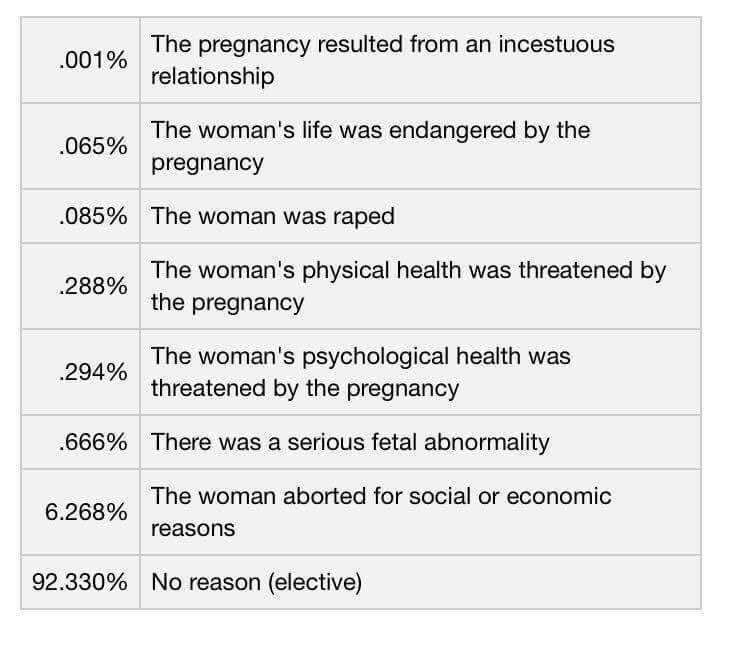
First, let's acknowledge that you're talking about a vanishingly tiny % of pregnancies. The following figures are limited to Florida, but they line up with the nationwide stats I've seen from the CDC (for which I can't currently find a link):

C3BQCRRXgAI-MN5.jpg


Second, salpingectomy is unquestionably licit, and I'd argue that a case can be made as well for MTX under the principle of double effect. So now we're down to the unicorn scenarios where a salpingostomy is necessary to preserve the life of the mother. In such cases, I would have no problem leaving it up to the discretion of the couple and their gynecologist; and while there are surely some absolutists who would argue against even that, I've never met one personally. But we, as a nation, are light years away from such a nuanced pro-life position. One of our two political parties recently made unrestricted abortion "rights", up to the moment of delivery, a plank of its platform. So hand-wringing over the extreme hard cases under Catholic doctrine strikes me as--at best-- ridiculously pedantic; and at worst, a bad faith obfuscation in light of the 60,000,000 abortions that have occurred since Roe v. Wade.
 

Old Man Mike

Fast as Lightning!
Messages
8,971
Reaction score
6,458
To Whiskey: I need to let this go, and if it were anyone on IE other than you (since I respect you) I would. But, as this issue is so hard-wired into your view of Life, it has blurred your almost legendary rationality of which all of us admire.

I refer to your line:"I trust you can appreciate the irony of this statement when applied to prolife "absolutists", as we're the ones trying to stop the killing."

I of course get what you're saying, but view it as the kind of "argument" that I don't expect from you. For these reasons:

A). If this was the Whiskey that I've grown to understand, I would firstly have expected a retort which acknowledged in some degree at least that the "other side" of the ensoulment philosophy does NOT believe that "killing" a human is taking place at all in the early stages of the embryo. Therefore, despite the different philosophies, the quoted retort only applies to one position on human life; the one that says it's the moment of conception --- which MANY "great" theologians (including Augustine) did not believe rational. That division of ontological basis puts the above retort on very uneven ground, and not at all "ironic", except to one point of view.

B). As to the "killing" statement: that original statement referred, as you certainly realize, to the general sad fact that persons with powerfully emotional stances on things (of whatever nature) are much more likely to be driven to violence, even extreme violence, when their deeply held belief is opposed --- who committed violence against the birth control offices in this country? Absolutism insufficiently moderated by Christian Charity did this violence.

C). I was not going to bring this up, but if one insists on talking about killing, and preventing killing, what are the comparative fatality statistics for an early abortion vs attempting to carry a fetus to term? You are a very smart man, and know those numbers. --- I wasn't going to bring them up. as I REALLY don't want to encourage abortions (even though I see a number of conditions which require, in my opinion, that The Good Society not forbid the woman to do so.) But, attempting to bring a pregnancy to term has a 15-plus times greater fatality rate than early termination. Yes, LATE abortions (which should never be done except under extreme and obvious health threats, and are mainly illegal already) are more dangerous. Very few abortions are late abortions for all kinds of "practical" reasons. In a simplistic comparison of early abortion vs fetus-to-term, it would be the forbid-abortion lobby who would be causing more women's deaths wouldn't it? ..... as I say, I didn't want to even mention this, because I believe that the attitude that abortion is generally a ho-hum decision is very bad for the country.

Now why didn't you nuance your response with these awarenesses which you already have? I must believe that somehow this issue is important to you beyond your normal approach to everything else. I get that too. There are things in my theology that I hold above argument. I've tried to clearly see which things are on my list, and, if possible, throttle my emotions whenever they come up --- as it is my experience that the less I force myself into other people's heartfelt business the better. .... but I did just do something like that here, and honestly apologize.
 
Last edited:

Whiskeyjack

Mittens Margaritas Ante Porcos
Staff member
Messages
20,894
Reaction score
8,126
To Whiskey: I need to let this go, and if it were anyone on IE other than you (since I respect you) I would. But, as this issue is so hard-wired into your view of Life, it has blurred your almost legendary rationality of which all of us admire.

I'm glad you chose not to let it go, because I get a lot out of these exchanges, and I'm certain others do as well. Your hesitance to discuss such controversial topics is understandable, but our ability to do so here in a civil and productive manner is what keeps me coming back to IE so frequently.

A). If this was the Whiskey that I've grown to understand, I would firstly have expected a retort which acknowledged in some degree at least that the "other side" of the ensoulment philosophy does NOT believe that "killing" a human is taking place at all in the early stages of the embryo. Therefore, despite the different philosophies, the quoted retort only applies to one position on human life; the one that says it's the moment of conception --- which MANY "great" theologians (including Augustine) did not believe rational. That division of ontological basis puts the above retort on very uneven ground, and not at all "ironic", except to one point of view.

What I intended to argue, and apparently didn't articulate well, was that when ensoulment precisely occurs isn't central to this debate. Because the Church has consistently condemned the practice of elective abortion from its earliest days, regardless of whether the act is considered the murder of a fully ensouled human being or some lesser evil on the scale down toward contraception.

B). As to the "killing" statement: that original statement referred, as you certainly realize, to the general sad fact that persons with powerfully emotional stances on things (of whatever nature) are much more likely to be driven to violence, even extreme violence, when their deeply held belief is opposed --- who committed violence against the birth control offices in this country? Absolutism insufficiently moderated by Christian Charity did this violence.

Every large political movement has a violent fringe, simply due to human nature and the % of psychopaths in the general population. In the 40 years since the pro-life movement became a major force in American politics, there have been 8 murders attributed to it. Each one was a tragedy, but what's that compared to the 60,000,000 abortions that have taken place in American since Roe v. Wade?

You wrote:

It is a powerful choice indeed to limit other persons' behaviors because of one's beliefs. (That's where the killing starts.)

That's a very liberal sentiment, which I strongly disagree with. And I don't think you can find much support for it in Catholic doctrine. Abortion is clearly in line with things like contraception and no-fault divorce, where our liberal society has chosen to privilege the selfish choices of adults over what is best for children (and the Common Good in general). The social pathologies that flow from liberalism are widespread and impossible to deny. The Church is simply and obviously right here, and the liberals are wrong. So I get upset when I read thoughtful Catholics like yourself seeking to morally equivocate on this issue when the current moment requires the exact opposite of us. We're called to be egalitarians when it comes to people, and elitists when it comes to ideas. Our ideas are clearly better here, so I don't think squeemishness about strong beliefs is helpful.

C). I was not going to bring this up, but if one insists on talking about killing, and preventing killing, what are the comparative fatality statistics for an early abortion vs attempting to carry a fetus to term? You are a very smart man, and know those numbers. --- I wasn't going to bring them up. as I REALLY don't want to encourage abortions (even though I see a number of conditions which require, in my opinion, that The Good Society not forbid the woman to do so.) But, attempting to bring a pregnancy to term has a 15-plus times greater fatality rate than early termination. Yes, LATE abortions (which should never be done except under extreme and obvious health threats, and are mainly illegal already) are more dangerous. Very few abortions are late abortions for all kinds of "practical" reasons. In a simplistic comparison of early abortion vs fetus-to-term, it would be the forbid-abortion lobby who would be causing more women's deaths wouldn't it? ..... as I say, I didn't want to even mention this, because I believe that the attitude that abortion is generally a ho-hum decision is very bad for the country.

Doing the right thing frequently involves putting oneself at greater risk than doing the selfish thing. The goal is not to minimize maternal fatalities by all means available, but to promote a consistent respect for the sacredness of human life within society, from conception to natural death.

I'm glad our currently flippant approach to abortion discomfits you, though it makes me wonder why we're arguing over this in the first place then. Millions of abortions are carried out here with full legal sanction every year, and the vast majority of them are elective. We are clearly light years away from having a society that celebrates and protects human life, instead of dehumanizing, commoditizing and brutalizing it whenever doing so serves the interests of the strong. As I mentioned above, I'd have no problem with allowing abortion in those hard cases where the life of the mother is threatened, since that involves balancing the evil of abortion against some equally important goods. But as Catholics, that sort of reservation needs to be a footnote against consistent condemnation of our Culture of Death, lest we cause scandal.

Now why didn't you nuance your response with these awarenesses which you already have? I must believe that somehow this issue is important to you beyond your normal approach to everything else. I get that too. There are things in my theology that I hold above argument. I've tried to clearly see which things are on my list, and, if possible, throttle my emotions whenever they come up --- as it is my experience that the less I force myself into other people's heartfelt business the better. .... but I did just do something like that here, and honestly apologize.

I do feel strongly about this, but I don't believe I'm being illogical at all here. The internal logic of the Church's position--no contraception, no divorce, no abortion, and legal protection for every human from conception until natural death (with a few exceptions, noted above)-- is pretty obvious to me, and I'm certain that such policies would produce a much more just order than the one we live in today. The liberal position is the one riddled with inconsistency, and it continues to produce a lot of evil.

Anyway, I appreciate your willingness to engage with me on this subject. You have my respect, as always.
 

Old Man Mike

Fast as Lightning!
Messages
8,971
Reaction score
6,458
To Veritate, Whiskey et al: this is my last comment on this (I think) because it is not directly on the topic.

What I wanted to try to accomplish with these posts was not to change anyone's mindset about the abortion topic (how foolish would I have to be to think THAT was a likelihood?), but to attempt to put a little dent in what I believe to be a particularly unhealthy position that many folks have: that you cannot be a thoughtful person who believes that abortion should be allowed for a citizen's choice, AND be a Catholic. I obviously consider myself to be both, and have done a GREAT deal of thinking about that.

In my analysis of Church pronouncements and even Biblically (clearly phrased) Law --- such as the Ten Commandments --- I find in essentially every case of real world application of those "laws" that one's position needs to be nuanced. Let's take the other obvious "killing" commandment. Thou Shalt Not Kill. Couldn't be flatly clearer. But the application to real life is FAR muddier and therefore "nuanced" --- any lawyer knows that. In real life, in fact, actual killing may not carry with it any sense of sinning at all given the nuancing circumstances. Far beyond that The Church even gives the go-ahead to killing on a vast scale with the concept of the Just War. Within these "OKs" (even as reluctantly as they are expressed), errors are made and innocents (fully-ensouled innocents) are killed. In Just War, many are.

Either GOD sorts this out soul-by-soul decision or He doesn't. I believe that He's plenty capable of sorting true intention out, and that this is what He intended The Creation to primarily be about anyway --- freedom of Will to carefully weigh weighty decisions requiring nuancing aided by spiritual counsel. (Counsel, not Forced Behavior because of some views not taking into account the individual-on-the-spot's real circumstances.)

Perhaps (almost certainly) I have not succeeded in my goal of demonstrating thoughtfulness combined with Spiritual Counsel to arrive at nuanced rather than absolute forbiddance thinking about this topic. My vision of the nature of Catholicism doubtless differs from the more conservative element of the Church. I have spoken of why it's foolish to blindly lock-step with the (nearly undefinable in any working sense) "Magisterium" rather than thoughtfully pursue spiritual guidance in many Catholic areas elsewhere on these pages. I even live in a group house with my best friend, a retired Catholic priest here as well. He has no problem considering me Catholic, and laughs at the contrary idea. Perhaps we are both headed for He!l.

The bottom reason for making the effort was that some people are so bound by this conservatism that they have become single-issue voters. In this world today, and with the number of lying manipulating politicians that we have, I can't think of many more inappropriate voting stances.
 
Top