Politics

Politics

  • Obama

    Votes: 4 1.1%
  • Romney

    Votes: 172 48.9%
  • Other

    Votes: 46 13.1%
  • a:3:{i:1637;a:5:{s:12:"polloptionid";i:1637;s:6:"nodeid";s:7:"2882145";s:5:"title";s:5:"Obama";s:5:"

    Votes: 130 36.9%

  • Total voters
    352
B

Buster Bluth

Guest
3) The Europe - US comparison can only go so far. We're not the same. Pretending to take Formula A from Switzerland and assuming it will apply to the US and have the same outcome is more than a far stretch.

I'm going to skip the other points because I'm not even a fan of the ACA so I won't waste my breath picking hairs haha

But on this note, even the countries most similar to us, like Canada, Australia, New Zealand, all have universal health coverage. How is comparing ourselves to Australia or Canada too much of a stretch?
 

Polish Leppy 22

Well-known member
Messages
6,594
Reaction score
2,009
The poll includes people who "lost" their plans ... Still happy with their coverage that replaced them. Overall, all people mixed together, people are content. Since 59 percent are folks who did not have insurance prior to ACA, 41 percent did. They are happy too. It is difficult to find this sort of favorability for anything. But sure, lots of people who have no skin in the game may disapprove of ACA. I am far more interested in the shrinking number of people who have gained access. People who do not need it but do not want people who do to have it make me sad.

We should be happy that all the doom and gloom from detractors has not materialized. People like their coverage. Why root for failure? Be happy that people are being taken care of. A 7 percent drop in people not covered in 18 months is great and people are satisfied with their plans. What is not to like? At least acknowledge that it's working better than you though it would. You don't have to be right so much that you cannot acknowledge that, do you? It is better than what it replaced. That is progress.

Ya know what, you're right. If the only criteria for ACA "working" is "people signing up for healthcare insurance", then you're 100% right. All other factors be damned.

People who lost their plans...screw you.

People who lost their doctor because the doctor is no longer in the network...screw you.

Businesses...a big screw you.

Doctors...screw you.

Middle class families and the poor (who are MOST affected by this financially)...screw you.
 
Last edited:

Polish Leppy 22

Well-known member
Messages
6,594
Reaction score
2,009
I'm going to skip the other points because I'm not even a fan of the ACA so I won't waste my breath picking hairs haha

But on this note, even the countries most similar to us, like Canada, Australia, New Zealand, all have universal health coverage. How is comparing ourselves to Australia or Canada too much of a stretch?

Same as I mentioned earlier:

1) Those countries aren't providing care for 12-18 million illegal immigrants

2) Those countries don't have nearly the population we do

3) Those countries generally live healthier lifestyles than we do
 

IrishJayhawk

Rock Chalk
Messages
7,181
Reaction score
464
Ya know what, you're right. If the only criteria for ACA "working" is "people signing up for healthcare insurance", then you're 100% right. All other factors be damned.

People who lost their plans...screw you.

People who lost their doctor because the doctor is no longer in the network...screw you.

Businesses...a big screw you.

Doctors...screw you.

Middle class families and the poor (who are MOST affected by this financially)...screw you.

Those things happened every year in huge numbers prior to the ACA as well. So what was the alternate plan? Or did you only start caring when it could be politically tied to Obama's healthcare law?
 

Whiskeyjack

Mittens Margaritas Ante Porcos
Staff member
Messages
20,894
Reaction score
8,126
I'm going to skip the other points because I'm not even a fan of the ACA so I won't waste my breath picking hairs haha

But on this note, even the countries most similar to us, like Canada, Australia, New Zealand, all have universal health coverage. How is comparing ourselves to Australia or Canada too much of a stretch?

This article by Megan McArdle offers one possible answer:

Ah, Scandinavia, Nordic paradise. Nowhere else seems to so easily combine a very progressive welfare state with high levels of growth. It's no surprise, then, that it is the darling of international indices of everything from happiness to prosperity.

In vain do the more libertarian-minded rejoinder that Swedes have the same poverty rate in America as in Sweden, that small homogenous countries are probably better able to support a cradle-to-grave welfare state than large, heterogenous ones, that tiny countries are more likely to generate outlying results than bigger ones (which looks fantastic if you drop the outlying underperformers from your sample), and that however splendid Norway may be, "tiny population nestled atop huge fossil fuel deposits" is probably not a strategy that the U.S. can emulate. What are you gonna believe -- some long-winded explanation, or this simple number that's right in front of your eyes?

Dan Drezner makes another point, however, that is not raised often enough: There's reason to think that the Scandinavians may be able to pair their high levels of government spending with a decent growth rate precisely because the U.S. does not follow their lead.

Let me explain. In the simplest terms, economic growth is population growth, plus productivity growth. How do nations get more productive? Well, one way is to find a lot of lucrative fossil fuel deposits in the North Sea. But let's accept that this is not going to be a widespread ticket to prosperity. Most of the way we get more productive is to innovate in some way (and indeed, the technology that discovered and recovered the Norwegian oil is itself an innovation.)

Where does innovation mostly come from? Daron Acemoglu, James Robinson and Thierry Verdier, the academics whom Drezner cites, argue that it disproportionately comes from economies where "incentives for workers and entrepreneurs results in greater inequality and greater poverty" . . . i.e., the United States. Those innovations, however, don't make just us more productive; they filter out to the rest of the world.

Now, you can quarrel with the academics' model, and indeed, many people have. But even if you think they are wrong about needing inequality-producing incentives to drive innovation, there remains a kernel of truth: When it comes to growth, Scandinavia's economic policy simply doesn't matter as much as U.S. economic policy, so it's hard to draw good lessons from it for other, larger countries.

Globally, this is simply obviously true, but even locally, it will always be the case that most of the innovations that drive Scandinavian growth will have to come from outside their borders, simply because their populations are so tiny compared to the hundreds of millions of other rich-world people who are living on the current innovation frontier. It is also true that their economies will be far more vulnerable to things that happen elsewhere -- witness the problems the Norwegian economy is experiencing as oil prices decline (thanks to the North American shale oil revolution, and the response it triggered from OPEC). In other words, the government can really screw things up, if it wants to, but it can't likely meaningfully increase the rate of growth above the level of innovation that the global system will support.

And if you think that Acemoglu, Robinson and Verdier are right, then Scandinavia simply doesn't need to focus on innovation, as long as the United States is willing to carry that weight. Which suggests that the Scandinavians may be crazy like a fox. But that doesn't mean that the rest of us can join them in the henhouse.

In other words, even the countries that are most similar to us are still not remotely comparable given the size and centrality of the American economy.
 

Polish Leppy 22

Well-known member
Messages
6,594
Reaction score
2,009
Those things happened every year in huge numbers prior to the ACA as well. So what was the alternate plan? Or did you only start caring when it could be politically tied to Obama's healthcare law?

First, are you saying ACA had NOTHING to do with any of those factors? Because our president told us how many times that those things wouldn't happen?

Second, alternative plans have been brought up. We've discussed that ad nauseum in this thread.

Third, I started caring when the federal government took an issue and made it worse via legislation and "you can read it when we pass it" that was rammed down the country's throat without one Republican vote.

Again, if the only criteria is "people signing up for ACA", then yes it's working. I'd like to think most of us can take the blinders off and recognize all the other effects.
 

IrishJayhawk

Rock Chalk
Messages
7,181
Reaction score
464
First, are you saying ACA had NOTHING to do with any of those factors? Because our president told us how many times that those things wouldn't happen?

Not at all. There were many plans that were cancelled. Many of those plans wouldn't have actually covered people in the way they thought they would. Having plans with a minimum coverage standard is not a bad idea.

Second, alternative plans have been brought up. We've discussed that ad nauseum in this thread.

I've heard very little substantive conversation from politicians on this topic. It's generally been death panels and "government take over." That said, I check out of this thread for weeks at a time. My apologies if I've missed some good conversation.

Third, I started caring when the federal government took an issue and made it worse via legislation and "you can read it when we pass it" that was rammed down the country's throat without one Republican vote.

Right. So you weren't all that concerned with people losing their plans prior to the ACA. You weren't concerned with rate hikes prior to the ACA. And you know as well as I do that "you can read it when we pass it" was an easy out-of-context quote to pull. It's also not actually what she said. Here's the actual quote: “But we have to pass the bill so that you can find out what is in it – away from the fog of the controversy.” She was making a point about the politics surrounding the bill, not that congress didn't understand what was in the bill.

Again, if the only criteria is "people signing up for ACA", then yes it's working. I'd like to think most of us can take the blinders off and recognize all the other effects.

There are other effects. Some people lost their plans. More people (many, many more) gained plans than lost them. And many of the plans that people lost were terrible. More people will be healthier as a result of this bill.
 
Last edited:
B

Buster Bluth

Guest
Same as I mentioned earlier:

1) Those countries aren't providing care for 12-18 million illegal immigrants

I'd be intrigued to see what their immigration picture is like. I bet it's probably more comparable than you'd think, as a percentage of population. I know it's a large issue in Australia. From the Canadian Studies elective I took in undergrad I remember reading like 49% of Toronto is foreign-born. Either way, those countries are dealing with a large number of poorer immigrations and rolling with it.

It would help if we'd give up the asinine idea that we'll deport 12-18 million people, or self-deport them, and make them tax payers though. Minimize the issue even further.

2) Those countries don't have nearly the population we do

At the same time, we have more tax payers. Shouldn't that even it out and then some considering we're wealthier?

gdp-per-capita-ppp-2011.png


"Because a program for 320 million will be inefficient," but can't we have states manage programs with federal funds?

3) Those countries generally live healthier lifestyles than we do

Do they?

National-Obesity-Rates-by-Body-Mass-Index-by-Economist.com_.gif


So they're somewhat healthier, and we're somewhat wealthier. Seems like it'd generally balance out.

It'd also probably help if we stopped this bullshit with five corporations dominating our food system and got the word out about how harmful sugar is so we don't all die of diabetes and obesity-related illnesses...

This article by Megan McArdle offers one possible answer:

In other words, even the countries that are most similar to us are still not remotely comparable given the size and centrality of the American economy.

Wait am I missing something? How does an article titled "U.S. Can't Import the Scandinavian Model," a tone I firmly agree with, have anything to do with comparing ourselves to Canada, Australia, etc?
 
Last edited:

Whiskeyjack

Mittens Margaritas Ante Porcos
Staff member
Messages
20,894
Reaction score
8,126
Wait am I missing something? How does an article titled "U.S. Can't Import the Scandinavian Model," a tone I firmly agree with, have anything to do with comparing ourselves to Canada, Australia, etc?

One of her arguments for why we shouldn't assume the Scandinavian model is reproducible here is because we're the center of the global economy and the primary driver of technological innovation, whereas those other countries aren't. Thus, they have a sort of provincial freedom to free ride on American innovation while adopting policies that stifle innovation domestically.

Put another way, the economies of Canada, Australia and New Zealand are tiny compared to ours. So despite certain demographic similarities, one cannot assume their models could be replicated here because they're not the global engine of innovation.

To be clear, I'm not looking to take sides in the larger debate that's going here about the ACA (my feelings on that are conflicted). I was just sharing a possible rebuttal to your argument that "Canada, Australia and New Zealand offer universal healthcare to similar demographic populations, therefore it could work in the US."
 

phgreek

New member
Messages
6,956
Reaction score
433
Not at all. There were many plans that were cancelled. Many of those plans wouldn't have actually covered people in the way they thought they would. Having plans with a minimum coverage standard is not a bad idea.


I've heard very little substantive conversation from politicians on this topic. It's generally been death panels and "government take over." That said, I check out of this thread for weeks at a time. My apologies if I've missed some good conversation.


Right. So you weren't all that concerned with people losing their plans prior to the ACA. You weren't concerned with rate hikes prior to the ACA. And you know as well as I do that "you can read it when we pass it" was an easy out-of-context quote to pull. It's also not actually what she said. Here's the actual quote: “But we have to pass the bill so that you can find out what is in it – away from the fog of the controversy.” She was making a point about the politics surrounding the bill, not that congress didn't understand what was in the bill.


There are other effects. Some people lost their plans. More people (many, many more) gained plans than lost them. And many of the plans that people lost were terrible. More people will be healthier as a result of this bill.

Well then she is a seer and revelator...because most of congress, as it turns out, did NOT have an operative understanding what was in it. In fact the executive branch wasn't sure...which is why they keep trying to unilaterally "fix" shit as they go.

The thing I get frustrated about is that no one denied there was an issue with certain aspects of healthcare. No one really denied the sentiments were good. The problem is, what is it costing tax payers to get said "benefit", and could it have been done better?

Everyone conveniently ignores the ENORMOUS overhead cost associated with staffing up the IRS and HHS et al to support this. Those are real costs, and need to be accounted for in the analysis when you talk about comparative costs. When you count those costs...what did we achieve per medical dollar? This was done because it could be, but not done with competent people; it grew the government...which is BY DEFINITION, OVERHEAD which = non-value-add cost. There is simply NO WAY this is CHEAPER, and the healthcare across the board is not BETTER if you look at quality and availability of care to the most people. It works out for some people who didn't have it before.
 

BobD

Can't get no satisfaction
Messages
7,918
Reaction score
1,034
Wow I have lots to catch up on here! I hope everyone is doing well?
 

wizards8507

Well-known member
Messages
20,660
Reaction score
2,661
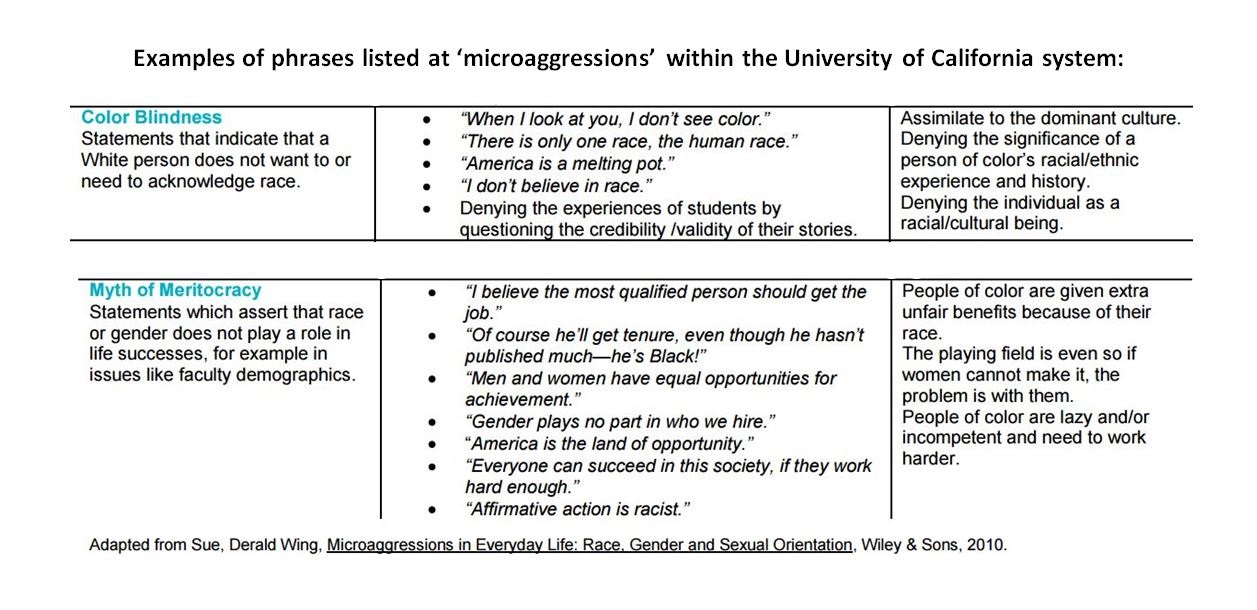
UCMicro.jpg


You have to be fucking kidding me. It's now racist to say "America is the land of opportunity" in the University of California system.
 

phgreek

New member
Messages
6,956
Reaction score
433
UCMicro.jpg


You have to be fucking kidding me. It's now racist to say "America is the land of opportunity" in the University of California system.

It is actually a campaign funded by the Koch brothers to discourage illegals from coming...
 

Wild Bill

Well-known member
Messages
5,517
Reaction score
3,260
I doubt Scalia is having lunch with Roberts today.

Some quotes from Scalia's dissent:

The Court holds that when the Patient Protection and Affordable Care Act says “Exchange established by the State” it means “Exchange established by the State or the Federal Government.” That is of course quite absurd, and the Court’s 21 pages of explanation make it no less so.

Under all the usual rules of interpretation, in short, the Government should lose this
case. But normal rules of interpretation seem always to yield to the overriding principle of the present Court: The Affordable Care Act must be saved.

I wholeheartedly agree with the Court that sound interpretation requires paying attention to the whole law, not homing in on isolated words or even isolated sections. Context always matters. Let us not forget, however, why context matters: It is a tool for understanding the terms of the law, not an excuse for rewriting them.

Faced with overwhelming confirmation that “Exchange established by the State” means what it looks like it means, the Court comes up with argument after feeble argument to support its contrary interpretation. None of its tries comes close to establishing the implausible conclusion that Congress used “by the State” to mean “by the State or not by the State.”

This Court, however, concludes that this limitation would prevent the rest of the Act from working as well as hoped. So it rewrites the law to make tax credits available everywhere. We should start calling this law SCOTUScare.

And the cases will publish forever the discouraging truth that the Supreme Court of the United States favors some laws over others, and is prepared to do whatever it takes to uphold and assist its favorites.
 

wizards8507

Well-known member
Messages
20,660
Reaction score
2,661
This is absolutely outrageous. From Roberts' decision:

“In this instance, the context and structure of the Act compel us to depart from what would otherwise be the most natural reading of the pertinent statutory phrase.”

Are you kidding me? Depart from the most natural reading of the pertinent phrase? In other words, we're going to ignore simple English because it's politically expedient. Absolutely outrageous.

quote-how-strangely-will-the-tools-of-a-tyrant-pervert-the-plain-meaning-of-words-samuel-adams-1148.jpg
 

GoIrish41

Paterfamilius
Messages
9,929
Reaction score
2,119
This is absolutely outrageous. From Roberts' decision:

“In this instance, the context and structure of the Act compel us to depart from what would otherwise be the most natural reading of the pertinent statutory phrase.”

Are you kidding me? Depart from the most natural reading of the pertinent phrase? In other words, we're going to ignore simple English because it's politically expedient. Absolutely outrageous.

quote-how-strangely-will-the-tools-of-a-tyrant-pervert-the-plain-meaning-of-words-samuel-adams-1148.jpg

I think he was talking about context and the spirit of the law.
 

wizards8507

Well-known member
Messages
20,660
Reaction score
2,661
I think he was talking about context and the spirit of the law.
Why do we even write laws if they're going to be interpreted based on their "spirit?" If you want a law to mean "it's illegal to buy apples," don't write it as "it's illegal to buy vegetables." If you write "it's illegal to buy vegetables," then it's your own damn fault when everyone is running around with Granny Smiths in their hands.

From Spectator, emphasis mine:

The problem lies, of course, in the fact that Congress failed to read the law, so while Gruber's original language configuring state exchanges appears to have actually made it into the law itself, Congress, which failed to do anything close to due diligence, proceeded to define a rubric for execution that totally ignored anything that the law actually said. So the Plaintiffs wanted Congress to abide by the law and the Defendants, who seem to have openly admitted that Congress is, as a whole, unable to read, wanted the Court to understand that Congress's enforcement rubric should demonstrate its actual intent, not the letter of the law itself.

SCOTUS Upholds Obamacare Subsidies 6-3 | The American Spectator
 
Last edited:

GoIrish41

Paterfamilius
Messages
9,929
Reaction score
2,119
Why do we even write laws if they're going to be interpreted based on their "spirit?" If you want a law to mean "it's illegal to buy apples," don't write it as "it's illegal to buy vegetables." If you write "it's illegal to buy vegetables," then it's your own damn fault when everyone is running around with Granny Smiths in their hands.

From Spectator, emphasis mine:

The problem lies, of course, in the fact that Congress failed to read the law, so while Gruber's original language configuring state exchanges appears to have actually made it into the law itself, Congress, which failed to do anything close to due diligence, proceeded to define a rubric for execution that totally ignored anything that the law actually said. So the Plaintiffs wanted Congress to abide by the law and the Defendants, who seem to have openly admitted that Congress is, as a whole, unable to read, wanted the Court to understand that Congress's enforcement rubric should demonstrate its actual intent, not the letter of the law itself.

SCOTUS Upholds Obamacare Subsidies 6-3 | The American Spectator

Interpretation -- The art or process of determining the intended meaning of a written document, such as a constitution, statute, contract, deed, or will.

I'm not a lawyer, but it seems to me that if there was the type of exacting clarity in all of our laws, there would be little need for the courts.
 

wizards8507

Well-known member
Messages
20,660
Reaction score
2,661
Interpretation -- The art or process of determining the intended meaning of a written document, such as a constitution, statute, contract, deed, or will.

I'm not a lawyer, but it seems to me that if there was the type of exacting clarity in all of our laws, there would be little need for the courts.
Or if Congress, you know, read the laws they passed.
 

GoldenDome

New member
Messages
808
Reaction score
61
Interpretation -- The art or process of determining the intended meaning of a written document, such as a constitution, statute, contract, deed, or will.

I'm not a lawyer, but it seems to me that if there was the type of exacting clarity in all of our laws, there would be little need for the courts.

Some people lack common sense, thus need courts to apply it.

Same would apply for that guy that killed a boyscott leader that raped him and others and alluded consequence due to the statue of limitations. By all accounts, it was murder 1 but the courts reduced it to manslaughter and the guy will most likely get 5-10 years. He killed a serial child molester and rapist, some of his victims as young as 6 years old and took the law into his hands. According to the explicit and literally definition of the law, he should be locked up for life.

http://www.nydailynews.com/news/cri...man-admits-killing-molester-article-1.2262471
 

IrishJayhawk

Rock Chalk
Messages
7,181
Reaction score
464
I think Toobin nails it with this article...

A Cynical Challenge to the A.C.A. - The New Yorker

The claim borders on the frivolous. The plaintiffs can’t assert that the A.C.A. violates the Constitution, because the Justices narrowly upheld the validity of the law in 2012. Rather, the suit claims that the Obama Administration is violating the terms of its own law. But the A.C.A. never even suggests that customers on the federal exchange are ineligible for subsidies. In fact, there’s a provision that says that, if a state refuses to open an exchange, the federal government will “establish and operate such Exchange within the State.” The congressional debate over the A.C.A. included fifty-three meetings of the Senate Finance Committee and seven days of committee debates on amendments. The full Senate spent twenty-five consecutive days on it, the second-longest session ever on a single piece of legislation. There were similar marathons in the House. Yet no member of Congress ever suggested that the subsidies were available only on the state exchanges. This lawsuit is not an attempt to enforce the terms of the law; it’s an attempt to use what is at most a semantic infelicity to kill the law altogether.
 
Top