
You are using an out of date browser. It may not display this or other websites correctly.
You should upgrade or use an alternative browser.
You should upgrade or use an alternative browser.
Improper Benefits in the SEC
- Thread starter Kak7304
- Start date


ACamp1900
Counting my ‘bet against ND’ winnings
- Messages
- 48,948
- Reaction score
- 11,227
Is anyone really surprised? Next: Ole Miss
I'm only surprised they only found this level of evidence with five guys... That's it

Irish Insanity
Well-known member
- Messages
- 9,885
- Reaction score
- 584
From the article:
So Fluker had a financial adviser while in school? Or am I reading that wrong.
Yahoo Sports authenticated multiple transactions tying Fluker to Davis and others, including cash transfers, hotel stays, furniture, airline flights and other expenses. The records also included a pair of invoices – one submitted to Davis by the mother of an Alabama teammate for monies that had been spent on Fluker's mother, Annice; another sent from Davis to Fluker's onetime financial adviser Hodge Brahmbhatt.
So Fluker had a financial adviser while in school? Or am I reading that wrong.

IrishinTN
Well-known member
- Messages
- 1,898
- Reaction score
- 351
I'm only surprised they only found this level of evidence with five guys... That's it
Yeah, I'm waiting for more evidence and names to start coming out.

stlnd01
Was away. Now returned.
- Messages
- 13,386
- Reaction score
- 10,247
Just peeked at a Bama board, and the discussion was actually quite refreshing. Most posts were along the lines of "this isn't good," "DJ is an idiot," "this may cost us two titles," and "the evidence is pretty damning, hard to argue with it."
Wow. That's a far more mature response than the reporter pinata that's going on around SI's Oklahoma State series this week.
stlnd01
Was away. Now returned.
- Messages
- 13,386
- Reaction score
- 10,247
From the article:
So Fluker had a financial adviser while in school? Or am I reading that wrong.
Sure. I'm sure he's like most college kids, trying to decide whether it's better to do a traditional IRA or a Roth.

Bishop2b5
SEC Exchange Student
- Messages
- 8,933
- Reaction score
- 6,160
I don't expect any major problem from this as far as games or titles being vacated or probation being handed down. It involves a couple of individual players getting involved with agents, not boosters buying players or any sort of pay-for-play system, and there is nothing about the coaching staff or university being involved. There's nothing institutional here such as players living in expensive homes or driving expensive cars, but the school turning a blind eye to it (think USC).
If a school has taken reasonable steps to educate their players about agents and impermissible benefits, but a few players still break the rules, the school generally doesn't get in trouble unless they know about it and still let the player play or attempt to hide the fact from the NCAA after finding out and engage in a cover up (think Ohio St.).
I'm not trying to minimize what Fluker did if the allegations are true, but this appears to be a problem with an isolated player or two dealing with agents, not an institutional issue of boosters or coaches giving impermissible benefits to gain a competitive advantage. As long as the coaches and administration weren't involved, made a reasonable effort to educate players about dealing with agents, didn't know about it, didn't try to cover anything up when they found out a player had dealt with an agent, and never knowingly played a player who had, it's very unlikely the program will receive any serious sanctions.
If a school has taken reasonable steps to educate their players about agents and impermissible benefits, but a few players still break the rules, the school generally doesn't get in trouble unless they know about it and still let the player play or attempt to hide the fact from the NCAA after finding out and engage in a cover up (think Ohio St.).
I'm not trying to minimize what Fluker did if the allegations are true, but this appears to be a problem with an isolated player or two dealing with agents, not an institutional issue of boosters or coaches giving impermissible benefits to gain a competitive advantage. As long as the coaches and administration weren't involved, made a reasonable effort to educate players about dealing with agents, didn't know about it, didn't try to cover anything up when they found out a player had dealt with an agent, and never knowingly played a player who had, it's very unlikely the program will receive any serious sanctions.
Last edited:
I don't expect any major problem from this as far as games or titles being vacated or probation being handed down. It involves a couple of individual players getting involved with agents, not boosters buying players or any sort of pay-for-play system, and there is nothing about the coaching staff or university being involved. There's nothing institutional here such as players living in expensive homes or driving expensive cars, but the school turning a blind eye to it (think USC).
If a school has taken reasonable steps to educate their players about agents and impermissible benefits, but a few players still break the rules, the school generally doesn't get in trouble unless they know about it and still let the player play or attempt to hide the fact from the NCAA after finding out and engage in a cover up (think Ohio St.).
I'm not trying to minimize what Fluker did if the allegations are true, but this appears to be a problem with an isolated player or two dealing with agents, not an institutional issue of boosters or coaches giving impermissible benefits to gain a competitive advantage. As long as the coaches and administration weren't involved, made a reasonable effort to educate players about dealing with agents, didn't know about it, didn't try to cover anything up when they found out a player had dealt with an agent, and never knowingly played a player who had, it's very unlikely the program will receive any serious sanctions.
If the NCAA determines that he took money, I believe he would be deemed ineligible at the point of receiving any gift and any win an ineligible player participates in, is vacated.
Bishop2b5
SEC Exchange Student
- Messages
- 8,933
- Reaction score
- 6,160
If the NCAA determines that he took money, I believe he would be deemed ineligible at the point of receiving any gift and any win an ineligible player participates in, is vacated.
Possibly, but unless the school knew he was ineligible and still allowed him to play (or should have known, such as with USC and Bush), the NCAA is very unlikely to vacate wins. Unless the school or its boosters did something wrong, willingly ignored ample evidence that something wrong was going on, knowingly let an ineligible player continue playing, or engaged in a cover up after they found out, the school usually doesn't receive significant punishment.
I don't expect any major problem from this as far as games or titles being vacated or probation being handed down. It involves a couple of individual players getting involved with agents, not boosters buying players or any sort of pay-for-play system, and there is nothing about the coaching staff or university being involved. There's nothing institutional here such as players living in expensive homes or driving expensive cars, but the school turning a blind eye to it (think USC).
If a school has taken reasonable steps to educate their players about agents and impermissible benefits, but a few players still break the rules, the school generally doesn't get in trouble unless they know about it and still let the player play or attempt to hide the fact from the NCAA after finding out and engage in a cover up (think Ohio St.).
I'm not trying to minimize what Fluker did if the allegations are true, but this appears to be a problem with an isolated player or two dealing with agents, not an institutional issue of boosters or coaches giving impermissible benefits to gain a competitive advantage. As long as the coaches and administration weren't involved, made a reasonable effort to educate players about dealing with agents, didn't know about it, didn't try to cover anything up when they found out a player had dealt with an agent, and never knowingly played a player who had, it's very unlikely the program will receive any serious sanctions.
If the NCAA determines that he took money, I believe he would be deemed ineligible at the point of receiving any gift and any win an ineligible player participates in, is vacated.
I totally agree with you Bishop, but Kak is right on the money here. The NCAA makes it very clear - a player receiving impermissible benefits is ineligible, and a game played with an ineligible player is an automatic forfeit. Whether the NCAA actually enforces its own rule is the only thing in question.
something to ponder in all this, im not advocating it but:
if it was ever opened all up, let the players get paid by the schools, no ncaa interference, and amatuerism was thrown asunder, we would be the yankees of college football...having the biggest checkbook of them all.
Some folks in Austin may have something to say about that
Bishop2b5
SEC Exchange Student
- Messages
- 8,933
- Reaction score
- 6,160
I totally agree with you Bishop, but Kak is right on the money here. The NCAA makes it very clear - a player receiving impermissible benefits is ineligible, and a game played with an ineligible player is an automatic forfeit. Whether the NCAA actually enforces its own rule is the only thing in question.
I think there's some gray area in the rules (or at least their enforcement) that allows for not vacating wins in situations where the school itself did nothing wrong and was unaware at the time they let him play that the player had accepted impermissible benefits. I guess we'll find out soon enough though.

CanadianIrishFan306
Canadian Navy Seals
- Messages
- 690
- Reaction score
- 77
Would this mean notre dame would be the 2012 BCS champs? If so someone stopped the plane of t shirts to Africa because I want mine!
B
Buster Bluth
Guest
I'm convinced we need a laws protecting the status of amateur athletics. Simply put, if you sign a contract to be an amateur and a booster pays you knowing that you've signed it, it's a bit of jail time for the booster. Or laws saying that if you have a record of paying amateur athletes, you get a ban from being a professional agent.
That'll put an end to it real quickly. The NCAA doesn't have subpoena power, state law enforcement does.
No.
That'll put an end to it real quickly. The NCAA doesn't have subpoena power, state law enforcement does.
Would this mean notre dame would be the 2012 BCS champs? If so someone stopped the plane of t shirts to Africa because I want mine!
No.
Last edited:
Would this mean notre dame would be the 2012 BCS champs? If so someone stopped the plane of t shirts to Africa because I want mine!
No.
IF Fluker/UA were sanctioned UA's wins in games he played would be vacated but losses would remain for those that came in second. Up into a few years ago*, using an ineligible player resulted in an automatic Loss as a penalty for cheating. The other school in such games was awarded the win for playing by the rules. The NCAA changed that policy after some 60 years around the time of the Alabama Textbook Scandal, I believe. When Bush/USC went down for an agent USC had the '05 Bush Push win vacated BUT ND was not awarded the win.
That policy is a PC travesty. If you cheat you lose. You forfeit and the other team get the win.
*UA had to forfeit 8 games from the '93 season for an ineligible player, Antonio Langham, who had played after signing with an agent. They had to vacate 21 games from '05-'07 for the Textbook scandal.
Last edited:

drayer54
Well-known member
- Messages
- 8,396
- Reaction score
- 5,821
I think your victory parade will be light on the attendance. This isn't how people want to win. I wouldn't even accept it if I were in that position.No.
That policy is a PC travesty. If you cheat you lose. You forfeit and the other team get the win.
I'm waiting to see the connection in the Okie State investigation into Les Miles now. Remember a few weeks back when they claimed that TexAgs commit Seals-Jones was offered a huge chunk of cash to go to an SEC/ACC school? I would take the bet that it was Les Miles current program. It was the other school in the battle. I think this house of cards is starting to wobble.
Last edited:
I think your victory parade will be light on the attendance. This isn't how people want to win. I wouldn't even accept it if I were in that position.
...
Victory parade? Where did I say I wanted to win that way? Go ahead, quote me!
It's about fairness. Sportsmanship.
In the history of sports if you used an ineligible player you forfeited.
It was that way in college football since they started keeping score. Go to college footballwarehouse.com and scan the records of teams across the nation, any conference, for over 100 years there are forfeits for using ineligible players.
Now the NCAA vacates the game for the cheater. The win is taken away but they don't get a loss either. It's like the game was never played by the cheater. But those that played by the rules still get a loss. IF there was no winner there should be no loser. If the game is vacated it should be so for both teams.
It's incentive to cheat.

ickythump1225
New member
- Messages
- 4,036
- Reaction score
- 323
I don't expect any major problem from this as far as games or titles being vacated or probation being handed down. It involves a couple of individual players getting involved with agents, not boosters buying players or any sort of pay-for-play system, and there is nothing about the coaching staff or university being involved. There's nothing institutional here such as players living in expensive homes or driving expensive cars, but the school turning a blind eye to it (think USC).
If a school has taken reasonable steps to educate their players about agents and impermissible benefits, but a few players still break the rules, the school generally doesn't get in trouble unless they know about it and still let the player play or attempt to hide the fact from the NCAA after finding out and engage in a cover up (think Ohio St.).
I'm not trying to minimize what Fluker did if the allegations are true, but this appears to be a problem with an isolated player or two dealing with agents, not an institutional issue of boosters or coaches giving impermissible benefits to gain a competitive advantage. As long as the coaches and administration weren't involved, made a reasonable effort to educate players about dealing with agents, didn't know about it, didn't try to cover anything up when they found out a player had dealt with an agent, and never knowingly played a player who had, it's very unlikely the program will receive any serious sanctions.
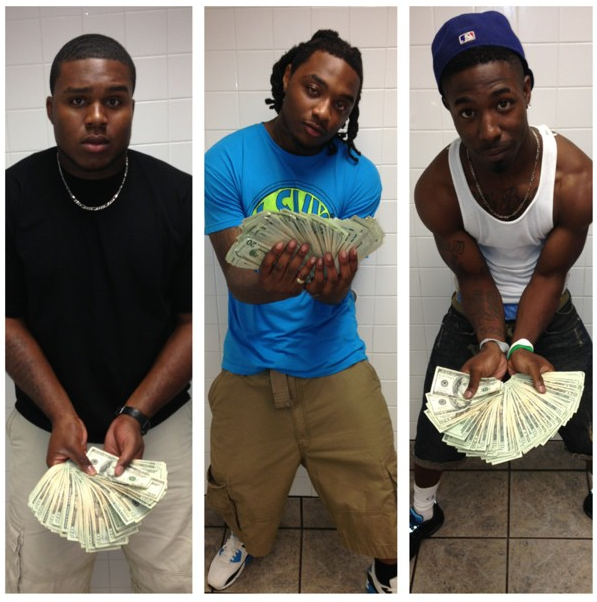
Yeah Dee Liner looks like he's living a modest lifestyle at Alabama.

Also it doesn't (or shouldn't but who knows with the NCAA) if Alabama knew or not. They played an ineligible player, while the program was still on probation by the way. I'm not saying that Alabama will get hit hard, just according to the rules they should.

T Town Tommy
Alabama Bag Man
- Messages
- 6,278
- Reaction score
- 2,768
Unless the NCAA can show that Bama knew Fluker received money and didn't do anything about it, it is highly likely that nothing substantial happens to Bama. Comparing this to the USC or tOSU issues is really not the same. In those cases, the schools knew, or should have had a reasonable amount of knowledge, that certain things were occurring and did not act upon it or tried to cover it up.
I have been very consistent in my stance when it comes to issues regarding compliance and if Bama has done anything wrong then I would support any appropriate action taken by the NCAA to address it. And contrary to some of the Bama haters on this board - that is the overwhelming consensus among most Bama fans.
I have been very consistent in my stance when it comes to issues regarding compliance and if Bama has done anything wrong then I would support any appropriate action taken by the NCAA to address it. And contrary to some of the Bama haters on this board - that is the overwhelming consensus among most Bama fans.
Yeah Dee Liner looks like he's living a modest lifestyle at Alabama.
Also it doesn't (or shouldn't but who knows with the NCAA) if Alabama knew or not. They played an ineligible player, while the program was still on probation by the way. I'm not saying that Alabama will get hit hard, just according to the rules they shoud.
They did previously when Antonio Langham signed "a napkin" with an agent back in '93. The Alabama state legislature passed an Agent Law after that situation.
UA publicly claimed they lost $5 million as a result of those sanctions. They have no claims against the agent but they did have a claim against Langham. Each year when scholarships are renewed, the scholarship holders get compliance education and sign that they are aware of the rules and their (the players) obligations.
How long would undergraduate players continue to sign premature deals if a sanctioned school like UA filed suit against the individual for damages resulting from the player's infractions?
The player has no income? Langham signed a multiyear NFL contract as did Reggie Bush and others. Sue them, get a judgement, and Garnish their NFL earnings and endorsements. It would only have to be done once to send the message.
For the coach that commits violations and bolts to the NFL, the TV booth, or another school, same thing. Sue 'em for the damages incurred and possibly punitive damages.
Of course that could be embarrassing when the coach reveals his marching orders from AD, university president and/or trustees. There's a reason Auburn let Head Coach and AD Pat Dye resign the night before the NCAA sanctions came down over AU player, Eric Ramsey's, tape recorded conversations with Dye about player payments and the connection to a local bank where Dye was an officer and the Bank C. E. O. Ran the AU Board of Trustees.
Dye resigned, the NCAA handed their sanctions, and then the AU President appointed Dye a special assistant to the univerity president. Conventional wisdom was Dye had some tapes of his own.
But if any college sued a coach, AD, or player, the incidents would lessened dramatically. But I don't think the OSU's, USC's, Bama's and Auburn's want to stop their people from cheating. They just want them to get caught less often.

BleedBlueGold
Well-known member
- Messages
- 6,270
- Reaction score
- 2,493
Yawn. Wake me when something actually happens as a result of all these findings. Until then, it is what it is...a hugely corrupt system that cares only about ratings and money.

What if Harvard wanted to win National Championships year in and year out? I think their endowment and potential for their checkbook would rival if not exceed ND.
all for it.
another crimson tide
C
Cackalacky
Guest
I am shocked... absolutely shocked.
However this confirms that the SEC is, in the great words of the Shakespearean Insult Generator, a "gleeking open-arsed botch!"
However this confirms that the SEC is, in the great words of the Shakespearean Insult Generator, a "gleeking open-arsed botch!"
Bishop2b5
SEC Exchange Student
- Messages
- 8,933
- Reaction score
- 6,160
I'm convinced we need a laws protecting the status of amateur athletics. Simply put, if you sign a contract to be an amateur and a booster pays you knowing that you've signed it, it's a bit of jail time for the booster. Or laws saying that if you have a record of paying amateur athletes, you get a ban from being a professional agent.
That'll put an end to it real quickly. The NCAA doesn't have subpoena power, state law enforcement does.
100% agree. Many states have such laws covering agents, but few seem willing to enforce them. Jail time for unscrupulous agents and rogue boosters who interfere with or compromise the amateur status of a player would go a long way towards stopping a lot of this crap.
100% agree. Many states have such laws covering agents, but few seem willing to enforce them. Jail time for unscrupulous agents and rogue boosters who interfere with or compromise the amateur status of a player would go a long way towards stopping a lot of this crap.
Here's the link to Alabama's Sports Agent Act, Act-2001-70.
http://www.sos.state.al.us/downloads/sports/act-2001-701.pdf
Penalties are covered in Section S-26A-15 through S-26A-17 on page 19.
The agent can be fine $25,000 which is chump change compared to a First Round commission.
The teeth is establishing grounds for the school to sue agent and athlete for losses, etc. Bet the ranch UA does NOT sue any player. They fear it being used against them in recruiting more than the loss of $5 or $10 million.
Here's a link to the state website:
Sports Agents

WakeUpEchoes
New member
- Messages
- 2,574
- Reaction score
- 101
Unless the NCAA can show that Bama knew Fluker received money and didn't do anything about it, it is highly likely that nothing substantial happens to Bama. Comparing this to the USC or tOSU issues is really not the same. In those cases, the schools knew, or should have had a reasonable amount of knowledge, that certain things were occurring and did not act upon it or tried to cover it up.
I have been very consistent in my stance when it comes to issues regarding compliance and if Bama has done anything wrong then I would support any appropriate action taken by the NCAA to address it. And contrary to some of the Bama haters on this board - that is the overwhelming consensus among most Bama fans.
I pretty much disagree with this entire analysis. Willful blindness in a court of law rarely is a successful defense.
Fortunately for 'bama and the other teams involved, this claim has worked on the NCAA before. Cam Newton, Renardo Sidney cases illustrate NCAA flaws - Andy Staples - SI.com
In my personal opinion, it seems that the longer a player receives improper benefits over a period of time, and if that player was more central to the team as a whole when compared to another player, a claim for lack of compliance, oversight, and willful blindness against the team by the NCAA should be stronger.
ickythump1225
New member
- Messages
- 4,036
- Reaction score
- 323
I pretty much disagree with this entire analysis. Willful blindness in a court of law rarely is a successful defense.
Fortunately for 'bama and the other teams involved, this claim has worked on the NCAA before. Cam Newton, Renardo Sidney cases illustrate NCAA flaws - Andy Staples - SI.com
In my personal opinion, it seems that the longer a player receives improper benefits over a period of time, and if that player was more central to the team as a whole when compared to another player, a claim for lack of compliance, oversight, and willful blindness against the team by the NCAA should be stronger.

It rings a bit hollow when Alabama fans claim that Nick Saban "didn't know anything." Come on "The Most Powerful Coach in Sports" has to see these dirt poor kids driving nice cars, wearing nice clothing/jewelry, etc. Sure he may not have paid them personally but he had to see what was going on and buried his head in the sand which is a difference without much distinction quite frankly.
C
Cackalacky
Guest
Really, I don't think he has too much to do with the kids off the field. Seriously, this guy probably has more insulation between him and the kids off the field than the Cosa Nostra. I have read a few articles where Alabama representatives talk about how they constantly talk to their players about managing their contact with agents, representatives, and other possibly problematic entities. The term "manage" was used a lot. I say this meaning that the players are informed of the no-no's and then left to their own devices. Plausible deniability is wonderful.
It rings a bit hollow when Alabama fans claim that Nick Saban "didn't know anything." Come on "The Most Powerful Coach in Sports" has to see these dirt poor kids driving nice cars, wearing nice clothing/jewelry, etc. Sure he may not have paid them personally but he had to see what was going on and buried his head in the sand which is a difference without much distinction quite frankly.

wizards8507
Well-known member
- Messages
- 20,660
- Reaction score
- 2,661
Really, I don't think he has too much to do with the kids off the field. Seriously, this guy probably has more insulation between him and the kids off the field than the Cosa Nostra. I have read a few articles where Alabama representatives talk about how they constantly talk to their players about managing their contact with agents, representatives, and other possibly problematic entities. The term "manage" was used a lot. I say this meaning that the players are informed of the no-no's and then left to their own devices. Plausible deniability is wonderful.
Don't get me wrong, I think Alabama is guilty as all get-out, but I don't think you can base assumptions on this particular set of vocabulary. ND said a lot of similar things regarding the Te'o family and their attorneys during the catfish incident.
WakeUpEchoes
New member
- Messages
- 2,574
- Reaction score
- 101
Really, I don't think he has too much to do with the kids off the field. Seriously, this guy probably has more insulation between him and the kids off the field than the Cosa Nostra. I have read a few articles where Alabama representatives talk about how they constantly talk to their players about managing their contact with agents, representatives, and other possibly problematic entities. The term "manage" was used a lot. I say this meaning that the players are informed of the no-no's and then left to their own devices. Plausible deniability is wonderful.
Ok, but this type of behavior is exactly what goes in to the NCAA's analysis of a "lack of institutional control."
http://compliance.pac-12.org/thetools/instctl.pdf
In most institutions, especially those with large and varied athletics programs, such delegations are made to a number of individuals who are expected to exercise control over compliance with regard to specific aspects of the program. The specific obligations of such individuals should be in writing, and not merely an understanding among the senior officials of the university and the athletics department. Not only the director of athletics, but other officials in the athletics department, the faculty athletics representative, the head coaches and the other institutional administrators outside of the athletics department responsible for such matters as the certification of athletes for financial aid, practice and competition, are expected to assume a primary role in ensuring compliance. Even though specific action has been taken to place responsibility elsewhere, these individuals will be assumed to be operating on behalf of the institution with respect to those responsibilities that are logically within the scope of their positions. Their failure to control those matters so as to prevent violations of NCAA rules will be considered the result of a lack of institutional control.
I'm not saying that there was a lack of institutional control here. Not at all. But my point is just because a head coach insulates himself from the day-to-day activities of his players does not mean he can insulate himself from liability.