Economics

wizards8507

Well-known member
Messages
20,660
Reaction score
2,661
#Sirico4Pope2020

These videos are a breath of fresh air to me. One of the things I miss the most about Notre Dame is being around priests with intellectual heft.
 
Last edited:

zelezo vlk

Well-known member
Messages
18,556
Reaction score
5,703
#Sirico4Pope2020

These videos are a breath of fresh air to me. One of the things I miss the most about Notre Dame is being around priests with intellectual heft.
No Paulists

Sent from my SAMSUNG-SM-G900A using Tapatalk
 

Whiskeyjack

Mittens Margaritas Ante Porcos
Staff member
Messages
20,899
Reaction score
8,157
#Sirico4Pope2020

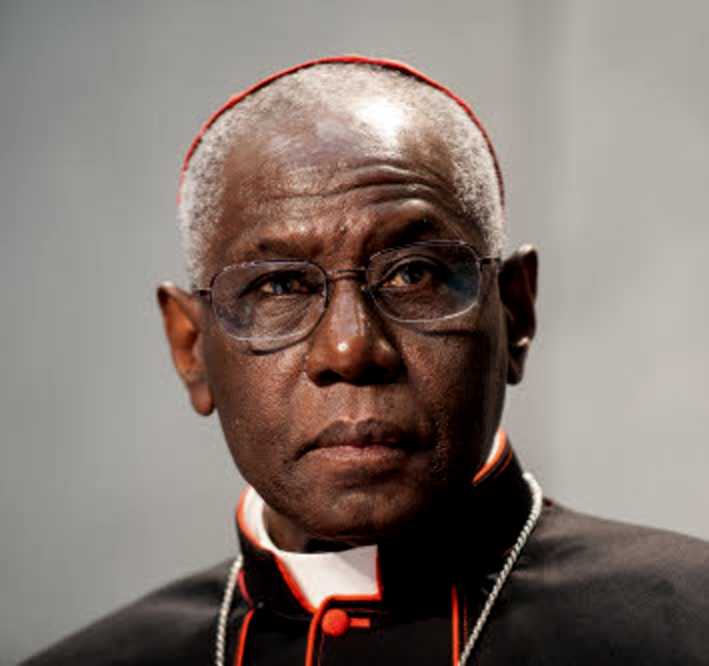
Cardinal%2BRobert%2BSarah.png

"GTFO with that liberal nonsense."
 

zelezo vlk

Well-known member
Messages
18,556
Reaction score
5,703
Late 20s. Would wife.
She's already wifed as you know, though Wiz prolly doesn't. She posts pictures of her kid on her Twitter account often. Baby Bruening is very photogenic and Elizabeth deserves a follow just on those grounds.

Sent from my SAMSUNG-SM-G900A using Tapatalk
 

wizards8507

Well-known member
Messages
20,660
Reaction score
2,661
Got to the 36:00 mark and she effectively disowned Rerum Novarum. 0/10 would not wife.
 

wizards8507

Well-known member
Messages
20,660
Reaction score
2,661
Not at all. She just doesn't buy that Rerum Novarum teaches that property rights are absolute.
I'm not sure how you can read Rerum Novarum and come to a conclusion any different than The Second Treatise of Government, Chapter V, On Property. Locke effectively plagiarized Leo.

Leo XIII:
The fact that God has given the earth for the use and enjoyment of the whole human race can in no way be a bar to the owning of private property. For God has granted the earth to mankind in general, not in the sense that all without distinction can deal with it as they like, but rather that no part of it was assigned to any one in particular, and that the limits of private possession have been left to be fixed by man's own industry, and by the laws of individual races. Moreover, the earth, even though apportioned among private owners, ceases not thereby to minister to the needs of all, inasmuch as there is not one who does not sustain life from what the land produces. Those who do not possess the soil contribute their labor; hence, it may truly be said that all human subsistence is derived either from labor on one's own land, or from some toil, some calling, which is paid for either in the produce of the land itself, or in that which is exchanged for what the land brings forth.

Locke:
Though the earth, and all inferior creatures, be common to all men, yet every man has a property in his own person: this no body has any right to but himself. The labour of his body, and the work of his hands, we may say, are properly his. Whatsoever then he removes out of the state that nature hath provided, and left it in, he hath mixed his labour with, and joined to it something that is his own, and thereby makes it his property. It being by him removed from the common state nature hath placed it in, it hath by this labour something annexed to it, that excludes the common right of other men: for this labour being the unquestionable property of the labourer, no man but he can have a right to what that is once joined to, at least where there is enough, and as good, left in common for others.
 

wizards8507

Well-known member
Messages
20,660
Reaction score
2,661
Does this debate ever level itself out? The intellectual heft of the panel is completely imbalanced.

1a - Bruenig
1b - Fr. Sirico
3 - Bradley
.
.
.
.
.
.
.
4 - Wear
 

Whiskeyjack

Mittens Margaritas Ante Porcos
Staff member
Messages
20,899
Reaction score
8,157
I'm not sure how you can read Rerum Novarum and come to a conclusion any different than The Second Treatise of Government, Chapter V, On Property. Locke effectively plagiarized Leo.

I agree that Rerum Novarum appears on its face to support your position. But you can't interpret any Church document in isolation. Everything must be read in continuity with what came before. Bruenig addresses this in the video, but the Patristics, Augustine and Aquinas all explicitly address how, for instance, a starving man who takes food that "belongs" to a wealthy neighbor isn't really stealing at all, but simply claiming what is his by right. And how Catholic jurists during the Middle Ages refused to enforce contracts that undermined the Common Good.

The weight of the Tradition is firmly against the existence of absolute property rights. Private property is tolerated on prudential grounds, and often results in good outcomes, but it is always and everywhere subject to the social mortgage of the Common Good. That we tossed that idea post-Reformation is the source of much inequality and suffering today.
 

wizards8507

Well-known member
Messages
20,660
Reaction score
2,661
For instance, a starving man who takes food that "belongs" to a wealthy neighbor isn't really stealing at all, but simply claiming what is his by right.
That's a poor example due to the fact that surplus as measured by perishable food is nothing like surplus as measured by money.
 

Ndaccountant

Old Hoss
Messages
8,457
Reaction score
5,991
<iframe width="560" height="315" src="https://www.youtube.com/embed/6NN8kXh-Tpk" frameborder="0" allowfullscreen></iframe>
 

Whiskeyjack

Mittens Margaritas Ante Porcos
Staff member
Messages
20,899
Reaction score
8,157
Andrew Strain just published an article in First Things titled "Free Markets and Unicorns":

In contemporary debates over economic policy, we often hear that government intervention in markets should be limited as much as possible. According to the neoliberal school of thought, the market is a self-regulating mechanism sufficient unto itself, a system naturally suited to achieve the best outcomes overall. But the faith of neoliberals in the intrinsic beneficence of self-regulating free markets becomes untenable when we look closely at the actual, practical basis of markets. So-called free markets are not actually free. Recognizing this, we are at liberty to evaluate economic life by other, higher criteria than market freedom.

Neoliberals often invoke a dichotomy between public and private: The private (“the market”) operates according to competitive self-interest, whereas the public (“the state”) is a coercive expression of politics. But the foundation of markets in western economies is the commercial corporation, and commercial corporations are not simply private. As David Ciepley has pointed out, they are neither fish nor fowl. They rest on private initiative but depend on the state to co-create and sustain them. The distinctive features of commercial corporations are impossible to maintain without the state’s ensuring them. Ciepley explains: “The business corporation depends on government for its contractual individuality, or ‘personhood’—its right to own property, make contracts, and sue and be sued as an individual. . . . The corporation depends on government for its governing rights: its right to establish and enforce rules within its jurisdiction.” The corporation is defined by its government-created and -conserved properties: limited liability, asset shielding, and asset lock-in. The corporation as a market institution is a product of the state, and what it means to be a corporation is inseparable by its very nature from governmental power.

This fact has devastating implications for those who subscribe to the notion of a self-regulating market. A laissez-faire economy that has corporations is a contradiction in terms, since in corporations the private is intertwined with the public. In the age of corporations, a truly free market is as mythical as a unicorn. Once we recognize this, and discard the public/private dichotomy, we can cease to decry state intervention as such, and begin to think about the best way to manage our economy. Intervention should be judged on its merits—how well it serves the common good—rather than condemned on principle. And the common good, contrary to neoliberal tenets, is not a utilitarian aggregate of material goods, but the order of justice and peace participated in by all the members of a society. This order and its demands are the true basis for assessing government intervention.

One alternative to the neoliberal paradigm is offered by Pius XI in his encyclical Quadragesimo anno. Pius argues that the state has a role to play in fostering intermediary institutions. He views modern individualism—rather than the encroachment of government into private life—as the force that disintegrates these institutions. (For a discussion of this the individualistic “revolution from below,” see Russell Hittinger’s recent essay.) Though it is true that disintegrating encroachments by the government may take place (vide the U.S.S.R.), Pius was not concerned with that scenario. Nor should we be shocked by his position, since it is the state that incorporates not just commercial enterprises but schools, churches, and any number of other corporate bodies that play a crucial role in our societies. In this vein, Pius recommends that the state should create syndicates of professions, as well as syndicates of employers. The aim of these syndicates would be to overcome the division between capital and labor. State-established syndicates of workers and employers would work together, with the state acting as a judge of last resort when no agreement can be reached.

Pius’s proposals are hardly the only option for moving beyond the neoliberal conception of our economic life, though they can’t be dismissed out of hand. All options should be measured by the common good of political society. The common good should be the rule and measure of government intervention into markets; it provides us with a standard by which to judge concrete actions of the state, corporate bodies, and private individuals. By contrast, the neoliberal conflation of the common good with so-called market freedom leads to confusions such as this one: a recent panel discussion on Christianity and the poor, in which the president of the neoliberal Acton Institute criticized the creation of laws against child labor in Thailand. Such inversions of the proper order, together with the great shifts now occurring in the West, make us keenly aware of the need for fresh insights and approaches to economic questions.
 

connor_in

Oh Yeeaah!!!
Messages
11,433
Reaction score
1,007
<blockquote class="imgur-embed-pub" lang="en" data-id="Sz64nuZ"><a href="//imgur.com/Sz64nuZ"></a></blockquote><script async src="//s.imgur.com/min/embed.js" charset="utf-8"></script>
 

Old Man Mike

Fast as Lightning!
Messages
9,421
Reaction score
7,261
Unless one defines "people" as money-generating entrepreneurs and their faux-necessity producing mind manipulation advertising, this quote is pure crap. Go to the self-reported "happiness" polls for countries around the planet, as a first approximation for "what people want" in context of greater free-market economic philosophy. The almost exact oppositional sense of the quote is perfectly Orwellian.
 

Whiskeyjack

Mittens Margaritas Ante Porcos
Staff member
Messages
20,899
Reaction score
8,157
Unless one defines "people" as money-generating entrepreneurs and their faux-necessity producing mind manipulation advertising, this quote is pure crap. Go to the self-reported "happiness" polls for countries around the planet, as a first approximation for "what people want" in context of greater free-market economic philosophy. The almost exact oppositional sense of the quote is perfectly Orwellian.

It's particularly good at convincing people they want what they don't need, while undermining everything that really matters in life. It also fails, in the richest and most powerful nation in world history, to provide the bare necessities for American citizens:

On a gold-gray morning in Mitchell County, Iowa, Christina Dreier sends her son, Keagan, to school without breakfast. He is three years old, barrel-chested, and stubborn, and usually refuses to eat the free meal he qualifies for at preschool. Faced with a dwindling pantry, Dreier has decided to try some tough love: If she sends Keagan to school hungry, maybe he’ll eat the free breakfast, which will leave more food at home for lunch.

Dreier knows her gambit might backfire, and it does. Keagan ignores the school breakfast on offer and is so hungry by lunchtime that Dreier picks through the dregs of her freezer in hopes of filling him and his little sister up. She shakes the last seven chicken nuggets onto a battered baking sheet, adds the remnants of a bag of Tater Tots and a couple of hot dogs from the fridge, and slides it all into the oven. She’s gone through most of the food she got last week from a local food pantry; her own lunch will be the bits of potato left on the kids’ plates. “I eat lunch if there’s enough,” she says. “But the kids are the most important. They have to eat first.”

The fear of being unable to feed her children hangs over Dreier’s days. She and her husband, Jim, pit one bill against the next—the phone against the rent against the heat against the gas—trying always to set aside money to make up for what they can’t get from the food pantry or with their food stamps, issued by the Supplemental Nutrition Assistance Program (SNAP). Congressional cuts to SNAP last fall of five billion dollars pared her benefits from $205 to $172 a month.

On this particular afternoon Dreier is worried about the family van, which is on the brink of repossession. She and Jim need to open a new bank account so they can make automatic payments instead of scrambling to pay in cash. But that will happen only if Jim finishes work early. It’s peak harvest time, and he often works until eight at night, applying pesticides on commercial farms for $14 an hour. Running the errand would mean forgoing overtime pay that could go for groceries.

It’s the same every month, Dreier says. Bills go unpaid because, when push comes to shove, food wins out. “We have to eat, you know,” she says, only the slightest hint of resignation in her voice. “We can’t starve.”

Chances are good that if you picture what hunger looks like, you don’t summon an image of someone like Christina Dreier: white, married, clothed, and housed, even a bit overweight. The image of hunger in America today differs markedly from Depression-era images of the gaunt-faced unemployed scavenging for food on urban streets. “This is not your grandmother’s hunger,” says Janet Poppendieck, a sociologist at the City University of New York. “Today more working people and their families are hungry because wages have declined.”

In the United States more than half of hungry households are white, and two-thirds of those with children have at least one working adult—typically in a full-time job. With this new image comes a new lexicon: In 2006 the U.S. government replaced “hunger” with the term “food insecure” to describe any household where, sometime during the previous year, people didn’t have enough food to eat. By whatever name, the number of people going hungry has grown dramatically in the U.S., increasing to 48 million by 2012—a fivefold jump since the late 1960s, including an increase of 57 percent since the late 1990s. Privately run programs like food pantries and soup kitchens have mushroomed too. In 1980 there were a few hundred emergency food programs across the country; today there are 50,000. Finding food has become a central worry for millions of Americans. One in six reports running out of food at least once a year. In many European countries, by contrast, the number is closer to one in 20.

To witness hunger in America today is to enter a twilight zone where refrigerators are so frequently bare of all but mustard and ketchup that it provokes no remark, inspires no embarrassment. Here dinners are cooked using macaroni-and-cheese mixes and other processed ingredients from food pantries, and fresh fruits and vegetables are eaten only in the first days after the SNAP payment arrives. Here you’ll meet hungry farmhands and retired schoolteachers, hungry families who are in the U.S. without papers and hungry families whose histories stretch back to the Mayflower. Here pocketing food from work and skipping meals to make food stretch are so common that such practices barely register as a way of coping with hunger and are simply a way of life.

It can be tempting to ask families receiving food assistance, If you’re really hungry, then how can you be—as many of them are—overweight? The answer is “this paradox that hunger and obesity are two sides of the same coin,” says Melissa Boteach, vice president of the Poverty and Prosperity Program of the Center for American Progress, “people making trade-offs between food that’s filling but not nutritious and may actually contribute to obesity.” For many of the hungry in America, the extra pounds that result from a poor diet are collateral damage—an unintended side effect of hunger itself.

In 2013 benefits totaled $75 billion, but payments to most households dropped; the average monthly benefit was $133.07 a person, less than $1.50 a meal. SNAP recipients typically run through their monthly allotment in three weeks, then turn to food pantries. Who qualifies for SNAP? Households with gross incomes no more than 130 percent of the poverty rate. For a family of four that qualifying point is $31,005 a year.

As the face of hunger has changed, so has its address. The town of Spring, Texas, is where ranchland meets Houston’s sprawl, a suburb of curving streets and shade trees and privacy fences. The suburbs are the home of the American dream, but they are also a place where poverty is on the rise. As urban housing has gotten more expensive, the working poor have been pushed out. Today hunger in the suburbs is growing faster than in cities, having more than doubled since 2007.

Yet in the suburbs America’s hungry don’t look the part either. They drive cars, which are a necessity, not a luxury, here. Cheap clothes and toys can be found at yard sales and thrift shops, making a middle-class appearance affordable. Consumer electronics can be bought on installment plans, so the hungry rarely lack phones or televisions. Of all the suburbs in the country, northwest Houston is one of the best places to see how people live on what might be called a minimum-wage diet: It has one of the highest percentages of households receiving SNAP assistance where at least one family member holds down a job. The Jefferson sisters, Meme and Kai, live here in a four-bedroom, two-car-garage, two-bath home with Kai’s boyfriend, Frank, and an extended family that includes their invalid mother, their five sons, a daughter-in-law, and five grandchildren. The house has a rickety desktop computer in the living room and a television in most rooms, but only two actual beds; nearly everyone sleeps on mattresses or piles of blankets spread out on the floor.

Though all three adults work full-time, their income is not enough to keep the family consistently fed without assistance. The root problem is the lack of jobs that pay wages a family can live on, so food assistance has become the government’s—and society’s—way to supplement low wages. The Jeffersons receive $125 in food stamps each month, and a charity brings in meals for their bedridden matriarch.

Like most of the new American hungry, the Jeffersons face not a total absence of food but the gnawing fear that the next meal can’t be counted on. When Meme shows me the family’s food supply, the refrigerator holds takeout boxes and beverages but little fresh food. Two cupboards are stocked with a smattering of canned beans and sauces. A pair of freezers in the garage each contain a single layer of food, enough to fill bellies for just a few days. Meme says she took the children aside a few months earlier to tell them they were eating too much and wasting food besides. “I told them if they keep wasting, we have to go live on the corner, beg for money, or something.”

Jacqueline Christian is another Houston mother who has a full-time job, drives a comfortable sedan, and wears flattering clothes. Her older son, 15-year-old Ja’Zarrian, sports bright orange Air Jordans. There’s little clue to the family’s hardship until you learn that their clothes come mostly from discount stores, that Ja’Zarrian mowed lawns for a summer to get the sneakers, that they’re living in a homeless shelter, and that despite receiving $325 in monthly food stamps, Christian worries about not having enough food “about half of the year.”

Christian works as a home health aide, earning $7.75 an hour at a job that requires her to crisscross Houston’s sprawl to see her clients. Her schedule, as much as her wages, influences what she eats. To save time she often relies on premade food from grocery stores. “You can’t go all the way home and cook,” she says.

On a day that includes running a dozen errands and charming her payday loan officer into giving her an extra day, Christian picks up Ja’Zarrian and her seven-year-old, Jerimiah, after school. As the sun drops in the sky, Jerimiah begins complaining that he’s hungry. The neon glow of a Hartz Chicken Buffet appears up the road, and he starts in: Can’t we just get some gizzards, please?

Christian pulls into the drive-through and orders a combo of fried gizzards and okra for $8.11. It takes three declined credit cards and an emergency loan from her mother, who lives nearby, before she can pay for it. When the food finally arrives, filling the car with the smell of hot grease, there’s a collective sense of relief. On the drive back to the shelter the boys eat until the gizzards are gone, and then drift off to sleep.

Christian says she knows she can’t afford to eat out and that fast food isn’t a healthy meal. But she’d felt too stressed—by time, by Jerimiah’s insistence, by how little money she has—not to give in. “Maybe I can’t justify that to someone who wasn’t here to see, you know?” she says. “But I couldn’t let them down and not get the food.”

Of course it is possible to eat well cheaply in America, but it takes resources and know-how that many low-income Americans don’t have. Kyera Reams of Osage, Iowa, puts an incredible amount of energy into feeding her family of six a healthy diet, with the help of staples from food banks and $650 in monthly SNAP benefits. A stay-at-home mom with a high school education, Reams has taught herself how to can fresh produce and forage for wild ginger and cranberries. When she learned that SNAP benefits could be used to buy vegetable plants, she dug two gardens in her yard. She has learned about wild mushrooms so she can safely pick ones that aren’t poisonous and has lobbied the local library to stock field guides to edible wild plants.

“We wouldn’t eat healthy at all if we lived off the food-bank food,” Reams says. Many foods commonly donated to—or bought by—food pantries are high in salt, sugar, and fat. She estimates her family could live for three months on the nutritious foods she’s saved up. The Reamses have food security, in other words, because Kyera makes procuring food her full-time job, along with caring for her husband, whose disability payments provide their only income.

But most of the working poor don’t have the time or know-how required to eat well on little. Often working multiple jobs and night shifts, they tend to eat on the run. Healthful food can be hard to find in so-called food deserts—communities with few or no full-service groceries. Jackie Christian didn’t resort to feeding her sons fried gizzards because it was affordable but because it was easy. Given the dramatic increase in cheap fast foods and processed foods, when the hungry have money to eat, they often go for what’s convenient, just as better-off families do.

It’s a cruel irony that people in rural Iowa can be malnourished amid forests of cornstalks running to the horizon. Iowa dirt is some of the richest in the nation, even bringing out the poet in agronomists, who describe it as “black gold.” In 2007 Iowa’s fields produced roughly one-sixth of all corn and soybeans grown in the U.S., churning out billions of bushels.

These are the very crops that end up on Christina Dreier’s kitchen table in the form of hot dogs made of corn-raised beef, Mountain Dew sweetened with corn syrup, and chicken nuggets fried in soybean oil. They’re also the foods that the U.S. government supports the most. In 2012 it spent roughly $11 billion to subsidize and insure commodity crops like corn and soy, with Iowa among the states receiving the highest subsidies. The government spends much less to bolster the production of the fruits and vegetables its own nutrition guidelines say should make up half the food on our plates. In 2011 it spent only $1.6 billion to subsidize and insure “specialty crops”—the bureaucratic term for fruits and vegetables.

Those priorities are reflected at the grocery store, where the price of fresh food has risen steadily while the cost of sugary treats like soda has dropped. Since the early 1980s the real cost of fruits and vegetables has increased by 24 percent. Meanwhile the cost of nonalcoholic beverages—primarily sodas, most sweetened with corn syrup—has dropped by 27 percent.

“We’ve created a system that’s geared toward keeping overall food prices low but does little to support healthy, high-quality food,” says global food expert Raj Patel. “The problem can’t be fixed by merely telling people to eat their fruits and vegetables, because at heart this is a problem about wages, about poverty.”

When Christina Dreier’s cupboards start to get bare, she tries to persuade her kids to skip snack time. “But sometimes they eat saltine crackers, because we get that from the food bank,” she said, sighing. “It ain’t healthy for them, but I’m not going to tell them they can’t eat if they’re hungry.”

The Dreiers have not given up on trying to eat well. Like the Reamses, they’ve sown patches of vegetables and a stretch of sweet corn in the large green yard carved out of the cornfields behind their house. But when the garden is done for the year, Christina fights a battle every time she goes to the supermarket or the food bank. In both places healthy foods are nearly out of reach. When the food stamps come in, she splurges on her monthly supply of produce, including a bag of organic grapes and a bag of apples. “They love fruit,” she says with obvious pride. But most of her food dollars go to the meat, eggs, and milk that the food bank doesn’t provide; with noodles and sauce from the food pantry, a spaghetti dinner costs her only the $3.88 required to buy hamburger for the sauce.

What she has, Christina says, is a kitchen with nearly enough food most of the time. It’s just those dicey moments, after a new bill arrives or she needs gas to drive the kids to town, that make it hard. “We’re not starved around here,” she says one morning as she mixes up powdered milk for her daughter. “But some days, we do go a little hungry.”

Lots of good photos and graphs in there if you have time to click through.
 

Whiskeyjack

Mittens Margaritas Ante Porcos
Staff member
Messages
20,899
Reaction score
8,157
Here's a two part article titled "Practical Policies for a Distributist Economy":

PART ONE

Distributists want as many people as possible to own the means of their production. A farmer should own the farm, a baker should own the bakery, and factory workers should own the factory. But how do we bring this about? Anyone from a libertarian to a socialist may identify as a distributist, agreeing on the end goal but disagreeing completely on what will get us there. So answering “how?” is the key to any distributist politics. I argue that once we get past the false dilemma of government intervention, we must pursue three lines of progress: countering capital concentration, directly distributing capital, and expanding the commons.

The question of government intervention

The first disputed question between distributists is: how much should the government intervene in the economy so as to bring about the distributist goal?

This is a meaningless question. Government intervention is what every economic system is composed of! Of course the libertarian wants to say that a truly free market with all goods and services owned privately and traded voluntarily is a state of minimal government involvement. But this is an illusion. Private property itself is a government program. You own property only to the extent that the government says you do. You may claim to own your coat, but if I file suit claiming the coat belongs to me and the court decides in my favor, then the coat is mine even if you continue to illicitly possess it. Even such minor instances of private property are a government program.

This is even more clear in the case of large assets like vehicles and real estate where ownership is established directly by government in the form of title documents, and all the more so for fictitious entities such as corporations, whose very existence depends completely on the government. So a "free market" is not "free" of government intervention. Just the opposite: it is constituted through and through by government interventions. Distributists, then, should seek the most effective and just forms of government intervention to achieve their goals, and should repudiate objections that doing so is coercion, theft, or giving power to the State. The real question is: in what ways should the government intervene in economic life?

Countering capital concentration

Distributism is not "nice capitalism". It is bluntly anti-capitalist. But what I mean by capitalism is not "free markets and entrepreneurialism." That is just a market economy. Capitalism is the system where a class of people are paid simply to own the means of production. Not paid to develop or utilize capital, nor to allocate itwisely; just paid to be the person who is on some government form somewhere listed as the owner. Distributism would have all capital owned by the people who use it: by the workers, and ideally in as small and local units as possible.

But how do we dismantle capitalism without lopping off heads? Can we radically change our world without the violence and chaos of revolution? As explained above, private property is a government program, so we begin by looking at how government creates capitalism in order to see how we should dismantle it.

Any free market economy is going to tend toward the concentration of wealth: specifically and most importantly of capital. As businesses compete inevitably some will out-compete others and acquire their capital and their market share. Smaller numbers of companies continue to compete and consolidate, gaining competitive advantage through economy of scale as they go. This trend is accelerated by capitalism which demands that the consumer pay 5-10% more than the cost of production. That portion goes to ownership, which increases the owners' share of national wealth year by year. Occasionally concentration gets disrupted here and there by luck, by technological change, and by exceptionally skilled or ruinous management. Still, the overall trend of wealth concentration is inevitable and unquestionably proven by all historical evidence since the beginning of capitalism. Let's find the apparatuses set up by the state to enable and protect this concentration, and reroute them toward widespread distribution.

If you've ever tried to create a company more complex than a sole proprietorship, you've seen that the state has detailed rules about who in the partnership, LLC, or corporation has what rights and what responsibilities, and who gets what in the event of dissolution. It could just as well be written into all business law that the state and the employees must get some equity and/or profit share in any business.

I'm the founder and current sole owner of a business. I realize how much effort and risk and how little reward a founder often sees in the first few years of a company. That should be compensated. Our economic well-being depends on the entrepreneurial drive and it should be incentivized. But it does not follow that the founder of a successful company naturally "deserves" a lifetime (much less his descendant's lifetimes!) of increasing income just because his name is on the charter.

The workers who build and maintain the company deserve their share of the success. Distributists believe every worker should own the means of his own production. We could simply require that all employees get a share of annual profit, and any employee who stays at a company more than a few years starts accruing equity in the company. Couple this with increased worker protections so that employers can't just fire employees to prevent them from getting equity, and eventually the company becomes (at least to a significant degree) employee owned. In an age when unions continue to shrink, this would empower employees to have some say in the conditions of their employment while giving them more of a stake in their company's success.

For larger companies, I'd suggest they should also be partly publicly owned. Our original corporations were created by the government to provide some public benefit, such as the transcontinental rail roads, that purely private business would never undertake. There was an understanding that these corporations were to serve the public good, not just their shareholder's private financial interests.

Perhaps it's too late to go back to that form of the corporation, but we could turn the purely financial drive of corporations to the public good by having a significant part of the shares of any publicly traded company automatically go to a sovereign wealth fund. The income generated by the sovereign wealth fund would provide public goods such as infrastructure, health care, education, or direct income. A sovereign wealth fund ensures that the public benefits from the profitability of that part of the private sector most dependent on government support.

We'd also do well to consider limiting corporations' ability to own property in multiple states, and certainly in multiple nations. Part of the reason our government must to be so large is because business is so big (thanks to government enabling). By limiting the geographic reign of corporations we could scale back the level of government needed to regulate them.

States cannot stand up to national corporations because those corporations wield enormous economic power over states. They are able to play one state off of another to see who can cut regulations and taxes most, sacrificing good governance for the sake of procuring the corporation's favor. Thus ten thousand small acts of different businesses have the unintended result of growing the centralized, federal government because they are the only ones left to direct the market as the corporations require.

We now see this race to the bottom in the service of capital on a global scale. Yet there is no natural reason a New York corporation must be able to buy a factory in South Carolina, or an American corporation buy a factory in Honduras; it only happens because the state and federal governments choose to allow and enable it. Limiting corporations to smaller geographic areas would allow smaller governments to regulate them, and would open up space for smaller businesses to compete with them.

Countering capital concentration is the negative side of the distributist program. It is an ongoing necessity, but in itself it only provides the open space for widespread ownership. The ground is tilled but the seed must be planted and watered. Tomorrow I will describe how we can continually replenish an ownership society through distribution of capital and expanding the commons.

PART TWO

Directly distributing capital

Countering capital concentration is only half the solution to the distributist goal of widespread capital ownership. The positive half is actually getting capital into the hands of each worker. I've already identified one way to do that - mandatory equity for all employees. The American Solidarity Party supports worker-owned cooperatives, but an employee equity mandate would give that support real teeth. Worker ownership is not just a nice idea, it's a requirement of justice.

We can also distribute capital to individuals directly by transfer payment. A substantial bit of real capital should be provided to every adult at the beginning of their career. It's nice to be born into a family business that you learn as you grow, and then help take over as an adult. But that's not a realistic opportunity for most children, and wouldn't be for those born to parents in worker-owned cooperatives either. If every citizen had, say, $50,000 seed money available for use pending approval, using something like the same process as loan approval but with no repayment needed, everyone would have an opportunity to launch into an ownership economy without usury. Even if it were used on a prudently considered home purchase, this would allow stability of place and economic freedom to resist the forces of capitalism that turn people into atomized wage slaves.

Free post-high school education and training would lift a heavy burden from the working and small-business owning classes, and it would widely distribute one of the most useful forms of capital. "Human capital" (a problematic phrase, but makes sense when talking about skills and qualifications rather than about people) is especially valuable in a distributist sense because it can never be alienated from the worker: you can't sell off your welding skills to pay for a kidney transplant. Wherever you may need to travel, that training accompanies you, and your employer must pay enough to access it.

This sort of capital distribution is especially amenable to cheap, local-scale solutions. Currently professional accreditation programs (i.e. universities) have become a sort of cartel designed to create scarcity and drive up costs, thus supporting a massive industry of accreditation suppliers, and a constrained class of accredited elites. This drives up the costs of all kinds of professional services (medicine being the most obvious). And it keeps many talented people out of the most respected and high paying vocations. The state has participated heavily in creating this state of affairs, and it could do much to reverse it. We probably all know more than one disgruntled philosophy or English MA who can't find an academic job, but who could lead a book discussion more worthwhile than any intro-level Gen-Ed class in a seven hundred student lecture hall.

The Saxifrage School in Pittsburgh was (as far as I know it is currently stalled out) an attempt to create an accredited asset-free college program. The idea was students would meet with instructors in public spaces such as libraries and coffee shops. The professors would be free-lancing, so the only expense would be paying for the professor’s time and the administrative cost of the program. The government could facilitate and fund such decentralized educational programs as they do state schools. Everyone who wants to get two years of liberal arts and/or two years of vocational training (white or blue collar) should be able to get it for free, and we could do it a lot cheaper than the current university system by using existing resources in our own communities.

Expanding the commons

In our agrarian past 'the commons' was land available to all for grazing, hunting and gathering fuel. The commons provided a resource for people who had lost all private property, enabling them to survive and get back on their feet. We should expand the concept and the content of the commons in ways suitable to our modern context. I think we can turn some expensive goods into public goods provided to all free of charge. We already do this with many of the goods businesses depend upon, like roads, fire fighting, crime prevention, trade regulation, and primary research. Let’s do more of the same for workers. What are expensive goods that don't work well as market commodities which we could add to the commons?

I've already explained why and how post secondary education should be added to the commons. Let me reinforce that bit by noting that education is often bought with little to no price-based rational analysis. No 18-year old knows if $100,000 of debt is worth it, nor are they likely to make a prudent decision at that age anyway. And frankly parents are hardly in a better position to make the evaluation, even the few who are in a position to pay. It just doesn't make sense for education to be a market based commodity. Prices become distorted by lack of information, prevalence of irrational decision, and collusion between supplier and regulators. Rather education should be in the commons, available freely to all who can make the most of it.

Health care is another socially-created good that does not work well as a market commodity. Very few people have the resources to pay for it personally when needed, and when it is needed no one is able to make a free and rational decision about what health care to get. You're basically the victim of a stick-up at that point. A personal anecdote: in the early days of starting my business I was providing for a wife and two kids on income of about $30,000 a year and simply could not afford health insurance. One day I received a visit from the appendicitis fairy and was rushed to the emergency room. I was never asked what treatment I wanted or told any prices, but to be honest, I would have said yes to anything, especially once the euphoria of the first dose of pain medication set in!

When I received $12,000 of bills from about six different providers, I was lucky enough to negotiate major reductions and assistance on all of them except the anesthesiologist. When that bill went to collections I had many entertaining conversations with debt collectors arguing about whether we should negotiate the price after the fact. Considering that when service was rendered I was on death's door, under the influence of drugs and had no recollection of being offered a choice of services or told their price, I thought we could make a deal. Those conversations ended only when I was doing well enough to just pay the bill in order to save my credit score. A more prudent person, foreseeing this possibility, would never have started my business. They would have chosen a job with Monsanto, something which offered health insurance. We can change that calculus. Free universal health care would allow many more workers to strike out on their own as entrepreneurs or just be independent homesteaders without the fear of losing employer provided health insurance. And it would allow small business owners to survive, both literally and financially, a surprise injury or illness. We should stop hedging about this as a ‘possible option to be explored’ and fully support free universal single-pay health care.

Finally and most controversially, we should support Universal Basic Income without reservation. UBI would enable employees to stand up for better pay and working conditions because they can hold out longer during a strike or period of unemployment. It would enable entrepreneurs much more freedom to strike out on their own, sustaining them during the lean start-up years that crush many new businesses. It would support homesteaders on the path to economic independence. And for the unsuccessful business owners who lose their personal capital to bad luck or poor management on the first try, UBI would give them a surer way to build up capital and try again, wiser for the experience.

Although as distributists we should want wage labor to be a minimal part of the economy, there will always be a role for it, especially as a way for new workers to enter the economy before they become long term owners in their own business. UBI would allow the wage labor market to be a truly free market. No one would be coerced into taking an exploitative job by material need, and businesses would not have to pay an arbitrary minimum wage. If, say, we had a UBI equivalent to $10/hr full time (or whatever covered the necessities of a modest but decent life), a business could offer $2/hr for an unneeded but valued greeter position. That would allow someone who has few skills a chance to participate in work life and improve their financial situation through their own effort. At the same time no one would be forced to take demeaning or grueling jobs at low pay simply because they lack the credentials for more respectable and high paying work. With a UBI we might find that a business has to pay just as much to get someone to clean the toilets as to design the website. Our current system values white-collar work at the real expense and dignity of blue-collar workers. But manual labor, be it cleaning the toilets or raising children, is what allows the website designer to work at all. The world has existed without website designers; we cannot survive as a species without waste management. UBI would make us acknowledge the real value of all jobs, as opposed to our current system which artificially inflates some while denigrating others.

In these two posts I’ve laid out some concrete policies distributists should advocate to bring about the goal of widespread capital ownership. We should counter capital concentration by mandating public and employee equity in corporations and by limiting companies’ ability to own property; we should directly distribute capital through mandated employee equity, transfer of funds for capital purchase, and free education; and we should expand the commons to include education, health care and universal basic income. Some of these ideas might seem distant and far-fetched, but it is only by boldly naming our destination and then taking the first incremental steps directly towards it that we will ever arrive.

The Week's Jeff Spross just published an article titled "Wealth inequality is even worse than income inequality":

You probably know the numbers on income inequality by now: The share of all income going to the top 1 percent of Americans now stands at around 20 percent, which is a big and disturbing number.

But what about wealth inequality?

Income is a relatively straightforward matter of wages and compensation. Wealth is more mercurial: It can be a physical asset like a car, house, or land. But it can also be a stock or bond or other financial asset.

The effects of wealth also go much deeper: If you own a piece of land, you can decide what uses that land gets put to. Same thing if you own a building. If you own someone else's debt, you have tremendous legal power over their livelihood. If you own shares in a company, you have input into its governance: Where does it invest? Who does it hire? What does it pay? Income decides your standard of living, but wealth gives you control over the shape and future course of the economy.

And if you think income inequality is bad, well, you ain't seen nothing yet.

As of 2015, the top 1 percent of American households in terms of wealth ownership enjoy 35 percent of the pie all by themselves. The top 10 percent own a staggering 76 percent of all wealth.

Furthermore, from 1963 to 2013, families in the bottom 10 percent of wealth ownership went from having no wealth at all on average to being $2,000 in debt. Over the same time period, the average wealth of the top 10 percent grew four times over. For the top 1 percent, it grew six times over. These shifts are far larger than the changes in the distribution of income over the same time frame.

But these two inequalities also feed into one another. Capital gains and other returns are a form of income, for example, and they've arguably been the biggest driver of rising income inequality since at least the 1990s. On the flip side, the more income you have, the more wealth-generating assets you can buy, leading to even more income. The top 1 percent's share of all income generated from wealth holdings has been rising for decades. And by 2014, 58.9 percent of all income going to the top 1 percent was income from wealth.

The equivalent number for the bottom half of all Americans was just 5.1 percent.

So the best way to enrich yourself is to already be wealthy. Which is kind of perverse, since income from wealth is income you don't have to lift a finger to earn. (You have to wonder if this bothers all the commentators and politicians who regularly worry that government aid to poor people discourages work.)

As a result of all this, wealth has a tendency to just transfer endlessly from one generation to the next in the same family. A big part is obviously outright inheritance. But there are subtler ways as well: "Wealthier families are better positioned to afford elite education, access capital to start a business, finance expensive medical procedures, reside in higher-amenity neighborhoods, exert political influence through campaign contributions, purchase better legal representation, leave a bequest, and withstand financial hardship resulting from an emergency," wrote Darrick Hamilton, an economist at the New School. All of which vastly improves the chances that the next generation can build up a wealth stock of their own.

So, not surprisingly, socioeconomic mobility in America is incredibly sclerotic. If you're born into the bottom fifth of the income ladder, the chances you'll stay there are 43 percent. Your chances of breaking into the top fifth are 4 percent. For people born into the top fifth, the numbers are effectively reversed. "In a capitalist system, if you lack capital, it just locks in inequality," Hamilton said.

Then there's the racial wealth gap: As of 2013, the median white household had $141,900 in wealth, while the median black household had a paltry $11,000. The median Hispanic household had $13,700. And the gaps have actually increased since the mid-2000s, mostly because household wealth for blacks and Hispanics nosedived. These disparities are much larger than the racial gap in income, and their consequences are profound. It is arguably the clearest and most concise evidence we have that the historic damage done to black Americans by slavery, segregation, and Jim Crow is far from repaired.

So what's there to be done about wealth inequality?

Well, first off, education or "skills" or whatever won't help. If we equalized education levels between black and white Americans, we'd barely dent the racial wealth gap. Rather, wealth inequality is about how our society distributes the power and property rights that ultimately make up wealth ownership, and how easily that ownership perpetuates across generations.

That's also the challenge, because this implicates huge swaths of society. You could try a number of different, interlocking policies: Massively hike the highest tax rates on income from capital gains and labor. Strengthen the inheritance tax or just tax wealth specifically. Close tax giveaways like the mortgage interest deduction, which spend hundreds of billions every year helping already-wealthy households build up even more wealth. Reform copyright and patent laws, which let powerful companies extract endless money out of everything from software ideas to media images. Or create some sort of public option for banking, to help the tens of millions of Americans who have little-to-no access to basic banking services. I could go on.

But Hamilton himself is pushing a particularly elegant idea: "baby bonds." Every American would be given a savings account at birth, directly funded out of the U.S. Treasury Department. How much money the account is stocked with would be scaled up or down depending on the wealth circumstances the child is born into — with the least wealthy children receiving as much as $50,000 or $60,000. Once the child is a legal adult, they can spend the money on certain "clearly defined asset enhancing activities," such as getting an education, buying a house, starting a business, etc. Think of baby bonds as the third piece of a triumvirate of "big idea" reforms that would reshape the economy, alongside a universal basic income and a federal job guarantee.

The point here is this: As important as income is, who owns wealth ultimately determines who rules. And that kind of inequality is arguably the most destructive inequality of all.

And, for wizards, here's Elizabeth Bruenig discussing how Locke helped originate a secular absolute theory of property rights.
 

Whiskeyjack

Mittens Margaritas Ante Porcos
Staff member
Messages
20,899
Reaction score
8,157
First Things' R.R. Reno just published an article titled "The Spirit of Democratic Capitalism":

The recent passing of Michael Novak prompted me to take up his masterpiece once again. I first read The Spirit of Democratic Capitalism in the 1980s. At the time, I had no illusions about socialism. It was obviously a failure, economically, politically, and morally. But like so many of my peers, I assumed capitalism to be morally suspect as well. Michael’s book helped me, as it helped so many others, to see that a free market economy has distinctive moral and spiritual contributions to make to a healthy society. Rereading The Spirit of Democratic Capitalism today, however, my reaction is different. Capitalism is not a choice, as it seemed to me and many others when Michael wrote his book. It is our fate—and our problem.

The leitmotif of the book is that capitalism promotes (and is promoted by) a democratic culture. Both, he argued, seek to limit the power of the state and “liberate the energies of individuals and independently organized communities.” As he put it, “the natural logic of capitalism leads to democracy,” because “citizens economically free soon demand political freedoms.” This mutual dynamism toward freedom is not sufficient, however, and Michael identifies the “moral-cultural base” or “moral ecology” (as he later described it) that undergirds, sustains, and guides economic and democratic freedom. He doesn’t denominate it as such, but we can call it “Judeo-Christian” as long as we remember that both religious terms include the classical inheritance of Greco-Roman philosophy, law, and civic engagement. A healthy society thus stands on three sturdy legs: a free economy; liberal, democratic political institutions; and a Judeo-Christian moral ecology that prizes human dignity and encourages self-discipline, social trust, and individual initiative.

This analysis is elegant. It influenced John Paul II’s important statement of Catholic social doctrine, Centesimus Annus (1991), and played an important role in the outlook of First Things. We sought to keep the three legs in balance, which meant defending economic freedom and democratic institutions, while at the same time insisting on the importance of religious and moral substance in the public square. But we overestimated the stability of the three-legged system. We could not see how much it depended upon a historical moment that is now passing away.

The Spirit of Democratic Capitalism was gestated in the late 1970s. A classic of neoconservative thought, it is imbued with the sensibilities of the 1960s, a decade of liberation. Michael hymns the virtues of a less unitary and constrained conception of social life, which parallel those of a less regulated economic system. It was characteristic of Michael to frame the highest good as liberation from constraint. As he says at one point, “God did not make creation coercive, but designed it as an arena of liberty.” Thus, the great virtue of capitalism is not its ability to produce vast wealth, as so many have pointed out. Instead, he commends capitalism’s spiritual achievement. “The real world of democratic capitalism is demonstrably open.”

Michael emphasized “pluralism” as a key dimension of an open society, by which he meant social organisms without strong, commanding centers. Promoting pluralism is, he argued, one of the positive contributions that democratic capitalism makes to world history. It has a deconsolidating dynamic that weakens the old, unitary foci of social authority. In their place, Michael envisioned a new kind of organizing principle. “The order of democratic capitalism is not the order of a unitary society. It is not a commanded, overseen order.” The ideal society—Michael could never resist the lure of the ideal—will have a spontaneous order that “springs from a multiplicity of motives, incentives, presuppositions, and purposes.”

The Spirit of Democratic Capitalism is a multi-faceted book with many tensions. Toward the end, he warns that democratic capitalism requires “leadership which draws on the ideals of fraternity and community and inspires all to self-sacrifice for the common good.” That’s surely true, but there’s little in his analysis that helps to identify the consolidating dynamics that give focus and common purpose to the “open” system of democratic capitalism. More significantly, the ideal of a spontaneous, self-organizing social order works against formulations of the common good, for questions of the common good—what it is and how to promote it—shift attention away from individual freedom and initiative toward shared ends that entail obligations. In the end, and in spite of all his qualifications, the miracle of market coordination of supply and demand, and its dynamic openness to new initiatives, emerges as Michael’s dominant image of the flourishing society. The free market gives us a glimpse of the ideal society, one that features order without authority and purposeful freedom without the need for agreement about the common good beyond a procedural rule of law.

John Rawls thought that postwar political liberalism was the only way to govern a pluralistic society so as to guarantee liberty and guard human dignity. Although Michael does not engage Rawls explicitly, the genius of The Spirit of Democratic Capitalism rests in the fact that he argues his case with the same attention to moral ideals. Democratic capitalism does a better job sustaining an open, pluralistic society than political liberalism, because capitalism, unlike political deliberation, guarantees freedom more jealously (and effectively).

In all likelihood, Michael was right, as the rise of an authoritarian liberalism keen to squelch dissent indicates. But therein rests the problem we face. The “new birth of freedom” that Michael championed largely came to pass. And it has tended to weaken the two other legs holding up society: democratic institutions and a vital religious and moral culture. Michael observes that “greater incentives will stimulate greater economic activism.” True, but he did not recognize that ever-greater economic activity can crowd out political engagement and sideline religious and moral authority. This is what has happened. Capitalism, now global in scope, is swallowing up more and more of civic life, so much so that in some contexts economists and policymakers present free market principles as ironclad laws about which we have no choice. Dwindling manufacturing jobs, technological displacement, global flows of labor and capital—we are told we have no alternative. This is a cruel reversal of what Michael commended as the source of freedom and openness.

Modern democracies ask most citizens for only occasional participation during election season. This is one of its benefits, for it allows ordinary people get on with their lives rather than focusing on politics all the time. The downside, however, is that episodic popular participation means that modern democracy tends toward oligarchy, a system in which the well-placed few govern the largely docile and easily manipulated many. This tendency has become very powerful recently. The Republican party has become a donorocracy. Libertarianism and rigorous free market economic principles have a vanishingly small constituency, and yet these notions dominate think tanks and journalists on the right. The Democratic party’s captivity to identity politics indicates a similar tilt to the interests of the upper reaches of society. LGBT rights and environmentalism are of greater concern to rich people than to middling voters. By the time Barack Obama was elected in 2008, our politics was increasingly a tussle between two sides in the upper quintile of society: one that tends to think entrepreneurial get-things-done pragmatism is best, and the other that prizes expert management and credentials. When Mitt Romney warned of the freeloading “47 percent” and Hillary Clinton identified the “deplorables,” both ill-fated politicians were expressing a common view among the well-educated and successful, left and right; the future of our country depends upon their ability to dominate and suppress the political influence of vast swaths of the American electorate.

This has not come about simply because of rising income inequality or the decline of labor unions in private industry. Since 1989 and the fall of the Soviet Union, the governing consensus has held that America’s interests lie in ever-greater economic globalization. We will flourish to the extent that we position ourselves at the center of the global economic system. This turns out to be true—for some, but not for all. Today, we’re seeing a growing divide in America between those who participate in the global economy and those who don’t. With that divide comes a political trend away from democratic politics, which focuses on promoting the common good of a sovereign nation, and toward the imperative of sustaining the “rules-based international order,” which is largely technocratic rather than political in any true sense.

Neither domestic oligarchy nor the “rules-based international order” is congenial to democratic institutions. The former suborns them; the latter supersedes them. First Things has always been opposed to the former. The judicial usurpation of democratic politics is an expression of oligarchy, and we have fought against it. We have urged the renewal of mediating institutions to restore civic ballast and provide ordinary citizens with a place to stand. But in retrospect, we underestimated the flesh-eating character of our free market economy, which now markets “community” and uses “social justice” as a way to sell products. Buy TOMS® shoes, and help someone in need! Today, large-scale global companies scramble to position themselves as agents of social change. The result is a political placebo, one that substitutes social-therapeutic gestures for genuine solidarity and civic engagement. The market is becoming the dominant mode of our social engagement, with social media leading the way. This diminishes democratic culture.

And what about the third leg, the Judeo-Christian religious and moral tradition? Here First Things has a long record of vigorous and unstinting advocacy. I can’t think of another significant journal that has been as relentless during the past generation in its warnings about the dangers of a naked public square. Yet we’ve seen setback after setback, and the corporate tsunami that recently swept through Indiana after it passed a Religious Freedom Restoration Act made clear the link between global capitalism and progressive clear-cutting of traditional religious culture and morality. There are many business leaders, entrepreneurs, investors, and others who sympathize with our mission, of course. But they know they will be punished “by the market” if they speak up. “Bigotry is bad for business,” we’re told by management consultants and corporate gurus, and “diversity” brings greater innovation and success. As we know, “diversity” does not mean a richly textured and open society. It means agreeing with progressive cultural commitments to “openness,” which in turn means accepting the authority of a rigid, punitive ideological system.

Needless to say, Michael Novak did not foresee these outcomes when he wrote The Spirit of Democratic Capitalism any more than I did when I thrilled to his insights more than three decades ago. This should not surprise us. As Yuval Levin outlines in The Fractured Republic, America came out of the Great Depression and its mobilization for World War II with a consolidated economic, political, and social system. There was a closed, sealed quality to a great deal of social and economic life, which is why Michael and so many others were attracted to motifs of creativity and openness. Seventy years on, however, the project of deconsolidation has done its work. We now live in a fluid world in which the very idea of borders—between nations as well as between the sexes—seems more and more tenuous. In this context, which is our context, the genius of capitalism as Michael described it—creative, open, innovative, and dynamic—seems less benign. Those qualities liquefy our social relations, and even our sense of self.

In his last article for First Things (“The Future of Democratic Capitalism,” June/July 2015), Michael summed up his spiritual endorsement of capitalism: “Free markets are dynamic and creative because they are open to the dynamism and creativity intrinsic to our humanity.” This anthropological assessment of capitalism follows the lead of John Paul II, and it’s a profound reason to cherish economic liberty. But Michael did not give due emphasis to an equally important aspect of our humanity, which is our desire to give ourselves in loyalty to permanent things. As a man of faith, he certainly knew and affirmed this dimension: You shall love the Lord your God with all your heart, soul, and mind, and you shall love your neighbor as yourself. But in his enthusiasm for open, upward transcendence—a constant theme in his work—he lost sight of our need for anchors. As a consequence, he described the anthropology of capitalism in a one-sided way. Its fearsome dynamism speaks to part of our soul, but it neglects and even works against the part that cherishes permanence.

This one-sidedness needs to be corrected, for our challenges are quite different from the legacy of postwar consolidation that Michael responded to with such élan. We do not live in a closed, regulated, regimented world. Political correctness is a serious problem, and it has an authoritarian tendency. But it is not born of loyalty to permanent things. As an outgrowth of liberalism itself, this rigid ideology comes under the sign of choice. It is an obligatory, enforced participation in a fluid, liquefied moral world. We are told that we are not required to think or live in any particular way—except that we can’t think or live in ways that constrain, compromise, or even throw doubt on anyone else’s free decision to think or live differently. Taken to its logical extreme—everything is permitted as long as it permits everything—this becomes a paradoxical totalitarian toleration that is all the more dangerous because it deludes those who promote it into thinking that when they drive all dissent from the public square, they are “including.”

All of this dovetails frighteningly well with the dynamism and openness of capitalism, which is also presented as obligatory. And its partial anthropological resonance means that a part of our soul—the dimension that, taken in isolation, thrills to today’s gnosticism and its promise of freedom from all constraints, even those imposed by nature and our bodies—is given great encouragement. This antinomianism—which, again, is presented as “history’s” obligatory verdict—casts a dark shadow on the West in the twenty-first century, not the Soviet Union or older forms of centralized, totalitarian control.

Retro figures such as Bernie Sanders and Jeremy Corbyn gain traction, not because voters believe in socialism, but because they intuit that they cannot live in a world of pure dynamism and openness. We are drowning in freedom. To a degree unprecedented in human history, super-majorities in the West experience few impediments to earning and accumulating wealth—other than those they (or their parents) impose by ill-considered uses of their freedom (which turn out to be significant, often insuperable impediments). Age-old expectations of marriage and children have become choices. We can even choose to become male or female. In this context, voting for a “socialist” does not mean signaling a return of Marxism. It reflects the fact that, thirty years after the end of communism, some voters haltingly recognize that our freedom must be directed toward enduring ends if it is to serve something higher than itself. And in our age, which has taken economics to be the key to almost everything, that intuition naturally comes into focus with calls for limits on economic freedom.

Retro-socialism is a dead end. But in the absence of alternatives that promise stability and relief from the existential exhaustion of perpetual dynamism, Sanders, Corbyn, and others on the left are likely to garner support. The same can be said for populist sentiments that endorse nationalist economic policies of protectionism and subsidies that fly in the face of free market principles.

Michael was right in his time, but times have changed. The truth about the human person has a side other than the one that seeks dynamism and openness. This side requires permanence, not in the superficial form of a frozen status quo, but rather in ends, purposes, and projects to which we can entrust our loyalty. This side of the human person has gone unfulfilled in recent decades. Today’s crisis is one of reliable loves.

It is time, therefore, to set aside the notion that the problems we face in the West can be solved by stiffer doses of economic freedom. In parts of Asia, Africa, and other areas of the world, this prescription has merit. But here it’s pure homeopathy. What we need is quite different.

The Spirit of Democratic Capitalism was extraordinarily influential because Michael recognized that economic freedom is not an end in itself. It is to be prized because it promotes the cultural conditions that allow for greater human flourishing. Today we need clarity about the ends economic freedom should serve: the renewal of marital stability and fruitfulness, the restoration of democratic institutions, and the encouragement of the dynamism and openness that really counts—that which seeks higher things than can be had in any market.

We are created in the image of God. Our desire for dynamism and openness reflects the fact that we are made for something more, something greater. As St. Augustine put it, our hearts are restless until they find their rest in God. Our civic life and economic system should give room and scope for that restlessness, as Michael so winsomely argued. But we are not made for endless seeking and striving. Our end is rest in God. In this life, we rightly cherish that which foreshadows this final rest: belonging to a family with its own home and heritage; being from a particular place and participating in a civic culture that has a noble inheritance to be cherished and sustained; being in solidarity as a distinct people that shares a common future, the most important of which is the Church, the people of God who seek to abide in him. What Michael Novak failed to recognize—what we must acknowledge—is that the dynamism of free market capitalism invades, overturns, refashions, and sometimes destroys these places of rest.

It is inhumane to forsake the dynamism of capitalism. But it is also inhumane to think that quality sufficient. In 2017, we need to think about how to direct economic freedom toward service of the common good.

That the senior editor of First Things is now openly criticizing capitalism is indicative of some seismic realignments on the American intellectual Right.
 

wizards8507

Well-known member
Messages
20,660
Reaction score
2,661
First Things' R.R. Reno just published an article titled "The Spirit of Democratic Capitalism":

That the senior editor of First Things is now openly criticizing capitalism is indicative of some seismic realignments on the American intellectual Right.
I scooped you on that about 13 hours ago. It's in the Liberalism and Conservatism thread. I'm very much intrigued by this Tweet from Jonah Goldberg.

<blockquote class="twitter-tweet" data-lang="en"><p lang="en" dir="ltr">Well, shit. <a href="https://t.co/Y9OXYHHPxo">https://t.co/Y9OXYHHPxo</a></p>— Jonah Goldberg (@JonahNRO) <a href="https://twitter.com/JonahNRO/status/908127852234715137">September 14, 2017</a></blockquote>
<script async src="//platform.twitter.com/widgets.js" charset="utf-8"></script>

I'm not sure how to read that, but if it means we start to see a similar shift over at National Review, we'd be talking about a seismic shift indeed.
 
Last edited:

Whiskeyjack

Mittens Margaritas Ante Porcos
Staff member
Messages
20,899
Reaction score
8,157
I'm not sure how to read that, but if it means we start to see a similar shift over at National Review, we'd be talking about a seismic shift indeed.

It's already happening. NRO picked up Michael Brendan Dougherty from the The Week about 6 months ago, and he's very skeptical of mainstream conservative economic and foreign policy.
 

Legacy

New member
Messages
7,871
Reaction score
322
Any articles or thoughts on the application of distributive economic principles to the health care system in an anti-competitive environment?
 

RDU Irish

Catholics vs. Cousins
Messages
8,932
Reaction score
3,021
Healthcare is a cartel. Every effort is made to remove economics from healthcare debates and decisions.
 

Legacy

New member
Messages
7,871
Reaction score
322
Trump's tax plan just got its first brutal review showing how it would benefit rich Americans but almost no one else (Business Insider)

Trump's tax plan just got its first brutal review showing how it would benefit rich Americans but almost no one else

President Donald Trump's new tax plan may result in the richest getting richer and the middle class eventually seeing a slight tax increase, a study released Friday found.

In an initial analysis of the nine-page framework for tax reform, the Urban Institute and Brookings Institution's Tax Policy Center found that Americans among the top 1% of earners would see the bulk of the plan's benefits, while lower- and middle-class Americans — even most upper-class people — would see few benefits.

The TPC said that its analysis was preliminary and that many of the aspects of Trump's tax plan were still up in the air, since its principles haven't yet been crafted into legislation.

The report also used static scoring, which does not factor in potential economic growth in the years after the plan's implementation. The White House prefers dynamic scoring, which assumes higher tax revenues from more economic growth.

The report says the average tax bill for all income groups would go down in 2018 if the framework were implemented — but what's eye-popping is how much the highest-earning Americans would save.

"Taxpayers in the bottom 95 percent of the income distribution would see average after-tax incomes increase between 0.5 and 1.2 percent," the TPC's report said. "Taxpayers in the top 1 percent (incomes above $730,000), would receive about 50 percent of the total tax benefit; their after-tax income would increase an average of 8.5 percent."

During that time, some Americans would see their tax bills increase, the report said. The TPC found that households earning between $150,000 to $300,000 annually would "experience a slight tax increase on average."

The TPC analysis says the average household in the top quintile would see its tax bill decline by $8,470 in 2018 under the plan — a drop of 2.4 percentage points from the average federal tax rate. For people in the middle quintile, making between $48,601 and $86,100, it would mean a decrease of just $660 — or 1 percentage point.

But the top 0.1% of income earners (those making above $3.43 million) would get a tax break of $722,510 on average, or a decrease of 6.8 percentage points.

IT'S HERE: All the details of Trump's massive tax plan (BI)

How Republicans Ditched Tax Reform for Tax Cuts (New Yorker)
The 1986 effort had one simple idea at its core: revenue neutrality. Some taxes would be cut and some would be raised, but the over-all money taken in by the federal government would remain the same. The idea was to make the tax code fairer and more efficient, not to cut taxes for the sake of cutting taxes. Every serious legislative effort in recent years that proclaims to be “tax reform” has abided by this simple metric. Some policymakers have argued that tax reform should also have “distributional neutrality,” so that that no income group is better or worse off after reform. But, at the very least, tax reform as a concept with any meaning is about changing the code in a way that doesn’t add to the national debt.
Instead of doing the hard work of crafting a revenue-neutral tax reform, which requires taking on powerful political constituencies and working with Democrats, Republicans will fall back on arguing that the economic effects of the tax legislation will be so powerful that it will pay for itself with growth.

Here’s How Tax Reform Could Squeeze the Middle Class
(Bloomberg)
If you save for retirement or itemize your tax deductions, you could end up paying thousands of dollars more after tax reform than you do now. To help pay for promised cuts, lawmakers are trying to raise revenue elsewhere.

And the best place to get this money may be the millions of Americans who use deductions and other such strategies to lower their tax bills.

Upper-middle-class taxpayers in particular could face a triple whammy. On the table are limits on—or even the elimination of—three of their favorite tax perks: deductions for mortgage interest and for state and local taxes and the ability to make pre-tax 401(k) retirement contributions.

These perks are popular with other taxpayers, too. Except for the very poor, Americans of all income levels can use 401(k)-style plans to lower their tax bills and save for retirement. The mortgage and local tax deductions are useful to the 30 percent of filers who itemize their tax returns. That includes 39 percent of filers earning $50,000 to $75,000 a year, 56 percent of those making $75,000 to $100,000, 77 percent earning $100,000 to $200,000, and 90 percent or more of those making $200,000-plus, Internal Revenue Service data show.

The wealthiest Americans, meanwhile, may have the most to gain from tax reform. The latest proposals include the elimination of the estate tax, which applies to estates of $5.49 million or more, and a cut in the top rate paid by rich individuals and business owners. It isn’t clear exactly how the plan would offset rate cuts with additional revenue.
 
Last edited:

Legacy

New member
Messages
7,871
Reaction score
322
Fed Stunner: Top 1% Of Americans Are 70% Wealthier Than The Bottom 90% (Fed report limked in article)

Today, the Federal Reserve released its triennial Survey of Consumer Finances (SCF) which collects information about family incomes, net worth, balance sheet components, credit use, and other financial outcomes. A superficial flip through the first few pages of the 2016 SCF as most will do, reveals "broad-based gains in income and net worth since the previous time the survey was conducted, in 2013" as the Fed puts it. Unfortunately, reading between the lines reveals that while net worth and income did increase in the past three years, it was exclusively for the "top 10%" of Americans. The "bottom 90%" got virtually nothing of this so-called recovery.

First, here is the report's summary, taken verbatim and meant to demonstrate just what a great job at "wealth creation" the Fed is doing:

-Between 2013 and 2016, median family income grew 10 percent, and mean family income grew 14 percent
-Families throughout the income distribution experienced gains in average real incomes between 2013 and 2016, reversing the trend from 2010 to 2013, when real incomes fell or remained stagnant for all but the top of the income distribution.
-Families without a high school diploma and nonwhite and Hispanic families experienced larger proportional gains in incomes than other families between 2013 and 2016, although more-educated families and white non-Hispanic families continue to have higher incomes than other families.

So far, so good. However, the next bullet is the first troubling admission that not all is well:

-Families at the top of the income distribution saw larger gains in income between 2013 and 2016 than other families, consistent with widening income inequality.


But while income may be bad, wealth is worse. Much worse.

As the next chart below shows, the wealth share of the top 1% climbed from 36.3% in 2013 to 38.6% in 2016, a record high, and surpassing the wealth share of the next highest 9 percent of families combined.

Meanwhile, as the super rich made more money and accumulated more wealth than ever, the merely "rich" have been left in the dust, and after rising over the second half of the 1990s and most of the 2000s, the wealth share of the "next highest 9%" of families has been falling since 2010, reaching 38.5% in 2016.

As for America's peasantry, which the Fed defines as the "bottom 90%" of the population, and what some others may have once called the middle-class, it has been falling over most of the past 25 years, dropping from 33.2% in 1989 to 22.8% in 2016.
 
Last edited:

Legacy

New member
Messages
7,871
Reaction score
322
CORPORATE INCOME TAX:
Most Large Profitable U.S. Corporations Paid Tax but Effective Tax Rates Differed Significantly from the Statutory Rate
(GAO)

What GAO Found
In each year from 2006 to 2012, at least two-thirds of all active corporations had no federal income tax liability. Larger corporations were more likely to owe tax. Among large corporations (generally those with at least $10 million in assets) less than half—42.3 percent—paid no federal income tax in 2012. Of those large corporations whose financial statements reported a profit, 19.5 percent paid no federal income tax that year. Reasons why even profitable corporations may have paid no federal tax in a given year include the use of tax deductions for losses carried forward from prior years and tax incentives, such as depreciation allowances that are more generous in the federal tax code than those allowed for financial accounting purposes. Corporations that did have a federal corporate income tax liability for tax year 2012 owed $267.5 billion.

rId15_image2.png


These reasons also explain why corporate effective tax rates (ETR) can differ substantially from statutory tax rates. ETRs attempt to measure taxes paid as a proportion of economic income, while statutory rates indicate the amount of tax liability (before any credits) relative to taxable income, which is defined by tax law and reflects tax benefits built into the law. The statutory tax rate on net corporate income ranges from 15 to 35 percent, depending on the amount of income earned. For tax years 2008 to 2012, profitable large U.S. corporations paid, on average, U.S. federal income taxes amounting to about 14 percent of the pretax net income that they reported in their financial statements (for those entities included in their tax returns).
When foreign and state and local income taxes are included, the average ETR across all of those years increases to just over 22 percent. GAO also computed ETRs that combine large profitable corporations and those large corporations with current year losses, which pay little if any actual tax. Over tax years 2008 to 2012, all large corporations—profitable and those that reported current year losses—paid 25.9 percent of their pretax net income in U.S. federal income taxes, and 40.1 percent when foreign and state and local taxes are included. Including corporations with losses results in a more comprehensive estimate, but makes the results difficult to interpret because ETR is not meaningful for a corporation in a year in which it has a net loss. GAO could not examine the variation in ETRs across corporations with the aggregated data available, although GAO's prior work suggests that ETRs are likely to vary considerably.
 

Legacy

New member
Messages
7,871
Reaction score
322
From post above from GAO:
rId15_image2.png


As more corporations do not pay federal taxes, corporate income tax revenue as a percentage has decreased. Corporate tax revenue is now 9% of all federal tax revenue.

From Policy Basics: Where Do Federal Tax Revenues Come From? (Center on Budget Policy and Priorities)

9-5-17tax-f2.png


Corporate income tax revenue is now 9% of all federal tax revenue.

9-5-17tax-f1.png
 
Last edited:

RDU Irish

Catholics vs. Cousins
Messages
8,932
Reaction score
3,021
I know you are baiting a debate over how unfair it is for huge companies not to "pay their fair share" - I would be interested in the graphic that shows payroll and income taxes paid by employees of those same companies. Global companies have the option of recognizing profits in more tax favorable jurisdictions and will go to great lengths to do so. If the US were the low tax jurisdiction they could capture more of this revenue. All they do is punish small, domestic only businesses with this stupid policy that only generates 9% of federal revenue.
 
Top