Trump Presidency

Status
Not open for further replies.

Polish Leppy 22

Well-known member
Messages
6,595
Reaction score
2,011
Exactly, and poor kids literally are trapped in public schools who do not receive enough funding. Vouchers and scholarships don't address enough of these kids living in poor school districts.


Not everyone. The poor kids who are stuck living in bad school districts don't have the same advantages as the higher-income kids who get their choice of better schools. If you want people to grow out of poverty cycles, you can't put your foot on their head from the very beginning.

I understand that a lot of public schools piss away the funding they do receive, but that doesn't mean we just go build better private schools elsewhere that only benefit the few kids who's families have the means to send them there. Essentially, what you're breeding is a system in which people with money get to go to better schools and people who are poor are stuck with whatever is left over. How is that, in any way possible, fair to the child who has no say in the matter at all? Sorry Johnnie, mommy and daddy don't have as much money as Billy's so you have to go to this school and get a worse education and less opportunity.

So unless you want to completely do away with public schools (and the tax that funds them) in order to build only privately own schools that allows every single person equal access to said school, then I'm not sure why this is even a conversation? Because I will never support more opportunity for rich kids at the expense of the poor kids. The objective should be about giving ALL children the best opportunity to succeed. Not just some.

The "not enough funding" argument is garbage and a weak excuse. The US has never spent more money on public education than we do now, yet we rank in the 20s and 30s worldwide in math and science. Do "poor" districts have fewer dollars to work with than "rich" districts? Yes, but that doesn't mean that's the only problem in those schools. Also, you have no one to blame for that problem but the government who built the system the way it is now.

In PA and most other states, if you want to send your kid to private school, you still have to pay your local school taxes on top of the private tuition. So imagine a scenario where a poor family only has to pay for the service they're receiving (private education) and be relieved of the cost of the service they're not receiving (public ed), and all of a sudden you've not only given the poor family another option but you've made it economically easier for them to do so.
 

kmoose

Banned
Messages
10,298
Reaction score
1,181
Re the 7 year thing, my reading of the law is that it is NOT waiveable.

Not only is it waiverable, but it's already been done.

Why James Mattis Needs a Waiver to Be Defense Secretary | Heavy.com

The Department of Defense as we know it today was created by the National Security Act of 1947, which brought the Departments of the Army (formerly the Department of War), Navy and the then-new Air Force under one office – the Department of Defense.
To make sure that the U.S. Military was under civilian command, the law stated that anyone “who has within ten years been on active duty as a commissioned officer in a Regular component of the armed services shall not be eligible as Secretary of Defense.”

However, Congress almost immediately allowed for an exception for George C. Marshall. He didn’t retire from active U.S. Army service until February 1947 and served as Secretary of State until January 1949. In March 1949, he returned to the active list as General of the Army. In September 1950, he became Secretary of Defense, a role he served in for just a year. It took a special act of Congress to allow that to happen.
 

drayer54

Well-known member
Messages
8,413
Reaction score
5,840
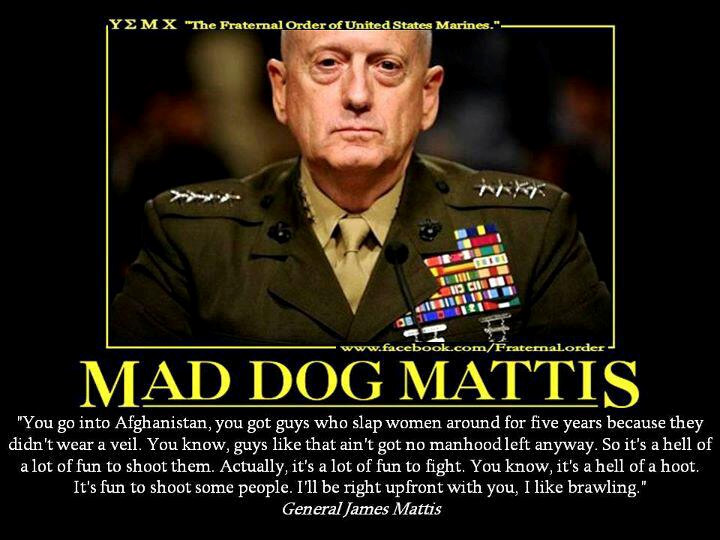
Apparently Mattis is Trump's pick for SecDef. I have no issues with Mattis (and, technically, served under him when I was in Afghanistan) but I don't think he's so good as to justify changing the statute that establishes the principle of civilian control of the military.

Some of us have wanted Mattis as high as possible for awhile.

Mattis-Webb 2016! Now that's a ticket I would get out of bed for!

genmattis.jpg

And it may be duffelblog, but it's true...

Military frantically Googling where Defense Secretary is in presidential order of succession
 

BleedBlueGold

Well-known member
Messages
6,271
Reaction score
2,496
The "not enough funding" argument is garbage and a weak excuse. The US has never spent more money on public education than we do now, yet we rank in the 20s and 30s worldwide in math and science. Do "poor" districts have fewer dollars to work with than "rich" districts? Yes, but that doesn't mean that's the only problem in those schools. Also, you have no one to blame for that problem but the government who built the system the way it is now.

In PA and most other states, if you want to send your kid to private school, you still have to pay your local school taxes on top of the private tuition. So imagine a scenario where a poor family only has to pay for the service they're receiving (private education) and be relieved of the cost of the service they're not receiving (public ed), and all of a sudden you've not only given the poor family another option but you've made it economically easier for them to do so.

This is specifically what I was referring to, so like what I said to Wiz, I'm sorry if I didn't communicate my point in a manner that was apples to apples.

A quick anecdote so you see where I'm coming from on the bolded:

My wife and I live in the wealthiest county in Indiana and our town neighbors the wealthiest town in the state. As you can imagine there's a large percentage of families who send their kids to private schools (and like you said, still pay the property taxes associated with public school funding in the area). They are constantly battling those taxes and repeatedly reject referendums that would help the public schools. It's the "My kids don't go there so what do I care," mentality. The problem is that teachers (my wife included) all got fired from this school, programs were cut drastically, and the kids were all crammed into classrooms with terrible student-to-teacher ratios. The people who can't afford to send their kids to these private schools, count on the public school to provide a great education (as it has in the past). The results are that the school rating has decreased, the housing market has decreased, and people are trying to get away from this district. Meanwhile, those who are stuck there, are stuck with a worsening school system and a worsening housing market (making it hard to move). I've seen this first hand and this specifically it what bothers me.

With that said, I'm not sure that's the situation Wiz is talking about. So again, apologies for not explaining myself better.

I get what you're saying (and Wiz) though in terms of giving people options for better education. If the people in the town I referenced had the choice to send their kids to other schools in a manner that was affordable for them, I'm sure they'd jump on it. The key is making these schools affordable to everyone though and not subjecting people to a system where more money always equals better opportunity. So if this privatization of education seeks to accomplish just that, maybe I can give it a little more support. I'm just being cynical that it'll actually happen that way.
 

Bluto

Well-known member
Messages
8,159
Reaction score
3,991
The "not enough funding" argument is garbage and a weak excuse. The US has never spent more money on public education than we do now, yet we rank in the 20s and 30s worldwide in math and science. Do "poor" districts have fewer dollars to work with than "rich" districts? Yes, but that doesn't mean that's the only problem in those schools. Also, you have no one to blame for that problem but the government who built the system the way it is now.

In PA and most other states, if you want to send your kid to private school, you still have to pay your local school taxes on top of the private tuition. So imagine a scenario where a poor family only has to pay for the service they're receiving (private education) and be relieved of the cost of the service they're not receiving (public ed), and all of a sudden you've not only given the poor family another option but you've made it economically easier for them to do so.
This assumes the "poor family" owns a house and or property because property taxes are what are typically used to fund schools.
 

kmoose

Banned
Messages
10,298
Reaction score
1,181
This assumes the "poor family" owns a house and or property because property taxes are what are typically used to fund schools.

Or rents.............. you think renters don't pay for property taxes, indirectly?
 

Bluto

Well-known member
Messages
8,159
Reaction score
3,991
If public education were working on a large scale level, the rise of charter schools and private schools wouldn't be a discussion.

Public education is working on a large scale. It's called the California University System. The problem with public education is in my opinion a matter of how the funding is allocated. It is based on property taxes as they relate to the individual school districts. Poorer areas have a lower tax base which in turn leads to those districts being more financially strapped. Allocation of resources based on individual enrollment numbers and population needs (i.e. taking a more socialist approach) would make much more sense to me. So would reducing the overall size of the individual schools to a neighborhood scale as well as focusing on, prioritizing and rewarding outcomes as opposed to integration.
 
Last edited:

BleedBlueGold

Well-known member
Messages
6,271
Reaction score
2,496
Or rents.............. you think renters don't pay for property taxes, indirectly?

They absolutely do. It's factored in to their rent payments. If not, their landlord is a "loser" in The Don's eyes.
 

Bluto

Well-known member
Messages
8,159
Reaction score
3,991
Or rents.............. you think renters don't pay for property taxes, indirectly?

That's a good point. I would imagine they do. I think that provides an even stronger case for allocating the resources dedicated to public education in a more equitable fashion as the best possible solution. See my post above.
 
Last edited:

wizards8507

Well-known member
Messages
20,660
Reaction score
2,661
Public education is working on a large scale. It's called the California University System.
Lmao. UCLA is $61K per year for nonresidents and $34K per year for residents. Also, prospective students have hundreds of colleges and universities to choose from. Public universities resemble privatized education a hell of a lot more than they resemble the "free" geography-based system of grade schools.

Our higher education already HAS the choice elements we want to see implemented into the rest of the system, so you're kind of proving our point.
 

Bluto

Well-known member
Messages
8,159
Reaction score
3,991
Lmao. UCLA is $61K per year for nonresidents and $34K per year for residents. Also, prospective students have hundreds of colleges and universities to choose from. Public universities resemble privatized education a hell of a lot more than they resemble the "free" geography-based system of grade schools.

Our higher education already HAS the choice elements we want to see implemented into the rest of the system, so you're kind of proving our point.

This is a completely different argument. What your original post implied was that public institutions were incapable of providing a good model for public education. That is not true. The California University System provides a clear example of that.

I am sure you are aware that attending these world class colleges used to be "free" in California. So what happened? A bunch of short sighted dummies decided to hamstring the funding mechanisms used to support that system vis-a-vis "tax reform" and caused a shift to funding via tuition and fees which has resulted in a number of problems across the board (exploding student debt being one of them). Now, I would prefer the former as a model for K-12 education. You would seem to prefer the latter.

As to the geography point, I feel I addressed that in the rest of my post which you chose not to address or take issue with.
 
Last edited:

Irish#1

Livin' Your Dream!
Staff member
Messages
44,620
Reaction score
20,108
Question,

Do we know what Pence and Indiana was offering as incentives to stay long before the election and what what different from those item to the ones agreed to in order to keep a little less than half of the jobs from going outside the US? Do we know if the talks were all carrot and no stick or if Carrier was also threatened with a stick?

Answers to these questions will help to shape my view of this.

I never heard and to be honest, the president elect has a lot more clout than a governor. Having said that, when Pence was interviewed on Carrier, he didn't offer any type of hope or even come across as promising to continue to fight to keep them here. It was basically, "We'll continue to have dialogue with them".
 

NorthDakota

Grandson of Loomis
Messages
15,707
Reaction score
6,014
Lmao. UCLA is $61K per year for nonresidents and $34K per year for residents. Also, prospective students have hundreds of colleges and universities to choose from. Public universities resemble privatized education a hell of a lot more than they resemble the "free" geography-based system of grade schools.

Our higher education already HAS the choice elements we want to see implemented into the rest of the system, so you're kind of proving our point.

34k???? That's bananas for a public school.
 

kmoose

Banned
Messages
10,298
Reaction score
1,181
Public education is working on a large scale. It's called the California University System. The problem with public education is in my opinion a matter of how the funding is allocated. It is based on property taxes as they relate to the individual school districts. Poorer areas have a lower tax base which in turn leads to those districts being more financially strapped. Allocation of resources based on individual enrollment numbers and population needs (i.e. taking a more socialist approach) would make much more sense to me. So would reducing the overall size of the individual schools to a neighborhood scale as well as focusing on, prioritizing and rewarding outcomes as opposed to integration.

I can agree with your premise that education dollars need to be allocated better, but the California University System? You're really trying to sell us on the fact that a state that is teetering on bankruptcy is the model for the public education system you would like to see? California's no model for fiscal responsibility.
 

Bluto

Well-known member
Messages
8,159
Reaction score
3,991
I can agree with your premise that education dollars need to be allocated better, but the California University System? You're really trying to sell us on the fact that a state that is teetering on bankruptcy is the model for the public education system you would like to see? California's no model for fiscal responsibility.

I'm not trying to sell anything. I'm simply pointing out that the education system in California pre Proposition 13 ( a conservative tax reform which has more to do with the budgetary issues the State has faced than anything else) was fantastic and could be the basis for a model for education across the board on a national level. In fact it would be easy to argue that intial investment in the State University System is a large part of the reason California has the 6th largest economy in the world and was a pretty smart use of tax dollars.
 

kmoose

Banned
Messages
10,298
Reaction score
1,181
I'm not trying to sell anything. I'm simply pointing out that the education system in California pre Proposition 13 ( a conservative tax reform which has more to do with the budgetary issues the State has faced than anything else) was fantastic and could be the basis for a model for education across the board on a national level. In fact it would be easy to argue that intial investment in the State University System is a large part of the reason California has the 6th largest economy in the world and was a pretty smart use of tax dollars.

It could also be argued that the University system is one of the reasons that California is on the precipice of bankruptcy.
 

IrishinSyria

In truth lies victory
Messages
6,046
Reaction score
1,924
It could also be argued that the University system is one of the reasons that California is on the precipice of bankruptcy.

I don't think that would be a great argument because California is not actually on the precipice of bankruptcy. It was 7 years ago during the Bush recession, so maybe that's what your talking about?
 

IrishinSyria

In truth lies victory
Messages
6,046
Reaction score
1,924
Not only is it waiverable, but it's already been done.

Why James Mattis Needs a Waiver to Be Defense Secretary | Heavy.com

I normally wouldn't refer to a "special act of Congress" as a waiver but I agree that it can be done.

My point was that there's no statutory provision for waiver nor is there anything in the language of the act to suggest it's voluntary. But because of standing/political question issues, it's absolutely true that Congress has the ability to consent if they choose.

I don't think they should. I think the law's a good one and enshrines an important principle.
 

Bluto

Well-known member
Messages
8,159
Reaction score
3,991
It could also be argued that the University system is one of the reasons that California is on the precipice of bankruptcy.

It could and it would be accurate, but only to a point. Again the 1978 tax reform measure Prop 13 altered the legislative process and public funding process (primarily the need for a 2/3rd's super majority to increase any taxes) that had previously allowed for the development and balancing of budgets in a fairly sane, stable and rationale manner and had propelled the State towards developing one of the most innovative and dynamic economies the world has ever seen in a relatively short period of time. It is that legislation that is the core issue with the State in terms of the boom and bust budget cycles. Howard Jarvis and other "tax reforms" seized on a situation (rising property tax rates) which required a screwdriver and instead used a sledgehammer and blew a hole in public education in the process.

Anyhow, on the flip side of this it would seem that what the GOP is selling is whats going on in Kansas. To be frank, I would take California (and it's many flaws) over what's going on in Kansas any day of the week.
 
Last edited:

kmoose

Banned
Messages
10,298
Reaction score
1,181
I normally wouldn't refer to a "special act of Congress" as a waiver but I agree that it can be done.

My point was that there's no statutory provision for waiver nor is there anything in the language of the act to suggest it's voluntary. But because of standing/political question issues, it's absolutely true that Congress has the ability to consent if they choose.

I don't think they should. I think the law's a good one and enshrines an important principle.

I do, too. But I also think that there are people who come along who break the mold, and if it helps the country, then they should make an exception. I think the reason that most people are against a waiver is exactly the reason that this guy should be appointed........... he's a naturally dominant leader. He's an Alpha Male........... and that scares people. They fear that they will not be able to control him. Our enemies would fear him, too. And that would give them at least a moment's pause before fucking with us.
 

IrishinSyria

In truth lies victory
Messages
6,046
Reaction score
1,924
I do, too. But I also think that there are people who come along who break the mold, and if it helps the country, then they should make an exception. I think the reason that most people are against a waiver is exactly the reason that this guy should be appointed........... he's a naturally dominant leader. He's an Alpha Male........... and that scares people. They fear that they will not be able to control him. Our enemies would fear him, too. And that would give them at least a moment's pause before fucking with us.

Like I said, I served (way way down) in Mattis's Chain of Command when I was deployed, I like him, but I don't think there's anything so exceptional about this moment in time that justifies overriding the rule.

By all means, make him a national security adviser or something and then if Trump gets reelected (god forbid) him put him into the job.
 

phgreek

New member
Messages
6,956
Reaction score
433
Like I said, I served (way way down) in Mattis's Chain of Command when I was deployed, I like him, but I don't think there's anything so exceptional about this moment in time that justifies overriding the rule.

By all means, make him a national security adviser or something and then if Trump gets reelected (god forbid) him put him into the job.

I'm usually a rules guy until someone can show me the rules were created based upon faulty logic, or exist in a space that no longer requires them. I believe you must change the rules by the rules...ie there is a process.

I believe a waiver is intended to stem the tide until rule making catches up...ie the waiver allows for something everyone agrees (well most everyone) will be the reality, and procedures will catch up.

But no one is saying the rule needs to change...just that the President elect prefers this guy, and that he is the right guy for war time...there are a dozen right guys...that does not make it for me. Pick someone else.
 

drayer54

Well-known member
Messages
8,413
Reaction score
5,840

Polish Leppy 22

Well-known member
Messages
6,595
Reaction score
2,011
Public education is working on a large scale. It's called the California University System. The problem with public education is in my opinion a matter of how the funding is allocated. It is based on property taxes as they relate to the individual school districts. Poorer areas have a lower tax base which in turn leads to those districts being more financially strapped. Allocation of resources based on individual enrollment numbers and population needs (i.e. taking a more socialist approach) would make much more sense to me. So would reducing the overall size of the individual schools to a neighborhood scale as well as focusing on, prioritizing and rewarding outcomes as opposed to integration.

The discussion was specifically K-12 education, where the US keeps dumping millions of dollars yet we rank in the 20s and 30s globally in math and science. The argument that public education is working is a joke, hence the demand in the market for other options.
 
Last edited:

Polish Leppy 22

Well-known member
Messages
6,595
Reaction score
2,011
Exactly, and poor kids literally are trapped in public schools who do not receive enough funding. Vouchers and scholarships don't address enough of these kids living in poor school districts.


Not everyone. The poor kids who are stuck living in bad school districts don't have the same advantages as the higher-income kids who get their choice of better schools. If you want people to grow out of poverty cycles, you can't put your foot on their head from the very beginning.

I understand that a lot of public schools piss away the funding they do receive, but that doesn't mean we just go build better private schools elsewhere that only benefit the few kids who's families have the means to send them there. Essentially, what you're breeding is a system in which people with money get to go to better schools and people who are poor are stuck with whatever is left over. How is that, in any way possible, fair to the child who has no say in the matter at all? Sorry Johnnie, mommy and daddy don't have as much money as Billy's so you have to go to this school and get a worse education and less opportunity.

So unless you want to completely do away with public schools (and the tax that funds them) in order to build only privately own schools that allows every single person equal access to said school, then I'm not sure why this is even a conversation? Because I will never support more opportunity for rich kids at the expense of the poor kids. The objective should be about giving ALL children the best opportunity to succeed. Not just some.

I could show you dozens of "poor" families who attend the local Catholic high school here for $8000 a year per student. How? They decided renting a place and spending the money on Catholic school tuition beat the alternative of owning a house in their district where the school is a disaster and has been for a long time.
 

Whiskeyjack

Mittens Margaritas Ante Porcos
Staff member
Messages
20,894
Reaction score
8,126
<blockquote class="twitter-tweet" data-lang="en"><p lang="en" dir="ltr">JUST IN: Trump has chosen retired Marine Gen. James Mattis for secretary of defense <a href="https://t.co/LrQzQ5anOS">https://t.co/LrQzQ5anOS</a></p>— Ed O'Keefe (@edatpost) <a href="https://twitter.com/edatpost/status/804432550567366656">December 1, 2016</a></blockquote>
<script async src="//platform.twitter.com/widgets.js" charset="utf-8"></script>

Apparently Mattis is Trump's pick for SecDef. I have no issues with Mattis (and, technically, served under him when I was in Afghanistan) but I don't think he's so good as to justify changing the statute that establishes the principle of civilian control of the military.

TAC's resident Progressive, Noah Millman, likes the pick:

I have to dissent from Daniel Larison’s negative view of Donald Trump’s choice to lead the Department of Defense. I consider this the best nomination Trump has made so far.

First of all, we should set the bar in the proper place. Some people who supported Trump were under the impression that he intended to pursue a more restrained and less-interventionist foreign policy. I never believed that. On the other hand, I fully expected Trump to staff his administration with third-rate hacks, has-beens and cranks notable mostly for their loyalty. And he’s done some of that — most alarmingly by choosing Michael Flynn as his National Security Advisor.

General Mattis, though, is both a sober, serious man and, crucially, a man who both knows and speaks his own mind. Trump badly needs people like that in his administration. He especially needs them in foreign policy, where his own knowledge base is nugatory and his instincts are incoherent.

Some are concerned about the fact that Mattis is a recently-retired general, and that his selection bodes ill for civil control of the military. In general, I would agree with those concerns. But I would make an exception now. At this point in history, I am acutely concerned about the alienation of the services from their civilian masters. We have been pushing the military incredibly hard on a mission of decreasing comprehensibility. Institutionally, the military needs to know that its civilian leadership understands the toll that has been taken.

There are civilian leaders who could provide that — Jim Webb comes to mind — and there are recently-retired military leaders who probably wouldn’t. But there are few individuals I can think of who would do a distinctly better job of that than Mattis. And at this moment in history, I just think that is more important than whether he’s a good bureaucratic in-fighter or the right guy to wring more efficiencies out of procurement.

Larison has highlighted his concerns about Mattis’s hawkish view of Iran. And it’s fair to call him a hawk. But it’s also fair to call someone like Jim Webb an Iran hawk — after all, he opposed the Iran deal. Heck, Rand Paul opposed the deal; so did Gary Johnson. The key question is not whether Mattis sees an opportunity for rapprochement with Iran but whether he is going to be actively looking for ways to get into conflict with them, or, worse, advocating policies aimed at regime change. I don’t think he is — and that fact is enormously important, because there will be other people advising Trump who will want to get into such a conflict, including his likely Secretary of State (whoever that turns out to be). Moreover, Mattis has been abundantly clear that the Iran deal is here to stay — something Trump himself seemed to understand earlier in the campaign and then gave up in favor of a cheap applause line. You were never going to get an Iran dove in this cabinet (nor, had she won, in Clinton’s). I feel confident that, relatively speaking, Mattis will be the voice of sanity, and that because of his personality, his voice will be heard more than some other sane voices might.

Finally, there’s this. Which of Trump’s nominees so far seem like the kind of people who one could imagine resigning if they felt that was the only way to preserve their integrity? This is not a trivial question with someone like Trump as President. And which of Trump’s nominees seem like the kind of people that it would be a political problem for Trump to fire? Again, not a trivial question with someone like Trump as President. I can’t think of anyone more likely than Mattis — and other than Attorney General, I can’t think of a more important cabinet position to have someone with that kind of integrity and reputation installed in.

From my perspective, this is a clear win.
 

phgreek

New member
Messages
6,956
Reaction score
433
I never once stated any support for Castro. I do however, understand why Castro and to a much greater extent Che are revered throughout much of the region. Now, if Castro being defended by people on the left makes your blood boil I would imagine Reagan's foreign policy in the Americas and the constatnt proclamations of what a great guy he was must really churn your stomach.

Castro's deeds are somehow comparable to Reagan's because...???
 

BGIF

Varsity Club
Messages
43,946
Reaction score
2,922
Donald Trump speaks with Taiwan's President - CNNPolitics.com

By Daniella Diaz, CNN
Updated 6:25 PM ET, Fri December 2, 2016

(
CNN)President-elect Donald Trump spoke with the President of Taiwan on Friday, according to a statement from his transition team, in a move that threatens to trigger a diplomatic showdown with China even before he takes office.

The move, which is certain to incense China, which considers the nationalist island to be a renegade province, is the first major sign of the "unpredictability" that Trump has vowed to bring to US relations with the rest of the world.
"President-elect Trump spoke with President Tsai Ing-wen of Taiwan, who offered her congratulations. During the discussion, they noted the close economic, political, and security ties exists between Taiwan and the United States. President-elect Trump also congratulated President Tsai on becoming President of Taiwan earlier this year."
Trump's conversation marks the first publicly reported call between a US President or President-elect and the leader of Taiwan since Washington established diplomatic relations with Beijing in 1979, said Bonnie Glaser, a China expert at the Center for Strategic and International Studies
.
 
Last edited:
Status
Not open for further replies.
Top