Politics

Politics

  • Obama

    Votes: 4 1.1%
  • Romney

    Votes: 172 48.9%
  • Other

    Votes: 46 13.1%
  • a:3:{i:1637;a:5:{s:12:"polloptionid";i:1637;s:6:"nodeid";s:7:"2882145";s:5:"title";s:5:"Obama";s:5:"

    Votes: 130 36.9%

  • Total voters
    352

Whiskeyjack

Mittens Margaritas Ante Porcos
Staff member
Messages
20,894
Reaction score
8,126
My point, Whiskey, is that much of the federal workforce does not live in D.C., are part of their community, and that the individual families and the ripple effect on those communities suffer until the shutdown ends. I acknowledge that to some people whose communities are not affected look upon these as sob stories, which is often inaccurate, and that these are people who want to work but are effectively locked out.

We seem to be arguing past each other. Walther isn't merely offering anecdotal evidence that his wife has had unpleasant interactions with federal workers in DC, positing that most federal workers live in/around DC, and concluding that they therefore deserve no sympathy. His point is that federal workers are a privileged class regardless of where they live, so the wall-to-wall coverage of how the shutdown is affecting them is counterproductive since the average American would kill to have the salary, benefits and job security of most federal workers. The privilege of federal workers is of course relative to the cost-of-living wherever they're located, but it's still real.

Imagine if the shutdown caused the "carried interest" tax loophole to sunset, and CNN ran nonstop coverage of the painful adjustments that hedge fund managers were having to deal with as a result. Responding that, "You know... this isn't only affecting rich guys in Manhattan. There are fund managers who rely on this loophole in most states!"... sort of misses the point.
 

Legacy

New member
Messages
7,871
Reaction score
321
Perhaps. Spiraling down to the lowest common denominator or ships on ebbing tides are likely metaphors that occur but may be off the point.

Two areas that have caught my attention impacted by the month long shutdown and indirectly by attitudes towards perceived big government with lazy employees are:

- The Federal Courts are running out of money which will cause the immigration courts backlog to increase to over a million cases

and
- Whistleblower lawsuits by DOJ lawyers, which have recovered over $59 billion over the years, are stalled

He did mention that he is not arguing that shudowns are good or sane policy and implied a pox on both houses.

(Nothing else from me today. Appreciate your responses.)
 
Last edited:

connor_in

Oh Yeeaah!!!
Messages
11,433
Reaction score
1,006
Mark your calendars...apparently we have until sometime in 2031 before we all die...

<blockquote class="twitter-tweet" data-lang="en"><p lang="en" dir="ltr">So much sciencing <a href="https://t.co/6X0PaLC69q">https://t.co/6X0PaLC69q</a></p>— Ben Shapiro (@benshapiro) <a href="https://twitter.com/benshapiro/status/1087562277962768385?ref_src=twsrc%5Etfw">January 22, 2019</a></blockquote>
<script async src="https://platform.twitter.com/widgets.js" charset="utf-8"></script>
 

Bishop2b5

SEC Exchange Student
Messages
8,944
Reaction score
6,165
Mark your calendars...apparently we have until sometime in 2031 before we all die...

<blockquote class="twitter-tweet" data-lang="en"><p lang="en" dir="ltr">So much sciencing <a href="https://t.co/6X0PaLC69q">https://t.co/6X0PaLC69q</a></p>— Ben Shapiro (@benshapiro) <a href="https://twitter.com/benshapiro/status/1087562277962768385?ref_src=twsrc%5Etfw">January 22, 2019</a></blockquote>
<script async src="https://platform.twitter.com/widgets.js" charset="utf-8"></script>

Does she really not grasp that temps and sea levels have changed dramatically over time and that it almost always leads to more diversity and new species? The Earth and its lifeforms aren't as fragile as her and her kind and we're not going extinct because of climate cycles. I'm so tired of decades of Chicken Little crying about how the sky is falling for one reason or another.
 

Irish#1

Livin' Your Dream!
Staff member
Messages
44,637
Reaction score
20,125
Mark your calendars...apparently we have until sometime in 2031 before we all die...

<blockquote class="twitter-tweet" data-lang="en"><p lang="en" dir="ltr">So much sciencing <a href="https://t.co/6X0PaLC69q">https://t.co/6X0PaLC69q</a></p>— Ben Shapiro (@benshapiro) <a href="https://twitter.com/benshapiro/status/1087562277962768385?ref_src=twsrc%5Etfw">January 22, 2019</a></blockquote>
<script async src="https://platform.twitter.com/widgets.js" charset="utf-8"></script>

SNL needs to hire Anna Hathaway to do some parody's on her, because she's growing old quickly.
 

NorthDakota

Grandson of Loomis
Messages
15,709
Reaction score
6,016
I'm already double-dead from net neutrality repeal and tax cuts.

I don't know...I found out this morning that it's billionaires fault that I got ringworm from wrestling in high school so I'm 100% on board with whatever she has in mind.
 

Legacy

New member
Messages
7,871
Reaction score
321
Where Government Is a Dirty Word, but Its Checks Pay the Bills
The residents of Harlan County, Ky., depend heavily on federal assistance. That hasn’t deterred, and may explain, their swing to Republican voting. (NY Times)

HARLAN, Ky. — Gov. Matt Bevin skillfully worked the room at the old courthouse building here in Harlan, one more town-hall meeting in the long campaign toward next year’s election. He deplored the parlous state of a half-mile stretch of U.S. 421 and said $802,000 would be spent to rebuild it. He commiserated with the man who wanted to know how he should deal with the bears tearing through his trash bins, now that it’s forbidden to shoot them.

The line that got the governor a standing ovation, however, was about Medicaid. More precisely, about his plan — so far frustrated by the courts — to require thousands of able-bodied Medicaid recipients between 19 and 64 to work, get training or perform community service for 20 hours a week to keep their health insurance.

“Yeahs” rippled across the room as the governor extolled the value and dignity of work, which propelled him from a hardscrabble youth in rural New Hampshire to the governor’s mansion in Frankfort. “People tell me it’s too much to ask,” he noted, incredulously, about his plan to demand that people on Medicaid get a job. “Baloney.”

And the line from Ronald Reagan got chuckles all around: “The worst thing you can hear,” the governor told Harlan’s gathered residents, is “I’m from the government and I’m here to help.”

Mr. Bevin’s distaste for government is not news. His insurgent campaign to take the Kentucky governorship in 2015 was heavy on attacks on government spending. What’s more notable is the people’s applause. Harlan County residents rely on government programs more than pretty much anybody else.

Harlan's commercial district has been in decline. Disability lawyers and pawn shops are prominent among the town's businesses.

Harlan County is the nation’s fifth most dependent on federal programs, according to the government’s Bureau of Economic Analysis. In 2016 some 54 percent of the income of the county’s roughly 26,000 residents came from programs like Social Security and Medicaid, food stamps — formally known as SNAP, the Supplemental Nutrition Assistance Program — and the earned-income tax credit. That is up from 28 percent in 1990.

Where Government Assistance Has Grown
Federal assistance has grown all over the U.S., but particularly in Appalachia and the South, where many people now get more than a third of their income from the government.

transfers-1050.png


Government transfer payments as a share of total personal income

Source: Bureau of Economic Analysis | By The New York Times

Surrounding counties are similarly dependent. Part of a coal-mining region in long, inexorable decline, this pocket of the nation exemplifies a political paradox: Why are so many American voters hostile to the government hand that feeds them?

“The SNAP card works every month; the kids eat two meals a day, but people don’t think about where the food comes from and go vote for Republicans,” said Larry King, a Kentucky farmer who is chairman of the Democratic Party in McCreary County, whose residents get 55 percent of their income from federal transfers.

It’s not just about Kentucky. Research by Dean Lacy at Dartmouth College on the presidential elections in 2004, 2008 and 2012 found that states receiving more federal spending for every tax dollar they contributed were more likely to go Republican.

The phenomenon produced a 2004 best seller, Thomas Frank’s “What’s the Matter With Kansas?” It argued that Republicans drew working-class voters to their platform against taxes and spending not with economic arguments, but by appealing to their conservative cultural preferences — against gay rights, abortion rights, affirmative action and gun control.

The contradiction has only become more pronounced over time. As Americans have grown more reliant on federal programs over the last 50 years, they have increasingly embraced the Republican Party, a trend put in stark relief by President Trump’s 2016 victory. Of the 10 states in which government transfers account for the largest share of income, seven voted for Mr. Trump. Speaking to the economic and social anxieties of blue-collar white voters over immigration, trade and demographic change, Mr. Trump has championed tax cuts for the well-to-do paired with benefit cuts for the struggling voters in his base.

The Kentucky Mine Supply Company building in Harlan. Fewer than 4,000 people work in eastern Kentucky’s coal mines, down from over 15,000 less than a decade ago.

The Bledsoe complex of the James River Coal Company in Harlan County. The decline of the coal industry, once the area’s economic lifeblood, is a cause of resentment.

Nowhere has the strategy worked better than Kentucky. In a new book, “The Government-Citizen Disconnect,” Suzanne Mettler, a political scientist at Cornell University, observes that Mitch McConnell was known as a pro-civil rights, union-friendly moderate as a county executive in Louisville in the late 1970s. As federal transfers grew from around 10 percent of the income of the average Kentuckian in 1970 to 24 percent in 2016, seven percentage points more than the national average, the ideology of Mr. McConnell, the Senate majority leader — and the rest of Kentucky’s congressional delegation — moved sharply to the right.

And local Democrats — who once thrived in heavily unionized mining towns — gradually lost ground. In 2015 Mr. Bevin became only the second Republican since the 1970s to take the governorship. And in 2016, Republicans captured the State Assembly and for the first time gained full control of Kentucky’s executive and legislative branches.

States Have Shifted to the Right

legislatures-600.png


Source: Steven Rogers, Ph.D (Saint Louis University) | By The New York Times

Transfers from the federal government account for more than half of residents’ personal income in 11 counties across the country. Ten are in eastern Kentucky; another is in West Virginia. Nine of those sit in Kentucky’s Fifth Congressional District, which was the first in the nation to declare a winner on election night, Nov. 6: Harold Rogers, a Republican who has held the seat since 1981. He won 79 percent of the vote.

Even excluding health insurance — which some experts argue should not count — people in this patch of Appalachia draw between a fifth and a third of their income from the public purse.

Perhaps the politics of welfare is changing — up to a point. Democrats made big gains this year in elections for the House and several statehouses, running largely on the promise that they would protect the most recent addition to the safety net: the Affordable Care Act, including the expansion of Medicaid in many states. But championing the safety net does not necessarily resonate in the places that most need it.

Take Daniel Lewis, who crashed his car into a coal truck 15 years ago, breaking his neck and suffering a blood clot in his brain when he was only 21. He is grateful for the $1,600 a month his family gets from disability insurance; for his Medicaid benefits; for the food stamps he shares with his wife and two children.

“Every need I have has been met,” Mr. Lewis told me. He disagrees with the governor’s proposal to demand that Medicaid recipients get a job. And yet, in 2016, he voted for Mr. Trump. “It was the lesser of two evils,” he said.

Daniel Lewis, disabled 15 years ago, gets $1,600 a month in insurance benefits, as well as Medicaid coverage and food stamps. “Every need I have has been met,” said Mr. Lewis, shown with his 11-month-old daughter, Ella Grace.

About 13 percent of Harlan’s residents are receiving disability benefits. More than 10,000 get food stamps. But in 2015 almost two-thirds voted for Mr. Bevin. In 2016 almost 9 out of 10 chose Mr. Trump.

Conservative values surely run strong in this county of many churches and only one liquor store. But the politics of Harlan, a storied Democratic enclave whose yearlong strike against the Duke Power Company’s coal-mining interests in 1973 is seared into union lore, can’t be explained simply by voters’ cultural leanings.

As Professor Mettler points out, the people who rely most on government transfers are least likely to vote. Only 31 percent of Kentucky’s electorate voted in 2015; only 16 percent voted for Mr. Bevin. Participation was lowest in the counties most dependent on federal aid. The governor’s victory was not propelled by the neediest Kentuckians.

The Most Conservative Counties Are the Ones That Get the Most Government Assistance

scatter-600.png


Notes: The axes are government transfers as a share of income and Trump’s share of the vote in 2016 in counties across the United States. The trendline is weighted by the total votes.Sources: David Leip’s Atlas of U.S. Presidential Elections; Bureau of Economic Analysis

A cognitive disconnect is at play: People often don’t link benefits they rely on with the idea of government welfare. Professor Lacy’s research, for instance, suggests that ideology and identity influence how people perceive their benefits, and can outweigh their personal experience of such assistance. He finds that Democrats and African-Americans, but not whites or Republicans, were much more likely as groups to feel they were benefiting from government programs in 2012, when Mr. Obama was president, than during the George W. Bush administration in 2008.

But Harlan’s experience suggests that the steepest barrier keeping voters from embracing the government payments that help them get through the day comes from fundamental mistrust. It’s not necessarily that people here don’t understand they benefit. They fear that Washington — so distant from rural America — does not understand their plight or have their interests in mind.

“People in Harlan County have been on the front lines of the war on poverty for 50-plus years and can see its actual effects,” said Preston Jones, the 31-year-old assistant director at the Pine Mountain Settlement School, over the mountain from Harlan. “It is degrading.”

Mr. Jones, a Republican who not long ago was a Democrat, speaks from a deep well of grievance over the fact that generations of Harlan residents have had to turn to the government for sustenance. That sentiment mixes in with a vague but powerful resentment across the county toward a political system that people here blame for allowing, encouraging even, the decline of coal, its economic backbone.

Harlan is one of the poorest counties in the nation. It has been poor for a long time. The typical household takes in barely $25,000 — less than half the national median. Opiate abuse is rampant. Over the last century or so, the population has shrunk by more than two-thirds.

Coal still provides some of the best jobs in the county, paying about $1,550 a week, on average — more than twice the average county wage. But it employs fewer than 600 people. Fewer than 4,000 work the coal mines in all of eastern Kentucky, down from over 15,000 in the early days of the Obama administration. In Harlan County, little more than a third of working-age residents have a job.

Data from Mark Muro and Jacob Whiton at the Brookings Institution’s Metropolitan Policy Program shows that as the coal industry has withered since 2010 — squeezed out by natural gas as cheaper fuel for power generation — productivity in terms of economic output per Harlan County worker has shrunk by an average of 8.6 percent a year.

Vacant commercial property in Harlan. There is a shortage of the elements of economic revival: good transportation and broadband links, a highly educated work force, or potential investment money.
There are few open storefronts downtown, mostly occupied by disability lawyers and pawn shops. “The biggest business for a long time was the U-Haul rental business as people moved out of state,” said Jay Nolan, who runs a string of newspapers based in London, some 70 miles northwest. “In Harlan you had to wait for days to get one.”

Many people blame Mr. Obama’s Clean Power Plan for killing coal and credit their vote for Mr. Trump to his promise that he would revitalize the industry. Some are skeptical of a government that saved Detroit’s automakers but not Appalachia’s lifeline. And this feeling is going to be hard to shake.

Harlan has few answers to its economic tribulations: few roads linking it to the world’s markets, few good broadband links, few college graduates, few investors willing to risk their money there. “Most of the kids from here who have a chance to go to university never come back,” said Colby Kirk, executive director at One Harlan County, a nonprofit economic development group serving the area.

Success, when it happens, happens on a small scale. This year, the Harlan County Chamber of Commerce gave its business-of-the-year award to a fledgling coal-mining company that has grown to 220 jobs, almost twice as many as last year.

Therein lies a monumental obstacle to transforming the politics of America’s safety net. As small towns lag behind prosperous urban centers along the coasts, as rural communities shed businesses and jobs, and as their residents turn to welfare as a last line of sustenance, the more they will resent Washington’s inability, or unwillingness, to stem the decline.
. (Bolded mine)

In Harlan County,
- 42% of the populations lives below the federal poverty line.
- 27% of the population is disabled.
- 14.5% of Harlan county's residents do not have health insurance at this time. (Kentucky overall - 6.57%)
- The unemployment rate in Kentucky is 5.9%.

Almost 72% of the population has Internet access. Medicaid work requirements require reporting over the Internet. The biggest employers categories are 1) Education and Health Services, and 2) Trade, Transportation and Utilities. Mining employs about a third the number of employees in the other two sectors. Over 10,,000 of Harlan County's 26,000+ population receives food stamps (SNAP).

Kentucky is in the process of instituting Medicaid and SNAP work requirements for eligibility. The Medicaid work requirements, are instituted under the Social Security Act which permitted states to waive certain provisions of the Medicaid law to give states additional flexibility to design and improve their programs with experimental, pilot, or demonstration projects. The work requirement changes were blocked once by the courts, revised and permitted again by the Admin after changes were made, and those are being reviewed by the courts again. Gov Bevin, who plans to start the program in April, recently refused to delay arguments in the case until the end of the federal government shutdown. Some lawyers involved argued for the delay since they are not being paid for their work due to the shutdown. SNAP funding for February is being provided, but after that due to the shutdown, no funds will be coming.
 
Last edited:

Irish YJ

Southsida
Messages
25,888
Reaction score
1,444
Where Government Is a Dirty Word, but Its Checks Pay the Bills
The residents of Harlan County, Ky., depend heavily on federal assistance. That hasn’t deterred, and may explain, their swing to Republican voting.


In Harlan County, 35.6% of the populations lives below the poverty line. 14.5% of the county's residents do not have health insurance at this time. The unemployment rate is 5.9%. Almost 72% of the population has Internet access. Medicaid work requirements require reporting over the Internet.

Kentucky is in the process of instituting Medicaid and SNAP work requirements for eligibility. The Medicaid work requirements, are instituted under the Social Security Act which permitted states to waive certain provisions of the Medicaid law to give states additional flexibility to design and improve their programs with experimental, pilot, or demonstration projects. The changes were blocked once by the courts, permitted again by the Admin after changes were made, and those are being reviewed by the courts again. Gov Bevin, who plans to start the program in April, recently refused to delay arguments in the case until the end of the federal government shutdown. Some lawyers involved argued for the delay since they are not being paid for their work due to the shutdown.


Well I guess one could say that they got that way under Dem leadership. And now the Dem leadership calls them deplorable. So I guess I can understand why they might make a change.

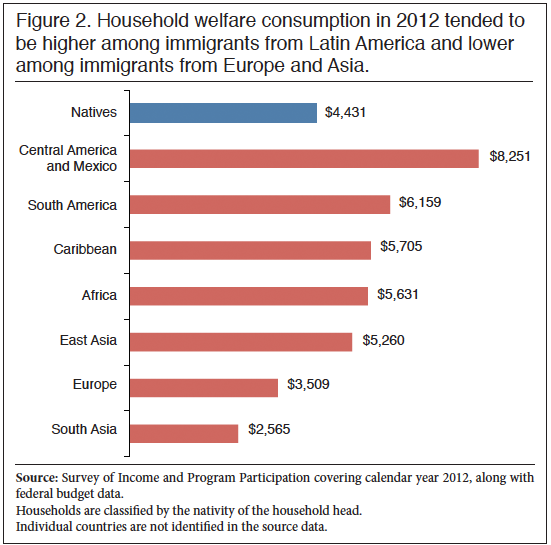
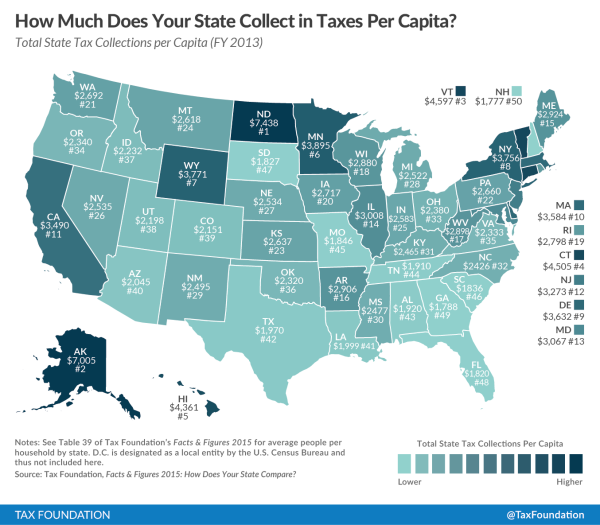
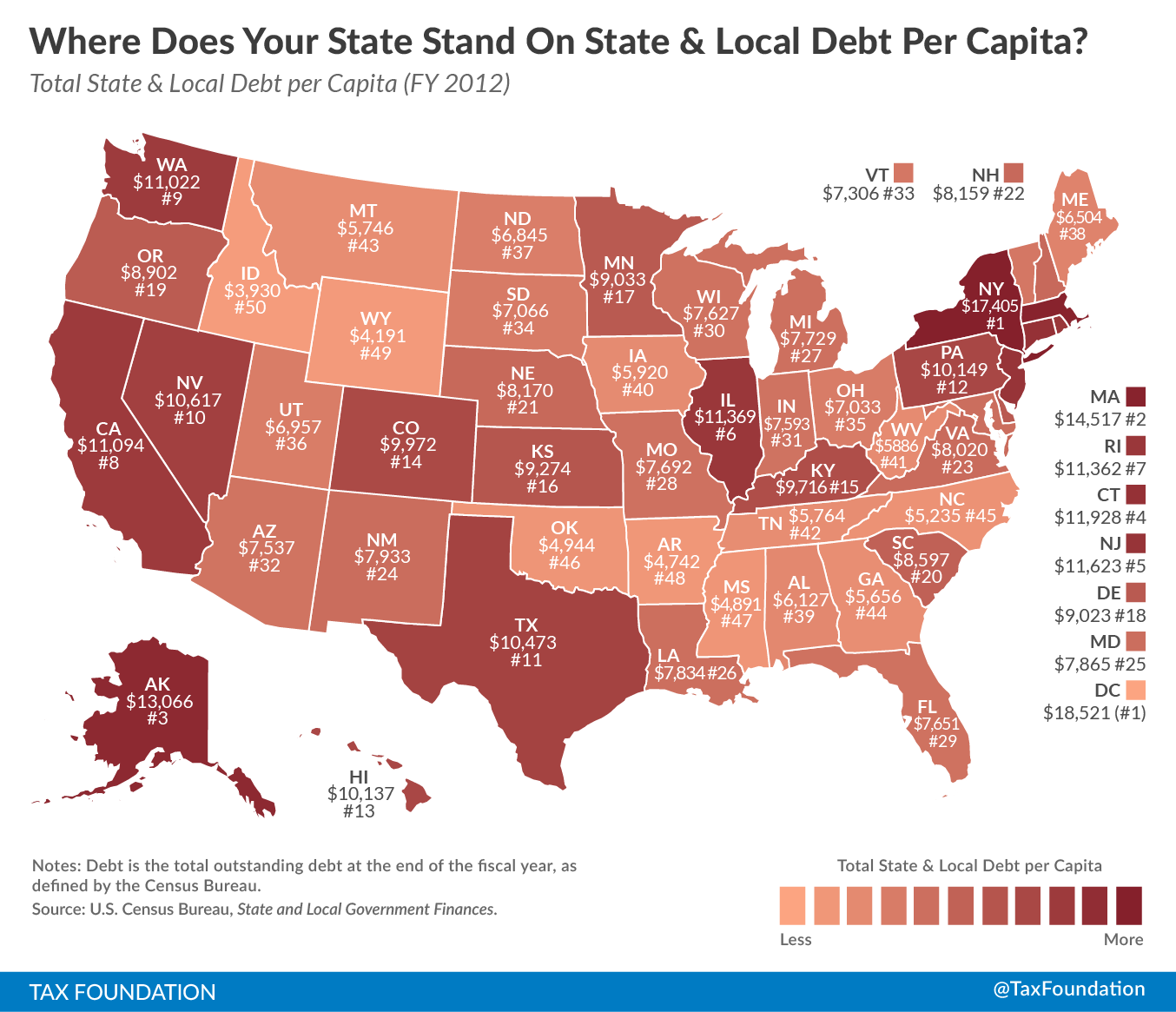
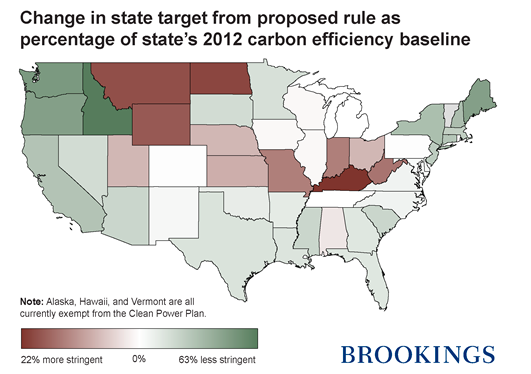
The graphic you posted is a small part of the story. Here's a few other pieces of the picture.

State-Spending-Per-Capita-(large)_0.png

figure-5-pwe.png

richwine-costs-f2.png

State-Tax-Collections-per-Capita-01-600x525.png

State-Local-Debt-per-Capita-01.png

Clean_energy_chart.png
 

wizards8507

Well-known member
Messages
20,660
Reaction score
2,661
<iframe width="560" height="315" src="https://www.youtube.com/embed/neSUe7dO4v0" frameborder="0" allow="accelerometer; autoplay; encrypted-media; gyroscope; picture-in-picture" allowfullscreen></iframe>
 

Legacy

New member
Messages
7,871
Reaction score
321
Reps, Wiz.

As a clarification, with the snapshot of Harlan County, Kentucky and Gov. Bevin's and the federal admin's Medicaid work requirements, in the NYT article with the stats above as prelude, I think it's worthwhile to place this in the context of the state's economy, reliance on federal dollars and programs, especially in their rural area, as Kentucky attempts to shed itself from big government and make changes to safety net programs

- or post more music please which is one of the great contributions Appalachia has made to America.

States have financial obligations for Medicaid. Sixteen states have applied for these waivers for demonstration programs with statuses of pending or approved.

10,000 lose access in Kentucky to food assistance program (AP)

Kentucky Economy at a Glance (U.S. Labor Dept)

A Snapshot of State Proposals to Implement Medicaid Work Requirements Nationwide

Feel free to comment.
 
Last edited:

Irish YJ

Southsida
Messages
25,888
Reaction score
1,444
Great song. Check out the original from Darrel Scott. The remake by Patty Loveless is also pretty good. Both IMO are much better than the BP remake. There's a lot of old timey and blue grass covers that are amazing too.

<iframe width="560" height="315" src="https://www.youtube.com/embed/neSUe7dO4v0" frameborder="0" allow="accelerometer; autoplay; encrypted-media; gyroscope; picture-in-picture" allowfullscreen></iframe>
 

connor_in

Oh Yeeaah!!!
Messages
11,433
Reaction score
1,006
OK, so my buddy emailed me he had on the Ben Shapiro podcast and apparently he compared Alexandria Ocasio-Cortez to the SNL skit the girl at the party no one wants to have a conversation with...and you know what, he's not far off...

<iframe width="560" height="315" src="https://www.youtube.com/embed/1unwR68iWxE" frameborder="0" allow="accelerometer; autoplay; encrypted-media; gyroscope; picture-in-picture" allowfullscreen></iframe>
 

connor_in

Oh Yeeaah!!!
Messages
11,433
Reaction score
1,006
Lindsey Graham 2.0 hits out again...

<blockquote class="twitter-tweet" data-lang="en"><p lang="en" dir="ltr">Let’s bury the hatchet and enjoy the next 12 years because they are going to be our last, right? <a href="https://t.co/OKhAAcGKyr">https://t.co/OKhAAcGKyr</a></p>— Lindsey Graham (@LindseyGrahamSC) <a href="https://twitter.com/LindseyGrahamSC/status/1088467382090301440?ref_src=twsrc%5Etfw">January 24, 2019</a></blockquote>
<script async src="https://platform.twitter.com/widgets.js" charset="utf-8"></script>

<blockquote class="twitter-tweet" data-conversation="none" data-lang="en"><p lang="en" dir="ltr">Even worse news, <a href="https://twitter.com/AOC?ref_src=twsrc%5Etfw">@AOC</a> and her new socialist colleagues seem hell-bent on making sure that our last 12 years will be spent as Venezuelan socialists, not Americans.</p>— Lindsey Graham (@LindseyGrahamSC) <a href="https://twitter.com/LindseyGrahamSC/status/1088473761966419970?ref_src=twsrc%5Etfw">January 24, 2019</a></blockquote>
<script async src="https://platform.twitter.com/widgets.js" charset="utf-8"></script>
 

Irish YJ

Southsida
Messages
25,888
Reaction score
1,444
Dems are going end AOC before the repubs have a chance to anyway. Big Money Elitist aint got no time for her nonsense.
 

wizards8507

Well-known member
Messages
20,660
Reaction score
2,661
Great song. Check out the original from Darrel Scott. The remake by Patty Loveless is also pretty good. Both IMO are much better than the BP remake. There's a lot of old timey and blue grass covers that are amazing too.
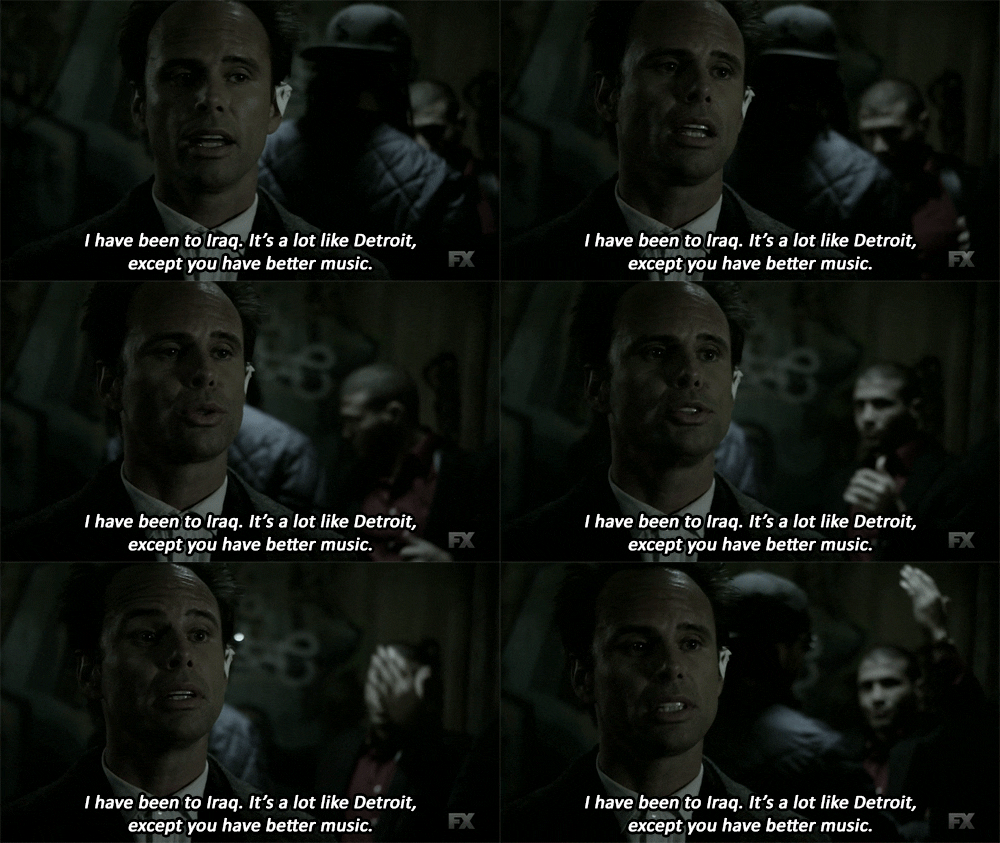
If you haven't watched Justified, watch Justified. If it had been on HBO or Netflix instead of FX, Walton Goggins and Timothy Olyphant would have been winning primetime Emmys left and right.

A eulogy for “Justified,” the most underappreciated drama of our time
 
Last edited:

Irish YJ

Southsida
Messages
25,888
Reaction score
1,444
If you haven't watched Justified, watch Justified. If it had been on HBO or Netflix instead of FX, Walton Goggins and Timothy Olyphant would have been winning primetime Emmys left and right.

It's one of my favorite shows. Loved me some Joelle Carter too. Goggins is so underrated.
 

Legacy

New member
Messages
7,871
Reaction score
321
Kentucky is either ranked second or fifth in most dependent on federal funds through programs, grants, etc. Ten of the top eleven states most dependent on federal funds voted Republican.

Some of the federal programs that Kentuckians rely upon include:
- Medicaid, CHIP, SS Disability (health)
- the Affordable Care Act or Obamacare (health)
- SNAP (food)
- HUD grants to organizations to supplement rents (housing)
- specific funding such as for Black Lung

Population - 4.49 million

- More than 1.2 million people in Kentucky are covered by Medicaid (22% of the total population). While seven in ten (74%) enrollees are children and adults, more than half (53%) of the state’s Medicaid spending is for the elderly and people with disabilities.
- 194,100 (25%) of Kentucky’s Medicare enrollees are also covered by Medicaid, accounting for nearly one-third (31%) of Medicaid spending.
- 40% of all children in Kentucky are covered by Medicaid, including 52% of children with special health care needs.
- 19,149 nursing home residents in Kentucky (67% of total nursing home residents) are covered by Medicaid and 49% of Medicaid long-term care spending in Kentucky is for nursing home care.
- Nearly one-half (49%) of people in Kentucky live in rural areas, which is higher than the national average of 19%. People who live in rural areas are more likely to be covered by Medicaid. (Source)

Kentucky is one of the few Southern states who passed Medicaid expansion (Obamacare) which lowered their uninsured rate from 14%, the fourth biggest drop of all states. An independent analysis estimated that the expansion would generate 40,000 jobs and have a $30 Billion impact. Conversely, choosing not to expand would have been expensive as well, incurring $100 million in costs.

Health care added thousands of jobs with Obamacare (just don't call it that in Kentucky). Most Kentuckians have positive views towards it and have pressed their Congressmen to retain protections for chronic diseases to make their costs affordable.

Yet they've elected a Governor who has advocated to eliminate Medicaid expansion and shed enrollees from Medicaid and CHIP. Their Senators, Mitch McConnell and Rand Paul, would eliminate Obamacare and reduce Medicaid and other entitlement programs.

Kentucky accepted federal funding at 100% to institute Obamacare which, among other benefits, had software for electronic medical records and direct payments to providers. Many of these changes benefited rural doctors and hospitals as well as metropolitan hospitals which relied on state funding.

In order to institute work requirements for Medicaid with the expectation that projects 100,000 residents to lose coverage, Kentucky has accepted more federal dollars - over $370 million - to get software for the internet portal, publicize the changes and hire employees to do outreach in rural areas. Reporting to meet work requirements is done only through the computer portal. Seventy percent of Kentuckians have access to the Internet.

Arkansas, which is another state with a high percentage of rural residents and whose eligibility program began in June, has dropped over 12,000 residents from their Medicaid with 78% of them due to not reporting. In Arkansas, the work requirements apply only to adults 30-64 who are not medically fragile which will expand to those 19-29 adding another 45,000 to the population subject to their work requirements.


11-16-18health.png


Bevin's Medicaid changes actually mean Kentucky will pay more to provide health care (Louisville Courier-Journal)
 
Last edited:

Irish YJ

Southsida
Messages
25,888
Reaction score
1,444
And yet the rest of America is dependent upon Kentucky for good bourbon.

If America would just drink more whiskey, KY might have a chance.

In all seriousness though, bluegrass KY (Lexington and Louisville areas) does great which makes up about 40ish% of the KY population. The UPS worldwide hub, YUM HQ, largest Toyota plant in the world outside of Japan, etc all do very well there.

Non-bluegrass areas that are part of Appalachia, and/or hit hard by the US's new attitudes on coal and tobacco are the 60% that struggle. Toss in the drugs, and it's not pretty.

Many say it's because of 95 straight years of a Dem controlled State House prior to 2016.... I guess you really can't blame anyone else....

My mother's family comes from KY, and I've done a lot of business there in the last 15 years. Also have a few friends with property on Cumberland. In my almost 50 years, the S, SE, and SW of KY (especially the AP area) have always been dirt poor. The moonshine in Cumberland is spectacular though.
 

Whiskeyjack

Mittens Margaritas Ante Porcos
Staff member
Messages
20,894
Reaction score
8,126
This short video of Tucker Carlson dunking on Charlie Kirk is amusing:

<blockquote class="twitter-tweet" data-lang="en"><p lang="en" dir="ltr">Tucker: "Maybe you should start to think of your country a little bit more like a family?" <br><br>Charlie Kirk: “No!!!!!! It is not government’s role to take care of it’s citizens.”<br><br>Tucker laughing: “Oh really? What is government’s role then?”<a href="https://t.co/IgiRDk7yIj">pic.twitter.com/IgiRDk7yIj</a></p>— The Columbia Bugle &#55356;&#56826;&#55356;&#56824; (@ColumbiaBugle) <a href="https://twitter.com/ColumbiaBugle/status/1088137539012063232?ref_src=twsrc%5Etfw">January 23, 2019</a></blockquote>
<script async src="https://platform.twitter.com/widgets.js" charset="utf-8"></script>
 

Legacy

New member
Messages
7,871
Reaction score
321
Medicaid Work Requirements

Medicaid Work Requirements

The economic impact of eastern Kentucky/Appalachia with the deterioration of their culture reminds me of Tucker Carlson's point the economics and culture cannot be separated, that the marketplace with its worship of wealth is apathetic to the struggles of those families, and how the solution to Kentucky's economic situation is to erode the safety net and entitlement programs that help support their families. There is much comparison between Appalachia and the maquiladoras across the border in Mexico, whose employees are taken advantage of by American companies for very low wages because that feeds their profits to supply what has become America's consumer society.

Carlson:
The idea that families are being crushed by market forces seems never to occur to them. They refuse to consider it. Questioning markets feels like apostasy Both sides miss the obvious point: Culture and economics are inseparably intertwined. Certain economic systems allow families to thrive.

An article from Matthew Walther, a conservative writer, against Medicaid work requirements:

The conservative case against Medicaid work requirements

Freedom. Privacy. Not having to listen to some whinging bureaucrat with a social science degree from Directional State University tell you what to do with your life. These are all part and parcel of what it means to live the good life. They are also, ostensibly, among the basic tenets of American conservatism. But they apparently mean very little to Gov. Asa Hutchinson (R), under whom thousands of Arkansans are being forced to spend 80 hours a month attending pointless "job training" seminars, filling out endless paint-by-numbers online job applications, performing mandatory "volunteer" work (a.k.a. slave labor), and writing meaningless book reports about the whole tedious experience, which must be submitted to a state website every night by 9 p.m. sharp.

When I say "forced" I don't quite mean that they are being made to do so at gunpoint. But very nearly that. Unemployed residents of the state who wish to receive Medicaid benefits for which they otherwise qualify must engage in this meaningless performative activity. More than 16,000 Arkansans have lost their coverage after failing to comply with these regulations — more than 4,500 in November alone. The Arkansas program is one of many theoretically approved by the Trump administration, but it's the only one to have taken effect so far. A similar one in Kentucky has been halted thanks to a lawsuit.

Why would any conservative think that this is a good idea? If the core insight of the GOP's blinkered version of libertarianism is that the state is not, fundamentally speaking, very good at doing things, why would a Republican governor set up a vast state apparatus to oversee the finding of employment for his citizens? Surely any minimal savings that might be had from dropping a few supposedly undeserving "freeloaders" is outweighed here by the cost of administering the workfare program — the endless state-employed minders who are charged with ensuring that all the reports about the valuable time spent watching PowerPoints about the possibility of learning to code and sweeping the floor of the American Legion for free are filed on time. This has nothing to do with saving money. It is organized cruelty for its own sake.

Many Republican governors have refused to allow the expansion of Medicaid in their states, on the grounds that their citizens would no doubt prefer to pay more for health care. This is their decision, of course, though it's worth pointing out that in the red states where the expansion has been allowed it has been both popular and wildly successful. Even the term-limited Gov. Phil Bryant of Mississippi, the deepest of deep red states, appears to be quietly coming round. But the expansion will do very little good if it's introduced alongside these bizarre, expensive, and ultimately pointless requirements. Health care, like food and water and shelter, is either something we all deserve or not. If you don't think it is, let the idle and the inefficient die in the streets from untreated illnesses. If you do, treat it the way, i.e., unconditionally, without recourse to tiresome interference from the state and the résumé website industrial complex.

Of course, there is another way of getting around the Arkansas dilemma. Able-bodied citizens who have no work could simply be given jobs under some kind of guaranteed employment scheme along the lines of that proposed recently by Sen. Bernie Sanders. But this is not likely to happen in the South any time soon. When Asa Hutchinson decides that capital and American productive capability are too important to be left in the hands of mere private actors and comes out in favor of, say, nationalizing the oil industry or guaranteeing a family wage for all Arkansas, he should feel free to experiment with these silly make-work health-care schemes. Till then, he should keep his government hands off of decent people's Medicaid.

Kentucky's minimum wage is $7.25 per hour which, for a couple, is below the federal poverty level ($16,460). Full time work in Kentucky at their minimum wage is $15,080.

The purpose of 1115 waivers that is being used to institute work requirements is:
"Section 1115 demonstration projects present an opportunity for states to institute reforms that go beyond just routine medical care, and focus on evidence-based interventions that drive better health outcomes and quality of life improvements."
not to dump Medicaid recipients en masse.

Tucker Carlson:
But our leaders don’t care. We are ruled by mercenaries who feel no long-term obligation to the people they rule…One of the biggest lies our leaders tell us that you can separate economics from everything else that matters. Economics is a topic for public debate. Family and faith and culture, meanwhile, those are personal matters. Both parties believe this.
 
Last edited:

wizards8507

Well-known member
Messages
20,660
Reaction score
2,661
This short video of Tucker Carlson dunking on Charlie Kirk is amusing.
Come on dude, Tucker is so full of shit and the tweet isn't even close to a fair summary of the clip. Parents' authority over their children is part of natural law. State authority over citizens is arbitrary.

The answer to the hypothetical parent in the anecdote is "stop being a shitty parent."
 

Legacy

New member
Messages
7,871
Reaction score
321
Come on dude, Tucker is so full of shit and the tweet isn't even close to a fair summary of the clip. Parents' authority over their children is part of natural law. State authority over citizens is arbitrary.

The answer to the hypothetical parent in the anecdote is "stop being a shitty parent."

What did you think of Walther's article on the conservative case against Medicaid work requirements as well as the purpose of demonstration waivers? The 1115 waivers are approved for five years. Analyses are that the state will break even with the costs of the program if 100,000 Medicaid recipients are dropped from the rolls. Otherwise, Kentucky loses money and the feds are out their part of it - $370 million.
 
Last edited:

wizards8507

Well-known member
Messages
20,660
Reaction score
2,661
What did you think of Walther's article on the conservative case against Medicaid work requirements as well as the purpose of demonstration waivers?
It seems to me more of an indictment of the regime in Arkansas in particular than of work requirements more generally.
 
Top