Healthcare

Legacy

New member
Messages
7,871
Reaction score
321
Tom Price, MD, former Secretary of the Department of Health and Human Services (HHS) in an address at the World Health Care Congress on Tuesday morning said that repealing the individual mandate, effective in 2019, will increase health care insurance premiums. Price is now concurring with health experts about the effect of that repeal.
"There are many -- I'm one of them -- who believe that that actually will harm the pool in the exchanges market, because you'll likely have individuals that are younger and healthier not participating in that market, and consequently that drives up the costs for other folks within that market."

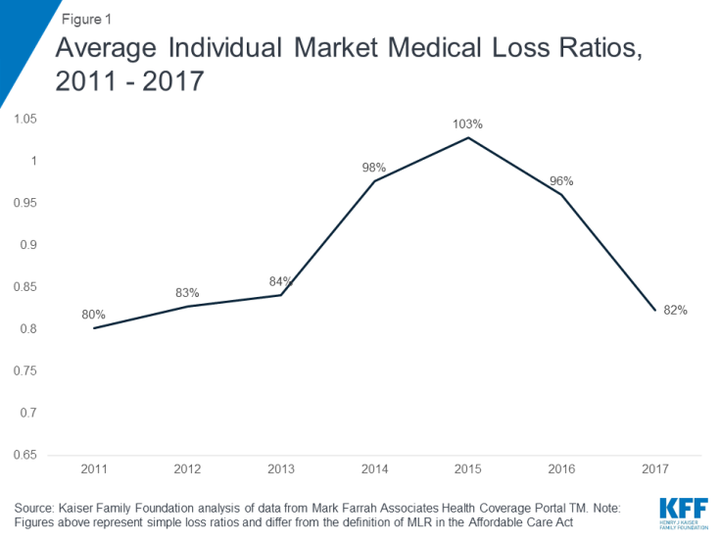
The Congressional Budget Office has projected that repeal of the mandate will increase premiums by 10 percent. The Urban Institute estimates that combining the mandate repeal and Trump's expansion of skimpier plans will increase premiums by almost 20% nationwide. A bipartisan bill from the Senate Health Committee chaired by Lamar Alexander (R) and Patty Murray (D) that would fund the ACA's cost-sharing insurance subsidy program and stabilize health premiums for 2018 was not allowed to reach the Senate floor by the Majority leader McConnell, with the result of raising premiums for 2018. Price said that, in 2018, the costs of the benchmark silver plans on the ACA marketplace rose about 36%.

How the Loss of Cost-Sharing Subsidy Payments is Affecting 2018 Premiums
https://www.kff.org/health-reform/i...-subsidy-payments-is-affecting-2018-premiums/

Price also noted that many states are reconsidering Medicaid expansion for the federal dollars as well as adopting waiver programs to tailor health care programs and create flexibility. States have lowered health care premiums by obtaining waivers from HHS/CMS in order to institute their own reinsurance programs. The Trump administration's Health and Human Services under Tom Price stalled on approving those waiver requests with the effect of increasing premiums in six states, most notably in Oklahoma and Iowa.

Administration Sends Mixed Signals On State Health Insurance Waivers
https://www.npr.org/sections/health...xed-signals-on-state-health-insurance-waivers

A Medicaid expansion ballot referendum passed in November, but the Republican governor has vetoed any bills. A lawsuit has been filed against the state's HHS. Utah's Rep Gov has signed a bill for Medicaid expansion. The Nevada Rep Gov has vetoed their legislature's Medicaid-for-all bill. Virginia's Rep legislature is about to pass a Medicaid expansion bill. Kentucky under a Rep Gov and legislature has adopted Medicaid expansion this year. In Idaho and Nebraska, signatures are being collected to put Medicaid expansion on the ballot for this November.

Former HHS Sec. Price Calls Individual Mandate Repeal a Mistake
https://www.medpagetoday.com/publichealthpolicy/healthpolicy/72633
 
Last edited:

MJ12666

New member
Messages
794
Reaction score
60
Tom Price, MD, former Secretary of the Department of Health and Human Services (HHS) in an address at the World Health Care Congress on Tuesday morning said that repealing the individual mandate, effective in 2019, will increase health care insurance premiums. Price is now concurring with health experts about the effect of that repeal.


The Congressional Budget Office has projected that repeal of the mandate will increase premiums by 10 percent. The Urban Institute estimates that combining the mandate repeal and Trump's expansion of skimpier plans will increase premiums by almost 20% nationwide. A bipartisan bill from the Senate Health Committee chaired by Lamar Alexander (R) and Patty Murray (D) that would fund the ACA's cost-sharing insurance subsidy program and stabilize health premiums for 2018 was not allowed to reach the Senate floor by the Majority leader McConnell, with the result of raising premiums for 2018. Price said that, in 2018, the costs of the benchmark silver plans on the ACA marketplace rose about 36%.

How the Loss of Cost-Sharing Subsidy Payments is Affecting 2018 Premiums
https://www.kff.org/health-reform/i...-subsidy-payments-is-affecting-2018-premiums/

Price also noted that many states are reconsidering Medicaid expansion for the federal dollars as well as adopting waiver programs to tailor health care programs and create flexibility. States have lowered health care premiums by obtaining waivers from HHS/CMS in order to institute their own reinsurance programs. The Trump administration's Health and Human Services under Tom Price stalled on approving those waiver requests with the effect of increasing premiums in six states, most notably in Oklahoma and Iowa.

Administration Sends Mixed Signals On State Health Insurance Waivers
https://www.npr.org/sections/health...xed-signals-on-state-health-insurance-waivers

A Medicaid expansion ballot referendum passed in November, but the Republican governor has vetoed any bills. A lawsuit has been filed against the state's HHS. Utah's Rep Gov has signed a bill for Medicaid expansion. The Nevada Rep Gov has vetoed their legislature's Medicaid-for-all bill. Virginia's Rep legislature is about to pass a Medicaid expansion bill. Kentucky under a Rep Gov and legislature has adopted Medicaid expansion this year. In Idaho and Nebraska, signatures are being collected to put Medicaid expansion on the ballot for this November.

Former HHS Sec. Price Calls Individual Mandate Repeal a Mistake
https://www.medpagetoday.com/publichealthpolicy/healthpolicy/72633

FYI, New Jersey (which is trying real hard to become the CA of the east) recently passed a state law that will require all residents to carry health insurance. The bill requires those without insurance pay a fine equal to 2.5 percent of their household income or $695 per adult and $347 per child, whichever is greater.

New Jersey lawmakers vote to reinstate ObamaCare individual mandate | TheHill

There are of course alternatives to reduce that cost of health insurance that do not involve re-instituting the mandate. Either of the following two options I believe would reduce the health insurance premiums offered on the exchanges; but I also readily admit that neither has a chance of becoming law.

Option #1 - Health insurance provided to employees should be taxed as a benefit that it is, with the revenue generated by this tax passed on those individuals who purchase insurance on the exchanges.

Option #2 - Pass a law that make is illegal for companies to provide health insurance to employees. Since the vast majority of these employees are healthy, many of whom will seek to purchase insurance on the exchanges, this should drive down the cost of the plans as it will obviously greatly the base. Wages should go up to offset the addition cost of having to buy a policy on the exchange.
 
Last edited:

NOLAIrish

May Contain 10% Ethanol
Messages
344
Reaction score
107
FYI, New Jersey (which is trying real hard to become the CA of the east) recently passed a state law that will require all residents to carry health insurance. The bill requires those without insurance pay a fine equal to 2.5 percent of their household income or $695 per adult and $347 per child, whichever is greater.

New Jersey lawmakers vote to reinstate ObamaCare individual mandate | TheHill

There are of course alternatives to reduce that cost of health insurance that do not involve re-instituting the mandate. Either of the following two options I believe would reduce the health insurance premiums offered on the exchanges; but I also readily admit that neither has a chance of becoming law.

Option #1 - Health insurance provided to employees should be taxed as a benefit that it is, with the revenue generated by this tax passed on those individuals who purchase insurance on the exchanges.

Option #2 - Pass a law that make is illegal for companies to provide health insurance to employees. Since the vast majority of these employees are healthy, many of whom will seek to purchase insurance on the exchanges, this should drive down the cost of the plans as it will obviously greatly the base. Wages should go up to offset the addition cost of having to buy a policy on the exchange.

I'm not sure that either of those would accomplish your goal.

If you pursued Option #1, you wouldn't see a massive uptick in insurance tax revenues, but rather a mass exodus from the group insurance markets. Employer-sponsored health insurance would no longer be a desirable benefit, and employees would instead ask their employers to pull out of the group and give them their employer share as regular income (after all, it's now taxable as regular income, so as an employee you'd much rather your employer just handed it to you and let you decide how to spend it). You might see some of the sicker employees/families try to form groups, but the vast majority would probably just exit the market or buy much cheaper products (like catastrophic coverage). On a per-unit basis, insurance would become more expensive -- as healthy people would choose to go without insurance -- but our annual national spend on health insurance would drop precipitously. None of that is necessarily a bad thing in the long run -- I've even argued in previous posts that ending the tax-preferred status of ESI can be the basis of some very positive reform -- but it's important to recognize that as a step toward ending health insurance as we know it, not reducing the price of insurance. Now, if ending the tax-preferred status of ESI did cause the behavior I just described, you'd see a significant uptick in income tax collections, which you could use to prop up the individual market, but you're creating a system where you either a) literally replace the inefficient employer/group subsidy with an even more inefficient individual subsidy for all of those people who now have an incentive to migrate into the ACA markets, in which case, why?; or b) use income tax to transfer a massive amount of wealth from the former-ESI group (which is largely middle-class) to the already-subsidized ACA market group by barring new entry from the former-ESI group, in which case, HOLY CRAP WHY???

If you pursued Option #2, you'd decrease the cost of insurance in the individual market relative to the current individual market, but you would increase the cost of the combined individual and group insurance markets relative to the cost of the current combined individual and group insurance markets. As above, the healthy former-ESI folks wouldn't participate in the individual market, and the rest would migrate from the more efficient group markets into the pretty inefficient individual markets. And wages would increase, but that would be more than offset by the loss in value of employee benefits -- you're turned a nontaxable benefit into taxable income. Even if employees were effective in recapturing 100% of that benefit in the form of increased wages (which is highly unlikely), they would still be looking at a significant loss of wealth.

I want to be clear -- there's a very good idea in here, at bottom: get rid of the tax-preferred status of employer-sponsored health insurance. This model is incredibly inefficient and leads to massive price insensitivity in health care. It also makes us uniquely beholden to our employers. It's just that you have to pair that tax hike with a policy that returns the tax proceeds to that same group, or you're just going to kill the folks (most of whom are middle and working class) with what I'd bet is the biggest wealth transfer in this country in our lifetimes.
 
Last edited:

Legacy

New member
Messages
7,871
Reaction score
321
Whiskey,

To be clear, the authors whose articles you have posted have little awareness of how health care works in the U.S. and whose points are not only detached from that reality but who have an agenda that they will buttress with dissimilar examples across different countries with different health care laws and systems. I can't conclude that they are necessarily ignorant, but there is a degree of maliciousness since their representations are done with intent.

The authors see physicians manipulation in life and death decision-making, having a lower regard for patients' lives, seeking to end their patients' lives, physicians who are good at avoiding public scrutiny, who refuse to treat children with disabilities, who want a patients to die when they are removed from ventilators, who consider disabled children unworthy of life, who take children forcibly from their families to end their lives, who violate their oaths to protect the lives under their care. etc. etc. This portrayal by the author leads to comparisons to Nazis and participation in eugenics.

Why would he say this? Reading on the author's purpose becomes clear in tying together two cases in the U.K with legalized extinctions in Belgium and the Netherlands, this should be a "rallying cry". It's a "trend" that will progress along a "clear logical path" from bad to worse, The "natural next step" is "actively killing disabled patients" because "we are already aiming at their deaths by forgoing treatment."

It gets even worse. Now we are at an almost unimaginable crossroads.

"The developed secular West now finds itself at one of the most serious crossroads we can imagine. Will we follow the logic of the moral and legal principles laid out in countries like the UK, Belgium, and the Netherlands? Or can we muster the moral will to challenge such principles directly and forcibly?"
With further zeal, let's go beyond mustering moral will to "now is the time" and to choose our families and lives of the most vulnerable against the evil of the medical and legal establishment!!

"Enough with the deference to the medical and legal establishment and its judgements about which lives are worth living. Now is a time for choosing. The most vulnerable require our clear and uncompromising support."
Us against them. Could we face any more dire circumstances than to defend ourselves and our families against those establishments and make the moral choices that physicians, the health care system and attorneys are working actively working to erode and who refuse to uphold and who practice eugenics?

That's the message and rallying cry from this First Things article.
 
Last edited:

MJ12666

New member
Messages
794
Reaction score
60
I'm not sure that either of those would accomplish your goal.

If you pursued Option #1, you wouldn't see a massive uptick in insurance tax revenues, but rather a mass exodus from the group insurance markets. Employer-sponsored health insurance would no longer be a desirable benefit, and employees would instead ask their employers to pull out of the group and give them their employer share as regular income (after all, it's now taxable as regular income, so as an employee you'd much rather your employer just handed it to you and let you decide how to spend it). You might see some of the sicker employees/families try to form groups, but the vast majority would probably just exit the market or buy much cheaper products (like catastrophic coverage). On a per-unit basis, insurance would become more expensive -- as healthy people would choose to go without insurance -- but our annual national spend on health insurance would drop precipitously. None of that is necessarily a bad thing in the long run -- I've even argued in previous posts that ending the tax-preferred status of ESI can be the basis of some very positive reform -- but it's important to recognize that as a step toward ending health insurance as we know it, not reducing the price of insurance. Now, if ending the tax-preferred status of ESI did cause the behavior I just described, you'd see a significant uptick in income tax collections, which you could use to prop up the individual market, but you're creating a system where you either a) literally replace the inefficient employer/group subsidy with an even more inefficient individual subsidy for all of those people who now have an incentive to migrate into the ACA markets, in which case, why?; or b) use income tax to transfer a massive amount of wealth from the former-ESI group (which is largely middle-class) to the already-subsidized ACA market group by barring new entry from the former-ESI group, in which case, HOLY CRAP WHY???

If you pursued Option #2, you'd decrease the cost of insurance in the individual market relative to the current individual market, but you would increase the cost of the combined individual and group insurance markets relative to the cost of the current combined individual and group insurance markets. As above, the healthy former-ESI folks wouldn't participate in the individual market, and the rest would migrate from the more efficient group markets into the pretty inefficient individual markets. And wages would increase, but that would be more than offset by the loss in value of employee benefits -- you're turned a nontaxable benefit into taxable income. Even if employees were effective in recapturing 100% of that benefit in the form of increased wages (which is highly unlikely), they would still be looking at a significant loss of wealth.

I want to be clear -- there's a very good idea in here, at bottom: get rid of the tax-preferred status of employer-sponsored health insurance. This model is incredibly inefficient and leads to massive price insensitivity in health care. It also makes us uniquely beholden to our employers. It's just that you have to pair that tax hike with a policy that returns the tax proceeds to that same group, or you're just going to kill the folks (most of whom are middle and working class) with what I'd bet is the biggest wealth transfer in this country in our lifetimes.

Very insightful analysis. First off it is virtually impossible that either proposal would be considered but with that said, and given your thoughts, I was thinking that instead of including the benefit as part of taxable income, there would need to be some type of payroll tax similar to SS, with the proceeds specifically dedicated to subsidizing the individual marketplace. Also there would need to be a law that would disallow any type group formations to be used in negotiating policies; all policies would need to be purchased on the individual market thus spreading the cost over the largest population. If this were done I agree that the cost of policies would be higher in the individual marketplace for those individuals who currently get employer provided plans, but at the same time, the individual policy costs would also come down from where they are today making it easier for those who don't have employer paid insurance to purchase a policy.
 

Legacy

New member
Messages
7,871
Reaction score
321
This will come up again in Nevada or in other states. The bill was vetoed by the Gov.

Nevada's legislature just passed a radical plan to let anybody sign up for Medicaid
https://www.vox.com/policy-and-politics/2017/6/6/15731622/nevada-medicaid-for-all
“Medicaid for all” offers an alluring alternative to those proposals. For one, Medicaid coverage generally costs less than “Medicare for all” because the program pays doctors lower rates. This might make it a more alluring option for price-sensitive consumers worried about their monthly premium.

Because states have a large role in running Medicaid, they can move these proposals forward with less involvement of the federal government. A public option program like this has always failed at the federal level. But a liberal state such as Maryland or Connecticut — or, in this case, even a more centrist state like Nevada — might explore the option unilaterally.

This could mean that the path to a public option doesn’t run through Washington, DC. Instead, it runs right through Carson City.

Nevada’s plan to create “Medicaid for all,” explained
Nevada’s bill to allow a broader Medicaid buy-in is short, running just four pages. It would allow any state resident who lacks health insurance coverage to buy into the state Medicaid program, which would sell under the name the Nevada Care Plan.

“There is no way people can be productive members of society and take care of their families if health care is a privilege and not a right,” says state Assembly member Michael Sprinkle, who introduced the measure. “That’s really where this bill started, thinking through, how do we make health care a right in our state.”

Under his bill, people who qualify for tax credits under the Affordable Care Act would be able to use those credits to buy Medicaid coverage instead. People who don’t qualify for anything would be able to use their own money to do the same. The plan would likely sell on Nevada’s health insurance marketplace, making it a public option to compete against the private health insurance plans also selling there.

The buy-in coverage would be pretty much identical to the coverage traditional Medicaid provides, although it would not cover emergency medical transportation (a benefit of the program tailored to the low-income population it traditionally serves).

“Medicaid is the better fit,” Columbia University’s Michael Sparer recently wrote at the New York Times. It has a more generous benefits package, is less costly and is developing more innovative care-management strategies. Moreover, the integration of the Obamacare exchanges into Medicaid would be relatively seamless: Many health plans are already in both markets.

Rolling a buy-in option into Medicaid may also help control costs and provide states with more flexibility.

Snapshots of Recent State Initiatives in Medicaid Prescription Drug Cost Control
https://www.kff.org/medicaid/issue-...s-in-medicaid-prescription-drug-cost-control/

Current Flexibility in Medicaid: An Overview of Federal Standards and State Options
https://www.kff.org/medicaid/issue-...rview-of-federal-standards-and-state-options/
 
Last edited:

Whiskeyjack

Mittens Margaritas Ante Porcos
Staff member
Messages
20,894
Reaction score
8,126
Apologies for the delayed response here.

To be clear, the authors whose articles you have posted have little awareness of how health care works in the U.S. and whose points are not only detached from that reality but who have an agenda that they will buttress with dissimilar examples across different countries with different health care laws and systems. I can't conclude that they are necessarily ignorant, but there is a degree of maliciousness since their representations are done with intent.

The authors of the articles I've shared here recently simply have a different (Catholic) conception of what human dignity demands during end-of-life healthcare. I have many friends and family members that work in healthcare here in the States that have remarked on similar trends within our own system. If you think this is "ignorant" and that reliable safeguards are in place to prevent us from going down the same dark road as the UK, Belgium, etc. , then I'd be interested in reading your defense of the same, because I'm not seeing it.

Why would he say this? Reading on the author's purpose becomes clear in tying together two cases in the U.K with legalized extinctions in Belgium and the Netherlands, this should be a "rallying cry". It's a "trend" that will progress along a "clear logical path" from bad to worse, The "natural next step" is "actively killing disabled patients" because "we are already aiming at their deaths by forgoing treatment."

Yes. You realize that eugenic practices like abortion are fundamentally indistinguishable from the Holocaust and chattel slavery, right? A vulnerable minority is first dehumanized, then commodotized and brutalized in service of an evil ideology. The rhetoric and comparisons to Nazi Germany are entirely appropriate.

I don't recall you objecting to the "divisive" rhetoric of those who recently denounced Spencer's tiki-torch Nazis or called for tearing down Confederate monuments.
 

Legacy

New member
Messages
7,871
Reaction score
321
Apologies for the delayed response here.
No problem. I usually appreciate your thoughtful responses, though this one presents obstacles for my follow-up response. I also trust you do not need further clarity you requested of my criticism of David French's First Things article. I acknowledge that much of this is a Catholic conception of end-of-life care and concerns. I disagree that this is reflective of how patients and families are treated within hospitals by physicians in the U.S. or in the health care system here in general.


The authors of the articles I've shared here recently simply have a different (Catholic) conception of what human dignity demands during end-of-life healthcare. I have many friends and family members that work in healthcare here in the States that have remarked on similar trends within our own system. If you think this is "ignorant" and that reliable safeguards are in place to prevent us from going down the same dark road as the UK, Belgium, etc. , then I'd be interested in reading your defense of the same, because I'm not seeing it.

Preserving the human dignity in end-of-life decisions is one of the most difficult decisions family members can make in our health care system. The "friends and family in health care" and "similar trends within our own system" is so vague that I do not have any idea what situations you refer to. A general statement like that needs examples. Alfie and Charlie? "Manipulating" physicians evilly making independent decisions on that? Eugenics in America rising to the level of Nazi exterminations? The elderly? Abortions? A "culture of death" here pervading our health care? "Death panels" when physicians talk with families as Palin put it? That Alfie and Charlie examples shows why we need AR-15s in America and its physicians and the health care system as one U.S. Rep said? Matt Walthur rips off these 400 word articles with whatever generalizations and inflammatory extrapolations strike him. Accuracy does not seem to be his primary purpose.

Yes. You realize that eugenic practices like abortion are fundamentally indistinguishable from the Holocaust and chattel slavery, right? A vulnerable minority is first dehumanized, then commodotized and brutalized in service of an evil ideology. The rhetoric and comparisons to Nazi Germany are entirely appropriate.

You realize that abortion is also a decision by a woman, and done in many states after counseling, listening to heartbeats, and waiting periods? Eugenics? Chattel slavery? The Holocaust? The decision by the woman to sign a consent form for the procedure is one of the most difficult she may face. I don't see the similarity to the Nazis rounding up the Jews for the gas chambers.

I don't recall you objecting to the "divisive" rhetoric of those who recently denounced Spencer's tiki-torch Nazis or called for tearing down Confederate monuments.

I don't know what to say about your statement here. Whether someone posts a comment on Charleston or not is relevant to a discussion on the health care system in America?

I may comment on your nursing home issue link or provide an end-of-life decision example at some time in the future. If I choose not to, isn't that my decision?

Without comment:
HOW TO AVOID DEATH PANELS by Wesley J. Smith, First Things
https://www.firstthings.com/web-exclusives/2014/09/how-to-avoid-death-panels

I noticed one of your links was to a professor who authored a thesis at ND but taught elsewhere? He was a scholar on Thomas Aquinas and had also published on him? That reminded me of an article by another ND prof on theories of soulness in utero throughout history. Would you, if you have the reference, mind posting the link?
 
Last edited:

Legacy

New member
Messages
7,871
Reaction score
321
This may have been one of the links from Whiskey?

The death industry by Matthew Walter (The Week)

These types of violations are the major concerns within the health care system by both hospitals, physicians, and families on long-term placement of their loved ones when families find no other alternative. Taking care of their parent at home is most desirable whether at their home or with one of their children as Barbara Bush was. We have a health care system that combines non-profit entities with these for-profit entities. The trend is that more long-term care facilities are being acquired by larger groups. So choices and competition are reduced. The for-profit facilities will limit those residents they accept for whom they will receive a lower reimbursement due to federal funding (Medicare or Medicaid) which is lower than reimbursements from health insurance systems whether locally or like Blue Cross, United, etc. Medicaid funding is through the state. Many states reimburse family members for taking care of their elderly at home, a much lower expense. Louisiana has has not been able to balance their budget. The result:
Tens of thousands of Louisiana residents could face eviction from nursing and group homes
https://www.cnn.com/2018/05/09/us/louisiana-medicaid-cuts-nursing-homes-evictions/index.html

In the case of Rebecca Zeni in the article above, Shepherd Hills in LaFayette, Georgia, is owned by Neil Pruitt, Jr, and his family, incorporated as PruittHealth Co, a for-profit. They were fined over $300,000 for these care violations and were sued by her daughter. Hospitals would be reluctant to place patients there until issues were resolved. Some long-term care entities also have a hospice facility. Neil Pruitt was honored with the "Good and Faithful Servant" Award from the regional Hospice association for "his profound commitment to caring, as well as his acclaimed leadership and active involvement in the health care profession at the national, state, and local levels." Pruitt and his family donated over $44,000 to the campaign of Republican candidate for Governor, Nathan Deal. On being elected, Deal named Pruitt to the Georgia Board of Regents. Subsequently, Mitch McConnell appointed Pruitt to the Commission On Long-Term Care.

Changes in Medicaid reimbursement by the federal government in addition to how states manage their budgets will impact how much and how many elderly and disabled people are cared for in long-term care facilities as well as the state budget shortfalls as in Louisiana. Here's how Medicaid funding is distributed by individual states based on classes of patients both by percentage and currency. Those most vulnerable to cuts in Medicaid are the elderly and disabled, who generally make up 50-70% of state's Medicaid spending.

State Health Care Facts - Medicaid Spending by Enrollment Group
https://www.kff.org/medicaid/state-...0&sortModel={"colId":"Location","sort":"asc"}
 
Last edited:

Legacy

New member
Messages
7,871
Reaction score
321
Maryland's plan to control health costs gets federal approval (Baltimore Sun, May 14, 2018)

The federal government has approved a plan Maryland has been testing for the past four years to control health costs by shifting more care out of hospitals and better coordinating care with doctors, nursing homes and community groups, state officials announced Monday.

The Centers for Medicare and Medicaid Services has been closely watching the state’s pilot program, first implemented in 2014, as a possible model for other states.

The program scrapped a hospital payment model that reimbursed them for the volume of services they provided in favor of annual spending budgets that hospitals were not allowed to exceed. The medical institutions began working with doctors, social workers, community groups and others to ensure patients took their medications, made follow-up visits and took other preventive measure that would keep them out of hospitals.

The pilot program resulted in substantial cost savings and improved care for patients, state officials said. The program saved $586 million in health costs between 2014 and 2016 and is now expected to continue to save an additional $300 million a year.

Maryland ponders ways to stabilize health insurance markets
By Associated Press | February 22, 2018
 
Last edited:

Legacy

New member
Messages
7,871
Reaction score
321
Emergency Room Visits for Mental Health Conditions: Expect Long Waits (Psychiatry.org)

An estimated one in eight emergency room visits involves a mental health and/or substance use condition, according to the Agency for Healthcare Research and Quality. All too often when people go to emergency rooms with psychiatric conditions they end up waiting much longer than people with other health concerns. And if they need inpatient treatment, they may end up waiting for days.

Several factors may be contributing to the lengthy waits. Many emergency rooms are not equipped to handle people with serious mental health issues. They do not have psychiatrists or other mental health clinicians on staff to assess and treat mental health problems. In the ACEP poll, only 17 percent reported having a psychiatrist on call to respond to psychiatric emergencies. The number of psychiatric visits has increased at a much faster pace than general medical visits.

Another contributing factor is the shortage of psychiatric beds. The number of psychiatric hospital beds in the U.S. has dropped significantly in the past several decades — more than 96 percent since the 1950s and more than 17 percent just since 2010, according to a 2016 report from the Treatment Advocacy Center.

ER wait times, length of stay far longer for psychiatric patients
(Modern Healthcare)

One of the reports, a survey from the ACEP (American College of Emergency Physicians) of 1,700 emergency medicine physicians, found 48% of doctors reported that at least one psychiatric patient per day was held in their emergency department waiting for an inpatient bed. Almost 21% said patients wait up to two to five days for an inpatient psychiatric bed. Additionally, 57% of doctors reported increased wait times and boarding for children with psychiatric conditions.

About 52% of surveyed emergency physicians said they have experienced cutbacks to mental health resources in the last year in the communities they serve. Yet, the need for psychiatric services hasn't diminished. Three-quarters of surveyed emergency physicians report treating psychiatric patients who require hospitalization at least once a shift.

A decline in resources “is exerting pressure on emergency departments and its most vulnerable patients,” Parker said. “The emergency department has become a dumping ground for patients who have been abandoned by every other part of the healthcare system.”

A decrease in psychiatric beds began in the 1960s when institutions were closed and psychiatric patients were moved from inpatient care to outpatient care. As a result, state and county psychiatric beds nationwide between 1970 and 2006 decreased from 400,000 to about 50,000 beds. That decline has continued. A report found that from 2005 to 2010 state psychiatric beds nationwide fell by 14% from 50,509 to 43,318.

Another study presented by the ACEP found 23% of psychiatric patients had emergency department visits that were longer than six hours, compared to 10% of other medical patients. In addition, 7% of psychiatric patients had an emergency department stay that was longer than 12 hours versus only 2.3% of other medical visits.

Alaska’s only psychiatric emergency room is overflowing. It’s a sign of a system breaking down. (Alaska Daily News)
Anchorage's emergency rooms are overflowing with psychiatric patients, a creeping problem that intensified this past year as a result of staff shortages at the state-run psychiatric hospital and a resurgence of meth use in the region, officials say.

Between July and January, there was a sixfold increase in the amount of time officials at Providence Alaska Medical Center spent alerting police and paramedics that it was unsafe to continue bringing psychiatric patients to the hospital's psychiatric emergency room and its main emergency room. While Providence doesn't turn patients away, police and paramedics will seek to take the patients to other area emergency rooms first.

General emergency rooms aren't built for psychiatric patients, who often stay for days on end and need special care, including around-the-clock monitoring. Officials and advocates say it creates a high-risk environment for caregivers and poor standard of care for patients.

Here's a story about a patient with dual diagnoses, not uncommon - one psychiatric and the other substance abuse:

Patients Wait Hours, Days As Demand For ER Psychiatric Beds Grows

Eric has been diagnosed with bipolar disorder, PTSD and a substance use disorder — what clinicians call "dual diagnosis" — meaning someone with both a mental health and substance use disorder. These patients often have an especially hard time accessing treatment: Most mental health facilities won't accept someone who is actively using substances, and many addiction programs won't accept someone with acute mental health issues.

Other complicating factors with ER boarding of psych patients include the facts that many psych patients are homeless of their choice or that families cannot manage their disruptions and behavior, are not taking their meds, may well be on Medicaid which stresses state budgets, strict criteria for inpatient admissions, must be allowed to sign themselves out when determined to be competent, involuntary commitment takes time and a judicial process, overcrowding in ERs with non-psych patients, acting out, violent or dangerous behavior, private insurances need appropriate justifications for in-patient admissions, and others. ERs are the most expensive places for care, further stressing state budgets for Medicaid patients.

Nearly 18% of adults reported having a mental, behavioral, or emotional disorder in 2015, including more than 1 in 5 women. However, 1 in 5 people say they or a family member had to forego needed mental health services because they couldn’t afford the cost, their insurance wouldn’t cover it, they were afraid or embarrassed, or they didn’t know where to go. Mental illness treatment accounted for $89 billion, or 5%, of total medical services spending in 2013, behind checkups/prevention and circulatory disorders. Mental health and substance use disorders together were the leading cause of disease burden in 2015, surpassing cancer and cardiovascular disease, among others.
(Source)
 
Last edited:

Whiskeyjack

Mittens Margaritas Ante Porcos
Staff member
Messages
20,894
Reaction score
8,126
No problem. I usually appreciate your thoughtful responses, though this one presents obstacles for my follow-up response. I also trust you do not need further clarity you requested of my criticism of David French's First Things article. I acknowledge that much of this is a Catholic conception of end-of-life care and concerns. I disagree that this is reflective of how patients and families are treated within hospitals by physicians in the U.S. or in the health care system here in general.

French writes for NRO, not First Things. I assume you meant the Charles Camosy article I shared? Camosy, btw, is a professor at Fordham who specializes in ethics and, as Catholics go, he's definitely on the left-side of the spectrum.

The argument is that the US' record for protecting human dignity is dismal (chattel slavery, genocide of Native Americans, Japanese internment camps, Hiroshima and Nagasaki, ~60m children aborted over the last 50 years, etc.), so disturbing trends re euthanasia in Europe are very relevant here. But I agree that we're not there yet.

"Death panels" when physicians talk with families as Palin put it?

That idiotic comment by Palin was meant to equate socialized medicine with euthanasia. That we currently allow insurance companies to ration care instead of having the government do it directly is rarely discussed. And in any case, I'd like to think my posting history on this subject is clearly not along those lines. There's nothing wrong with socialized medicine in a culture that is committed to upholding human dignity at all stages of development. Since ours is not, injustice is unavoidable whether the state or a publicly traded company is making those decisions.

Matt Walthur rips off these 400 word articles with whatever generalizations and inflammatory extrapolations strike him. Accuracy does not seem to be his primary purpose.

He's a columnist, not a policy wonk, so he's obviously not presenting in-depth analysis. A good columnist is one who provokes, writes well, and gets his readers to consider perspectives outside the mainstream. And Walther seems to be doing that better than anyone right now, which is why I share so many of his articles here.

You realize that abortion is also a decision by a woman, and done in many states after counseling, listening to heartbeats, and waiting periods? Eugenics? Chattel slavery? The Holocaust? The decision by the woman to sign a consent form for the procedure is one of the most difficult she may face. I don't see the similarity to the Nazis rounding up the Jews for the gas chambers.

The "difficulty" of the decisions involved, the "complexity" of the circumstances, the "well-informed discernment of the parties", etc... these are all weasel words used to provide a fig leaf for the brutalization of vulnerable minorities. You can find similar rhetoric from Southern slavers defending that venerable institution. Some practices are inherently evil and therefore never permissible under any circumstances. Abortion is one of them. During each of the travesties listed above, you can find lots of prominent Catholics publicly dissenting, and virtually no institutional support for them from the Church. For instance, in Buck v. Bell, a SCOTUS decision that upheld the constitutionality of forced sterilization by the government, the lone dissenting justice was a Catholic. So when I look back over the history of this country, the Church has been on the right side of every meaningful human rights issue; which is why I'm very comfortable denouncing the current abortion regime. History will judge its supporters no differently than Nazis and slavers.

Are you Catholic? Given your username, I had assumed so. You don't seem to have any difficulty understanding how coercion can exist even in situations of apparent mutual consent (like the employer-employee relationship). Abortion is no different.

I don't know what to say about your statement here. Whether someone posts a comment on Charleston or not is relevant to a discussion on the health care system in America?

I may comment on your nursing home issue link or provide an end-of-life decision example at some time in the future. If I choose not to, isn't that my decision?

You assumed I was denouncing the current state of end-of-life care in the US, rather than commenting on disturbing trends elsewhere that I feel are relevant to our trajectory. I assumed you were objecting to the heated abortion rhetoric of the authors I've posted here instead of pointing out that things aren't that bad here yet. Seems we were talking past each other.

I noticed one of your links was to a professor who authored a thesis at ND but taught elsewhere? He was a scholar on Thomas Aquinas and had also published on him? That reminded me of an article by another ND prof on theories of soulness in utero throughout history. Would you, if you have the reference, mind posting the link?

I'd be happy to, but the author you're referring to isn't coming to mind. Did I post one of his articles directly, or was he merely linked to within an article?
 

NOLAIrish

May Contain 10% Ethanol
Messages
344
Reaction score
107
Emergency Room Visits for Mental Health Conditions: Expect Long Waits (Psychiatry.org)


ER wait times, length of stay far longer for psychiatric patients
(Modern Healthcare)


Alaska’s only psychiatric emergency room is overflowing. It’s a sign of a system breaking down. (Alaska Daily News)


Here's a story about a patient with dual diagnoses, not uncommon - one psychiatric and the other substance abuse:

Patients Wait Hours, Days As Demand For ER Psychiatric Beds Grows


Other complicating factors with ER boarding of psych patients include the facts that many psych patients are homeless of their choice or that families cannot manage their disruptions and behavior, are not taking their meds, may well be on Medicaid which stresses state budgets, strict criteria for inpatient admissions, must be allowed to sign themselves out when determined to be competent, involuntary commitment takes time and a judicial process, overcrowding in ERs with non-psych patients, acting out, violent or dangerous behavior, private insurances need appropriate justifications for in-patient admissions, and others. ERs are the most expensive places for care, further stressing state budgets for Medicaid patients.

(Source)

I've been mulling over the first few articles for a bit. I think they identify a very real, troubling issue -- declining access to timely acute and emergency care for behavioral health/substance use disorders -- but they misuse a few of their facts and imply a conclusion that I think totally misses the real problem (which is about how behavioral health care is funded in this country).

There's this focus in the articles on the loss of psych beds around the country. The first article even cites to a study finding a 96% decline in psych beds since the 1950s and a 17% decline since 2010. That's not accurate, and it's wrong in some very critical and misleading ways. The study actually found a 96%/17% decline in state psych beds. It's essential to understand a) that these are overwhelmingly long-term care beds being counted and not the emergency and acute care beds that the articles are actually talking about, and b) that the study counted a bed moving from state to private ownership as a "lost" bed. Read correctly, both the 96% and the 17% decline should have us cheering for a system shedding old, poor practices, not bemoaning the loss of access (and, again, emergent and acute psych bed access is a huge problem, it's just not this problem).

Beginning in the 1950s, the country started moving away from the old 19th century model of permanently housing psych patients in large facilities out in rural areas. The standard of care became to offer supports to allow individuals to live at home or in small (i.e 8-16 bed) facilities in their communities, typically run by private companies or by local government. That led to a massive de-certification of long-term care psych beds across the country. There have been significant issues with this shift, as many residents did not get the supports they needed and ended up homeless or underinsured. On balance, though, I think most clinicians would say the shift has been positive and the standard of care remains to keep individuals with behavioral and substance use disorders in their homes or communities unless they have particular impairments. So a large chunk of that 96% is "progress." And in either case, it has little to do with access to acute/emergent beds (you have to make some leaps to go from "little to do" to "nothing to do," basically arguing that the money saved from de-institutionalization funds our current level of acute and emergency psych care access; that's a different discussion, so I'm going to say "little to do").

The 17% is mostly another kind of modernization. Starting about 15 years ago and continuing today, states have made a big push to break up their remaining residential facilities (which largely house the remaining behavioral health, substance use disorder, developmentally disabled, and aging populations who are too sick to live at home and lack the resources to pay for private care) into smaller facilities and put them under private management. An 80 bed public psych hospital in the middle of nowhere suddenly becomes 10 8-bed facilities located in or around population centers. The state sells its beds to the private manager, and the manager agrees to take those same residents in exchange for guaranteed funding. In the study, that change shows up as a "lost" bed, because the bed is no longer owned by the state. Some people believe this model creates higher costs for the states over time, but there's not an actual loss of access (in fact, often there are more beds among the replacement facilities than there were in the original public psych hospital).

That leaves the big question of what is driving the long ED waits and acute psych bed shortages. As with many other issues in health care, I think it's overwhelmingly down to money. Behavioral health patients are covered by Medicaid to such an extent that opening an ED or acute psych bed is virtually synonymous with opening a Medicaid/uninsured bed. Unless they're going to get some kind of extra funding on top of their Medicaid rate, hospitals have every incentive to limit beds that aren't going to get at least some significant volume of Medicare or private insurance. If you watch hospital behavior over time, they take a lot of steps to limit high uninsured/Medicaid volumes -- closing EDs in declining neighborhoods, opening off-site EDs and clinics in affluent neighborhoods, restricting hours to times when wage-earners typically can't visit, etc. Limiting acute and emergent psych beds is another strategy along those lines. Incentivizing hospitals to change that behavior is going to be very costly -- either states would have to increase their Medicaid rates for behavioral health care, directly subsidize high-psych hospitals (they can do that through Medicaid, too), or the feds are going to have to subsidize private coverage of low-income patients with behavioral health needs. As deep as the problem runs, I don't think there's enough appetite to really do any of those things right now.
 

Legacy

New member
Messages
7,871
Reaction score
321
French writes for NRO, not First Things. I assume you meant the Charles Camosy article I shared? Camosy, btw, is a professor at Fordham who specializes in ethics and, as Catholics go, he's definitely on the left-side of the spectrum.

The argument is that the US' record for protecting human dignity is dismal (chattel slavery, genocide of Native Americans, Japanese internment camps, Hiroshima and Nagasaki, ~60m children aborted over the last 50 years, etc.), so disturbing trends re euthanasia in Europe are very relevant here. But I agree that we're not there yet.


That idiotic comment by Palin was meant to equate socialized medicine with euthanasia. That we currently allow insurance companies to ration care instead of having the government do it directly is rarely discussed. And in any case, I'd like to think my posting history on this subject is clearly not along those lines. There's nothing wrong with socialized medicine in a culture that is committed to upholding human dignity at all stages of development. Since ours is not, injustice is unavoidable whether the state or a publicly traded company is making those decisions.


He's a columnist, not a policy wonk, so he's obviously not presenting in-depth analysis. A good columnist is one who provokes, writes well, and gets his readers to consider perspectives outside the mainstream. And Walther seems to be doing that better than anyone right now, which is why I share so many of his articles here.


The "difficulty" of the decisions involved, the "complexity" of the circumstances, the "well-informed discernment of the parties", etc... these are all weasel words used to provide a fig leaf for the brutalization of vulnerable minorities. You can find similar rhetoric from Southern slavers defending that venerable institution. Some practices are inherently evil and therefore never permissible under any circumstances. Abortion is one of them. During each of the travesties listed above, you can find lots of prominent Catholics publicly dissenting, and virtually no institutional support for them from the Church. For instance, in Buck v. Bell, a SCOTUS decision that upheld the constitutionality of forced sterilization by the government, the lone dissenting justice was a Catholic. So when I look back over the history of this country, the Church has been on the right side of every meaningful human rights issue; which is why I'm very comfortable denouncing the current abortion regime. History will judge its supporters no differently than Nazis and slavers.

Are you Catholic? Given your username, I had assumed so. You don't seem to have any difficulty understanding how coercion can exist even in situations of apparent mutual consent (like the employer-employee relationship). Abortion is no different.


You assumed I was denouncing the current state of end-of-life care in the US, rather than commenting on disturbing trends elsewhere that I feel are relevant to our trajectory. I assumed you were objecting to the heated abortion rhetoric of the authors I've posted here instead of pointing out that things aren't that bad here yet. Seems we were talking past each other.


I'd be happy to, but the author you're referring to isn't coming to mind. Did I post one of his articles directly, or was he merely linked to within an article?

Sorry I did not get back to you before this. I limit my political postings per day.

We're getting on the same page. I criticized the Carmosy article w.r.t. his inaccuracy about U.S. health care system, specifically hospital care but also other aspects, as inaccurate, ignorant, and never happening here. I don't understand how your family and friends can have examples but would be open to hearing them. Families have control over decision-making here, though those patients who have none and are in comas are difficult. I think you are aware of the process of declaring incompetent and of establishing guardianship for many reasons. Hospital law is a specialty in itself, and I would encourage you to discuss your concerns with any you know.

I'll give you an example that is accurate if not specific for obvious reasons.

A juvenile male, who has had no problem with the law, lives in a rural area, has a good family and is in, of course, that period of life where he is acting independently and in that concerning age for parents where he is influenced by peer group and out on his own with friends. I'll name him David. He has a friend who can demonstrate some risky behavior, and who convinces him to break into a place, say a cottage, little used at that time of year for a lark. They find a handgun there, unsecured. Someone calls the police. The friend surrenders, David is distraught. Despite the father's pleas - he was called by the police - David shoots himself in the head. Like a good portion of our society, they are more than one hour from a Trauma 1 hospital which has a neurosurgeon. He is rushed there. Family has always chosen life. Mom is a midwife. Family requests everything be done for their son, who survives the ambulance ride. The physician gets a quick reassurance of no limitations and consent for treatment. If they are not there in time, attempts will be made to reach them for verbal consent to surgery. If not, based on report from ambulance, physicians will operate if not stable. Surgery, ICU, intubation with sedation, drains, etc. always with updates to family and written consents for further procedures. He doesn't recover to the point of being able to interact and even have minimal responsiveness due to the extensive damage from the head trauma from the gunshot wound. His heart is strong and never stops beating, he breathes independently when off the ventilator, EEG shows brain waves. This is not necessarily a BioEthics Committee matter, which is used by a physician to get input. David's is not a life and death situation. None of their thoughts are legal recommendations. His vital organs are functioning and he has brain activity. They don't make decisions on life and death, only contribute thoughts when a review is requested. This committee has a lawyer, a priest in a Catholic hospital or other religious entity, various doctors and nurses experienced in critical situations. Always the decisions about David's care are made by his close-knit family. They always choose life - a Full Code status. The decision on what to do in the future should his heart stop is up to them and is documented. He may be in any number of religiously-affiliated hospitals or not. The law is the same everywhere in the U.S. The family makes the decisions, which are recorded in writing and all caregivers are made aware of "code status" and any changes. There are never any "slow codes" but CPR with advanced life support is always instituted when appropriate by national standards. David never recovers enough to respond to commands and interact with his environment. Any code status is renewed and affirmed. He is placed in long-term care, which is specialized for his condition, for the 24 hour care of nutrition and avoidance of complications and early intervention. The family always choices life - full code, but after some time, decides no resuscitation or any intervention should his heart stops. Even then, some ER physicians will resuscitate in case the family has changed their minds and that has not been conveyed. They choose life if unsure. In all these ways, physicians protect human dignity. David has now lived almost half his life in this situation with good care. If the family does not want blood product for religious reasons, the physicians will not intervene. There is never any involvement of the judicial system as in the U.K.

Any thoughts? Again, this example is not specific to any person. Your son and your family would be treated in the same manner with decision-making up to you in our health care situation. If you wish, use a child with severe neurological problems like cerebral palsy or multiple congenital abnormalities, an adult in a car accident with critical injuries including bleeding in the head, a father with a massive stroke. Talk of physicians who manipulate, make their own decisions, a health system that practices eugenics or act as the Nazis is misguided. This would not change should we have a one-payer system or "socialized medicine" in some foolish minds. The struggles families face in these situations is usually related to private insurance who wants to switch them to Medicaid and Medicare Disability, placement in an appropriate long-term care facility, and the impossibility of providing care at home despite their love. The disturbing situation is that of Louisiana's that I posted above - Medicaid patients potentially needing to find other funding to maintain residency. I expect only in that case would something end up in court before it happens and the state would be required by the judge to find the funding.

Changing the scenario slightly, you are the home owner, who returns during the break-in, surprising David and friend with the unsecured handgun nearby or in his hand. You are a neighbor and know him well, but misconstrue movement by him and shoot him in the head.

Or David is your son.
 
Last edited:
C

Cackalacky

Guest
<blockquote class="twitter-tweet" data-lang="en"><p lang="en" dir="ltr">what a chart <a href="https://t.co/A5eVZ4JkSf">pic.twitter.com/A5eVZ4JkSf</a></p>— Jon Stone (@joncstone) <a href="https://twitter.com/joncstone/status/998309880183377926?ref_src=twsrc%5Etfw">May 20, 2018</a></blockquote>
<script async src="https://platform.twitter.com/widgets.js" charset="utf-8"></script>
 

IrishLax

Something Witty
Staff member
Messages
37,545
Reaction score
28,995
<blockquote class="twitter-tweet" data-lang="en"><p lang="en" dir="ltr">what a chart <a href="https://t.co/A5eVZ4JkSf">pic.twitter.com/A5eVZ4JkSf</a></p>— Jon Stone (@joncstone) <a href="https://twitter.com/joncstone/status/998309880183377926?ref_src=twsrc%5Etfw">May 20, 2018</a></blockquote>
<script async src="https://platform.twitter.com/widgets.js" charset="utf-8"></script>

People can argue over "life expectancy" to be an imperfect measure of healthcare effectiveness (is there a perfect one? probably not)... but the undeniable take away from that chart is WE'RE PAYING DOUBLE and it's not even on par with other developed countries.

I like capitalism, but healthcare should not be an "industry"... this isn't complicated, but it's not getting fixed as long as insurance and pharma lobbyists control legislation.
 

zelezo vlk

Well-known member
Messages
18,012
Reaction score
5,054
<blockquote class="twitter-tweet" data-lang="en"><p lang="en" dir="ltr">what a chart <a href="https://t.co/A5eVZ4JkSf">pic.twitter.com/A5eVZ4JkSf</a></p>— Jon Stone (@joncstone) <a href="https://twitter.com/joncstone/status/998309880183377926?ref_src=twsrc%5Etfw">May 20, 2018</a></blockquote>
<script async src="https://platform.twitter.com/widgets.js" charset="utf-8"></script>

Yup. I realized last year when looking at my health insurance that it's better for me to die if I get sick. That really shouldn't be going through people's minds if they need medical care.
 

BleedBlueGold

Well-known member
Messages
6,270
Reaction score
2,493
People can argue over "life expectancy" to be an imperfect measure of healthcare effectiveness (is there a perfect one? probably not)... but the undeniable take away from that chart is WE'RE PAYING DOUBLE and it's not even on par with other developed countries.

I like capitalism, but healthcare should not be an "industry"... this isn't complicated, but it's not getting fixed as long as insurance and pharma lobbyists control legislation.

100%

Don't forget soda, fast-food, and pesticide lobbies as well as the likes of Walmart, etc for pushing Americans into horrid diets that cause a multitude of health problems. The U.S. is the highest in obesity ranking.

I noticed Singapore isn't on the chart. If I looked at the correct numbers, they should be somewhere around Spain on this chart. Pretty sure they have a blended healthcare system between individual, employer, and government responsibility. It's ranked pretty high in the world for best healthcare systems.
 
C

Cackalacky

Guest
I have been reading more on Japan's system. Its super interesting, but the die hards here would call it un-American to say the least. Healthcare providers are not allowed to make profit.
 

BleedBlueGold

Well-known member
Messages
6,270
Reaction score
2,493
I have been reading more on Japan's system. Its super interesting, but the die hards here would call it un-American to say the least. Healthcare providers are not allowed to make profit.

I agree that the profit-motive can get in the way of decent healthcare. But I also believe the U.S. needs to continue to be the world leader in innovation. That's why I tend to lean towards the more blended approach. For the record, I abhor insurance companies and the power they've been given.
 
C

Cackalacky

Guest
People can argue over "life expectancy" to be an imperfect measure of healthcare effectiveness (is there a perfect one? probably not)... but the undeniable take away from that chart is WE'RE PAYING DOUBLE and it's not even on par with other developed countries.

I like capitalism, but healthcare should not be an "industry"... this isn't complicated, but it's not getting fixed as long as insurance and pharma lobbyists control legislation.

Yup. I realized last year when looking at my health insurance that it's better for me to die if I get sick. That really shouldn't be going through people's minds if they need medical care.

I agree that the profit-motive can get in the way of decent healthcare. But I also believe the U.S. needs to continue to be the world leader in innovation. That's why I tend to lean towards the more blended approach. For the record, I abhor insurance companies and the power they've been given.

I think if you dig into it you will see Japan does not lack innovation in its system. Its actually very innovative and progressive.
 

BleedBlueGold

Well-known member
Messages
6,270
Reaction score
2,493
Last edited:

BleedBlueGold

Well-known member
Messages
6,270
Reaction score
2,493
Personally, I believe, that kicking the lobbying companies who are essentially for-profit and against healthy life styles need to be kicked to the curb. We need better education on the issue of healthy living. We need to fight obesity. We need to fight the Sugar industry. People need to eat better and exercise more. All are ways to cut costs of healthcare.

If in the meantime, if we also find a realistic way to cherry pick the good ideas from other country's systems and revamp what we're currently doing here, I'm all for that as well.
 

Legacy

New member
Messages
7,871
Reaction score
321
I've been mulling over the first few articles for a bit. I think they identify a very real, troubling issue -- declining access to timely acute and emergency care for behavioral health/substance use disorders -- but they misuse a few of their facts and imply a conclusion that I think totally misses the real problem (which is about how behavioral health care is funded in this country).

There's this focus in the articles on the loss of psych beds around the country. The first article even cites to a study finding a 96% decline in psych beds since the 1950s and a 17% decline since 2010. That's not accurate, and it's wrong in some very critical and misleading ways. The study actually found a 96%/17% decline in state psych beds. It's essential to understand a) that these are overwhelmingly long-term care beds being counted and not the emergency and acute care beds that the articles are actually talking about, and b) that the study counted a bed moving from state to private ownership as a "lost" bed. Read correctly, both the 96% and the 17% decline should have us cheering for a system shedding old, poor practices, not bemoaning the loss of access (and, again, emergent and acute psych bed access is a huge problem, it's just not this problem).

Beginning in the 1950s, the country started moving away from the old 19th century model of permanently housing psych patients in large facilities out in rural areas. The standard of care became to offer supports to allow individuals to live at home or in small (i.e 8-16 bed) facilities in their communities, typically run by private companies or by local government. That led to a massive de-certification of long-term care psych beds across the country. There have been significant issues with this shift, as many residents did not get the supports they needed and ended up homeless or underinsured. On balance, though, I think most clinicians would say the shift has been positive and the standard of care remains to keep individuals with behavioral and substance use disorders in their homes or communities unless they have particular impairments. So a large chunk of that 96% is "progress." And in either case, it has little to do with access to acute/emergent beds (you have to make some leaps to go from "little to do" to "nothing to do," basically arguing that the money saved from de-institutionalization funds our current level of acute and emergency psych care access; that's a different discussion, so I'm going to say "little to do").

The 17% is mostly another kind of modernization. Starting about 15 years ago and continuing today, states have made a big push to break up their remaining residential facilities (which largely house the remaining behavioral health, substance use disorder, developmentally disabled, and aging populations who are too sick to live at home and lack the resources to pay for private care) into smaller facilities and put them under private management. An 80 bed public psych hospital in the middle of nowhere suddenly becomes 10 8-bed facilities located in or around population centers. The state sells its beds to the private manager, and the manager agrees to take those same residents in exchange for guaranteed funding. In the study, that change shows up as a "lost" bed, because the bed is no longer owned by the state. Some people believe this model creates higher costs for the states over time, but there's not an actual loss of access (in fact, often there are more beds among the replacement facilities than there were in the original public psych hospital).

That leaves the big question of what is driving the long ED waits and acute psych bed shortages. As with many other issues in health care, I think it's overwhelmingly down to money. Behavioral health patients are covered by Medicaid to such an extent that opening an ED or acute psych bed is virtually synonymous with opening a Medicaid/uninsured bed. Unless they're going to get some kind of extra funding on top of their Medicaid rate, hospitals have every incentive to limit beds that aren't going to get at least some significant volume of Medicare or private insurance. If you watch hospital behavior over time, they take a lot of steps to limit high uninsured/Medicaid volumes -- closing EDs in declining neighborhoods, opening off-site EDs and clinics in affluent neighborhoods, restricting hours to times when wage-earners typically can't visit, etc. Limiting acute and emergent psych beds is another strategy along those lines. Incentivizing hospitals to change that behavior is going to be very costly -- either states would have to increase their Medicaid rates for behavioral health care, directly subsidize high-psych hospitals (they can do that through Medicaid, too), or the feds are going to have to subsidize private coverage of low-income patients with behavioral health needs. As deep as the problem runs, I don't think there's enough appetite to really do any of those things right now.

As always, NOLA, I appreciate your input and agree with much of what you are saying. Decreasing state psych beds and decentralizing psych care for those who can better be taken care of in their community are positive changes.

Also, money does drives the problem of ER boarding of psych patients. ER physicians have no problem with initial care of substance abuse complications for ER patients, nor with sedation and initial psych care, especially with the consult of a psychiatrist on call. Generally, psychiatrist will not come to the ER. Those patients wait for psych beds which are somewhat easier to obtain within a patient's health insurance plans.

With three days reimbursement and many patients with Medicaid or who are uninsured, placement is difficult to say the least. When acute episodes are managed in the ER and patients have to understand that their wait for an inpatient bed may be days, they are considered competent to sign themselves out, which often they do against medical advice. In that case, the ER physicians will not write for needed medications and follow up appointments with psychiatric physicians who may not be comfortable with evaluating their needs in an outpatient treatment setting.

That is equivalent to managing patients who have been admitted to the hospital with physical illness diagnoses when a hospital is full for days. ER boarding of psych patients does come down to money with Medicaid reimbursing at a lower rate, limitation of inpatient stays unless justified with psych patients who oftentimes needing longer stays for appropriate treatment, or admission to non-psych hospital beds where they wait for treatment by a psychiatrist. Whether private or federal insurance will reimburse for continuing ER boarding of patients with admitting diagnoses is an issue that imperils hospital finances. In a state with available psych inpatient beds run by for profit organizations at some distance from the admitting ER, they can be transferred potentially far from their residence with follow up care referred to a psychiatrist back in their area of residency on discharge. Usually the family is then asked to foot the bill for the stay unless that for profit organization accepts the lower reimbursements.
 
Last edited:

phork

Raining On Your Parade
Messages
9,863
Reaction score
1,019
More
In essence, this graph alone says nothing, except for the fact that US spends a lot on healthcare and people there have lower life expectancy

1 reply 0 retweets 0 likes
Reply 1 Retweet Like

Lol that one guy. Isn't that really the whole point? Spend a fuck ton more and get less?
 

Polish Leppy 22

Well-known member
Messages
6,594
Reaction score
2,009
https://www.politico.com/story/2018/05/21/california-health-care-immigrants-trump-598037

California is poised to become the first state in the nation to offer full health coverage to undocumented adults even as the Trump administration intensifies its crackdown by separating families at the border.

The annual price tag to expand Medicaid benefits to poor adult immigrants without legal status is projected at $3 billion annually. Some also worry that extending health coverage could make California a magnet for undocumented immigrants from other states.


Paging Buster: how does this scenario help California's fiscal situation?
 
C

Cackalacky

Guest
<blockquote class="twitter-tweet" data-lang="en"><p lang="en" dir="ltr">"On average, the new policies Trump and Congress have enacted will add $1,013 to unsubsidized annual premiums next year, an increase of 16.4 percent above what rates would have been" <a href="https://t.co/3OG605IeAv">https://t.co/3OG605IeAv</a></p>— Chris Murphy (@ChrisMurphyCT) <a href="https://twitter.com/ChrisMurphyCT/status/998936787190939649?ref_src=twsrc%5Etfw">May 22, 2018</a></blockquote>
<script async src="https://platform.twitter.com/widgets.js" charset="utf-8"></script>
but muh tax cut!
 

Legacy

New member
Messages
7,871
Reaction score
321
Nancy Tyler: Remember how the US House wanted to gut our health care, WV budget last year? (Charleston Gazette, May 22, 2018)
One year ago, on May 4, the House of Representatives passed the so-called “American Health Care Act,” or AHCA. The health care repeal bill would have cut coverage, increased costs and eliminated protections for tens of thousands of West Virginians. The bill also would have imposed an “age tax,” letting insurers charge people over 50 five-times more for coverage, and put the health of one in five Americans on Medicaid — including seniors, children and people with disabilities — in jeopardy.

Thankfully, similar versions of the AHCA failed to pass in the Senate. But at the one-year anniversary of House Republicans’ attempts to dismantle health care for millions of Americans, it’s worth reminding ourselves just how much the bill would have devastated West Virginia.

The AHCA would have stripped health care coverage from 122,800 West Virginians. For those who might have been able to retain their health care coverage, the AHCA would have raised premiums by double digits.

Though a large portion of West Virginians stood to lose in some way, our state’s most vulnerable were the ones under the greatest threat. Astonishingly, the AHCA would have allowed states to eliminate provisions that prevent insurers from charging more to people with pre-existing conditions. That means the 800,000 West Virginians who have a pre-existing condition could have legally been charged exorbitantly higher prices, while surcharges for things like asthma, pregnancy, arthritis, and cancer would have spiked tens of thousands of dollars.

Furthermore, the bill would have allowed states to opt out from the requirement that all insurers provide a set of 10 essential health benefits, including maternity care, hospitalizations, and mental and behavioral health. This, coupled with the drastic proposed cuts to health programs, would have made it harder for our state and others to tackle the opioid addiction crisis gripping our nation.

Not even the elderly were spared in this bill. The AHCA tried to impose what AARP called an “age tax” on older Americans, letting insurers charge people over age 50 up to five times more. In West Virginia, annual out-of-pocket costs for older people stood to increase by as much as $12,369 by 2026 had the AHCA passed.

Just as sad and shocking is the fact that 2,200 West Virginia veterans — those whom we should be protecting the most — might have lost their health care coverage. This is largely due to the AHCA’s unprecedented proposed cuts to Medicaid.

The AHCA was poised to slash Medicaid, the program so many of us rely on, to the tune of $839 billion (or 25 percent). It would have ended federal programs that help states expand Medicaid to even more vulnerable populations, as well as converted the program into a “per capita cap,” thus ending guaranteed coverage for everyone on the program. In short, it put the health of 77 million Americans — including roughly 568,000 West Virginians — who rely on Medicaid at risk of losing their coverage.

Aside from harming the health of the citizens who help West Virginia prosper, the state budget also stood to take a massive hit under the AHCA. Medicaid cuts included in the bill would have shifted $4 billion in costs to West Virginia, straining our state’s finances and forcing legislators to respond by either raising taxes or cutting funding to other critical programs, like education. The AHCA was more than just an attack on our health care; it was a direct threat to the economic well-being of our state.

As we remember the devastation that we narrowly escaped thanks to the Senate striking down the House’s AHCA, we must recommit ourselves to fighting for our health care, holding our representatives in Congress accountable, and, come November, voting out of office those who put partisan politics and big donors before us — their constituents.

(Nancy Tyler, of Charleston, is a board member of West Virginians for Affordable Health Care and a health care consultant with the West Virginia Partnership for Elder Living.)

West Virginia Economy Would Suffer Under Proposed Health Care Plans - Policy Brief, West Virginia Center on Budget and Policy, June 2017
Introduction
The repeal of the Affordable Care Act (ACA) could have a devastating impact on one the most important
sectors of both the nation’s and West Virginia’s economy, health care. One out-of-every eight private
sector jobs in the country are in health care,1 and the health-care sector is projected to account for nine
of the country’s 12 top-growing jobs in the next decade.2

Of the occupations in West Virginia projected to add the most new jobs between 2012 and 2022, six of the top 10 are in the health-care sector.3 These include personal-care aides, registered nurses, home-health aides, and nursing assistants. Currently, six of West Virginia’s top 10 private employers are hospitals and health-care providers, including WVU Medicine, the state’s largest private sector employer.4

While the cuts to Medicaid and Medicaid expansion in the American Health Care Act (AHCA) ,or the
Senate’s version could cause tens of thousands of West Virginians to lose health coverage, the cuts could
also have a major negative impact on West Virginia’s health-care sector and those who are employed by it.

This report breaks down the growth in health-care jobs in West Virginia since the passage of the
Affordable Care Act, and which counties in the state have a high concentration of health-care jobs. In
these counties, significant cuts to Medicaid, like those in the AHCA or the Senate’s version, the Better
Care Reconciliation Act, which could lead to large losses in insurance coverage, could have a negative
impact on local economies.

Key Findings
-- Nearly one out-of-every five private sector jobs in West Virginia are in the health-care sector.
-- In West Virginia’s rural counties, one out-of-every six private sector jobs are in health care.
-- Since 2008, total private sector jobs in West Virginia have declined by 4.1 percent, while health-care
jobs have increased by 9 percent.
-- Rural counties make up six of the top 10 West Virginia counties with the greatest share of health-care jobs.
-- The health-care industry accounts for over 10 percent of the state’s Gross Domestic Product (GDP),
and has grown five times faster than the rest of the economy since 2014.
-- The American Health Care Act (AHCA) and the Better Care Reconciliation Act (BCRA) could cause West
Virginia to lose over 10,000 jobs, and over $1 billion in lost GDP.
-- The AHCA and BCRA is estimated to cause 195,000 West Virginians to lose their health coverage,
nearly half of the state’s non-elderly Medicaid population.

The three West Va Reps - all Republicans - voted for the AHCA. Senator Caputo (R) had reservations but was convinced to vote for the bill in the Senate. Sen Manchin (D) voted against it.
 
Last edited:

ulukinatme

Carr for QB 2026!
Messages
31,521
Reaction score
17,393
<blockquote class="twitter-tweet" data-lang="en"><p lang="en" dir="ltr">"On average, the new policies Trump and Congress have enacted will add $1,013 to unsubsidized annual premiums next year, an increase of 16.4 percent above what rates would have been" <a href="https://t.co/3OG605IeAv">https://t.co/3OG605IeAv</a></p>— Chris Murphy (@ChrisMurphyCT) <a href="https://twitter.com/ChrisMurphyCT/status/998936787190939649?ref_src=twsrc%5Etfw">May 22, 2018</a></blockquote>
<script async src="https://platform.twitter.com/widgets.js" charset="utf-8"></script>
but muh tax cut!

As if HuffPro wasn't enough:

On average, the new policies Trump and Congress have enacted will add $1,013 to unsubsidized annual premiums next year, an increase of 16.4 percent above what rates would have been, according to an analysis published Friday by the liberal Center for American Progress.

I stopped reading after that last line.
 
C

Cackalacky

Guest
As if HuffPro wasn't enough:


I stopped reading after that last line.

Then you missed this:

Health insurance companies have begun submitting requests for rate hikes to state regulators in a handful of states, and it’s not looking pretty based on information that Maryland, Virginia, Oregon and Vermont have already made public. Double-digit premium increases again appear to be on the horizon for many consumers.

And according to what these insurers are telling states, those rate hikes wouldn’t be nearly as big if not for actions President Donald Trump and the GOP-led Congress have taken.

The biggest change was the repeal of the financial penalty for people who don’t comply with the Affordable Care Act’s individual mandate. Although the mandate may have been less effective than the health law’s authors expected, insurers are nervous that taking away that incentive to get covered will result in fewer healthy customers, meaning less revenue to cover the costs of the sicker people who will remain in the market. That alone will account for 10 percent premium increases overall, according to the Congressional Budget Office.

and this
5afdfe921e0000a0038e5dc6.png


But then there is this:
https://www.marketplace.org/2017/10/05/health-care/uncertainty-healthcare-premiums-increase-2018-50-percent

this
The Effects of Federal Policy: What Early Premium Rate Filings Can Tell Us About the Future of the Affordable Care Act - Center on Health Insurance Reforms
The impact of the above factors differs among insurers. For example, among our sample of filings from the above four states, projections of medical inflation ranged from 4 percent (Kaiser Health Plan in Oregon) to 9.5 percent (CareFirst in Maryland). Also, insurers’ profit expectations ranged from a high of 8 percent (Optima in Virginia) to a low of 1.5 percent (Blue Cross Blue Shield of Vermont). However, there were common themes.

Repeal of the Individual Mandate Penalty is Increasing Premiums
According to the rate filings, the number one factor pushing premiums up in 2019 is Congress’ repeal of the individual mandate penalty in the Tax Cuts and Jobs Act of 2017. This is not unexpected. The non-partisan Congressional Budget Office projected that repealing the mandate penalty would increase premiums by about 10 percent each year.

The Expansion of Short-term and Association Health Plans is Increasing Premiums
Insurers are also predicting that their risk pool will be smaller and sicker due to “potential movement into other markets.” These markets include association health plans (AHPs) and short-term, limited duration insurance, both of which are exempt from many of the ACA’s consumer protections and have been promoted by the Trump administration as cheaper coverage alternative.

this
Actually, Trump is raising health insurance premiums
Regulators in some states that hadn't taken this precaution swiftly moved to boost rates after Trump's announcement.

In Oregon, state officials on Friday ordered insurers offering policies on the exchange to boost their silver plans premiums by an additional 7.1% for 2018. This will make up for the $49 million in cost-sharing subsidy funding that they will lose.

Rate increases in Arkansas will be roughly double what they would have been had the cost-sharing subsidy funding continued. The average premium at insurer Ambetter will rise 21.4% next year, instead of 9.9%, the state insurance department said Friday. Arkansas Blue Cross Blue Shield will boost rates an average of 14.2%, instead of 7.8%.

Pennsylvania regulators said Monday that rates will jump 30.6%, on average, rather than the 7.6% hike that was expected had Trump continued funding the subsidies.

"This is not the situation I hoped we would be in, but due to President Trump's refusal to make cost-sharing reduction payments for 2018 and Congress's inaction to appropriate funds, it is the reality that state regulators must face and the reason rate increases will be higher than they should be across the country," said Acting Insurance Commissioner Jessica Altman.

Some states haven't yet decided what to do. Maryland is in this boat.

"We are still reviewing our options," Al Redmer, Jr., the state's insurance commissioner, told CNNMoney.

Related: Trump kills key Obamacare subsidies: What it means

CareFirst BlueCross BlueShield, one of two insurers on the Maryland exchange, is already asking regulators to raise rates. Earlier this year, it had requested premium hikes of 50.4% and 58.8%, on average, for its HMO and PPO policies, respectively. It was granted increases of 34.5% and 49.9% for those polices.

Without another set of premium increases, the company expects to lose an additional $50 million in the individual market in 2018, on top of the $200 million it projects it will lose this year, said Michael Sullivan, CareFirst's spokesman. Regardless, it plans to stay on the exchange.

North Dakota, on the other hand, is bucking the trend. Insurance Commissioner Jon Godfread said Monday that he will not allow insurers to raise their rates to make up for the funding loss because it would hurt enrollees who don't receive premium subsidies.

Blue Cross Blue Shield of North Dakota, which will increase premiums by nearly 23% next year even without the additional boost, said it will continue to offer policies. But it expects to raise rates even further for 2019 to compensate for the additional costs.

this
The first projections for Trumpcare 2019 are in: Expect rate increases of up to 30%

This is clearly a MASSIVE LIBERAL CONSPIRACY!!!!!!

I would try to include some "conservative" links but they dont seem to be covering it. Soooo strange....
 
Last edited:
Top