Environmental Issues

Blazers46

Adjectives: wise/brilliant/handsome.
Messages
8,105
Reaction score
5,458
First time I rode in a car equipped with that tech, we stopped at a red light and I was like WTF? Did your truck just die? lol
Even worse, my wife ordered a brand new Honda pilot. Driving it off the lot and at the first red light the car just shuts off. And then, of course when you take your foot off the break, it starts up again. So we drove the thing back because we thought it had some electrical Smart device type issue. Luckily, there’s a button to shut it off so we just have to remind ourselves to shut it off when we leave, sometimes the reminder is when we first stop in the car just shuts off.
 

calvegas04

Well-known member
Messages
11,857
Reaction score
8,435
First time I drove a rental with start stop I freaked out as I don't take insurance on rentals. But one of my SUVs has it and we have no issues with it. Not sure why anyone would be against it or for it. I'm sure the fuel savings is minimal
 

NDVirginia19

Rally
Messages
4,420
Reaction score
5,129
They theoretically have engineered the car where the constant off and on won’t wear out parts… but I highly doubt it
 

NDVirginia19

Rally
Messages
4,420
Reaction score
5,129
Yeah, idling a car for an entire hour (something that probably takes me a month to do) uses less than 20% of a gallon. I would pay 60 cents a month to not have my car be delayed when I’m turning onto a busy street or stuck in traffic
 

Irish#1

Livin' Your Dream!
Staff member
Messages
44,569
Reaction score
20,019
First time I drove a rental with start stop I freaked out as I don't take insurance on rentals. But one of my SUVs has it and we have no issues with it. Not sure why anyone would be against it or for it. I'm sure the fuel savings is minimal
They theoretically have engineered the car where the constant off and on won’t wear out parts… but I highly doubt it
People have been driving forever without that feature, so this is probably something people need to adjust to and it will take some time. Regardless if the fuel saving is big or little, it looks good for the environment.

Cars are designed and engineered so well these days. Tolerances in the engine and transmission are so precise these days that failures on the two most critical components aren't nearly as often as cars built before 2000. IIRC the biggest reason for engine failure is lack of oil changes (human error) and not mechanical failure.

None of my cars have this, so I don't have to deal with it.
 

Tejas

The Rizzard of Shiz
Messages
1,748
Reaction score
844
I had a 2016 F150 for daily work that had the auto start/stop, it was totalled in April. Never had any issues with parts wearing out. It annoyed me at first, but like driving a standard, it became 2nd nature and I hardly noticed it after a while.
 
Last edited:

Old Man Mike

Fast as Lightning!
Messages
8,959
Reaction score
6,451
Re: Hawaii's TAT of 0.75% on things like hotel rooms. This once-potential policy has been brought before the State legislature continually over the last seven years. The tourist industry lobby has lobbied against it and till now has been successful in blocking passage.

This governor has run several times on this exact philosophy of policy and won elections, so the Hawaiian people at least by some majority do not dislike the idea. Recent polling showed that Hawaiians generally favored this exact bill, and focus groups began changing politicians' minds.

Because theoretically government is supposed to facilitate what the citizens want, the passing of this law seems within the appropriate function of government. Hawaiians are concerned greatly about their unique land (s) and wildlife and many value that far more than the occasion tourist not wanting to pay 1% more for a room.

Hawaiian also fear hurricanes and damage repairs, plus dry fires. Both of these have been linked with climate change in the islands. Given the current US administration seeming to want to gut even FEMA, Hawaiians have even more reason to pass this bill which directs some of its funds to emergency readiness and repairs.

It always surprises me when on IE I read what seems to be a knee-jerk shallow comment which seems to have no research underpinning it. No wonder we have the "fucking stupid" politicians voted in that we have in some positions today.
 
Last edited:

Bishop2b5

SEC Exchange Student
Messages
8,927
Reaction score
6,155
Re: Hawaii's TAT of 0.75% on things like hotel rooms. This once-potential policy has been brought before the State legislature continually over the last seven years. The tourist industry lobby has lobbied against it and till now has been successful in blocking passage.

This governor has run several times on this exact philosophy of policy and won elections, so the Hawaiian people at least by some majority do not dislike the idea. Recent polling showed that Hawaiians generally favored this exact bill, and focus groups began changing politicians' minds.

Because theoretically government is supposed to facilitate what the citizens want, the passing of this law seems within the appropriate function of government. Hawaiians are concerned greatly about their unique land (s) and wildlife and many value that far more than the occasion tourist not wanting to pay 1% more for a room.

Hawaiian also fear hurricanes and damage repairs, plus dry fires. Both of these have been linked with climate change in the islands. Given the current US administration seeming to want to gut even FEMA, Hawaiians have even more reason to pass this bill which directs some of its funds to emergency readiness and repairs.

It always surprises me when on IE I read what seems to be a knee-jerk shallow comment which seems to have no research underpinning it. No wonder we have the "fucking stupid" politicians voted in that we have in some positions today.
What will the state of Hawaii do with the money from this new tax that will actually make a difference in CO2 levels or climate change problems?
 

NDVirginia19

Rally
Messages
4,420
Reaction score
5,129
Re: Hawaii's TAT of 0.75% on things like hotel rooms. This once-potential policy has been brought before the State legislature continually over the last seven years. The tourist industry lobby has lobbied against it and till now has been successful in blocking passage.

This governor has run several times on this exact philosophy of policy and won elections, so the Hawaiian people at least by some majority do not dislike the idea. Recent polling showed that Hawaiians generally favored this exact bill, and focus groups began changing politicians' minds.

Because theoretically government is supposed to facilitate what the citizens want, the passing of this law seems within the appropriate function of government. Hawaiians are concerned greatly about their unique land (s) and wildlife and many value that far more than the occasion tourist not wanting to pay 1% more for a room.

Hawaiian also fear hurricanes and damage repairs, plus dry fires. Both of these have been linked with climate change in the islands. Given the current US administration seeming to want to gut even FEMA, Hawaiians have even more reason to pass this bill which directs some of its funds to emergency readiness and repairs.

It always surprises me when on IE I read what seems to be a knee-jerk shallow comment which seems to have no research underpinning it. No wonder we have the "fucking stupid" politicians voted in that we have in some positions today.
It’s a virtue signaling self own that will do nothing but drive up prices and hurt the demand for the tourism industry on the island.
 

ozzman

Well-known member
Messages
1,524
Reaction score
1,597
Anyone else think this was a joke? Yeah, me neither.


Irish#1

Livin' Your Dream!
Staff member
Messages
44,569
Reaction score
20,019
Anyone else think this was a joke? Yeah, me neither.

Not a good look.
 

Bishop2b5

SEC Exchange Student
Messages
8,927
Reaction score
6,155
Re: Hawaii's TAT of 0.75% on things like hotel rooms. This once-potential policy has been brought before the State legislature continually over the last seven years. The tourist industry lobby has lobbied against it and till now has been successful in blocking passage.

This governor has run several times on this exact philosophy of policy and won elections, so the Hawaiian people at least by some majority do not dislike the idea. Recent polling showed that Hawaiians generally favored this exact bill, and focus groups began changing politicians' minds.

Because theoretically government is supposed to facilitate what the citizens want, the passing of this law seems within the appropriate function of government. Hawaiians are concerned greatly about their unique land (s) and wildlife and many value that far more than the occasion tourist not wanting to pay 1% more for a room.

Hawaiian also fear hurricanes and damage repairs, plus dry fires. Both of these have been linked with climate change in the islands. Given the current US administration seeming to want to gut even FEMA, Hawaiians have even more reason to pass this bill which directs some of its funds to emergency readiness and repairs.

It always surprises me when on IE I read what seems to be a knee-jerk shallow comment which seems to have no research underpinning it. No wonder we have the "fucking stupid" politicians voted in that we have in some positions today.
It's one thing to say, "We've created a new tax to combat a problem." It's another to have an actual working plan to use that tax to do something feasible and effective. What will the state of Hawaii use this new tax revenue to do? I'm not necessarily for or against it. I'm just curious about what they're going to do with it that will actually be effective at combating CO2 levels and climate issues.
 

Gladiator

Banned
Messages
1,359
Reaction score
1,018
That's i
Interesting. Seeing how, It was a left wing nut job that wanted to be the Joker. He killed many, injured and maimed many more. Regardless of the party everyone wants to stake their truth and willingness to accept truth to. The truth Isn't hard to find.
Shootings are becoming more and more prevalant, as well as molitave cocktails burnings.
It's horrendous and abhorrent.
The joker in all of these killings are nut job's, but who's keeping count.

 
Last edited:

Old Man Mike

Fast as Lightning!
Messages
8,959
Reaction score
6,451
Yep. It's a very big country. Nutjobs and incompetents on all sides in some amounts. (one would expect that.)

Too bad one of those groups has executive power. Where's Batman when we need him? (Bat-sh!t ignorant is what we don't need.)
 

Irish#1

Livin' Your Dream!
Staff member
Messages
44,569
Reaction score
20,019
Yep. It's a very big country. Nutjobs and incompetents on all sides in some amounts. (one would expect that.)

Too bad one of those groups has executive power. Where's Batman when we need him? (Bat-sh!t ignorant is what we don't need.)
Remember when the other Batman had executive power?


BuaConstrictor

Well-known member
Messages
3,277
Reaction score
1,920
Remember when the other Batman had executive power?


Interesting that you didn't use this update from Sept of 2024.


Or this one from Feb 2024
 

Bishop2b5

SEC Exchange Student
Messages
8,927
Reaction score
6,155
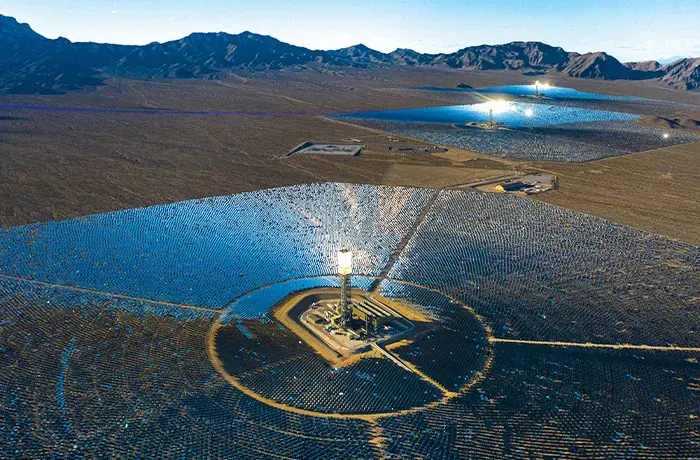
California's Ivanpah solar power plant, which cost $2.2 billion, never came close to meeting energy production goals, was prohibitively expensive to operate, and an environmental mess. It's now slated to be closed only 11 years after construction and less than halfway through its projected lifespan. Like all too many green energy ideas, it's more for appearance's sake and for politicians to virtue signal to voters that they are "saving the planet" than any actual engineering or physics reality. This is SO typical and has now cost Californians a few billion dollars and done a LOT of environmental harm to that area, all while falling way short of production goals... you know, exactly what critics argued would happen when it was proposed.

In the end, it produced less than half a percent of California's energy. California's lone operating nuclear plant, on the other hand, produces roughly 20 times as much energy, and does it at a lower cost and with less harm to the environment. But again, if you want to virtue signal about how much you really really care about the environment, you build this expensive inefficient money pit, then shut it down a few years later.

I've driven by it a couple of times. It's on I-15 between Barstow and Vegas, near the Nevada state line. Interesting looking place, but if you can't make a solar panel farm work in the Californian desert, I'm not sure you can make one like this work anywhere with our current technology.


The sun sets on California’s massive solar plant​

AA1GcE62.img


California politics are synonymous with many things, but failed energy policy might be the most relevant.


The Ivanpah solar power plant is on its way to being shut down, just 11 years after it opened. PG&E pulled out of its contract with the plant, leading to a planned closure of two of its three units by next year, while Southern California Edison is also working on buying out its contract. The plant cost $2.2 billion to build, and the Department of Energy said taxpayers will receive a refund of an undisclosed amount for the $1.6 billion in department loans. The contracts were supposed to take the plant through at least 2039.


In all, the energy from the plant costs too much money. It produced around 70% of what it was projected to produce annually. The sea of mirrors that the plant relied on to produce the energy led to the plant catching on fire in 2016, after mirrors were wrongly positioned in relation to the sun. The plant struggled with energy production due to weather, clouds, and jet streams, and was also pretty bad for the environment, what with the whole burning-birds-to-death thing. The plant also used natural gas to keep itself running, around six times the limit allowed by the California Energy Commission.


What is most shocking is the scope and scale of this project compared to the icky nuclear energy California has tried to rid itself of over the same time period. In 2020, Ivanpah produced 856 gigawatt-hours of energy. This represented a “substantial increase in efficiency and output,” and 91% of the plant’s production goals. The plant takes up 3,500 acres of land.


Meanwhile, the Diablo Canyon nuclear plant is the last nuclear plant in California. It takes up around 750 acres and produces over 17,700 gigawatt-hours of energy. That is around 20 times more than Ivanpah and accounted for over 8% of California’s in-state energy production in 2023. The nuclear plant is so successful that California Democrats have temporarily stopped trying to destroy it. In 2016, the state wanted to shut down the plant by 2025. In 2023, state regulators voted to push that deadline back to 2030.


Also, Diablo Canyon doesn’t have massive mirrors that work as bird death rays. Not bad for the only form of clean energy that environmentalists despise.


You would think California would be eager to recreate those numbers if a zero-carbon future were truly the state’s goal, but you would be wrong. Instead, the state bets its future on grand projects such as Ivanpah, which are more inefficient in energy production and land use. Sure, massive solar plants may not keep the lights on without natural gas, oil, and nuclear propping up the state’s grid, but at least it makes environmentalists feel good about themselves (so long as we don’t talk about the dead birds).


To say something positive about Ivanpah as it prepares for the end, at least it was actually constructed. Take that, California High-Speed Rail Authority.
 

Bluto

Well-known member
Messages
8,146
Reaction score
3,976
California's Ivanpah solar power plant, which cost $2.2 billion, never came close to meeting energy production goals, was prohibitively expensive to operate, and an environmental mess. It's now slated to be closed only 11 years after construction and less than halfway through its projected lifespan. Like all too many green energy ideas, it's more for appearance's sake and for politicians to virtue signal to voters that they are "saving the planet" than any actual engineering or physics reality. This is SO typical and has now cost Californians a few billion dollars and done a LOT of environmental harm to that area, all while falling way short of production goals... you know, exactly what critics argued would happen when it was proposed.

In the end, it produced less than half a percent of California's energy. California's lone operating nuclear plant, on the other hand, produces roughly 20 times as much energy, and does it at a lower cost and with less harm to the environment. But again, if you want to virtue signal about how much you really really care about the environment, you build this expensive inefficient money pit, then shut it down a few years later.

I've driven by it a couple of times. It's on I-15 between Barstow and Vegas, near the Nevada state line. Interesting looking place, but if you can't make a solar panel farm work in the Californian desert, I'm not sure you can make one like this work anywhere with our current technology.

So this was a bit of a boondoggle, had a flawed design and or fell short of projected output. That sucks.

Why not leave it at that instead of using this to set up a strawman argument against “green energy”?

Now, to provide some context in terms of comparable impacts I’m pretty confident that this project won’t even come close to registering on the list of worst disasters due to energy sources and or their delivery systems failing spectacularly.
 

drayer54

Well-known member
Messages
8,366
Reaction score
5,796
So this was a bit of a boondoggle, had a flawed design and or fell short of projected output. That sucks.

Why not leave it at that instead of using this to set up a strawman argument against “green energy”?

Now, to provide some context in terms of comparable impacts I’m pretty confident that this project won’t even come close to registering on the list of worst disasters due to energy sources and or their delivery systems failing spectacularly.
OR we just say that solar has been so abundantly subsidized at this point that it has the infrastructure and economical case to compete against other sources of power without government aid? Let it run on the merits at this point.
 

Bluto

Well-known member
Messages
8,146
Reaction score
3,976
OR we just say that solar has been so abundantly subsidized at this point that it has the infrastructure and economical case to compete against other sources of power without government aid? Let it run on the merits at this point.
Ok sure.

I don’t think solar has been subsidized as much as fossil fuels or nuclear to this point. How about pulling the plug on later while continuing to subsidize the former to the level and over the same time frame those others enjoyed before pulling the plug?

If one is being serious about energy resilience in the face of interruptions small scale decentralized systems like residential solar and batteries make waaaaaay more sense in my opinion as opposed to the current large scale, centralized corporate delivery model in terms of resiliency in the face of natural disasters, avoiding catastrophic failures that cause large scale disasters and or interruptions to service.
 
Last edited:
Top