Economics

wizards8507

Well-known member
Messages
20,660
Reaction score
2,661
Stop letting executives be paired with stock options.

Do you understand basic human motivation? Executives are paid with stock options because it forces them to improve their companies in order to have a big payday. Stock options mean that if the firm makes money, the executives make money. It makes the executive a shareholder and therefore his incentive is to benefit shareholders.

An executive paid in salary has NO incentive to maximize shareholder value because he's getting paid no matter what.
 

chicago51

Well-known member
Messages
3,658
Reaction score
387
Do you understand basic human motivation? Executives are paid with stock options because it forces them to improve their companies in order to have a big payday. Stock options mean that if the firm makes money, the executives make money. It makes the executive a shareholder and therefore his incentive is to benefit shareholders.

An executive paid in salary has NO incentive to maximize shareholder value because he's getting paid no matter what.

No it forces the them to improve the stock value not the company.

Incentive based salary is a good thing. You can easily have incentive based salary in actual dollars based on meeting certain profits and sales numbers. In fact we see this kind of incentive based salary in dollars not stock with pro athletes in virtually every sport. Because improving say profits would mean you need to sell and that may mean you have expand your product line thus hiring more workers.

Since when did the stock market become more important economic than unemployment? median wage income? GDP growth?
 

chicago51

Well-known member
Messages
3,658
Reaction score
387
Why are 99% of companies started? To make a profit, whether it be a small business for a single owner or a large corporation. They aren't started in order to create well paying jobs for a group of people.

You can trace a lot of the economic woes back to the UAW in the 70's & early 80's. They struck all over for better wages because they thought it was unfair for stockholders to get big dividends and they only receive a salary. Union salaries raced through the roof. UAW workers became some of the best paid workers in the country. In order to pay these salaries the price of cars went way up. Now the average Joe has to go into major debt to buy a car he really can't afford, but needs to get to his job, the grocery, etc..

I do agree that CEO's salaries are way out of hand and need to be reeled in.

I'm not saying the unions didn't overdue at times throughout history but hear me out on this.

Is it possible that maybe the unions worker weren't getting over paid but non union workers were getting underpaid?

If workers are being more productive and productivity is creating increased wealth. Shouldn't workers wages rise in proportion to their increased productivity?

Shouldn't the assembly line guy who is more productive see his wages rise linearly in proportion to his productive just like the CEOs salary should absolutely rise linearly also.

What we have seen is a decline in median income. Household income that has flat lined barely keeping up with the cost of living but that is with 2 workers instead of 1. Yet executive pay has increased exponentially. In fact we've seen million dollar bonus to failing companies that where forced to say off workers.

The question is why? Is it economic policy? Or is it some social cultural issue with America?
 

Irish#1

Livin' Your Dream!
Staff member
Messages
44,577
Reaction score
20,027
I'm not saying the unions didn't overdue at times throughout history but hear me out on this.

Is it possible that maybe the unions worker weren't getting over paid but non union workers were getting underpaid?

If workers are being more productive and productivity is creating increased wealth. Shouldn't workers wages rise in proportion to their increased productivity?

Shouldn't the assembly line guy who is more productive see his wages rise linearly in proportion to his productive just like the CEOs salary should absolutely rise linearly also.

What we have seen is a decline in median income. Household income that has flat lined barely keeping up with the cost of living but that is with 2 workers instead of 1. Yet executive pay has increased exponentially. In fact we've seen million dollar bonus to failing companies that where forced to say off workers.

The question is why? Is it economic policy? Or is it some social cultural issue with America?

I'm listening, but I would say no given the difference in UAW wages compared to other union wages and non union wages.

I would be all for the assembly guys wages rise with his productivity, but that will never work. First, most union contracts already have quota's built into each position. The unions fought to keep quotas out of the CBA, but gave in as a concession to others things like wages, benefits. Why did they fight these? Basically it goes back to what I said earlier. Most appear to want to do as little work as possible. I grew up in a union house (IBEW) and as stated had my taste of a union job. In the 80's the company I worked for went on strike. Office staff were asked to help on the assembly lines until the strike could be settled. I spent two weeks on the line. I met my daily quota within two hours and I wasn't humping.

Now I know there are a lot of good hard working people who are members of a union, but I've seen and heard comments where they are told to slow down or face the consequences from the union leaders. They did this to prove to the company that the quotas were unreasonable and prevent the quotas from rising which in turn kept productivity from rising. Don't know about today's union factories, but that's the way it was back then.
 
Last edited:

tussin

Well-known member
Messages
4,153
Reaction score
1,982
No it forces the them to improve the stock value not the company.

Incentive based salary is a good thing. You can easily have incentive based salary in actual dollars based on meeting certain profits and sales numbers. In fact we see this kind of incentive based salary in dollars not stock with pro athletes in virtually every sport. Because improving say profits would mean you need to sell and that may mean you have expand your product line thus hiring more workers.

Since when did the stock market become more important economic than unemployment? median wage income? GDP growth?

On the first bolded part...what? The value of a company fluctuates with its stock price.

Part 2, publicly traded companies have no obligation to address social issues, and I'd argue it is inappropriate for them to focus any time and effort on how to fix such issues (insofar as they don't directly impact the company). As I've stated before, their sole purpose is to increase the wealth of the shareholders; after all, the shareholders do OWN the company. If shareholders were more concerned with addressing societal issues, they would have donated their money instead of investing it with said company.

Bottom line, everyone acts and should act in self interest. That's why you are investing your retirement funds and not donating them to non-profits.
 
Last edited:

RDU Irish

Catholics vs. Cousins
Messages
8,622
Reaction score
2,722
I'm listening, but I would say no given the difference in UAW wages compared to other union wages and non union wages.

I would be all for the assembly guys wages rise with his productivity, but that will never work. First, most union contracts already have quota's built into each position. The unions fought to keep quotas out of the CBA, but gave in as a concession to others things like wages, benefits. Why did they fight these? Basically it goes back to what I said earlier. Most appear to want to do as little work as possible. I grew up in a union house (IBEW) and as stated had my taste of a union job. In the 80's the company I worked for went on strike. Office staff were asked to help on the assembly lines until the strike could be settled. I spent two weeks on the line. I met my daily quota within two hours and I wasn't humping.

Now I know there are a lot of good hard working people who are members of a union, but I've seen and heard comments where they are told to slow down or face the consequences from the union leaders. They did this to prove to the company that the quotas were unreasonable and prevent the quotas from rising which in turn kept productivity from rising. Don't know about today's union factories, but that's the way it was back then.

Watching "Big" the other day and love the part where Hanks' has his new job for 10 minutes and Lovitz is telling him to slow down or he'll make everyone look bad.

Unions are their own worst enemy. You can't artificially inflate the price of production without expecting the invisible hand to move production elsewhere over time. Enter outsourcing and robots.
 

Whiskeyjack

Mittens Margaritas Ante Porcos
Staff member
Messages
20,894
Reaction score
8,126
I have read this seven or eight times. Still cant wrap m head around it.

You're right; that post is borderline incomprehensible. Let me try again:

My problem with capitalism is that it shears away the ties that bind individuals to their families, communities, etc. A different system, like Distributism, wouldn't have such problems. Unfortunately, I don't see any plausible way we can make such systemic change as a nation (because it's basically global now). So, assuming we're stuck with capitalism, how can we improve it?

Implementing a Basic Income and universal catastrophic healthcare coverage while devolving as much power as possible from the Feds back to states and municipalities would at least provide for the material needs of our citizens much better than our current system, while also allowing localities the freedom to experiment with alternate systems.

Corporations to exist still have to have charters with state governments. However state governments used to demand some sort of public good in their mission statements and would revoke corporations charters if they thought say a railroad company was behaving detrimentally to the state and the community. We don't do this any more in fact you got guys like Rick Perry kissing as much corporate rear ends as possible trying get as many jobs as possible to his state, which I don't completely blame him for.

I'll say though it looks like I am wrong. Because I think Tussin is right the only objective companies see themselves having is enhancing share holder value. There is no corporate objectives toward society. Even though government research has help many corporations, even though corporations use workers educated by their state's public school system, even though corporations use infrastructure paid for by we the people the only objective is to enhance shareholder value.

This all gets back to the Lockean ideal of the autonomous self which under-girds much of liberal democracy-- you have absolute ownership over yourself, and no one has a right to prevent you from realizing your "full potential". Thus, individuals have virtually no duty to their communities, their families, even the parents who raised them-- especially no obligations to the generations who came before or those who will come after them-- because that would prevent one from self-actualization. So it's unsurprising that our corporate model is essentially amoral; imposing social obligations on them would impede their ability to make a profit.

And practically speaking, it's much more efficient to have the government provide benefits directly to constituents than to force businesses to do it through regulation. Then again, efficiency is beneficial only insofar as we're progressing toward a good end. I don't think we are.

I'll ask the question socially/culturally has America lost its soul?

Anyone who was masochistic enough to wade through the "God, Bible and Jesus" thread probably already knows my thoughts on this, but I'd definitely say so. Humans are social, spiritual creatures. We need community, faith (of some sort) and a shared conception of the Good in order to thrive. American culture is currently destroying the first two, and its concept of the third is questionable to say the least.

The one argument I get is private charity. Personally I don't buy the private charity argument some make. There is a small few that would seriously rather don't to private charity and believe that is better than government programs. I think must just don't see any responsibility to community or society. I got say it sure looks a lot of times like there is no obligation to community or society.

Bingo. Welcome to America! You can do whatever the f*ck you want, but don't expect any help along the way.
 

DSully1995

New member
Messages
1,103
Reaction score
74
Watching "Big" the other day and love the part where Hanks' has his new job for 10 minutes and Lovitz is telling him to slow down or he'll make everyone look bad.

Unions are their own worst enemy. You can't artificially inflate the price of production without expecting the invisible hand to move production elsewhere over time. Enter outsourcing and robots.

Yup, the answer to competition from developing nations labour sources has been to increase the price of labour domestically, further hurting american competitiveness, I wouldnt be surprised to see large support from china to policy makers arguing to raise minimum wage and the like. (no allegations just observing how its in their interests, just like Russia not wanting america to turn to fracking)
 

RDU Irish

Catholics vs. Cousins
Messages
8,622
Reaction score
2,722
Forget corporations, haven't SS and Medicare done more to destroy family and community than anything? No longer need to rely on kids or community to care for elders, they can fend for themselves. You were incentivized to partake in family and community b/c going it alone was potentially catastrophic later in life.


There really is no turning back. I believe that a national basic income (every citizen gets the same monthly check) in conjunction with a consumption tax would be much more efficient and universally fair.

No doubt in my mind that pushing power back to states would go a long way to improving our society.
 

Whiskeyjack

Mittens Margaritas Ante Porcos
Staff member
Messages
20,894
Reaction score
8,126
Forget corporations, haven't SS and Medicare done more to destroy family and community than anything? No longer need to rely on kids or community to care for elders, they can fend for themselves. You were incentivized to partake in family and community b/c going it alone was potentially catastrophic later in life.

Yup. The creation of the American welfare state in the early 20th century was strongly opposed by many Catholics and Distributists (Chesterton, Belloc, Day, etc.) on that basis.

There really is no turning back.

And yup. No unwinding it now.

I believe that a national basic income (every citizen gets the same monthly check) in conjunction with a consumption tax would be much more efficient and universally fair.

Agreed again. Since the welfare state can't be dismantled, we might as well make it as efficient and non-paternalistic as possible.
 

wizards8507

Well-known member
Messages
20,660
Reaction score
2,661
Forget corporations, haven't SS and Medicare done more to destroy family and community than anything? No longer need to rely on kids or community to care for elders, they can fend for themselves. You were incentivized to partake in family and community b/c going it alone was potentially catastrophic later in life.
Agree completely.

No doubt in my mind that pushing power back to states would go a long way to improving our society.
Agree completely.

There really is no turning back. I believe that a national basic income (every citizen gets the same monthly check) in conjunction with a consumption tax would be much more efficient and universally fair.
Disagree completely. I'm not sure how you can hold this position and maintain the two positions above. I'll ignore my ideological disagreement and address this from a practical economic point of view. A basic income would do literally nothing to help the poor for one simple reason: inflation. Distributing a basic income does nothing to impact the supply of goods and services. All it does is increase the supply of dollars. More dollars for the same number of goods and services means more expensive goods and services. A poor person will have exactly the same purchasing power as he or she did before. This is the same problem with increasing the minimum wage. Raising the standard of living for the poor requires increasing their purchasing power by making goods and services cheaper. This is achieved by open markets and competition among businesses.
 

tussin

Well-known member
Messages
4,153
Reaction score
1,982
You're right; that post is borderline incomprehensible. Let me try again:

My problem with capitalism is that it shears away the ties that bind individuals to their families, communities, etc. A different system, like Distributism, wouldn't have such problems. Unfortunately, I don't see any plausible way we can make such systemic change as a nation (because it's basically global now). So, assuming we're stuck with capitalism, how can we improve it?

Implementing a Basic Income and universal catastrophic healthcare coverage while devolving as much power as possible from the Feds back to states and municipalities would at least provide for the material needs of our citizens much better than our current system, while also allowing localities the freedom to experiment with alternate systems.

You and I can only shop at small-town stores and eat foods from locally sourced farms. Distributism is a lot like capitalism, except there is a value shift among individuals living in society. It's a free-will movement, not an economic policy.

Structured Distributism could never work IMO. Medieval guilds were nothing more than a few providers using government to restrict competition. That's why prices dropped and productivity increased significantly when they were abolished.
 
Last edited:

Wild Bill

Well-known member
Messages
5,518
Reaction score
3,262
Right after HS, I spent about two months working in a factory. The mindset of those people was to get as much as they could for doing as little as possible. It was almost like a game they were playing. I knew pretty quickly I didn't want to become one of them. That's when I was fortunate enough to get into IT.

It's called hide and seek for a grand a week.
 

wizards8507

Well-known member
Messages
20,660
Reaction score
2,661
Structured Distributism could never work IMO. Medieval guilds were nothing more than a few providers using government to restrict competition. That's why prices dropped and productivity increased significantly when they were abolished.

This is important. @chicago51 and others forget that employees and consumers are the same people. Anything you do to regulate labor is going to have an offset in price, and anything you do to regulate prices is going to have an offset in labor. If this were a closed system, it would essentially be a wash, but regulation and compliance have real costs associated with them. The only "winners" in these situations are the regulators themselves.
 

goldandblue

Well-known member
Messages
3,721
Reaction score
419
There really is no turning back. I believe that a national basic income (every citizen gets the same monthly check) in conjunction with a consumption tax would be much more efficient and universally fair.
.

First off, please forgive me for my minimal lack of understanding of economic policies and principles. The United States already has an issue with an overwhelming number of immigrants coming in to the country. Wouldn't a "national basic income" even progress that further?

Now you may argue that those illegal immigrants would not be eligible for this "basic income" but even if you could somehow keep those illegal immigrants from receiving the standardized income, What about their kids? Keep in mind there are many illegal immigrants in this country receiving government benefits primarily via government healthcare. Now I know if you are born in the U.S. you are a U.S. citizen. At what point or what rate of population growth does the "national basic income" cease to work?

Info regarding social benefits to immigrants

I was taught as a young boy all the way through life that if you don't work, you don't eat. Thank God, we live in a country where we get to make choices as the pertain to our own lives and how we want to live them. This country has made it as far as it has on the working backs of Americans. The problem is, we have many less Americans willing to put in a hard days work in today's society. The message in today's American Society is "if you don't want to work, to hell with it, draw a check"

I am in no way trying to start an immigration debate or anything of that matter. I am really interested in this thread and the great concepts and ideas that are being discussed. These were just some questions I had and am looking for realistic and educated answers.

Thanks Guys/Gals.
 
Last edited:

RDU Irish

Catholics vs. Cousins
Messages
8,622
Reaction score
2,722
Disagree completely. I'm not sure how you can hold this position and maintain the two positions above. I'll ignore my ideological disagreement and address this from a practical economic point of view. A basic income would do literally nothing to help the poor for one simple reason: inflation. Distributing a basic income does nothing to impact the supply of goods and services. All it does is increase the supply of dollars. More dollars for the same number of goods and services means more expensive goods and services. A poor person will have exactly the same purchasing power as he or she did before. This is the same problem with increasing the minimum wage. Raising the standard of living for the poor requires increasing their purchasing power by making goods and services cheaper. This is achieved by open markets and competition among businesses.

Yeah, the concept falls apart pretty quickly if it is not part of a comprehensive change to income/corporate/FICA taxes. I am in the camp that would love to abolish corporate and personal income taxes plus FICA and replacing with a consumption tax, paired with a monthly pre-bate to all citizens equal to tax on $15,000 of annual consumption (poverty line).

This article probably has more realistic ideas for simplifying welfare programs with significant cost savings, while providing incentives to work (currently grossly insufficient).

https://www.weeklystandard.com/blogs/report-us-spent-37-trillion-welfare-over-last-5-years_764582.html#
 

Whiskeyjack

Mittens Margaritas Ante Porcos
Staff member
Messages
20,894
Reaction score
8,126
You and I can only shop at small-town stores and eat foods from locally sourced farms. Distributism is a lot like capitalism, except there is a value shift among individuals living in society. It's a free-will movement, not an economic policy.

It's not just localism, though that's an important part of it. Its defining feature is widespread ownership of the means of production. Shopping at a farmer's market instead of Wal-Mart generally doesn't do anything to help one's neighbors become self-sufficient.

Structured Distributism could never work IMO.

What do you mean by "Structured Distributism"? There are many examples of it working well historically. But if you mean that it probably can't displace capitalism as our national economic system, then you're probably right. That's why devolution of power from the Feds to states and municipalities is important-- so that localities will at least have to resources and freedom to implement it themselves.

Medieval guilds were nothing more than a few providers using government to restrict competition. That's why prices dropped and productivity increased significantly when they were abolished.

I don't think that's a fair characterization of the Medieval guild system. They were abolished because of the Protestant skepticism of all intermediate institutions. And yes, their abolishment and the rise of capitalism afterward increased productivity; but to whom has that benefit redounded? Are we better off now than we were then? I don't think so.
 

RDU Irish

Catholics vs. Cousins
Messages
8,622
Reaction score
2,722
First off, please forgive me for my minimal lack of understanding of economic policies and principles. The United States already has an issue with an overwhelming number of immigrants coming in to the country. Wouldn't a "national basic income" even progress that further?

Now you may argue that those illegal immigrants would not be eligible for this "basic income" but even if you could somehow keep those illegal immigrants from receiving the standardized income, What about their kids? Keep in mind there are many illegal immigrants in this country receiving government benefits primarily via government healthcare. Now I know if you are born in the U.S. you are a U.S. citizen. At what point or what rate of population growth does the "national basic income" cease to work?

Info regarding social benefits to immigrants

I was taught as a young boy all the way through life that if you don't work, you don't eat. Thank God, we live in a country where we get to make choices as the pertain to our own lives and how we want to live them. This country has made it as far as it has on the working backs of Americans. The problem is, we have many less Americans willing to put in a hard days work in today's society. The message in today's American Society is "if you don't want to work, to hell with it, draw a check"

I am in no way trying to start an immigration debate or anything of that matter. I am really interested in this thread and the great concepts and ideas that are being discussed. These were just some questions I had and am looking for realistic and educated answers.

Thanks Guys/Gals.

Issue tons of Visas under this plan. They pay consumption taxes and don't get the monthly check. All the folks out there working for cash, including teenage babysitters, would pay tax when they buy new goods. Since FICA and corporate taxes are eliminated, these folks are suddenly paying a much bigger piece of the pie than they currently do. Pimps and prostitutes and drug dealers? Yeah, they pay too.

As for the check, its got to be uncomfortably low so people are incentivized to supplement their income with, GASP, real work! When structured philosophically to offset taxes on a subsistence level of consumption, you create a progressive tax that gets a mark in the "fair" column necessary to placate a lot of folks..
 

Whiskeyjack

Mittens Margaritas Ante Porcos
Staff member
Messages
20,894
Reaction score
8,126
As for the check, its got to be uncomfortably low so people are incentivized to supplement their income with, GASP, real work! When structured philosophically to offset taxes on a subsistence level of consumption, you create a progressive tax that gets a mark in the "fair" column necessary to placate a lot of folks..

You also have to set it at a subsistence level of consumption because we couldn't afford to transfer anymore than that. Could also make the benefit contingent on working/ looking for work (similar to our current unemployment system) or disability (like our current SSD system).
 
B

Buster Bluth

Guest
Forget corporations, haven't SS and Medicare done more to destroy family and community than anything? No longer need to rely on kids or community to care for elders, they can fend for themselves. You were incentivized to partake in family and community b/c going it alone was potentially catastrophic later in life.

If we're pointing fingers at what destroys communities, then the federal highway system, transportation funding, and the post-WW2 American development model (ie suburbia) deserve their share of the blame.
 
B

Buster Bluth

Guest
I don't think that's a fair characterization of the Medieval guild system. They were abolished because of the Protestant skepticism of all intermediate institutions. And yes, their abolishment and the rise of capitalism afterward increased productivity; but to whom has that benefit redounded? Are we better off now than we were then? I don't think so.

Considering how capitalism has crushed the prices for goods and increased the standards of living for everyone in the world (despite clear "growing pains") , I'd say we are better off now. For me the question is whether or not it's a phase like Marx thought or permanently optimal. I'm siding with Marx on the matter.
 

tussin

Well-known member
Messages
4,153
Reaction score
1,982
What do you mean by "Structured Distributism"? There are many examples of it working well historically. But if you mean that it probably can't displace capitalism as our national economic system, then you're probably right. That's why devolution of power from the Feds to states and municipalities is important-- so that localities will at least have to resources and freedom to implement it themselves.

Yes, that is what I meant. Agree completely with your points here.


I don't think that's a fair characterization of the Medieval guild system. They were abolished because of the Protestant skepticism of all intermediate institutions. And yes, their abolishment and the rise of capitalism afterward increased productivity; but to whom has that benefit redounded? Are we better off now than we were then? I don't think so.

I have always understood Distributism as a guise for crony capitalism. However, between your views here (and in the religion thread) I can see that you are quite the Chestertonian and I have to admit I'm not well-versed enough to actually debate you in depth on these topics.
 

RDU Irish

Catholics vs. Cousins
Messages
8,622
Reaction score
2,722
You also have to set it at a subsistence level of consumption because we couldn't afford to transfer anymore than that. Could also make the benefit contingent on working/ looking for work (similar to our current unemployment system) or disability (like our current SSD system).


Comprehensive tax reform is essential to global competitiveness. FICA and Corporate taxes are a huge obstacle to the US regaining superior economic growth.

As much as Cain was heckled, the principle behind the 9-9-9 plan seems like a great middle ground for tax reform. 9% sales/consumption tax, 9% flat personal income tax, 9% flat corporate income tax. I think 15/15/15 is more realistic, especially when coupled with a pre-bate to make it progressive instead of regressive.

Assuming $13 trillion of income (2012 estimate) you get $2 trillion of income tax.
Corporate profits of $1.6T (2010 Census data) you get $240 billion
Consumption of $13T (makes sense it would be similar to income) you get $2 trillion of income

Add it up, you get $4.2 trillion of receipts, versus current revenues under $3T. Throw a multiplier on that for expected growth in the economy and you get more revenue growing faster than what we have today.

As for the subsidy, $200/month per citizen would be expensive - about $800B/year, but as you can see our revenue generation more than makes up for it. Then add in faster growth and more incentive for marginal production.... net, net huge gain.

Tons of variables would impact the actual number applied but somewhere between 9% and 15% passes my smell test for what would be needed to adequately fund most of what the feds have their fingers in today.
 

Irish#1

Livin' Your Dream!
Staff member
Messages
44,577
Reaction score
20,027
This is important. @chicago51 and others forget that employees and consumers are the same people. Anything you do to regulate labor is going to have an offset in price, and anything you do to regulate prices is going to have an offset in labor. If this were a closed system, it would essentially be a wash, but regulation and compliance have real costs associated with them. The only "winners" in these situations are the regulators themselves.

Regulators have families and feelings like the rest of us.
 

chicago51

Well-known member
Messages
3,658
Reaction score
387
This is important. @chicago51 and others forget that employees and consumers are the same people. Anything you do to regulate labor is going to have an offset in price, and anything you do to regulate prices is going to have an offset in labor. If this were a closed system, it would essentially be a wash, but regulation and compliance have real costs associated with them. The only "winners" in these situations are the regulators themselves.

If CEOs made less say instead of 500x the average worker they made 100x the average worker then couldn't employees hourly wages go up without a price increase?

The bold is exactly why need to stop allowing bankers buy commodities futures on food commodities. It has raised food prices so food no longer follows typically supply/demand profit margin/sales which determine what an item is priced at.
 

wizards8507

Well-known member
Messages
20,660
Reaction score
2,661
If CEOs made less say instead of 500x the average worker they made 100x the average worker then couldn't employees hourly wages go up without a price increase?

I'm losing patience trying to teach BASIC economics around here.

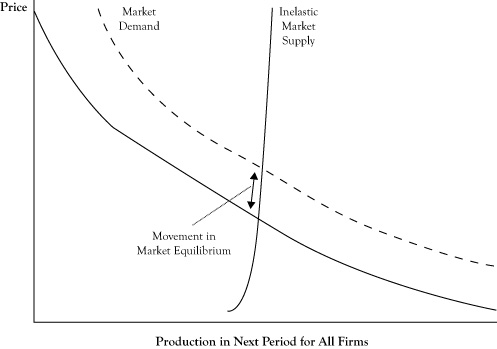
I'm not saying prices would increase due to labor costs. Prices would increase because all of a sudden people are running around with all kinds of money. The only prices that would fall are yachts, mansions, and luxury cars because demand for those items will drop along with executive compensation.

I'll try to illustrate this with a very simple example. Joe and Mary can afford a $200,000 house, which is an average 3 bed, 2 bath home in their town. All of a sudden, Joe's income goes up by 50% due to your wage equalization tactics. All of Joe's peers also receive the same increase. You think this is great! Joe can now afford a $300,000 home. While that may be true, ALL of the workers got the same bump, so demand for homes rises and the 3 bed, 2 bath home now costs $300,000. Sure, Joe and Mary make more "dollars" than they used to, but their purchasing power is exactly the same. All you did was artificially drive up demand.

stengel-fig06_007.jpg


Prices rise not because of increased cost of production (in this example), but because of artificially inflated demand for goods and services.
 
Last edited:

RDU Irish

Catholics vs. Cousins
Messages
8,622
Reaction score
2,722
If CEOs made less say instead of 500x the average worker they made 100x the average worker then couldn't employees hourly wages go up without a price increase?

The bold is exactly why need to stop allowing bankers buy commodities futures on food commodities. It has raised food prices so food no longer follows typically supply/demand profit margin/sales which determine what an item is priced at.


I think you over estimate the amount of employee compensation funneled to the C-suite.

Cisco Systems has 74,000 employees, John Chambers - CEO made $12M last year = $160 per employee or 8 cents per hour.

GE - 307,000 employees, Immelt made $12M also = $39 per employee or 2 cents per hour

WYNN - 16,500 employees, Steve Wynn made $18M = $1090 per employee or 55 cents per hour

McDonalds - 440,000 employees, Thompson made $11M = $25 per employee or 1.25 cents per hour.


McDonalds total revenue is only $63,000 per employee, which means they sure as hell can't pay more than that in average wages and stay in business! And don't say that is all international workers skewing the results, Wendy's generates $67,000 of revenue per worker.
 

RDU Irish

Catholics vs. Cousins
Messages
8,622
Reaction score
2,722
Higher COGS will also support the inflated price since there will not be excessive profits to spur increased competition in the long run.
 

goldandblue

Well-known member
Messages
3,721
Reaction score
419
Issue tons of Visas under this plan. They pay consumption taxes and don't get the monthly check. All the folks out there working for cash, including teenage babysitters, would pay tax when they buy new goods. Since FICA and corporate taxes are eliminated, these folks are suddenly paying a much bigger piece of the pie than they currently do. Pimps and prostitutes and drug dealers? Yeah, they pay too.

As for the check, its got to be uncomfortably low so people are incentivized to supplement their income with, GASP, real work! When structured philosophically to offset taxes on a subsistence level of consumption, you create a progressive tax that gets a mark in the "fair" column necessary to placate a lot of folks..

I really like this model of taxation. Everyone pays the same, regardless of your economic or social status. Naturally the Rich will pay more due to spending more. Everyone pays in this model and this is exactly what we need in my opinion. It preserves the American Dream while not depending on one economic class to "carry" the country. This also does away with a lot of social separation I think. Everyone pays the same so the poor don't feel the rich are getting away with Murder and the Rich don't feel that they are paying for the poor to live.

I don't have a problem with my tax dollars going to the legitimate needy people in our country. I don't like my tax dollars going to people with zero drive or ambition to better themselves who are completely healthy. People that live in government assisted housing have low income electric and phone bill rates but drive cars that are a hell of a lot nicer than mine. There has to be some standard set of criteria to be met in order to receive benefits.
 

MJ12666

New member
Messages
794
Reaction score
60
I'm losing patience trying to teach BASIC economics around here.

I'm not saying prices would increase due to labor costs. Prices would increase because all of a sudden people are running around with all kinds of money. The only prices that would fall are yachts, mansions, and luxury cars because demand for those items will drop along with executive compensation.

I'll try to illustrate this with a very simple example. Joe and Mary can afford a $200,000 house, which is an average 3 bed, 2 bath home in their town. All of a sudden, Joe's income goes up by 50% due to your wage equalization tactics. All of Joe's peers also receive the same increase. You think this is great! Joe can now afford a $300,000 home. While that may be true, ALL of the workers got the same bump, so demand for homes rises and the 3 bed, 2 bath home now costs $300,000. Sure, Joe and Mary make more "dollars" than they used to, but their purchasing power is exactly the same. All you did was artificially drive up demand.

stengel-fig06_007.jpg


Prices rise not because of increased cost of production (in this example), but because of artificially inflated demand for goods and services.


You realize you are trying to present a rational argument to someone who believes that Elizabeth Warren is the most qualified to be succeed our current president. Trust me, it is a lost cause and not worth the effort (or aggravation).
 
Top