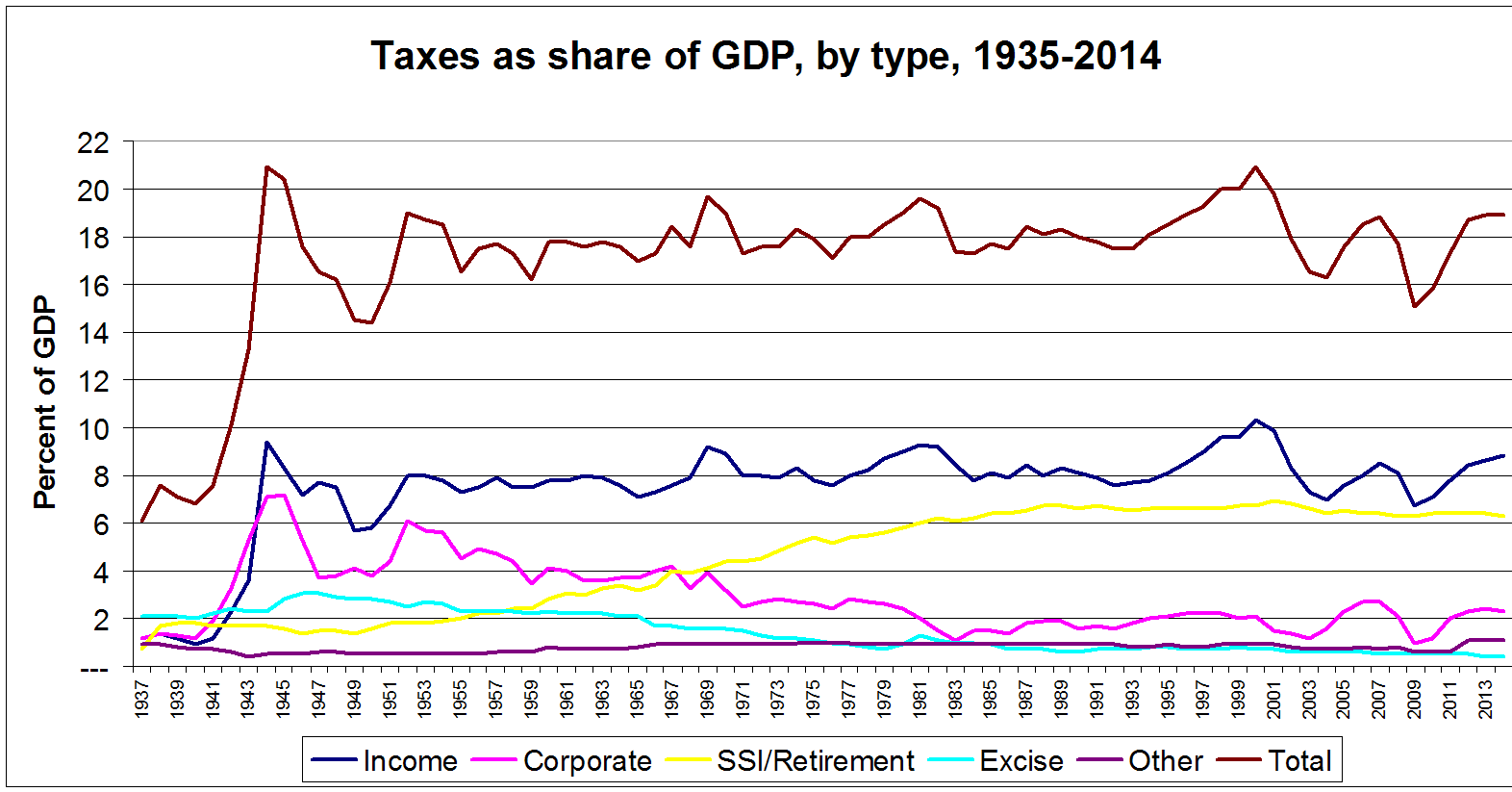
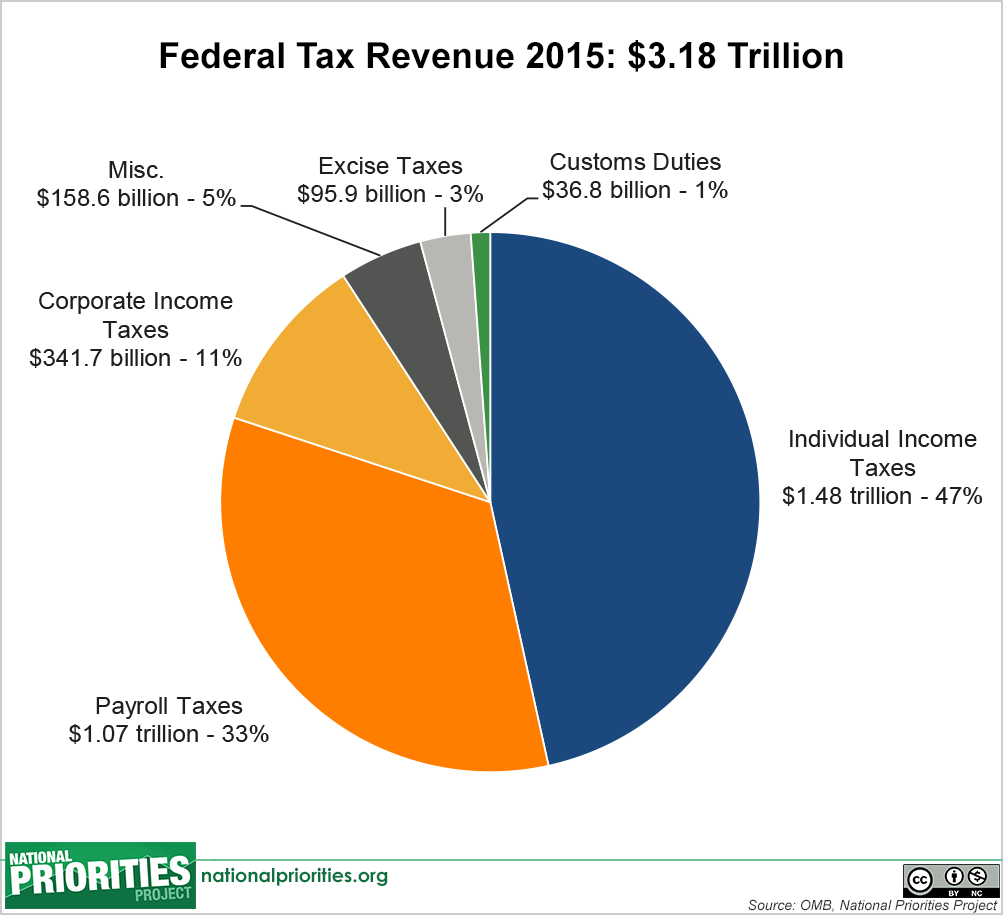
With corporate income taxes currently comprising 11% of Federal Tax Revenue, any decrease pressures other sources of federal income (payroll tax, individual income tax). Otherwise, the 19 trillion dollar debt increases. (See NDAccountant's graphic above that demonstrates that Total Amount of Taxes paid by Corporations relative to the GDP is already near the lowest amount in fifty years.)
Many candidates would also decrease individual taxes, creating lower tax brackets. Without cuts, lower tax rates will increase borrowing and interest payments. The interest payments on current debt make up 6% of federal spending.
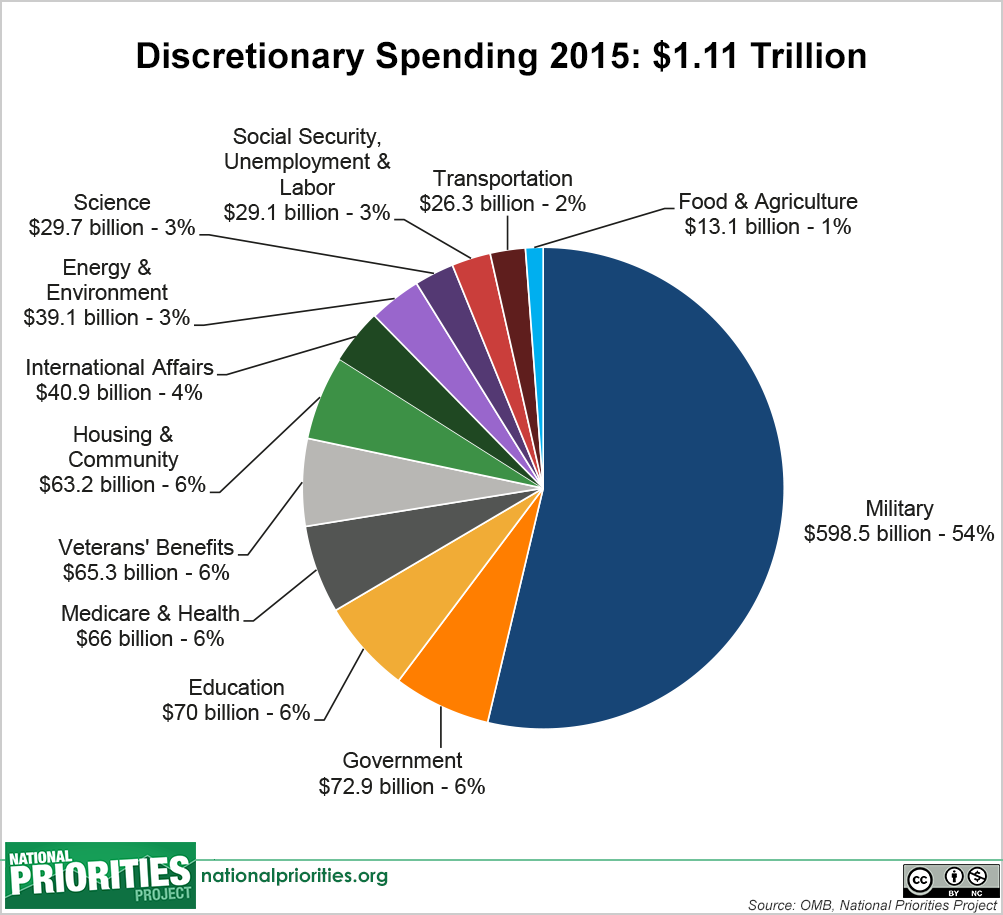
Military spending makes up 54% of discretionary spending more than any other expenditure. Republican candidates would increase that. Veterans benefits make up another 6% of discretionary spending. That is as much or more than any of the top non-military spending sectors. Those two make up 60% of discretionary spending.
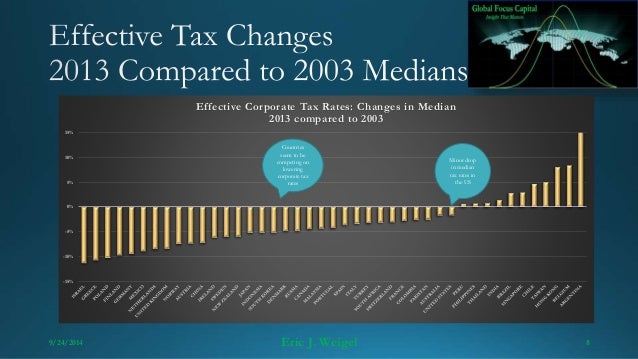
Multinational corporations (MNC) have taken advantage of lower corporate tax rates overseas (Ireland 12.5%, UK 25%, Luzembourg 29%. But they also further lowered their taxes in those countries by techniques like "profit shifting" from to further reduce their corporate taxes. This technique is described as
"Base Erosion and Profit Shifting - BEPS.
MNCs pay Ireland, UK and Luxembourg pay only 1-2% corporate taxes as a result of those techniques. With this type of tax revenue from MNCs instead of their lower corporate rates, those countries benefit only slightly from those rates.
OEC data on tax/tax on corporate profits (including % of GDP)
The international group of thirty-two nations,
Organisation for Economic Co-operation and Development (OECD) has agreed upon a plan to make the MNCs pay their fair share at the rates that are common to their region - the
BEPS plan of action. (For OECD, See membership - 32 countries including U.S. - and mission in link). One their point of action is that MNCs should pay taxes on the revenue earned in each country. This would go a long way towards eliminating "profit shifting" to other countries even from countries with lower corporate tax rates. European countries are using this to attack these types of actions, which, of course, require this type of global cooperation.
Right now companies do not pay U.S. tax on revenue overseas, but only when they bring the money back into the U.S. Republican presidential candidates propose a "repatriation fee" of 10-15% to move this revenue that was sent overseas to avoid the U.S. corporation tax of 35% back to the U.S.. That 10-15% is much lower than the average corporate tax rate in most other countries. In effect, "repatriation fees" are "profit shifting" also.
Lowering that tax rate to 25% helps companies who do not have overseas revenue. For MNCs, foreign tax credits further lower those rates which could be significant for Google, Apple, Facebook, Microsoft, etc. Further investment overseas by these MNCs with foreign tax credits helps them further lower their U.S. taxes - and decreases federal corporate tax revenue (now 11% of federal income as above). Will it bring back jobs to the U.S.? Or will MNCs continue to keep jobs overseas due to lower wages? How then do we decrease the federal debt?
In short, lowering corporate tax rates is not the total solution without addressing these other issues.
Nice find, BBG.
Broken at the Top
How America’s dysfunctional tax system costs billions in
corporate tax dodging