WE LANDED ON MARS!

C

Cackalacky

Guest
NASA hasn't done jack since we went to the moon. We were going to the moon in the sixties and seventies, we should have a lunar base right now. China is going, will build a base there, and has plans to go to mars. Meanwhile, weve been screwing around with the shuttle for 30 years as well as the space station and neither were technically e en going into space. Now, we can't even send an astronaut to the space station without hit Ning a ride with the Russians. Sorry, but NASA doesn't exactly impress me or much of the American people.

Screwing around with the shuttle allowed for neat things like GPS satellites to be repaired and the Hubble space telescope to be launched but hey I guess those aren't real impressive. The shuttle has also served as a stepping stone for general manned space exploration around our planet for almost 30 years so when we do try to go to another planet we won't be totally unprepared. But I guess that's unimpresive too. If you want to complain about having to hitch rides it's because we are switching to unmanned exploration now and I can't help you there.....And I am totally Impressed by all of it and I don't speak for much of America though. I also highly recommend going to the JPL webste for a list of past and current missions. I would not exactly say they haven't done jack....pretty impressive list of stuff, particularly the SOHO project.
 
Last edited:

IrishMoore1

Well-known member
Messages
1,146
Reaction score
181
Wow if NASA can engineer this kind of technology and landing, why haven't we sent a man to Mars!? We clearly have the technology to do it. Pretty much any problem that comes with a manned mission could be solved.
 
C

Cackalacky

Guest
Wow if NASA can engineer this kind of technology and landing, why haven't we sent a man to Mars!? We clearly have the technology to do it. Pretty much any problem that comes with a manned mission could be solved.

Main issues include :
It takes 9 months to get there and humans can't travel nine months in zero gravity,without significant bodily harm,
Transporting enough materials to build a base,
Transporting enough food to last for the duration of the trips there and back and while there,
Dust removal, from suits prior to reentering the habitable space,
The martian soil exhibits perchlorates and other caustic chemicals (perchlorate is a dry cleaning chemical that is very toxic,

I could go on but unmanned exploration is the foreseeable future for any planetary trip. Not saying it can't be done, just a bit far off.
 
Last edited:

dshans

They call me The Dribbler
Messages
9,624
Reaction score
1,181
Main issues include :
It takes 9 months to get there and humans can't travel nine months in zero gravity,without significant bodily harm,
Transporting enough materials to build a base,
Transporting enough food to last for the duration of the trips there and back and while there,
Dust removal, from suits prior to reentering the habitable space,
The martian soil exhibits perchlorates and other caustic chemicals (perchlorate is a dry cleaning chemical that is very toxic,

I could go on but unmanned exploration is the foreseeable future for any planetary trip.

Geez,t a Buzz Kill are you. All NASA need do is look to Isaac Asimov, Harlan Ellison and Marvel Comics for inspiration.

Sheesh ...
 
Last edited:

RubberSoul

Banned
Messages
283
Reaction score
59
Wow if NASA can engineer this kind of technology and landing, why haven't we sent a man to Mars!? We clearly have the technology to do it. Pretty much any problem that comes with a manned mission could be solved.

It's funny. You watch 2001, which was made in 1968 and the expectation was that we'd have a lunar base, a mid earth to moon space spation and spacecraft capable of traveling to Jupiter. And why not? We put men on the moon when the freaking Beatles were still together. There is far more technology in one pc then was in all of the computers on board AND at mission control at the time. It's absolutely inexcusable that our space program is in the pathetic state that it's in.

And people are impressed because we dropped a non manned dune buggy on mars 45 years later??
 

IrishMoore1

Well-known member
Messages
1,146
Reaction score
181
Main issues include :
It takes 9 months to get there and humans can't travel nine months in zero gravity,without significant bodily harm,
Transporting enough materials to build a base,
Transporting enough food to last for the duration of the trips there and back and while there,
Dust removal, from suits prior to reentering the habitable space,
The martian soil exhibits perchlorates and other caustic chemicals (perchlorate is a dry cleaning chemical that is very toxic,

I could go on but unmanned exploration is the foreseeable future for any planetary trip. Not saying it can't be done, just a bit far off.

There is a way to simulate gravity on a space craft, using centripetal force, but I guess that's just a theory right now
Materials as well as fuel making technology could be sent to Mars prior to mission launch
I don't know how they would deal with toxic soil, but I'm sure they could easily come up with something.

There is literally nothing holding us back technologically...
 
B

Buster Bluth

Guest
It's absolutely inexcusable that our space program is in the pathetic state that it's in.

And people are impressed because we dropped a non manned dune buggy on mars 45 years later??

Like you know what the hell you're talking about when it comes to where the space program should be. You are knowledgeable on what technologies they have and limitations they face?

You're claim of a "non manned dune buggy," to be nice, is just idiotic. Literally. We just flew a nuclear-powered mobile laboratory to f*cking Mars. This mobile lab is so highly equipped that if we were to have a manned mission to Mars, you wouldn't need much more than this thing (e.g., food and water for the human).

We essentially just landed a manned mission, without the man. There are no human limitations (e.g. food/water/time) for this thing. It just goes. It's f*cking amazing.
 

RubberSoul

Banned
Messages
283
Reaction score
59
There is a way to simulate gravity on a space craft, using centripetal force, but I guess that's just a theory right now
Materials as well as fuel making technology could be sent to Mars prior to mission launch
I don't know how they would deal with toxic soil, but I'm sure they could easily come up with something.

There is literally nothing holding us back technologically...

It would be cheaper to put a man on Mars now than it did to put a man on the moon in 1969.

What irks me is that instead of building our presence on the moon with a lunar base and science teams, we decided to rest on our laurals and spend trillions of dollars and thirty years with a piece of crap shuttle system that looked cool but was worthless and never even went into space and an international space station that, again, isn't even in space. We don't even have a damn rocket to get us into space anymore as NASA, which used to be great, is more concerned with global warming than actually exploring space.

I'm actually much more impressed with Viking in 1975 than this dune buggy in 2012.
 

ndcoltsfan2010

Well-known member
Messages
2,643
Reaction score
135
I know we have had rovers on Mars before, but this technology is much more advanced and my god the photos are crystal clear! Just awesome!
 

RubberSoul

Banned
Messages
283
Reaction score
59
Like you know what the hell you're talking about when it comes to where the space program should be. You are knowledgeable on what technologies they have and limitations they face?

You're claim of a "non manned dune buggy," to be nice, is just idiotic. Literally. We just flew a nuclear-powered mobile laboratory to f*cking Mars. This mobile lab is so highly equipped that if we were to have a manned mission to Mars, you wouldn't need much more than this thing (e.g., food and water for the human).

We essentially just landed a manned mission, without the man. There are no human limitations (e.g. food/water/time) for this thing. It just goes. It's f*cking amazing.

Calm down Buster, if you think it's great than that's fine. And if you're happy with where NASA is at then that's fine as well. I know i'm not, as well as many others who are far more qualified than myself to be disapointed.
But maybe I shouldn't expect NASA to be great anymore? Maybe I should be happy with them spending their time on greenhouse gasses instead of, you know, space exploration? I know that NASA used to do things that were incredible and would excite the masses instead of triumphs that cause CNN reporters to candidly ask 'what's the point? Haven't we done this before?'

What's new about nuclear powered spacecraft?
 

BobD

Can't get no satisfaction
Messages
7,918
Reaction score
1,034
Unfortunately the really cool stuff is all classified top secret.
 
C

Cackalacky

Guest
There is a way to simulate gravity on a space craft, using centripetal force, but I guess that's just a theory right now
Materials as well as fuel making technology could be sent to Mars prior to mission launch
I don't know how they would deal with toxic soil, but I'm sure they could easily come up with something.

There is literally nothing holding us back technologically...

I agree with your first statement but I have to say, our own desire, imagination, and funding are our only limitations. We are juveniles with regards to detailing the fundamental physics (we only truly know the make up of 25% of the entire universe), but we are little babies rolling around on the floor with regards to applying that technology. That requires desire, imagination, and funding.

I know you can simulate gravity using a massive body that rotates to generate the necessary 32.2 ft/s of gravity, but it would have to be massive or spin fast and already be in orbit. Either way is a challenge and I dont think anyone has been able to pull it off yet (to my limited knowledge). Maybe the higgs boson discovery will allow us to manipulate mass in a manner to overcome this problem.
 
Last edited:
C

Cackalacky

Guest
Calm down Buster, if you think it's great than that's fine. And if you're happy with where NASA is at then that's fine as well. I know i'm not, as well as many others who are far more qualified than myself to be disapointed.
But maybe I shouldn't expect NASA to be great anymore? Maybe I should be happy with them spending their time on greenhouse gasses instead of, you know, space exploration? I know that NASA used to do things that were incredible and would excite the masses instead of triumphs that cause CNN reporters to candidly ask 'what's the point? Haven't we done this before?'

What's new about nuclear powered spacecraft?

You do understand that the race to the moon was more political than it was scientific? So much so that the US went and grabbed as many German rocket scientists (who were far more advanced than anyone in the world at the time) during WWII to help build up their knowledge base ahead of the Russians (who were doing the same thing). During the COld war it was an us versus them attitute and JFK went out and hired 400,000 of the smartest people they could get their hands on to creat NASA and put a man on the moon, just to show we could do it, in less than ten years, since the russians beat us into space first.

If we had that desire today, I know we could go anywhere and do anything (and Europe is actually doing something quite similar with the LHC). We could actually end our dependence on oil if we wanted too...if we had a belief that ridding ourselves of oil was worthy of pursuing, but alas, its business as usual.

We dont have that right attitude now and no enemy to speak of, and with budget shortfalls everywhere and being in debt up to our ears our biggest enemy is ourselves. NASAs budget has been cut every year since after the shuttle program started and NASA has now switched to less expensive un-manned missions and satellite data collection. Our understanding of our small little place in this solar system has improved vastly in the last 30years due to NASA.

Missions - NASA Jet Propulsion Laboratory
There are approximately 115 past present and proposed missions NASA is working on which you can check out that are supremely interesting, many of which required the shuttle to launch. I am sorry the luster of the Cold War race has worn off on you, but that is less a function of NASA than it is of politicians. I have given you just one of many links you could explore and ask your own questions, instead of haveing a **** for brains media outlet ask them for you.

Go, explore, return, and enjoy.
 
Last edited:

RubberSoul

Banned
Messages
283
Reaction score
59
You do understand that the race to the moon was more political than it was scientific? So much so that the US went and grabbed as many German rocket scientists (who were far more advanced than anyone in the world at the time) during WWII to help build up their knowledge base ahead of the Russians (who were doing the same thing). During the COld war it was an us versus them attitute and JFK went out and hired 400,000 of the smartest people they could get their hands on to creat NASA and put a man on the moon, just to show we could do it, in less than ten years, since the russians beat us into space first.

If we had that desire today, I know we could go anywhere and do anything (and Europe is actually doing something quite similar with the LHC). We could actually end our dependence on oil if we wanted too...if we had a belief that ridding ourselves of oil was worthy of pursuing, but alas, its business as usual.

We dont have that right attitude now and no enemy to speak of, and with budget shortfalls everywhere and being in debt up to our ears our biggest enemy is ourselves. NASAs budget has been cut every year since after the shuttle program started and NASA has now switched to less expensive un-manned missions and satellite data collection. Our understanding of our small little place in this solar system has improved vastly in the last 30years due to NASA.

Missions - NASA Jet Propulsion Laboratory
There are approximately 115 past present and proposed missions NASA is working on which you can check out that are supremely interesting, many of which required the shuttle to launch. I am sorry the luster of the Cold War race has worn off on you, but that is less a function of NASA than it is of politicians. I have given you just one of many links you could explore and ask your own questions, instead of haveing a **** for brains media outlet ask them for you.

Go, explore, return, and enjoy.

Nice post man. I'll check it out.
 
C

Cackalacky

Guest
Geez,t a Buzz Kill are you. All NASA need do is look to Isaac Asimov, Harlan Ellison and Marvel Comics for inspiration.

Sheesh ...

Haha...sorry bro, my bad. I am an idealist with regards to humans overall potential, but a realist with regards to humans current potential.....
 
C

Cackalacky

Guest
Nice post man. I'll check it out.

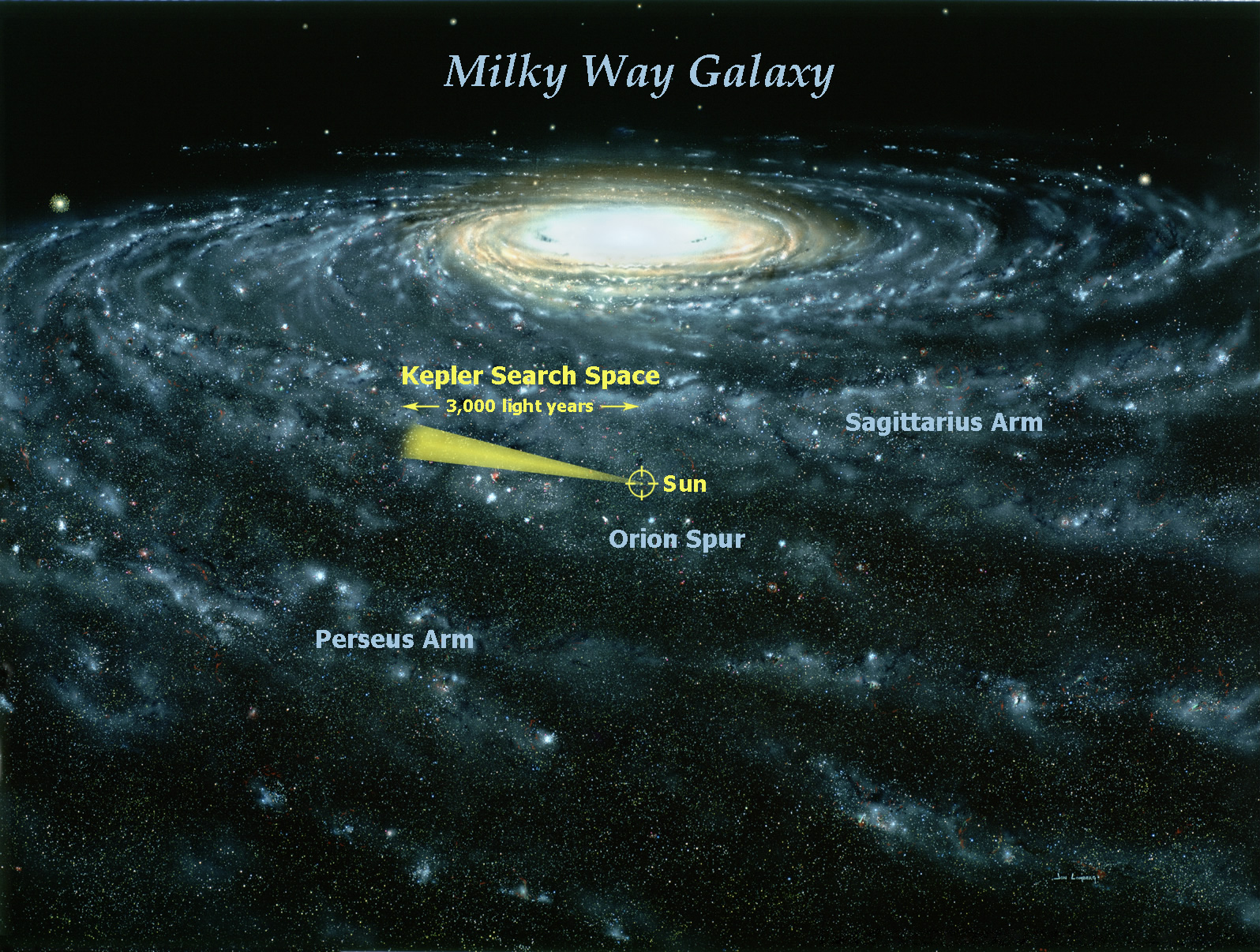
Thanks. My particular favorites are Casini, Kepler, Juno, Spitzer, and SOHO.
Kepler will change your total outlook on the universe.

LombergA1024.jpg
 
Last edited:

Old Man Mike

Fast as Lightning!
Messages
8,975
Reaction score
6,464
I just have to say this, even though I should let it go: the poster who believes that NASA hasn't done jack, and that we should be sending manned missions to Mars by now has exactly no idea of what he's talking about. Incredible baloney. Must be a troll-type comment to mess with people.

I've spent a significant part of my life teaching astronomy, space travel, NASA work, space shuttle, and on and on. I've known the people who have engineered some of our machines, and the person who designed the Hubble Repair mission. This sloppy "NASA should do this, NASA sucks on that" commentary beggars the imagination. Cackalacky's intelligent responses show great actual knowledge; and he too knows that they are just the tip of the iceberg concerning NASA accomplishments and the "ease" of developing such missions. I applaud him. NASA has accomplished so much in terms of space exploration on the crumbs of budget that the politicians deign to provide that the guys should be enshrined as heroes. These are the guys who can aim microscopic [comparatively] orbiter machines so near giant far-distant planets that the gravitational curves they get propel them on EXACTLY to the moons of those planets to take the pictures to the minute.

Everyone with any knowledge at all about the difficulties of space exploration knows that while planetary robots explorers are do-able on small budgets, manned exploration is not. To have manned exploration, barring some astounding new propulsion breakthrough, it must be staged. First a solidly useful presence in near space --- REAL orbiting habitation with muscular spacecraft-assembly and repair capability [not the puny spacelab/station], Second an orbiting lunar base, with a slow concurrent building of a permanent lunar habitation [maybe even with some mining and refining capability], Third an orbiting manned attempt at Mars [needing all the breakthroughs mentioned by Cackalacky and more], Fourth, several more attempts at Mars to build a permanent orbiting living facility with significant air, water, and food processing in cyclable technologies, Fifth, several missions then to the surface with the orbiting facility as the staging base and the escape hatch when something goes wrong. This stepped procedure would be hugely expensive and very long term. When Bush made some grandstand comments about us going to Mars, the NASA insiders roared with disbelief. NONE of them wanted to hear that political crap. It threatened to get the ignorant Congress and people oriented to a Fool's Errand and suck all funding away from things which we really could do. Thankfully, everyone who is a serious player realizes how full of crap that was, NASAs budget wasn't totally cut to the bone [though it was a near thing], and we can still have marvelous things like Curiosity and deep-space telescopes to actually teach us something.

The usefulness of actual manned landings anywhere is almost zero anyway, unless there would be a permanent scientific/technology base. The concept is almost entirely one of ego and fantasy. Yeh, it was "nice", but Neal Armstrong, in the end, discovered nothing about the Moon. I'm glad that he went, because we need an ego boost once in a while, but if we're ever going to grow up, we should be doing things which allow us to actually learn something. Curiosity sure does that.
 

Old Man Mike

Fast as Lightning!
Messages
8,975
Reaction score
6,464
A couple of other science things for whatever they're worth:

1). As Cackalacky said, you can simulate a gravitational force by creating a spacecraft which has a living working surface on the inside of a cylinder [your head pointing towards the middle axis] and spinning it. If you spin it at the right speed, the generated force will push your feet to the "floor" and this sounds well and good. The issue then is: how fast do you spin it? If you have a relatively small diameter cylinder, then you have to spin it pretty fast. Because this isn't REALLY gravity with its "straight down" force component, you are going to get the sensation of the spin as well. For as relatively fast spin, this is disorienting. It even affects work in well adjusted persons. This is because objects will not move through the air in straight lines; they will have a "natural" curve. Visually things are also caddywampus. The "solution" is to have a spacecraft with a very large diameter so the spin can be "slow". The physics gives you the same false gravity but the anomalous visual and motion characteristics are muted. But the bigger the spacecraft the more absolute need for a VERY mature presence in space, as any craft of size must be assembled "up there".

2). Nuclear engines: we have been attempting to develop useful nuclear engines since the late 1940s/early 1950s NEPA [Nuclear Energy for Propulsion of Aircraft] project at Oak Ridge. Obviously we succeeded as the entire submarine fleet went nuclear. Employing them as aircraft though had a trickier element. Flying things crash. Do we want a nuclear-powered aircraft crashing in your hometown? Well, no, but what about space? Unless you're going to mine and refine Uranium from the Moon or a friendly asteroid, you're going to have to lift it up there from here. So why not do it? First, a full-blown spacecraft engine would be VERY heavy. Second, if you think you'll lift it up in pieces and assemble it there, you don't have an assembly facility, and you haven't provided much security for the assembly workers who are now tooth-to-jowl with heavily radiating Uranium or Plutonium. Third, although lifting rockets never blow up in the movies, here on Earth we've had quite a few accidents with our vehicles. Once again: Uranium Rain in your town?

But what then does it mean that we sent a nuclear-powered mission? It wasn't the big ground-based boosters which were nuclear powered. The rover/laboratory had a small but mighty nuclear-power plant. That device was relatively light, could be incorporated in the mission package without straining the weight limits, could be assembled securely in our on-the-ground nuclear labs with sufficient shielding, and all we had to keep our fingers crossed about was that the lift-off went OK and the [relatively small] plutonium charge didn't get deposited in your hometown. Since the odds on the latter occurrence are pretty small, and the quantity of Plutonium quite small even in a worst case scenario, we decide to roll those dice.
 
C

Cackalacky

Guest
A couple of other science things for whatever they're worth:

1). As Cackalacky said, you can simulate a gravitational force by creating a spacecraft which has a living working surface on the inside of a cylinder [your head pointing towards the middle axis] and spinning it. If you spin it at the right speed, the generated force will push your feet to the "floor" and this sounds well and good. The issue then is: how fast do you spin it? If you have a relatively small diameter cylinder, then you have to spin it pretty fast. Because this isn't REALLY gravity with its "straight down" force component, you are going to get the sensation of the spin as well. For as relatively fast spin, this is disorienting. It even affects work in well adjusted persons. This is because objects will not move through the air in straight lines; they will have a "natural" curve. Visually things are also caddywampus. The "solution" is to have a spacecraft with a very large diameter so the spin can be "slow". The physics gives you the same false gravity but the anomalous visual and motion characteristics are muted. But the bigger the spacecraft the more absolute need for a VERY mature presence in space, as any craft of size must be assembled "up there".

2). Nuclear engines: we have been attempting to develop useful nuclear engines since the late 1940s/early 1950s NEPA [Nuclear Energy for Propulsion of Aircraft] project at Oak Ridge. Obviously we succeeded as the entire submarine fleet went nuclear. Employing them as aircraft though had a trickier element. Flying things crash. Do we want a nuclear-powered aircraft crashing in your hometown? Well, no, but what about space? Unless you're going to mine and refine Uranium from the Moon or a friendly asteroid, you're going to have to lift it up there from here. So why not do it? First, a full-blown spacecraft engine would be VERY heavy. Second, if you think you'll lift it up in pieces and assemble it there, you don't have an assembly facility, and you haven't provided much security for the assembly workers who are now tooth-to-jowl with heavily radiating Uranium or Plutonium. Third, although lifting rockets never blow up in the movies, here on Earth we've had quite a few accidents with our vehicles. Once again: Uranium Rain in your town?

But what then does it mean that we sent a nuclear-powered mission? It wasn't the big ground-based boosters which were nuclear powered. The rover/laboratory had a small but mighty nuclear-power plant. That device was relatively light, could be incorporated in the mission package without straining the weight limits, could be assembled securely in our on-the-ground nuclear labs with sufficient shielding, and all we had to keep our fingers crossed about was that the lift-off went OK and the [relatively small] plutonium charge didn't get deposited in your hometown. Since the odds on the latter occurrence are pretty small, and the quantity of Plutonium quite small even in a worst case scenario, we decide to roll those dice.

I was going to attempt to go into more detail about the scale of the ship versus the speed and awareness issues, but I felt uneasy describing it. Excellent job sir.
 

RubberSoul

Banned
Messages
283
Reaction score
59
I just have to say this, even though I should let it go: the poster who believes that NASA hasn't done jack, and that we should be sending manned missions to Mars by now has exactly no idea of what he's talking about. Incredible baloney. Must be a troll-type comment to mess with people.

I've spent a significant part of my life teaching astronomy, space travel, NASA work, space shuttle, and on and on. I've known the people who have engineered some of our machines, and the person who designed the Hubble Repair mission. This sloppy "NASA should do this, NASA sucks on that" commentary beggars the imagination. Cackalacky's intelligent responses show great actual knowledge; and he too knows that they are just the tip of the iceberg concerning NASA accomplishments and the "ease" of developing such missions. I applaud him. NASA has accomplished so much in terms of space exploration on the crumbs of budget that the politicians deign to provide that the guys should be enshrined as heroes. These are the guys who can aim microscopic [comparatively] orbiter machines so near giant far-distant planets that the gravitational curves they get propel them on EXACTLY to the moons of those planets to take the pictures to the minute.

Jeffrey Kluger: Why China’s Moon Mission Is a Good Thing | TIME Ideas | TIME.com
Everyone with any knowledge at all about the difficulties of space exploration knows that while planetary robots explorers are do-able on small budgets, manned exploration is not. To have manned exploration, barring some astounding new propulsion breakthrough, it must be staged. First a solidly useful presence in near space --- REAL orbiting habitation with muscular spacecraft-assembly and repair capability [not the puny spacelab/station], Second an orbiting lunar base, with a slow concurrent building of a permanent lunar habitation [maybe even with some mining and refining capability], Third an orbiting manned attempt at Mars [needing all the breakthroughs mentioned by Cackalacky and more], Fourth, several more attempts at Mars to build a permanent orbiting living facility with significant air, water, and food processing in cyclable technologies, Fifth, several missions then to the surface with the orbiting facility as the staging base and the escape hatch when something goes wrong. This stepped procedure would be hugely expensive and very long term. When Bush made some grandstand comments about us going to Mars, the NASA insiders roared with disbelief. NONE of them wanted to hear that political crap. It threatened to get the ignorant Congress and people oriented to a Fool's Errand and suck all funding away from things which we really could do. Thankfully, everyone who is a serious player realizes how full of crap that was, NASAs budget wasn't totally cut to the bone [though it was a near thing], and we can still have marvelous things like Curiosity and deep-space telescopes to actually teach us something.

The usefulness of actual manned landings anywhere is almost zero anyway, unless there would be a permanent scientific/technology base. The concept is almost entirely one of ego and fantasy. Yeh, it was "nice", but Neal Armstrong, in the end, discovered nothing about the Moon. I'm glad that he went, because we need an ego boost once in a while, but if we're ever going to grow up, we should be doing things which allow us to actually learn something. Curiosity sure does that.

I don't think we should have a man on mars now. We should have a lunar base, however. Imagine the united states having a permanent base on the moon with scientific teams, with lunar telescopes, ect. Setting off magnesium flares so the people on earth can see them.

We should have a rocket developed by now that could get people to the moon and mars. We should be prepping in the next 10 years too send a dry run to Mars with intent of sending a man there soon after. We don't even have a rocket to get us into near earth orbit. The crappy shuttle system cost us 30 years in designing newer and better rockets and space capsules. And yes, it was junk. It's why they are gone and nobody on earth wants to copy them.
Cina is going to the moon and beyond. Russia is going to the moon and beyond. The US had better get it's act together and soon.

Jeffrey Kluger: Why China’s Moon Mission Is a Good Thing | TIME Ideas | TIME.com
 
Last edited:

Old Man Mike

Fast as Lightning!
Messages
8,975
Reaction score
6,464
Well, we can completely agree on one thing: the Shuttle system was a horror show design-wise from the beginning and every space engineer and spacecraft design student that I know said so. We should have opted for the surface-to-space orbiting plane instead. It would have taken longer to get into space than the "pile-of-pieces" shuttle design, but the wait would have been worth it. I have a friend who predicted the Challenger disaster well before it happened. We were whistling in the dark with a known risk-loaded design for years, but pressured into stupid decisions by popular and political pressures.

Concerning heavy-lift vehicles, however: Congress slammed the budget down tight after we succeeded with Apollo. The only reason that we had things like the Vikings/Voyagers was that there were some "leftover" Saturn 5 boosters. Even giving Congress its due crap, the heavylift booster from Earth surface isn't the way to "go far and fast" anyway. We need to have a full blown muscle facility in space, and assemble and launch solar system explorers from there. If one wants to gripe about our slow progress in manned presence in space, one should beat up Congress on their attitudes about [non-]funding space platform development. By the way, some clown senator from Tennessee wanted to shut NASAs budget down entirely in this year's vote.

China may go to Mars and beyond, but if they do it will be on American money. Every time you go for the cheap and buy a "made in China" product, you're giving them the wherewithall to do any damm thing they want by brute economic power. [I never buy a "Made-in-China" product unless I'm faked out somehow. I'm currently assessing a way to get lightbulbs shipped from the American plant in Illinois rather than succumb to the fake American lightbulb makers]. And even if they DO send men to permanent lunar bases and ultimately Mars, it "ain't gonna happen quick". Money cannot simply buy some of the necessary developments.
 

tadman95

I have a bigger bullet
Messages
2,846
Reaction score
248
I was 5 years old when Kennedy said we were going to the moon. Shepard and Glenn had already made history for the Unites States. I spent the next 7 years living, breathing NASA. I would write the space centers in Texas and Florida and get these big packets of maps and pictures of the moon and rockets and astronauts.

On top of that, we had Star Trek. I could dream about me and my buddies conquering the universe. Good times.

I don't remember a more excited time for this nation, and the planet, when Armstrong stepped off of that ladder. With the total computer power of a small modern day calculator on board, we did the impossible, or so it seemed.

In the midst of the Vietnam War, assassinations, the Civil Rights Movement, a nation at unrest, NASA gave us something to be proud about.

Apollo 13. We didn't breathe for three days. Even typing this brings back emotions, the joy of seeing those three parachutes popping into view. The sheer excitement of seeing those three men step out of the capsule. Just wow! We were geniuses! NASA could do anything! Maybe they were too good, made it seem to easy.

Then we begin to lose our way. Thanks congress for the lack of vision. We can explore the universe with robots now. It's incredible what these guys can do. Cheaper and safer for sure, but not nearly as exciting, at least to most. I check "space" news everyday, after IE of course.

One thing I believe our government must always do is play the role of enabler. It should provide the resources to create greatness. No other entity can do that. Private enterprise only has limited resources, not the resources to develop the technologies mentioned in the posts above.

Dreaming, fulfilling those dreams are what we do, and do very well.
 
Last edited:
Top