
You are using an out of date browser. It may not display this or other websites correctly.
You should upgrade or use an alternative browser.
You should upgrade or use an alternative browser.
Thread of the Random
- Thread starter PLACforever
- Start date

Circa
Conspire to keep It real
- Messages
- 8,000
- Reaction score
- 818
Merry Holiday Season.
AMC has ELF on a loop atm.
<iframe src="https://giphy.com/embed/MRBoE0SHrhceA" width="480" height="274" frameBorder="0" class="giphy-embed" allowFullScreen></iframe><p><a href="https://giphy.com/gifs/MRBoE0SHrhceA">via GIPHY</a></p>
AMC has ELF on a loop atm.
<iframe src="https://giphy.com/embed/MRBoE0SHrhceA" width="480" height="274" frameBorder="0" class="giphy-embed" allowFullScreen></iframe><p><a href="https://giphy.com/gifs/MRBoE0SHrhceA">via GIPHY</a></p>

- Messages
- 44,597
- Reaction score
- 20,056
Cook your meat you knuckleheads.
A man had seizures after eating hot pot. Turns out he had tapeworms in his brain.
(CNN)A 46-year-old construction worker in China suffering from seizures turned out to have tapeworms in his brain -- suspected to be the result of eating undercooked meat.
About a month ago, Zhu (a pseudonym for the patient), from Luzhou, in eastern Zhejiang province, bought pork and mutton to cook in a spicy hot pot broth, according to a report published last week by the First Affiliated Hospital of Zhejiang University.
A few days later, he began to feel dizzy, and suffered headaches during the day, the report said. During the night, while he was sleeping, Zhu would experience seizure-like symptoms, similar to epilepsy.
Zhu's coworkers found him during such a seizure, and quickly sent him to a nearby hospital, where a CT scan showed "intercranial calcifications" and lesions in his skull. However, Zhu declined any further examinations, not wanting to spend more money, and returned home, according to the report.
However, the symptoms did not go away and Zhu continued experiencing seizures. Finally, he went to the Zhejiang University hospital, where doctors performed an MRI scan and diagnosed him with neurocysticercosis -- tapeworms on the brain.
After hearing that Zhu had eaten hot pot recently, the hospital's chief physician speculated that the pork and mutton may have been infested with tapeworm larvae -- which could then have entered Zhu's digestive tract because the meat had not been cooked properly.
"I only simmered the meat a little," Zhu said in the report. "The bottom of the pot with the spicy broth was red, so you couldn't see if the meat had been cooked thoroughly."
Zhu has since recovered, after doctors removed the tapeworms and reduced the pressure on his brain, the report said.
Neurocysticercosis is a parasitic infection that is contracted when someone swallows tapeworm eggs that have passed in the feces of another person who has an intestinal tapeworm. The larvae crawl out of the eggs and into muscle and brain tissues, where they form cysts -- like the "calcifications" observed in Zhu's CT scans.
Cysticercosis infections occur worldwide, though these parasitic invasions of the human body mostly occur in rural areas of countries where pigs are allowed to roam and where sanitation practices are poor, according to the US Centers for Disease Control and Prevention.
Though these infections may be rare among people who live in countries where pigs do not have contact with human feces, cysticercosis can be acquired anywhere in the world, including the United States and other Western nations. Just this June, a New York resident reported experiencing hallucinations and disorientation, which doctors believed was due to a brain tumor -- until they discovered a baby tapeworm in her brain.
A man had seizures after eating hot pot. Turns out he had tapeworms in his brain.
(CNN)A 46-year-old construction worker in China suffering from seizures turned out to have tapeworms in his brain -- suspected to be the result of eating undercooked meat.
About a month ago, Zhu (a pseudonym for the patient), from Luzhou, in eastern Zhejiang province, bought pork and mutton to cook in a spicy hot pot broth, according to a report published last week by the First Affiliated Hospital of Zhejiang University.
A few days later, he began to feel dizzy, and suffered headaches during the day, the report said. During the night, while he was sleeping, Zhu would experience seizure-like symptoms, similar to epilepsy.
Zhu's coworkers found him during such a seizure, and quickly sent him to a nearby hospital, where a CT scan showed "intercranial calcifications" and lesions in his skull. However, Zhu declined any further examinations, not wanting to spend more money, and returned home, according to the report.
However, the symptoms did not go away and Zhu continued experiencing seizures. Finally, he went to the Zhejiang University hospital, where doctors performed an MRI scan and diagnosed him with neurocysticercosis -- tapeworms on the brain.
After hearing that Zhu had eaten hot pot recently, the hospital's chief physician speculated that the pork and mutton may have been infested with tapeworm larvae -- which could then have entered Zhu's digestive tract because the meat had not been cooked properly.
"I only simmered the meat a little," Zhu said in the report. "The bottom of the pot with the spicy broth was red, so you couldn't see if the meat had been cooked thoroughly."
Zhu has since recovered, after doctors removed the tapeworms and reduced the pressure on his brain, the report said.
Neurocysticercosis is a parasitic infection that is contracted when someone swallows tapeworm eggs that have passed in the feces of another person who has an intestinal tapeworm. The larvae crawl out of the eggs and into muscle and brain tissues, where they form cysts -- like the "calcifications" observed in Zhu's CT scans.
Cysticercosis infections occur worldwide, though these parasitic invasions of the human body mostly occur in rural areas of countries where pigs are allowed to roam and where sanitation practices are poor, according to the US Centers for Disease Control and Prevention.
Though these infections may be rare among people who live in countries where pigs do not have contact with human feces, cysticercosis can be acquired anywhere in the world, including the United States and other Western nations. Just this June, a New York resident reported experiencing hallucinations and disorientation, which doctors believed was due to a brain tumor -- until they discovered a baby tapeworm in her brain.

ACamp1900
Counting my ‘bet against ND’ winnings
- Messages
- 48,947
- Reaction score
- 11,226
Valentine's Day to Easter pro tip...
1.) Go buy all your Easter candy for the kidos this weekend while it's still on discount from Valentine's Day
2.) Don't remove any of the discount stickers. It's important your kids know where they stand.
1.) Go buy all your Easter candy for the kidos this weekend while it's still on discount from Valentine's Day
2.) Don't remove any of the discount stickers. It's important your kids know where they stand.
- Messages
- 44,597
- Reaction score
- 20,056
Valentine's Day to Easter pro tip...
1.) Go buy all your Easter candy for the kidos this weekend while it's still on discount from Valentine's Day
2.) Don't remove any of the discount stickers. It's important your kids know where they stand.
Given heart shaped candy doesn’t resemble an egg you could remove the sticker and they’ll still know. You tightwad.

- Messages
- 20,894
- Reaction score
- 8,126
The Guardian recently published a great article by Rutger Bregman called, "The real Lord of the Flies: what happened when six boys were shipwrecked for 15 months":
For centuries western culture has been permeated by the idea that humans are selfish creatures. That cynical image of humanity has been proclaimed in films and novels, history books and scientific research. But in the last 20 years, something extraordinary has happened. Scientists from all over the world have switched to a more hopeful view of mankind. This development is still so young that researchers in different fields often don’t even know about each other.
When I started writing a book about this more hopeful view, I knew there was one story I would have to address. It takes place on a deserted island somewhere in the Pacific. A plane has just gone down. The only survivors are some British schoolboys, who can’t believe their good fortune. Nothing but beach, shells and water for miles. And better yet: no grownups.
On the very first day, the boys institute a democracy of sorts. One boy, Ralph, is elected to be the group’s leader. Athletic, charismatic and handsome, his game plan is simple: 1) Have fun. 2) Survive. 3) Make smoke signals for passing ships. Number one is a success. The others? Not so much. The boys are more interested in feasting and frolicking than in tending the fire. Before long, they have begun painting their faces. Casting off their clothes. And they develop overpowering urges – to pinch, to kick, to bite.
By the time a British naval officer comes ashore, the island is a smouldering wasteland. Three of the children are dead. “I should have thought,” the officer says, “that a pack of British boys would have been able to put up a better show than that.” At this, Ralph bursts into tears. “Ralph wept for the end of innocence,” we read, and for “the darkness of man’s heart”.
This story never happened. An English schoolmaster, William Golding, made up this story in 1951 – his novel Lord of the Flies would sell tens of millions of copies, be translated into more than 30 languages and hailed as one of the classics of the 20th century. In hindsight, the secret to the book’s success is clear. Golding had a masterful ability to portray the darkest depths of mankind. Of course, he had the zeitgeist of the 1960s on his side, when a new generation was questioning its parents about the atrocities of the second world war. Had Auschwitz been an anomaly, they wanted to know, or is there a Nazi hiding in each of us?
I first read Lord of the Flies as a teenager. I remember feeling disillusioned afterwards, but not for a second did I think to doubt Golding’s view of human nature. That didn’t happen until years later when I began delving into the author’s life. I learned what an unhappy individual he had been: an alcoholic, prone to depression; a man who beat his kids. “I have always understood the Nazis,” Golding confessed, “because I am of that sort by nature.” And it was “partly out of that sad self-knowledge” that he wrote Lord of the Flies.
I began to wonder: had anyone ever studied what real children would do if they found themselves alone on a deserted island? I wrote an article on the subject, in which I compared Lord of the Flies to modern scientific insights and concluded that, in all probability, kids would act very differently. Readers responded sceptically. All my examples concerned kids at home, at school, or at summer camp. Thus began my quest for a real-life Lord of the Flies. After trawling the web for a while, I came across an obscure blog that told an arresting story: “One day, in 1977, six boys set out from Tonga on a fishing trip ... Caught in a huge storm, the boys were shipwrecked on a deserted island. What do they do, this little tribe? They made a pact never to quarrel.”
The article did not provide any sources. But sometimes all it takes is a stroke of luck. Sifting through a newspaper archive one day, I typed a year incorrectly and there it was. The reference to 1977 turned out to have been a typo. In the 6 October 1966 edition of Australian newspaper The Age, a headline jumped out at me: “Sunday showing for Tongan castaways”. The story concerned six boys who had been found three weeks earlier on a rocky islet south of Tonga, an island group in the Pacific Ocean. The boys had been rescued by an Australian sea captain after being marooned on the island of ‘Ata for more than a year. According to the article, the captain had even got a television station to film a re-enactment of the boys’ adventure.
I was bursting with questions. Were the boys still alive? And could I find the television footage? Most importantly, though, I had a lead: the captain’s name was Peter Warner. When I searched for him, I had another stroke of luck. In a recent issue of a tiny local paper from Mackay, Australia, I came across the headline: “Mates share 50-year bond”. Printed alongside was a small photograph of two men, smiling, one with his arm slung around the other. The article began: “Deep in a banana plantation at Tullera, near Lismore, sit an unlikely pair of mates ... The elder is 83 years old, the son of a wealthy industrialist. The younger, 67, was, literally, a child of nature.” Their names? Peter Warner and Mano Totau. And where had they met? On a deserted island.
My wife Maartje and I rented a car in Brisbane and some three hours later arrived at our destination, a spot in the middle of nowhere that stumped Google Maps. Yet there he was, sitting out in front of a low-slung house off the dirt road: the man who rescued six lost boys 50 years ago, Captain Peter Warner.
Peter was the youngest son of Arthur Warner, once one of the richest and most powerful men in Australia. Back in the 1930s, Arthur ruled over a vast empire called Electronic Industries, which dominated the country’s radio market at the time. Peter was groomed to follow in his father’s footsteps. Instead, at the age of 17, he ran away to sea in search of adventure and spent the next few years sailing from Hong Kong to Stockholm, Shanghai to St Petersburg. When he finally returned five years later, the prodigal son proudly presented his father with a Swedish captain’s certificate. Unimpressed, Warner Sr demanded his son learn a useful profession. “What’s easiest?” Peter asked. “Accountancy,” Arthur lied.
Peter went to work for his father’s company, yet the sea still beckoned, and whenever he could he went to Tasmania, where he kept his own fishing fleet. It was this that brought him to Tonga in the winter of 1966. On the way home he took a little detour and that’s when he saw it: a minuscule island in the azure sea, ‘Ata. The island had been inhabited once, until one dark day in 1863, when a slave ship appeared on the horizon and sailed off with the natives. Since then, ‘Ata had been deserted – cursed and forgotten.
But Peter noticed something odd. Peering through his binoculars, he saw burned patches on the green cliffs. “In the tropics it’s unusual for fires to start spontaneously,” he told us, a half century later. Then he saw a boy. Naked. Hair down to his shoulders. This wild creature leaped from the cliffside and plunged into the water. Suddenly more boys followed, screaming at the top of their lungs. It didn’t take long for the first boy to reach the boat. “My name is Stephen,” he cried in perfect English. “There are six of us and we reckon we’ve been here 15 months.”
The boys, once aboard, claimed they were students at a boarding school in Nuku‘alofa, the Tongan capital. Sick of school meals, they had decided to take a fishing boat out one day, only to get caught in a storm. Likely story, Peter thought. Using his two-way radio, he called in to Nuku‘alofa. “I’ve got six kids here,” he told the operator. “Stand by,” came the response. Twenty minutes ticked by. (As Peter tells this part of the story, he gets a little misty-eyed.) Finally, a very tearful operator came on the radio, and said: “You found them! These boys have been given up for dead. Funerals have been held. If it’s them, this is a miracle!”
In the months that followed I tried to reconstruct as precisely as possible what had happened on ‘Ata. Peter’s memory turned out to be excellent. Even at the age of 90, everything he recounted was consistent with my foremost other source, Mano, 15 years old at the time and now pushing 70, who lived just a few hours’ drive from him. The real Lord of the Flies, Mano told us, began in June 1965. The protagonists were six boys – Sione, Stephen, Kolo, David, Luke and Mano – all pupils at a strict Catholic boarding school in Nuku‘alofa. The oldest was 16, the youngest 13, and they had one main thing in common: they were bored witless. So they came up with a plan to escape: to Fiji, some 500 miles away, or even all the way to New Zealand.
There was only one obstacle. None of them owned a boat, so they decided to “borrow” one from Mr Taniela Uhila, a fisherman they all disliked. The boys took little time to prepare for the voyage. Two sacks of bananas, a few coconuts and a small gas burner were all the supplies they packed. It didn’t occur to any of them to bring a map, let alone a compass.
No one noticed the small craft leaving the harbour that evening. Skies were fair; only a mild breeze ruffled the calm sea. But that night the boys made a grave error. They fell asleep. A few hours later they awoke to water crashing down over their heads. It was dark. They hoisted the sail, which the wind promptly tore to shreds. Next to break was the rudder. “We drifted for eight days,” Mano told me. “Without food. Without water.” The boys tried catching fish. They managed to collect some rainwater in hollowed-out coconut shells and shared it equally between them, each taking a sip in the morning and another in the evening.
Then, on the eighth day, they spied a miracle on the horizon. A small island, to be precise. Not a tropical paradise with waving palm trees and sandy beaches, but a hulking mass of rock, jutting up more than a thousand feet out of the ocean. These days, ‘Ata is considered uninhabitable. But “by the time we arrived,” Captain Warner wrote in his memoirs, “the boys had set up a small commune with food garden, hollowed-out tree trunks to store rainwater, a gymnasium with curious weights, a badminton court, chicken pens and a permanent fire, all from handiwork, an old knife blade and much determination.” While the boys in Lord of the Flies come to blows over the fire, those in this real-life version tended their flame so it never went out, for more than a year.
The kids agreed to work in teams of two, drawing up a strict roster for garden, kitchen and guard duty. Sometimes they quarrelled, but whenever that happened they solved it by imposing a time-out. Their days began and ended with song and prayer. Kolo fashioned a makeshift guitar from a piece of driftwood, half a coconut shell and six steel wires salvaged from their wrecked boat – an instrument Peter has kept all these years – and played it to help lift their spirits. And their spirits needed lifting. All summer long it hardly rained, driving the boys frantic with thirst. They tried constructing a raft in order to leave the island, but it fell apart in the crashing surf.
Worst of all, Stephen slipped one day, fell off a cliff and broke his leg. The other boys picked their way down after him and then helped him back up to the top. They set his leg using sticks and leaves. “Don’t worry,” Sione joked. “We’ll do your work, while you lie there like King Taufa‘ahau Tupou himself!”
They survived initially on fish, coconuts, tame birds (they drank the blood as well as eating the meat); seabird eggs were sucked dry. Later, when they got to the top of the island, they found an ancient volcanic crater, where people had lived a century before. There the boys discovered wild taro, bananas and chickens (which had been reproducing for the 100 years since the last Tongans had left).
They were finally rescued on Sunday 11 September 1966. The local physician later expressed astonishment at their muscled physiques and Stephen’s perfectly healed leg. But this wasn’t the end of the boys’ little adventure, because, when they arrived back in Nuku‘alofa police boarded Peter’s boat, arrested the boys and threw them in jail. Mr Taniela Uhila, whose sailing boat the boys had “borrowed” 15 months earlier, was still furious, and he’d decided to press charges.
Fortunately for the boys, Peter came up with a plan. It occurred to him that the story of their shipwreck was perfect Hollywood material. And being his father’s corporate accountant, Peter managed the company’s film rights and knew people in TV. So from Tonga, he called up the manager of Channel 7 in Sydney. “You can have the Australian rights,” he told them. “Give me the world rights.” Next, Peter paid Mr Uhila £150 for his old boat, and got the boys released on condition that they would cooperate with the movie. A few days later, a team from Channel 7 arrived.
The mood when the boys returned to their families in Tonga was jubilant. Almost the entire island of Haʻafeva – population 900 – had turned out to welcome them home. Peter was proclaimed a national hero. Soon he received a message from King Taufa‘ahau Tupou IV himself, inviting the captain for an audience. “Thank you for rescuing six of my subjects,” His Royal Highness said. “Now, is there anything I can do for you?” The captain didn’t have to think long. “Yes! I would like to trap lobster in these waters and start a business here.” The king consented. Peter returned to Sydney, resigned from his father’s company and commissioned a new ship. Then he had the six boys brought over and granted them the thing that had started it all: an opportunity to see the world beyond Tonga. He hired them as the crew of his new fishing boat.
While the boys of ‘Ata have been consigned to obscurity, Golding’s book is still widely read. Media historians even credit him as being the unwitting originator of one of the most popular entertainment genres on television today: reality TV. “I read and reread Lord of the Flies ,” divulged the creator of hit series Survivor in an interview.
It’s time we told a different kind of story. The real Lord of the Flies is a tale of friendship and loyalty; one that illustrates how much stronger we are if we can lean on each other. After my wife took Peter’s picture, he turned to a cabinet and rummaged around for a bit, then drew out a heavy stack of papers that he laid in my hands. His memoirs, he explained, written for his children and grandchildren. I looked down at the first page. “Life has taught me a great deal,” it began, “including the lesson that you should always look for what is good and positive in people.”

NDBoiler
The Rep Machine
- Messages
- 4,455
- Reaction score
- 1,826
As a fan of hiking, camping, backpacking, etc., I’ve always been intrigued by the story of the Forrest Fenn treasure. I’ve even been to many of the areas where it was allegedly hidden, although I never searched for it. As of late yesterday, the rumor is that it has now been found:
https://www.krqe.com/news/new-mexico/has-forrest-fenns-treasure-been-found/
Will be interesting to see what else comes out about this and if it can be officially confirmed.
https://www.krqe.com/news/new-mexico/has-forrest-fenns-treasure-been-found/
Will be interesting to see what else comes out about this and if it can be officially confirmed.
- Messages
- 44,597
- Reaction score
- 20,056
As a fan of hiking, camping, backpacking, etc., I’ve always been intrigued by the story of the Forrest Fenn treasure. I’ve even been to many of the areas where it was allegedly hidden, although I never searched for it. As of late yesterday, the rumor is that it has now been found:
https://www.krqe.com/news/new-mexico/has-forrest-fenns-treasure-been-found/
Will be interesting to see what else comes out about this and if it can be officially confirmed.
Don't remember what network it was on, but saw a show about this a while back. Must be nice to have the kind of money where you can go bury $3M and not miss it.
NDBoiler
The Rep Machine
- Messages
- 4,455
- Reaction score
- 1,826
Don't remember what network it was on, but saw a show about this a while back. Must be nice to have the kind of money where you can go bury $3M and not miss it.
Yes it must be.
There’s now multiple reports confirming it was found, including an interview with Fenn confirming it. The guy who found it wants to remain anonymous, but he sent Fenn a picture of it that verified he found it. It would be interesting to know where it actually was hidden, but I haven’t seen any reports yet that reveal where it was.
NDBoiler
The Rep Machine
- Messages
- 4,455
- Reaction score
- 1,826
I noticed there was a bit of an uptick in efforts to “cancel” Christopher Columbus recently (statues being removed, etc.). I know there is a large painting of CC as you walk into the ND admin building, wonder if that will see a change too.
- Messages
- 44,597
- Reaction score
- 20,056
I get to an intersection where cars that are waiting to turn are blocking the intersection so no one can get through. It was the line for Chik-Fil-A drive thru. It was wrapped around the store, then back up the short drive and into the intersection. Your lunch break would be almost over by the time you got your food.
I don't know what they're putting in those sandwiches, but it's got a lot of people hooked.
I don't know what they're putting in those sandwiches, but it's got a lot of people hooked.

- Messages
- 19,127
- Reaction score
- 11,077
I noticed there was a bit of an uptick in efforts to “cancel” Christopher Columbus recently (statues being removed, etc.). I know there is a large painting of CC as you walk into the ND admin building, wonder if that will see a change too.
I think they actually moved that painting a year or so ago after a petition from some students and/or alumni.
I'll see if I can locate the article about it.
- Messages
- 20,894
- Reaction score
- 8,126
I don't know what they're putting in those sandwiches, but it's got a lot of people hooked.
<iframe width="560" height="315" src="https://www.youtube.com/embed/YKRFlNryaWw?start=88" frameborder="0" allow="accelerometer; autoplay; encrypted-media; gyroscope; picture-in-picture" allowfullscreen></iframe>
Possible new avatar for you, #1.

Bishop2b5
SEC Exchange Student
- Messages
- 8,932
- Reaction score
- 6,160
Not sure where else to put this. There was a massive explosion in Beirut earlier today. Preliminary reports are that a fire ignited an explosion in warehouse where several tons of ammonium nitrate (fertilizer) was stored. The explosion was big enough to damage approximately half the city with areas closest to the explosion being devastated. Video looks almost like a small atomic bomb going off.
This link contains a few different videos of the blast:
https://www.sciencealert.com/beirut...in-size-but-nothing-about-it-suggests-nuclear
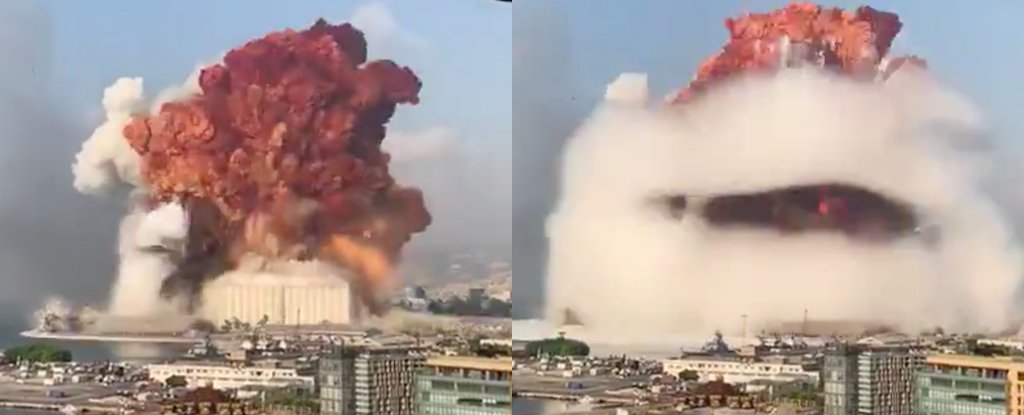
This link contains a few different videos of the blast:
https://www.sciencealert.com/beirut...in-size-but-nothing-about-it-suggests-nuclear
- Messages
- 44,597
- Reaction score
- 20,056
Not sure where else to put this. There was a massive explosion in Beirut earlier today. Preliminary reports are that a fire ignited an explosion in warehouse where several tons of ammonium nitrate (fertilizer) was stored. The explosion was big enough to damage approximately half the city with areas closest to the explosion being devastated. Video looks almost like a small atomic bomb going off.
This link contains a few different videos of the blast:
https://www.sciencealert.com/beirut...in-size-but-nothing-about-it-suggests-nuclear
Also heard on the news the ammonium nitrate had been confiscated about 6 years ago and the port authority or whomever is responsible have been asking permission to get rid of it for quite a few years. Some heads are going to roll. A somewhat bizarre story if you care to read.
https://www.cnn.com/2020/08/05/europe/lebanon-russian-ship-blast-intl/index.html
As a refresher, this is what Timothy McVey used to blow up the federal building in OKC.
Last edited:
- Messages
- 44,597
- Reaction score
- 20,056
Today is the 75th anniversary of the Hiroshima bombing.
At the time it was dropped, the writing was on the wall for Japan, but they were determined to go down fighting rather than lose honor by surrendering. Japan's stubbornness to surrender led to the second one dropped on Nagasaki.
NDBoiler
The Rep Machine
- Messages
- 4,455
- Reaction score
- 1,826
Not sure where else to put this. There was a massive explosion in Beirut earlier today. Preliminary reports are that a fire ignited an explosion in warehouse where several tons of ammonium nitrate (fertilizer) was stored. The explosion was big enough to damage approximately half the city with areas closest to the explosion being devastated. Video looks almost like a small atomic bomb going off.
This link contains a few different videos of the blast:
https://www.sciencealert.com/beirut...in-size-but-nothing-about-it-suggests-nuclear
I saw an article where it said it was 2,750 tons of it stored!

NorthDakota
Grandson of Loomis
- Messages
- 15,701
- Reaction score
- 6,003
Anyone have any idea why whiskey has selected giga Chad as his avatar?
Circa
Conspire to keep It real
- Messages
- 8,000
- Reaction score
- 818
Anyone have any idea why whiskey has selected giga Chad as his avatar?
What's that?
I read the first page of this thread and I went down a wormhole that I don't regret.
There Is more to life than we can understand...
Circa
Conspire to keep It real
- Messages
- 8,000
- Reaction score
- 818
At the time it was dropped, the writing was on the wall for Japan, but they were determined to go down fighting rather than lose honor by surrendering. Japan's stubbornness to surrender led to the second one dropped on Nagasaki.
I'm not saying you are incorrect... Japan was ready to surrender. They knew russia was advancing on the Western front of Manchuria and all they asked for, was that the Emperor stay in place.
Truman denied after talks with Stalin and the bully system... England's PM was present also.
Hundreds of thousands of humans had to die. We still see It as a righteousness.... Sad!
Last edited:
- Messages
- 44,597
- Reaction score
- 20,056
I'm not saying you are incorrect... Japan was ready to surrender. They knew russia was advancing on the Western front of Manchuria and all they asked for, was that the Emperor stay in place.
Truman denied after talks with Stalin and the bully system... England's PM was present also.
Hundreds of thousands of humans had to die. We still see It as a righteousness.... Sad!
Stalin didn't want to fight Japan. He unwillingly agreed to as part of a negotiation with Roosevelt and Churchill. His concession to move on Japan was part of the deal made with the U.S. and England to invade France which would force Hitler to move troops from the Russian front to the west.
Bully system? Japan was the bully that started the war in the Pacific. Japan without any provocation attacked the U.S. The day before the attack their Ambassador was in the U.S. telling us there would be no war with the U.S., all the while knowing an attack was coming.
Yes it was righteousness. The alternative was to sit by and let Japan dictate to the U.S. The loss of life is still tragic, but could have been avoided if Japan had agreed to surrender.
Last edited:
Bishop2b5
SEC Exchange Student
- Messages
- 8,932
- Reaction score
- 6,160
Stalin didn't want to fight Japan. He unwillingly agreed to as part of a negotiation with Roosevelt and Churchill. His concession to move on Japan was part of the deal made with the U.S. and England to invade France which would force Hitler to move troops from the Russian front to the west.
Bully system? Japan was the bully that started the war in the Pacific. Japan without any provocation attacked the U.S. The day before the attack their Ambassador was in the U.S. telling us there would be no war with the U.S., all the while knowing an attack was coming.
Yes it was righteousness. The alternative was to sit by and let Japan dictate to the U.S. The loss of life is still tragic, but could have been avoided if Japan had agreed to surrender.
And is but a small fraction of what was expected if we'd had to invade Japan and force them to end the war. Estimates were that an invasion would've cost over 100,000 American lives and 5,000,000 Japanese lives. Being shocked and bludgeoned into an immediate surrender by the Hiroshima and Nagasaki bombings probably saved millions of lives and allowed Japan to start rebuilding instead of being totally devastated by an invasion.
Circa
Conspire to keep It real
- Messages
- 8,000
- Reaction score
- 818
Stalin didn't want to fight Japan. He unwillingly agreed to as part of a negotiation with Roosevelt and Churchill. His concession to move on Japan was part of the deal made with the U.S. and England to invade France which would force Hitler to move troops from the Russian front to the west.
Bully system? Japan was the bully that started the war in the Pacific. Japan without any provocation attacked the U.S. The day before the attack their Ambassador was in the U.S. telling us there would be no war with the U.S., all the while knowing an attack was coming.
Yes it was righteousness. The alternative was to sit by and let Japan dictate to the U.S. The loss of life is still tragic, but could have been avoided if Japan had agreed to surrender.
I can't argue the bolded and the warnings have recently, 20 years or so, been apart of some debates.
I can argue with some assertion that Moscow was pushing In on to the Manchurian front that Japan was occupying, In which Japan knew that If Russia was to go all In,.. their days were numbered as a Country.
It's a great debate and I was raised to think the bombings forced Japan's surrender also. But more information has come to light.
Here's a good article that can explain my previous post better than I.
https://www.atomicheritage.org/history/debate-over-japanese-surrender
https://apjjf.org/-tsuyoshi-hasegawa/2501/article.html
1: The Influence of the Hiroshima Bomb on Japan’s Decision to Surrender
"In order to discuss the influence of the atomic bombs on Japan’s decision to surrender, we must examine three separate issues: (1) the effect of the Hiroshima bomb; (2) the effect of the Nagasaki bomb; and (3) the effect of the two bombs combined.
Let us first examine the effect of the Hiroshima bomb. In order to prove that the Hiroshima bomb had a decisive effect on Japan’s decision, Asada and Frank use the following evidence: (1) the August 7 cabinet meeting; (2) the testimony of Lord Keeper of the Privy Seal Kido Koichi concerning the emperor’s statement on August 7; and (3) the emperor’s statement to Foreign Minister Togo Shigenori on August 8."
The Potsdam Proclamation was already done at this point and Japan knew It. Germany had already been defeated for a few months.
After the bomb was dropped on Hiroshima, Stalin still attacked on the western front of Manchuria/Current day China. August 9th... 3 days later. Later that day, we still dropped the bomb on Nagasaki.
Last edited:
Circa
Conspire to keep It real
- Messages
- 8,000
- Reaction score
- 818
I'll post this video. It opened up a bunch of questions about the situation, and It's a pretty good start.
Oliver Stone: Chapter 3
Oliver Stone: Chapter 3
- Messages
- 44,597
- Reaction score
- 20,056
I think you misread what I wrote. I didn't say Russia wasn't applying pressure. Russia didn't want to get involved in the war in the Pacific, but reluctantly agreed as part of a "scratch my back and I'll scratch yours" agreement. How much pressure and military force would they bring is still up for debate as Japan surrendered before anyone could find out.
The article at this link https://apjjf.org/-tsuyoshi-hasegawa/2501/article.html reinforces what I stated earlier about Japan being stubborn about surrendering.
Japan's military didn't want to surrender. Their last ditch effort to try and turn the tide or at a minimum come to a truce was evident by the use of Kamikaze pilots at the end.
The article at this link https://apjjf.org/-tsuyoshi-hasegawa/2501/article.html reinforces what I stated earlier about Japan being stubborn about surrendering.
"The army appeared to minimize the effect of the bomb, without admitting that it was the atomic bomb, insisting that further investigation was necessary.”
" Togo replied: “I reported that the United States was broadcasting that the atomic bomb would impart a revolutionary change in warfare, and that unless Japan accepted peace it would drop the bombs on other places. The Army… attempted to minimize its effect, saying that they were not sure if it was the atomic bomb, and that since it [had] dispatched a delegation, it had to wait for its report.”[8] The picture that emerges from this testimony is that Togo merely reported the U.S. message. Perhaps he merely conveyed his preference to consider the Potsdam Proclamation by reporting Truman’s message. But when met with stiff opposition from Army Minister Anami Korechika, who dismissed the American atomic bomb message as mere propaganda, Togo, without a fight, accepted Anami’s proposal to wait until the delegation submitted its official findings.
Japan's military didn't want to surrender. Their last ditch effort to try and turn the tide or at a minimum come to a truce was evident by the use of Kamikaze pilots at the end.
Bishop2b5
SEC Exchange Student
- Messages
- 8,932
- Reaction score
- 6,160
I can't argue the bolded and the warnings have recently, 20 years or so, been apart of some debates.
I can argue with some assertion that Moscow was pushing In on to the Manchurian front that Japan was occupying, In which Japan knew that If Russia was to go all In,.. their days were numbered as a Country.
It's a great debate and I was raised to think the bombings forced Japan's surrender also. But more information has come to light.
Here's a good article that can explain my previous post better than I.
https://www.atomicheritage.org/history/debate-over-japanese-surrender
https://apjjf.org/-tsuyoshi-hasegawa/2501/article.html
1: The Influence of the Hiroshima Bomb on Japan’s Decision to Surrender
"In order to discuss the influence of the atomic bombs on Japan’s decision to surrender, we must examine three separate issues: (1) the effect of the Hiroshima bomb; (2) the effect of the Nagasaki bomb; and (3) the effect of the two bombs combined.
Let us first examine the effect of the Hiroshima bomb. In order to prove that the Hiroshima bomb had a decisive effect on Japan’s decision, Asada and Frank use the following evidence: (1) the August 7 cabinet meeting; (2) the testimony of Lord Keeper of the Privy Seal Kido Koichi concerning the emperor’s statement on August 7; and (3) the emperor’s statement to Foreign Minister Togo Shigenori on August 8."
The Potsdam Proclamation was already done at this point and Japan knew It. Germany had already been defeated for a few months.
After the bomb was dropped on Hiroshima, Stalin still attacked on the western front of Manchuria/Current day China. August 9th... 3 days later. Later that day, we still dropped the bomb on Nagasaki.
There were other factors also. Truman was very concerned that if he didn't use the bomb and we had to invade, the public would crucify him (and rightfully so) for sending so many Americans to the slaughter an invasion of the home islands would be when he'd had a way to stop the war quickly and without the loss of so many American lives. Also, we didn't want Russia invading Japan and then holding on to part of the country as a communist satellite like they'd done in Eastern Europe. For all the handwringing and second guessing and false claims that Japan was just about to surrender anyway (they weren't), Harry did the right thing.
Circa
Conspire to keep It real
- Messages
- 8,000
- Reaction score
- 818
I think you misread what I wrote. I didn't say Russia wasn't applying pressure. Russia didn't want to get involved in the war in the Pacific, but reluctantly agreed as part of a "scratch my back and I'll scratch yours" agreement. How much pressure and military force would they bring is still up for debate as Japan surrendered before anyone could find out.
The article at this link https://apjjf.org/-tsuyoshi-hasegawa/2501/article.html reinforces what I stated earlier about Japan being stubborn about surrendering.
Japan's military didn't want to surrender. Their last ditch effort to try and turn the tide or at a minimum come to a truce was evident by the use of Kamikaze pilots at the end.
Last Ditch Effort Is right. It's an interesting debate, as i said. There's more to it tho. Kamikaze pilots had been used earlier in the war. It wasn't something new to the Navy.
Japanese fighters (from what I've read) fought for honor. It's hard to decipher the actual nature of a man (Japanese) through the eyes of today's man, in nature.
Last edited:
- Messages
- 44,597
- Reaction score
- 20,056
I'll post this video. It opened up a bunch of questions about the situation, and It's a pretty good start.
Oliver Stone: Chapter 3
Oliver Stone? The man takes way too many liberties with telling of events. He's the king of conspiracy theory.
Go watch the History Channel. "WWII: Race to Victory". It talks about the meetings and negotiations between the U.S., England and Russia.
Last edited:
Circa
Conspire to keep It real
- Messages
- 8,000
- Reaction score
- 818
There were other factors also. Truman was very concerned that if he didn't use the bomb and we had to invade, the public would crucify him (and rightfully so) for sending so many Americans to the slaughter an invasion of the home islands would be when he'd had a way to stop the war quickly and without the loss of so many American lives. Also, we didn't want Russia invading Japan and then holding on to part of the country as a communist satellite like they'd done in Eastern Europe. For all the handwringing and second guessing and false claims that Japan was just about to surrender anyway (they weren't), Harry did the right thing.
Ok, It Is debatable through many historical thoughts. I can appreciate your take.