Theology

Whiskeyjack

Mittens Margaritas Ante Porcos
Staff member
Messages
20,894
Reaction score
8,126
The historical criticism that Christianity was subjected to in the early 20th century is just now being utilized on Islam. Here's a video on some of their recent discoveries:


And here's an article on the collapse of Catholicism in France:

Catholic practice collapsed in the West in the 1960s: the statistics are overwhelming

France, the eldest daughter of the Church, went from 25% Sunday Mass attendance in the 1950s to less than 2% now; the collapse includes regions where weekly Sunday Mass attendance had reached 97% in the late 1950s (this applies also to Belgium, Québec, etc.). The qualitative argument “but they’re better Catholics now!”—a subjective assessment amounting to soul-reading that never did, on the whole, convince—is seldom heard anymore.

This is a catastrophe which, for having occasioned an abundant but too seldom rigorous literature, remains unsatisfactorily addressed or explained. One used to hear that it would be for twenty-first-century historians to sort out the extent, causes, and effects of the mid-to-late-twentieth-century collapse of Western Catholicism.

They have begun to do so, and none more carefully, soberly, and instructively than French historian Guillaume Cuchet (1973-), professor of history at the University of Paris I-Panthéon-Sorbonne. The title of his principal work on the subject is blunt: How Our World Stopped Being Christian: Anatomy of a Collapse.1 It is heavy on facts and figures (including statistical maps) and shuns frivolous speculation; for this reason, it has received a couple of prestigious book awards from the French State.2 This book, and indeed the rest of Cuchet’s production, contributes to our understanding of what happened while proceeding carefully and avoiding polemics.

As it does not yet exist in English, we here present its salient discoveries and analyses.

The first fact that Cuchet brings out—relying on the excellent pre-conciliar sociological work of Canon Fernand Boulard and others3—is the surprising vigor of French Catholicism from the 1930s to the early 1960s, when it could be said that in France, Catholics made up the “ultramajority” (p. 56): from a survey conducted in 1872 to Boulard’s investigations in the early 1960s, 98% of French responders declared themselves to be “Roman Catholic.” True, some areas were void of actual Sunday Mass attendance (the very regions whose clergy had rallied to the French Revolution in the 1790s, which were the same regions, it turns out, that had been sluggish in implementing . . . Trent!) while in others, all but the canonically impeded were at Mass every Sunday of the year (the Vendée, Flanders . . .). 94% of French children were baptized Catholic within three months of birth (as opposed to 30% within seven years today). Boulard’s work, summarized in a famous map of Catholic practice, was on the whole reassuring to an episcopate that had been worried by a 1943 book asking whether France might not be mission territory (it is still invoked to claim that all was not well in the 1940s and 50s).4 Indeed, during those decades, fully three quarters of missionaries overseas were French priests and religious of both sexes.

Next, Cuchet explodes a couple of myths regarding the timing of the collapse. Conventional Catholic historiography dated the “before and after” event to 1968. Conservatives saw in that year a generalized breakdown in traditional society (the famous “May 1968” strikes among workers and students) that affected the patriarchal structure of the family, respect for authority generally, and religion specifically. Progressive Catholics blamed the slowing down or even reversal of necessary Vatican II reforms; from this point of view, Paul VI’s 1968 encyclical Humanae Vitae excluding the morality of contraception betrayed the Council, dashed the hopes of ordinary Catholics, and helped empty the churches.

Cuchet, once again relying on the late-1960s work of Canon Boulard and others, shows that the collapse of practice among Catholics in France dates to three years before 1968, very precisely to the year 1965. He calls it “the year of the drop-off (décrochage)” or “of the collapse (effondrement).” As Cuchet points out, this reality puzzled Boulard and the bishops he reported to at a time of “ideological sanctuarization of the Second Vatican Council,”5 although by then the bishops, who could (unconsciously?) sense that certain hopes had been misplaced, were no longer interested in such quantitative studies. In fact, Boulard continued his research at the university and carried on until his death in 1977. Cuchet had access to some of his correpondence and interlocutors from the period 1965-1977; after a time, it did dawn on Boulard that something drastic had happened.

Cuchet shows that 1965 is not only the year of the collapse in terms of Mass attendance but also—and sometimes even more dramatically—in terms of confession (now “Reconciliation”), baptism, and extreme unction (now “Anointing of the Sick”). The figures he marshals are starkly irrefutable.

The question Cuchet, a professional historian, had to broach was that of causes. His reluctance to tread onto the minefield is palpable. Although the trend over several centuries had been a slow decline of Catholicism, with a few dips (French Revolution) and peaks (in the nineteenth century—think of the Curé of Ars and Saint Thérèse—and after each of the World Wars), the collapse of 1965 is as steep and sudden as it was completely unexpected by anyone at the time, Boulard being the first among those startled at so uncharacteristic an inflexion in the graphs he had been drawing for a generation. Why did it happen at this time?

Cuchet cautiously ventures the following (p. 144): “Where can this rupture, since rupture there was, possibly have come from? There must have been an event behind a phenomenon of this magnitude, at least to provoke it. My hypothesis is that it was the Second Vatican Council.”6 He does hedge by claiming that a priori the texts of the Council had little to do with the collapse, while granting that, perhaps, certain aspects of the liturgical reform or of the text on religious liberty might have contributed. But certainly, he adds, the text on liturgical reform did not minimize the importance of Sunday liturgy—quite the contrary!

Here are the causes he invokes, in outline:

1) The teaching of the council on religious liberty in Dignitatis Humanae (December 1965). The application of religious liberty could hardly concern society at large, since such a liberty had existed in the West for nearly two centuries. It was therefore applied ad intra as freedom of conscience to the manner in which Catholics approached their own religious obligations (pp. 146-147). This amounted to a permission for Catholics to make up their own minds regarding doctrine and discipline (today we would speak of “cafeteria Catholicism”).
 

Whiskeyjack

Mittens Margaritas Ante Porcos
Staff member
Messages
20,894
Reaction score
8,126
Continued from above:

2) The discrepancy between “official Catholicism” after Vatican II and traditional popular piety. As an illustration of this factor, Cuchet notes that in shrines where this piety was respected, the collapse was far slower than in those in which new pastoral orientations were enforced (p. 148).7

3) In this connection, Cuchet (p. 149) points out that some elements of the liturgy, while seeming secondary to intellectuals, are actually psychological and anthropological determinants. He mentions the abandonment of Latin, changing pronouns to address God (“Thou” vs. “you” in the English context), Communion in the hand, the minimization or scuttling of former obligations (see below), and so forth.

4) An often forgotten principle of the new pastoral orientations is their high standard of expectation regarding the level of commitment of Catholics, starting already in 1960 and generalized by 1965. Access to baptism for one’s children required not only the promise to have one’s child catechized (which was already the case), but also now a “preparation” of several months for the parents to undergo. If the pastor deemed the parents insufficiently committed, he might postpone the baptism—a reversal of the pre-conciliar urgency to baptize children as soon as possible. Matrimony in Church went from a sociological convention to a personal investment and a public declaration of faith from which many, for diverse reasons, shrank (sense of propriety, discretion, simple shyness . . .).

5) As concerns doctrine and changes in catechesis, Cuchet invokes a principle that nineteenth-century philosopher Théodore Jouffroy articulated: changes in official teaching turn humble folk into skeptics. Indeed, an institution that admits to having been wrong yesterday may well be wrong today, too.8 In this respect, Cuchet focuses on the sudden silence in the pulpits (as tracked in parish bulletins giving the topic of the homily) regarding the four last things (Judgment, Purgatory, Heaven, Hell); it gave the impression that the clergy had either ceased to believe in them or no longer knew how to discuss them, even though these had been frequent sermon topics right up until the Council; historian Jean Delumeau spoke of a pre-conciliar “pastoral strategy of fear.”9

6) More fundamentally, Cuchet speaks of “a collective exit from the culture of obligatory practice under pain of mortal sin.” This practice was articulated in the list of obligations generally taught as “Commandments of the Church”: holy days “of obligation”; Sunday Mass; Confession of Sins; Easter Communion; Fasting (Ember Days, Vigils, Lent); abstinence (all Fridays and some other days). While these obligations were at most softened (days of abstinence and fasting) but never suspended in the official texts, they were seldom mentioned any more. The gradual shrinking of the Eucharistic fast (traditionally no food or drink of any kind from midnight to Communion), begun by Pius XII in 1953 (water no longer broke it), led to its virtual extinction by Paul VI (the “one hour before Communion” Eucharistic fast) (p. 153). These modifications entailed social changes as well: anecdotally, Boulard noted the adverse affect that the end of Friday abstinence had on the fish markets of France. The permission to anticipate Sunday by attending Mass on Saturday evenings participated in the desacralization of Sundays, whose focus now shifted to leisure (which the now widespread ownership of television sets and automobiles made that much more available). As an aside, Cuchet mentions that at the time, the clergy viewed these effects in a positive light: a pastor could now be sure that those Catholics who still went to Sunday Mass or did penance on Fridays did so “more freely and more consciously” (p. 155).

7) Lastly, a decision was made that let out of the churches their most teachable demographic: children. Under the former catechetical system, 80% of French children attended Mass every Sunday (with or without their parents) in preparation for their “Solemn First Communion,” a rite of passage complete with a fancy lunch at the restaurant and gifts from relatives. Whole classes, arrayed in little wedding dresses and dark suits (festooned with white fringed satin arm band and mother-of-pearl crucifix boutonniere), went through it at the age of twelve. Weekly attendance at Mass and monthly Confession were required to be admitted to this socially resonant rite, after which young people tended to replicate their parent’s attendance rates. By 1965, however, this system was judged to be “merely social” and hypocritical and was withdrawn along with its incentives, significantly raising the median aged of the average congregation. Retired priests of the conciliar generation have confided to Cuchet that they felt liberated from such a burden as hearing confessions, particularly children’s confessions, every Saturday—a burden termed “chronophagous,” a “time-eater.” Other factors may have played a role in the loss of the church-attending hordes of children too, including the length of obligatory schooling, which gave the public school system a longer time in which to intervene between family tradition and the child.

Such, in broad strokes, are the results of Cuchet’s careful analysis of and reflection on the data surrounding the unprecedented downturn in the graph tracking measurable religious practice among Catholics in France. There is no denying that, despite the author’s charitable tone, it does amount to an indictment of the clergy (bishops and priests alike) on whom the responsibility of implementing the Council fell. Retrospectively, one wishes the priests had left well enough alone.

What emerges most forcefully—and what the author goes on to explore in his more reflective and prospective book Does Catholicism Still Have a Future in France?10—is the necessarily sociological dimension of religion. A whole complex of shared values, to some extent held together by a system of obligations indexed on a strong sense of the connection between religious practice and one’s eternal destiny, and incarnated in seasonal practices (recurring feasts and fasts, rites of passage), was the body of Catholicism, while the soul in this analogy was actual personal assent to the truths taught and, in fine, commitment to Christ. Many of what Cuchet calls the clergy’s “false good pastoral ideas” (i.e. good intentions with disastrous results) derive from the Platonic notion that separating the soul from the body would be to the former’s benefit. Instead, of course, death ensued, and our world stopped being Christian.

It is most interesting to compare similar works in other countries—not least our own—and see whether the local situation, with its own particularities (the Church in the US did not have Solemn First Communion, nor was it ever the ultramajority), reflects the same statistical drop-off, and at what date (was it also 1965?); as it is, Cuchet’s work may be too narrowly focused on France alone. But this work, in tandem with the statistical analyses of Stephen Bullivant’s Mass Exodus: Catholic Disaffiliation in Britain and America since Vatican II (Oxford, 2019) and, for religious life, Fr. Joseph Becker’s significant The Re-Formed Jesuits: A History of Changes in Jesuit Formation During the Decade 1965-1975 (Ignatius, 1992), may help to pinpoint and, perhaps, avoid repeating the causes of the major civilizational change of our lifetime.
 

Whiskeyjack

Mittens Margaritas Ante Porcos
Staff member
Messages
20,894
Reaction score
8,126
Bishop Daniel Flores just published a short essay on hell in The Lamp titled What Was Really the Case:
Hell and the judgment that would send me away may in the end be the same thing, or at least a perpetual moment and state with little distance between them. To be shown what really was the case in a single instant, and what could have been erased had mercy and its prior grace not been evaded for reasons I at the time chose not to see for what they were, obstinate loves horribly misplaced. In a moment I see it, and all the attendant shame that comes when no answer can be given other than to say it was so, an Amen spoken over the past tense, uttered to my own self misspent.

To see it as Augustine says, the way it was, but having missed the chance of which he spoke, to settle on the way to court. The chances missed to plead guilty then, when the Master walked at my side, and he and I had time to attend to every twisted limb. Guilty as charged, I should have said, while on the way. He was there, I knew it, but not so well so as to do what the occasional glimpse of a pierced hand might, under better circumstances, have moved me to do. What am I saying? Under better circumstances? The habit of excuse still wiggles and curls, like what’s left of a beheaded snake.

He walked with me, He did, close as my shadow, sometimes outside but then, by a trick of the light, drawing in. He was in all the shifting spaces and angles that made up my every living day. Let the shame and fear burn now, you said, so that time can open up a place for the milder mercy that fixes while it breaks. But no. Yes, I saw you. But no, I didn’t really. I didn’t want to. He wanted a repentance that would quicken my step, a moving forward, toward him with at least a stumbling, selfless act of brilliant dying. I helped a grouchy old lady get back into her locked apartment one day. It was cold; she’d lost her key. I know, He said, I remember that. But you let it slide and nothing more came of it, until it died.

Hell, not unlike the frozen lake, but lived in a perpetual moment of burning lament, knowing that the cold sea of regret cannot of itself towards repentance break. It’s too cerebral for that.

You are just, Sir. I did not want to see, which is why you see me here now. A place, yes, but more a truth I knew but decided not to need so didn’t heed. I decided then the truth of me; and all the grouchy ladies, poor and barely a threaded sweater to warm their thinning arms, the ones I never saw or meant to see, I see them now. They’re at the Gate; they recognize me, sadly, as one of those who passed them by, and I’ve no place to go now but away from them, like I always did, into the hole that my merciless soul its time on digging spent.
It's the Feast of All Souls today, so spare a prayer for the dead, especially those you knew in life.
 

tussin

Well-known member
Messages
4,153
Reaction score
1,982
Whiskeyjack (and others): To someone who has experienced real trauma and loss and is questioning their faith, how would you best answer this question:

Why do bad things happen to good people?
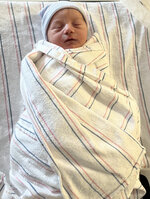
When I posted this back in 2021 my wife and I were dealing with some pretty tough fertility outcomes. It’s been a long road for us but our prayers were answered with a beautiful little boy (and future Irish fan).
 

Attachments

  • A41D1CAD-C670-4778-9566-5F0925C83F16.jpeg
    A41D1CAD-C670-4778-9566-5F0925C83F16.jpeg
    1.6 MB · Views: 5
Last edited:

Reaper97

Banned
Messages
3,109
Reaction score
4,226
When I posted this back in 2020 my wife and I were dealing with some pretty tough fertility outcomes. It’s been a long road for us but our prayers were answered with a beautiful little boy (and future Irish fan).
Incredible.
My life was what most would consider “bad ass,” before I had children.
But my life began when my daughters were born.
It’s amazing.
 

Blazers46

Adjectives: wise/brilliant/handsome.
Messages
8,105
Reaction score
5,458
Incredible.
My life was what most would consider “bad ass,” before I had children.
But my life began when my daughters were born.
It’s amazing.
Same!! My wife had a 9-5 and I worked from home. I spent about 3 hours a day at the gym and running 5 miles a day. Boating, skiing, even went on a few “business trips” to go rock climbing even though I really didn’t have to check in with that location. Then boom, baby boy. Selfishly thought he’d be my little sidekick but it didn’t work like that obviously. Then a girl… daughters change everything.
 

Veritate Duce Progredi

A man gotta have a code
Messages
9,358
Reaction score
5,352
Prior to kids, I was a greek God. Wrestled alligators, beat bears to death with bricks, ate the finest of caviar and bedded many a fine women. And that was just a Tuesday.

Had kids, now I look a little like Jude Law and a lot like Dom Deluise. My hip hurts when it rains and I have a stinking suspicion that most of my past memories are, at least in part, fictitious. Must be the head trauma from the bears.

C'est la vie
 

CANONIZEFATHERSORIN

Well-known member
Messages
1,081
Reaction score
906
The historical criticism that Christianity was subjected to in the early 20th century is just now being utilized on Islam. Here's a video on some of their recent discoveries:


And here's an article on the collapse of Catholicism in France:


Patricia Crone's book Hagarism is fascinating and does an excellent job of indicating how obscure the early history of Islam is. I haven't read it, but The Syro-Aramaic Reading of the Koran is another supposedly fascinating exploration of Islam's murky early history. Personally, I am partial to Dante's depiction of Muhammad as a schismatic bishop seeking to take all the power of Rome for himself, and thus located among the fraudsters in the eighth circle of Hell, where he is placed amongst the other schismatics where

"Between his legs his guts spilled out, with the heart/
and other vital parts, and the dirty sack/
that turns to shit whatever the mouth gulps down."

---

Speaking of Christian theology more specifically, the at-times radical theology I was taught at Notre Dame (never forget Gustavo Gutierrez remains on the faculty!) inclined me heavily towards panentheism - the idea that God is in all of us, and we are all, in a sense, God. Supporting passages include...

Colossians 3:11: Here there is no Gentile or Jew, circumcised or uncircumcised, barbarian, Scythian, slave or free, but Christ is all, and is in all.

John 10:34-39: Jesus answered them, “Is it not written in your Law, ‘I have said you are “gods”’If he called them ‘gods,’ to whom the word of God came—and Scripture cannot be set aside— what about the one whom the Father set apart as his very own and sent into the world? Why then do you accuse me of blasphemy because I said, ‘I am God’s Son’? Do not believe me unless I do the works of my Father. But if I do them, even though you do not believe me, believe the works, that you may know and understand that the Father is in me, and I in the Father.” Again they tried to seize him, but he escaped their grasp.

and, of course,

Luke 17:21: the kingdom of God is within you.
 

stpeteirish

House Skeptic
Messages
4,319
Reaction score
1,817
Prior to kids, I was a greek God. Wrestled alligators, beat bears to death with bricks, ate the finest of caviar and bedded many a fine women. And that was just a Tuesday.

Had kids, now I look a little like Jude Law and a lot like Dom Deluise. My hip hurts when it rains and I have a stinking suspicion that most of my past memories are, at least in part, fictitious. Must be the head trauma from the bears.

C'est la vie
Hang in there. The grandkids will revitalize you.
 

zelezo vlk

Well-known member
Messages
18,006
Reaction score
5,046
I’ll be starting Exodus 90 tomorrow, so no more posting for me until Easter.

RIP for us and also maybe for you. I’m all for penitential practices but I’ve heard more priests give caution about Exodus 90 than recommend it. I pray you find it spiritually enriching.


Sent from my iPhone using Tapatalk
 

Whiskeyjack

Mittens Margaritas Ante Porcos
Staff member
Messages
20,894
Reaction score
8,126
RIP for us and also maybe for you. I’m all for penitential practices but I’ve heard more priests give caution about Exodus 90 than recommend it. I pray you find it spiritually enriching.
It's my first time, so I'll let you know how it goes. My impression is that it's a heavy lift for men who aren't accustomed to asceticism, and can be harmful for those prone to scrupulosity. But I've got a good group for accountability, and we're not trying to be hardcore about it. The spirit over the letter, etc.

The screen fast is going to be the hardest part for me (by far). The other stuff I'm already doing to various degrees.
 

Blazers46

Adjectives: wise/brilliant/handsome.
Messages
8,105
Reaction score
5,458
Tomorrow I start classes in an accredited school of missions and ministry. Should be interesting. I have the time and the schooling basically lines up with my devotional and church schedule anyway.
 

zelezo vlk

Well-known member
Messages
18,006
Reaction score
5,046
It's my first time, so I'll let you know how it goes. My impression is that it's a heavy lift for men who aren't accustomed to asceticism, and can be harmful for those prone to scrupulosity. But I've got a good group for accountability, and we're not trying to be hardcore about it. The spirit over the letter, etc.

The screen fast is going to be the hardest part for me (by far). The other stuff I'm already doing to various degrees.

Sounds like you’re way more prepared than any other guy I’ve known who’s done it. Good luck my man and may God and Mary be with you


Sent from my iPhone using Tapatalk
 

zelezo vlk

Well-known member
Messages
18,006
Reaction score
5,046
Tomorrow I start classes in an accredited school of missions and ministry. Should be interesting. I have the time and the schooling basically lines up with my devotional and church schedule anyway.

Dope!


Sent from my iPhone using Tapatalk
 

Veritate Duce Progredi

A man gotta have a code
Messages
9,358
Reaction score
5,352
So I'd just like to point out that Whiskey does Exodus 90 starting in January of 2023.

We don't see him post for the remainder of the year and the Theology thread doesn't get bumped since the last day he posted in it.


giphy.gif
 

zelezo vlk

Well-known member
Messages
18,006
Reaction score
5,046
Modern christians spurn asceticism/abstention when in truth it is one of the most powerful spiritual tools we have. Christ fasted for a reason

This very much is true. I did the Great Fast one year and it was incredibly enriching to my soul. A good fast can very much make you turn to Christ in the wilderness.


Sent from my iPhone using Tapatalk
 

NormND_44

Well-known member
Messages
174
Reaction score
429
I love that Reaper is on this page 2 years ago talking about the good ol' days - some things don't change! ;)
 

IrishBoognish

Well-known member
Messages
2,344
Reaction score
3,619
As a vocational pastor I have been digging into three questions as of late and wanted to present them to interested IE members for mutual growth. I must admit I come to this discussion with preconceived notions of the correct answers to these questions, but I do feel as though I have much more room to grow in my understanding. The questions were stirred in me as I engaged a DVD series called "True U" by Focus on the Family (a conservative evangelical para church organization). I would love to hear your ideas, feedback and dialogue about the three. Humor is welcome, but please no abusing one another through hateful, degrading or belittling speech. Thanks!

Question #1- Is there a God? (A question of origin)

Question #2- Is the Bible reliable? (That is historically)

Question #3- Who is Jesus? (Real person? Fairy tale?)

(Since these are each huge questions that do not have simple answers feel free to tackle one at a time).

These are not really "huge questions"

#1 Probably not, but who knows? If there is, they're not exactly doing a bang up job at it.


#2 No. The Bible discusses the beginning of time and gets everything wrong from the jump, Genesis is wildly inaccurate and there was never a global flood that killed everything on Earth but everything in a boat.


#3. Again, probably not but who knows and what does it matter considering #1 and #2? Scholars document there were hundreds of dudes at the time of Jesus who professed to be the prophetic Son of God and all had their own spin on it. (Leading to a whole slew of them being executed in the most popular method of the day)

Meaning "Jesus" is likely an amalgamation of all the stuff all of those dudes said.


To be clear, I'm not one of those atheists that shits on people of faith. It works for you and yours, there's no issue.

Just don't try to explain faith as fact. No issues.
 

Cackalacky2.0

Specimen
Messages
9,023
Reaction score
8,018
So I have done a huge deep dive into this channel over the last six months and its really one of the best, unbiased, education sources on the interrelatedness of the near east religions, specifically, Judiaism, Christianity and Islam. Highly recommend it to everyone. He also makes hella useful charts. The author and creator is Matt Baker (UsefulCharts)
Matt was originally raised in the Worldwide Church of God, a religious group which believes that Brits and Americans are the lost descendants of the twelve tribes of Israel. As a young adult, he attended Pentecostal and Anglican churches. While he was working on his PhD thesis on the personality traits of atheists, however, Matt became an agnostic [4]. Today, Matt and his family are Reform Jewish, having converted after marrying his wife.


This is a playlist for all of his videos on various religions but mostly Jews and Christians.
 

Lberry

Banned
Messages
2,285
Reaction score
1,875
This very much is true. I did the Great Fast one year and it was incredibly enriching to my soul. A good fast can very much make you turn to Christ in the wilderness.


Sent from my iPhone using Tapatalk
What was your fast (days, consumption)? I just did my first 72 hour water fast and today is my first day after it. I feel great.
 

zelezo vlk

Well-known member
Messages
18,006
Reaction score
5,046
What was your fast (days, consumption)? I just did my first 72 hour water fast and today is my first day after it. I feel great.
I just did it the easy way of Ash Wednesday to Easter Vigil with Sundays being a ramping back from the strictness of the fast and Saturdays making sure I was getting good meals to make up for the caloric deficit I was unable to avoid during the week. So for the most part Monday through Friday was the strictest part of the fast, Saturday I would maintain to the specific food abstentions but make sure to have a good hearty meal, then Sunday I would eat relatively normal (but still no meat at all).
 

bobbyok1

Dominates Wiffle Ball
Messages
1,447
Reaction score
1,287
These are not really "huge questions"

#1 Probably not, but who knows? If there is, they're not exactly doing a bang up job at it.


#2 No. The Bible discusses the beginning of time and gets everything wrong from the jump, Genesis is wildly inaccurate and there was never a global flood that killed everything on Earth but everything in a boat.


#3. Again, probably not but who knows and what does it matter considering #1 and #2? Scholars document there were hundreds of dudes at the time of Jesus who professed to be the prophetic Son of God and all had their own spin on it. (Leading to a whole slew of them being executed in the most popular method of the day)

Meaning "Jesus" is likely an amalgamation of all the stuff all of those dudes said.


To be clear, I'm not one of those atheists that shits on people of faith. It works for you and yours, there's no issue.

Just don't try to explain faith as fact. No issues.
Hello IrishBoognish

Thanks for the thoughtful reply. I have a full day today, so no space to give much of meaningful reply to your responses. But I should be able to engage soon, maybe yet this weekend.

In short, I'll just say this for today. I appreciate your openness to those who do choose to follow the Christian faith, as having a right to do so.

I also appreciate your perspective that Christianity ultimately comes down to a matter of faith, an accurate perspective in my view.

I do think there may be some common erroneous arguments in your responses, but I'll leave any further response for when I can give it a little more thought and more specific reply.

I also respect those of an atheist profession being able to see things from different perspective, and enjoy trying to see through that lens.

Thanks again, and I'll reply more soon
 

ColinKSU

Well-known member
Messages
4,647
Reaction score
6,163
As a vocational pastor I have been digging into three questions as of late and wanted to present them to interested IE members for mutual growth. I must admit I come to this discussion with preconceived notions of the correct answers to these questions, but I do feel as though I have much more room to grow in my understanding. The questions were stirred in me as I engaged a DVD series called "True U" by Focus on the Family (a conservative evangelical para church organization). I would love to hear your ideas, feedback and dialogue about the three. Humor is welcome, but please no abusing one another through hateful, degrading or belittling speech. Thanks!

Question #1- Is there a God? (A question of origin)

Question #2- Is the Bible reliable? (That is historically)

Question #3- Who is Jesus? (Real person? Fairy tale?)

(Since these are each huge questions that do not have simple answers feel free to tackle one at a time).
1. No. I believe the concept of gods are a way for people to make sense of something that doesn’t make sense and that’s important and understandable. We all have to justify getting up every day and we all do it in our own way.

2. I think the Bible was meant to less a historical account and more a collection of stories that help guide people through life.

3. Jesus was a real human being who lived and gathered a following and that’s the extent of it.

I’m an atheist, but I don’t begrudge anyone who believes. Anything that gives people meaning in life is valid and good. It’s when people force their meaning in life on others that I take extreme issue.
 
Top