You won’t believe what Gerwig and her Barbie (Margot Robbie) get away with in this joyously over-the-top meta feminist manifesto. Yes, they’ve made something political out of the blonde-haired, pink-dressed doll.
If she had shown hints of brilliance as an actress and director, Gerwig has officially lost the plot. Her film, set in Barbieland, a utopia for strong women, and with men, all second fiddles named Ken, overreaches to the nth degree. Hell, there’s even an all-Barbie Supreme Court. So fetch!
And what a messy last half hour it is. She throws everything but the phonebook to assault us with her faux messaging. By then, she’s already juggled multiple twists and turns, some inspired, others falling flat, but her empty disdain for the “patriarchy,” a word mentioned almost a dozen times, does her a disservice. “Barbie” is a feminist fantasy that paints men as the “problem” in society, and it all feels like a little too much. There’s no genuine feeling to it — as if it was written by a Twitter algorithm.
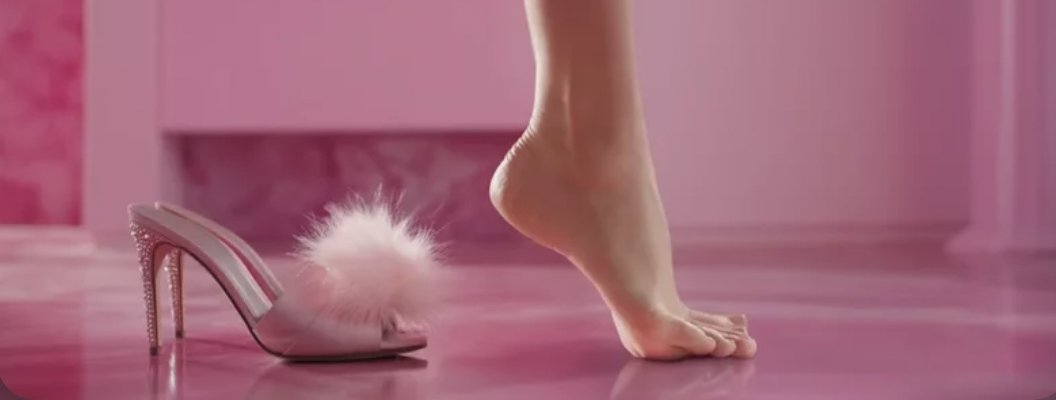
The crux of the plot has Margot Robbie’s Barbie having to leave “Barbieland” because she’s not adapting: she's having thoughts of death, cellulite and flat feet, oh my. It turns out that, while going to the “real world”, our world, her Ken realizes that men can have power too. He assembles his alpha buddies to transform Barbieland into a male paradise (the “Mojo Dojo Casa House”) and that’s when he becomes the villain of the piece.
The film is certainly a spirited affair, drenched in pink campiness that criticizes, at every step, its own existence. But it also reeks of corporate feminism, the kind that only sees things in black and white, never digging deeper into the nuances that come with the territory. One can easily admire Gerwig’s ambitious attempt at avoiding materialism in her “Barbie” movie, but her way of delivering the film’s core message turns out be artificial and, unbeknownst to her, materialist.
The marketing-on-steroids, the hype, we’ve had to endure for “Barbie” could never result in bad reviews. People had to, needed to, have this movie turn out to be good. However, don’t be mistaken, this film is another ploy by capitalism to sell more merchandise, and its true brilliance hides behind its faux-subversive facade. Those who want to see, and try hard to like, “Barbie” will do so accordingly, and you can bet they’ll also tweet about it.