Environmental Issues

dshans

They call me The Dribbler
Messages
9,624
Reaction score
1,181
How soon do you think it will be before Pruitt and his cronies devise a method to "harvest this methane while destroying permafrost, lakes and natural containment features?

"What the hell, 'natural' climate events are melting ice and snow here, there, and everywhere. It's our God Given right – and Duty – to exploit it for monetary gain."

Let's just speed up the warming process by ignoring the science. "We need easier access."

"Renewable energy efforts (you know, research and funding) are not filling our bank vaults. They only suck at the teats of our source of subsidies and threaten our bottom line."

"Free (even more) the coal mining behemoths, the drillers and the frackers. To hell with Joe Sixpack and his family!"

Give them added access to federal lands and charge ludicrously low fees for mineral rights. A small price to be paid to those willing to rape the environment for profit.


Foward contributions to my campaign fund @ politicalwhore.gov.
 

Legacy

New member
Messages
7,871
Reaction score
321
Is Trump's potential coal bailout what Wyoming needs? (Casper Star-Tribune)

Wyoming is the largest coal-producing state, mostly in the Powder River basin. A number of groups, including oil and gas industries and environmental groups, oppose this use of taxpayer dollars and market interference under Trump's coal companies bailout using his authority under the Defense Production Act and the Federal Power Act. Responses to this change, which previously unanimously was rejected by the Federal Energy Regulatory Commission (FERC), are legal challenges and appeals to FERC.

As West Coast shuns coal, Wyoming will face difficulties (Wyoming Daily Journal)

New rules restricting self-bonding in Wyoming fail to clear regulatory board (Casper Star-Tribune)

Bonding is required of coal companies for their obligations for reclamation of old mines, which is especially important with surface mining or strip mining as in the Powder River Basin. Otherwise, taxpayers are on the hook for the cleanup. Coal companies have been avoiding this responsibility by regularly declaring bankruptcies.

The GAO has previously advised on this matter.
COAL MINE RECLAMATION: Federal and State Agencies Face Challenges in Managing Billions in Financial Assurances
 
Last edited:

Old Man Mike

Fast as Lightning!
Messages
8,973
Reaction score
6,462
Nobody in places like Wyoming and West Virginia want to hear it, but coal is a dying industry, artificially supported by embedded infrastructure (somewhat decaying) and fear of change. Laws and funding policies don't really encourage getting away from coal as fast as even the projected economics say we should. If anyone has a kneejerk negative response to this, ask yourself honestly whether investment in long term coal mining is where you'd like to put your money.

Coal stumbles on just because a few states will die faster if it does not. And monsters like AMAX do not die easily, especially when politicians are involved.
 

Old Man Mike

Fast as Lightning!
Messages
8,973
Reaction score
6,462
There are a million things to say about this but here are two:

1). Indigenous cultures residing close to major modern western cultures are dying culturally regardless of things like environmental pollution by heavy materials producing industries. The nearness and ubiquity of western cultural ways are just too powerful. For my view of an ideal world, this diversity loss is terrible. I look at the arts and crafts and folklore of the diverse cultures of the world and experience wonderful things. And that's just my self-oriented values speaking. As a Gospel of Caring Neighborliness Catholic and hopefully a good citizen of the world, this blunt destruction of the foundations of whole peoples' meaning-of-life is brutal and heartlessly unkind. Indigenous culture is doomed, yes; just as my Olde Time Irish culture was doomed. But we should not crudely ignore what we are doing in their story.

2). Every chronic pollution situation is different and needs to be addressed from very solid fact-based foundations. This is true regardless of the human beings possibly being assaulted. Many of the claimed facts in the SciAm article will certainly turn out to be "scientifically true." Some might not be. Anyone who casually waves off such concerns as bogus knows (or cares) nothing about the history and current operational state of heavy industry. Dangerous pollution and environmental assault occurs all the time. It is almost built into the economic reality of "doing business." (I was once asked to testify as a chemical expert at a Johns-Manville trial about asbestos. The key revelation in the trial was that Johns-Manville had three stages of awareness about the cancer-causing effects of their asbestos: a]. an early period when everyone was ignorant of it; b]. a middle period when only they were aware of the threat; and c]. a late period when others outside of J-M knew of the dangers. J-M's company behavior about selling the product DID NOT DIFFER from one time period to the next. Think about that for a minute. These bastards continued to sell lung cancer producing (mesothelioma) product EVEN WHEN THEY WERE THE ONLY ONES WHO KNEW THE EFFECTS. That's even more immoral than cigarette makers and that's saying a lot. In case anyone thinks such things must not go on "regularly", I worked a job at a metals factory where management secretly sent out testers to farm owners downwind to sneak plants from their locations to test for the level of pollutants they knew they were sending their way.)

Some of the cases in the SciAm article will turn out to be correct and possibly even worse when one gets the science data properly done and in perspective. In the big moral picture, it is no different that these are native americans vs any other assaulted persons. Playing the native american "card" is obviously done to try to make us read the article and elicit (deserved) sympathy, but it is a sympathy that we should have for all the involuntarily chemically-assaulted communities scattered about the technological landscape.
 

Legacy

New member
Messages
7,871
Reaction score
321
Toxic tensions in the heart of 'Cancer Alley'
The EPA says this town has the nation's highest risk of developing cancer from air toxins. The plant emitting the toxins says otherwise. Locals are outraged.

The town of LaPlace, Louisiana, lies along the Mississippi River, a stone's throw from Lake Pontchartrain and the Maurepas Swamp. It sits in the heart of an area that's become known by locals as "Cancer Alley," a vast industrial stretch between New Orleans and Baton Rouge where dozens of petrochemical plants dot the landscape.

One sign posted by a local advocacy group warns the town's 29,000 residents that they are "more likely to get cancer due to chloroprene air emissions." The warning refers to the Denka Performance Elastomer plant at the edge of town, where a vast network of pipes and valves stand testament to industry.

The facility looms over Fifth Ward Elementary School, where children run around the playground oblivious to the toxic emissions in the air.

The plant, (opened in 1969) and formerly operated by DuPont, employs more than 200 workers and has been in this spot for nearly 50 years. The facility plays a vital manufacturing role as the nation's only producer of neoprene, a synthetic rubber that's found in everything from gaskets and hoses to fishing waders and wetsuits. But it also emits 99% of the nation's chloroprene pollution, according to the EPA. Chloroprene is the main chemical used in the production of neoprene.

According to according an analysis by the EPA’s National Air Toxics Assessment in 2011, the five census tracts around the plant have the highest cancer risk in the country — more than 700 times the national average in one tract. Congress passed bipartisan legislation signed into law in 2016 strengthening toxic chemical regulations.

Trump nominated Michael Dourson to head EPA’s Office of Chemical Safety and Pollution Prevention (OCSPP), which would regulate and enforce the chemical industry and EPA standards for toxic chemicals. Fifty public health officials opposed his nomination in a letter, citing his record of working for the chemical industry giants including Dow Chemical, Koch Industries and Chevron.
In their letter to the Senate Environment and Public Works Committee:
Granting Dr. Dourson the responsibility of overseeing EPA OCSPP would threaten the agency’s ability to credibly and effectively address harmful chemical exposures. Dr. Dourson has built a career of abusing science to mischaracterize real-world chemical risks and in doing so has jeopardized public health, including the health of those most vulnerable among us like pregnant women and children.

The American Chemistry Council, the chemical industry's main trade association and lobbying arm, said Dourson would make an excellent addition at EPA. “His knowledge, experience and leadership will strengthen EPA’s processes for evaluating and incorporating high-quality science into regulatory decision-making,” said the group’s spokesman.

His nomination was approved on a party line vote and sent to the Senate where it never got a vote due to their opposition. Meanwhile, Dourson worked in EPA's chemical safety division despite not being confirmed for six months until he left in January 2018.

Dourson represented DuPont against the EPA chemical violations under the Toxic Substance Control Act and the Clean Air and Clean Water Acts. Dourson's company, established as a non-profit, is called Toxicology Education Foundation. Among the organizations donating to the Foundation are the American Chemical Council, Chevron, Dow Chemical, Exxon Mobil, Shell. Employees of ExxonMobil and Shell are on the Foundation's Board of Trustees.

Dr Nancy Beck was appointed to be the head of the EPA's toxic chemical unit (Office of Chemical Safety and Pollution Prevention) in May, 2017. For the previous five years, Beck was an executive at the American Chemical Council. She has rewritten the rules and regulations in updating the Toxic Substances Control Act (TSCA), weakening government oversight and authority.

The spokeswoman for the EPA, Liz Bowman, formerly worked for the American Chemical Council.

Why Has the E.P.A. Shifted on Toxic Chemicals? An Industry Insider Helps Call the Shots (NY Times)
 
Last edited:

Legacy

New member
Messages
7,871
Reaction score
321
I'd like to update something Whiskey, I think, may have posted. It's a good read, long, difficult to get through if you enjoy pork, and certainly sticks with you about Smithfield Foods, "the largest and most profitable pork processor in the world".

Boss Hog: The Dark Side of America's Top Pork Producer (Rolling Stone, Dec 14, 2006)
America's top pork producer churns out a sea of waste that has destroyed rivers, killed millions of fish and generated one of the largest fines in EPA history. Welcome to the dark side of the other white meat


As far as the update, China acquired Smithfield Foods in 2013. Also a good read.
Why Is China Treating North Carolina Like the Developing World? (Rolling Stone, March 19, 2018)
How lax regulation made it cheaper for China to outsource pork production – and all of its environmental and human costs – to the U.S.

In July 2013, Larry Pope, the CEO of Smithfield Foods, the largest pork producer in America, was called to testify before a U.S. Senate committee about the pending sale of his company to a Chinese conglomerate now known as WH Group. The $7.1 billion purchase, the largest-ever foreign takeover of its kind, had attracted concerns. The Chinese pork manufacturer had a checkered health record, allegedly feeding its hogs illegal chemicals, and Smithfield had a long history of environmental problems at its farms, including a $12 million fine for several thousand clean-water violations. But the worries did not stop there. The Chinese government had a track record of using nominally private entities as proxies for state power. "To have a Chinese food company controlling a major U.S. meat supplier, without shareholder accountability, is a bit concerning," said Republican Sen. Chuck Grassley. "A safe and sustainable food supply is critical to national security. How might this deal impact our national security?"

In a measured Southern drawl, Pope explained that the deal was a win for everyone. Pork markets were declining in America, while China had become the largest pork consumer in the world. The takeover would create jobs in rural America by opening a vast market. When senators pressed Pope about whether the takeover was being directed by the Chinese government, the executive laughed it off. He promised both companies would respect the health of the communities and the environment surrounding hog farms. A few months later, the deal was approved.

When Congress approved the sale of the largest pork processor to China, I'll bet neither foresaw the day when a tariff war would bring the Chinese to apply tariffs to pork exported from a Chinese owned company in the North Carolina. Nor that Sen Grassley's Iowa constituents, as the top pork-producing state, would be most damaged by tariffs on pork impacting jobs. Or could the Chinese exempt their Smithfield company from tariffs? Smithfield in 2016 sent 300,000 tons of pork to China.
 
Last edited:

Legacy

New member
Messages
7,871
Reaction score
321
As a follow-up to the Boss Hog article on the damage to the water, air and nearby and downstream residents in North Carolina, it's worth focusing on Iowa, the nation's largest pork producer and the unprecedented growth of confinement pig farms by corporate interests and the responses of the communities.

I won't summarize all the articles from the Des Moines Register, but post excerpts and leave it up to interested readers.
Hog wild: Iowa must tap the brakes on record growth of pork industry (Des Moines Register)
A record number of hogs and pigs were on Iowa farms as of Sept. 1: 22.9 million, up 3 percent from a year ago, according to a U.S. Department of Agriculture report released Thursday. That’s about 7.3 times more pigs than people in the state.

No other state is even close to Iowa, which has more hogs than second-place North Carolina and third-place Minnesota combined.

More hogs are coming. In September, Seaboard Triumph Foods opened a plant in Sioux City, where it can slaughter 10,500 hogs per day and, by adding a second shift next year, up to 21,000 a day. Prestage Foods plans to open its plant near Eagle Grove in November 2018 and process 10,000 hogs a day. Iowa farms could expand to fulfill the demand.

More hogs and processing plants bring more jobs and income. But they also bring noxious odors that can make people sick. They threaten water bodies and groundwater — and more than half of the state’s lakes, rivers and streams are already considered polluted.

“My number one concern is water”
As hog farms grow in size and number, so do Iowa water problems


As large hog barns spring up around his house, Jerry George sums up the major reason he and his wife, Sue, are in opposition: "It's water. My number one concern is water."

They have good reason to worry. In a biannual state water quality report released this spring, environmental regulators reported 750 Iowa waterways are "impaired"—mostly due to excessive pollution—out of the 1,378 tested.

Large hog farms are undoubtedly a major contributor—Iowa has more than 6,300 hog farms and about 60 percent of them raise more than 1,000 hogs, which leaves farmers with massive amounts of manure to deal with. More than 10 billion gallons of liquid manure are applied to Iowa fields annually. State records show 800 manure spills between 1996 and 2012. The manure is high in fecal coliform, nitrogen and phosphates.

The situation is about the same in the country's second largest hog producing state, North Carolina, which also deals with an estimated 10 billion gallons of hog feces and urine waste each year, according to an analysis of state data by the non-profit organization, Environmental Working Group. The waste, like the hog farms themselves, is concentrated: North Carolina boasts the two highest hog producing counties in the nation, Duplin and Sampson counties. Together they account for 40 percent of the state's wet waste.

Across the U.S. nitrogen pollution from livestock manure has increased 46 percent over the past 80 years, according to a 2015 study.

We have previously noted the Dead Zone in the Caribbean due to nitrogen from waste and fertilizer use.

A few of the facts from the pork industry in Iowa:
-At any one time, there are approximately 20 million pigs being raised in Iowa.
-Iowa producers market approximately 50 million hogs a year.
Nearly one-third of the nation’s hogs are raised in Iowa.
-Iowa is the number one pork producing state in the U.S. and the top state for pork exports.
-Exports of pork from Iowa totaled more than $1.1 billion in 2017.
Japan, Hong Kong, Canada, Mexico and South Korea are the leading customers for Iowa pork.

Iowa uses satellites to uncover 5,000 previously undetected animal confinements
(D.M. Register)

Mazour said 17 counties seek either changes to the master matrix, a moratorium on new confinement construction or directly support the petition.

County leaders have become more vocal about master matrix shortfalls, after fielding complaints from residents and businesses about odor and concerns about facilities' impact on water quality.

Environmental groups charge that manure from confinements used to fertilizer Iowa crops contribute to high levels of nitrates that add to toxic algal blooms in Iowa lakes and rivers, and threaten human health and drinking water.

High nutrient levels also contribute to the dead zone in the Gulf of Mexico, which grew to about the size of New Jersey this summer, the largest ever measured.

"Three other counties are considering action. That would put us at one-fifth of the counties that say 'it's not working for us,'" Mazour said.

"It's not just urban counties ... rural counties that are in the center of the hog facilities and living this are saying 'no more,'" she said.
Large animal confinements are hotly debated in Iowa, the nation's largest pig and egg producer, with about 20.2 million hogs and 60 million laying hens. The state also ranks seventh for cattle production, with 3.9 million head.

Pig producers say few agribusinesses are as heavily regulated as they are — from governing where confinements are built to stipulating how manure from the facilities is applied to cropland.

But neighbors and environmental groups complain that the facilities smell, create health problems and generate manure spills that degrade water quality, kill fish and harm wildlife.

These large corporate pig "processing" plants that confine pigs in warehouses generate massive amounts of manure usually piped into toxic holding ponds and have pork "losses" due to young pigs being crushed and with antibiotics generate bacteria resistant to most antibiotics. Imagine 20 million pigs currently at any one time in Iowa. New plants will add 8-9 million more pigs.

Iowa could support 45,700 livestock confinements, but should it?
(DM Register)
Blair said rapid expansion highlights the need for leaders to talk about limiting growth, especially with the potential for 45,700 CAFOs.

"It's an appalling number of factory farms that could be on Iowa’s landscape," Blair said. The state's estimate of 11,000 existing confined and open lot facilities — "and that's a conservative number — is far too many."

"We're already seeing a high level of concern from Iowans who can't enjoy life outside," she said, adding that Iowa also has a record number of impaired waterways.

Iowa had 750 impaired waterways in 2016, based on an Iowa Department of Natural Resources estimate. It's about half of all assessed waterways in Iowa.

The leading cause of impairments is bacteria, often associated with waste from animals and people.

The 45,700 CAFOs estimate — pulled from a DNR employee's conference presentation — represents how many animal feeding operations could be supported, based on the state's fertilizer needs, said Alex Murphy, an Iowa Department of Natural Resources spokesman.

A photo of algae blooms in an Iowa lake from above article:
635883723888083090-des.m0717bigcreek4mw.jpg


Iowa residents most affected want to limit the expansion of these large confinement warehouses (CAFOs), and their city and county commissions have denied expansions. But they have been overruled by state legislatures who have focused on the profits, tax income and jobs generated. Many of these "processing plants" require refugees/immigrants in addition to local residents.

Also of concern to Iowans are how much Chinese and Mexican responses to tariffs levied by Trump will impact their businesses. Iowa is the second highest producer of soybeans by state with exports of over $1 billion a year. Having acquired Smithfield's pork producing plants, the largest in the world, the Chinese, who are decades behind the U.S. in genetics and processing, will be able to accelerate their pork production, eventually impacting Iowa's economy.
 
Last edited:

Irish YJ

Southsida
Messages
25,888
Reaction score
1,444
I love bacon. I hate the smell of pig farms (Grandpa's house was across a cornfield from one). Is that why I've always hated well water?
 

Old Man Mike

Fast as Lightning!
Messages
8,973
Reaction score
6,462
It's all about you.


Legacy: my great grandfather emigrated from Ireland to the Illinois/Iowa border to build railroad shortlines to send the burgeoning pig industries' animals to the Chicago slaughterhouses.

On the one hand it made America, briefly, the best fed country in the world. On the other hand it led to unexpected mass pollution and health issues.

I have no "answer" for this out of control industry. My own life says yes to ham, pork chops, hot dogs, but I buy them from small local farmers. (The ham, bacon, and pork are, by the way, AT LEAST as good tasting as the mass producer stuff. The little guys haven't got the "hot dog" trick solved yet.)

BIG PORK is out of control and doesn't give a damn. The trouble is not many citizens do either.
 

Whiskeyjack

Mittens Margaritas Ante Porcos
Staff member
Messages
20,894
Reaction score
8,126
The Week's Matthew Walther just published an article titled "American Wasteland":

The almost unfathomable volume of modern Americans' wastefulness would have been astonishing to anyone in any previous civilization throughout human history. A person who lived before the middle of the last century would not have believed it possible for even a very wealthy household to possess in a lifetime what even the poorest Americans throw away in a year.

We should thus applaud Seattle for officially becoming the first major U.S. city to ban plastic drinking straws. It's a small step, but one of the few inarguably wholesome public policy decisions that have been made recently by any government at any level.

It will also almost certainly be the occasion for a certain amount of libertarian belly-aching, as if sipping from a polypropylene tube instead of lifting a glass to one's lips were a cherished liberty enshrined in the Bill of Rights and the United Nations Charter. But really it ought to be uncontroversial. Similar laws have already been proposed throughout the European Union, in Vancouver, and in the private household of Queen Elizabeth. Some 70 percent of Canadians say that they are in favor of such a ban.

Part of the reason there is less grumbling from the public about these things than one might expect — and even a surprising amount of willingness from major corporations to cooperate with and even preempt state and municipal regulations — is that the scale of our culture of waste is matched only by the heedlessness with which we participate in it. No one is especially invested in Styrofoam or plastic forks, but all of us use them without giving it a second thought. In the so-called developed world and increasingly in the "developing" one as well, we have become slaves to a mindless, wasteful, ugly ideal of convenience. We are so used to throwing things away by the millions — one estimate suggests that in this country alone we are burning through as many as 500 million plastic straws every day — that we cannot imagine what it would be like to live any other way.

The nitpickers and meliorists who dream of better and more cost-effective recycling technology, or blithe deniers who pretend to be unfazed by images of the growing trash continents in our oceans, are wrong. It really doesn't matter what the measurable effect of waste is. Even if it were to be proven tomorrow beyond any possible doubt that so far from being an ecological crisis of almost unimaginable proportions, seabirds and fish in the North Atlantic were actually healthier for all the plastic they ingest, it would still be wrong. It would be wrong because thrift — not to be confused with being cheap; in practice the two are almost always opposites rather than synonyms — is as virtuous in itself as waste is inherently wicked. It would be wrong because there is something violent and disfiguring about going through life interacting almost exclusively with objects of which one will have no memory, items produced en masse, generally under brutal working conditions, for the sole purpose of housing a certain number of ounces of high-fructose corn syrup before being tossed, never to be seen or thought of again.

A ban on plastic straws and other single-use packaging like the one adopted in Seattle is only the first step, however. It is not even an especially important one. What we really need is a revolution, or rather a restoration, of our habits, a revival of a way of life that has almost completely vanished. We need a return to permanence.

Such a return would of course involve a move away from individual single-use packages. There is no reason in the world that everything from Lucky Charms to beer to steak could not be transported and purchased from stores in reusable containers. This is, believe it or not, exactly how people bought nearly everything only a century ago. The milk man with glass bottles is not such a distant memory — and in Britain he is even making a comeback.

Planned obsolescence will have to go as well. No one should buy a telephone or a computer on the assumption that in two years it will be time to chuck it in a bin or hire some boutique recovery service to haul it away to be mined for raw material. The worldwide textile industry will have to be totally re-imagined; no more plastic clothes made in sweatshops so that Americans can perform a parody of leisure in brand logo-festooned rags. Sheep, one likes to imagine, will very likely play a more prominent role in the future of any rightly ordered society.

Things — crockery, furniture, electronics, vehicles — should be manufactured to last as long as they can. It should be both possible and desirable to fix appliances rather than buy new ones. Instead of plastic boxes that can only be repaired with the aid of a manufacturer-provided computer, cars should be made of glittering steel and fixable by anybody's bored grandpa, the way they were half a century ago, but vastly improved by our ability to make them run faster and more cleanly on less fuel. And eventually cars themselves should start to disappear, not only in cities but in small towns. We should get serious about rail in this country, but we should also make cycling something other than a boutique mode of transportation feasible only for urban professionals.

All of these things and many more are necessary to realize the kind of future I am describing, one in which we are more mindful of the world around us and more firmly grounded in the soil and the great natural processes that produce the things we require and enjoy. They will require an extraordinary amount of effort and creativity, but more important than that, they will require a great slowing down. A world in which one has time to scrub a cotton diaper or two, as opposed to throwing away one made from polyethylene film, sodium polyacrylate, polypropylene, and Disperse Blue 106 and 124 that won't decompose for half a millennium, is one in which we are all doing a lot less while thinking more carefully about everything we do manage to accomplish.
 

Old Man Mike

Fast as Lightning!
Messages
8,973
Reaction score
6,462
That article is, sadly, the commonly stated idealism of good people who see the malfunctions of today's linear systems and put forward "it could be this other way" commentary. It's all true but it's all practically irrelevant.

Marshall McLuhan said way back in 1967: YOU are the product. The entire thrust of American advertising has been to create a bunch of lazy entitled consumers, who cannot be bothered with "inconvenience" and who do not have the words "self-denial" in their dictionaries. The undisciplined "Throwaway Society" is the universally recognized result. The "adult" extended adolescent is the primary functional unit.

A person can try to walk away from this degrading (personally and environmentally) way of existing, but it requires a complete (pretty much complete) change of consciously being in Creation. I use "Creation" here as I believe that this personal shift is very hard to pull off without some kind of deep Spirituality (which is becoming absent in American (non)culture.) I can easily imagine this being for some a non-Catholic spirituality, but my Catholic "Love of The Creation and All GOD's Works" Spirituality has done well for me.

I live in a house which tries to live soft on The Earth and attentive to responsibility (not just rights, desires, pleasures-on-call.) My city has a good recycling program which helps, but my calculated "Footprint" of burden on the Creation is still far too great. Even with no car, the dependence of everything in America on a Don't-Give-a-Damm about-anything-but-the-price-of-a-gallon-of-gas way of thinking means that everything in our lives is part of a linear suck-out-but-don't-replace economic system. Even good people striving hard are stuck in the Machine.

We live "Brown" in America rather than "Green." Maybe "Dark Brown" would be more symbolic. My lifestyle has moved into "Light Brown" and now to "Light Green." I do not believe that I can make it to "Dark Green." Living inside The Machine will not give me the choice.

At least if we as an individual "consumer" recognize ourselves for what we are, and achieve a little disgust for our behavior, we can get on a more moral path. If we do, we will be looked upon as idiots by our fellow citizens, who will laugh as they casually litter our planet and ultimately our own living space.

Green Living, full-fledged Dark Green living is anti-modern economics, anti-big business, and that means anti-The System. Takes a Hero or a Don Quixote to fight that. And on the large scale, we will lose. On the scale of the Heart, we might win.
 

Legacy

New member
Messages
7,871
Reaction score
321
Good comments. Thanks once more, Mike, for your contributions. Your insight is always valuable.

My latest contributions - Cancer Alley in La, and pig farms with their toxic sludge contaminating the water in N.C. and Iowa - have led up to a coordinated attack on such laws as the Clean Water and the Clean Air Acts.

Much falls onto the responsibility of state legislatures to act to protect their citizens.
A million tons of feces and an unbearable stench: life near industrial pig farms
Recently, a jury awarded neighbors to Smithfield's (now owned by China) $50 million, which was reduced by NC law to a legislative cap of $250,000 each.

There's only so much as a consumer that one can do, though that can be significant should enough people reduce their use of non-biodegradables or recycling products.

China used to buy our plastic waste for recycling, which they've now banned. That one action means we have 111 million tons of plastic waste with nowhere to go.
Australia banned plastic bags, which dropped their annual plastic waste 95 tons after it was implemented, and also plastic straws.

Forward-thinking countries and those states realize now the impact of population growth without changes is unsustainable. The world population growth is projected to grow by 2.2 billion more people on the planet by 2050.

As countries, the biggest users - China and India - have invested in alternative energy sources for power, especially China. There are profits and jobs in alternative energy and recycling.

- The Labor Department projects those renewable energy jobs are the fastest growing in the nation.
- China recognizes that. China Leading on World’s Clean Energy Investment, Says Report-China has pursued some aggressive policies to switch to alternative energies and to reduce their use of non-biodegradables. They buy Smithfield so that that massive waste is produced in the USA.
- China has also invested in Florida's solar manufacturing industry, which will not be affected by tariffs.
- They have also announced expansion plans in Florida. Solar manufacturing is a growth industry with capacity increasing.


Then there is that moral factor. As you say,
At least if we as an individual "consumer" recognize ourselves for what we are, and achieve a little disgust for our behavior, we can get on a more moral path. If we do, we will be looked upon as idiots by our fellow citizens, who will laugh as they casually litter our planet and ultimately our own living space.

The giant garbage vortex in the Pacific Ocean is over twice the size of Texas — here's what it looks like The region is huge, at more than 1.6 million square kilometers (617,800 square miles).
 
Last edited:

zelezo vlk

Well-known member
Messages
18,011
Reaction score
5,049
Good article. Making “straws” from bamboo for home use is pretty easy. Cut a couple smaller shoots and drill through the nodes. Viola. It’s easy to use for chopsticks as well. Go figure.

This is what I do

PF-8782-PiroChocFudge.jpg
 

Legacy

New member
Messages
7,871
Reaction score
321
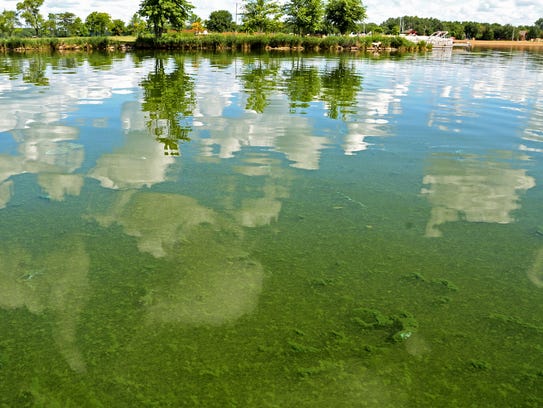
Picking up the thread on algae blooms in Iowa lakes, news on algae blooms elsewhere... (Algae blooms are the result of an excess of nutrients, particularly phosphate and nitrogen)

Massive and toxic algae bloom threatens Florida coasts with another lost summer (Miami Herald, June 29, 2018)

Miles of Algae Covering Lake Erie (Oct, 2017)

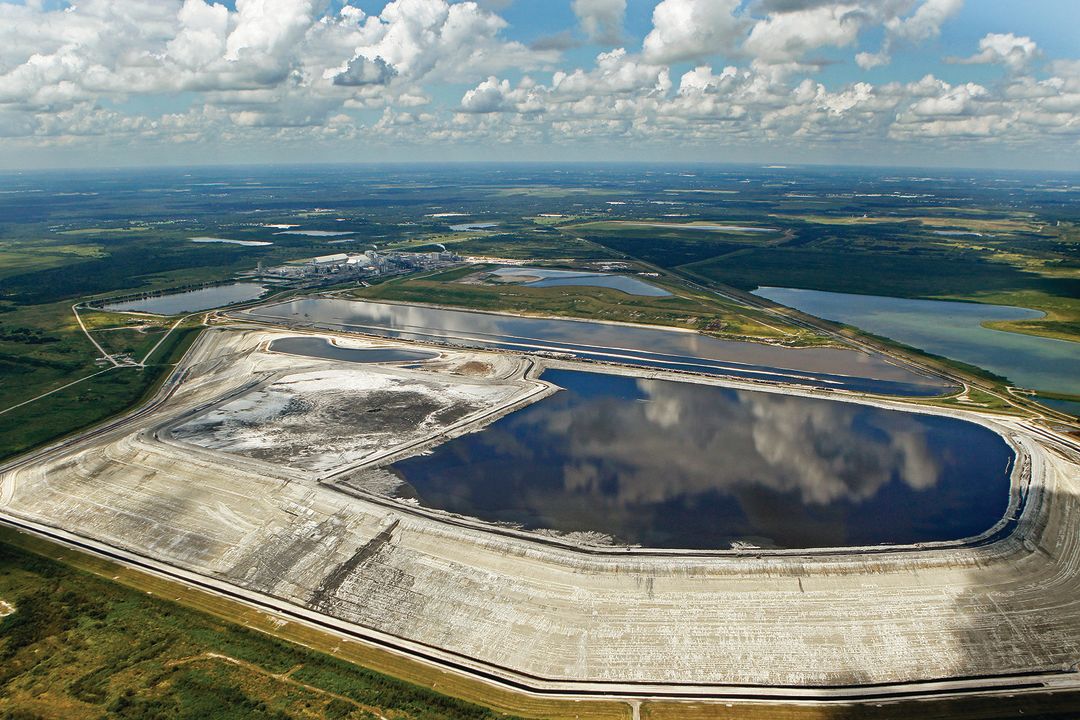
Not only has Florida waters suffered algae blooms due to excessive fertilizers from agriculture, Florida is also the center for phosphate mining supplying 75% of phosphate used in the U.S. Phosphate is one of the primary components of fertilizer with nitrogen and potassium. The phosphate mining company, Mosaic, agreed to pay $2 billion in 2015 over disposal of its waste from phosphate mining. Mosaic had been dumping their waste into Florida streams.

Phosphate giant Mosaic agrees to pay nearly $2 billion over mishandling of hazardous waste (Tamp Bay.com)
 
Last edited:

Old Man Mike

Fast as Lightning!
Messages
8,973
Reaction score
6,462
My father (ND:Chemical Engineering, 1935) was an elite Industrial Engineer working for General Chemical, Uncle Sam, and PPG Chemicals. He told me (disapprovingly) that no matter what the engineers recommended as to design for the "end-product" wastes, business administrators always preferred the "Flush It Downstream" solution. This was true until the Government made laws requiring at least holding ponds. Still, if there was any emergency, waste was DESIGNED to have access to the local river (in the dead of night if necessary.)

People don't give a crap about this. Only if they are directly "in the path" does anyone (except for the hated environmentalists) care. I've heard people say: Well, they knew what they were doing when they decided to live there (rarely true) so @#$% them. Others have said to me: they should quit cry-babying and act-like-a-man. Others have said that they wish they'd be told to just "pound sand." The public solution to this chemical assault is the extremely clever labeling of all such protesting as "not in my backyard" and then turning that into a mockable acronym (NIMBY.)

Nobody gives a damm until they get punched in the face with a situation. Our country allegedly honors "Life, Liberty, and the Pursuit of Happiness", and the courts and politicians have usually prioritized them in that order. The Pursuit of Happiness has become nearly equated with the Ability to Make and Keep Money. To that the corollary has been added that this must be allowed to "progress" freely. That "freely" has taken on huge powerful proportions.

This has all seen the near inversion of the Life, Liberty, and Pursuit of Happiness prioritization when the making of really big bucks vs the health of individual citizens enters the courtroom (or even the public discussion.) Only Power can put stops to environmental assaults on citizens and smaller businesses, but Power and the Polluters are more and more becoming the same thing.

....... and as long as it's not-in-my-back-yard, no one else really cares anyway. We are, after all, too busy contemplating our next pizza and alcoholic beverage.
 

Legacy

New member
Messages
7,871
Reaction score
321
Thanks, Mike.

Florida's agribusiness is a powerful political force. Now Scott, who's taken their political contributions, wants the feds to cough up more money. He abandoned a legislative commitment to a state funding cleanup process. The caverns in Florida that phosphate is mined from and just left when they are mined out. Mosaic just moves on to another site.

Gov. Scott declares emergency over toxic algae outbreaks
greenslime.jpg


Lake Okeechobee: a time warp for polluted water

A 2000 law promising to spend $175 million to help farmers and ranchers control phosphorus doled out just $3 million. Seven years later a plan that would have created about a million acre-feet of storage north of the lake got swallowed in the recession and abandoned by a new governor.

Critics say state laws favor “best management” goals for many agricultural operations instead of enforceable standards, and include loopholes like one allowing largely unregulated use of treated sewage sludge, high in nutrients, on farm fields. Meanwhile, suburbs that produce even more phosphorus than farms continue to expand around booming Orlando.

And this year, after failing to meet the law’s 2015 deadline to get phosphorus loads into the lake down to 140 tons, state lawmakers simply set a new deadline — 20 years from now.

The Clock is Ticking on Florida’s Mountains of Hazardous Phosphate Waste: Phosphate has also seeded Florida with the environmental equivalent of ticking time bombs.


AP_239442173395_awdrfq.jpg


The first sign something had gone wrong happened on the morning of Saturday, Aug. 27. Workers checked the water level in a 78-acre pond of polluted water sitting atop its 190-foot gyp stack and discovered it had dropped by more than a foot.

They decided it was just the wind blowing the water around. But around 11 a.m. Sunday, they checked again and realized the level had now dropped three feet.

What was sucking down all that contaminated water? A sinkhole 45 feet wide and 220 feet deep had opened up beneath the stack. Down went 215 million gallons of contaminated water, gurgling into the aquifer that supplies the region’s drinking water.

Yet as the water drained down the hole, Mosaic employees, their consultants from Ardaman & Associates and state DEP inspectors all avoided saying the s-word. For 10 days they called it an “anomaly,” or “a water loss incident.”

Geologists say it should have been obvious right from the start what was happening. But not until the pond had drained out completely and everyone could see the fissure did they finally call it what it was.
 
Last edited:

Old Man Mike

Fast as Lightning!
Messages
8,973
Reaction score
6,462
These things have always been "unfair fights" as soon as Big Money gets involved (no matter how much "citizen concern" one thinks one can drum up.) The unfairness is ridiculously simple: If a polluter or destroyer cannot be completely "run out of town", the cause will be lost. This is because the environmentally-concerned community must win EVERY fight. As soon as one is lost, the valued thing that was trying to be protected is lost.

I worked on one issue where we "won." We did it by running a waste-to-energy company out of both Kalamazoo and Battle Creek before they could get political approval for their waste machine. We only did it by having an alternative. It was a hard sell, in that most permitters want MONEY. We had to sell VALUES against cash. Tough to do, but we won.

That usually doesn't happen. The environmentalists "win" only to delay the loss. Once the other side wins, the loss is irreversible. (That is typical anyway of most so-called fights, whether the loss is property, health, quality-of-life in that place, even the dreaded childish Love of The Creation.)
 

Legacy

New member
Messages
7,871
Reaction score
321
This is criminal.

How the EPA and the Pentagon Downplayed a Growing Toxic Threat (ProPublica)

A family of chemicals — known as PFAS and responsible for marvels like Teflon and critical to the safety of American military bases — has now emerged as a far greater menace than previously disclosed.

The chemicals once seemed near magical, able to repel water, oil and stains.

By the 1970s, DuPont and 3M had used them to develop Teflon and Scotchgard, and they slipped into an array of everyday products, from gum wrappers to sofas to frying pans to carpets. Known as perfluoroalkyl substances, or PFAS, they were a boon to the military, too, which used them in foam that snuffed out explosive oil and fuel fires.

It’s long been known that, in certain concentrations, the compounds could be dangerous if they got into water or if people breathed dust or ate food that contained them. Tests showed they accumulated in the blood of chemical factory workers and residents living nearby, and studies linked some of the chemicals to cancers and birth defects.

Now two new analyses of drinking water data and the science used to analyze it make clear the Environmental Protection Agency and the Department of Defense have downplayed the public threat posed by these chemicals. Far more people have likely been exposed to dangerous levels of them than has previously been reported because contamination from them is more widespread than has ever been officially acknowledged.

Moreover, ProPublica has found, the government’s understatement of the threat appears to be no accident.

The EPA and the Department of Defense calibrated water tests to exclude some harmful levels of contamination and only register especially high concentrations of chemicals, according to the vice president of one testing company. Several prominent scientists told ProPublica the DOD chose to use tests that would identify only a handful of chemicals rather than more advanced tests that the agencies’ own scientists had helped develop which could potentially identify the presence of hundreds of additional compounds.

The first analysis, contained in an EPA contractor’s PowerPoint presentation, shows that one chemical — the PFAS most understood to cause harm — is 24 times more prevalent in public drinking water than the EPA has reported. Based on this, the Environmental Working Group, an advocacy organization whose scientists have studied PFAS pollution, has estimated that as many as 110 million Americans are now at risk of being exposed to PFAS chemicals.

In the second analysis, ProPublica compared how the military checks for and measures PFAS-related contamination to what’s identified by more advanced tests. We found that the military relied on tests which are not capable of detecting all the PFAS chemicals it believed to be present. Even then, it underreported its results, sharing only a small part if its data. We also found that the military’s own research programs had retested several of those defense sites using more advanced testing technology and identified significantly more pollution than what the military reported to Congress.

Even before the troubling new information about PFAS chemicals emerged, the government had acknowledged problems relating to them were spreading. Past EPA water testing, however incomplete, identified drinking water contamination across 33 states that Harvard researchers estimated affected some 6 million people. The military suspected drinking water at more than 660 U.S. defense sites where firefighting foam was used could be contaminated; earlier this year, it announced it had confirmed contamination in 36 drinking water systems and in 90 groundwater sites on or near its facilities.

Pruitt resigned not only due to the ethics scandals, but also just prior to the ProPublica article being published and after word of the EPA's and White House's attempts to bury the results.

EPA move on chemical study may trip up Pruitt (Politico)

EPA Administrator Scott Pruitt is facing a new controversy over chemical contamination that could prove even more damaging than his spate of recent ethics scandals.

When Pruitt returns to Capitol Hill Wednesday, he will likely be asked to explain why EPA helped to bury a federal study that would have increased warnings about toxic chemicals found in hundreds of water supplies across the country. A handful of Republicans were quick to demand answers after POLITICO reported Monday that senior aides to Pruitt intervened after the White House warned of a "public relations nightmare" from the impending Health and Human Services Department assessment.
White House, EPA headed off chemical pollution study
(Politico)

Scott Pruitt’s EPA and the White House sought to block publication of a federal health study on a nationwide water-contamination crisis, after one Trump administration aide warned it would cause a "public relations nightmare," newly disclosed emails reveal.

The intervention early this year — not previously disclosed — came as HHS' Agency for Toxic Substances and Disease Registry was preparing to publish its assessment of a class of toxic chemicals that has contaminated water supplies near military bases, chemical plants and other sites from New York to Michigan to West Virginia.

I previously posted (#96) the extensive involvement of Chemistry industry officials in Trump's EPA.

People all over the country are affected. In Michigan....

High levels of PFAS found in 3 drinking-water wells near Kalamazoo (mlive)

Michigan's Department of Environmental Quality issued a report on PFAs six years ago, only obtained recently through FOI.

Environmentalists outraged Michigan warning about PFAS went unheeded (good links to other articles including maps where the fifteen communities with thirty-one PFA-contaminated drinking water sites are)

What are PFCs and How Do They Relate to Per- and Polyfluoroalkyl Substances (PFASs)?
(EPA)

Per- and Polyfluoroalkyl Substances (PFAS) and Your Health (CDC)

Anyone wanting to know if PFCs in their drinking water should do a local search.
 
Last edited:

Old Man Mike

Fast as Lightning!
Messages
8,973
Reaction score
6,462
Some commentary from formal government health sites:

"Human exposure to per- and polyfluoroalkyl substances (PFAS) is a public health concern that the Centers for Disease Control and Prevention’s (CDC) National Center for Environmental Health (NCEH) and the Agency for Toxic Substances and Disease Registry (ATSDR) are helping our local, territorial, tribal, state, and federal partners address. Over the last decade, interest in PFAS has been growing. ATSDR and our state health partners are investigating exposure to and possible health effects associated with PFAS in more than 30 communities across the United States."

"The health effects of PFOS, PFOA, PFHxS, and PFNA have been more widely studied than other per- and polyfluoroalkyl substances (PFAS). Some, but not all, studies in humans with PFAS exposure have shown that certain PFAS may:

affect growth, learning, and behavior of infants and older children
lower a woman’s chance of getting pregnant
interfere with the body’s natural hormones
increase cholesterol levels
affect the immune system
increase the risk of cancer
Scientists are still learning about the health effects of exposures to mixtures of PFAS.

For the most part, laboratory animals exposed to high doses of one or more of these PFAS have shown changes in liver, thyroid, and pancreatic function, as well as some changes in hormone levels. Because animals and humans process these chemicals differently, more research will help scientists fully understand how PFAS affect human health."

So, in an environment of uncertain impacts of the chemicals, why be concerned? Why not just turn off one's brain and Yawn?

Everyone has their own "right" in a sense to go mindless on any topic so "fine." (Thinking that one should treat others to that mindlessness as if it's a worthy if contentless contribution to a concern is a bit more puzzling.) There are two reasons that a scientific understanding of these issues would make the situation clearer and should make anyone a bit more mindful:

1). These chemicals are persistent. They do not biodegrade.
2). These substances bioaccumulate. They increase over time and exposure in the internal organs, most especially the body's chemical powerhouse, the liver.

What this means to the thoughtful: persons living in even low-level exposures will bioaccumulate these chemicals in vital organs. With every increasing step of accumulation, those organs become more susceptible to the consequences listed above. Just because ambient levels are low does not mean that they are "safe." Just because a fast toxic "poisoning" doesn't occur, does not mean that a slow-bullet isn't heading one's way. American's are astoundingly blase about slow bullets --- how else can one explain cigarette and alcoholism and drug taking. But the science of these slow bullets is not "fake news" as they would like to non-think.

But ... Yawn.
 

Legacy

New member
Messages
7,871
Reaction score
321
To sharpen the discussion a bit, PFCs from drinking water can be detected in a vast majority of Americans. This is a question of the Agency for Toxic Substances and Disease Registry (ATSDR) is preparing to propose safe levels for fluorinated chemicals in drinking water nearly six times more stringent than the Environmental Protection Agency’s recommendation based on recent studies on their health effects (from 70 pts per trillion to 12 pts per trillion).

Should that change have been a Yawn-like change, why should the White House and Trump's Economic Protection Agency try to suppress the changes?

A couple of possible reasons:
- Congress has already been quite concerned about the health effects, holding hearings and requiring testimonies, about the dangers at greater than 70 ppt
- Congress passed the Toxic Control Substance Act to set standards based on evidence-based science
- Pruitt's EPA with the head of toxic chemical unit, Dr Nancy Beck, is calling into question safe levels of chemicals in drinking water
- Dr Beck is rewriting rules that make it harder to track these chemicals. Dr Beck worked as an executive of the American Chemical Council, representing the chemical industry
- Lowering the levels will have a significant increase in the number of sites' drinking water levels that require the EPA to act
especially around military bases
- Trump proposed slashing the EPA budget by 23% which would have eliminated a number of Congress kept their budget at the same level

In the case of military bases, in Florida:
-- Florida community raises alarms about potential cancer link to water contamination (pfasproject)
-- Florida health agency collecting data on Patrick Air Force Base cancers


For military bases overall:
-- DoD: At least 126 bases report water contaminants linked to cancer, birth defects
(Military Times)
At the 70 ppts level from above article:
The water at or around at least 126 military installations contains potentially harmful levels of perfluorinated compounds, which have been linked to cancers and developmental delays for fetuses and infants, the Pentagon has found.

In a March report provided to the House Armed Services Committee, the Pentagon for the first time publicly listed the full scope of the known contamination. The Defense Department identified 401 active and Base Closure and Realignment installations in the United States with at least one area where there was a known or suspected release of perfluorinated compounds.

These included 36 sites with drinking water contamination on-base, and more than 90 sites that reported either on-base or off-base drinking water or groundwater contamination, in which the water source tested above the Environmental Protection Agency’s acceptable levels of perfluorooctane sulfonate or perfluorooctanoic acid, also known as PFOS and PFOAs.

Maureen Sullivan, deputy assistant secretary of defense for environment, safety and occupational health, said DoD has already made safety changes at affected bases, including installing filters and providing bottled water to families living there. It has also released the full list of installations, reported in a lengthy chart attached toward the end of the congressional report, and will be working with the Centers for Disease Control next year on a study of the potential long-term effects of exposure.

Air Force Secretary Heather Wilson was asked about the exposure this week on Capitol HIll, where she was testifying about the service’s fiscal 2019 budget needs.

“It’s an issue not just in New Hampshire, but at military installations across this country,” said Sen. Jeanne Shaheen, D-New Hampshire. “We have 1,500 people who have been tested with elevated levels in the Portsmouth area, who are anxious about their future and their children’s future. And I know there are many people throughout the Air Force and our other military installations who share that concern.”

In all, 25 Army bases; 50 Air Force bases, 49 Navy or Marine Corps bases and two Defense Logistics Agency sites have tested at higher than acceptable levels for the compounds in either their drinking water or groundwater sources. Additionally, DoD tested 2,668 groundwater wells both on and in the surrounding off-base community and found that 61 percent of them tested above the EPA’s recommended level.

Changes at EPA's administration toxic chemicals division encountering outrage by Congress:
Why Has the E.P.A. Shifted on Toxic Chemicals? An Industry
Insider Helps Call the Shots
(NY Times)

Senator to Pruitt: EPA meddling in health study ‘unconscionable’
(Politico, 5/16/18)
(Sen. Patrick) Leahy said efforts by the White House and political officials at EPA to block the chemicals assessment “unconscionable,” and he pointed to a community in his state that is grappling with chemical contamination.

“It’s incomprehensible to the people in Bennington and in Vermont why an agency that works for them — their tax dollars are paying for it — whose charge it is to protect their health, turns their back on them and tries to hide health dangers,” Leahy said in his opening statement.

West Virginia Republican Sen. Shelley Moore Capito also pressed Pruitt on his agency's intervention on the study, prompting him to deny that he had a hand in it.
 
Last edited:

Legacy

New member
Messages
7,871
Reaction score
321
With Andrew Wheeler, former coal lobbyist who worked for Murray Energy a major donor to Trump and who is now in charge of the Economic Protection Agency, the EPA is rolling back coal ash regulations put in place to limit airborne and water pollution of coal ash and occupational safety.

With EPA rule change, worries linger for those near coal ash ponds (CNN)

According to the American Coal Ash Association, about 110 million tons were generated last year.
The association says that about half of all coal ash produced in the United States is recycled into construction materials such as concrete or wallboard.
However, that leaves about 50 million tons of coal ash does not get repurposed, and instead needs to be disposed of every year.
Frequent Questions about the 2015 Coal Ash Disposal Rule (EPA site, this may disappear soon)

Health effects of coal ash
(Wiki)

Coal and Water Pollution (Union of Concerned Scientists)

More than 5 million cubic yards of coal ash spilled into Tennessee’s Emory River near Kingston - one of the country’s largest environmental disasters ever.
energy-coal-ash-spill.jpg


Holding pond spill, Kingston, Tenn
image.ashx


A huge spill which unloaded up to 39,000 tons of coal ash and some 27 million gallons of coal ash slurry into the Dan River, Va.
coal_ash_spill_411.jpg
 
Last edited:

Legacy

New member
Messages
7,871
Reaction score
321
Last edited:

Legacy

New member
Messages
7,871
Reaction score
321
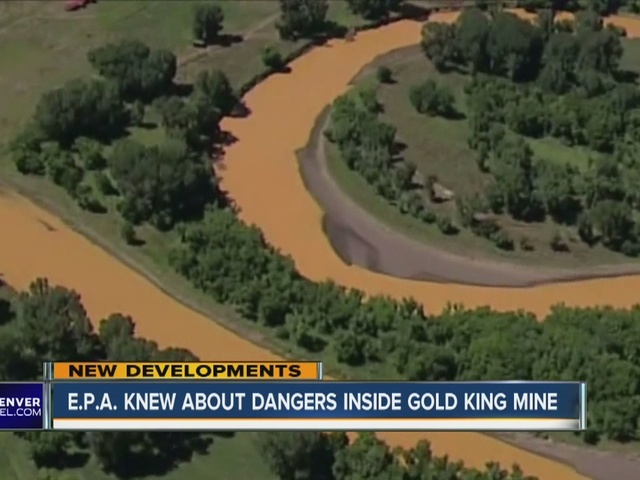
Three years ago, August 2015, the EPA which was in charge of a Superfund site cleanup at the Gold King mining site in Colorado, accidentally released during a cleanup three million tons of toxic water into the Animas River in southwest Colorado. The release was north of Silverton upstream from Durango. The wastewater carried 540 U.S. tons of arsenic, lead, metal and other heavy metals and polluted rivers in Colorado, New Mexico and Utah. The economic damage was felt by cities and towns that needed other sources of drinking water, states and the Navajo Nation who helped with the cleanup and monitoring, farmers whose crops could not be watered, and other uses by small businesses like fishing guides and rafting companies. Farmers, rafting companies, fishing guides, homeowners and others filed for about $318 million in economic losses, according to EPA documents reviewed by The Associated Press. State, tribal and local governments said their losses were higher.

EPA_knew_about_dangers_inside_Gold_King__0_31771360_ver1.0_640_480.jpg


Seventy-three claims totaled more than $1.2 billion for losses. The Obama administration promised to "make people whole" and then in January 2017 announced they would only pay $4.5 million to states and the Navajo Nation for their part in cleaning up, monitoring the water, and hauling water. The EPA, after admitting responsibility with the EPA administration promising to pay all claims, sited sovereign immunity under the Federal Tort Claims Act (FTCA). U.S. Senators and Reps, who were angry at the EPA's accidental spill and damage, were further incensed.

Scott Pruitt, who had sued the EPA numerous times, at his confirmation hearing promised to review the decision and reimburse people for their economic damages. Three years later the Trump administration has also decided they would not compensate anyone for their economic damages.

Colorado itself has over 23,000 abandoned mines similar to Gold King. Much of those are now on federal lands. Applicable federal laws include the Comprehensive Environmental Response, Compensation, and Liability Act (CERCLA) (aka Superfund); the Resource Conservation and Recovery Act (RCRA); and the Clean Water Act (CWA). The state of law includes the Colorado Mined Land Reclamation Act and the Colorado Land Reclamation Act for the Extraction of Construction Materials. Prior to those laws, when mining was completed, the companies just walked away leaving piles of waste and dug out holes.

In the eyes of those damaged by the spill, both Administrations lied to them.

Numerous lawsuits brought by the injured parties are proceeding through federal district court. Colorado Sen. Michael Bennet, along with Sens. Tom Udall, D-N.M., Martin Heinrich, D-N.M., Ron Wyden, D-Ore., and Edward Markey, D-Mass., introduced the Hardrock Mining and Reclamation Act of 2017 on Tuesday to update the nation’s antiquated hard-rock mining laws. The bill would reform the General Mining Law of 1872 that allows companies to extract minerals such as gold and silver on federal public lands without paying royalties, and while avoiding liability for any environmental damage.

With the Trump administration's rollback of some federal lands like Grand-Staircase-Escalante and Bear's Ear and the speedup of the process whereby federal land permits are granted to mining companies, the lack of responsibility to states and nearby landowners for cleanup is certainly in question.

In Utah alone, leases for more than half a million acres on formerly federal lands will be sold on-line in September and December. A Canadian mining company has already bought long-term leases for cobalt mining. The benefit in jobs and taxes is negligible with profits going north with minimal contribution to Making America Great Again. At this time, the Canadian company and other mining companies have no obligation for cleanup of toxic waste that uses a complicated process including acids to extract the cobalt, copper, and other metals. Much of the mining would be near the beautiful National Parks that Utahans are so proud of and which small businesses rely on to bring lots of tourist dollars. Lawsuits have been filed in federal court which contend that the Trump administration's reversal of National Monument lands is illegal.

The Hardrock Mining and Reclamation Act of 2017 in the Senate is going nowhere. It has not even been referred to Committee. The EPA, whose budget Trump proposed cutting by a third, and the states and their taxpayers will currently be responsible for cleanup and restoration. Not a Canadian or any other national or international company. Large amounts of water in the arid West will be required for the extraction and processing of minerals. Much of this cannot be cleaned and will end up in holding ponds like Gold King's for centuries to come - a legacy to future generations.

Three years after Gold King Mine spill, victims awaiting payment from EPA (Denver Post)

The Ongoing Lack of EPA Accountability for the Gold King Mine Spill: The EPA’s New “Responder” Theory
(Heritage Foundation)

Bill introduced to reform hard-rock mining laws
(Durango Herald)

A Canadian firm wants to start mining on Utah lands that used to be part of Grand Staircase-Escalante National Monument (Salt Lake City Tribune)

There could be eight times more coal mining near Bryce Canyon National Park if Trump’s BLM has its way (Salt Lake City Tribune)

Owners walk away from debt-ridden, unsafe Utah coal mine
(SLC Tribune)
 
Last edited:
Top