Drowning Kiribati

connor_in

Oh Yeeaah!!!
Messages
11,433
Reaction score
1,006
Copernicus was an early scientist who was fighting non-scientific Church beliefs about the earth being the center of the universe. I don't think this is the example you want...

My understanding of history is that the Church adopted what had been the standard scientific view because it fit in with their beliefs (aristotle then adjusted via Ptolemy). So actually, I have no problem with using Copernicus in my example as a guy who went against the consensus beliefs and was proved (mostly) correct.
 

woolybug25

#1 Vineyard Vines Fan
Messages
17,677
Reaction score
3,018
Glad to hear that I am not making you angry, as I said, I enjoy your posts and am not looking for a pissing match

As for the bolded part, unless you determine the cause correctly and attack that, then you can only attack the symptoms. Thus you would be looking at adaptation techniques such as moving (evacuation), dikes (hello, Netherlands), or harvesting earth from elsewhere (potentialy nearby sea bottom) and adding it to the areas being affected (see pics above of Dubai)

I'm glad as well.


It seems that ideas like dikes, harvesting earth, etc are all short term answers. Ultimately, assuming they kept rising, wouldn't these people just need to relocate? If so, are they refugees (which require UN intervention) or simply displaced? Who pays for all of this? Tough decisions.
 

IrishJayhawk

Rock Chalk
Messages
7,181
Reaction score
464
My understanding of history is that the Church adopted what had been the standard scientific view because it fit in with their beliefs (aristotle then adjusted via Ptolemy). So actually, I have no problem with using Copernicus in my example as a guy who went against the consensus beliefs and was proved (mostly) correct.

Fair enough. But most of those views were prior to the scientific revolution. They weren't necessarily based on the scientific method, just what people referred to as science. As I understand, those beliefs were largely based on theology.
 

irishog77

NOT SINBAD's NEPHEW
Messages
7,441
Reaction score
2,206
It's a joke, but one that actually has some validity to it. I mean, Christmas Island is a tourist destination. Right now, the property value is practically nothing, despite it being an expensive place to visit. If someone is that absolutely positive that the President of Kiribati, their people, the science community, etc are all wrong... then you should buy it up and make millions.

Detroit is a bad comparison. First of all, while cheap, Detroit property is far more expensive than Kiribati. Furthermore, it is distressed because of economic conditions not environmental conditions. If Detroit bounced back, you would still have property in the ghetto. If Kiribati bounced back, you would have beachfront property in the pacific. Two very different scenarios.

And how much money and time would it cost me...just to get there???

Dude, are you gonna start sending out emails, posing as a prince of some obscure country, trying to ask me for money for an investment?
 

connor_in

Oh Yeeaah!!!
Messages
11,433
Reaction score
1,006
It's a joke, but one that actually has some validity to it. I mean, Christmas Island is a tourist destination. Right now, the property value is practically nothing, despite it being an expensive place to visit. If someone is that absolutely positive that the President of Kiribati, their people, the science community, etc are all wrong... then you should buy it up and make millions.

Detroit is a bad comparison. First of all, while cheap, Detroit property is far more expensive than Kiribati. Furthermore, it is distressed because of economic conditions not environmental conditions. If Detroit bounced back, you would still have property in the ghetto. If Kiribati bounced back, you would have beachfront property in the pacific. Two very different scenarios.

Don't you mean the economic environment?

Playin' guys...just playin'
 

woolybug25

#1 Vineyard Vines Fan
Messages
17,677
Reaction score
3,018
And how much money and time would it cost me...just to get there???

Dude, are you gonna start sending out emails, posing as a prince of some obscure country, trying to ask me for money for an investment?

Ha... I would if I didn't think the damn place was getting sank into the ocean.

You wouldn't have to ever visit there. Just buy it and sell it later to an investor. Club Med or some shit.
 

connor_in

Oh Yeeaah!!!
Messages
11,433
Reaction score
1,006
And how much money and time would it cost me...just to get there???

Dude, are you gonna start sending out emails, posing as a prince of some obscure country, trying to ask me for money for an investment?

thought this was the guy in your avatar
 

Kak7304

Well-known member
Messages
2,068
Reaction score
361
Scientists' data models take that all into account.

I worked in a paleoecology lab which studied the effects of climate change on various plants while I was in undergrad at ND and had to read a lot of papers with research on climate change. The point you make is a big point that many miss. The earth's climate is cyclical, alternating between periods of warmth and ice ages. According to the climate models, we're supposed to be well on our way to an ice age now so even when the global temp stays the same, it's a change from what should be happening. Also, there are strong arguments that man-made climate change started thousands of years ago with mass deforestation for the purpose of agriculture.

Another distinction to note is the difference between global warming and climate change. The average temperature of the earth can stay the same while there are massive climate shifts throughout the world. This is definitely happening and can have grave consequences. As some have mentioned, climate change is natural but it is now happening at an accelerated pace due to humans. The problem with this is climate changes are causing ecosystems to change at a faster pace than the pace at which organisms evolve and adapt. As a result, we're starting to see organisms who cannot adapt to their new environment.
 

irishog77

NOT SINBAD's NEPHEW
Messages
7,441
Reaction score
2,206
I'm glad as well.


It seems that ideas like dikes, harvesting earth, etc are all short term answers. Ultimately, assuming they kept rising, wouldn't these people just need to relocate? If so, are they refugees (which require UN intervention) or simply displaced? Who pays for all of this? Tough decisions.

I think the obvious answer is to move people on all islands and within 75 miles of a coastline, globally, to Detroit.
 

woolybug25

#1 Vineyard Vines Fan
Messages
17,677
Reaction score
3,018
I think the obvious answer is to move people on all islands and within 75 miles of a coastline, globally, to Detroit.

The answer to the world's problems were sitting in front of us all along. haha
 

IrishJayhawk

Rock Chalk
Messages
7,181
Reaction score
464
I worked in a paleoecology lab which studied the effects of climate change on various plants while I was in undergrad at ND and had to read a lot of papers with research on climate change. The point you make is a big point that many miss. The earth's climate is cyclical, alternating between periods of warmth and ice ages. According to the climate models, we're supposed to be well on our way to an ice age now so even when the global temp stays the same, it's a change from what should be happening. Also, there are strong arguments that man-made climate change started thousands of years ago with mass deforestation for the purpose of agriculture.

Another distinction to note is the difference between global warming and climate change. The average temperature of the earth can stay the same while there are massive climate shifts throughout the world. This is definitely happening and can have grave consequences. As some have mentioned, climate change is natural but it is now happening at an accelerated pace due to humans. The problem with this is climate changes are causing ecosystems to change at a faster pace than the pace at which organisms evolve and adapt. As a result, we're starting to see organisms who cannot adapt to their new environment.

And others that are changing migration patterns and others still that live further north than they have ever been able to live.

Great post.
 

connor_in

Oh Yeeaah!!!
Messages
11,433
Reaction score
1,006
I'm glad as well.


It seems that ideas like dikes, harvesting earth, etc are all short term answers. Ultimately, assuming they kept rising, wouldn't these people just need to relocate? If so, are they refugees (which require UN intervention) or simply displaced? Who pays for all of this? Tough decisions.

Short term, maybe...maybe that is all they need to get to a period of lowering sea levels. This goes back to determining the root cause of the problem.

I did list evacuation as an option. They would either just be refugees scattered by the wind...could be taken whole into one country (US...Australia...???)...or UN could step in and carve a piece of land out of an existing region and give it to them.
 
C

Cackalacky

Guest
Living where I live, we are definitely losing a lot of marshland and beachfront property. No question the sea level is rising here.

Regarding temperature change, it affects many things.... many things...including how much carbon dioxide can be absorbed by the water and air (and thereby becoming a sink), ocean and air current patterns, positive feedback loops for other environmental chemicals etc. There is massive data and modeling that shows minor changes in the average global temperature changes will cause significant changes in the environment to include expansion of desert areas, loss of colder climate areas etc...This does not necessarily mean that one spot will be always hotter than it used to, but the midwest could turn into a dust bowl and the tropics could become a sub-tropical zone...

Regarding loss of ice caps, the fresh water ice melting causes the salinity to change in the oceans which in turn affects pretty much everything else. Massive data that this is occurring and altering ocean currents and air currents.

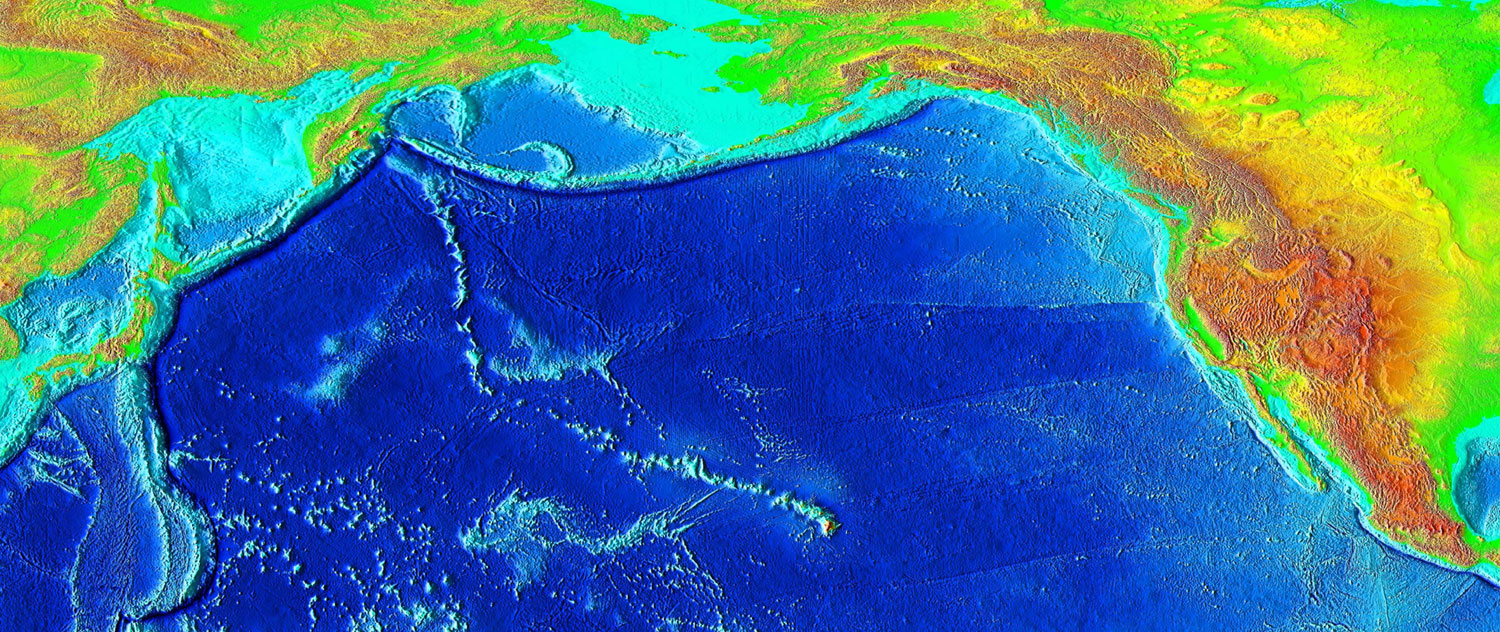
Regarding the islands, many atolls or oceanic islands derived from volcanoes tend to sink over time as they are no longer volcanic and become more dense as they cool down over long periods of time. No doubt the mean sea level is rising though.
atoll-britannica.gif


In this picture below, the Hawaiian islands have been formed, move west with plat tectonic activity and then become dense and sink becoming underwater mountains. They used to be islands above the surface of the water.
Hawaii_hotspot.jpg
 

ACamp1900

Counting my ‘bet against ND’ winnings
Messages
48,947
Reaction score
11,225
I am going to assume we all know that global temperatures have been significantly higher during many periods of human history than they are now… (if the ice core data is to be believed that is, not saying it shouldn’t be but a lot of our data and models are based in large part on that data and human error or misinterpretations are always at least a slight possibility, either way… But back to the point…) assuming the world was significantly hotter in the past, and assuming the argument that temperatures are the cause of these seas levels, then how did coastal and island peoples survive during say, the Medieval Warming period? Obviously, humanity and island cultures survived ‘worse’ times … to be clear this is a honest thought/question…. Not some insult, jab or political attack… just so we are clear. I am not trying to debate anything... it's just a thought I had in regards to Kiribati :)
 
Last edited:
C

Cackalacky

Guest
I am going to assume we all know that global temperatures have been significantly higher during many periods of human history than they are now… (if the ice core data is to be believed that is, not saying it shouldn’t be but a lot of our data and models are based in large part on that data and human error or misinterpretations are always at least a slight possibility, either way… But back to the point…) assuming the world was significantly hotter in the past, and assuming the argument that temperatures are the cause of these seas levels, then how did coastal and island peoples survive during say, the Medieval Warming period? Obviously, humanity and island cultures survived ‘worse’ times … to be clear this is a honest thought/question…. Not some insult, jab or political attack… just so we are clear. :)
I will just say that many people who inhabit island nations inhabit places where there are numerous islands in groups that are able to be inhabited or accessed by boat other such means. Not all islands in these groups disappear at the same time. Some are larger some are taller etc. Its not inconcievable that they could move from island to island easily and survive. Look at the Philippenes. How many islands are there? Thousands? There are 33 in this one nation alone.

I am not arguing that temperatures have not significantly changed by natural means as in the past, as recently as 10,000 years ago the Northern Hemisphere was in an Ice Age, but there is little doubt that man-made activities are exacerbating issues and will accelerate the degradation of the environment we are currently are supported by. 6,000 years ago the Sahara had much more vegetation. We will have to adapt and it makes more sense to stop doing stuff we know that cause problems.
 

NDBoiler

The Rep Machine
Messages
4,455
Reaction score
1,826
I worked in a paleoecology lab which studied the effects of climate change on various plants while I was in undergrad at ND and had to read a lot of papers with research on climate change. The point you make is a big point that many miss. The earth's climate is cyclical, alternating between periods of warmth and ice ages. According to the climate models, we're supposed to be well on our way to an ice age now so even when the global temp stays the same, it's a change from what should be happening. Also, there are strong arguments that man-made climate change started thousands of years ago with mass deforestation for the purpose of agriculture.

Another distinction to note is the difference between global warming and climate change. The average temperature of the earth can stay the same while there are massive climate shifts throughout the world. This is definitely happening and can have grave consequences. As some have mentioned, climate change is natural but it is now happening at an accelerated pace due to humans. The problem with this is climate changes are causing ecosystems to change at a faster pace than the pace at which organisms evolve and adapt. As a result, we're starting to see organisms who cannot adapt to their new environment.

That is an interesting point I've always had questions about whenever I hear discussion of global warming or climate change, hopefully someone can answer them for me. First off, I am no scientist myself, but I did learn in grade school science class that in order to be more scientifically accurate (in assessing things like changes in the Earth's temperature or rising sea levels, for example) that you shoud include as many data points as possible. Outside of modern science in the past 150 years or so, how would we know what sea temperatures or sea levels were beyond that time to be able to make a judgement with any degree of certainty on whether these variables were going up or down? How would we then know for sure that we should be well on our way to another ice age? How can we say with any certainy what "should" be happening based on such a small slice of data over a 4 billion year (alleged) existence of Earth?
 

Bluto

Well-known member
Messages
8,146
Reaction score
3,979
I am going to assume we all know that global temperatures have been significantly higher during many periods of human history than they are now… (if the ice core data is to be believed that is, not saying it shouldn’t be but a lot of our data and models are based in large part on that data and human error or misinterpretations are always at least a slight possibility, either way… But back to the point…) assuming the world was significantly hotter in the past, and assuming the argument that temperatures are the cause of these seas levels, then how did coastal and island peoples survive during say, the Medieval Warming period? Obviously, humanity and island cultures survived ‘worse’ times … to be clear this is a honest thought/question…. Not some insult, jab or political attack… just so we are clear. I am not trying to debate anything... it's just a thought I had in regards to Kiribati :)

Interesting question. If you are interested in this you might want to read Collapse by Jared Diamond. He presents an interesting theory on how societies succeed and or fail and presents case studies for both success and failure using Eastern Island (failure), Medieval Japan (success), The Norse settlement in Greenland (failure talks specifically about the Medieval Warming Period) and several others.
 

Bluto

Well-known member
Messages
8,146
Reaction score
3,979
That is an interesting point I've always had questions about whenever I hear discussion of global warming or climate change, hopefully someone can answer them for me. First off, I am no scientist myself, but I did learn in grade school science class that in order to be more scientifically accurate (in assessing things like changes in the Earth's temperature or rising sea levels, for example) that you shoud include as many data points as possible. Outside of modern science in the past 150 years or so, how would we know what sea temperatures or sea levels were beyond that time to be able to make a judgement with any degree of certainty on whether these variables were going up or down? How would we then know for sure that we should be well on our way to another ice age? How can we say with any certainy what "should" be happening based on such a small slice of data over a 4 billion year (alleged) existence of Earth?

Ice core samples, soil core samples and tree ring data can all get you there. Also, there are several ancient cities underwater off the coasts of Italy and India. So that could give you a good benchmark for sea levels at those times.
 
Last edited:

NDBoiler

The Rep Machine
Messages
4,455
Reaction score
1,826
Ice core samples, soil core samples and tree ring data can all get you there. Also, there are several ancient cities underwater off the coasts of Italy and India. So that could give you a good benchmark for sea levels at those times.

Thanks for the info Bluto. Are those methods accurate enough to determine the fraction of (1) degree in temperature changes noted though? I'm guesing that those methods can go back thousands of years correct? Even if they went back 50,000 years, that's still a small fraction of 1% of the Earth's existence.
 

Ndaccountant

Old Hoss
Messages
8,370
Reaction score
5,771
Just think where we would be today if it wasn't for Australia these last few years ?!?!
 

Bluto

Well-known member
Messages
8,146
Reaction score
3,979
Thanks for the info Bluto. Are those methods accurate enough to determine the fraction of (1) degree in temperature changes noted though? I'm guesing that those methods can go back thousands of years correct? Even if they went back 50,000 years, that's still a small fraction of 1% of the Earth's existence.

Geological samples go back way farther than that. Same with ice cores. The oldest one dated as of now dates back something like 800,000 years.
 

NDBoiler

The Rep Machine
Messages
4,455
Reaction score
1,826
Geological samples go back way farther than that. Same with ice cores. The oldest one dated as of now dates back something like 800,000 years.

Thats still only 2 one hundreths of 1% of a 4 billion year old Earth :). I can see where that would maybe indicate a pattern for that period of time, but it leaves so much room for uncertainty outisde that (relatively speaking) small sample size.
 
Last edited:

ab2cmiller

Troublemaker in training
Messages
11,453
Reaction score
8,532

A picture says 1,000 words. Unfortunately it can also give a misleading picture. Even pictures like this aren't always what they appear. Sandy Point has obviously eroded. The question is how much is it due to rising sea levels. This article comments about all the erosion, but here is one small section.
Cape Romain's unseen scourge – The Post and Courier

The culprits are the usual erosive suspects -- nor'easter winter storms, tropical cyclones, sea rise, even the damming of the Santee River to the cape's north.

But there's one large culprit that might not even occur to most people: the Georgetown jetties.

Here's another document that shows Bulls Island's (close to the same spot as Sandy Point) historical shoreline since 1852. From 1875 to 1920 there was a significant loss of shoreline. Was this due to man made issues as well?
http://www.google.com/url?sa=t&rct=j&q=&esrc=s&source=web&cd=4&ved=0CD0QFjAD&url=http%3A%2F%2Fwww.fws.gov%2Fscrefugescomplex%2Ftext%2FCapeRomainCCFact.pdf&ei=cOqgUqmCMMT4yQHH4ID4BA&usg=AFQjCNEfsYjk9tn8QxKwdZCgrqocKzwMTg&bvm=bv.57155469,d.aWc
 
C

Cackalacky

Guest
A picture says 1,000 words. Unfortunately it can also give a misleading picture. Even pictures like this aren't always what they appear. Sandy Point has obviously eroded. The question is how much is it due to rising sea levels. This article comments about all the erosion, but here is one small section.
Cape Romain's unseen scourge – The Post and Courier


Here's another document that shows Bulls Island's (close to the same spot as Sandy Point) historical shoreline since 1852. From 1875 to 1920 there was a significant loss of shoreline. Was this due to man made issues as well?
http://www.google.com/url?sa=t&rct=j&q=&esrc=s&source=web&cd=4&ved=0CD0QFjAD&url=http%3A%2F%2Fwww.fws.gov%2Fscrefugescomplex%2Ftext%2FCapeRomainCCFact.pdf&ei=cOqgUqmCMMT4yQHH4ID4BA&usg=AFQjCNEfsYjk9tn8QxKwdZCgrqocKzwMTg&bvm=bv.57155469,d.aWc
Erosion is one part of a series of larger issues. Yes man-made problems such as jetties cause down stream barrier islands to erode faster and that soil typically gets deposited further down stream but that is not what is happening. The islands are eroding and the sea level is rising and consequently we are losing high ground, most of which is inhabited. This is why I said above that we should stop doing stuff that exacerbates things and do more stuff that is neutral or a net positive.

There are many contributing factors to the loss of barrier islands. Sea level is rising approximately 3.5 mm per year in our area since 1900 when record first began being kept. Over 100 years we have seen an increase in .35 meters That is a little over 1 foot increase. That is major especially when much of that impacts developed land or sources of economy like most coastal areas are
 

ACamp1900

Counting my ‘bet against ND’ winnings
Messages
48,947
Reaction score
11,225
The sea isn't rising guys... the land is sinking... it's these damned ground squirrels...
 

ACamp1900

Counting my ‘bet against ND’ winnings
Messages
48,947
Reaction score
11,225
We are heading straight into a Gears of War like apocalypse .... Gears Versus mutated ground squirrels...
 

Bluto

Well-known member
Messages
8,146
Reaction score
3,979
Thats still only 2 one hundreths of 1% of a 4 billion year old Earth :). I can see where that would maybe indicate a pattern for that period of time, but it leaves so much room for uncertainty outisde that (relatively speaking) small sample size.

Yeah not really because it provides a clear picture from that point in time moving through the entire period of human existence (the most relevant period of time). So if you use that as baseline data for human activity and how it effects climate it should provide a pretty clear picture of how it has impacted climate.

Anyhow, here's a website that will answer most of your questions:

Arguments from Global Warming Skeptics and what the science really says
 
Top