Projects/Home Improvement Thread

NDBoiler

The Rep Machine
Messages
4,455
Reaction score
1,826
Thanks, I'm happy with it. Yeah, I figured we saved around 20K. Hats off to the wife. It was her design and material selection. I just provided the labor.

P.S. I just realized last night I need to hang the towel bar and toilet paper holder! lol
How long did it take start to finish?
 

Wild Bill

Well-known member
Messages
5,518
Reaction score
3,263
Thanks, I'm happy with it. Yeah, I figured we saved around 20K. Hats off to the wife. It was her design and material selection. I just provided the labor.

P.S. I just realized last night I need to hang the towel bar and toilet paper holder! lol
At least. I did my master bath/closet last year and spent about $15k for materials and did the work myself. I got a couple quotes just for the closets and they were in excess of $10k. I have a buddy that owns a cabinet store and he's getting into closets now b/c women will spend their life savings to install them. I took the designs from the quotes I got and worked iwth my buddy to build out the closets and install them on my own.

I would have been well over $50k for the bath/closets if I paid someone to demo and install new shit.
 

Irish#1

Livin' Your Dream!
Staff member
Messages
44,584
Reaction score
20,035
How long did it take start to finish?
It took me a couple of months. We have a house we're renovating so that took some of my weekend time. We also had a delay in getting the vanity in and the wife couldn't make up her mind on the tile and closet system.
 

Irish#1

Livin' Your Dream!
Staff member
Messages
44,584
Reaction score
20,035
At least. I did my master bath/closet last year and spent about $15k for materials and did the work myself. I got a couple quotes just for the closets and they were in excess of $10k. I have a buddy that owns a cabinet store and he's getting into closets now b/c women will spend their life savings to install them. I took the designs from the quotes I got and worked iwth my buddy to build out the closets and install them on my own.

I would have been well over $50k for the bath/closets if I paid someone to demo and install new shit.
We came in around $11K for materials. We looked at those systems and we were getting quotes of $12K - $15K. Just couldn't justify it. I found Easy Closets online. You give them your dimensions and what you want and they design it for you. You can see it in 3D and make whatever changes you want until your happy. Everything came labeled. Took about 2-3 to put together. I think it ended up around $3,500.


NDRock

Well-known member
Messages
7,489
Reaction score
5,448
Any of you concrete guys have experience with the helix micro rebar? I'm getting ready to start my workshop. Planning on a monolithic pour and was wondering if I could use this for the whole thing. Is it as good as traditional rebar? Does it help with cracking of the slab? Any info would be appreciated.
 

Rack Em

Community Bod
Messages
7,089
Reaction score
2,727
Any of you concrete guys have experience with the helix micro rebar? I'm getting ready to start my workshop. Planning on a monolithic pour and was wondering if I could use this for the whole thing. Is it as good as traditional rebar? Does it help with cracking of the slab? Any info would be appreciated.
If ACamp’s old lady is walking on it, then definitely go traditional rebar
 

Wild Bill

Well-known member
Messages
5,518
Reaction score
3,263
Any of you concrete guys have experience with the helix micro rebar? I'm getting ready to start my workshop. Planning on a monolithic pour and was wondering if I could use this for the whole thing. Is it as good as traditional rebar? Does it help with cracking of the slab? Any info would be appreciated.
I don't have any experience using it but it's supposed to reduce cracking. If you are getting a permit, check your local codes to see if you need rebar. There are differences in opinion with respect to using rebar in a 4 inch slab, which is probably what you are pouring. I'll give you my half ass explanation and opinion and you can take it from there.

Concrete cracks due to shrinkage, drying too quickly while it cures, weather, settling or stress. Rebar will not prevent cracks for any of these reasons outside of stress b/c it will strengthen the slab. The concrete, without the rebar, should be strong enough to prevent stress cracks so some people believe there is no reason to add rebar.

Cracks caused by shrinkage can be limited by not adding a ton of water to the mix while you pour and not letting it dry to fast. Sometimes the conditions require you add more water - it's really hot outside, you don't have enough guys to finish timely or they bring you a shitty load. You can control the drying, to an extent, by soaking the slab every day after it's poured until it's fully cured, which takes 30 days.

You can't do much about the weather cracks aside from adding expansion joint where it's needed so when it expands it has room. Nothing much you can do about frost.

Settling is the biggest problem, especially with new construction. You can follow local codes with stone/compacting and it won't matter. If you are doing it on your own and you have time and patience, here is the best thing you can do: Excavate the area you are pouring and repeatedly floud the area before you add the stone. You can do this before or after you frame. Do it as many times as possible. Frame the pad, add your stone, and flood it again, over and over. Add more stone to get yourself to the depth you want and run a compactor over it while you drink a sixer.

The guys who argue rebar is unnecessary may not be completely wrong but I always use it. It may not prevent a crack but it may (usually will) prevent a crack from increasing in size over time and it's relatively cheap. That's enough for me. I don't know how much this helix shit costs but if it's expensive, I wouldn't use it for a slab.
 

NDRock

Well-known member
Messages
7,489
Reaction score
5,448
I don't have any experience using it but it's supposed to reduce cracking. If you are getting a permit, check your local codes to see if you need rebar. There are differences in opinion with respect to using rebar in a 4 inch slab, which is probably what you are pouring. I'll give you my half ass explanation and opinion and you can take it from there.

Concrete cracks due to shrinkage, drying too quickly while it cures, weather, settling or stress. Rebar will not prevent cracks for any of these reasons outside of stress b/c it will strengthen the slab. The concrete, without the rebar, should be strong enough to prevent stress cracks so some people believe there is no reason to add rebar.

Cracks caused by shrinkage can be limited by not adding a ton of water to the mix while you pour and not letting it dry to fast. Sometimes the conditions require you add more water - it's really hot outside, you don't have enough guys to finish timely or they bring you a shitty load. You can control the drying, to an extent, by soaking the slab every day after it's poured until it's fully cured, which takes 30 days.

You can't do much about the weather cracks aside from adding expansion joint where it's needed so when it expands it has room. Nothing much you can do about frost.

Settling is the biggest problem, especially with new construction. You can follow local codes with stone/compacting and it won't matter. If you are doing it on your own and you have time and patience, here is the best thing you can do: Excavate the area you are pouring and repeatedly floud the area before you add the stone. You can do this before or after you frame. Do it as many times as possible. Frame the pad, add your stone, and flood it again, over and over. Add more stone to get yourself to the depth you want and run a compactor over it while you drink a sixer.

The guys who argue rebar is unnecessary may not be completely wrong but I always use it. It may not prevent a crack but it may (usually will) prevent a crack from increasing in size over time and it's relatively cheap. That's enough for me. I don't know how much this helix shit costs but if it's expensive, I wouldn't use it for a slab.
Nice information in there, especially on prep. Thank you. I did polished concrete for my house (shop is phase 2) and put a grid of rebar every 12 inches. Slab was about 5 inches and was on top of 4 inches of gravel and 2 inches of foam insulation, along with 10 mil poly. So far I've only had one small crack that developed quickly in corner of where one of my showers were. We'll see how it does long term.

Nobody here puts rebar in any slab. The basic mindset is "all concrete cracks". I've decided I'm going to put rebar in anything I pour. So far that has included a garage, porch and driveway/sidewalk. Like you said, it's relatively cheap and I plan on living here until I die or lose my mind. I feel like the rebar helps with any settling issues that may happen. Think the helix is actually cheaper than putting in rebar, which is why I was thinking about it. Thanks again.
 

Irish#1

Livin' Your Dream!
Staff member
Messages
44,584
Reaction score
20,035
Good luck. Let’s see some pics after you pour.
 

Wild Bill

Well-known member
Messages
5,518
Reaction score
3,263
Nice information in there, especially on prep. Thank you. I did polished concrete for my house (shop is phase 2) and put a grid of rebar every 12 inches. Slab was about 5 inches and was on top of 4 inches of gravel and 2 inches of foam insulation, along with 10 mil poly. So far I've only had one small crack that developed quickly in corner of where one of my showers were. We'll see how it does long term.

Nobody here puts rebar in any slab. The basic mindset is "all concrete cracks". I've decided I'm going to put rebar in anything I pour. So far that has included a garage, porch and driveway/sidewalk. Like you said, it's relatively cheap and I plan on living here until I die or lose my mind. I feel like the rebar helps with any settling issues that may happen. Think the helix is actually cheaper than putting in rebar, which is why I was thinking about it. Thanks again.
That's an expensive slab - the foam alone was probably a few grand.

Do you have heat in the shop? If not, consider water heated pex. I'd install it in my garage and basement if I was building. Install is expensive but it's mostly labor. If you can connect PEX you can do it yourself for a reasonable price.
 

Rack Em

Community Bod
Messages
7,089
Reaction score
2,727
Bumping this thread. I'm moving to a new house in about 3 weeks and it needs some work. First project on the list is pulling up about 250sq ft of ceramic tile in the basement. The majority of the basement has some kind of vinyl sheet or linoleum laid down, but part of the floor is ceramic which is obviously higher than the rest of the floor. To save some $$, I'm planning to remove the ceramic so the floor is (more) level. One of the carpet installers said they wouldn't remove the tiles because there is a possibility that there's asbestos in them, depending on the age?

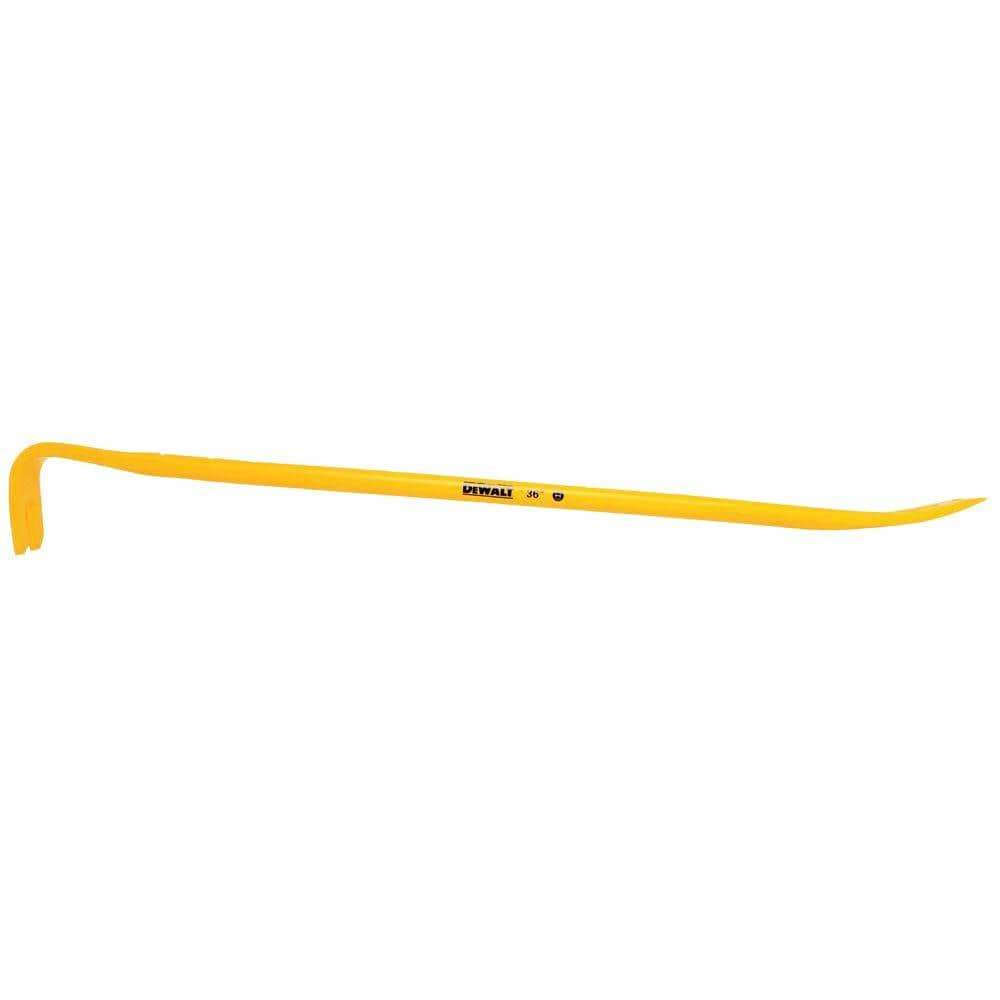
My thought was to take my angle grinder to the grout and then try to pry up the tiles (which are standard 90s/early 2000s 12"x12" tiles) with a prybar. Any ideas to either make it easier?

And any suggestions for how to remove any mastic left on the concrete subfloor? And how much of the mastic do I need to remove if I have the thickest carpet pad laid down?
 

irishff1014

Well-known member
Messages
26,511
Reaction score
9,285
Bumping this thread. I'm moving to a new house in about 3 weeks and it needs some work. First project on the list is pulling up about 250sq ft of ceramic tile in the basement. The majority of the basement has some kind of vinyl sheet or linoleum laid down, but part of the floor is ceramic which is obviously higher than the rest of the floor. To save some $$, I'm planning to remove the ceramic so the floor is (more) level. One of the carpet installers said they wouldn't remove the tiles because there is a possibility that there's asbestos in them, depending on the age?

My thought was to take my angle grinder to the grout and then try to pry up the tiles (which are standard 90s/early 2000s 12"x12" tiles) with a prybar. Any ideas to either make it easier?

And any suggestions for how to remove any mastic left on the concrete subfloor? And how much of the mastic do I need to remove if I have the thickest carpet pad laid down?
 

Attachments

  • IMG_7831.png
    IMG_7831.png
    533.2 KB · Views: 5

irishff1014

Well-known member
Messages
26,511
Reaction score
9,285
If you have a small hammer drill you can get this same kinda of bit for it that I posted above. You may find that the tile come up easy depending on how well they were put down. It’s a little bit manual labor but not to bad. That chisel will allow you to knock the rows down easily, then might just have to take a grinder and smooth it out.
 

Wild Bill

Well-known member
Messages
5,518
Reaction score
3,263
Bumping this thread. I'm moving to a new house in about 3 weeks and it needs some work. First project on the list is pulling up about 250sq ft of ceramic tile in the basement. The majority of the basement has some kind of vinyl sheet or linoleum laid down, but part of the floor is ceramic which is obviously higher than the rest of the floor. To save some $$, I'm planning to remove the ceramic so the floor is (more) level. One of the carpet installers said they wouldn't remove the tiles because there is a possibility that there's asbestos in them, depending on the age?

My thought was to take my angle grinder to the grout and then try to pry up the tiles (which are standard 90s/early 2000s 12"x12" tiles) with a prybar. Any ideas to either make it easier?

And any suggestions for how to remove any mastic left on the concrete subfloor? And how much of the mastic do I need to remove if I have the thickest carpet pad laid down?
Demo hammer is the easiest way to remove tile. They'll fly out. You can rent one at HD. My guess would be $40 for 4 hours and you should easily have it done within that time. Make sure you know how to set the bit before you leave. It'll be a spline bit. Easy to use but most people never use them. Just make sure you figure it out before you leave so you're not dicking around half the time figuring it out.

If you have a sawzall, you can buy a scraper blade attachment. That should be enough to get it cleaned. It looks like this.
 

GATTACA!

It's about to get gross
Messages
15,104
Reaction score
12,943
Bumping this thread. I'm moving to a new house in about 3 weeks and it needs some work. First project on the list is pulling up about 250sq ft of ceramic tile in the basement. The majority of the basement has some kind of vinyl sheet or linoleum laid down, but part of the floor is ceramic which is obviously higher than the rest of the floor. To save some $$, I'm planning to remove the ceramic so the floor is (more) level. One of the carpet installers said they wouldn't remove the tiles because there is a possibility that there's asbestos in them, depending on the age?

My thought was to take my angle grinder to the grout and then try to pry up the tiles (which are standard 90s/early 2000s 12"x12" tiles) with a prybar. Any ideas to either make it easier?

And any suggestions for how to remove any mastic left on the concrete subfloor? And how much of the mastic do I need to remove if I have the thickest carpet pad laid down?
I'd get a long pry bar and see if you can just get under them. If they do have asbestos you don't want to be going at them with an angle grinder.


Wild Bill

Well-known member
Messages
5,518
Reaction score
3,263
Early 90s tile doesn't have asbestos. Sleazeball attorneys like Rack em just make that shit up to churn fees.
 

Rack Em

Community Bod
Messages
7,089
Reaction score
2,727
Early 90s tile doesn't have asbestos. Sleazeball attorneys like Rack em just make that shit up to churn fees.

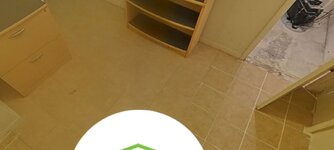
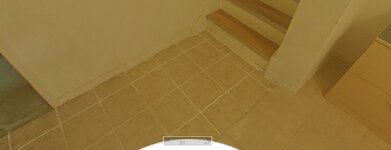
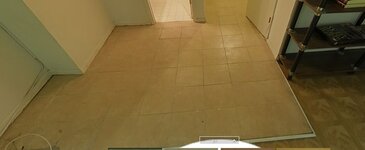
You guys tell me if you think I'm wrong, but this looks like typical 90s/early 2000s tile used in the bathrooms of developed subdivisions where the houses are all the same. That's why I feel pretty confident there's no asbestos in it.

Screenshot 2023-07-03 112446.jpg

Screenshot 2023-07-03 112518.jpg

Screenshot 2023-07-03 112553.jpg
 

FDNYIrish1

ARE YOU SUPPORTIVE OF THESE ONESIES???
Messages
3,014
Reaction score
5,228
Asbestos? I put mustard on it and I eat that shit. N95 and you’re good!
Couldn’t resist a jerky boys reference.
 

Irish#1

Livin' Your Dream!
Staff member
Messages
44,584
Reaction score
20,035
Fixing the basement up for your mom or ACamps? I wouldn’t worry about getting the grout out first. It’s going to come up with the tile.
 

Irish#1

Livin' Your Dream!
Staff member
Messages
44,584
Reaction score
20,035
A big storm came through the town where we have an old house we're rehabbing. Power was out in the area from Thursday to yesterday. Took down a big ass maple tree about 40-50ft tall. Fortunately it fell where straight across the yard and missed the neighbors privacy fence by about 5ft. Unfortunately, it ripped the power pole from the house (lines stayed connected). I know insurance will take care of the power, but waiting to see if the insurance will take care of the tree.
 

RDU Irish

Catholics vs. Cousins
Messages
8,622
Reaction score
2,722
Bumping this thread. I'm moving to a new house in about 3 weeks and it needs some work. First project on the list is pulling up about 250sq ft of ceramic tile in the basement. The majority of the basement has some kind of vinyl sheet or linoleum laid down, but part of the floor is ceramic which is obviously higher than the rest of the floor. To save some $$, I'm planning to remove the ceramic so the floor is (more) level. One of the carpet installers said they wouldn't remove the tiles because there is a possibility that there's asbestos in them, depending on the age?

My thought was to take my angle grinder to the grout and then try to pry up the tiles (which are standard 90s/early 2000s 12"x12" tiles) with a prybar. Any ideas to either make it easier?

And any suggestions for how to remove any mastic left on the concrete subfloor? And how much of the mastic do I need to remove if I have the thickest carpet pad laid down?
RYOBI ONE+ 18V Lithium-Ion Cordless 1/2 in. SDS-Plus Rotary Hammer Drill (Tool Only) P222 - The Home Depot

Ryobi hammer drill works like a charm for me (or any hammer drill for that matter but I like my cordless 18v Ryobi suite of tools). I found some bits at a pawn shop to compliment it - damn expensive new and I wasn't sure if I would need a variety. Pretty much all of them got the job done on the tile but he 1" or 2" flat bits were best on screwed in cement board working around the screws.

Tile is easy, getting the subfloor is a bitch if they screwed it down. If it is nailed down find the biggest prybar you can find and be sure to stretch first, a couple of 2x4s help create leverage and pressure where needed with less effort once you get a section going. Get a lot of five gallon buckets to haul it out - they fill up fast and you probably don't want to carry more than that out at once anyway.

If its screwed down cement board just go ape with the hammer drill and you will want to unscrew each one rather than pull them out. I am 98% sure your guy used asbestos as a BS excuse not to do the back breaking part of the job. Massive difference between nails and screws on removing the subfloor and only one way to find out.
 
Last edited:

RDU Irish

Catholics vs. Cousins
Messages
8,622
Reaction score
2,722
Demo hammer is the easiest way to remove tile. They'll fly out. You can rent one at HD. My guess would be $40 for 4 hours and you should easily have it done within that time. Make sure you know how to set the bit before you leave. It'll be a spline bit. Easy to use but most people never use them. Just make sure you figure it out before you leave so you're not dicking around half the time figuring it out.

If you have a sawzall, you can buy a scraper blade attachment. That should be enough to get it cleaned. It looks like this.

Never seen that scraper attachment - I need one of those, not sure what for but I need one.
 

Irish#1

Livin' Your Dream!
Staff member
Messages
44,584
Reaction score
20,035
If its screwed down cement board just go ape with the hammer drill and you will want to unscrew each one rather than pull them out. I am 98% sure your guy used asbestos as a BS excuse not to do the back breaking part of the job. Massive difference between nails and screws on removing the subfloor and only one way to find out.
Except in one instance, I've always used an underlayment instead of cement board for floor tile. I used screws with the cement board, but ringed shank nails for the underlayment. In both of my bathroom remodels I redid the floor and sarcastically wished I hadn't used the ring shank nails. lol
 

Rack Em

Community Bod
Messages
7,089
Reaction score
2,727
This is the basement so I'm assuming there is no subfloor other than the concrete slab. You can see in my first picture that the tiny room with the sump pump is just concrete slab floor. It looks like the tile is not much higher than the slab.

I'm no floor tile expert though, so I'll defer to you guys as to whether I should expect a subfloor under it?
 
Top