
- Messages
- 45,847
- Reaction score
- 21,865
Nice work!
Thanks, I'm hoping to find some larger limestone pieces to cap it with. The ones at the big box stores or too small which would leave quite a few joints. I don't think that would look good.

Nice work!

Anybody good with electrical?
I've been replacing light switches and I screwed something up. A single switch controls two lights on the front of the house. The switch works properly for one of the lights, but the other light is stuck on. What am I looking for?
No.Is there another switch that also controls those lights?
Anybody good with electrical?
I've been replacing light switches and I screwed something up. A single switch controls two lights on the front of the house. The switch works properly for one of the lights, but the other light is stuck on. What am I looking for?


Anybody good with electrical?
I've been replacing light switches and I screwed something up. A single switch controls two lights on the front of the house. The switch works properly for one of the lights, but the other light is stuck on. What am I looking for?

Anybody good with electrical?
I've been replacing light switches and I screwed something up. A single switch controls two lights on the front of the house. The switch works properly for one of the lights, but the other light is stuck on. What am I looking for?
If one light is working it means the switch is fine and the hot wire is connected.
I assume you checked the light bulbs. It's possible the fixture may have an issue or that you pulled the connection loose when you changed the switch but probably not likely.
I would start by checking the switch leg connection. Sometimes people make this type of connection by connecting both switch legs directly to the switch and other times they tie the wires together with a pigtail and that pigtail is connected to the switch. I'm not sure how yours was wired but that's probably your issue.
If you have them connected with a nut and pigtail, check to make sure the connection is solid. Pull the wire nut to see if its loose. If not, unscrew it and make sure the line is connected properly. Sometimes one line slips out and prevents a connection or the tip of a line cracks off, etc. Get everything good to go, tie them back up, put the nut back on and make sure the open end of the nut is facing down when you pack it into the box so it doesn't collect dust. You can tape the bottom too. Not a bad idea. You can run some tape around the switch once you get it working too.
If you have both lines connected to the switch, I would put them on a pigtail - same as above.
While you're in there with the power off, you may want to check your connection on the neutral line and the ground.
If you're still not getting heat to that light, check the connection in the fixture or the bulbs if you haven't done so already.
He said the light is on all the time, so he's getting juice.
Did you take a pic before disconnecting the old switch?
I figured it out. The switch had two different ways to attach wires, the kind where you insert the wire straight into the back of the switch and the kind where you screw it onto the side. I had the hot wire connected to the top back (correct), one of the lights connected to the bottom back (correct), and the second light connected to the top side (incorrect, I believe this made it a "traveler"). I moved that wire down to the bottom side terminal and everything works properly.Ahhh, sorry. You probably crossed the line and connected the switch leg with the hot wire. Common mistake b/c the hot wire and switch legs are often both black. Track the lines and once you figure it out, wrap a piece of electric tape on the end of the switch legs about an inch away from the copper so you'll know it's a switch leg going forward.
Disconnect the switch leg from the hot line and tie it in with the other switch leg and connect it to the switch. Should be good to go.
Solid advice if you're ever messing with an old box with several wires. It's so easy to confuse lines.
Goes without saying but take your time when you are doing electric. It's always easier to slow down and get it done right than it is to trace lines to correct a mistake. And a little patience will probably save you from riding the lightning too.
I chewed up my skin being so vigorous with the screwdriver that I can no longer use my fingerprint to unlock my phone.I did all the electrical when we finished the basement in our house. I bought books, googled the crap out of everything, was meticulous in making sure that every little rule was followed.
Inspector comes in and spends about 3 minutes glancing around and approved me. I was like ..... WTF ..... aren't you going to look and make sure that every wire is secured within 12 inches of each box. Learned that I spent probably twice as much time doing the project as I probably could've.
Another electrical project. I have my thoughts on this, but want to hear what you guys think is the best way to approach this.
We built a pavillion on our patio and I want to get power to it to install a ceiling fan and a couple of outlets for a TV. One of the corner polls sits just a couple of feet from the house. At that location I have a porch light and a GFC recepticle. I'm thinking my best option is to remove the light and add a surface box. Then I can put the light on the box and run a short piece of conduit out the top of the box over to the pavillion. This of course assumes I won't overload the breaker and don't need to add a toally new circuit.


HVAC puzzle.
My house has a single air handler pushing air conditioning and forced hot air to three different zones controlled by duct dampers. We currently have a Nest thermostat installed in Zone 1 (downstairs) and two wireless thermostats installed in Zones 2 and 3, both upstairs.
We want to replace the two upstairs thermostats with Nests as well. The good news is that there is thermostat wire already running behind the existing wireless thermostats, they're just not hooked up to anything. It seems fairly straightforward. Use the existing wire to connect the two new Nests directly to the zone control system, bypassing the wireless receiver entirely. Where I'm stumped is that I can't find the basement end of the damn thermostat wires. I can't figure out what the guy who installed the wireless thermostats did with them. Any suggestions?


Okay so riddle me this. I still can't find the Zone 2 wires, but setting that aside for a second.
I got out a wire tracer to confirm that what I believed to be the Zone 3 wires were, in fact, the Zone 3 wires. They were, except that on the thermostat end there are 5 wires in the cable but on the basement end there are only 3 wires in the cable.
I'm not crazy!
I tracked down the HVAC guy who set up the current thermostats. There were two major remodels done in this house's history, one to finish a bonus room over the garage, and then a two-story extension that includes the kitchen on the first floor and the master bedroom on the second floor. The contractor who did one or the other of those projects messed up the wiring and the old zones terminate randomly in the walls somewhere that they've never been able to trace.


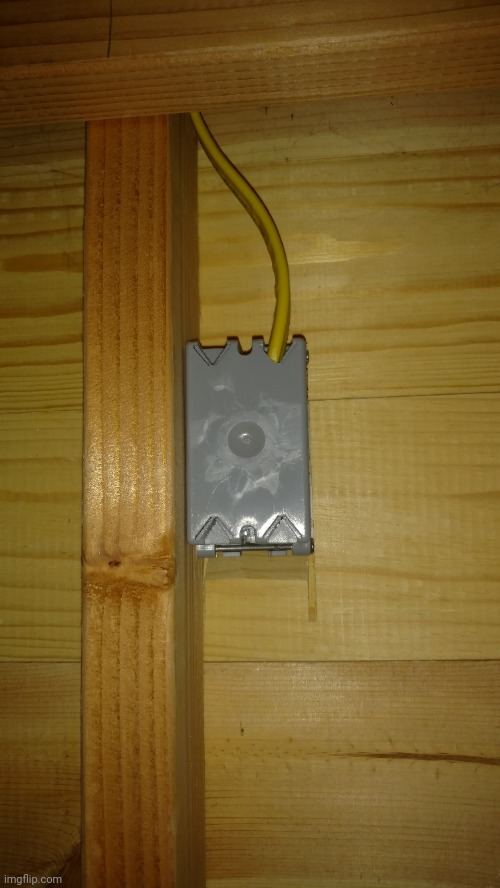

So i think this project should be relatively easy but I am no electrician by any means.
I have an outlet in my basement and a storage area on the immediate other side of the wall which is unfinished. I want the outlet to be on both sides. I believe i can just install a different style outlet box that allows me to put one on both sides but just wanted to check here. See picture below.
