Hard-Working Americans

Legacy

New member
Messages
7,871
Reaction score
321
Steve Lopez explores the shrinking middle class

The Pulitzer Board named columnist Steve Lopez as a finalist in the commentary category for a series of columns grappling with wealth inequality in Southern California, which Lopez described as “the stratified kingdom of hillside castles and cardboard cities.”

Lopez’s work explored the lives of a 71-year-old South Los Angeles woman who survived without running water, a laid-off aerospace worker, an Air Force veteran seeking work, casualties of forced gentrification in Echo Park, and the work of a real estate agent in Beverly Hills.

Here are their stories....
linked
 

Legacy

New member
Messages
7,871
Reaction score
321
Survey: Financial security rises, but saving for emergencies

Bankrate's Financial Security Index rebounded to its best reading since November, buoyed by improved job security, rising wages and consumers' increased comfort with debt.

The FSI, which takes into account Americans' answers to questions about savings, job security, debt and other factors stands at 103, up from 101.5 in January.

Unemployment is at an 8-year low of 4.9% and average hourly and weekly earnings saw an uptick in the latest unemployment report, but despite that, the data also show that Americans aren't increasing their savings.

Little progress on emergency savings
"The percentage of Americans with more emergency savings than credit card debt dropped in the past year," says Bankrate's chief financial analyst Greg McBride, CFA. "Currently, just 52% of Americans have more emergency savings than credit card debt, down from 58% in 2015."The percentage of Americans with no credit card debt -- but no savings either -- jumped from 13% last year to 21% in 2016.

On a brighter note, the survey also asked Americans about credit card debt and found that only 22% have more credit card debt than emergency savings. That's down from 24% last year and is the lowest in the 6 years the question has been asked.

Millennials more likely to set aside emergency funds
"Despite Americans' lack of progress on emergency savings, they're upbeat on other aspects of financial security," McBride says.
While there was little difference between men and women when it came to savings and credit card debt, there was a notable variance when looking at age group and income levels.
 
Last edited:

Legacy

New member
Messages
7,871
Reaction score
321
We may hear "hard working Americans" once or twice in the next few days. Ya think?

Link to Rep Party Platform 2012

Tax Cheats Stick Honest Taxpayers with a $406 Billion Annual Tax Bill

A new report from the Internal Revenue Service (IRS) estimates that the “tax gap,” meaning the amount in taxes that are owed but go unpaid each year, was $406 billion on average between 2008-2010. This is a $406 billion cost that honest taxpayers are forced to make up for due to the illegal actions of individuals and corporations.

It is also important to note that the vast majority of middle income taxpayers are not the ones evading taxes. That’s mainly because they can’t cheat even if they were so inclined. Employers must report wages to the IRS and remit withholding taxes. The majority of the tax gap ($247 billion) is due to underreporting of business income.

Rather than increasing the funding of the IRS to close the tax gap however, Congress has actually cut the IRS budget by 17 percent since 2010, after accounting for inflation. While cutting the IRS budget may appeal to members of Congress who are in favor of tax cheating, it’s counterproductive in terms of deficit reduction and protecting honest taxpayers.

So if Congress wants to get serious about closing the tax gap, the first thing it should do is reverse these budget cuts and increase the IRS’s funding substantially. In addition, there are numerous legislative actions that Congress could take to crack down on tax evasion. For example, Congress could require more information reporting, increase penalties for tax-evasion facilitators and close the various offshore loopholes that create the opportunity for tax cheating businesses to game the tax system.

Allowing for rampant tax evasion steals money from honest taxpayers and the public investments that we need. Congress should act immediately to stop this theft of taxpayer money.
 
Last edited:

MJ12666

New member
Messages
794
Reaction score
60
We may hear "hard working Americans" once or twice in the next few days. Ya think?

Link to Rep Party Platform 2012

Tax Cheats Stick Honest Taxpayers with a $406 Billion Annual Tax Bill

Honestly this is another silly article. First off there is no way to very the dollar amounts of alleged tax cheats so the numbers quoted are meaningless. If you could calculate it accurately you would no who is cheating and turn them in. Second, additional funding of the IRS will not automatically result in an increase in tax revenue. Most of the people cheating are you local small businesses. I remember I had a friend whose husband owned a auto repair shop. He did primarily a cash business. They wanted to buy a new house and needed to give the bank a copy of their tax returns to verify their income. Well since he had a cash business he did not report all of his income (actually a substantial portion) so the bank would not approve the mortgage. She knew I was a CPA and asked me what they could do. I told her the only thing she could do is report her income honestly. She was not happy as then they would owe significantly more taxes. I don't believe the bought the house. These are the people the IRS would need to find but it is almost impossible and the cost would be prohibitive.
 

irishnd31

Biggest Idiot On This Site
Messages
6,208
Reaction score
8,088
021.gif
 

Legacy

New member
Messages
7,871
Reaction score
321
Honestly this is another silly article. First off there is no way to very the dollar amounts of alleged tax cheats so the numbers quoted are meaningless. If you could calculate it accurately you would no who is cheating and turn them in. Second, additional funding of the IRS will not automatically result in an increase in tax revenue. Most of the people cheating are you local small businesses. I remember I had a friend whose husband owned a auto repair shop. He did primarily a cash business. They wanted to buy a new house and needed to give the bank a copy of their tax returns to verify their income. Well since he had a cash business he did not report all of his income (actually a substantial portion) so the bank would not approve the mortgage. She knew I was a CPA and asked me what they could do. I told her the only thing she could do is report her income honestly. She was not happy as then they would owe significantly more taxes. I don't believe the bought the house. These are the people the IRS would need to find but it is almost impossible and the cost would be prohibitive.

It looks to me as though the figures in the article's "Tax Cheats" are from this group:

In testimony before the Senate Budget Committee, Bob McIntyre, director of Citizens for Tax Justice, explained that the IRS estimates likely underestimate the amount of income that individuals and corporations are able to evade by hiding their money in tax havens.

Also, (from the IRS)

Abusive Offshore Tax Avoidance Schemes - Talking Points

Schemes
The Abusive Tax Scheme Program is concerned about taxpayers who exploit secrecy laws of offshore jurisdictions in an attempt to conceal assets and income subject to tax by the United States.
Some different types of entities and schemes being used in Abusive Offshore Tax Schemes include:
-Foreign trusts
-Foreign corporations
-Foreign (offshore) partnerships, LLCs and LLPs
-International Business Companies (IBCs)
-Offshore private annuities
-Private banking (U.S. and offshore)
-Personal investment companies
-Captive insurance companies
-Offshore bank accounts and credit cards
-Related-party loans
 
Last edited:

Legacy

New member
Messages
7,871
Reaction score
321
Ryan challenger Paul Nehlen launches super PAC

Although Nehlen lost the Aug. 9 contest by a staggering margin — Ryan won 84 percent of the vote — he and his allies think that the support he received from right-wing figures such as Ann Coulter and former Alaska governor Sarah Palin has given him a burgeoning national profile.
In particular, Nehlen's candidacy drew support from the deeply populist and nationalist wing of the Republican Party, which cheered on his attacks on Ryan as a "soulless globalist" aligned with wealthy Wall Street donors.

“We’re launching,” Nehlen said in an email, “to amplify the voices of hard-working Americans who have had enough of party leadership and who are ready to put out to pasture the political dynasties running America.”

He added, “Millions of hard-working Americans have had enough of the Clinton dynasty and they’ve had enough of career politicians colluding to keep outsiders like Donald Trump, who echoes their thoughts, out of power.”
 

Legacy

New member
Messages
7,871
Reaction score
321
Clinton campaign highlights jilted Trump contractors

The Democratic speakers also hit Trump for outsourcing manufacturing jobs for his clothing and other product lines to India, China and Turkey. “He’s made a career at the expense of everyone else,” said Democratic National Committee Chairwoman Debbie Wasserman Schultz, a Florida congresswoman. “We won’t allow Donald Trump to prey on hard-working Americans by giving him the keys to the White House,” she said.
 

Legacy

New member
Messages
7,871
Reaction score
321
GM cuts 1,100 jobs in Michigan after creating 800 jobs in Tennessee (MLive)

With three shifts, Delta Township employs 3.252. By June, that number is forecast to be 2,368.

GM's workforce in Spring Hill is 4,097, according to its website. There also are 1,171 third-party service providers.

One example of how jobs follow automakers when they shift facilities: Comprehensive Logistics just laid off 138 in Michigan as it also expanded in Spring Hill.

The shift cut is the second for GM in Michigan this year. The automaker announced in late 2016 that it would cut the second shift at the Hamtramck Assembly plant in Detroit (1,300 jobs).

It also cut 839 jobs at its Grand River Assembly plant, also near Lansing, in 2016.

But its also adding jobs to the state: Examples are production of the Chevrolet Bolt EV in Lake Orion and 450 jobs coming with it moves pickup production from Mexico to Michigan.

The 839 jobs cut at the Grand River Assembly plant near Lansing was part of the job cuts GM announced in November of 2,000 jobs. The others were when GM ended the third shift at its Lordstown, Ohio.

Total job losses at GM (excluding any third party losses):
- 1100 at Delta Township
- 1300 at the Hamtramck Assembly plant
- 2,000 at the Grand River Assembly plant and the Lordstown, Ohio plant.

Congressman Tim Walberg, R-Tipton, in a statement, said he is disappointed by GM’s decision to ax the shift at Lansing Delta Township.

“This is a very difficult day for many of the workers and their families. I have visited the GM Delta Township Plant on numerous occasions, and the dedicated and hardworking men and women who work there represent the best of what Michigan has to offer. The auto industry is critical to our state's economy, and I will continue fighting for more jobs and opportunity for the workers who form the backbone of Michigan manufacturing.”

Tough day for some Americans in Detroit.
 
Last edited:

Irish#1

Livin' Your Dream!
Staff member
Messages
44,583
Reaction score
20,035

Nice story.


I saw one a week or two ago where some policemen chipped in and bought a teenager new tires for his car. He had a flat and no jack when the police stopped. They noticed his other tires were showing thread so they chipped in to get him new tires. They then started a GofundMe to get him more reliable transportation.

APD officers buy brand new tires for stranded teen | KXAN.com
 

Legacy

New member
Messages
7,871
Reaction score
321
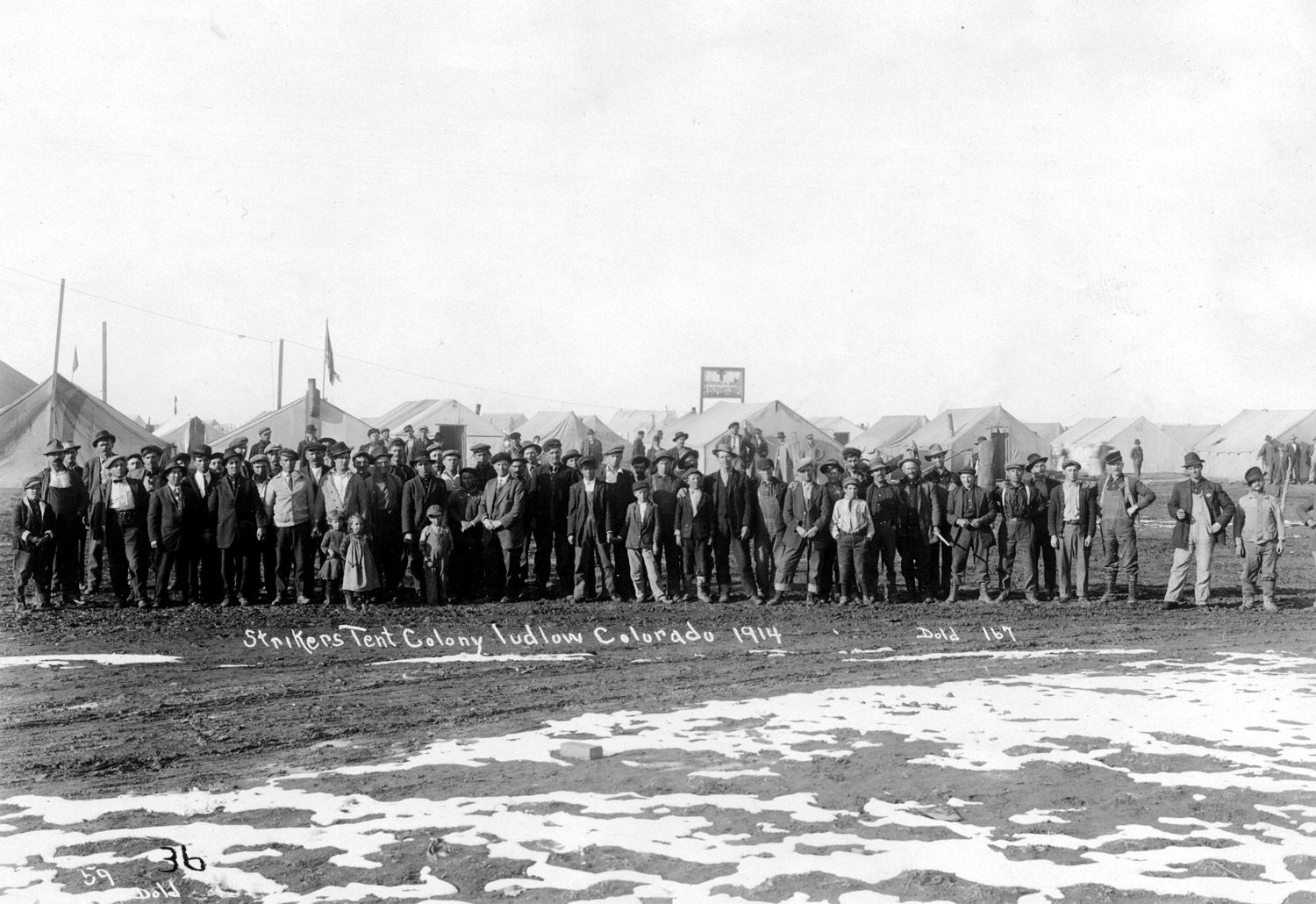
Ludlow Massacre

Ludlow Massacre

ludlow_teny_colony_cc_img.jpg


A sign in the midst of prairie eighteen miles north of Trinidad, Colorado marks the spot of the bloodiest fight in the history of the American labor movement - the Ludlow Massacre on April 20, 1914. About 1,200 striking coal miners and their families, who had moved to a tent city nearby the company town of Ludlow, were attacked by strikebreakers and camp guards of the Colorado Fuel and Iron Company, owned by John Rockefeller, Jr. and by the Colorado National Guard. The Guards and the militia employed by CFIC placed Colt-Browning machine guns that could fire 450 rounds per minute on a ridge above the tents and opened fire. At the end of the day, they set fire to the tents. Under one tent, four women and eleven children had hidden to escape the gunfire and died from the flames. Most of the miners were first-generation immigrants from Italy, Greece, and Serbia with some Spanish-speaking and Asian immigrants as well. The massacre set off what's called the Colorado Coalfield War as 700 to 1,000 strikers "attacked mine after mine, driving off or killing the guards and setting fire to the buildings". The massacre changed the nation’s attitude toward labor and capital for the next several decades, though the first major mine safety act would not be passed until 1952.

71168-004-D3677529.jpg


Here are some good accounts:
There Was Blood; The Ludlow massacre revisited. (The New Yorker)

Ludlow Massacre (Wikipedia)

Ludlow Massacre: April 20, 1914 (Zinn Project)

Modern mining regulation in the United States is carried out by Mine Safety and Health Administration and governed by The Federal Mine Safety and Health Act of 1977.
 
Last edited:

Veritate Duce Progredi

A man gotta have a code
Messages
9,358
Reaction score
5,352
ludlow_teny_colony_cc_img.jpg


A sign in the midst of prairie eighteen miles north of Trinidad, Colorado marks the spot of the bloodiest fight in the history of the American labor movement - the Ludlow Massacre on April 20, 1914. About 1,200 striking coal miners and their families, who had moved to a tent city nearby the company town of Ludlow, were attacked by strikebreakers and camp guards of the Colorado Fuel and Iron Company, owned by John Rockefeller, Jr. and by the Colorado National Guard. The Guards and the militia employed by CFIC placed Colt-Browning machine guns that could fire 450 rounds per minute on a ridge above the tents and opened fire. At the end of the day, they set fire to the tents. Under one tent, four women and eleven children had hidden to escape the gunfire and died from the flames. Most of the miners were first-generation immigrants from Italy, Greece, and Serbia with some Spanish-speaking and Asian immigrants as well. The massacre set off what's called the Colorado Coalfield War as 700 to 1,000 strikers "attacked mine after mine, driving off or killing the guards and setting fire to the buildings". The massacre changed the nation’s attitude toward labor and capital for the next several decades, though the first major mine safety act would not be passed until 1952.

71168-004-D3677529.jpg


Here are some good accounts:
There Was Blood; The Ludlow massacre revisited. (The New Yorker)

Ludlow Massacre (Wikipedia)

Ludlow Massacre: April 20, 1914 (Zinn Project)

Modern mining regulation in the United States is carried out by Mine Safety and Health Administration and governed by The Federal Mine Safety and Health Act of 1977.

I had never heard of that. Thanks for sharing the story.
 

Legacy

New member
Messages
7,871
Reaction score
321
I had never heard of that. Thanks for sharing the story.

Sure. Just a small sign on I-25 and, off the road, a few abandoned buildings in a ghost town and a monument to the dead and all the miners. I, too, was unaware how much the incident was recorded in newspapers, books and hearings in Congress. I also did not know how extensive coal mining in Colorado was or how unsafe.

A 1917 coal mine explosion in southern Colorado killed 121. But it’s just a faint memory in the state’s history.
(Denver Post)
It was April 27, 1917, just a few weeks after the U.S. joined World War I. The explosion was the blackest mark among a series of mining disasters that over decades had killed hundreds of men who were working risky jobs to provide for their families. And yet, it’s not been a major narrative in Colorado’s economic history.

“This was the biggest mine disaster in Colorado history — and yet mines in the southern coalfields exploded so regularly as to numb the general public to the suffering mine workers experienced there,” said Thomas Andrews, a history professor at the University of Colorado and the author of “Killing for Coal: America’s Deadliest Labor War.”

More than 200 miners were killed at mines within a few miles of the Hastings in 1910 alone, Andrews said.
 
Last edited:

Legacy

New member
Messages
7,871
Reaction score
321
China Gets That Going Green Is A Win For Job Creation. Why Doesn't Trump? (Forbes, Oct 2017)

According to the Department of Energy’s 2017 U.S. Energy and Employment Report, roughly 300,000, or 14%, of new jobs created last year were in the energy sector. Of that, many are in either renewable energy, like wind and solar, or in energy efficiency, which alone added 133,000 new jobs in 2016, or 44% of new energy jobs overall. The solar industry employed 374,000 workers in 2016, according to the Department of Energy. There are an additional 102,000 workers employed at wind firms across the nation. The solar workforce increased by 25% in 2016, while wind employment increased by 32%.

Coal employs some 160,000 workers. Coal mining and support employment declined by 39% from March 2009 (93,439) to March 2016 (57,325) according to the Bureau of Labor Statistics, with a 24% decline in the last year alone.

The report notes:

Net generation from coal sources declined by 53 percent between 2006 and September 2016, while electricity generation from natural gas increased by 33 percent and solar by over 5,000 percent—from 508,000 MWh to just over 28,000,000 MWh. The solar growth only includes utility-scale facilities. In fact, between September 2015 and September 2016 alone, distributed solar photovoltaic generation increased 35 percent nationwide, while estimated total solar--both utility-scale and distributed generation--increased by 52 percent across the country. These shifts in electric generation source are mirrored in the sector’s changing employment profile, as the share of natural gas, solar, and wind workers increases, while coal mining and other related employment is declining.
Our challenge as a nation remains whether we want to fight these trends or capitalize on them.

Governors Urge Trump to Support Wind and Solar Power (Bloomberg, Feb 2017)

Employment by detailed occupation
Other available formats: (XLSX)

Table 1.2 Employment by detailed occupation, 2016 and projected 2026
(Numbers in thousands) (Bureau of Labor Statistics)
 
Last edited:

Legacy

New member
Messages
7,871
Reaction score
321
‘Too Little Too Late’: Bankruptcy Booms Among Older Americans (NY Times)

Keith Morris, chief executive of Elder Law of Michigan, which runs a legal hotline for older adults, said the prospect of bankruptcy was a regular topic for his callers.

“They worked all of their lives, and did what they were supposed to do,” he said, “and through circumstances like a late-life divorce or a death of a spouse or having to raise grandkids, have put them in a situation where they are not able to make the bills.”

The NY Times has a number of good articles under Elderly savings and other appropriate topics for >65 y.o. Worthy topics also may included impact of government cutbacks, implications of caring for aging parent for the next generation and their savings, retirement changes, Medicaid changes in addition to medical costs, signing for childrens' college loans, etc.

How Many Seniors Are Living in Poverty? National and State Estimates Under the Official and Supplemental Poverty Measures in 2016 (KFF)

Income and Assets of Medicare Beneficiaries, 2016-2035 . (KFF)
 
Last edited:

Legacy

New member
Messages
7,871
Reaction score
321
If anything unites us, it's the concern we evidence and the assistance we provide to those Americans whose lives are changed by disasters. Sometimes - like when the Texans especially J.J. Watt after Harvey and the Alabama football helped when a massive tornado hit Tuscaloosa - sports is involved reminding us we are all alike. With the huge tornado last night in Jefferson City, Mo. and the destruction and the it caused, Americans will once again unite. The Midwest storms have caused record flooding with so many Americans either losing their homes or watching their fields inundated without a chance of recovering to plant a crop on top of everything else that has impacted their livelihood.

Live updates: 'Violent' tornado delivers direct hit to Missouri, killing 3 overnight (ABC)

Midwest Floods: Worst Agricultural Disaster in Modern U.S. History (The Trumpet)

The historic rainfall is on top of record-setting snowfalls in the Midwest.

U.S. farmers face devastation following Midwest floods (Reuters)
“I’ve never seen anything like this in my life,” said Tom Geisler, a farmer in Winslow, Nebraska, who said he lost two full storage bins of corn. “We had been depending on the income from our livestock, but now all of our feed is gone, so that is going to be even more difficult. We haven’t been making any money from our grain farming because of trade issues and low prices.”
Americans' responses are usually "How can I help?" with emergency help from the federal government whether with disaster relief or having had crop insurance subsidies. Sadly, many will never be able to recover. And the flooding is all headed south to New Orleans.

Update: And it looks like Congress has agreed on a Disaster Aid package.
Senate Reaches Deal On Disaster Aid Package As Trump Pivots To Support It (NPR)
 
Last edited:

Irish#1

Livin' Your Dream!
Staff member
Messages
44,583
Reaction score
20,035
Doesn't matter if you're a Dem, Repub or Ind, when it comes to disasters. Everyone chips in one way or another.
 

Legacy

New member
Messages
7,871
Reaction score
321
Oh, well....

Conservative blocks House passage of disaster relief bill (The Hill)

Rep. Chip Roy (R-Texas), a member of the conservative House Freedom Caucus, blocked a disaster relief bill in the House on Friday by objecting to an unanimous consent vote.

The Texas Republican who previously worked for Sen. Ted Cruz (R-Texas) argued the House should not have recessed before debating the legislation and holding a vote in arguing why he moved to stall the legislation.

“I'm here today primarily because if I do not object, Congress will have passed into law a bill that spends $19 billion of taxpayer money without members of Congress being present in our nation's capital to vote on it,” he said on the floor.

“Secondly, it's a bill that includes nothing to address the clear national emergency and humanitarian crisis we have at our southern border.”

He also cited concerns with how the bill would ultimately be paid for.

The $19.1 billion disaster aid package, which did not include the $4.5 billion in border funding requested by President Trump, passed the Senate in an 85-8 vote on Thursday, and the House GOP leadership had also supported moving forward with the bill.

The House is due to come back on June 3 though it will hold a "pro forma" session on Tuesday, providing another opportunity to pass the bill.

Roy slammed the Democrats' objection to provide border funding as a reason why he moved to block, for now, the disaster aid bill.

"While Speaker Pelosi has consistently denied the crisis at our border, and thus has denied the humanity of the victims of cartels and other traffickers, she has been insisting that there is no money to satisfy the good faith compromise emergency funding requests from the White House," he said.

Roy also forcefully argued the disaster aid bill should have included the border funding requested by Trump, saying it would have ensured the Department of Homeland Security and the Department of Health and Human Services "do not run out of money while managing the over 100,000 illegal aliens being apprehended and the Unaccompanied Alien Minor Children being unable to be housed appropriately."

The measure includes $900 million in aid to Puerto Rico — a provision the president previously objected to — in addition to assistance for areas of the United States affected by hurricanes, flooding, earthquakes and wildfires.

The bill included $4.38 billion that was slated to be allocated toward Hurricane Harvey housing aid to Texas.

The president previously agreed to sign the legislation, siding with Senate Appropriations Committee Chairman Richard Shelby (R-Ala.) and Sen. David Perdue's (R-Ga.) call for him to support the measure.

The House GOP leadership had also wanted a unanimous consent vote to move forward for the bill, according to an aide.

"The House Republican Leadership position was to move forward with UC. It takes just one person to object and it is blocked," a House GOP aide told The Hill, referring to unanimous consent.

But Freedom Caucus leaders Reps. Jim Jordan (R-Ohio) and Mark Meadows (R-N.C.) had reportedly advised Trump to reject the measure after the upper chamber dropped the border security provisions from the bill, according to Politico. ...

I guess in June when Congress returns, we'll have debate, attempts to alter the bill, eventually a vote, but only if Trump says he will sign it over Freedom Caucus objections. Groundhog Day.

"I'm not sure what our legislative agenda is right now. I'm not sure what it consists of," said one Republican senator who asked to speak on background to voice their frustration about the state of affairs. "There is a sense that because Democrats control the House and Republicans control the Senate ... what's the point? Why bother?"

"There is also a sense that there are a lot of senators up for reelection in 2020," the member said. "They don't necessarily want to cast votes just for the sake of casting votes possibly leaving senators in a more vulnerable position, but it begs the question: which makes us more vulnerable, inacation or action?"

"What I am about to say, I intend to say gently and constructively. And that is this. We need to do more. We need to do more. By we, I mean the United States Congress. We have completed almost 25% of the time allotted to this current Congress and what have we done other than nominations," Sen. John Kennedy (R-La) said. "We have done nothing. Zero. Zilch. Nada."

There's infrastructure. lowering drug costs, a two year budget would fund the government and block automatic cuts by October, the southern border and border security, trade war impact on the farmers, disaster relief, etc.
 
Last edited:

Legacy

New member
Messages
7,871
Reaction score
321
The middle class is being left behind and haven't recovered to the pre-recession level. (See graphic)

Why wealth gap has grown despite record-long economic growth

As it enters its 11th year, America’s economic expansion is now the longest on record — a streak that has shrunk unemployment, swelled household wealth, revived the housing market and helped fuel an explosive rise in the stock market.

Yet even after a full decade of uninterrupted economic growth, the richest Americans now hold a greater share of the nation’s wealth than they did before the Great Recession began in 2007. And income growth has been sluggish by historical standards, leaving many Americans feeling stuck in place.

Those trends help explain something unique about this expansion: It’s easily the least-celebrated economic recovery in decades.

As public discontent has grown, the issue has become one for political candidates to harness — beginning with Donald Trump in 2016. Now, some of the Democrats running to challenge Trump for the presidency have built their campaigns around proposals to tax wealth, raise minimum wages or ease the financial strain of medical care and higher education.

America’s financial disparities have widened in large part because the means by which people build wealth have become more exclusive since the Great Recession.

Fewer middle-class Americans own homes. Fewer are invested in the stock market. And home prices have risen far more in wealthier metro areas on the coasts than in more modestly priced cities and rural areas. The result is that affluent homeowners now sit on vast sums of home equity and capital gains, while tens of millions of ordinary households have been left mainly on the sidelines.

“The recovery has been very disappointing from the standpoint of inequality,” said Gabriel Zucman, an economist at the University of California, Berkeley, and a leading expert on income and wealth distribution.

Household wealth — the value of homes, stock portfolios and bank accounts, minus mortgage and credit card debt and other loans — jumped 80% in the past decade. More than one-third of that gain — $16.2 trillion in riches— went to the wealthiest 1%, figures from the Federal Reserve show. Just 25% of it went to middle-to-upper-middle class households. The bottom half of the population gained less than 2%.

Nearly 8 million Americans lost homes in the recession and its aftermath, and the sharp price gains since then have put ownership out of reach for many would-be buyers. For America’s middle class, the homeownership rate fell to about 60% in 2016 from roughly 70% in 2004, before the housing bubble, according to separate Fed data.

And the sharpest increases occurred in richer cities, like San Francisco, where prices have more than doubled in the past decade, or Phoenix, where they’ve surged 80%. By contrast, in lower-cost Charlotte, home prices have risen by only about a third. In Cleveland, by less than one-fifth.

Overall, in fact, middle-income households on average now have less home equity than they did before the recession, Fed data show.

The other major engine of household wealth — the stock market — hasn’t much benefited most people, either. The longest bull market in U.S. history, which surpassed its own 10-year mark in March, has shot equity prices up more than four-fold. Yet the proportion of middle-income households that own shares has actually declined.

The Fed calculates that about half of middle-income Americans owned shares in 2016, the most recent year for which data is available, down from 56% in 2007. That includes people who hold stocks in retirement accounts.

The decline in stock market participation occurred mainly because more middle-income workers took contract work or other jobs that offered no retirement savings plans, the Fed concluded. In other cases, people who face major expenses for, say, health care or who have heavy student loan debt find it hard to save and invest much even if they do have access to retirement accounts.

“Many households find it challenging to make key middle-class investments because incomes at the middle are not keeping up with the rising costs of education and homeownership, and it is difficult to save enough,” Lael Brainard, a member of the Federal Reserve’s Board of Governors, said in a speech in May.
 
Last edited:

IrishLax

Something Witty
Staff member
Messages
37,545
Reaction score
28,993
There is so much misinformation spread about the "middle class." The "middle class" is disappearing largely because of people rising out of it not falling into being "lower class." When you contrast to the "good old days" or even just pre-bubble, it's rather inarguable what is going on. The housing prices exploding in metro areas are a direct result of there being 3x as many "upper class" people than there were back in the day.

Part of this is a product of automation/IT/etc. where a larger than ever group of people are in "professional" roles. There are less and less traditional "middle class" jobs than before.

Some good introductory reading: https://www.latimes.com/opinion/op-ed/la-oe-schiller-shrinking-middle-class-20190131-story.html

middleclass1.png
 
Last edited:

Irish#1

Livin' Your Dream!
Staff member
Messages
44,583
Reaction score
20,035
There is so much misinformation spread about the "middle class." The "middle class" is disappearing largely because of people rising out of it not falling into being "lower class." When you contrast to the "good old days" or even just pre-bubble, it's rather inarguable what is going on. The housing prices exploding in metro areas are a direct result of there being 3x as many "upper class" people than there were back in the day.

Part of this is a product of automation/IT/etc. where a larger than ever group of people are in "professional" roles. There are less and less traditional "middle class" jobs than before.

Some good introductory reading: https://www.latimes.com/opinion/op-ed/la-oe-schiller-shrinking-middle-class-20190131-story.html

middleclass1.png

Solid points. I think some of the "fewer" homeowners is also in part to those wanting to live in the downtown area of major cities so they end up in apartments.
 

IrishLax

Something Witty
Staff member
Messages
37,545
Reaction score
28,993
Solid points. I think some of the "fewer" homeowners is also in part to those wanting to live in the downtown area of major cities so they end up in apartments.

Yes, and the number of single-person households has also exploded.

It's a very complex topic. But the more you drill down on it, the American system is really only failing for two groups of people:
1. The ultra rich, who are able to use their wealth to generate obscene amounts of new wealth. These people are both protected in any recession and no one has been able to write a tax code that properly taxes their wealth.
2. The lower class stuck working hourly "gigs" and part time jobs. The healthcare system fails them, the welfare system is poorly designed (either not supportive enough to the people who really need/deserve money OR acts as a subsidy to mega corporations), and many of them do not have a clear path out of their situation for them or their families while other generations did.

That's it. The numbers quite clearly prove that the middle class is matriculating to the upper class or staying in the comfortable middle class, regardless of what some thinkpieces say. On top of that, way too many people buying homes they couldn't actually afford is what caused the greatest recession of our lifetime so I don't subscribe to the baloney narrative that millenials not being able to purchase a house in major metro areas is somehow a crisis.
 

Irish#1

Livin' Your Dream!
Staff member
Messages
44,583
Reaction score
20,035
Yes, and the number of single-person households has also exploded.

It's a very complex topic. But the more you drill down on it, the American system is really only failing for two groups of people:
1. The ultra rich, who are able to use their wealth to generate obscene amounts of new wealth. These people are both protected in any recession and no one has been able to write a tax code that properly taxes their wealth.
2. The lower class stuck working hourly "gigs" and part time jobs. The healthcare system fails them, the welfare system is poorly designed (either not supportive enough to the people who really need/deserve money OR acts as a subsidy to mega corporations), and many of them do not have a clear path out of their situation for them or their families while other generations did.

That's it. The numbers quite clearly prove that the middle class is matriculating to the upper class or staying in the comfortable middle class, regardless of what some thinkpieces say. On top of that, way too many people buying homes they couldn't actually afford is what caused the greatest recession of our lifetime so I don't subscribe to the baloney narrative that millenials not being able to purchase a house in major metro areas is somehow a crisis.

It was a noble idea to get these people into homes, but lenders were playing a lot of longshots. The people they were giving loans to had those "gigs" (bus drivers, carpenters, mechanics, etc.) you described that don't really offer much of a chance for promotions and decent raises meaning they were going to struggle in keeping a home unless they were very disciplined and could resist buying cars, TV's, vacations, etc.
 
Top