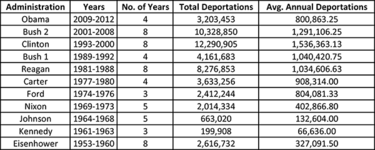
They're not prioritizing looking for criminals. I know because it's literally their policy.
From the Law Enforcement Immigration Task Force:

leitf.org
The Trump administration abandoned the Obama framework, asserting that
all undocumented migrants were deemed priorities for apprehension and removal. On January 25, 2017, the Trump administration issued an
Executive Order entitled “Enhancing Public Safety in the Interior of the United States,” which, along with
subsequent DHS guidance, effectively “prioritized” all undocumented immigrants for removal at any time. The Trump priorities set out seven broad categories, including new categories for those who engaged in visa fraud or identification misrepresentation. However, in contrast to the Obama administration’s tiered prioritization categories, the Trump administration asserted that each of the categories were of equal weight – serious offenses shared the same priority as minor ones. Effectively, the Trump guidance expanded the understanding of “enforcement priority” “
so broadly as to render the term meaningless.”
In effect, the Trump administration
indicated that anyone who was deportable or inadmissible was a priority for removal. The Trump guidance not only directed the
prioritization for the arrest and deportation of any undocumented immigrant who had been convicted or even charged with a criminal offense – it also prioritized those merely deemed to “have committed acts which constitute a chargeable criminal offense.” In addition, the guidance included a broad, ill-defined catch-all category for those who “in the judgment of an immigration officer, otherwise pose a risk to public safety or national security.” These broad categories could be extended to cover those with minor offenses like speeding, or those who committed immigration offenses, like unlawful entry, even if they never were charged with those offenses.
By equally prioritizing those convicted of crimes, those charged with crimes, and those whose conduct did not lead to charges, but whose conduct could “constitute” a chargeable offense or could be deemed to be a public safety risk, the Trump guidance significantly expanded the universe of prioritized migrants. In addition, unlike the Obama administration guidance, the Trump guidance did not distinguish between seriousness of offenses, prioritizing – at least in theory – minor traffic offenses equally with violent crimes.
Furthermore, the Trump DHS issued a
memorandum foreswearing the use of prosecutorial discretion to deprioritize low risk groups or those with longstanding ties to the U.S. The memorandum stated that “prosecutorial discretion shall not be exercised in a manner that exempts or excludes a specified class or category of noncitizens from enforcement of immigration laws.” A stark contrast from the Obama administration orders that discretion be assessed on the basis of length of time in the U.S., social ties and U.S. citizen family members, or military service, the Trump administration severely limited the discretionary authority of immigration-enforcement personnel. Instead, ICE personnel were expected to execute immigration laws against all removable individuals.
These broad enforcement priorities
translated to more arrests and deportations of less serious offenders and fewer arrests and deportations of more serious offenders. According to
ICE data, the monthly number of level 3 (misdemeanors) offenders detained climbed from 6,000 in March 2015 to 9,500 in April 2019. At the same time, the number of level 1 (felony and aggravated felony) offenders detained decreased from 7,500 to 6,000. Additionally, an estimated 1 in 10 undocumented individuals arrested during FY2017 had neither a criminal conviction or charge. By targeting the entire undocumented population rather than those who posed threats, the Trump prioritization policy faced
criticism for wasting resources.