
You are using an out of date browser. It may not display this or other websites correctly.
You should upgrade or use an alternative browser.
You should upgrade or use an alternative browser.


RyCo1983
Formerly known as TheFlyingAlamo
- Messages
- 3,596
- Reaction score
- 191
God Bless man
I'm on some shaky ground right now as far as religion goes. But I keep that to myself on a fansite for a Catholic School's football team!
We should brainstorm some proactive things we can do in our own lives, in our own homes, with our own families, to combat this epidemic, at least on a small scale.
H
HereComeTheIrish
Guest
This profession is definitely for those who care! You don't last long if you do!
Yeah...hope...I wish I could hand it out to everyone like a ticket or something.
Keep fightin' the fight, Brah... Right there with ya.
Sometimes it feels like you're running uphill against a hurricane force wind, but in the end, most times, it pays off.

RyCo1983
Formerly known as TheFlyingAlamo
- Messages
- 3,596
- Reaction score
- 191
Keep fightin' the fight, Brah... Right there with ya.
Sometimes it feels like you're running uphill against a hurricane force wind, but in the end, most times, it pays off.
The mullett will heal all
#mullettpower
I don't do hashtags...but I had to here boys...sorry.
#dealwithit

BobD
Can't get no satisfaction
- Messages
- 7,918
- Reaction score
- 1,034
"We should brainstorm some proactive things we can do in our own lives, in our own homes, with our own families, to combat this epidemic, at least on a small scale."
My wife suffers from minor depression caused by pain from three back surgeries. She always seems to be happier when we have foster care animals around to care for, flowers and plants we are growing etc.
One thing I do that I'm not sure helps at all, but I do it ....I try to keep the house bright with natural light.
My wife suffers from minor depression caused by pain from three back surgeries. She always seems to be happier when we have foster care animals around to care for, flowers and plants we are growing etc.
One thing I do that I'm not sure helps at all, but I do it ....I try to keep the house bright with natural light.
RyCo1983
Formerly known as TheFlyingAlamo
- Messages
- 3,596
- Reaction score
- 191
My wife suffers from minor depression caused by pain from three back surgeries. She always seems to be happier when we have foster care animals around to care for, flowers and plants we are growing etc.
One thing I do that I'm not sure helps at all, but I do it ....I try to keep the house bright with natural light.
The power of sunlight my friend!
Yes, seasonal depression is a real deal in my eyes.
Open those blinds up when the sun is out!
RyCo1983
Formerly known as TheFlyingAlamo
- Messages
- 3,596
- Reaction score
- 191
This profession is definitely for those who care! You don't last long if you do!
Yeah...hope...I wish I could hand it out to everyone like a ticket or something.
Come to think of it...maybe I will print up some "Hope" tickets...some of my teenagers would get a kick out of that.
B
Bogtrotter07
Guest
Tell the truth.
Tell someone you care about that you care.
Stand up for someone or something you care a great deal about. Get a cause.
Find something to laugh about.
Plant a garden.
Let someone vent.
I have an 81 year old neighbor whose husband is all there but his mind. She has to take care of him 24X7. She won't let me do anything, except she comes down to talk. I never turn her away. She does of course send me a gift card for a restaurant every year in her Christmas card. I take in their garbage cans.
Tell someone you care about that you care.
Stand up for someone or something you care a great deal about. Get a cause.
Find something to laugh about.
Plant a garden.
Let someone vent.
I have an 81 year old neighbor whose husband is all there but his mind. She has to take care of him 24X7. She won't let me do anything, except she comes down to talk. I never turn her away. She does of course send me a gift card for a restaurant every year in her Christmas card. I take in their garbage cans.

Irish YJ
Southsida
- Messages
- 25,888
- Reaction score
- 1,444
Great post Jeepster!
My first neighborhood was about two miles from the first Willys-Overland Stack, which still stands. My grandpa's factory was across the highway from that location. My first neighborhood had bank VP's and auto mechanics living there. We used to do chores for old Mr. Young who was the city Law Director, (City DA). Ara Parseghian's sister lived a block over, that is how I met him. There were all kinds of people, from all kinds of backgrounds. It wasn't ideal; I am sure some people didn't like each other; but as you say, people had each others back. I remember the day Mr. Sellegman backed his car into the street because the hotrodders were tearing around the neighborhood while us kids were out playing.
I grew up in the town that had a mayor about 50 years before I was born named Samuel Jones; he was called "Golden Rule." Read about him. He was an amazing man. About the only thing you won't find listed is that my great-grandfather lost a mayoral election to him. Toledo had that spirit after the original industrialist built it. It was a Catholic immigrant town. Neighborhoods and schools meant everything. Once the industrial turmoil of the 30's were settled, Toledo was a living growing prosperous town. Now it is a hulk. A big part is that neighborly attitude. That was a big part of the growth, and that is a big part of what is missing in its decline.
I grew up pretty much across the street from Eli Lily downtown Indy. Down the street from the farmer's market, a few miles from the circle down town. At that time, you had a Catholic Church, and a Catholic grade school every couple miles it seemed. I grew up a few blocks from the Italian parish, 2 miles from the Irish Parish, 2 miles the other way from the German Parish, etc.. Several years before I started school they closed the German school down (Sacred Heart). Right before I started grade school, they closed the Italian school down (Latin School / Holy Rosary). I started at St. Pat's, and it was closed a couple years later. Moved to St. James (a whopping 5 miles away) and they closed that down a few years later. At that point, several schools were consolidated into Central Catholic (St. Catherine's) where I finished before going to Roncalli HS. As of today, Central Catholic was bulldozed and they built a new school/church at St. James now called Central Catholic. Latin School has reopened under a new name, Lumen Christi. As of today, the Italian parish is the only one to survive with any type of resemblance to the olden days. My aunts and cousins still live in the now updated and trendy part of downtown Indy. The rest of the neigborhoods are pretty much run down.
Speaking of jeeps, finally cleaned out and re-org'd the barn so I can get back to work on the 93. Hard finding time to put all the new updates back on. Can't wait to roll it down to Florida this summer.
Absolutely man. We've touched on some major points thus far.
Only when we have identified the major causes can anything be done about it...
The terrifying thing to me is...this isn't something that you can just stop or fix.
The best I can do is assist people that have identified suicidal ideation, or that have had past attempts, and help them cope. This is a reactive effort...
This problem, well...myriad of problems...really requires a proactive approach.
In it's current state, our culture doesn't really allow for a proactive approach.
In general, I work with children and adolescents. It feels like we've been fighting a losing fight.
p.s. I still smile everytime I see that sweet avatar YJ!
IMO, it gets tougher and tougher to find good things to say about this world. Don't get me wrong, I'm very blessed and have much to be happy about. What I mean is, it's very hard to look some people in the eye and tell them how wonderful things are with the nation, this generation, and the future in general. Half empty I know, but it's hard to be half full when you are looking at someone with crappy prospects, horrible parents or a horrible up bringing, etc., and trying to tell them how wonderful things can be. The demise of family and community has really kicked this nation in the face. In better news, I just saved a bunch of money by switching to Geiko (I kid
Tell the truth.
Tell someone you care about that you care.
Stand up for someone or something you care a great deal about. Get a cause.
Find something to laugh about.
Plant a garden.
Let someone vent.
I have an 81 year old neighbor whose husband is all there but his mind. She has to take care of him 24X7. She won't let me do anything, except she comes down to talk. I never turn her away. She does of course send me a gift card for a restaurant every year in her Christmas card. I take in their garbage cans.
This!
I've been volunteering at the local refugee center a little lately, and it I think it helps me as much or more as the folks I'm helping. Hoping to do much more in the future. Perhaps getting people with low self worth, to help others might create some pride and brighten outlooks. They also have a community garden which I will be helping with as soon as I get mine out. Going to donate my rear tine tiller as well (they are 3rd world gardners)
I also mow my neighbors' yards. One has cancer, one is just old and on oxygen. Can't really say much here as I just love getting on the John Deere and mowing grass till the sun goes down. I love doing it, but it's sad that the guy's (with cancer) kid (17 years old) doesn't, and that one of the 10 kids on my short street doesn't help the old lady on oxygen.

Old Man Mike
Fast as Lightning!
- Messages
- 8,971
- Reaction score
- 6,458
Whiskey's general comment about the loss of true community is the big deal, and the thing that ecovillage envisioners have found is an even greater attraction than the green-living elements of living in right-relationship to the Earth and the Cycle of Life.
For every adult individual there should at a minimum be added one "simple" thing. The majority of us have two "places". One is the "Home" place, where one looks for security and support but where the complexity of individual human relationships may break down and add more stress than succor to our lives. The second is the "Work" place, where it seems more and moreso the economic inhuman tendency of high-stress concentration on profit margins tends to make the lives of the majority of real people more and more miserable. What is missing from most Americans' lives is a healthy "third place".
The third place is the place of peace. It for most is generally a solitary place, a Solitude. For one friend of mine, it is sitting "out-the-back" looking at the pond and the willow trees. For one brother, it is leaving the house to walk up into a ridge by the forest, maybe or maybe not making a small fire, and just "being". Some can do it in an in-house chapel, some in a place of special memories.
The thing about the "Third Place" is that there it is just you and Creation directly. Ultimately you realize it is just you and God directly. Noise silences. And so does the noise in the mind. Speed comes to a stop. The clock is irrelevant. The Soul can expand and peacefully touch The Other. Things happen. Perspective. Gratefulness. Useful thoughts. An renewal of purpose.
In our Spiritual-less American society, the Third Place never becomes a reality in most lives, or if it ever was, it tends to be squeezed out. Busy stressed irritated men stumbled into bars after sessions in their "second places" looking for friendship, relief from stress, and pseudo-solutions. We seem to do it here on IE.... why else is there a VERY long thread called "what are you drinking?" [the existence of this thread has been the most depressing revelation for me of anything about our site]. The bar is not CHEERS bar. "I want to be somewhere [friendly and supportive] where everybody knows my name". It's in the end not good enough. There needs to be something more profound. There needs to be a Third Place. It is there that one ultimately discovers that there IS Someone "Who really knows my name".
If our society would enter into these two sorts of living relationships {Whiskey's true caring human community, and the profound mysticism of the Third Place}, we still would not eliminate all depression nor all suicide in the world {some IS really deeply brain-chemical}, but the majority of these tragedies involving social/psychological causes would go.
The foundational principle of properly designed ecovillages are:
1]. Spirituality
2]. True Community
3]. Living lightly on the Earth.
These intertwine. They call for a caring First Place, an understanding Second Place, a Spiritual Third Place.
We don't live in ecovillages, but when our first and second places fail us, we can always count on God and the Third Place.
For every adult individual there should at a minimum be added one "simple" thing. The majority of us have two "places". One is the "Home" place, where one looks for security and support but where the complexity of individual human relationships may break down and add more stress than succor to our lives. The second is the "Work" place, where it seems more and moreso the economic inhuman tendency of high-stress concentration on profit margins tends to make the lives of the majority of real people more and more miserable. What is missing from most Americans' lives is a healthy "third place".
The third place is the place of peace. It for most is generally a solitary place, a Solitude. For one friend of mine, it is sitting "out-the-back" looking at the pond and the willow trees. For one brother, it is leaving the house to walk up into a ridge by the forest, maybe or maybe not making a small fire, and just "being". Some can do it in an in-house chapel, some in a place of special memories.
The thing about the "Third Place" is that there it is just you and Creation directly. Ultimately you realize it is just you and God directly. Noise silences. And so does the noise in the mind. Speed comes to a stop. The clock is irrelevant. The Soul can expand and peacefully touch The Other. Things happen. Perspective. Gratefulness. Useful thoughts. An renewal of purpose.
In our Spiritual-less American society, the Third Place never becomes a reality in most lives, or if it ever was, it tends to be squeezed out. Busy stressed irritated men stumbled into bars after sessions in their "second places" looking for friendship, relief from stress, and pseudo-solutions. We seem to do it here on IE.... why else is there a VERY long thread called "what are you drinking?" [the existence of this thread has been the most depressing revelation for me of anything about our site]. The bar is not CHEERS bar. "I want to be somewhere [friendly and supportive] where everybody knows my name". It's in the end not good enough. There needs to be something more profound. There needs to be a Third Place. It is there that one ultimately discovers that there IS Someone "Who really knows my name".
If our society would enter into these two sorts of living relationships {Whiskey's true caring human community, and the profound mysticism of the Third Place}, we still would not eliminate all depression nor all suicide in the world {some IS really deeply brain-chemical}, but the majority of these tragedies involving social/psychological causes would go.
The foundational principle of properly designed ecovillages are:
1]. Spirituality
2]. True Community
3]. Living lightly on the Earth.
These intertwine. They call for a caring First Place, an understanding Second Place, a Spiritual Third Place.
We don't live in ecovillages, but when our first and second places fail us, we can always count on God and the Third Place.

Redbar
Well-known member
- Messages
- 3,531
- Reaction score
- 806
Whiskey's general comment about the loss of true community is the big deal, and the thing that ecovillage envisioners have found is an even greater attraction than the green-living elements of living in right-relationship to the Earth and the Cycle of Life.
For every adult individual there should at a minimum be added one "simple" thing. The majority of us have two "places". One is the "Home" place, where one looks for security and support but where the complexity of individual human relationships may break down and add more stress than succor to our lives. The second is the "Work" place, where it seems more and moreso the economic inhuman tendency of high-stress concentration on profit margins tends to make the lives of the majority of real people more and more miserable. What is missing from most Americans' lives is a healthy "third place".
The third place is the place of peace. It for most is generally a solitary place, a Solitude. For one friend of mine, it is sitting "out-the-back" looking at the pond and the willow trees. For one brother, it is leaving the house to walk up into a ridge by the forest, maybe or maybe not making a small fire, and just "being". Some can do it in an in-house chapel, some in a place of special memories.
The thing about the "Third Place" is that there it is just you and Creation directly. Ultimately you realize it is just you and God directly. Noise silences. And so does the noise in the mind. Speed comes to a stop. The clock is irrelevant. The Soul can expand and peacefully touch The Other. Things happen. Perspective. Gratefulness. Useful thoughts. An renewal of purpose.
In our Spiritual-less American society, the Third Place never becomes a reality in most lives, or if it ever was, it tends to be squeezed out. Busy stressed irritated men stumbled into bars after sessions in their "second places" looking for friendship, relief from stress, and pseudo-solutions. We seem to do it here on IE.... why else is there a VERY long thread called "what are you drinking?" [the existence of this thread has been the most depressing revelation for me of anything about our site]. The bar is not CHEERS bar. "I want to be somewhere [friendly and supportive] where everybody knows my name". It's in the end not good enough. There needs to be something more profound. There needs to be a Third Place. It is there that one ultimately discovers that there IS Someone "Who really knows my name".
If our society would enter into these two sorts of living relationships {Whiskey's true caring human community, and the profound mysticism of the Third Place}, we still would not eliminate all depression nor all suicide in the world {some IS really deeply brain-chemical}, but the majority of these tragedies involving social/psychological causes would go.
The foundational principle of properly designed ecovillages are:
1]. Spirituality
2]. True Community
3]. Living lightly on the Earth.
These intertwine. They call for a caring First Place, an understanding Second Place, a Spiritual Third Place.
We don't live in ecovillages, but when our first and second places fail us, we can always count on God and the Third Place.
Thank You.

Circa
Conspire to keep It real
- Messages
- 8,000
- Reaction score
- 818
Looking at the political threads; my life experience; what I learned from those that traveled before me all leads me to one conclusion. What you believe is less important than who you choose to be; and how you react; and how you accept responsibility.
:
I was a foster child thrown from family to family and asked to love each mommy and daddy that was givin to us 5 different times as a child, my brother was a great kid and loved anyone whom would show their love back. I have come to a point in my life where I question my own existence all the time, and look for acceptance in the wrong places repeatedly but I will go no where! My brother, (blood brother and only sibling) decided in 1997 to take his life! He only wanted friends but bc of complications at birth he was a little slower in his maturity and didn't develop at the same rate as other kids his age, so he was bullied! Bullying goes on at any age and should be a crime! I have a childhood friend, Elec Simon is his name and he has made It his life mission to help put a stop to this bullying! He was the only best friend my brother ever had besides me! He told me the night I buried him he would do what he's doing now.
Elec Simon, World Percussionist. Home.
RyCo1983
Formerly known as TheFlyingAlamo
- Messages
- 3,596
- Reaction score
- 191
I was a foster child thrown from family to family and asked to love each mommy and daddy that was givin to us 5 different times as a child, my brother was a great kid and loved anyone whom would show their love back. I have come to a point in my life where I question my own existence all the time, and look for acceptance in the wrong places repeatedly but I will go no where! My brother, (blood brother and only sibling) decided in 1997 to take his life! He only wanted friends but bc of complications at birth he was a little slower in his maturity and didn't develop at the same rate as other kids his age, so he was bullied! Bullying goes on at any age and should be a crime! I have a childhood friend, Elec Simon is his name and he has made It his life mission to help put a stop to this bullying! He was the only best friend my brother ever had besides me! He told me the night I buried him he would do what he's doing now.
Elec Simon, World Percussionist. Home.
Just remember, you aren't alone my friend!

irishpat183
Banned
- Messages
- 5,625
- Reaction score
- 504
Here's a great read on what is happening with the youth:
Three Huge Mistakes We Make Leading Kids…and How to Correct Them
Three Huge Mistakes We Make Leading Kids…and How to Correct Them
H
HereComeTheIrish
Guest
I was a foster child thrown from family to family and asked to love each mommy and daddy that was givin to us 5 different times as a child, my brother was a great kid and loved anyone whom would show their love back. I have come to a point in my life where I question my own existence all the time, and look for acceptance in the wrong places repeatedly but I will go no where! My brother, (blood brother and only sibling) decided in 1997 to take his life! He only wanted friends but bc of complications at birth he was a little slower in his maturity and didn't develop at the same rate as other kids his age, so he was bullied! Bullying goes on at any age and should be a crime! I have a childhood friend, Elec Simon is his name and he has made It his life mission to help put a stop to this bullying! He was the only best friend my brother ever had besides me! He told me the night I buried him he would do what he's doing now.
Elec Simon, World Percussionist. Home.
I feel ya, brah... Thanks for posting that. Bullying is horrible and should not be tolerated in school, the park....Life in general.
Our school district has a Bully Free policy... It still happens, but nowhere close to as bad as I remember in school in the early 90's. As most know, I work with Special Needs individuals...... The typical kids are so awesome that they actually seek out the special needs kids and befriend them. I wish there would be much more of this.
Acceptance and tolerance would be a beautiful thing. Isn't going to happen, but it would be nice.
B
Bogtrotter07
Guest
I was a foster child thrown from family to family and asked to love each mommy and daddy that was givin to us 5 different times as a child, my brother was a great kid and loved anyone whom would show their love back. I have come to a point in my life where I question my own existence all the time, and look for acceptance in the wrong places repeatedly but I will go no where! My brother, (blood brother and only sibling) decided in 1997 to take his life! He only wanted friends but bc of complications at birth he was a little slower in his maturity and didn't develop at the same rate as other kids his age, so he was bullied! Bullying goes on at any age and should be a crime! I have a childhood friend, Elec Simon is his name and he has made It his life mission to help put a stop to this bullying! He was the only best friend my brother ever had besides me! He told me the night I buried him he would do what he's doing now.
Elec Simon, World Percussionist. Home.
I wish I would have read your posts first, before I responded to your PM, not that it was bad, just that I didn't understand!
You are not alone; you have a whole band of brothers here.
Consider this your thread; I would be honored.
Maybe we could throw 1ND some friendship requests, (small token).
Also, I really liked what I saw on Elec Simon's site. I loved his precussionistic renderings. He preforms for groups and schools? I will have to find more about the business end! Our school district has been hit awfully hard and suffered the results of bullying and peer pressure.
Last edited:
B
Bogtrotter07
Guest
Here's a great read on what is happening with the youth:
Three Huge Mistakes We Make Leading Kids…and How to Correct Them
Execellent article Pat! Better because you posted it in this thread, welcome aboard, man!
I especially liked his eight steps:
1.Help them take calculated risks. Talk it over with them, but let them do it. Your primary job is to prepare your child for how the world really works.
2.Discuss how they must learn to make choices. They must prepare to both win and lose, not get all they want and to face the consequences of their decisions.
3.Share your own “risky” experiences from your teen years. Interpret them. Because we’re not the only influence on these kids, we must be the best influence.
4.Instead of tangible rewards, how about spending some time together? Be careful you aren’t teaching them that emotions can be healed by a trip to the mall.
5.Choose a positive risk taking option and launch kids into it (i.e. sports, jobs, etc). It may take a push but get them used to trying out new opportunities.
6.Don’t let your guilt get in the way of leading well. Your job is not to make yourself feel good by giving kids what makes them or you feel better when you give it.
7.Don’t reward basics that life requires. If your relationship is based on material rewards, kids will experience neither intrinsic motivation nor unconditional love.
8.Affirm smart risk-taking and hard work wisely. Help them see the advantage of both of these, and that stepping out a comfort zone usually pays off.
2.Discuss how they must learn to make choices. They must prepare to both win and lose, not get all they want and to face the consequences of their decisions.
3.Share your own “risky” experiences from your teen years. Interpret them. Because we’re not the only influence on these kids, we must be the best influence.
4.Instead of tangible rewards, how about spending some time together? Be careful you aren’t teaching them that emotions can be healed by a trip to the mall.
5.Choose a positive risk taking option and launch kids into it (i.e. sports, jobs, etc). It may take a push but get them used to trying out new opportunities.
6.Don’t let your guilt get in the way of leading well. Your job is not to make yourself feel good by giving kids what makes them or you feel better when you give it.
7.Don’t reward basics that life requires. If your relationship is based on material rewards, kids will experience neither intrinsic motivation nor unconditional love.
8.Affirm smart risk-taking and hard work wisely. Help them see the advantage of both of these, and that stepping out a comfort zone usually pays off.

tadman95
I have a bigger bullet
- Messages
- 2,846
- Reaction score
- 248
I was a foster child thrown from family to family and asked to love each mommy and daddy that was givin to us 5 different times as a child, my brother was a great kid and loved anyone whom would show their love back. I have come to a point in my life where I question my own existence all the time, and look for acceptance in the wrong places repeatedly but I will go no where! My brother, (blood brother and only sibling) decided in 1997 to take his life! He only wanted friends but bc of complications at birth he was a little slower in his maturity and didn't develop at the same rate as other kids his age, so he was bullied! Bullying goes on at any age and should be a crime! I have a childhood friend, Elec Simon is his name and he has made It his life mission to help put a stop to this bullying! He was the only best friend my brother ever had besides me! He told me the night I buried him he would do what he's doing now.
Elec Simon, World Percussionist. Home.
Every unknown turn is a new beginning. Embrace it, be part of it, feel like you belong there.
I wish I would have read your posts first.
You are not alone; you have a whole band of brothers here.
Consider this your thread; I would be honored.
Maybe we could throw 1ND some friendship requests, (small token).
Yep.. Done
B
Bogtrotter07
Guest
What is happening?
It's hard to say, but our increasingly me-first world might have something to do with it. According to a study published in the journal Social Psychology and Personality Science, clinical narcissism --defined by heightened feelings of entitlement, decreased morality and a dog-eat-dog mentality -- has increased by 30% over the past 20 years. Two out of every three people now measure high for the disorder.
In her book "The Narcissism Epidemic," Jean Twenge argues that we live in a culture that not only tolerates, but also encourages, "being true to ourselves" and "never compromising." This can extend to parenthood, as more and more mothers and fathers resist the notion that parenthood is necessarily life changing -- and perhaps not all it's cracked up to be.
This is one end of what I was trying to get my hands around. I first noticed it in the eighties when the new-age resurgence in reincarnation grew. I asked myself why was everybody someone famous, a king or a queen, in their past life? Then in the nineties, Scott Adams (Dilbert) wrote of the "individual", as in the jerk at the cubicle down the isle. But everyone started laughing and pointing out how everyone else was an "individual", including all the individuals. Scott Adams recanted.
Then about ten years ago I heard people on the street talk about others disrespecting them like a cheap imitations of Marlin Brando from the Godfather. Sometimes these people that would be talking about respect, looked as though they had little if any self-respect. And in the political arena, the the lies hit an all time record high. And people bought into them with unrivaled enthusiasm.
As sure as I am about anything, I am part of this movement, part of the problem. And it has blinded me to the consequences, the mechanism and the solution.
B
Bogtrotter07
Guest
Op-Ed Contributors
How Austerity Kills
By DAVID STUCKLER and SANJAY BASU
Published: May 12, 2013 96 Comments
EARLY last month, a triple suicide was reported in the seaside town of Civitanova Marche, Italy. A married couple, Anna Maria Sopranzi, 68, and Romeo Dionisi, 62, had been struggling to live on her monthly pension of around 500 euros (about $650), and had fallen behind on rent.
Because the Italian government’s austerity budget had raised the retirement age, Mr. Dionisi, a former construction worker, became one of Italy’s esodati (exiled ones) — older workers plunged into poverty without a safety net. On April 5, he and his wife left a note on a neighbor’s car asking for forgiveness, then hanged themselves in a storage closet at home. When Ms. Sopranzi’s brother, Giuseppe Sopranzi, 73, heard the news, he drowned himself in the Adriatic.
The correlation between unemployment and suicide has been observed since the 19th century. People looking for work are about twice as likely to end their lives as those who have jobs.
In the United States, the suicide rate, which had slowly risen since 2000, jumped during and after the 2007-9 recession. In a new book, we estimate that 4,750 “excess” suicides — that is, deaths above what pre-existing trends would predict — occurred from 2007 to 2010. Rates of such suicides were significantly greater in the states that experienced the greatest job losses. Deaths from suicide overtook deaths from car crashes in 2009.
If suicides were an unavoidable consequence of economic downturns, this would just be another story about the human toll of the Great Recession. But it isn’t so. Countries that slashed health and social protection budgets, like Greece, Italy and Spain, have seen starkly worse health outcomes than nations like Germany, Iceland and Sweden, which maintained their social safety nets and opted for stimulus over austerity. (Germany preaches the virtues of austerity — for others.)
As scholars of public health and political economy, we have watched aghast as politicians endlessly debate debts and deficits with little regard for the human costs of their decisions. Over the past decade, we mined huge data sets from across the globe to understand how economic shocks — from the Great Depression to the end of the Soviet Union to the Asian financial crisis to the Great Recession — affect our health. What we’ve found is that people do not inevitably get sick or die because the economy has faltered. Fiscal policy, it turns out, can be a matter of life or death.
At one extreme is Greece, which is in the middle of a public health disaster. The national health budget has been cut by 40 percent since 2008, partly to meet deficit-reduction targets set by the so-called troika — the International Monetary Fund, the European Commission and the European Central Bank — as part of a 2010 austerity package. Some 35,000 doctors, nurses and other health workers have lost their jobs. Hospital admissions have soared after Greeks avoided getting routine and preventive treatment because of long wait times and rising drug costs. Infant mortality rose by 40 percent. New H.I.V. infections more than doubled, a result of rising intravenous drug use — as the budget for needle-exchange programs was cut. After mosquito-spraying programs were slashed in southern Greece, malaria cases were reported in significant numbers for the first time since the early 1970s.
In contrast, Iceland avoided a public health disaster even though it experienced, in 2008, the largest banking crisis in history, relative to the size of its economy. After three main commercial banks failed, total debt soared, unemployment increased ninefold, and the value of its currency, the krona, collapsed. Iceland became the first European country to seek an I.M.F. bailout since 1976. But instead of bailing out the banks and slashing budgets, as the I.M.F. demanded, Iceland’s politicians took a radical step: they put austerity to a vote. In two referendums, in 2010 and 2011, Icelanders voted overwhelmingly to pay off foreign creditors gradually, rather than all at once through austerity. Iceland’s economy has largely recovered, while Greece’s teeters on collapse. No one lost health care coverage or access to medication, even as the price of imported drugs rose. There was no significant increase in suicide. Last year, the first U.N. World Happiness Report ranked Iceland as one of the world’s happiest nations.
Skeptics will point to structural differences between Greece and Iceland. Greece’s membership in the euro zone made currency devaluation impossible, and it had less political room to reject I.M.F. calls for austerity. But the contrast supports our thesis that an economic crisis does not necessarily have to involve a public health crisis.
Somewhere between these extremes is the United States. Initially, the 2009 stimulus package shored up the safety net. But there are warning signs — beyond the higher suicide rate — that health trends are worsening. Prescriptions for antidepressants have soared. Three-quarters of a million people (particularly out-of-work young men) have turned to binge drinking. Over five million Americans lost access to health care in the recession because they lost their jobs (and either could not afford to extend their insurance under the Cobra law or exhausted their eligibility). Preventive medical visits dropped as people delayed medical care and ended up in emergency rooms. (President Obama’s health care law expands coverage, but only gradually.)
The $85 billion “sequester” that began on March 1 will cut nutrition subsidies for approximately 600,000 pregnant women, newborns and infants by year’s end. Public housing budgets will be cut by nearly $2 billion this year, even while 1.4 million homes are in foreclosure. Even the budget of the Centers for Disease Control and Prevention, the nation’s main defense against epidemics like last year’s fungal meningitis outbreak, is being cut, by at least $18 million.
To test our hypothesis that austerity is deadly, we’ve analyzed data from other regions and eras. After the Soviet Union dissolved, in 1991, Russia’s economy collapsed. Poverty soared and life expectancy dropped, particularly among young, working-age men. But this did not occur everywhere in the former Soviet sphere. Russia, Kazakhstan and the Baltic States (Estonia, Latvia and Lithuania) — which adopted economic “shock therapy” programs advocated by economists like Jeffrey D. Sachs and Lawrence H. Summers — experienced the worst rises in suicides, heart attacks and alcohol-related deaths.
Countries like Belarus, Poland and Slovenia took a different, gradualist approach, advocated by economists like Joseph E. Stiglitz and the former Soviet leader Mikhail S. Gorbachev. These countries privatized their state-controlled economies in stages and saw much better health outcomes than nearby countries that opted for mass privatizations and layoffs, which caused severe economic and social disruptions.
Like the fall of the Soviet Union, the 1997 Asian financial crisis offers case studies — in effect, a natural experiment — worth examining. Thailand and Indonesia, which submitted to harsh austerity plans imposed by the I.M.F., experienced mass hunger and sharp increases in deaths from infectious disease, while Malaysia, which resisted the I.M.F.’s advice, maintained the health of its citizens. In 2012, the I.M.F. formally apologized for its handling of the crisis, estimating that the damage from its recommendations may have been three times greater than previously assumed.
America’s experience of the Depression is also instructive. During the Depression, mortality rates in the United States fell by about 10 percent. The suicide rate actually soared between 1929, when the stock market crashed, and 1932, when Franklin D. Roosevelt was elected president. But the increase in suicides was more than offset by the “epidemiological transition” — improvements in hygiene that reduced deaths from infectious diseases like tuberculosis, pneumonia and influenza — and by a sharp drop in fatal traffic accidents, as Americans could not afford to drive. Comparing historical data across states, we estimate that every $100 in New Deal spending per capita was associated with a decline in pneumonia deaths of 18 per 100,000 people; a reduction in infant deaths of 18 per 1,000 live births; and a drop in suicides of 4 per 100,000 people.
OUR research suggests that investing $1 in public health programs can yield as much as $3 in economic growth. Public health investment not only saves lives in a recession, but can help spur economic recovery. These findings suggest that three principles should guide responses to economic crises.
First, do no harm: if austerity were tested like a medication in a clinical trial, it would have been stopped long ago, given its deadly side effects. Each nation should establish a nonpartisan, independent Office of Health Responsibility, staffed by epidemiologists and economists, to evaluate the health effects of fiscal and monetary policies.
Second, treat joblessness like the pandemic it is. Unemployment is a leading cause of depression, anxiety, alcoholism and suicidal thinking. Politicians in Finland and Sweden helped prevent depression and suicides during recessions by investing in “active labor-market programs” that targeted the newly unemployed and helped them find jobs quickly, with net economic benefits.
Finally, expand investments in public health when times are bad. The cliché that an ounce of prevention is worth a pound of cure happens to be true. It is far more expensive to control an epidemic than to prevent one. New York City spent $1 billion in the mid-1990s to control an outbreak of drug-resistant tuberculosis. The drug-resistant strain resulted from the city’s failure to ensure that low-income tuberculosis patients completed their regimen of inexpensive generic medications.
One need not be an economic ideologue — we certainly aren’t — to recognize that the price of austerity can be calculated in human lives. We are not exonerating poor policy decisions of the past or calling for universal debt forgiveness. It’s up to policy makers in America and Europe to figure out the right mix of fiscal and monetary policy. What we have found is that austerity — severe, immediate, indiscriminate cuts to social and health spending — is not only self-defeating, but fatal.
Here is another one.
B
Bogtrotter07
Guest
Recession is a good time to boost profits, says Cameron aide
Lord Young says low-wage conditions are a bonus for business, drawing a furious response from the TUC
Daniel Boffey, policy editor
The Observer, Saturday 11 May 2013 16.02 EDT
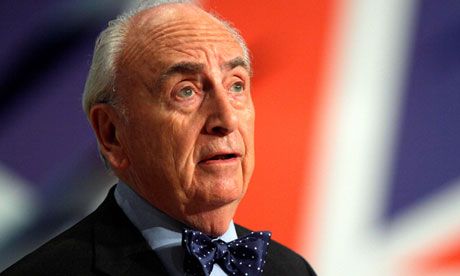
Lord Young was forced to resign as an adviser in 2010 after another controversy caused by remarks about the recession. Photograph: Geoff Newton/Allstar
The prime minister's adviser on enterprise has told the cabinet that the economic downturn is an excellent time for new businesses to boost profits and grow because labour is cheap, the Observer can reveal.
Lord Young, a cabinet minister under the late Baroness Thatcher, who is the only aide with his own office in Downing Street, told ministers that the low wage levels in a recession made larger financial returns easier to achieve. His comments are contained in a report to be published this week, on which the cabinet was briefed last Tuesday.
Young, who has already been forced to resign from his position once before for downplaying the impact of the recession on people, writes: "The rise in the number of businesses in recent years shows that a recession can be an excellent time to start a business.
"Competitors who fall by the wayside enable well-run firms to expand and increase market share. Factors of production such as premises and labour can be cheaper and higher quality, meaning that return on investment can be greater."
A Downing Street spokesman said Young was merely stating a "factual point and nothing else". But the comments were described as "appalling and ill-timed" by union leaders, with job-market figures due out next week expected to show that the initial resilience of employment has faded while wages are being severely tightened.
UK employees' average hourly earnings have fallen by 8.5% since 2009 in real terms, adjusting for inflation, according to the Office for National Statistics (ONS).
In his report Young cites statistics from Barclays Bank showing a rise in the number of startup businesses after 2008, at the beginning of the economic crash, to trumpet the point that "a recession can be a good time to grow a business".
He further claims in the report, addressed to David Cameron, that while there has been a considerable reduction in public-sector employment over 2010-12 the private sector has expanded to more than make up a difference.
He writes that the UK's flexible labour markets make it one of the best environments for the creation of new firms, adding: "World-renowned firms such as GE, Microsoft and Disney all started during a recession."
However, official statistics show that any potential economic benefits of a recession for new businesses are not being shared across the country.
In London, 14.6% of active businesses in 2011 were new, significantly higher than in the regions, where much of the public sector job cuts have been made.
There was a 10.4% "death rate", which is the proportion of companies de-registering for VAT purposes in the year, according to the latest figures published by the ONS. In comparison, the north-west has a 10.5% new business birth rate but a 10.7% death rate.
Analysis of official jobs figures carried out for the Observer by the TUC also shows that 267,000 net new jobs have been created in London since the start of the recession in 2008; yet almost every other part of the country has fewer jobs now than before the crash.
Frances O'Grady, general secretary of the TUC, said: "The 2.5 million people still out of work will wonder what planet Lord Young is living on when he claims recessions bring economic gains.
"Not only is the government failing to deal with the living standards crisis, their advisers are revelling in the jobs and wage squeeze that is putting people's finances under strain."
Young was forced to quit just months into the government in 2010, after he was overwhelmed by condemnation of his claim that voters had never had it so good during the "so-called recession" due to low interest rates.
The former trade and industry secretary also dismissed the 100,000 job cuts expected each year in the public sector as being "within the margin of error" in the context of a workforce of 30 million. He added that complaints about spending cuts came from "people who think they have a right for the state to support them".
Young quit but was quietly reappointed 11 months later.
A Downing Street spokesman said: "Lord Young doesn't say a recession is a good time, he says it can be a good time to start a business, which is borne out by the statistics.
"The TUC is deliberately misrepresenting his report to suit their political agenda."

Not much different from what the advisor to Victoria, Naseau Senior said; that a million Irish dead from the "Great Hunger" wasn't nearly enough!
to the OP...i would have to think the alarming (and profoundly sad) amount of iraq and afghan war vets committing suicide (22 per day-almost one per hour of every day- since 2005 per that 60 minutes piece last night) could/would have an impact on the numbers?
had a good buddy (good looking, HS football star, everything going for him) break up with his GF, so he gets hammered, gets in a bar fight, ends up in jail and he ends up hanging himself in the jail cell with his shoelaces. once its done its done. decades later we all still think about "what if". i just pray that soemeone can be there at that critical time for anyone who is contemplating "the final cut".
this suicide thing is very real out in the world. seems soo many people
"teettering", and 'waiting to snap' for so many different reasons. the hard part is seeing the signs. people can be smiling on the outside but be completely miserable, unhappy etc on the inside. its scary stuff. and it is everywhere, i especially worry about the young kids (ages 13 thru 22) for a lot of the reasons mentioned above.
had a good buddy (good looking, HS football star, everything going for him) break up with his GF, so he gets hammered, gets in a bar fight, ends up in jail and he ends up hanging himself in the jail cell with his shoelaces. once its done its done. decades later we all still think about "what if". i just pray that soemeone can be there at that critical time for anyone who is contemplating "the final cut".
this suicide thing is very real out in the world. seems soo many people
"teettering", and 'waiting to snap' for so many different reasons. the hard part is seeing the signs. people can be smiling on the outside but be completely miserable, unhappy etc on the inside. its scary stuff. and it is everywhere, i especially worry about the young kids (ages 13 thru 22) for a lot of the reasons mentioned above.
We keep starting these kids on drugs at an earlier and earlier age. Most of that to make them compliant.
Anti depressants for the young girls who feel like they are not as well liked as they should be.
Big Pharama can now advertise....tell your doctor about ***X.
If it weren't so sad it would funny.
Anti depressants for the young girls who feel like they are not as well liked as they should be.
Big Pharama can now advertise....tell your doctor about ***X.
If it weren't so sad it would funny.
B
Bogtrotter07
Guest
to the OP...i would have to think the alarming (and profoundly sad) amount of iraq and afghan war vets committing suicide (22 per day-almost one per hour of every day- since 2005 per that 60 minutes piece last night) could/would have an impact on the numbers?
had a good buddy (good looking, HS football star, everything going for him) break up with his GF, so he gets hammered, gets in a bar fight, ends up in jail and he ends up hanging himself in the jail cell with his shoelaces. once its done its done. decades later we all still think about "what if". i just pray that soemeone can be there at that critical time for anyone who is contemplating "the final cut".
this suicide thing is very real out in the world. seems soo many people
"teettering", and 'waiting to snap' for so many different reasons. the hard part is seeing the signs. people can be smiling on the outside but be completely miserable, unhappy etc on the inside. its scary stuff. and it is everywhere, i especially worry about the young kids (ages 13 thru 22) for a lot of the reasons mentioned above.
My daughter's high school has lost two girls in just over the last year to suicide.
Circa
Conspire to keep It real
- Messages
- 8,000
- Reaction score
- 818
Hey I had a follow up to the percussionist I posted about last year. Elec Simon is his name and he's doing wonder's for under privileged kids with his energy and charisma! He did a special a few months ago and he included my brother! Terry Ford. He's a great human being whom truly cares! If ya got a minute, It's good stuff that this man has decided to take on!
Applause: Performer Elec Simon; Glass Blower Mark Sudduth; The Cunning Little Vixen / ideastream - Northeast Ohio Public Radio, Television and Multiple Media
Applause: Performer Elec Simon; Glass Blower Mark Sudduth; The Cunning Little Vixen / ideastream - Northeast Ohio Public Radio, Television and Multiple Media

Circa
Conspire to keep It real
- Messages
- 8,000
- Reaction score
- 818
This guy is doing some work for the nonprofit I work for in Canton. Doesn't he teach music?
Sent from my iPad using Tapatalk
He teaches many things, including music. He is currently living in Canton, so I would imagine if your from the area you have heard of his message. Great guy!
Last edited: