Politics

Politics

  • Obama

    Votes: 4 1.1%
  • Romney

    Votes: 172 48.9%
  • Other

    Votes: 46 13.1%
  • a:3:{i:1637;a:5:{s:12:"polloptionid";i:1637;s:6:"nodeid";s:7:"2882145";s:5:"title";s:5:"Obama";s:5:"

    Votes: 130 36.9%

  • Total voters
    352

chicago51

Well-known member
Messages
3,658
Reaction score
387
This is a bit long but I would like some honest thought on this:

Been thinking a lot about healthcare, trying not to just be an Obama cheerleader but look at the real issues and the benefits of the law; as well as what the ideal solution would be.

I think came but a more ideal way to confront this issue and have a healthcare “grand bargain”. I asked myself what Teddy Roosevelt would do; as he was the first President that pushed for healthcare? Teddy Roosevelt by the way had an R next to his name but the fact is he displayed the type of progressive (not the same as liberal) solutions that have largely evaporated from both parties.

So using TR’s logic of fair competition, standing up to corporate bullies (in this case the insurance companies / drug companies, which Obamacare does that some with 80/20 premium expense rule but ultimately also has many big benefits for the bullies as well), as well giving help to working class he is what I think should happen:

First off let me say that we need to make sure every person in America has basic health coverage that doesn’t break the bank. To achieve that, Democrats must accept a private insurance industry and Republicans must accept that some people can’t afford decent policies on their own. This “grand bargain” is about liberals agreeing that innovation shouldn’t be regulated out of U.S. health care and conservatives agreeing that justice has to be regulated into it. We also not only keep but expand on consumer options and choices. Here's my idea using Teddy Roosevelt progressive conservative principles as my guide:

1- Keep the Obamacare state exchanges and expand them to the entire country and scrap employer provide healthcare. It is an unnecessary burden on business. Ultimately business through some other taxes may bear some responsibility for healthcare cost but not what they are right now. Having open competition on the exchanges that allow all the whole state to compare rates and plans will drive prices down. It’s also time we got corporations out of the business of running our welfare state — they’ve got enough to do to compete with China and India. Plus this will ensure that every American has access to group rates through health reform’s insurance exchanges.

2- Stand up to the bullies and cap insurance rates, and prescription drug prices. In 1906 through Hepburn Act at that TR got passed Congress was able to cap prices on railroad rates. We should do the same for insurance companies and big pharmaceutical companies. Many of the expensive drugs where developed with the help of tax payer money. Instead using tax payer dollars to subsidized consumers from high cost like Democrats want, and instead of letting the consumers bear the full burden like Republicans we should be doing this. Rates should be capped at a % of income because it is unjust to be spending 25% of one’s income on healthcare and as a top maximum rate because it is also unrealistic for anyone to even a millionaire have to pay say $100k for his or her insurance just make up the cost for everyone else.

Ultimately because of the number of uninsured, including those with pre-existing conditions, joining the market place and the fact the insurance companies should at least make a small profit healthcare rates even with the reduction in drug prices there may still be minor premium hikes. Some subsidies may be needed to help those who can’t afford to them. I would propose funding those subsidies by some the current Obamacare funding mechanisms, as well as adding a small transaction tax on wall street which would generate hundreds of billions of dollars over a ten year period. It also help in preventing speculative trades which is a good thing. The goal is ultimately with rate capping is that less tax payer subsidies will be needed over time.

3 – Bring more efficiency to the healthcare industry. Obamacare’s provision of changing to a fee per patient instead of a fee for service is a good step. It should stop doctor’s from doing unnecessary procedures and test just run up a bill. Ideally doctors should be on straight salary so the ultimate focus is on patient’s care. I’d also replace today’s malpractice litigation lottery with a system that protects doctors from liability so long as they’ve followed evidence-based best practices. This would put an end to the “defensive medicine” that runs up costs — a common-sense reform that Democrats shamefully reject as a sop to the trial lawyers who fund their campaigns.

Edit: Would like to add if Teddy Roosevelt was president today he would also probably take some antitrust action against some of the bigger insurance companies and break them up especially Blue Cross/Blue Shield. FYI my family used to be on Blue Cross the experience was positive but ultimately they control an unhealthy share of the market place.
 
Last edited:

Kanye West

Yeezus
Messages
1,037
Reaction score
43
This is a bit long but I would like some honest thought on this:

Been thinking a lot about healthcare, trying not to just be an Obama cheerleader but look at the real issues and the benefits of the law; as well as what the ideal solution would be.

I think came but a more ideal way to confront this issue and have a healthcare “grand bargain”. I asked myself what Teddy Roosevelt would do; as he was the first President that pushed for healthcare? Teddy Roosevelt by the way had an R next to his name but the fact is he displayed the type of progressive (not the same as liberal) solutions that have largely evaporated from both parties.

So using TR’s logic of fair competition, standing up to corporate bullies (in this case the insurance companies / drug companies, which Obamacare does that some with 80/20 premium expense rule but ultimately also has many big benefits for the bullies as well), as well giving help to working class he is what I think should happen:

First off let me say that we need to make sure every person in America has basic health coverage that doesn’t break the bank. To achieve that, Democrats must accept a private insurance industry and Republicans must accept that some people can’t afford decent policies on their own. This “grand bargain” is about liberals agreeing that innovation shouldn’t be regulated out of U.S. health care and conservatives agreeing that justice has to be regulated into it. We also not only keep but expand on consumer options and choices. He's my idea take from Teddy Roosevelt progressive conservative principles:

1- Keep the Obamacare state exchanges and expand them to the entire country and scrap employer provide healthcare. It is an unnecessary burden on business. Ultimately business through some other tax will may bear some responsibility for healthcare cost but not what they are right now. Having open competition on the exchanges that allow all the whole state to compare rates and plans will drive prices down. It’s also time we got corporations out of the business of running our welfare state — they’ve got enough to do to compete with China and India. Plus this will ensure that every American has access to group rates through health reform’s insurance exchanges.

2- Stand up to the bullies and cap insurance rates, and prescription drug prices. In 1906 through Hepburn Act at that TR got passed Congress was able to cap prices on railroad rates. We should do the same for insurance companies and big pharmaceutical companies. Many of the expensive drugs where developed with the help of tax payer money. Instead using tax payer dollars to subsidized consumers from high cost like Democrats want, and instead of letting the consumers bear the full burden like Republicans we should be doing this. Rates should be capped at a % of income because it is unjust to be spending 25% of one’s income on healthcare and it is also unrealistic for anyone to even a millionaire have to pay say $100k for his or her insurance just make up the cost for everyone else.

Because of the ultimately number of uninsured, including those with pre-existing conditions joining the market place, and the fact the insurance companies should at least make some profit healthcare rates even the reduction in drug prices there may still be minor premium hikes. Some subsidies may be needed to help those who can’t afford to them. I would propose funding those subsidies by some the current Obamacare funding mechanisms, as well as adding a small transaction tax on wall street which would generate hundreds of billions of dollars over a ten year period. It also help in preventing speculative trades which is a good thing. The goal is ultimately with rate capping is that less tax payer subsidies will be needed over time.

3 – Bring more efficiency to the healthcare industry. Obamacare’s provision of changing to a fee per patient instead of a fee for service is a good step. It should stop doctor’s from doing unnecessary procedures and test just run up a bill. Ideally doctors should be on straight salary so the ultimate focus is on patient’s care. I’d also replace today’s malpractice litigation lottery with a system that protects doctors from liability so long as they’ve followed evidence-based best practices. This would put an end to the “defensive medicine” that runs up costs — a common-sense reform that Democrats shamefully reject as a sop to the trial lawyers who fund their campaigns.

The thing about healthcare is why isn't there a price ceiling determined by legistlators to counteract the unnecessary fees. Instead of paying for other's health care why don't we make it cheaper to it's actual non inflated value. It's similar to Universities especially public ones where there are a lot of fluff that is determined by the school's such as an extra 1000 dollars here or there for "Intellectual Property". I'm all for free-market economics for non necessities. but pills are too expensive due to the price paid for the patent rather than the service. The fact that there is such a 0price difference in hospitals near each other prove that we pay for the experience rather than the service. This is due to insurance and the high risk of a job obviously, but it shouldn't cost 7,000 dollars to stay one night in the hospital. The bills can be easily reduced, but that wouldn't benefit companies. Free Market economics really work if the consumer isn't willing to pay for something the price or the product would change. Most consumers will pay anything for a love one or for themselves to live a better life and thus the price inflates since there cannot be a lowering of demand due to this. The Government basically like you said cap prices, because 90% of the fees are fluff.
 

chicago51

Well-known member
Messages
3,658
Reaction score
387
The thing about healthcare is why isn't there a price ceiling determined by legistlators to counteract the unnecessary fees. Instead of paying for other's health care why don't we make it cheaper to it's actual non inflated value. It's similar to Universities especially public ones where there are a lot of fluff that is determined by the school's such as an extra 1000 dollars here or there for "Intellectual Property". I'm all for free-market economics for non necessities. but pills are too expensive due to the price paid for the patent rather than the service. The fact that there is such a 0price difference in hospitals near each other prove that we pay for the experience rather than the service. This is due to insurance and the high risk of a job obviously, but it shouldn't cost 7,000 dollars to stay one night in the hospital. The bills can be easily reduced, but that wouldn't benefit companies. Free Market economics really work if the consumer isn't willing to pay for something the price or the product would change. Most consumers will pay anything for a love one or for themselves to live a better life and thus the price inflates since there cannot be a lowering of demand due to this. The Government basically like you said cap prices, because 90% of the fees are fluff.

Exactly Medicare cost have actually grown slower than private cost because we cap the rates.

I would compare what is going on today with Railroad rates in the late 1800s and early 1900s. Railroads were critical for business back then. Today's GOP would say the heck people have to suck it up and deal the high price, while today's Democrats would just throw a bunch of tax payer dollars as subsidies to offset the cost. Yes the Democrat proposal probably helps the working class but the fact the big bully in that case the railroad company is still price gouging making out on the tax payers expence.

In reality we should learn from history. I say do what the 1906 Hepburn Act did to the railroad companies and cap the rates. By the way railroad companies made money after the rate cap it is not like they went broke.
 
Last edited:

Kanye West

Yeezus
Messages
1,037
Reaction score
43
Exactly

I would compare what is going on today with Railroad rates in the late 1800s and early 1900s. Railroads were critical for business back then. Today's GOP would say the heck people have to suck it up and deal the high price, while today's Democrats would just throw a bunch of tax payer dollars as subsidies to offset the cost. Yes the Democrat proposal probably helps the working class but the fact the big bully in that case the railroad company is still price gouging making out on the tax payers expence.

In reality we should learn from history. Do what the Hepburn Act did to the railroad companies and cap the rates. By the way railroad companies made money after the rate cap it is not like they went broke.
Healthcare is easily affordable if you treat it as a right rather than product. Teddy Roosevelt was great because he realized that Capitalism while the best method to grow a country needed some guidance. Capping hospital prices, won't really increase spending or really lower revenue. The Government is there for one reason, to provide safety for its members. It should not pay for them, but it should protect them from the crooked corporations. But nothing will happen with the corporations running the show. I mean Vyvanse and Adderall are the same product essentially but one is 300 dollars (without insurance and cannot be a generic) while the other one is 150 but has a cheap generic. Seriously, health companies and Hospitals are the biggest crooks in America.
 

Black Irish

Wise Guy
Messages
3,769
Reaction score
602
Astra Zeneca just laid off hundreds of people in my area. It doesn't seem like they are rolling in price-gouging profits.
 

Ndaccountant

Old Hoss
Messages
8,370
Reaction score
5,771
Exactly Medicare cost have actually grown slower than private cost because we cap the rates.
I would compare what is going on today with Railroad rates in the late 1800s and early 1900s. Railroads were critical for business back then. Today's GOP would say the heck people have to suck it up and deal the high price, while today's Democrats would just throw a bunch of tax payer dollars as subsidies to offset the cost. Yes the Democrat proposal probably helps the working class but the fact the big bully in that case the railroad company is still price gouging making out on the tax payers expence.

In reality we should learn from history. I say do what the 1906 Hepburn Act did to the railroad companies and cap the rates. By the way railroad companies made money after the rate cap it is not like they went broke.

Now, did the hospitals / providers keep costs low or shift the costs elsewhere? You can't look at one thing that is manipulated and say that is proof it works without speaking to the larger picture. I don't know the answer to my first question, but I have a hunch rates increased more in private insurance. Was that greed or the fact that they couldn't fully cover their medicare costs? Both?
 

chicago51

Well-known member
Messages
3,658
Reaction score
387
Astra Zeneca just laid off hundreds of people in my area. It doesn't seem like they are rolling in price-gouging profits.


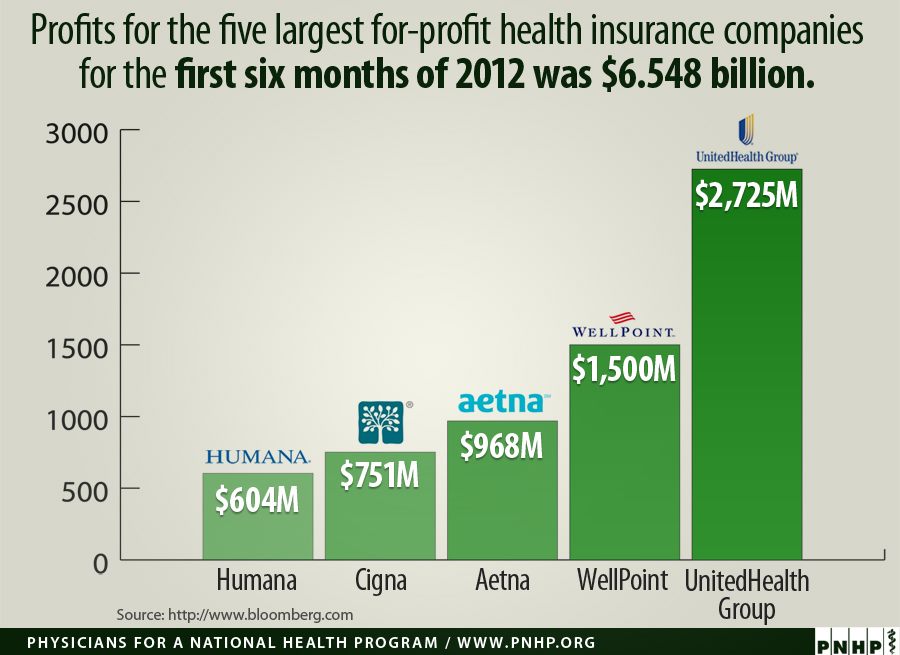
Insurance companies are doing okay.

health-insurance-profits-2012.jpeg


I can't speak for Astra Zeneca and I know they are a drug company not an insurance company. Big pharmacy companies in general are doing great. Over 43 billion in profits. Again that is profit so that is after there CEOs take multi multi millionion dollar salaries. Say we capped drug prices to 50% of current prices? So they make 21.5 billion in profits, not exactly the poor house. I don't that considering it is people's health and lives we are talking about we can't regulate that down to 10 billion. By the government is to blame for price gouging because they give 7 year patents instead say a 2 year patent.

pharma11.png


FYI profits does not equal jobs. That is the most inherritted flaw in the conservative line of thinking. Now I have been trying be more open and look at harder at liberal views as well. However I can tell that just because profits are high it does not mean more jobs.

Jobs are created because there is a need for more work. A company make billions but if they find more efficent ways to do the work they will let people go in a heart beat. On the other and profits can be lower but if they need more workers to meet demand they are going to higher them.
 
Last edited:

irishpat183

Banned
Messages
5,625
Reaction score
504
Insurance companies are doing okay.

health-insurance-profits-2012.jpeg


I can't speak for Astra Zeneca and I know they are a drug company not an insurance company. Big pharmacy companies in general are doing great. Over 43 billion in profits. Again that is profit so that is after there CEOs take multi multi millionion dollar salaries. Say we capped drug prices to 50% of current prices? So they make 21.5 billion in profits, not exactly the poor house. I don't that considering it is people's health and lives we are talking about we can't regulate that down to 10 billion. By the government is to blame for price gouging because they give 7 year patents instead say a 2 year patent.

pharma11.png


FYI profits does not equal jobs. That is the most inherritted flaw in the conservative line of thinking. Now I have been trying be more open and look at harder at liberal views as well. However I can tell that just because profits are high it does not mean more jobs.

Jobs are created because there is a need for more work. A company make billions but if they find more efficent ways to do the work they will let people go in a heart beat. On the other and profits can be lower but if they need more workers to meet demand they are going to higher them.

Do you realize how many people the health industry employs?? It most certainly does mean jobs in this industry.
 

chicago51

Well-known member
Messages
3,658
Reaction score
387
Now, did the hospitals / providers keep costs low or shift the costs elsewhere? You can't look at one thing that is manipulated and say that is proof it works without speaking to the larger picture. I don't know the answer to my first question, but I have a hunch rates increased more in private insurance. Was that greed or the fact that they couldn't fully cover their medicare costs? Both?

You might very well be right my friend on the Medicare point, that cost maybe just shifted elsewhere.

That is why need to start capping all the rates. That along with opening up the health care exchanges to all Americans for more competition, and at the same time take a big amount of the burden off of business will bring down cost. May United Healthcare only makes 1 billion a year in profits instead of 5.

While I think Obamacare takes some steps in the right direction it ultimately shifts the cost more onto business which are already struggling to compete in the global economy against companies with lower wages that don't have pay most of their employees health cost; as well not only the wealthy but upper-to mid middle class income earners.

Doing it this way says not only are we going make healthcare available to all Americans we are going in a way that doesn't kill business or hurt American tax payers.
 

chicago51

Well-known member
Messages
3,658
Reaction score
387
Do you realize how many people the health industry employs?? It most certainly does mean jobs in this industry.

They are not going to be selling less drugs. They are going the drugs for less money. There will not be a decline in production therefore there will not a decline in jobs.

If anything they are going to be selling more drugs because more people can afford them and they are going to have hire more people. When Teddy Roosevelt capped the railroad rates the rail road companies didn't lose business so they didn't cut jobs. They just made less profits.

Conservatives should be in favor capping rates and my whole what would Theodore Roosevelt do approach. It takes the burden of struggling American businesses trying to do the right thing and provide their employees healthcare and over time it will require less of a burden of the fortunate having to subsidize and cover the unfortunate.
 
Last edited:

Ndaccountant

Old Hoss
Messages
8,370
Reaction score
5,771
Insurance companies are doing okay.

health-insurance-profits-2012.jpeg


I can't speak for Astra Zeneca and I know they are a drug company not an insurance company. Big pharmacy companies in general are doing great. Over 43 billion in profits. Again that is profit so that is after there CEOs take multi multi millionion dollar salaries. Say we capped drug prices to 50% of current prices? So they make 21.5 billion in profits, not exactly the poor house. I don't that considering it is people's health and lives we are talking about we can't regulate that down to 10 billion. By the government is to blame for price gouging because they give 7 year patents instead say a 2 year patent.

pharma11.png


FYI profits does not equal jobs. That is the most inherritted flaw in the conservative line of thinking. Now I have been trying be more open and look at harder at liberal views as well. However I can tell that just because profits are high it does not mean more jobs.

Jobs are created because there is a need for more work. A company make billions but if they find more efficent ways to do the work they will let people go in a heart beat. On the other and profits can be lower but if they need more workers to meet demand they are going to higher them.

Who said profits were high? Compared to other companies, they are about average.

Phizer - 12% profit margin
J&J (who is much more than a pharma) - 22%
Merck - 2%
Abbott - 13%
Eli - 22%

Combined the top five have an average margin of about 15%.

Exxon profit margin in 2012 was about 9%.
Proctor and Gamble was about 15%.
Apple was about 25%
Coke was almost 19%
McDonalds was almost 20%

I would say their profit margins were not extreme at all, especially when you consider the industry. They must make sure they can absorb a lawsuit. They must advertise given the current consumer climate. Finally, they must invest in the future, with projects that work and projects that tank. If you take the top 20 biggest industrial R&D spenders in the world, eight of them are drug companies. Roche is over 19% of sales, Merck is over 17%, and AstraZeneca is over 16%. The others are no slouches, either: Sanofi and GSK are above 14%, and Pfizer is at 13.5%.

The point is this. If drug companies are making money hand over fist, there could be countless reasons why, some are good reasons and some are not. Simply showing a profit dollar amount and claiming the companies are extra greedy is not really looking at the big picture. Are there areas of improvement? Absolutely, but capping prices is not one of them.
 

irishpat183

Banned
Messages
5,625
Reaction score
504
Who said profits were high? Compared to other companies, they are about average.

Phizer - 12% profit margin
J&J (who is much more than a pharma) - 22%
Merck - 2%
Abbott - 13%
Eli - 22%

Combined the top five have an average margin of about 15%.

Exxon profit margin in 2012 was about 9%.
Proctor and Gamble was about 15%.
Apple was about 25%
Coke was almost 19%
McDonalds was almost 20%

I would say their profit margins were not extreme at all, especially when you consider the industry. They must make sure they can absorb a lawsuit. They must advertise given the current consumer climate. Finally, they must invest in the future, with projects that work and projects that tank. If you take the top 20 biggest industrial R&D spenders in the world, eight of them are drug companies. Roche is over 19% of sales, Merck is over 17%, and AstraZeneca is over 16%. The others are no slouches, either: Sanofi and GSK are above 14%, and Pfizer is at 13.5%.

The point is this. If drug companies are making money hand over fist, there could be countless reasons why, some are good reasons and some are not. Simply showing a profit dollar amount and claiming the companies are extra greedy is not really looking at the big picture. Are there areas of improvement? Absolutely, but capping prices is not one of them.

Liberals have no idea what true profit is or margins. They just point to the billions and forget that there are costs to doing business.
 

Ndaccountant

Old Hoss
Messages
8,370
Reaction score
5,771
You might very well be right my friend on the Medicare point, that cost maybe just shifted elsewhere.

That is why need to start capping all the rates. That along with opening up the health care exchanges to all Americans for more competition, and at the same time take a big amount of the burden off of business will bring down cost. May United Healthcare only makes 1 billion a year in profits instead of 5.

While I think Obamacare takes some steps in the right direction it ultimately shifts the cost more onto business which are already struggling to compete in the global economy against companies with lower wages that don't have pay most of their employees health cost; as well not only the wealthy but upper-to mid middle class income earners.

Doing it this way says not only are we going make healthcare available to all Americans we are going in a way that doesn't kill business or hurt American tax payers.

Capping rates won't change consumer habits, which is the real problem.
 

Kanye West

Yeezus
Messages
1,037
Reaction score
43
Who said profits were high? Compared to other companies, they are about average.

Phizer - 12% profit margin
J&J (who is much more than a pharma) - 22%
Merck - 2%
Abbott - 13%
Eli - 22%

Combined the top five have an average margin of about 15%.

Exxon profit margin in 2012 was about 9%.
Proctor and Gamble was about 15%.
Apple was about 25%
Coke was almost 19%
McDonalds was almost 20%

I would say their profit margins were not extreme at all, especially when you consider the industry. They must make sure they can absorb a lawsuit. They must advertise given the current consumer climate. Finally, they must invest in the future, with projects that work and projects that tank. If you take the top 20 biggest industrial R&D spenders in the world, eight of them are drug companies. Roche is over 19% of sales, Merck is over 17%, and AstraZeneca is over 16%. The others are no slouches, either: Sanofi and GSK are above 14%, and Pfizer is at 13.5%.

The point is this. If drug companies are making money hand over fist, there could be countless reasons why, some are good reasons and some are not. Simply showing a profit dollar amount and claiming the companies are extra greedy is not really looking at the big picture. Are there areas of improvement? Absolutely, but capping prices is not one of them.

With R&D I agee, companies are doing great things and they are motivated by the Patent money. But, companies charging 300 dollars for changing 1 ingredient and having no generics made is another. The point is these companies can charge whatever they like because of the monopoly of the patent. The Peak price of a medicine is not determined by the medicine but by that money. Pharm companies are better than Hospitals, which are the true crooks in America. An overnight pinkie surgery should not cost 15,000 dollars. The majority of the money went to staying overnight. These prices are the ones that definitly need to be capped.
 

NDFan4Life

Forum Regular
Messages
1,967
Reaction score
254
Internal IRS probe cited same problems with approach to conservative groups in May 2012, House aide says

By Juliet Eilperin, Published: May 21, 2013 at 2:17 pm

An Internal Revenue Service review of the agency’s approach of scrutinizing conservative groups seeking tax-exempt status questioned the now-controversial policy a year ago, according to House Oversight and Government Reform Committee spokesman Ali Ahmad.

IRS officials briefed House and Senate committee staffers on the matter on May 13, the day before the Treasury Department’s Inspector General for Tax Administration released his report describing the decision to single out groups with phrases such as “tea party” and “patriot” in their name as “inappropriate.”

In late March 2012, IRS deputy commissioner Steven Miller–who resigned his post as acting commissioner last week at President Obama’s request–directed senior technical advisor Nancy J. Marks to investigate allegations of political targeting of groups seeking tax exempt status, agency officials told congressional aides. Holly Paz, acting director of ruling and agreements, worked with Marks on the probe, and both traveled to Cincinnati to conduct interviews.

On May 3, 2012. Marks gave what IRS officials described as a “presentation” to Miller describing her findings. Marks said the investigation had found significant problems in the review process and a substantial bias against conservative group, Ahmad said. No written findings were produced as a result, the aide said, and it does not appear the internal review led to any disciplinary actions against IRS employees.

It would take more than a year, and an orchestrated question at an American Bar Association meeting, to bring the matter to light.

Internal IRS probe cited same problems with approach to conservative groups in May 2012, House aide says
 

Kanye West

Yeezus
Messages
1,037
Reaction score
43
Internal IRS probe cited same problems with approach to conservative groups in May 2012, House aide says

By Juliet Eilperin, Published: May 21, 2013 at 2:17 pm

An Internal Revenue Service review of the agency’s approach of scrutinizing conservative groups seeking tax-exempt status questioned the now-controversial policy a year ago, according to House Oversight and Government Reform Committee spokesman Ali Ahmad.

IRS officials briefed House and Senate committee staffers on the matter on May 13, the day before the Treasury Department’s Inspector General for Tax Administration released his report describing the decision to single out groups with phrases such as “tea party” and “patriot” in their name as “inappropriate.”

In late March 2012, IRS deputy commissioner Steven Miller–who resigned his post as acting commissioner last week at President Obama’s request–directed senior technical advisor Nancy J. Marks to investigate allegations of political targeting of groups seeking tax exempt status, agency officials told congressional aides. Holly Paz, acting director of ruling and agreements, worked with Marks on the probe, and both traveled to Cincinnati to conduct interviews.

On May 3, 2012. Marks gave what IRS officials described as a “presentation” to Miller describing her findings. Marks said the investigation had found significant problems in the review process and a substantial bias against conservative group, Ahmad said. No written findings were produced as a result, the aide said, and it does not appear the internal review led to any disciplinary actions against IRS employees.

It would take more than a year, and an orchestrated question at an American Bar Association meeting, to bring the matter to light.

Internal IRS probe cited same problems with approach to conservative groups in May 2012, House aide says
This whole situation makes me sick.
 

chicago51

Well-known member
Messages
3,658
Reaction score
387
So, being informed there is an on-going investigation discredits the act?

Not at all. The scandals as well as the issues have worn me out on politics.

I've never been this frustrated before. When it comes to politics I like to say "despair is not an option" and basically one has to stay active informed and engaged. I'm having a hard time with this right now.

Ultimately like I believe it may have been you or another pointed out a few days ago people need stay informed. So I'm going to try.

I think now would actually be a good time for a grass roots 3rd party movement. One that rejects corporatism and gives Americans a square deal.
 

NDFan4Life

Forum Regular
Messages
1,967
Reaction score
254
How about mainstream ABC?

Better?

Republicans Informed of IRS Investigation Last Year - ABC News

You may disagree with my views but I don't intentionally make stuff up on here. At times on IE political forms I have gotten facts wrong and I have usually owned up to it.

Never said you make stuff up. I'm just saying that try to use an unbiased source. All of the articles I've posted came from unbiased sites. Well... except for the Post and LA Times. :)

Now... to respond to your post. Democrats were also informed. Does it make it all better that Republicans were informed at the same time as the Democrats?

I'm going with what Kanye West posted, the government should never overstep its boundaries. When it does, that's when we the people need to get involved and root out the offenders.
 

MJ12666

New member
Messages
794
Reaction score
60
How about mainstream ABC?

Better?

Republicans Informed of IRS Investigation Last Year - ABC News

You may disagree with my views but I don't intentionally make stuff up on here. At times on IE political forms I have gotten facts wrong and I have usually owned up to it.

I am just finished watching testimony from the Director of the IRS and at no time did he state that anyone in Congress was notified of the IRS singling out Conservative groups. As a matter of fact they are reporting that the individual in charge of the area (who as been promoted to oversee the IRS overseeing the implementation of Obama Care) will be taking the 5th. I question the accuracy of the ABC report.
 

Whiskeyjack

Mittens Margaritas Ante Porcos
Staff member
Messages
20,894
Reaction score
8,126
From an AmCon blog post published today regarding social inclusiveness v. economic inequality:

In our time, the stories of greater social equality and economic inequality are far from “unrelated”. Rather, social inclusion has been used to legitimize economic inequality by means of familiar arguments about meritocracy. According to this view, it’s fine that the road from Harvard Yard to Wall Street is paved with gold, so long as a few representatives of every religion, color, and sexual permutation manage to complete the journey. Superficial diversity at the top thus provides n moral alibi for the gap between the one percent and the rest.

Over the next few decades, erstwhile radicals learned that they could get more of what they wanted by cooperating with business than by opposing it. The New Left got affirmative action, relaxed gender norms, and good coffee, while the corporations acquired a new justification for their profits. The libertarianism adopted by many Silicon Valley types is the most rigorous theory of this fusion of inclusiveness and capitalism. But the “social liberalism, fiscal conservatism” popular on Wall Street and at elite universities is a milder and therefore more palatable version of the same idea.

More generally, it is hard for a society characterized by ethnic and cultural pluralism to generate the solidarity required for the redistribution of wealth. People are willing, on the whole, to pay high taxes and forgo luxuries to support those they see as like themselves. They are often unwilling to do so for those who look, sound, or act very differently. In this respect, the affirmations of choice and diversity that now characterize American culture, tend to undermine appeals to collective action or shared responsibility. If we’re all equal in our right to live own lives, why should we do much to help each other?

And this from a David Brooks article today on "how our language discloses the rise of individualist consciousness and the loss of the ability to think and talk in terms of moral judgment":

Conservatives sometimes argue that if we could just reduce government to the size it was back in, say, the 1950s, then America would be vibrant and free again. But the underlying sociology and moral culture is just not there anymore. Government could be smaller when the social fabric was more tightly knit, but small government will have different and more cataclysmic effects today when it is not.

Liberals sometimes argue that our main problems come from the top: a self-dealing elite, the oligarchic bankers. But the evidence suggests that individualism and demoralization are pervasive up and down society, and may be even more pervasive at the bottom. Liberals also sometimes talk as if our problems are fundamentally economic, and can be addressed politically, through redistribution. But maybe the root of the problem is also cultural. The social and moral trends swamp the proposed redistributive remedies.

Evidence from crude data sets like these are prone to confirmation bias. People see patterns they already believe in. Maybe I’ve done that here. But these gradual shifts in language reflect tectonic shifts in culture. We write less about community bonds and obligations because they’re less central to our lives.
 
Last edited:

chicago51

Well-known member
Messages
3,658
Reaction score
387
From an AmCon blog post published today social inclusiveness v. economic inequality:


And this from a David Brooks article today on "how our language discloses the rise of individualist consciousness and the loss of the ability to think and talk in terms of moral judgment":

Nice post Whiskey. While I feel there are economic issues I don't disagree with the general premise the writer makes on cultural issues.

I have read David Brooks' articles at time and find him typically to be a good read.
 
Top