Healthcare

Irish YJ

Southsida
Messages
25,888
Reaction score
1,444
Yes. I am not a believer in state healthcare. I don't believe healthcare is something we are entitled to. Others disagree, and they are entitled to their opinion.

I'm torn. I'd love it if the US would actually provide good HC for everyone. Not because people are entitled, but because it's the right thing to do. But they can't half ass it and keep the insurance companies.

I do hate the entitlement crap though. It's a slippery slope. The more help/entitlements a gov gives, the more people think it's their "right". Welfare has gotten out of hand, and now we're talking living wage. It never ends with some... But I do think HC is an area where we should do it, not as an entitlement, but because it makes sense. OCare sucks though.
 

NorthDakota

Grandson of Loomis
Messages
15,704
Reaction score
6,004
I'm torn. I'd love it if the US would actually provide good HC for everyone. Not because people are entitled, but because it's the right thing to do. But they can't half ass it and keep the insurance companies.

I do hate the entitlement crap though. It's a slippery slope. The more help/entitlements a gov gives, the more people think it's their "right". Welfare has gotten out of hand, and now we're talking living wage. It never ends with some... But I do think HC is an area where we should do it, not as an entitlement, but because it makes sense. OCare sucks though.

I don't disagree, people should be able to see a doctor. The problem to me is making doctors basically de facto government employees. Besides, Catholic hospitals have to follow retarded rules if the government starts meddling. You are entitled to very few things. Any time we can eliminate an entitlement that requires another to provide you a service, I am very likely going to support it.
 

Legacy

New member
Messages
7,871
Reaction score
321
Lots of moving parts in our HC system that contribute to costs.

Here's one that hasn't been shared much.
Coloradans pay more as hospital building spree leads to empty beds and profits nearly twice the national average

One excerpt:
Kaiser Permanente, the largest insurer in the state, said its costs for hospital admissions went up by 9 percent last year and emergency department costs grew 12 percent. “Higher costs for health plans equals higher costs for patients,” said Amy Whited, Kaiser’s director of communications in Colorado.

“We also have seen a widening gap between the rates we pay hospitals in our network compared to those outside,” Whited added. “Unlike some states, Colorado has few regulations governing what hospitals can charge. This means that the same hospital can charge drastically different fees for the same procedure depending on the patient.”

The burden hospitals now place on the privately insured is a force felt throughout the state, Bimestefer and other critics say. Insurers say it’s the main reason those living in Vail and other resort towns in the state’s mountainous west region struggle to pay what a 2014 study found was the highest insurance costs in the nation.

Administrative costs, varying prices for tests and procedures, little regulation, the Medicaid v private insurance reimbursement rate difference...Some physician groups in communities do not belong to HMOs or accept federal reimbursement.

Hospital executives say Medicaid doesn’t reimburse the full cost of hospital care, forcing them to charge the privately insured more to cover costs associated with seeing more Medicaid patients. But Colorado, through the provider fee program, raised Medicaid reimbursement rates to the same level as Medicare. And the federal Medicare Payment Advisory Commission, which advises Congress on the adequacy of that program, has found that “relatively efficient providers” still can avoid losing money on Medicare repayments. Further, amid Colorado’s Medicaid expansion, the profit margins of Colorado’s hospitals have continued to rise as those hospitals charge the privately insured increasingly more.
 

Legacy

New member
Messages
7,871
Reaction score
321
Pretty great interactive site with lots of useful information overall and for particular states for a wide range of health measures. Front page is for the U.S. Overall with tabs at the top to explore different measures and individual states.

America's Heath Measures Annual Report, 2018 (United Health Foundation)

Excerpt:
State Findings: United States, 2018
Highlights
In the past three years, drug deaths increased 25% from 13.5 to 16.9 deaths per 100,000 population
In the past year, obesity increased 5% from 29.9% to 31.3% of adults
In the past 15 years, air pollution decreased 36% from 13.2 to 8.4 micrograms of fine particles per cubic meter
In the past year, HPV immunization among males aged 13 to 17 increased 18% from 37.5% to 44.3%
In the past five years, children in poverty decreased 19% from 22.6% to 18.4% of children aged 0 to 17
In the past year, mental health providers increased 8% from 218.0 to 234.7 per 100,000 population
In the past two years, primary care physicians increased 8% from 145.3 to 156.7 per 100,000 population
In the past three years, cardiovascular deaths increased 2% from 250.8 to 256.8 deaths per 100,000 population
In the past two years, frequent mental distress increased 7% from 11.2% to 12.0% of adults
In the past five years, premature death increased 6% from 6,981 to 7,432 years lost before age 75 per 100,000 population

The categories of measurements are broken down into categories of Behaviors, Community and Environment, Policy, Clinical Care and Outcomes.

As an example, here are the health measures and their rankings on each in comparison to the rest of the states.
Determinates in Kentucky, 2018

Excerpt:
State Findings: Kentucky, 2018
Strengths
Low violent crime rate
High percentage of high school graduation
Low incidence of chlamydia
Challenges
High cancer death rate
High prevalence of frequent mental distress
High prevalence of smoking
Highlights
In the past three years, excessive drinking increased 27% from 13.6% to 17.3% of adults
In the past 10 years, air pollution decreased 41% from 13.8 to 8.2 micrograms of fine particles per cubic meter
In the past five years, the percentage uninsured decreased 65% from 15.0% to 5.3% of the population
In the past two years, frequent mental distress increased 17% from 13.8% to 16.2% of adults
Since 1990, cancer deaths increased 11% from 211.6 to 234.9 deaths per 100,000 population
In the past four years, diabetes increased 22% from 10.6% to 12.9% of adults

Having clicked on a state, like Kentucky, you can use the dropdown for Measures from "Overall" to pick out an individual measure like "Children in Poverty" that shows the percent of the state population for that measure over time. Children in Poverty in Kentucky was 31.8% in 2014 and in 2018 it is 20.7%. Another mesurement, Uninsured in Kentucky, shows that the percent of uninsured peaked at 16% in 2011, was at 15% in 2013 and has dropped to 5.3% in 2018. The comparison national graph shows the national average is 8.7%.

Have fun.
 
Last edited:

Legacy

New member
Messages
7,871
Reaction score
321
Eerie Photos of History's Deadliest Pandemic

In 1918, it is estimated that about 500 million people — or about one third of the world’s population — caught influenza, otherwise known at the time as the “Spanish Flu."

It was the deadliest disease outbreak in recorded history, with between 50 million and 100 million people worldwide being killed. In the United States alone, 675,000 died and the average life expectancy fell by about 12 years between 1917 to 1918...
 
Last edited:

Legacy

New member
Messages
7,871
Reaction score
321
How to Avoid Surprise Medical Bills
http://guides.wsj.com/health/health-costs/how-to-avoid-surprise-medical-bills/

Sweeping legislation takes aim at shock emergency room bills in Texas
https://www.texastribune.org/2019/0...n-takes-aim-shock-emergency-room-bills-texas/

Typically, the unexpected and often confusing bills result when disputes between out-of-network doctors and insurance companies leave patients holding the bag — even if they had no choice in selecting their medical provider.

In Texas, patients can go to mediation.
 
Last edited:

Irish#1

Livin' Your Dream!
Staff member
Messages
44,599
Reaction score
20,060
I want to thank Obama for his AHCA. I was just notified that my dental coverage is going up 10% this year. Now dental for my wife and I is $65 per month and doesn't pay much except for xrays and one cleaning. My deductible is so high I will be stuck with most of the cost of any dental work. Last year we had $9,000 in dental work. Insurance paid $1,600.
 

Legacy

New member
Messages
7,871
Reaction score
321
Medicaid Expansion, Voter Referendum Expansion v Politicians

Medicaid Expansion, Voter Referendum Expansion v Politicians

Nebraska is the only state of the three that is implementing what voters passed in November.

Medicaid expansion and funding face threats in several states (Modern Healthcare)

Medicaid expansion and funding face serious political challenges in several Western and Great Plains states, following expansion ballot initiatives and legislative and gubernatorial elections in those states.

In two states, Republican elected officials have pushed to limit and delay expansions to low-income adults that were approved by voters in November. A third state where voters passed an expansion ballot initiative is moving to implement it. Meanwhile, existing Medicaid expansions in two other states are under threat from GOP leaders.

In Alaska, the new Republican governor not only is questioning the state's Medicaid expansion but is proposing draconian cuts in Medicaid spending.

The political uncertainty in these states grows out of the ambivalence among Republicans across the country to expanding coverage under the Affordable Care Act, even in states where voters demanded it and where polls show broad public support.

"It shows the real tension that still exists between those who see the benefits of expansion from a coverage and fiscal perspective for states, and those who want states to have more control over the terms of the expansion," said Patricia Boozang, senior managing director at Manatt Health.

Many GOP officials say their states can't afford their 10% share of the expansion cost, and that "guardrails" are needed to prevent those costs from growing out of control.

"We want to make sure Medicaid expansion is sustainable, and do it in a way that provides the benefit we're looking for without crowding out other important state obligations," said Paul Edwards, deputy chief of staff to Utah Republican Gov. Gary Herbert.

But healthcare providers and others in these states say Medicaid expansion more than pays for itself in terms of jobs and economic benefits, reduction in uncompensated care costs, and shifting of state costs to the federal government. In Montana, for instance, federal funding covered costs previously borne by the state, and led to a $700,000 state surplus in 2017, according to a new report from the Commonwealth Fund.

In Alaska, new Republican Gov. Mike Dunleavy has proposed to slash total Medicaid spending by nearly a third, and has not committed to maintaining the state's expansion of Medicaid to about 50,000 low-income adults. Providers warn his proposal would severely disrupt the state's healthcare system.

"The cuts would reshape the entire delivery system, hospitals would close, and providers would leave the state," said Becky Hultberg, CEO of the Alaska State Hospital and Nursing Association. "The governor also has said Medicaid expansion is a topic of future conversation, and we don't feel a great deal of confidence in that statement."

Idaho, where 61% of voters in November approved a Medicaid expansion to adults earning up to 138% of the federal poverty level, has sent the CMS a state plan amendment to implement the expansion to an estimated 91,000 people. But some Republican legislators have proposed conservative changes including a work requirement, co-pays, and lifetime benefit limits.

In Montana, where a ballot initiative to extend the state's Medicaid expansion with a large tobacco tax failed in November, some GOP lawmakers are backing a bill to add a work requirement and hike premiums for the state's 95,000 expansion enrollees. The state's Democratic governor, citing a new study estimating that as many as 43,000 Montanans would lose coverage as a result of those changes, wants to renew the expansion without them.

Utah Republicans passed a bill earlier this month to replace the voter-approved Medicaid expansion with a skinny expansion for people earning up to 100% of poverty, reducing the expansion population to an estimated 90,000 rather than 150,000. It also would set a per capita cap on federal Medicaid payments to the state.

Nebraska is the only one of the three states where voters passed a Medicaid expansion ballot initiative in November that is moving ahead to implement it. There, Republican Gov. Pete Ricketts, who strongly opposed the initiative, is preparing to file a state plan amendment, without changes to the initiative, to add coverage for an estimated 90,000 people.

Expansion advocates say they were pleasantly surprised that Republican lawmakers did not file any bills to add a work requirement by the deadline for new legislation. "No one got around to it, so we're still on track, thankfully," said Andy Hale, vice president of advocacy for the Nebraska Hospital Association.

"In Nebraska, it appears we actually respect the will of the people," said Sen. Adam Morfeld, a Democrat who spearheaded the expansion effort.

Meanwhile, Medicaid expansion opponents are gearing up to block expansion ballot initiatives in Florida and Missouri, where expansion advocates are considering launching fresh initiatives. Florida Republicans have filed a bill to increase the vote threshold for passing an initiative from 60% to two-thirds, while Missouri Republicans want to establish new files for filing petitions for ballot initiatives.

The issue in Alaska goes beyond Medicaid expansion to basic healthcare services provided to all 210,000 of the state's Medicaid beneficiaries.

To balance the budget in the face of reduced state oil revenues, Gov. Dunleavy has proposed $249 million in state Medicaid funding reductions, which would be accompanied by a $465 million reduction in federal funding, according to an analysis by the Alaska State Hospital and Nursing Home Association. That $714 million combined cut would comprise about a third of total Medicaid spending.

Dunleavy administration officials have said most of the spending reductions would come from cutting provider payment rates. Alaska rates are higher than in most states because they are set on a cost basis to support the healthcare infrastructure in the state's vast rural areas.

"We're taking a close look at that and then we're looking at different ways of treating and providing access to the expansion population," Mike Barnhill, the governor's budget policy director, said in a recent media briefing.

The governor's budget proposal also would zero out funding for the state's cooperative arrangement with the University of Washington to train medical students in Alaska, as well as cutting funding to substance abuse prevention and treatment programs, the Alaska Psychiatric Institute, and assisted living.

Dunleavy has ruled out any tax increases in a state with no income or sales tax. In addition, he's insisting on paying out the full $3,000 annual dividend to every Alaska resident from the $60 billion permanent fund drawn from oil revenues, rather than tapping that fund to pay for Medicaid and other state services.

Hultberg said a number of rural Alaska hospitals with less than 10 days of cash on hand likely would close if payment rates are cut. The potential elimination of optional Medicaid benefits, such as pharmacy, behavioral health, and dental, would affect all Alaska providers.

It's unlikely the GOP-controlled legislature will go along with the full extent of the governor's proposed cuts. But provider groups are worried Dunleavy will have a powerful say in the final budget negotiations because he has line-item veto authority. The governor's office did not return requests for comment.

"He's saying, 'We'll do everything in Medicaid better and reduce the budget by a third,'" Hultberg said. "We know that's not feasible. You can't cut rates and get to a third of the budget without having no providers."

Alaska
Alaska expanded Medicaid in 2015, has over 50,000 enrollees. As of October, Alaska has 210,276 enrollees in either Medicaid or Childens Health Insurance Program (CHIP). More than a third of Alaska's children live in poverty. Medicaid expansion raises the limit to those making up to $17,000 a year. Many residents due to Alaska's climate and percent of Native Americans work only part of the year such as fishermen and hunters, high costs of living, and may have challenges getting good nutritional sources. A work requirement would drop tens of thousands from the rolls without any alternative.
The federal government covers at least 50 percent of the costs generated by each Medicaid enrollee. Costs from traditional Medicaid recipients are covered 50-50 by the state and the federal government, while Medicaid expansion recipients are covered 93 percent by the federal government and 7 percent by the state this year.

Dunleavy budget includes $225M cut to Alaska’s state share of Medicaid
(Anchorage Daily News)

Health Insurance Prices Will Go Up if Medicaid Expansion is Repealed

(Alaska Native News, Feb 19, 2019)

Today, Representatives Tiffany Zulkosky (D-Bethel) and Zack Fields (D-Anchorage) released a report outlining the potential impacts of repealing Medicaid expansion in Alaska. Medicaid expansion was implemented in 2015 to provide medical insurance coverage to a portion of Alaskans who live just above the poverty line. The report, prepared by the non-partisan Legislative Research Services, finds that if Medicaid expansion is repealed there is strong evidence to suggest that a significant portion of medical costs for the expansion population will be borne by hospitals and private payers due to uncompensated medical costs.

“Alaskans who get sick without health insurance face tough choices. Many may delay receiving care because they cannot afford it; causing health conditions to worsen over time. Delaying care may result in an individual finding themselves in an emergency room, with no way to pay. The report we released today shows that uncompensated care results in higher premiums for both private and public health insurance plans. Medicaid expansion provides Alaskans just above the poverty line with basic and accessible healthcare, without shifting costs to consumers in the form of higher insurance premiums,” said Rep. Zulkosky...
 
Last edited:

NorthDakota

Grandson of Loomis
Messages
15,704
Reaction score
6,004
Our base told us a couple weeks ago that military members would be getting priority and that dependents would be getting referred off base.

This was a cause for celebration. No one wants Federal healthcare. It's a joke. A friend of mine is a nurse on base and she was psyched too because when healthcare is "free" she ends up dealing with stupid shit nobody would ever go to a hospital or clinic for if it had a cost.
 

RDU Irish

Catholics vs. Cousins
Messages
8,625
Reaction score
2,729
Wife in urgent care with our son after I took him in Thursday to GP who didn't feel need to run any tests. Some lady brings her daughter in. Kid wearing flip flops and her finger is white - they are convinced she has frostbite and lady it too important to be slowed down at noon on a Sunday. Railing on the phone with her husband about urgent care not being covered by their big name insurance. Dumb ass was outside at a retreat (in flip flops remember) too damn dumb to put her phone down so her index finger sticks out while rest of her hand holds phone. Worried about frostbite in 50 degree weather and wearing flip flops. Let's run to urgent care on a whim instead of putting your hand in your pockets for few minutes. Holy crap people are stupid. I have Raynauds so I appreciate the white finger experience but I never once even considered anything other than warming myself up in response.

Second chuckle for me - wife started day all worried about our "fake insurance" nobody takes (health care ministry with more robust network than any other plan). Free Telemedicine call takes less than half an hour. They didn't want to prescribe antibotic for a valid reason and send us to urgent care. $75 co-pay for urgent care when they get there. Wife humbled over lady who is apoplectic over their "real" health insurance experience compared to hers. Add that to our $20 co-pay for the primary visit Thursday and I don't mind the run down the rabbit hole versus "real" insurance costing probably $600 against our deductible for the same result.

Can't wait for the labs to tell us we need a $5 antibotic that he should have been on since Thursday.
 

Irishize

Well-known member
Messages
4,531
Reaction score
461
I want to thank Obama for his AHCA. I was just notified that my dental coverage is going up 10% this year. Now dental for my wife and I is $65 per month and doesn't pay much except for xrays and one cleaning. My deductible is so high I will be stuck with most of the cost of any dental work. Last year we had $9,000 in dental work. Insurance paid $1,600.

That sucks. Dental “insurance” is a misnomer. It’s basically a coupon. Most policies include two cleanings/xrays per year and then 50% of any filling, crown, root canal. Most now have small coverage for a dental implant.
 

Legacy

New member
Messages
7,871
Reaction score
321
Our base told us a couple weeks ago that military members would be getting priority and that dependents would be getting referred off base.

This was a cause for celebration. No one wants Federal healthcare. It's a joke. A friend of mine is a nurse on base and she was psyched too because when healthcare is "free" she ends up dealing with stupid shit nobody would ever go to a hospital or clinic for if it had a cost.

That's a positive, though people everywhere may use the ER when they do not need to. You're probably still on federal healthcare and, to some people, socialized medicine with cost controls of drug prices and competitive bidding for the contract that the feds will still negotiate for you. Reimbursement to providers for federal insurance programs is generally 60% of what private insurance pays. Or perhaps you have an alternative choice annually of federal insurance or private insurances? Should VA be the only option for a person, you can have vets who are concerned that their symptoms are related to their service resulting in increases in their disability. In general, private insurance may look at a veteran pool as more costly with high-risk patients. There may be better articles and that may depend on locations but, in one case...

INCREASED PRIVATIZATION OF THE VA HAS LED TO LONGER WAITS AND HIGHER COSTS FOR TAXPAYERS
An analysis of VA claims data shows that sending more vets to private care has not had the positive effects that were long promised by conservatives.
 
Last edited:

Irishize

Well-known member
Messages
4,531
Reaction score
461
That's a positive, though people everywhere may use the ER when they do not need to. You're probably still on federal healthcare and, to some people, socialized medicine with cost controls of drug prices and competitive bidding for the contract that the feds will still negotiate for you. Reimbursement to providers for federal insurance programs is generally 60% of what private insurance pays. Or perhaps you have an alternative choice annually of federal insurance or private insurances? Should VA be the only option for a person, you can have vets who are concerned that their symptoms are related to their service resulting in increases in their disability. In general, private insurance may look at a veteran pool as more costly with high-risk patients. There may be better articles and that may depend on locations but, in one case...

INCREASED PRIVATIZATION OF THE VA HAS LED TO LONGER WAITS AND HIGHER COSTS FOR TAXPAYERS
An analysis of VA claims data shows that sending more vets to private care has not had the positive effects that were long promised by conservatives.

How long have you & your family been on Federal insurance? Likes? Dislikes?
 

Legacy

New member
Messages
7,871
Reaction score
321
As a f/u to postings on Kentucky work requirements and Medicaid expansion,

US judge blocks Medicaid work rules in blow to Trump (AP)

WASHINGTON (AP) — A federal judge ruled Wednesday that Medicaid work requirements undermine the program’s mission of providing health care for the needy, dealing a blow to the Trump administration’s efforts to push the poor toward self-sufficiency.

U.S. District Judge James E. Boasberg in Washington, D.C., blocked work requirements for low-income people in two states — Arkansas and Kentucky. He found that the states’ requirements pose numerous obstacles to getting health care that have gone unresolved by federal and state officials.

Boasberg sent the federal Health and Human Services Department back to the drawing board. But he stopped short of deciding the central question of whether work requirements are incompatible with Medicaid, a federal-state program that traditionally allows states broad leeway to set benefits and eligibility....

A review of Arkansas' work requirements from Kaiser Family Foundation
February State Data for Medicaid Work Requirements in Arkansas

Arkansas is one of eight states for which CMS has approved a Section 1115 waiver to condition Medicaid eligibility on meeting work and reporting requirements and the first state to implement this type of waiver.1 The new requirements were phased in for most enrollees ages 30-492 beginning in June 2018 and for individuals ages 19-29 starting in January 2019. Unless exempt, enrollees must engage in 80 hours of work or other qualifying activities each month and must report their work or exemption status by the 5th of the following month using an online portal; as of mid-December 2018, they also may report by phone.3 Monthly data related to the new requirements released by the Arkansas Department of Human Services show that over 18,000 people were disenrolled from Medicaid for failure to comply with the new requirements in 2018. Those who fail to comply with the requirements for any three months in 2019 can lose coverage beginning in April 2019,4 unless a federal district court ruling prevents new coverage losses from going into effect.5 This brief looks at data for February 2019. Separate reports look at early implementation of the new requirements and enrollee experiences...
 

Legacy

New member
Messages
7,871
Reaction score
321
Another Medicare fraud scheme was busted today.

Feds charge 2 dozen in billion dollar Medicare brace scam (AP)

WASHINGTON (AP) — Federal agents on Tuesday broke up a billion dollar Medicare scam that peddled unneeded orthopedic braces to hundreds of thousands of seniors. Two dozen people were charged, including doctors accused of writing bogus prescriptions.

The Justice Department said the scheme relied on overseas call centers to pry Medicare numbers from beneficiaries. Authorities also announced charges against owners of call centers, telemedicine firms and medical equipment companies that shipped unneeded back, shoulder, wrist and knee braces...
 

MJ12666

New member
Messages
794
Reaction score
60
Another Medicare fraud scheme was busted today.

Feds charge 2 dozen in billion dollar Medicare brace scam (AP)

WASHINGTON (AP) — Federal agents on Tuesday broke up a billion dollar Medicare scam that peddled unneeded orthopedic braces to hundreds of thousands of seniors. Two dozen people were charged, including doctors accused of writing bogus prescriptions.

The Justice Department said the scheme relied on overseas call centers to pry Medicare numbers from beneficiaries. Authorities also announced charges against owners of call centers, telemedicine firms and medical equipment companies that shipped unneeded back, shoulder, wrist and knee braces...
-

My Mom gets these types of call daily. This is just another reason why the "Medicare for All" scheme proposed by the Dems is a bad idea. Can you imagine the fraud if every single person in the US was covered by Medicare. It would be a disaster.
 

Polish Leppy 22

Well-known member
Messages
6,594
Reaction score
2,009
-

My Mom gets these types of call daily. This is just another reason why the "Medicare for All" scheme proposed by the Dems is a bad idea. Can you imagine the fraud if every single person in the US was covered by Medicare. It would be a disaster.

ACA wasn't enough of a disaster. Dems had to go back to the drawing board and introduce a new healthcare bill. Trump will sit on a strong economy in 2020 and blast the Dems for this.
 

Legacy

New member
Messages
7,871
Reaction score
321
Nearly 60 Doctors, Other Medical Workers Charged In Federal Opioid Sting (Reuters)

Federal prosecutors are charging 60 doctors, pharmacists, medical professionals and others in connection with alleged opioid pushing and health care fraud, the Justice Department said Wednesday.

The charges came less than four months after the Justice Department dispatched experienced fraud prosecutors across hard-hit regions in Appalachia.

The cases involve more than 350,000 prescriptions for controlled substances and more than 32 million pills — the equivalent of a dose of opioids for "every man, woman and child," across Ohio, Kentucky, Tennessee, Alabama and West Virginia, said Assistant Attorney General Brian Benczkowski.

"You can rest assured, when medical professionals behave like drug dealers, the Department of Justice is going to treat them like drug dealers," added Benczkowski, who runs the DOJ's criminal division.

Those charged include 31 doctors, seven pharmacists, eight nurse practitioners and seven other licensed medical professionals, the Justice Department said.

The idea for the department's Appalachian Regional Prescription Opioid Strike Force was formed last autumn to assist areas suffering from high numbers of opioid overdoses and deaths.

Justice Department leaders ultimately approved sending 14 health care fraud prosecutors to several different federal districts to help build cases. They started in January, sifting through data analysis to find the biggest outliers.

Then, the prosecutors used traditional law enforcement methods, including search warrants, confidential informants and surveillance, officials say.

It's not yet clear how many of the defendants ensnared in this round of prosecutions may fight the charges in court. To prevail, the Justice Department would need to prove that prescriptions were written and filled outside the course of normal medical practices and that they had no legitimate medical purpose.

In some examples, authorities pointed to "inordinately large quantities, 100 prescriptions per day," or other suspicious facts — such as prescriptions with no evidence of a patient having been physically examined.

In another episode, one doctor had a pharmacy operating outside his own waiting room.

"This is extreme outlier behavior," Benczkowski said. "We're targeting the worst of the worst doctors in these districts."

Authorities said they are working with the Centers for Disease Control and Prevention, the Department of Health and Human Services and local public health officials so that patients who arrive at the doors of medical offices that have been shuttered will receive information and other options for medical treatment.

Authorities say one goal was simply to cut off the flow of too many opioids into areas where addiction already has taken a heavy toll.

"In my view, if we can save one life, this will have been worth it," Benczkowski said. "We're not going to just come out and try to arrest our way out of the problem."

The CDC has reported that 130 Americans die every day of an opioid-related overdose, and federal law enforcement officials have been tasked with trying to stanch the flow of some of those drugs.

"The opioid epidemic is the deadliest drug crisis in American history, and Appalachia has suffered the consequences more than perhaps any other region," Attorney General William Barr said. "But the Department of Justice is doing its part to help end this crisis."

The efforts will continue, officials say — the strike force is expected to expand into a new area, the Western District of Virginia, starting this week.

Doctors Accused of Trading Opioid Prescriptions for Sex and Cash (NY Times)

Cases like this have been prosecuted before, including a Justice Department operation last June that resulted in charges against 162 defendants, including 76 doctors, for fraudulently prescribing and distributing opioids. Those cases were handled within the larger health fraud unit at the Justice Department.
Doctors in five states charged with prescribing painkillers for cash, sex (Charleston (W.Va.) Gazette)
 
Last edited:

Legacy

New member
Messages
7,871
Reaction score
321
Rebates to ACA Consumers

Rebates to ACA Consumers

ACA uncertainty created financial boon for health insurers (Modern Healthcare)

Insurers selling plans on the Affordable Care Act marketplace are expected to pay consumers $800 million in 2019 as a result of excess premiums, according to a new review of preliminary estimates.

The Kaiser Family Foundation on Tuesday released a report that found uncertainty over the future of the ACA's individual health insurance market in 2018 led to spikes in premiums and some of the best annual performances by insurers.

Overall, the analysis projects insurers are expected to pay up to $1.4 billion in rebates due to excess premium payments across the individual and small- and large-group markets, marking the largest payment to consumers since the law went into effect in 2010.

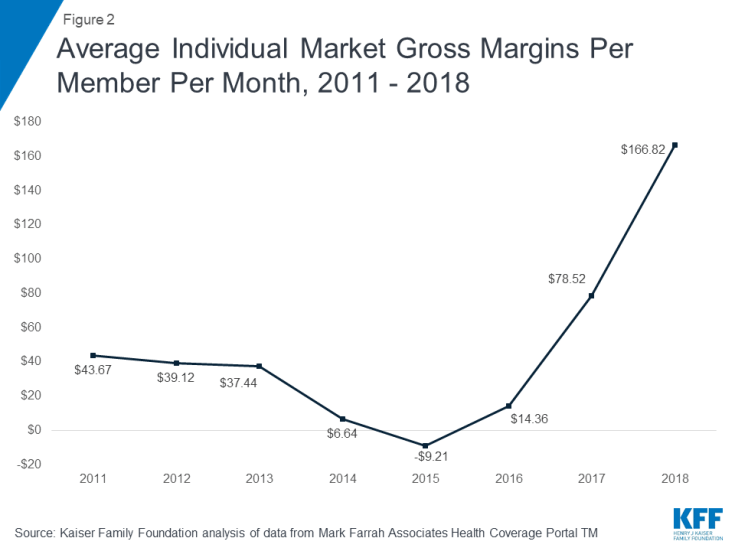
Despite those rebates, last year stood as the best financially for insurers in the individual market since 2011, with monthly average individual market gross margins per member more than doubling from $78 in 2017 to $167 in 2018.

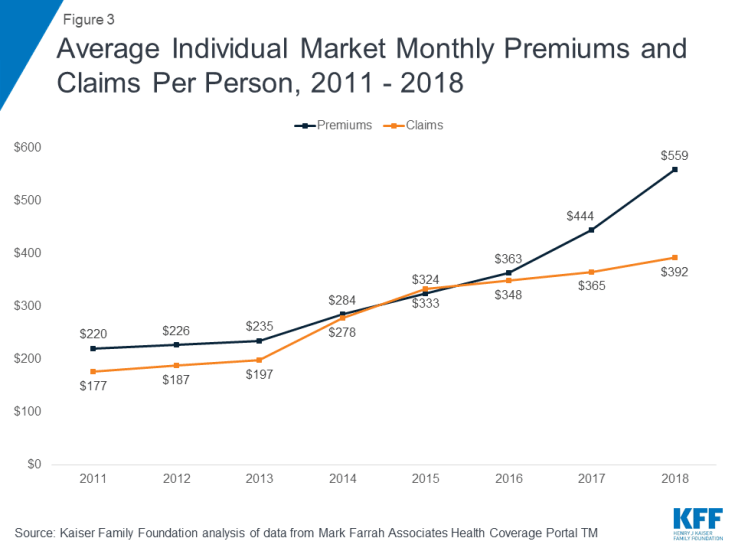
The payments are a result of health insurers failing to spend at least 80% of premium revenues on claims or quality improvements as required by the ACA's medical loss ratio. The average share of health premiums paid out in claims fell from 82% in 2017 to 70% in 2018.

A number of factors led to rising marketplace premiums last year. Payments per enrollee grew 26% to $559 in 2017. However, per person claims grew only 7% to $392 year over year.

A large driver was the uncertainty over the fate of the ACA's individual mandate, which was eventually repealed by Congress in 2017, as was the Trump administration's proposal to expand the availability of short-term, non-ACA insurance plans. But the biggest factor was the Trump administration's move in October 2017 to discontinue government-backed, cost-sharing subsidies.

Study lead author Cynthia Cox, director of the Kaiser Family Foundation's program for the study of health reform and private insurance, said the loss of subsidies likely caused insurers to over-correct.

"Based on how they were performing they likely would have only needed small increases or even to hold premiums mostly flat going into 2018 but instead rates went up by more than 20%," Cox said.

In recent years, there were concerns that increased premiums and lost subsidies would drive younger, healthier consumers out of the marketplace, leaving mostly older, sicker members to drive up healthcare costs. But those fears never really materialized. The average number of days individual market enrollees spent in a hospital fell to the lowest rate since 2014.

Such indicators seem to point to a stabilization of the market that has added more insurers in 2019 after years of exits. With that said, the report projects more than 3 million consumers should receive rebates by Sept. 30.

The rebates, as noted, are the direct result of the provision in the ACA on medical-loss ratio with the driver behind insurers raising rates was the instability created Trump administration actions especially eliminating the individual mandate and cost-sharing subsidies, as insurers then increased premiums.

The Kaiser Family Foundation report

However, by mid-2017 when insurers were considering 2018 premiums and participation, it was unclear whether the individual mandate would be enforced, cost-sharing subsidies would be paid, or the ACA as a whole would remain law. In October 2017, the Trump Administration ceased payments for cost-sharing subsidies, which led some insurers to exit the market or request larger premium increases than they would have otherwise. The Administration also reduced funding for advertising and outreach. And, Congress ultimately repealed the individual mandate penalty, effective for 2019. Amid these policy changes and legislative uncertainty, insurers raised benchmark premiums by an average of 34% going into 2018.

In this analysis, we find individual market insurers saw better financial performance in 2018 than in all the earlier years of the ACA and returned to, or even exceeded, pre-ACA levels of profitability. Premiums fell slightly on average for 2019, as it became clear that some insurers had raised 2018 rates more than was necessary. It is likely premiums would have fallen even more if the individual mandate penalty were still in effect.

9196-04-Figure-2.png


9196-04-Figure-3.png


Expected Rebates
The medical loss ratio (“MLR”) provision of the ACA requires most insurance companies that cover individuals to spend at least 80% of their premium income on health care claims and quality improvement, leaving the remaining 20% for administration, marketing, and profit. Beginning in 2012, insurers failing to meet the applicable MLR standard for the prior year (2011) were required to issue rebates to consumers and employers. Thus far, the 2011 rebates had remained the largest ever issued – totaling $399 million in the individual market alone (and $1.071 billion across the individual, small group, and large group markets).
 

Legacy

New member
Messages
7,871
Reaction score
321
In the last weeks or months, some important information has emerged on the reasons for soaring healthcare costs.

Pricing by hospitals for private insurance plans
Many Hospitals Charge Double or Even Triple What Medicare Would Pay
The Parkview Health System in Indiana had among the highest overall hospital prices compared to Medicare rates, according to a study of 25 states’ hospital pricing.
(NY Times, May 9, 2019)

In Indiana, a local hospital system, Parkview Health, charged private insurance companies about four times what the federal Medicare program paid for the same care, according to a study of hospital prices in 25 states released on Thursday by the nonprofit RAND Corp.

Colorado employers were shocked to learn they were paying nearly eight times what the federal government did for outpatient services like an emergency room visit, an X-ray or a checkup with a specialist at Colorado Plains Medical Center, northeast of Denver.

Hospital Acquistions of Physician Practices including Rural
Hospital Acquisition of Independent Physician Practices Continues to Increase (AJMC)
During the time period (July 2015-2016), the number of physicians employed by hospitals grew by 14,000, also representing an 11% increase in employed physicians. According to the report, every region of the country saw an increase in both hospital ownership of practices and physician employment. The rate of hospital-owned practices increased between 8% and 47% in every region in the country, and the rate of hospital-employed physicians increased between 5% and 22%.

“When physicians are employed by hospitals or health systems, they perform more services in a hospital outpatient department setting (HOPD) than independent physicians,” states the report. “The higher proportion of services performed in a HOPD setting increases both costs to the Medicare program and financial responsibility for patients.

Generic Drug Price-Fixing
Forty-three states Attorneys General and Puerto Rico's brought a lawsuit against generic drug manufacturers accusing 20 drug firms of conspiring to inflate prices.
- States bring price fixing suit against generic drug makers (AP News)
BOSTON (AP) — Attorneys general from more than 40 states are alleging the nation’s largest generic drug manufacturers conspired to artificially inflate and manipulate prices for more than 100 different generic drugs, including treatments for diabetes, cancer, arthritis and other medical conditions.
Connecticut Attorney General William Tong, a Democrat, said investigators obtained evidence implicating 20 firms.
“We have hard evidence that shows the generic drug industry perpetrated a multibillion dollar fraud on the American people,” Tong said. “We have emails, text messages, telephone records and former company insiders that we believe will prove a multi-year conspiracy to fix prices and divide market share for huge numbers of generic drugs.”

- States allege generic drug executives deleted texts, obstructed justice in price cartel probe (Wash Post)
“That the biggest generic drug manufacturer in the world is one of the leaders of this marketwide collusion is beyond disappointing, and in some ways dispiriting,’’ Connecticut Attorney General William Tong told The Washington Post on Friday.
“What bothers me about this case is that these are regular people that appear to go to work every day at big companies and break the law,’’ he said. “It’s the regular everyday-ness of it that bothers me. It is just part of the routine in this industry, and it seems endemic and part and parcel of what they do.’’

- US states sue Teva for price-fixing in ‘multi-billion dollar fraud’ (Times of Israel)
“Teva is a consistent participant in the conspiracies identified in this complaint, but the conduct is pervasive and industry-wide,” stated the complaint, according to Bloomberg.

The lawsuit “puts Teva at the center of the conspiracy,” to collude with drug makers to artificially raise prices, Bloomberg reported.
(Teva is either the #1 or #2 biggest corporation in Israel)

Pharmacy Benefit Managers (PBMs) like Express Scripts accused of inflating prices
Generic drugs. on which drug companies are now accused of conspiring to raise prices, represent 90% of all prescriptions. They were called before Congress in April. They blamed Big Pharma and price-fixing schemes.
6 takeaways from Senate's PBM hearing (Becker's Hospital Review)
Five executives from top pharmacy benefit managers in the U.S. testified before the Senate Finance Committee April 9.

During the high-stakes hearing, lawmakers asked the top executives to explain their roles in the drug industry, answer questions about the drug rebate system and tell whether they would support a law banning spread pricing...

Six takeaways:

1. PBMs blamed Big Pharma. Executives repeatedly said that drugmakers are to blame for high drug prices and their pursuit of profits drives list prices higher, according to CNBC. Throughout the hearing, the executives blasted the drug industry for the rising cost of brand-name drugs, citing several examples, including skyrocketing insulin prices. In addition, they said the industry is anti-competitive.
5. PBMs cited drugmakers' tactics to thwart competition. During the hearing, PBMs attacked anticompetitive behavior of pharma companies, including "pay for delay" tactics, which are used by brand-name drugmakers to delay generic manufacturers from introducing their cheaper product. Additionally, executives denounced "evergreening," a tactic used to extend patent protection. They suggested lawmakers look into bills to ban the practices.

6. PBMs defended spread-pricing. The finance committee's ranking member Sen. Ron Wyden D-Oregon, took issue with a tactic known as spread-pricing, where PBMs charge health plan customers a higher price for a medication than they reimburse pharmacies. "In my view, it's as clear a middleman rip-off as you're going to find," he said, according to the StarTribune. The executives said it is simply a way customers can elect to pay them for their services.
Big Pharm Regular Response
High U.S. drug prices cannot be explained by R&D spending alone (Modern Healthcare)
Pharmaceutical companies often cite research and development spending to justify high drug prices in the U.S. But they make much more from those high prices than they spend on R&D, researchers found.

According to research published on the Health Affairs blog, the 15 drug companies that made the 20 best-selling drugs worldwide in 2015 made $116 billion in excess revenue from premium drug prices in the U.S. Meanwhile, they spent only $76 billion on global research and development.

The excess revenue comes from drug prices that are much higher in the U.S. than in Canada, Denmark, Ireland and the U.K., the researchers said. Drug prices in those countries for the 15 companies studied were 41% of their U.S. counterparts on average.

Health Insurers Profitability and CEO bonuses
Health insurer CEOs score big paychecks despite public scrutiny (Modern Heatlhcare)
Nearly all of the largest publicly traded health insurance companies gave their CEOs a pay raise in 2018. That includes UnitedHealth Group, whose CEO David Wichmann's total compensation reached $18.1 million.

Health insurer CEO compensation and company profits are topics fueling discussions about moving the U.S. healthcare system to a single-payer model to provide universal coverage to all Americans. Combined, the CEOs of the eight largest publicly traded insurance companies—including pharmacy behemoth CVS, which acquired insurer Aetna—made $143.5 million in total compensation in 2018, up 14.4%.

Meanwhile, those same companies recorded a combined $21.9 billion in profits in 2018 on revenue of $718 billion.
U.S. health care spending reached $3.65 trillion in 2017, which means payment to insurers was about 20% of all HC spending.
Spending on U.S. prescription medications is approaching $500 billion a year - - about 14% of HC spending annually - and growing up to 7% annually, according to IQVIA, a provider of health data.
Roughly 60% of American adults have at least one chronic illness, such as heart disease, cancer or diabetes, and 40% have two or more, according to the CDC.
 
Last edited:

Legacy

New member
Messages
7,871
Reaction score
321
https://www.vox.com/science-and-health/2016/11/30/12945756/prescription-drug-prices-explained

Rx drugs are more expensive in the US but there’s a tradeoff in that the US subsidizes the R&D for the rest of the world. The US could regulate prices like Australia but it’s not that simple.

https://www.policymed.com/2014/12/a...oval-rate-for-drugs-entering-clinical-de.html

I've meant to get back to you, Irishize, and address this. I feel you read my articles, but just wish to point out that one details the high price of drugs cannot be explained by R&D alone. You seem to be saying that R&D by U.S. pharmaceutical companies should support new medications world-wide. While their approval processes as in Australia and regulation and purchasing keeps their citizens' drug prices lower, sometimes significantly, here in the U.S. the costs are passed along to us, which is a reasonable tradeoff.

The supply chain of drugs from manufacturer to the consumer is complicated with every element taking a profit along the way from manufacturers to wholesalers/PBMs, pharmacies to providers (hospitals, hospital clinics, physicians).

Spending On Prescription Drugs In The US: Where Does All The Money Go? (Health Affairs)

As drug prices rise here in the U.S. unrestrained with minimal oversight and few regulations or justifications, HC insurers raise their rates, increase premiums and deductibles, etc.

I included an article on the exorbitant profits and CEO bonuses and another on the conspiracy by a cartel of generic manufacturers and pharmacy companies to maintain the status quo, preserve market share among competitors and maintain profitabilities with price-fixing. That further suppresses competition by companies not included in that cartel that would become their competitors.

Consider another article by Sarah Kliff who wrote the Vox article "The true story of America’s sky-high prescription drug prices"

What Australia can teach America about health care (Vox)
 
Last edited:

Irish#1

Livin' Your Dream!
Staff member
Messages
44,599
Reaction score
20,060
Glad to see a judge take a swing at United Health Care. UHC claims proton radiation is experimental, but pretty much every drug and procedure was experimental at one point or another.

I had surgery, so I can't speak towards the radiation personally, but my daughter had to go through chemo and radiation treatment for her breast cancer and she said the effects of radiation were far worse than the chemo.

Judge rips insurance company for 'immoral, barbaric' cancer denials

https://www.cnn.com/2019/05/16/health/judge-proton-beam-therapy-recusal-unitedhealthcare/index.html
 

Legacy

New member
Messages
7,871
Reaction score
321
All venture capital firms and many angel and seed investors get their money from preferred stock options that hedges their investment against losses should the company be liquidated but can be very valuable as the company grows. Administrators also get stock options. United Healthcare ousted a CEO, William McGuire, when it was found he was backdating his vested stock options worth $1.6 billion at the time (@ around $62 per share when he was ousted). He eventually surrendered $620 million in his stock options to settle with United Health, the SEC, etc. As of today, the stock under UnitedHealth Group is worth $239, almost five times that.

UnitedHealth Group ex-CEO forfeits $620 million (AAPS, Association of American Physicians and Surgeons)

McGuire turned UnitedHealth into one of America’s largest health-care companies through a series of mergers.

UnitedHealth’s current CEO, Stephen Hemsley, plans to voluntarily have his remaining options repriced, effectively forfeiting $50 million, on top of the $190 million in gains he agreed to give back last year on options with questionable grant dates.

While growing into a colossus, the company has repeatedly failed to perform its basic job of paying medical bills. UnitedHealth, which covers 70 million Americans, has been sanctioned in nine states for paying claims slowly; shortchanging doctors, hospitals, or patients; or poorly handling complaints and appeals.

One Nebraska woman complained to state regulators that UnitedHealth’s computers had incorrectly rejected claims related to her son’s surgery—six times.

At one point, UnitedHealth owed Dr. George Schroedinger, an orthopedic surgeon, $600,000. He and his clinic sued UnitedHealth of the Midwest in 2004.

United Health covers at least one in five patients in the U.S. Of course, they are fighting Medicare For All and have spent huge amounts in lobbying efforts.

‘We’ve done a lot more than you would think’: How the health-insurance industry is working to pull Democrats away from Medicare-for-all (Wash Post)

The UnitedHealth Group, which recorded about $17 billion in earnings in 2018, spent about $8 million on lobbying efforts last year on a broad range of health-care issues, according to the Center for Responsive Politics, which tracks money in politics. The company, the parent of UnitedHealthcare, declined to comment on whether it had met with Democratic presidential candidates.
 
Last edited:

Irishize

Well-known member
Messages
4,531
Reaction score
461
I've meant to get back to you, Irishize, and address this. I feel you read my articles, but just wish to point out that one details the high price of drugs cannot be explained by R&D alone. You seem to be saying that R&D by U.S. pharmaceutical companies should support new medications world-wide. While their approval processes as in Australia and regulation and purchasing keeps their citizens' drug prices lower, sometimes significantly, here in the U.S. the costs are passed along to us, which is a reasonable tradeoff.

The supply chain of drugs from manufacturer to the consumer is complicated with every element taking a profit along the way from manufacturers to wholesalers/PBMs, pharmacies to providers (hospitals, hospital clinics, physicians).

Spending On Prescription Drugs In The US: Where Does All The Money Go? (Health Affairs)

As drug prices rise here in the U.S. unrestrained with minimal oversight and few regulations or justifications, HC insurers raise their rates, increase premiums and deductibles, etc.

I included an article on the exorbitant profits and CEO bonuses and another on the conspiracy by a cartel of generic manufacturers and pharmacy companies to maintain the status quo, preserve market share among competitors and maintain profitabilities with price-fixing. That further suppresses competition by companies not included in that cartel that would become their competitors.

Consider another article by Sarah Kliff who wrote the Vox article "The true story of America’s sky-high prescription drug prices"

What Australia can teach America about health care (Vox)

Yes, it’s not black & white. Of course, pharma cos have plenty of issues & I’m not here to defend them but keep in mind they don’t get “refunds” when a drug is developed through Phase III only to be rejected for approval by the FDA:

“The standard answer, based on a study by the Tufts Center for the Study of Drug Development, is $2.7 billion. But not all experts are convinced that's the correct total, and a study in JAMA Internal Medicine adds fuel to that fire. The study found that it cost $648 million each to bring 10 cancer drugs to market.Sep 14, 2017”

I believe the more accurate # is in between the two above extremes. In the past, the typical cost for getting a drug to FDA approval was $1B. I wonder what country is willing to shoulder the burden that the US does so we as Americans can enjoy lower drug costs and let some other 1st world nation allow Big Pharma to set up HQs in their country and run their business w/ minimal cost regulations. If no other nation is willing to do that, what are the consequences? Everyone is willing to live w/ fewer novel drug compounds available for everything from cancer to a rare disease w/ orphan status...until they acquire a disease that can only be treated by an ADC or biologic that wouldn’t be developed under a more regulated system.
 
Last edited:

Legacy

New member
Messages
7,871
Reaction score
321
Yes, it’s not black & white. Of course, pharma cos have plenty of issues & I’m not here to defend them but keep in mind they don’t get “refunds” when a drug is developed through Phase III only to be rejected for approval by the FDA:

“The standard answer, based on a study by the Tufts Center for the Study of Drug Development, is $2.7 billion. But not all experts are convinced that's the correct total, and a study in JAMA Internal Medicine adds fuel to that fire. The study found that it cost $648 million each to bring 10 cancer drugs to market.Sep 14, 2017”

I believe the more accurate # is in between the two above extremes. In the past, the typical cost for getting a drug to FDA approval was $1B. I wonder what country is willing to shoulder the burden that the US does so we as Americans can enjoy lower drug costs and let some other 1st world nation allow Big Pharma to set up HQs in their country and run their business w/ minimal cost regulations. If no other nation is willing to do that, what are the consequences? Everyone is willing to live w/ fewer novel drug compounds available for everything from cancer to a rare disease w/ orphan status...until they acquire a disease that can only be treated by an ADC or biologic that wouldn’t be developed under a more regulated system.

Certainly all your points are very valid as to costs of R&D and the benefits of lack of regulations in the U.S. accounting for new biologics, immunotherapies and those based on genome sequencing with targeted cancer therapies. Clinical trials are very expensive, but is lack of regulations and cost control the answer when the medications from the biotech industry may cost the patient tens of thousands of dollars for a few months supply? What other country has investors with such deep pockets or companies that fund their own research and clinical trials? If you simply isolating biotech firms R&D with the impacts of a more regulated system, your point is taken. I would contend regulations on exorbitant profits in other parts of the drug industry need to be more regulated to lower drug costs for patients. Orphan drug R&D is mostly funded by the federal government, I believe, because the profits are not there. It seems almost counterintuitive that Celgene boosted the prices of their meds on the day that they were acquired by deep-pocketed Bristol-Meyers Squibb - or perhaps not.
 
Last edited:

Legacy

New member
Messages
7,871
Reaction score
321
Article based on Georgetown Univ. Health Policy Institute study of maternal and child mortality.

Report: Babies Are More Likely to Die in States That Didn't Expand Medicaid
Infant mortality rates have dropped in expansion states and risen in nonexpansion states.
(Governing)

Significantly, the study highlights low-income and racial disparities at a time when some states are cutting insurance coverage with requirements that impact pregnancy nutrition and addressing health risks, e.g. smoking, high blood pressure, etc. in prenatal care and high risk pregnancies. Also of significance is the possibility of federal insurance changes, changes in Title X funding limitations and changes in abortion laws and womens' reproductive clinics that will result in more births, especially in states without Medicaid expansion and with the highest number of African-Americans.

Governing covers issues of importance to local and state governments.
 
Last edited:
Top