
You are using an out of date browser. It may not display this or other websites correctly.
You should upgrade or use an alternative browser.
You should upgrade or use an alternative browser.
Gerad Parker - Troy Head Coach :)
- Thread starter IrishLax
- Start date


theclassickiller
old and improved
- Messages
- 500
- Reaction score
- 104
That's the actual frame before he is out. He has not touched out of bounds before that.Classic- he is obviously out of bounds in that frame from what I saw THE BALL was at the 18 yard line at the best position before he is hit by the defender.

Sea Turtle
Slow and steady wins the race
- Messages
- 5,645
- Reaction score
- 3,488
Reminds me of superbowl 13. Everything went against Dallas and they still almost beat Pittsburgh.
On to Duke.
On to Duke.
NumbersGuy0520
Well-known member
- Messages
- 960
- Reaction score
- 1,344
Seriously, if anyone here has minimal contact to the staff, can you just beg them to always QB sneak on 4th and 1, or at least ask why they don’t? Maybe with Mitchell Evans (wasn’t it like 3 of 4 last year). QB sneaks are the most successful scrimmage play in football.
I’m happy we tried it on our second 4th down attempt, but even that was poor execution (Sam basically tried to get all the way around the pile).
Run straight. The shortest distance between two points is a straight line. We should not be running a play action that results in a Sam Hartman sprint to the sidelines, especially with the athletes OSU has.
It was painful watching the Eagles be successful with Hurts yet again last night and then immediately remembering how we schemed our attempts.
I’m happy we tried it on our second 4th down attempt, but even that was poor execution (Sam basically tried to get all the way around the pile).
Run straight. The shortest distance between two points is a straight line. We should not be running a play action that results in a Sam Hartman sprint to the sidelines, especially with the athletes OSU has.
It was painful watching the Eagles be successful with Hurts yet again last night and then immediately remembering how we schemed our attempts.
theclassickiller
old and improved
- Messages
- 500
- Reaction score
- 104
It's possible you're right. I'm just saying that the NCAA rule reads that, in that frame, the ball is still in play. Tell me if I'm reading it wrong, but I don't think I am.Because is in his right arm, it never makes the line to gain.

IRISHMAN
Well-known member
- Messages
- 1,245
- Reaction score
- 176
this is why i didn't think the call would get overturned. yeah he was probably short but because their wasn't a camera right down the line im not sure you could say with 100% confidence that he was short.Yeah that was some bullshine reverse on that 1st down. No way you can tell unless you have a directly parallel 90 degree video shot.
ab2cmiller
Troublemaker in training
- Messages
- 11,454
- Reaction score
- 8,533
So, is the ball spotted where the ball was when his foot actually touched out of bounds OR it's where the football was when the ball broke the vertical plane of the sideline?
theclassickiller
old and improved
- Messages
- 500
- Reaction score
- 104
From what I can tell (admittedly not extensive research) the spot is in line with the ball when the ball is declared dead. I don't believe it is like the pylon in the endzone, which has to be crossed in-bounds. I could be wrong, I'm hoping someone can tell me, either way.So, is the ball spotted where the ball was when his foot actually touched out of bounds OR it's where the football was when the ball broke the vertical plane of the sideline?

forkbeard3777
Well-known member
- Messages
- 1,671
- Reaction score
- 2,037
What ever happened to a quick full back dive? Just recruit a big ass Alstott fullback.
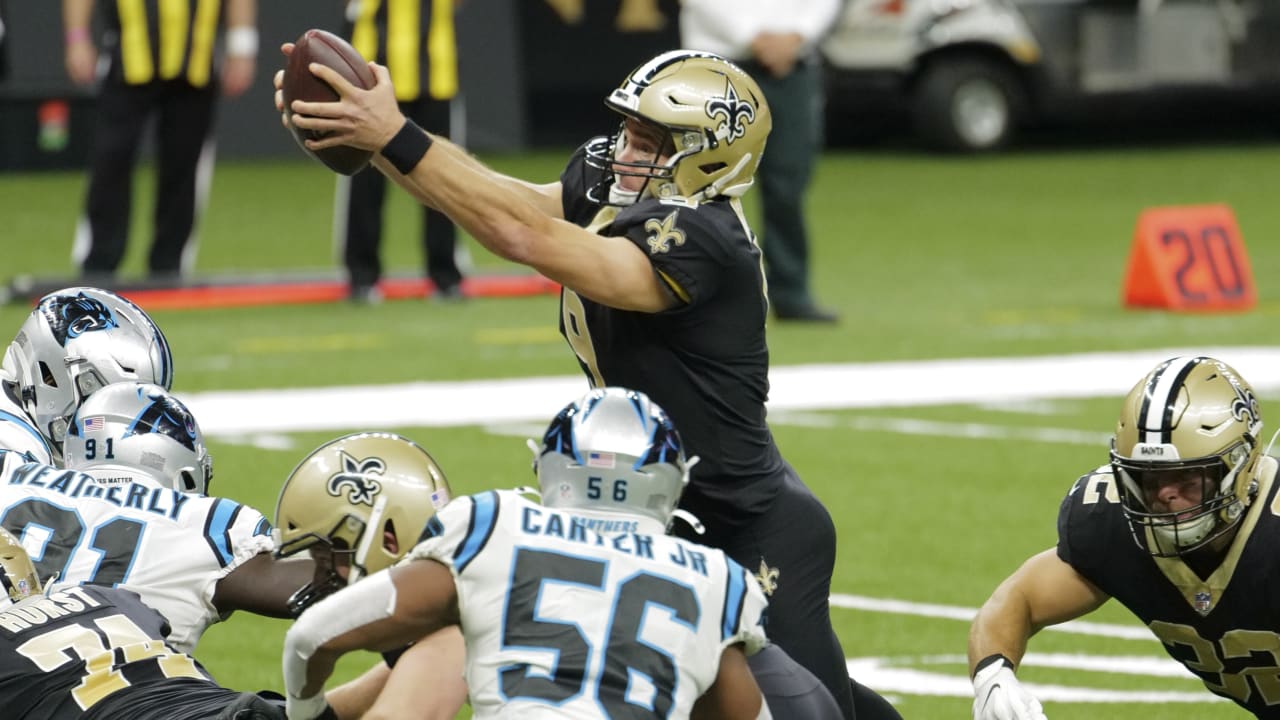
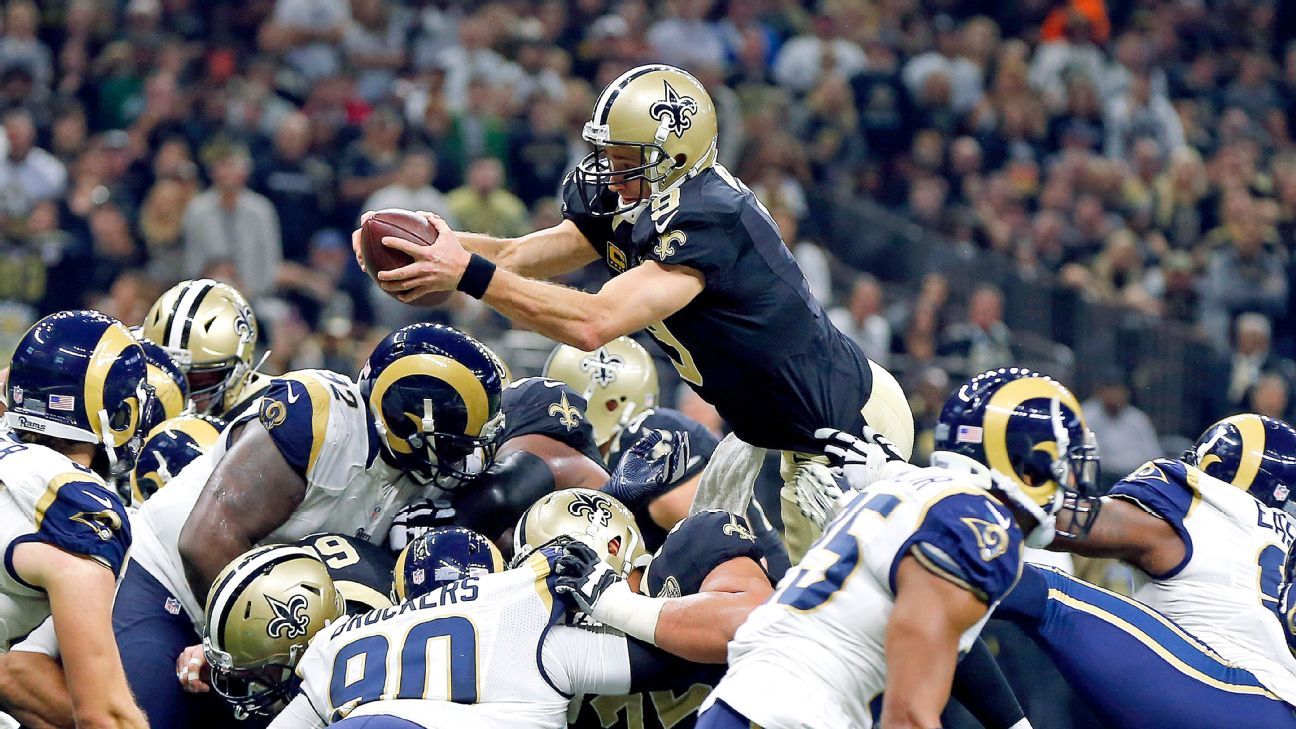
I honestly don't know the rule here...what requires a first down? Can the ball just cross the first down line? If the ball so, why not have Hartman, who is pretty athletic and agile, do a "Drew Brees" QB sneak - i.e., jump over the center and extend the ball? Brees was a master at it, but that was typically on the goal line.
Last edited:
FDNYIrish1
ARE YOU SUPPORTIVE OF THESE ONESIES???
- Messages
- 3,015
- Reaction score
- 5,231
I got you fam. I’ll blast out a DM to MF on Twitter.Seriously, if anyone here has minimal contact to the staff, can you just beg them to always QB sneak on 4th and 1, or at least ask why they don’t? Maybe with Mitchell Evans (wasn’t it like 3 of 4 last year). QB sneaks are the most successful scrimmage play in football.
I’m happy we tried it on our second 4th down attempt, but even that was poor execution (Sam basically tried to get all the way around the pile).
Run straight. The shortest distance between two points is a straight line. We should not be running a play action that results in a Sam Hartman sprint to the sidelines, especially with the athletes OSU has.
It was painful watching the Eagles be successful with Hurts yet again last night and then immediately remembering how we schemed our attempts.

Rockin’Irish
Hearing Impaired
- Messages
- 3,245
- Reaction score
- 2,510
My understanding it is where the ball is when the first body part touches out of bounds (in the case, Hartman’s foot) rather than the vertical plane of the sideline.So, is the ball spotted where the ball was when his foot actually touched out of bounds OR it's where the football was when the ball broke the vertical plane of the sideline?

Irish8248
Well-known member
- Messages
- 1,994
- Reaction score
- 880
Easy solution-- don't let the refs have a say. You have 1 yd, you can't abandon everything until you get that yd. Going out of bounds instead of fighting for that yard was a poor decision.From what I can tell (admittedly not extensive research) the spot is in line with the ball when the ball is declared dead. I don't believe it is like the pylon in the endzone, which has to be crossed in-bounds. I could be wrong, I'm hoping someone can tell me, either way.


Irish4life
Well-known member
- Messages
- 2,887
- Reaction score
- 3,674
I'm starting to think about OC replacements already btw lol
theclassickiller
old and improved
- Messages
- 500
- Reaction score
- 104
I honestly don't know the rule here...what requires a first down? Can the ball just cross the first down line? If the ball so, why not have Hartman, who is pretty athletic and agile, do a "Drew Brees" QB sneak - i.e., jump over the center and extend the ball? Brees was a master at it, but that was typically on the goal line.

When the ball crosses the goal line in a player's possession, it is dead. That's a touchdown, whether or not they pull it back or fumble it after that point. I'm pretty sure the same does not apply in any case in the open field. You can be pushed backward and maintain forward progress, but you can't voluntarily move the ball backward and also maintain forward progress. So in Hartman's case, he would have to hold that ball there until the play ended. That's my understanding.
forkbeard3777
Well-known member
- Messages
- 1,671
- Reaction score
- 2,037
When the ball crosses the goal line in a player's possession, it is dead. That's a touchdown, whether or not they pull it back or fumble it after that point. I'm pretty sure the same does not apply in any case in the open field. You can be pushed backward and maintain forward progress, but you can't voluntarily move the ball backward and also maintain forward progress. So in Hartman's case, he would have to hold that ball there until the play ended. That's my understanding.
Gotya.
You aren't reading it wrong. It doesn't matter where the ball is while the play is still live. A player can catch a ball at his own 1-yard line, run down the sideline with the ball stretched over the out of bounds all the way to the opponent's 1-yard line before getting pushed out of bounds and the ball will NOT be placed where it first crossed out of bounds. It will be placed at its forward-most point when the player went out of bounds and the play becomes dead. The moment the player is out of bounds is when the play and ball are dead and that is the moment the ref is supposed to look at where the forwardmost part of the ball is and mark it at that spot.It's possible you're right. I'm just saying that the NCAA rule reads that, in that frame, the ball is still in play. Tell me if I'm reading it wrong, but I don't think I am.
The previous screenshot that you posted was close to showing the point where Hartman went out of bounds but it was actually a split second before. So even as conclusive as that picture looked, it's even clearer when you look a split second later when he actually touches out of bounds and the play becomes dead as seen here:
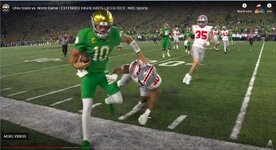
Hartman's foot is clearly past the 17-yard line. The forwardmost part of the football appears to be in front of his foot and actually looks closer to the 16-yard line than the 17, so if the refs thought they should respot the football, they should have respotted even more in ND's favor. But beyond doing that there is NO WAY they should have reversed the 1st-down spot on the field.

GoIrish41
Paterfamilius
- Messages
- 9,929
- Reaction score
- 2,120
Im almost positive that it’s where the ball crosses the line that matters. Think punting the ball out of bounds and the ref running up the sideline to mark the line of scrimmages. Doesn’t matter where the ball lands, just where it was when it crossed the sideline.You aren't reading it wrong. It doesn't matter where the ball is while the play is still live. A player can catch a ball at his own 1-yard line, run down the sideline with the ball stretched over the out of bounds all the way to the opponent's 1-yard line before getting pushed out of bounds and the ball will NOT be placed where it first crossed out of bounds. It will be placed at its forward-most point when the player went out of bounds and the play becomes dead. The moment the player is out of bounds is when the play and ball are dead and that is the moment the ref is supposed to look at where the forwardmost part of the ball is and mark it at that spot.
The previous screenshot that you posted was close to showing the point where Hartman went out of bounds but it was actually a split second before. So even as conclusive as that picture looked, it's even clearer when you look a split second later when he actually touches out of bounds and the play becomes dead as seen here:
View attachment 3054467
Hartman's foot is clearly past the 17-yard line. The forwardmost part of the football appears to be in front of his foot and actually looks closer to the 16-yard line than the 17, so if the refs thought they should respot the football, they should have respotted even more in ND's favor. But beyond doing that there is NO WAY they should have reversed the 1st-down spot on the field.
That's true for a punt but not for a player holding onto a football. The play is live until something - a body part or the football itself - touches out of bounds. At that moment the play becomes dead and the football is marked at its forwardmost point. We see players tiptoeing the sidelines all the time with the ball at times crossing the out of bounds mark but the ball is never retroactively marked back where it first crossed out of bounds. It is always marked where the ball was when a player actually goes out of bounds.Im almost positive that it’s where the ball crosses the line that matters. Think punting the ball out of bounds and the ref running up the sideline to mark the line of scrimmages. Doesn’t matter where the ball lands, just where it was when it crossed the sideline.
Rockin’Irish
Hearing Impaired
- Messages
- 3,245
- Reaction score
- 2,510
This my understanding of how the rule is stated as well……I’ve heard this more than once during a telecast.That's true for a punt but not for a player holding onto a football. The play is live until something - a body part or the football itself - touches out of bounds. At that moment the play becomes dead and the football is marked at its forwardmost point. We see players tiptoeing the sidelines all the time with the ball at times crossing the out of bounds mark but the ball is never retroactively marked back where it first crossed out of bounds. It is always marked where the ball was when a player actually goes out of bounds.

GATTACA!
It's about to get gross
- Messages
- 15,110
- Reaction score
- 12,945
I don't believe this is correct.That's true for a punt but not for a player holding onto a football. The play is live until something - a body part or the football itself - touches out of bounds. At that moment the play becomes dead and the football is marked at its forwardmost point. We see players tiptoeing the sidelines all the time with the ball at times crossing the out of bounds mark but the ball is never retroactively marked back where it first crossed out of bounds. It is always marked where the ball was when a player actually goes out of bounds.
d. The most forward point of the ball when declared out of bounds between the goal lines is the point of forward progress (A.R. 8-2-1-I and A.R. 8-5- 1-VII) (Exception: When a ball carrier is airborne as they cross the sideline (including a striding runner), forward progress is determined by the position of the ball as it crosses the sideline (A.R. 8-2-1-II-III and V-IX).
theclassickiller
old and improved
- Messages
- 500
- Reaction score
- 104
Good find. I stand corrected. You totally could have BS'd that, but it sounds awfully official, so I'll believe youI don't believe this is correct.
 .
.
theclassickiller
old and improved
- Messages
- 500
- Reaction score
- 104
I wonder, though, where does this stride start? Is it when Hartman's left foot leaves the ground? If the stride starts from the time the player truly becomes airborne, I feel it would have still been difficult to overturn that call. But it certainly becomes more understandable, now.
You highlighted the wrong part:I don't believe this is correct.
The forward progress rule does not include a striding runner. Hartman was a striding runner which means that part of the rule does not apply to that play.d. The most forward point of the ball when declared out of bounds between the goal lines is the point of forward progress (A.R. 8-2-1-I and A.R. 8-5- 1-VII) (Exception: When a ball carrier is airborne as they cross the sideline (including a striding runner), forward progress is determined by the position of the ball as it crosses the sideline (A.R. 8-2-1-II-III and V-IX).
PutuporShutup
Banned
- Messages
- 4,824
- Reaction score
- 1,909
Yeah , it’s where the ball is when player crosses oob line not where ball is when he lands oob.
Obvious play call, no deception, terrible play action fake, and Hartman has easy first if he doesn’t go oob.
Obvious play call, no deception, terrible play action fake, and Hartman has easy first if he doesn’t go oob.
To add to this, here is an article from Referee.com that seems to confirm my interpretation of the rule. And here is the key quote:The forward progress rule does not include a striding runner. Hartman was a striding runner which means that part of the rule does not apply to that play.
Another thing that can happen on out-of-bounds plays is that you don’t process where the ball was when the runner stepped out of bounds. The proper spot is not where the runner went out of bounds, but instead is where the ball was when he did so. Depending on the runner’s position when he stepped out of bounds, the ball could be a good two or three feet beyond that spot, and that is where the ball needs to be spotted.

Irishdrunk
Not Banned Yet
- Messages
- 2,861
- Reaction score
- 807
unfortunately that definition still isn’t clear.To add to this, here is an article from Referee.com that seems to confirm my interpretation of the rule. And here is the key quote: