Healthcare

Legacy

New member
Messages
7,871
Reaction score
321
MJ,

Affordable Care Act (ACA)

Which goals did the ACA not meet?

From your source:

Medicaid was largely impacted by this reform, for states now had the opportunity to expand Medicaid eligibility to larger parts of the uninsured population. Thus, the percentage of uninsured in the United States decreased from over 16 percent in 2010 to nine percent in 2017.

Which of the four groups noted saw the most increase from the ACA?
 
Last edited:

MJ12666

New member
Messages
794
Reaction score
60
MJ,

Affordable Care Act (ACA)

Which goals did the ACA not meet?

From your source:


Which of the four groups noted saw the most increase from the ACA?

My point is that I believe the American citizens were being told that the passage of the ACA would reduce the number of individuals who either could not get coverage or simply chose not to get health insurance; as well as reducing the cost of health insurance for those that already had an existing policy while increasing the benefits. Based on the aggregate values included in the link this did not happen. The only event that occurred was that there are more people on Medicaid. The aggregate number of uninsured has stayed basically the same. Increasing the number of people on Medicaid could very easily have been done by simply passing a law that expanded Medicaid coverage.

I must admit that my view on this is a little jaded in that last year paid $8,000 for a policy that basically paid for me getting a flu shot and a physical that I chose not to take. As a reward, this year I get to pay $9,000 for the same coverage.
 
Last edited:

Irish#1

Livin' Your Dream!
Staff member
Messages
44,597
Reaction score
20,058
I must admit that my view on this is a little jaded in that last year paid $8,000 for a policy that basically paid for me getting a flu shot and a physical that I chose not to take. As a reward, this year I get to pay $9,000 for the same coverage.

I feel your pain. Our employees who sign up for spouse and family pay around $7,200 annually. While our company pays 80% of the employee cost, I was paying around $5,000 for me and my wife. I did back flips when she turned 65. She picked up her medicare and I got her a supplemental policy for just $50 a month and it covers pretty much everything.
 

Legacy

New member
Messages
7,871
Reaction score
321
My point is that I believe the American citizens were being told that the passage of the ACA would reduce the number of individuals who either could not get coverage or simply chose not to get health insurance; as well as reducing the cost of health insurance for those that already had an existing policy while increasing the benefits. Based on the aggregate values included in the link this did not happen. The only event that occurred was that there are more people on Medicaid. The aggregate number of uninsured has stayed basically the same. Increasing the number of people on Medicaid could very easily have been done by simply passing a law that expanded Medicaid coverage.

I must admit that my view on this is a little jaded in that last year paid $8,000 for a policy that basically paid for me getting a flu shot and a physical that I chose not to take. As a reward, this year I get to pay $9,000 for the same coverage.

For the ACA goals from the link above - Healthcare.gov:

Affordable Care Act (ACA)
The comprehensive health care reform law enacted in March 2010 (sometimes known as ACA, PPACA, or “Obamacare”).

The law has 3 primary goals:

- Make affordable health insurance available to more people. The law provides consumers with subsidies (“premium tax credits”) that lower costs for households with incomes between 100% and 400% of the federal poverty level.
- Expand the Medicaid program to cover all adults with income below 138% of the federal poverty level. (Not all states have expanded their Medicaid programs.)
- Support innovative medical care delivery methods designed to lower the costs of health care generally.

Can I assume that you obtain health insurance through an exchange with either the state or federal government sites in a state that has approved the Medicaid expansion? And that you have obtained subsidies for which you qualified with income between 100% and 400% of the federal poverty level?

From a comprehensive review of the effects of the ACA on those goals: The Effects of Medicaid Expansion under the ACA: Updated Findings from a Literature Review (KFF, Aug 15, 2019)

Key Findings

- Research indicates that the expansion is linked to gains in coverage; improvements in access, financial security, and some measures of health status/outcomes; and economic benefits for states and providers.
Coverage: Studies show that Medicaid expansion states experienced significant coverage gains and reductions in uninsured rates among the low-income population broadly and within specific vulnerable populations. States that implemented the expansion with a waiver have seen coverage gains, but some waiver provisions appear to compromise coverage.

- Access to care and related measures: Most research demonstrates that Medicaid expansion has improved access to care, utilization of services, the affordability of care, and financial security among the low-income population. Studies show improved self-reported health following expansion and an association between expansion and certain positive health outcomes. A small subset of study findings showed no effects of expansion on certain specific measures within these access-related categories. Findings on expansion’s effect on provider capacity are mixed, with studies showing increases, decreases, or no effects on measures like appointment availability or wait times.

- Economic measures: Analyses find effects of expansion on numerous economic outcomes, including state budget savings, revenue gains, and overall economic growth. Multiple studies suggest that expansion can result in state savings by offsetting state costs in other areas. The federal government covered 100% of the cost of the expansion in the early years of the ACA, and will cover 90% over time. There is limited research examining the fiscal effects of the Medicaid expansion at the federal level. Additional studies show that Medicaid expansions result in reductions in uncompensated care costs for hospitals and clinics, and a growing number of studies show an association between expansion and gains in employment as well as growth in the labor market (with a minority of studies showing neutral effects in this area).
 

Irish#1

Livin' Your Dream!
Staff member
Messages
44,597
Reaction score
20,058
Never understood how the government could force someone to have health coverage.

Obamacare ruled Unconstitutional

Appeals court says Obamacare individual mandate unconstitutional and sends law back to lower court

(CNN)A federal appeals court has found the Affordable Care Act's individual mandate unconstitutional but did not invalidate the entire law, which remains in effect.

The 2-1 decision by the 5th US Circuit Court of Appeals likely pushes any Supreme Court action on Obamacare until after the 2020 election but again thrusts the issue of health care into the forefront of the campaign -- and extends the uncertainty surrounding the future of the landmark law, long a political target for President Donald Trump and other Republicans.
The challenge was brought by Texas and a coalition of Republican states after a failed 2017 congressional repeal effort, then later joined by the Trump administration -- which, in a dramatic reversal from its earlier position, argued the entire law should be thrown out. "Let the courts do their job," Attorney General William Barr told Congress earlier this year.
READ: Appeals court ruling on Affordable Care Act
The ruling should not affect the millions of Americans who signed up for 2020 coverage on the exchanges in recent weeks. Nearly 3.9 million people had selected policies through December 7, but millions more signed up or were automatically re-enrolled in policies through the end of open enrollment, which finished early Wednesday morning in most states. Protections for those with preexisting conditions -- one of the law's most popular provisions -- remain in effect.
The court case is part of what once was considered a long-shot attempt to gut the Affordable Care Act. But two courts have now sided with the argument that a key part of Obamacare -- the individual mandate requiring Americans to purchase health insurance -- is no longer constitutional.
"The most straightforward reading applies: the mandate is a command. Using that meaning, the individual mandate is unconstitutional," Wednesday's ruling states.
Judges Jennifer Walker Elrod -- appointed by President George W. Bush -- and Kurt Engelhardt -- appointed by President Donald Trump -- were in the majority. Judge Carolyn Dineen King, an appointee of President Jimmy Carter, dissented.
John Roberts and Texas's lawsuit
Legal challenges to Obamacare have continually defied predictions and its fate may be even more difficult to predict in the 2020 presidential election year -- other than the fact it will continue.
Wednesday, the panel told a lower court that it must consider whether the individual mandate can be separated from the rest of the law.
When Chief Justice John Roberts and the Supreme Court upheld the ACA's linchpin individual insurance requirement in 2012, the majority had relied on Congress' taxing power.
Texas and other Republican-led states sued after the Republican-led Congress in 2017 cut the tax penalty for those who lacked insurance to zero as part of the year-end tax overhaul. That move came after a Republican-led repeal effort failed at the last minute due to the vote of the late Republican Sen. John McCain of Arizona.
But because the individual mandate is no longer tied to a specific tax penalty, the states argue, it is unconstitutional. They also say that because the individual mandate is intertwined with a multitude of ACA provisions, invalidating it should bring down the entire law, including protections for people with preexisting conditions.
Getting rid of Obamacare would be a headache for Trump
Last winter, US District Court Judge Reed O'Connor agreed and struck down the full law.
The appeals court majority agreed.
In 2012, "the individual mandate -- most naturally read as a command to purchase insurance -- was saved from unconstitutionality because it could be read together with the shared responsibility payment as an option to purchase insurance or pay a tax," Wednesday's opinion states.
"It could be read this way because the shared responsibility payment produced revenue. It no longer does so," the judges added. "Therefore the most straightforward reading applies: the mandate is a command. Using that meaning, the individual mandate is unconstitutional."
Defenders of the ACA, which include California and other Democratic-run states, as well as the Democratic-led US House of Representatives, have argued that Congress' 2017 action affected only the amount of the tax penalty, not the individual mandate or the law as a whole. They say that if lawmakers wanted to actually repeal additional Obamacare regulations, they would have done so.
Trump celebrated the ruling, which was issued in the middle of the House debate on impeachment.
The ruling "confirms what I have said all along: that the individual mandate, by far the worst element of Obamacare, is unconstitutional," the President said in a statement.
"This decision will not alter the current healthcare system," he added. "My Administration continues to work to provide access to high-quality healthcare at a price you can afford, while strongly protecting those with pre-existing conditions. The radical healthcare changes being proposed by the far left would strip Americans of their current coverage. I will not let this happen. Providing affordable, high-quality healthcare will always be my priority. They are trying to take away your healthcare, and I am trying to give the American people the best healthcare in the world."
The Department of Health and Human Services and Centers for Medicare and Medicaid Services, which administer the Affordable Care Act, did not immediately return requests for comment.
Texas Attorney General Ken Paxton praised the ruling.
"The Fifth Circuit correctly held that the individual mandate is unconstitutional," Paxton said in a statement. "We look forward to the opportunity to further demonstrate that Congress made the individual mandate the centerpiece of Obamacare and the rest of the law cannot stand without it."
What happens next
In its ruling, the court directed the lower court to look at two issues: How much of the law can stand and whether it should apply nationwide.
The appeals court said that O'Connor went too far when he invalidated the full law and needs to explain "with precision" what he believes should happen next. They advised O'Connor to use a "finer toothed comb" and conduct a more "searching inquiry" into which provisions Congress intended to be inseverable from the individual mandate.
"The rule of law demands a careful, precise explanation," the court said.
Getting rid of Obamacare would be a headache for Trump
For instance, the judges questioned whether the Affordable Care Act provision requiring certain chain restaurants to disclose the calories of their menu items is tied to the individual mandate.
The judges also said O'Connor must take a second look at the law after the Trump administration made new arguments late in the game that had said the law should only be struck as it applies to the states that brought the challenge.
Invalidating the law in only the 18 states in the lawsuit would throw the nation's health care system into chaos and deepen the inequality of access to health care that already exists. Also, several provisions -- such as making it easier to obtain lower-cost versions of certain complex drugs, changing Medicare payment rates or increasing certain taxes on wealthier Americans -- would be difficult to divide up by state.
The court acknowledged that when the lower court reviews its opinion it might once again hold that the entire law must fall. But the judges urged limits, writing: "It is no small thing for unelected, life-tenured judges to declare duly enacted legislation passed by the elected representatives of the American people unconstitutional."
Supreme Court action could be delayed for years
By sending the issue back to O'Connor, Wednesday's action actually lessens the likelihood that the Supreme Court will be faced with yet another monumental challenge to Obamacare just ahead of the next presidential election.
It is exceedingly rare for the high court to accept a case that has not yet been aired and resolved by lower court judges.
"Because the Court of Appeals did not reach the larger question of whether the entire Affordable Care Act must now fall, and instead remanded that to the district court, the Supreme Court will face far less pressure to take this case now -- versus waiting until the case comes back after that remand," said Steve Vladeck, CNN Supreme Court analyst and professor at the University of Texas School of Law.
"Thus, among other things, today's ruling may allow the justices to dodge -- if they want to, anyway."
But California Attorney General Xavier Becerra, a Democrat who is leading the coalition of states defending the law, said his department is prepared to file a petition with the Supreme Court to challenge Wednesday's ruling.
"Let's get finality," he said. "Americans don't need to be jerked around when it comes to their health care."
"For California, and I think millions of Americans, it is indispensable to get clarity and certainty," he told reporters. "And the best way to get certainty is to go to the Supreme Court."
'Boggles the mind'
In her dissent, King said it "boggles the mind" that Congress wanted to strike Obamacare when it changed the tax language in 2017.
"It is unlikely that Congress would want a statute on which millions of people rely for their healthcare and livelihood to disappear overnight with the wave of a judicial wand," King wrote.
King added that she believed Texas and the other states behind the challenge did not have the legal right to bring the challenge in the first place because they could not demonstrate how they were harmed by the law.
If Congress had wanted to repeal the law "it could have done so," she wrote. "But with the stakes so high, it is difficult to imagine that this is a matter Congress intended to turn over to the judiciary."
She called the district court opinion that invalidated the entire law "textbook judicial overreach." The majority, she wrote, has ensured "that no end for this litigation is in sight."
 

MJ12666

New member
Messages
794
Reaction score
60
For the ACA goals from the link above - Healthcare.gov:


Can I assume that you obtain health insurance through an exchange with either the state or federal government sites in a state that has approved the Medicaid expansion? And that you have obtained subsidies for which you qualified with income between 100% and 400% of the federal poverty level?

From a comprehensive review of the effects of the ACA on those goals: The Effects of Medicaid Expansion under the ACA: Updated Findings from a Literature Review (KFF, Aug 15, 2019)

Sorry, I have been busy and have not had the opportunity log on until today. In response to your questions:

1) I live in New Jersey and I receive health insurance via the exchange. I believe it is the federal exchange but not 100% sure.
2) No idea if NJ applied for Medicaid expansion.
3) I do not qualify for any subsidies. I pay 100% of the $736 per month premium for 2020 which is the least expensive policy on the exchange.
4) Honestly I could not care less what the listed goals are now. When the bill was being debated and passed it was suppose to reduce the number of uninsured and keep premiums in check. In my opinion it did neither.
 
Last edited:

Legacy

New member
Messages
7,871
Reaction score
321
The Failure of Medicaid Work Requirements

The Failure of Medicaid Work Requirements

Study: Arkansas Medicaid Work Requirement Hits Those Already Employed (KHN)

The Medicaid work requirement plan devised by Arkansas and approved by the Trump administration backfired because it caused thousands of poor adults to lose coverage without any evidence the target population gained jobs, a new study finds.

In fact, the requirement had only a limited chance for success as nearly 97% of Arkansas residents ages 30-49 who were eligible for Medicaid — those subject to the mandate — were already employed or should have been exempt from the new law, according to the study published Wednesday in the New England Journal of Medicine.

Yet the state’s mandate — the first of its kind in the nation — resulted in 18,000 of the 100,000 targeted people falling off the Medicaid rolls. And despite administration officials’ statements that many of them may have found jobs, the study by researchers at Harvard found no evidence they secured either jobs or other insurance coverage. In fact, it noted a dip in the employment rate among those eligible for Medicaid.

The researchers said the uninsured rate increased among 30- to 49-year-old Arkansans eligible for Medicaid from 10.5% in 2016 to 14.5% in 2018, while the employment rate fell from about 42% to just below 39%.

arkansas-medicaid-chart3.png


While the thousands of Arkansas residents losing Medicaid coverage has been documented since last year, the Harvard study is the first to provide evidence that the change left them uninsured and did not promote employment.

The results, based on a telephone survey of about 3,000 low-income adults in Arkansas, concluded that the law befuddled enrollees and that its mandatory reporting requirements led many to unnecessarily lose coverage.

“Lack of awareness and confusion about the reporting requirements were common, which may explain why thousands of individuals lost coverage,” the researchers wrote.

Asked whether the findings mean the administration should pull the plug on work requirements, co-author Benjamin Sommers, a professor of health policy and economics at Harvard, replied, “It’s time for them to pump the brakes at the very least.” (cont)
 

Legacy

New member
Messages
7,871
Reaction score
321
The NY Times and ProPublica continue to bring this egregious behaviors to light. Congress and the Admin do nothing.

As Patients Struggle with Bills, Hospitals Sue Thousands (NYT)

Most hospitals do not frequently take patients to court over medical debt. But since 2015, Carlsbad Medical Center, in New Mexico, has filed lawsuits by the thousands. (cont)

Thousands of Poor Patients Face Lawsuits From Nonprofit Hospitals That Trap Them in Debt
Across the country, low-income patients are overcoming stigmas surrounding poverty to speak out about nonprofit hospitals that sue them. Federal officials are noticing. Help us keep the pressure on.
(ProPublica)

Over the past few months, several hospitals have announced major changes to their financial assistance policies, including curtailing the number of lawsuits they file against low-income patients unable to pay their medical bills.

Investigative reports have spurred the moves, and they prompted criticism from a top federal official.

“We are learning the lengths to which certain not-for-profit hospitals go to collect the full list price from uninsured patients,” Seema Verma, the administrator of the Centers for Medicare and Medicaid Services, told board members of the American Hospital Association on Tuesday, according to published remarks. “This is unacceptable. Hospitals must be paid for their work, but it’s actions like these that have led to calls for a complete Washington takeover of the entire health care system.”

In June, ProPublica published a story with MLK50 on the Memphis, Tennessee-based nonprofit hospital system Methodist Le Bonheur Healthcare. It brought more than 8,300 lawsuits against patients, including dozens against its own employees, for unpaid medical bills over five years. In thousands of cases, the hospital attempted to garnish defendants’ paychecks to collect the debt.

After our investigation, the hospital temporarily suspended its legal actions and announced a review. That resulted in the hospital raising its workers’ wages, expanding its financial assistance policy and announcing that it would not sue its lowest-income patients. “We were humbled,” the hospital’s CEO, Michael Ugwueke, told reporters.

The same month, NPR reported that Virginia’s nonprofit Mary Washington Hospital was suing more patients for unpaid medical bills than any hospital in the state. Dr. Marty Makary, a surgeon at Johns Hopkins University, and fellow researchers had documented 20,000 lawsuits filed by Virginia hospitals in 2017 alone. The research team found that nonprofit hospitals more frequently garnished wages than their public and for-profit peers.

In mid-August, The Oklahoman reported that dozens of hospitals across the state had filed more than 22,250 suits against former patients since 2016. Saint Francis Health System, a nonprofit that includes eight hospitals, filed the most lawsuits in the three-year span.

In the first week of September, The New York Times reported that Carlsbad Medical Center in New Mexico had sued 3,000 of its patients since 2015. That report was also based on findings from Makary, who just published the book “The Price We Pay: What Broke American Health Care — and How to Fix It.”

And this week, Kaiser Health News and The Washington Post chronicled how Virginia’s state-run University of Virginia Health System sued patients more than 36,000 times over a six-year span.


There is no federal law mandating that nonprofit hospitals provide a specific amount of charity care, nor is there readily accessible data measuring how aggressively each hospital pursues patients for unpaid bills. But consumer advocates say the revelations in recent coverage on hospitals’ litigation practices are troubling. (cont)
 

Legacy

New member
Messages
7,871
Reaction score
321
137 million Americans are struggling with medical debt. Here’s what to know if you need some relief (CNBC)

-Research shows that about 137.1 million Americans have faced financial hardship this year because of medical costs.
- High health-care bills are the No. 1 reason people would consider taking money out of their retirement accounts or filing for bankruptcy.
- Before you raid your personal savings, there are some proactive steps you can take to negotiate those balances down or even pursue forgiveness.

For 137 million Americans, they can be the scariest bills to open.

That’s the number of adults who have faced medical financial hardship in the past year, research shows.

In fact, medical debt is the top reason that people, regardless of age, would consider cashing in their 401(k)s or other retirement savings, TD Ameritrade found.

And even then, raiding their long-term savings is often not enough. Separate research published this year found that 66.5% of all personal bankruptcies are tied to medical issues.(cont)

This is the real reason most Americans file for bankruptcy (CNBC)

- Two-thirds of people who file for bankruptcy cite medical issues as a key contributor to their financial downfall.
- While the high cost of health care has historically been a trigger for bankruptcy filings, the research shows that the implementation of the Affordable Care Act has not improved things.
- What most people do not realize, according to one researcher, is that their health insurance may not be enough to protect them.

As the NYT and ProPublica have documented in the articles in the prior post, many of these burdened with medical debt are workers in a nation which has reached full employment - and sometimes hospitals sue their own employees, garnishing wages. Rural area residents with few alternatives to their local hospital have little choices. Workers may have to forego prescribed medicines for chronic diseases to pay medical bills and the interests accrued while on payment plans.
 
Last edited:

Legacy

New member
Messages
7,871
Reaction score
321
What You Need to Know Before Filing a Medical Bankruptcy
(The Balance)

Excerpt:
Is There a Medical Bankruptcy?
No, there is no such thing as a “medical bankruptcy”. Even though you’re filing a bankruptcy case to get rid of overwhelming medical debt, you won’t be able to limit the case to just outstanding medical bills. The bankruptcy laws are designed to be as fair as possible to the debtor (the person who files the bankruptcy case) and to the creditors. Medical debt is considered the same as credit card debt, old utility bills, personal loans, and money borrowed from friends and family. These are all similar enough that the bankruptcy code treats them the same way. Therefore, if you’re filing a case to get medical debt relief — what we call a discharge — you’ll also eliminate those other unsecured debts, too.

In fact, bankruptcy is not a “pick and choose” project. When you file a case, you’re required to list all your debts, personal property and real estate. You must disclose all your family income and every family expense, even if your spouse will not be filing bankruptcy with you. You’ll also provide other details of your financial life like your marital status, recent debt payments, and recent property transfers or sales.

And if you have student loan debt...

2019 Student Loan Debt Statistics
Total U.S. student loan debt is $1.6 trillion, and 2018 college grads with loans owe $29,200 on average.
(Nerd Wallet)

Sixty-five percent of the class of 2018 graduated with student debt, according to the most recent data available from The Institute for College Access & Success, a nonprofit organization that works to improve higher education access and affordability. Among these graduates, the average student loan debt was $29,200.

The average U.S. household with student debt owes $47,671, according to NerdWallet’s 2018 household debt study.

Students who pursue professional degree programs can expect to take on much more.
 
Last edited:

Legacy

New member
Messages
7,871
Reaction score
321
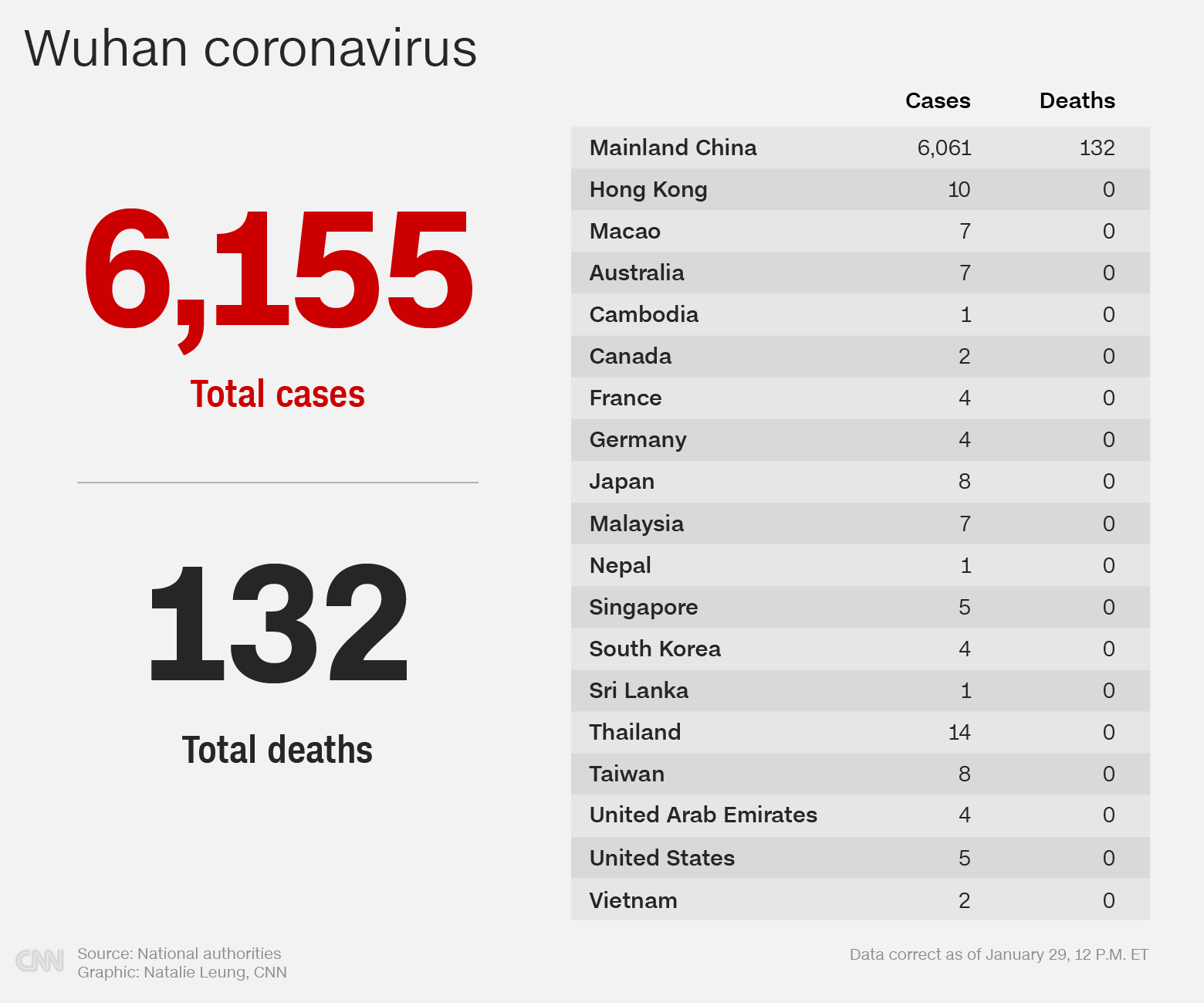
The Wuhan Coronavirus

The Wuhan Coronavirus

(All comments or "engagement" are welcome)

How Does Wuhan Coronavirus Compare With MERS, SARS And The Common Cold? (NPR)

See Chart in article for other coronaviruses mortality rates - SARS 10%, MERS 30%

Updated figures
eb0c61cf-d025-41c4-afef-0b2fb2998e50.png


How the new coronavirus stacks up against SARS and MERS
For the third time since around 2003, a coronavirus has jumped from animals to people
(Science News)

Excerpt
How dangerous is a coronavirus infection?
Usually coronavirus illnesses are fairly mild, affecting just the upper airway. But the new virus, as well as both SARS and MERS, are different.

Those three types of betacoronaviruses can latch onto proteins studding the outside of lung cells, and penetrate much deeper into the airway than cold-causing coronaviruses, says Anthony Fauci, director of the U.S. National Institute of Allergy and Infectious Diseases in Bethesda, M.D. The 2019 version is “a disease that causes more lung disease than sniffles,” Fauci says.

Damage to the lungs can make the viruses deadly. In 2003 and 2004, SARS killed nearly 10 percent of the 8,096 people in 29 countries who fell ill. A total of 774 people died, according to the World Health Organization.

MERS is even more deadly, claiming about 30 percent of people it infects. Unlike SARS, outbreaks of that virus are still simmering, Fauci says. Since 2012, MERS has caused 2,494 confirmed cases in 27 countries and killed 858 people.

MERS can spread from person to person, and some “superspreaders” have passed the virus on to many others. Most famously, 186 people contracted MERS after one businessman unwittingly brought the virus to South Korea in 2015 and spread it to others. Another superspreader who caught MERS from that man passed the virus to 82 people over just two days while being treated in a hospital emergency room (SN: 7/8/16).

Right now, 2019-nCoV appears to be less virulent, with about a 4 percent mortality rate. But that number is still a moving target as more cases are diagnosed, Fauci says. As of January 23, the new coronavirus had infected more than 581 people, with about a quarter of those becoming seriously ill, according to the WHO. By January 24, the number of reported infections had risen to at least 900.

An analysis of the illness in the first 41 patients diagnosed with 2019-nCoV from Wuhan, China suggests that the virus acts similarly to SARS and MERS. Like the other two, 2019-nCoV causes pneumonia. But unlike those viruses, the new one rarely produces runny noses or intestinal symptoms, researchers report January 24 in the Lancet. Most of the people affected in that first group were healthy, with fewer than a third having chronic medical conditions that could make them more vulnerable to infection.
 
Last edited:

Whiskeyjack

Mittens Margaritas Ante Porcos
Staff member
Messages
20,894
Reaction score
8,126
Thread:

<blockquote class="twitter-tweet"><p lang="en" dir="ltr">A lesson in how healthcare in the US works for most people. THREAD.<br><br>I am the CEO of a company with about 2,000 employees. My company is owned by private equity. /1<a href="https://t.co/cuT5o13mlM">https://t.co/cuT5o13mlM</a></p>— Trent Roman (@BenedictStockOp) <a href="https://twitter.com/BenedictStockOp/status/1222893309774876673?ref_src=twsrc%5Etfw">January 30, 2020</a></blockquote> <script async src="https://platform.twitter.com/widgets.js" charset="utf-8"></script>
 

Irishize

Well-known member
Messages
4,531
Reaction score
461
I want to hear from folks who insist on Medicare for All if that includes them personally losing their current private coverage? I mean, if private insurance is as evil as the articles they copy/paste ad nauseam say it is, can I assume they would gleefully let the govt control their family’s healthcare?

I listened to Joe Rogan podcast with Bill Maher. Even those two self-proclaimed Democrat Progressives admit the govt would screw up healthcare worse than the ins companies. Mostly because they know it would create a huge bureaucracy where most the tax dollars will go to fund.

Legacy, I love you buddy but please don’t reply to this thread with a ream of articles that tells us ‘Medicare for all - utopia, private insurance - evil’. Just answer my first question from a PERSONAL POV.
 

Legacy

New member
Messages
7,871
Reaction score
321
I want to hear from folks who insist on Medicare for All if that includes them personally losing their current private coverage? I mean, if private insurance is as evil as the articles they copy/paste ad nauseam say it is, can I assume they would gleefully let the govt control their family’s healthcare?

I listened to Joe Rogan podcast with Bill Maher. Even those two self-proclaimed Democrat Progressives admit the govt would screw up healthcare worse than the ins companies. Mostly because they know it would create a huge bureaucracy where most the tax dollars will go to fund.

Legacy, I love you buddy but please don’t reply to this thread with a ream of articles that tells us ‘Medicare for all - utopia, private insurance - evil’. Just answer my first question from a PERSONAL POV.

Sure, man. I am not in favor of Medicare for All, and the cost will be something we can't afford. We do need to provide options that would not dump 25 million people off health care insurance, is affordable and does not bankrupt people and states. You put your finger on The Question, buddy.
 

Irishize

Well-known member
Messages
4,531
Reaction score
461
Sure, man. I am not in favor of Medicare for All, and the cost will be something we can't afford. We do need to provide options that would not dump 25 million people off health care insurance, is affordable and does not bankrupt people and states. You put your finger on The Question, buddy.

That’s a fair response. The challenge is each side finding what they agree on and crafting something from there. Frankly, I’ve heard horror stories from both sides as well as physicians/nurses and pharma.
 

Legacy

New member
Messages
7,871
Reaction score
321
That’s a fair response. The challenge is each side finding what they agree on and crafting something from there. Frankly, I’ve heard horror stories from both sides as well as physicians/nurses and pharma.

That challenge would require some compromise on both sides, which is one reason why most of us are so disgusted with Congress. I want to see a heath care plan to substitute for the ACA before it is dissolved. States as a group despite their differences feel they could come up with solutions protecting their citizens while keeping costs under control. Governors of states with large numbers of rural citizens are aware of how many citizens would no longer have healthcare or a rural hospital. We've as a country have always felt there as some vulnerable citizens who get benefits like health care and adequate nutrition. I would not end those programs.
 

MJ12666

New member
Messages
794
Reaction score
60
That challenge would require some compromise on both sides, which is one reason why most of us are so disgusted with Congress. I want to see a heath care plan to substitute for the ACA before it is dissolved. States as a group despite their differences feel they could come up with solutions protecting their citizens while keeping costs under control. Governors of states with large numbers of rural citizens are aware of how many citizens would no longer have healthcare or a rural hospital. We've as a country have always felt there as some vulnerable citizens who get benefits like health care and adequate nutrition. I would not end those programs.

Compromises such as? Not being snarky just wondering if there is something specific you have in mind.

If states can do this then why need the federal government to get involved. As a counterpoint though, New Jersey (as I previously noted in prior posts) two years ago implemented a "tax" on those that do not maintain a certain level of coverage to replace this federal requirement and this new policy (as with the federal policy) has failed to keep rates affordable.

The problem with this is that more and more citizens and non-citizens are being categorized as "vulnerable" with the net result being more and more funds are being siphoned off to pay for these "programs". For example, it will not be to long before New Jersey public schools will be providing free breakfast, lunch and dinners to all school children, and this will occur all year around in some urban districts; which is ludicrous in my opinion, but I have no doubt it is going to happen.
 

Legacy

New member
Messages
7,871
Reaction score
321
Compromises such as? Not being snarky just wondering if there is something specific you have in mind.

If states can do this then why need the federal government to get involved. As a counterpoint though, New Jersey (as I previously noted in prior posts) two years ago implemented a "tax" on those that do not maintain a certain level of coverage to replace this federal requirement and this new policy (as with the federal policy) has failed to keep rates affordable.

The problem with this is that more and more citizens and non-citizens are being categorized as "vulnerable" with the net result being more and more funds are being siphoned off to pay for these "programs". For example, it will not be to long before New Jersey public schools will be providing free breakfast, lunch and dinners to all school children, and this will occur all year around in some urban districts; which is ludicrous in my opinion, but I have no doubt it is going to happen.

I am a big advocate for free breakfasts and lunches for school children whether they are paid for by locals and states or supported by food banks who qualify and child development. Every parent and teacher knows how poor nutrition and lack of food impacts learning. Funding through the federal government was established through the National School Lunch Program (NSLP) established through Federal legislation in 1946 and he Child Nutrition Act in 1966. States administer those programs' funding, setting who qualifies. An example might be qualifying to those school districts where 75% of families live in poverty. Other federal programs like Medicaid where incomes are verified do not require further verification, which is repetitive and would require increasing bureaucracies, for other federal programs like CHIP providing health insurance for children. Some of those children have conditions like diabetes that require regular meals. A minimum wage job is barely above the federal poverty limit (FPL). Food producers/farmers benefit from child lunch programs. We shall see a recession some time in the future, impacting lower wage workers most. Some states may be impacted more than others, so some flexibility is required. Right now 27 million Americans (one of every eight) do not have health insurance. Prior to the ACA, 46 million Americans (one of every six) did not have health insurance.

I realize you are in a high tax state, have probably seen the impact of lowering the state income tax deduction for your federal taxes and pay for you and your family's increasingly expensive health insurance without benefit of federal subsidies. We are the wealthiest nation on earth and cannot provide basic medical insurance to all because our federal government cannot or will not compromise on what I consider basic health and nutrition rights.

I found this for New Jersey though it may not help with your situation.

New Jersey’s Individual Market Premiums to be Among the Lowest in the Nation
 
K

koonja

Guest
I have very little insight into a single payer system. I've watched the PBS doc "sick around the world" and it was a great microscopic view of how 5 different social systems work in 5 different countries.

But I think it all has to do with timing. I personally believe uprooting the US system now would be a complete nightmare. If we did it back in 1950, maybe.

If US did go to a single payer, who administers the coverage? Would one insurance company be chosen to administer the claims, processing, etc, with the government reimbursing in the background? Like how medicare works -- insurance companies alstill administer the benefit.

Or would the govt literally start administering the benefit and collecting claims, reimbursing, etc. If the govt would truly be in full control and not enlist the help of one insurance company to administer, hell no hell no hell no.
 
Last edited:

MJ12666

New member
Messages
794
Reaction score
60
I am a big advocate for free breakfasts and lunches for school children whether they are paid for by locals and states or supported by food banks who qualify and child development. Every parent and teacher knows how poor nutrition and lack of food impacts learning. Funding through the federal government was established through the National School Lunch Program (NSLP) established through Federal legislation in 1946 and he Child Nutrition Act in 1966. States administer those programs' funding, setting who qualifies. An example might be qualifying to those school districts where 75% of families live in poverty. Other federal programs like Medicaid where incomes are verified do not require further verification, which is repetitive and would require increasing bureaucracies, for other federal programs like CHIP providing health insurance for children. Some of those children have conditions like diabetes that require regular meals. A minimum wage job is barely above the federal poverty limit (FPL). Food producers/farmers benefit from child lunch programs. We shall see a recession some time in the future, impacting lower wage workers most. Some states may be impacted more than others, so some flexibility is required. Right now 27 million Americans (one of every eight) do not have health insurance. Prior to the ACA, 46 million Americans (one of every six) did not have health insurance.

I realize you are in a high tax state, have probably seen the impact of lowering the state income tax deduction for your federal taxes and pay for you and your family's increasingly expensive health insurance without benefit of federal subsidies. We are the wealthiest nation on earth and cannot provide basic medical insurance to all because our federal government cannot or will not compromise on what I consider basic health and nutrition rights.

I found this for New Jersey though it may not help with your situation.

New Jersey’s Individual Market Premiums to be Among the Lowest in the Nation

Thanks for the information but you did not answer my original question. Maybe I was not clear so let me rephrase. In one of your posts regarding health insurance you stated:

We do need to provide options that would not dump 25 million people off health care insurance, is affordable and does not bankrupt people and states.

Then in a second related post on this topic you wrote:

That challenge would require some compromise on both sides.

So what I am most curious about is what compromises are you referring to?
 

Legacy

New member
Messages
7,871
Reaction score
321
Thanks for the information but you did not answer my original question. Maybe I was not clear so let me rephrase. In one of your posts regarding health insurance you stated:

We do need to provide options that would not dump 25 million people off health care insurance, is affordable and does not bankrupt people and states.

Then in a second related post on this topic you wrote:

That challenge would require some compromise on both sides.
So what I am most curious about is what compromises are you referring to?

Sorry, MJ. What I would not either dump the federal heath programs we have now nor try to expand the ACA into a Medicare-For-All. Without the Reps winning the House, no health bill will get through Congress without compromising. The compromise I suggested would be that both parties reach agreement on controlling costs to reduce expenditures. I don't think you should have to pay more than anyone else for your health care. Structurally, we probably can't do more than a partnership between government and private for-profit entities. This price gouging and unreasonable profits is ridiculous for the consumers and employers. Whether the federal government steps in to take bids on contracts for certain areas and negotiate like with the VA is at least worth a threat or considering. We have bills passed by the House to control drug costs. A Senate Committee on Health passed a bill on protecting those with chronic diseases has been forwarded in the last Congress.
 

Irish#1

Livin' Your Dream!
Staff member
Messages
44,597
Reaction score
20,058
From the NY Tims.

China reported a record 97 deaths in one day, as the country’s leader, Xi Jinping, made a public appearance in Beijing to show he’s in charge of efforts to contain the outbreak.

China has agreed to allow the World Health Organization to come in and assess.
 

MJ12666

New member
Messages
794
Reaction score
60
Sorry, MJ. What I would not either dump the federal heath programs we have now nor try to expand the ACA into a Medicare-For-All. Without the Reps winning the House, no health bill will get through Congress without compromising. The compromise I suggested would be that both parties reach agreement on controlling costs to reduce expenditures. I don't think you should have to pay more than anyone else for your health care. Structurally, we probably can't do more than a partnership between government and private for-profit entities. This price gouging and unreasonable profits is ridiculous for the consumers and employers. Whether the federal government steps in to take bids on contracts for certain areas and negotiate like with the VA is at least worth a threat or considering. We have bills passed by the House to control drug costs. A Senate Committee on Health passed a bill on protecting those with chronic diseases has been forwarded in the last Congress.

No need to apologize. A couple of comments as follows:

1. I agree that there should not be any difference in costs for medical procedures and prices should be publicly available. But let's face it, there is going to be differences in prices based on geography. For example, simply the costs of operating in let's say NYC is going to higher then the same type of facility operating in South Bend, so the amounts charged in NYC are going to be higher, but that is okay as long as the patient knows the costs upfront.

2. I agree on drug pricing. I do not believe that costs should vary based on which type of insurance (or lack of) you have, or where you buy it. The price should be the same for everyone. However, with that said, I took a look at the bill passed by the House (https://www.congress.gov/bill/116th-congress/senate-bill/102/text) and there is no way this bill or any part of it should be passed. Having worked in the Phram. industry in finance, quite frankly I have no idea how any of this could be fairly implemented. Basically it is saying that the HHS secretary will have the ability to arbitrarily set the price of all drugs and if you don't agree you will lose patent protection and anyone can manufacture and sell the drug based on the price set by the HHS secretary. It is terrible and if anything close to it is passed it would basically destroy the pharmaceutical industry. What I believe would be good policy is to allow the initial drug price be determined by the "market" when it is first made available for distribution and under patent. But once this price is determined than the only allowable price increase should be tied to inflation. Additionally, once the drug comes off patent then the price should be the lower of the generic price as set by the market or (let's say) a formula that calculates the average of the price for the same drug sold in Canada, Germany and the UK (for example).

I also have no issue with purchasing drugs from Canada (or any other foreign country) but if this occurs then the individual purchasing the drug has to bear the risk that they may be purchasing a counterfeit drug that may not be as effective in combating the condition for which it was prescribed.

3. As far as insurance is concerned, state mandates should be eliminated and individuals should be allowed to purchase insurance across state lines, thus increasing the pool of prospective customers and lowering premiums.
 

Legacy

New member
Messages
7,871
Reaction score
321
No need to apologize. A couple of comments as follows:

1. I agree that there should not be any difference in costs for medical procedures and prices should be publicly available. But let's face it, there is going to be differences in prices based on geography. For example, simply the costs of operating in let's say NYC is going to higher then the same type of facility operating in South Bend, so the amounts charged in NYC are going to be higher, but that is okay as long as the patient knows the costs upfront.

2. I agree on drug pricing. I do not believe that costs should vary based on which type of insurance (or lack of) you have, or where you buy it. The price should be the same for everyone. However, with that said, I took a look at the bill passed by the House (https://www.congress.gov/bill/116th-congress/senate-bill/102/text) and there is no way this bill or any part of it should be passed. Having worked in the Phram. industry in finance, quite frankly I have no idea how any of this could be fairly implemented. Basically it is saying that the HHS secretary will have the ability to arbitrarily set the price of all drugs and if you don't agree you will lose patent protection and anyone can manufacture and sell the drug based on the price set by the HHS secretary. It is terrible and if anything close to it is passed it would basically destroy the pharmaceutical industry. What I believe would be good policy is to allow the initial drug price be determined by the "market" when it is first made available for distribution and under patent. But once this price is determined than the only allowable price increase should be tied to inflation. Additionally, once the drug comes off patent then the price should be the lower of the generic price as set by the market or (let's say) a formula that calculates the average of the price for the same drug sold in Canada, Germany and the UK (for example).

I also have no issue with purchasing drugs from Canada (or any other foreign country) but if this occurs then the individual purchasing the drug has to bear the risk that they may be purchasing a counterfeit drug that may not be as effective in combating the condition for which it was prescribed.

3. As far as insurance is concerned, state mandates should be eliminated and individuals should be allowed to purchase insurance across state lines, thus increasing the pool of prospective customers and lowering premiums.

Thank you for your insight and a thoughtful response. I imagine that as far as standardizing the pricing of medical procedures in a community you would favor regulation.

The federal government, as you may well know, already employs a number of effective tools for reducing the prices of drug purchased by certain public programs like the VA, DoD, and Medicaid. They fall into two broad categories:

- Price controls, usually in the form of required discounts off of the average price paid by other purchasers.
- Negotiated pricing, in which the government wields its market power to bargain for favorable rates from pharmaceutical suppliers.

Source

Competition and market power should be tools to lower drug prices in addition to negotiation like the federal government does with their programs noted above. In May Colorado took the unusual step of capping the monthly cost of Insulin, invented in the 1920s.

The absurdly high cost of insulin, explained

As far as competition, mergers and acquisitions are not limited to horizontal ones. Examples include CVS, which has its own Pharmacy Benefits Manager division, has acquired Aetna. Cigna has acquired Express Scripts, a PBM. Hospital plans negotiate not only their insurance plans but also drug prices, which can vary monthly. They may not have the market power that the federal government has to get discounts or more favorable rates.
 
Last edited:

Whiskeyjack

Mittens Margaritas Ante Porcos
Staff member
Messages
20,894
Reaction score
8,126
<blockquote class="twitter-tweet"><p lang="en" dir="ltr">As a former health insurance exec, I don’t think any story better illustrates my old industry’s racket than the one I’m about to tell you: Right now, as we enter the worst public health crisis of our lifetimes (<a href="https://twitter.com/hashtag/COVID19?src=hash&ref_src=twsrc%5Etfw">#COVID19</a>), health insurers are still raking in record profits. (1/11)</p>— Wendell Potter (@wendellpotter) <a href="https://twitter.com/wendellpotter/status/1242969820762484736?ref_src=twsrc%5Etfw">March 26, 2020</a></blockquote> <script async src="https://platform.twitter.com/widgets.js" charset="utf-8"></script>
 

Irishize

Well-known member
Messages
4,531
Reaction score
461
<blockquote class="twitter-tweet"><p lang="en" dir="ltr">As a former health insurance exec, I don’t think any story better illustrates my old industry’s racket than the one I’m about to tell you: Right now, as we enter the worst public health crisis of our lifetimes (<a href="https://twitter.com/hashtag/COVID19?src=hash&ref_src=twsrc%5Etfw">#COVID19</a>), health insurers are still raking in record profits. (1/11)</p>— Wendell Potter (@wendellpotter) <a href="https://twitter.com/wendellpotter/status/1242969820762484736?ref_src=twsrc%5Etfw">March 26, 2020</a></blockquote> <script async src="https://platform.twitter.com/widgets.js" charset="utf-8"></script>

I don’t doubt what his tweet thread states but I also don’t support Medicare For All which Wendell Potter is a huge advocate of. Italy lacked the infrastructure to deal w/ coronavirus for myriad reasons but one was the lack of funding to their National Healthcare system. As much as the bureaucracies in our country waste money, I could see it even worse than Italy had we been operating under mandatory Medicare for All leading into this pandemic.
 

Whiskeyjack

Mittens Margaritas Ante Porcos
Staff member
Messages
20,894
Reaction score
8,126
I don’t doubt what his tweet thread states but I also don’t support Medicare For All which Wendell Potter is a huge advocate of. Italy lacked the infrastructure to deal w/ coronavirus for myriad reasons but one was the lack of funding to their National Healthcare system. As much as the bureaucracies in our country waste money, I could see it even worse than Italy had we been operating under mandatory Medicare for All leading into this pandemic.

I didn't share it to advocate for M4A, but to highlight the absurd corruption of a system where private health insurers get rich during a global pandemic.

But since you mentioned it, South Korea has handled COVID-19 better than anyone, and their system is basically M4A.
 

MJ12666

New member
Messages
794
Reaction score
60
I didn't share it to advocate for M4A, but to highlight the absurd corruption of a system where private health insurers get rich during a global pandemic.

But since you mentioned it, South Korea has handled COVID-19 better than anyone, and their system is basically M4A.

Before I make an observation I am no fan of the current health insurance policies. The ACA created these types of policies which are extremely expensive and all have very high deductibles. With that said, and again I am no fan of health insurance companies, but the health insurance companies being referred to above I believe only have domestic based US operations. Assuming this is correct, since the first case of the virus was at the end of January 2020, Mr. Potter is a bit premature to conclude that they will be making record profits off the coronavirus pandemic as claims for people infected by the virus will only start to be filed during the Q1 2020, with the largest claims probably being submitted in Q2. They may in fact report record profits during this pandemic, but we will not really know for sure until August at best.
 
Last edited:
K

koonja

Guest
Government healthcare would be more expensive, it'd just be masked into taxes so it doesn't "feel" as expensive.

Healthcare companies go through massive cuts which are unfortunate each year to get to a promising bottom line, but that's part of the beauty of free market capitalism.

When companies compete over prices, the consumer wina. If the government became the monopoly, there's no reason to be cost conscious.
 
Top